Study Shows After 2020 Megafires In Oregon Cascades, Fish, Amphibians Doing Well

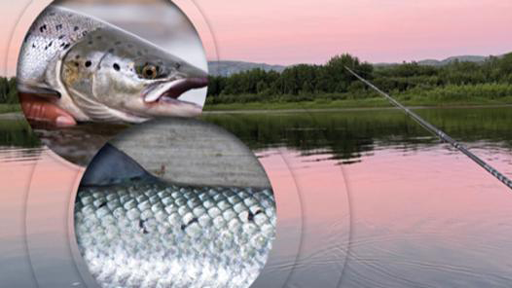
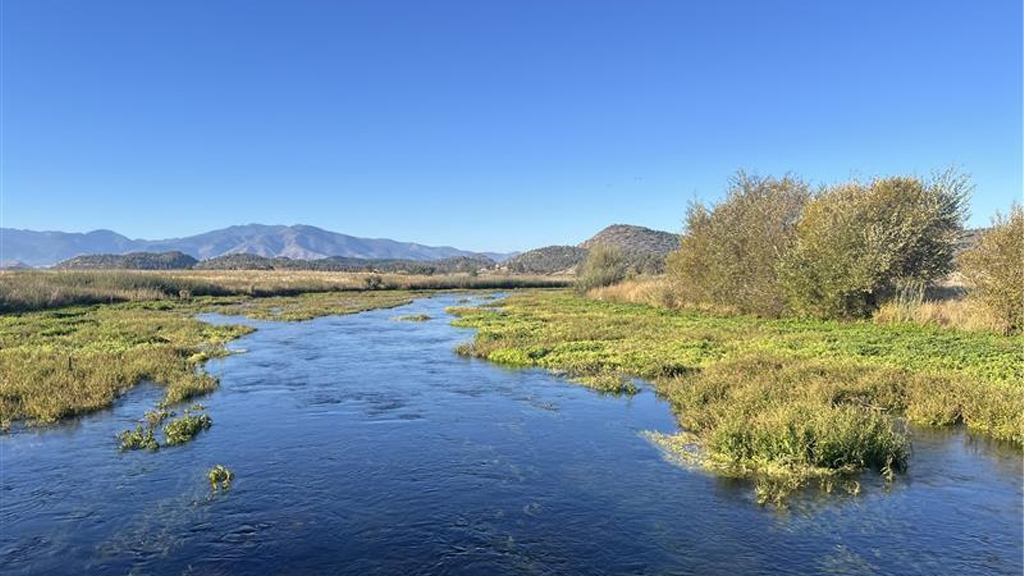
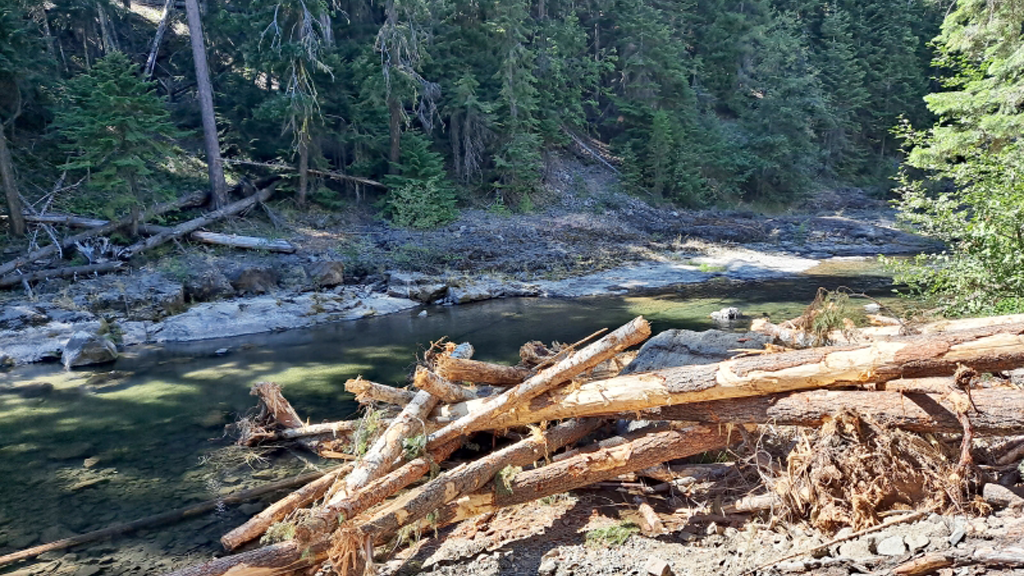
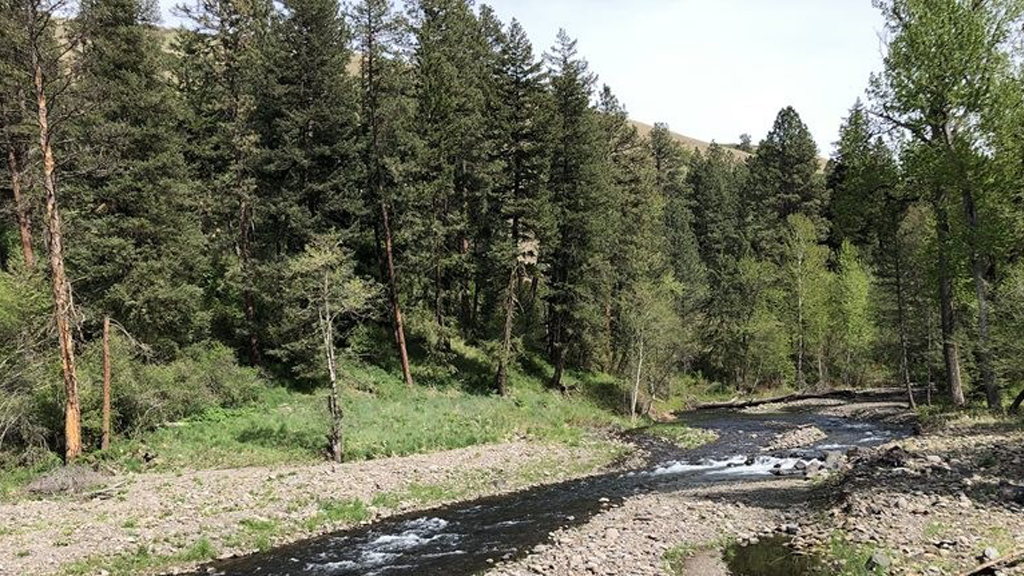
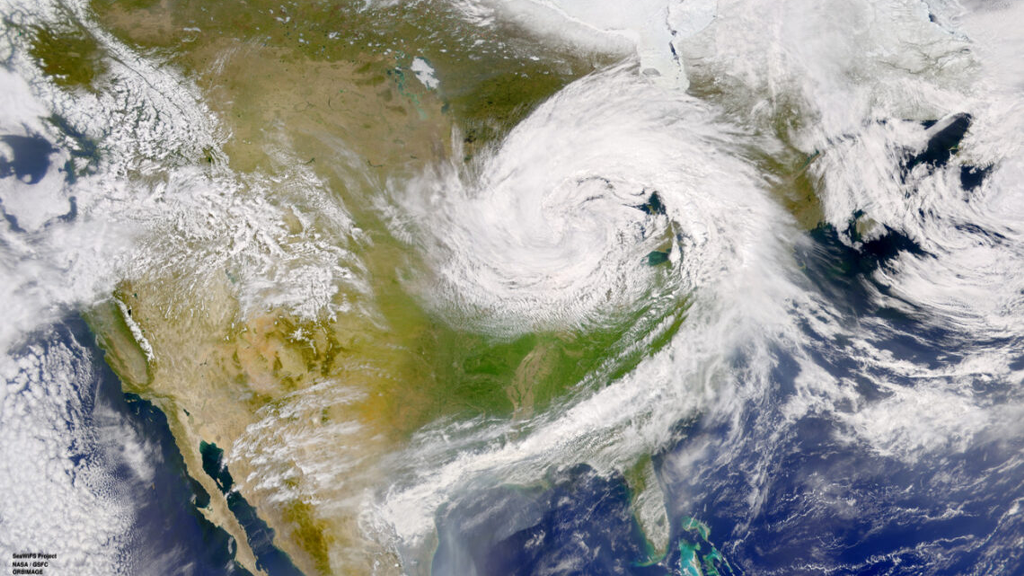
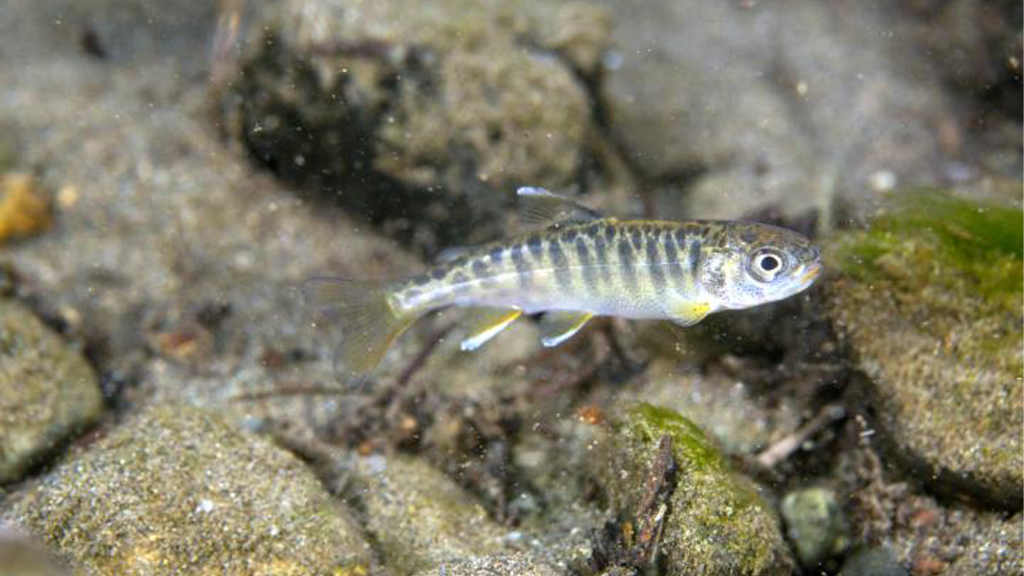
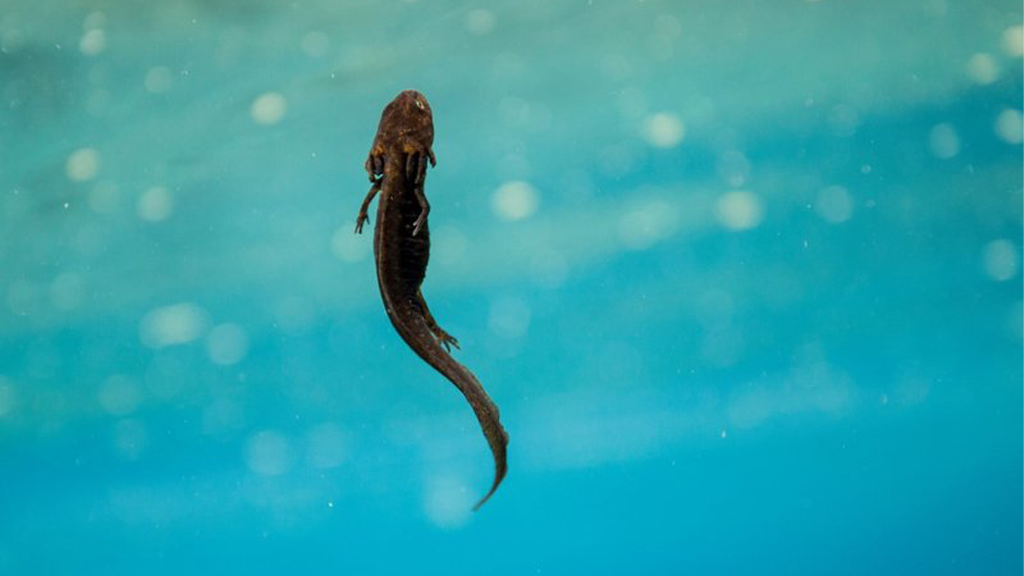
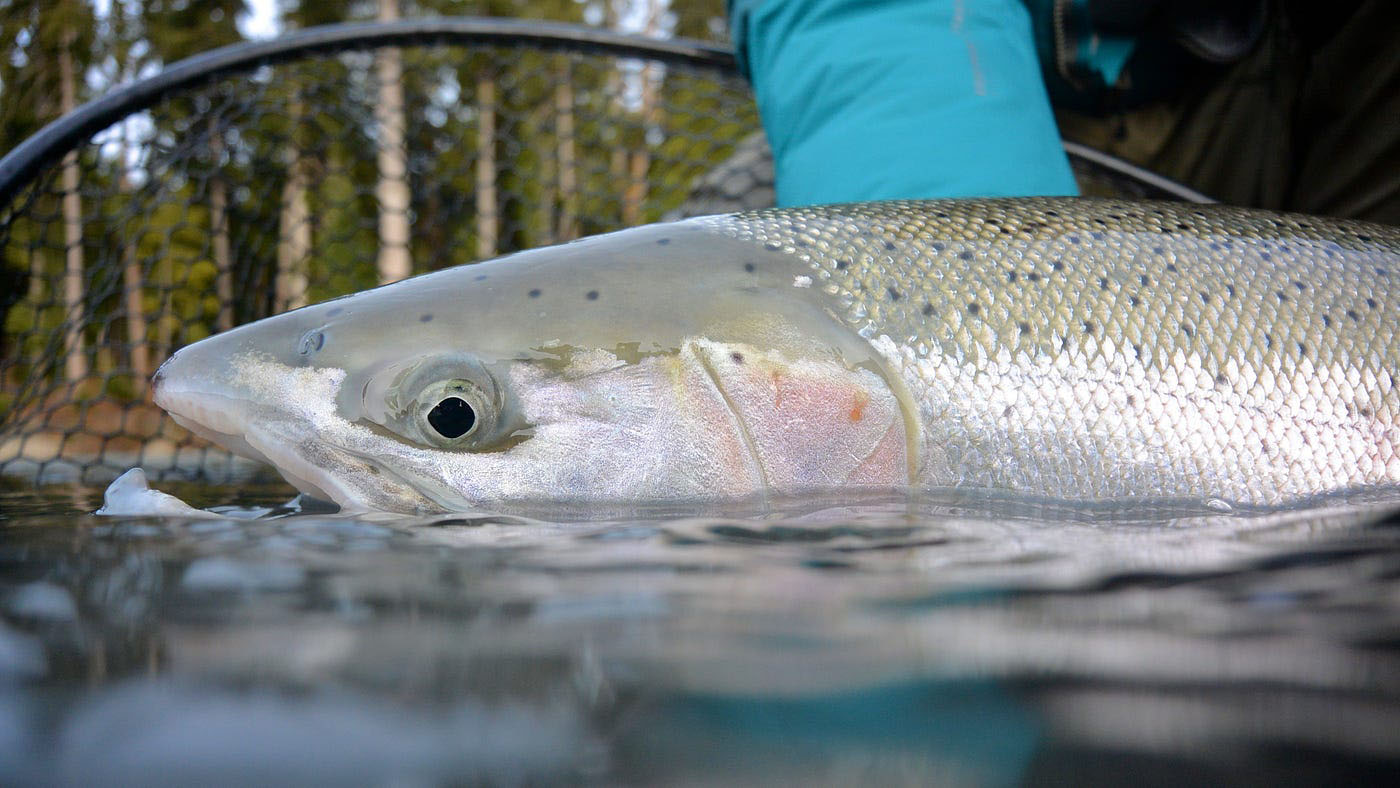
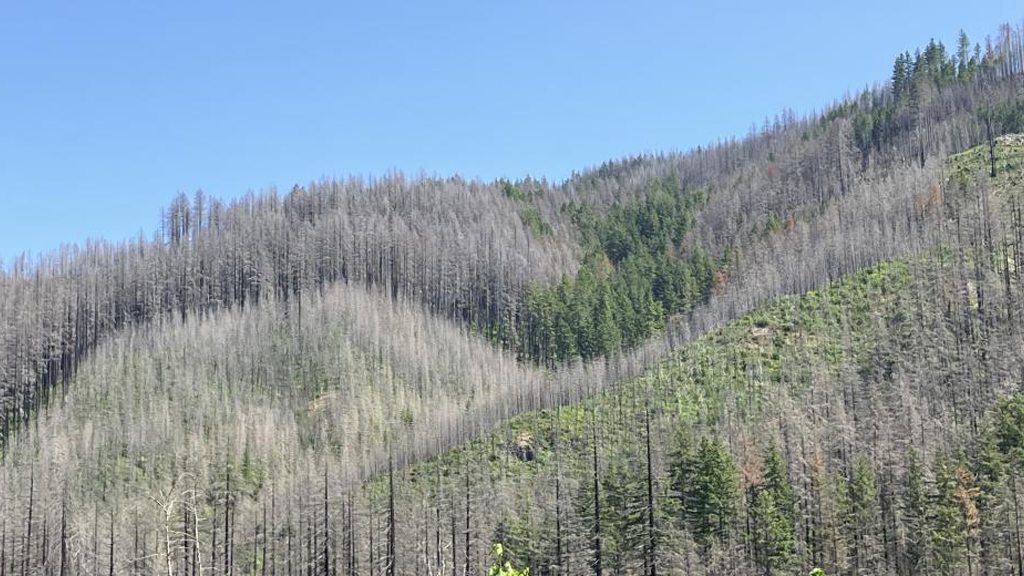
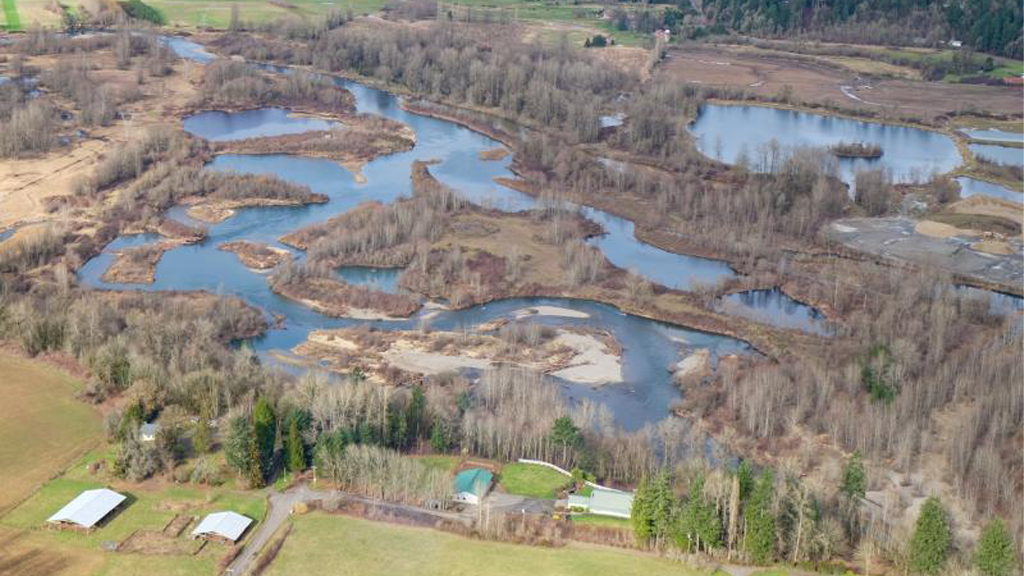
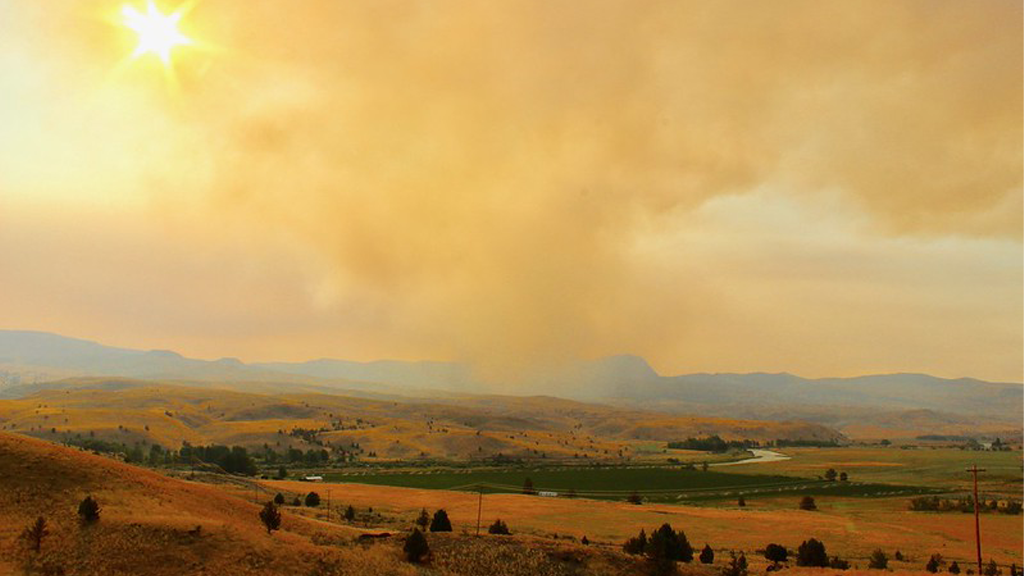
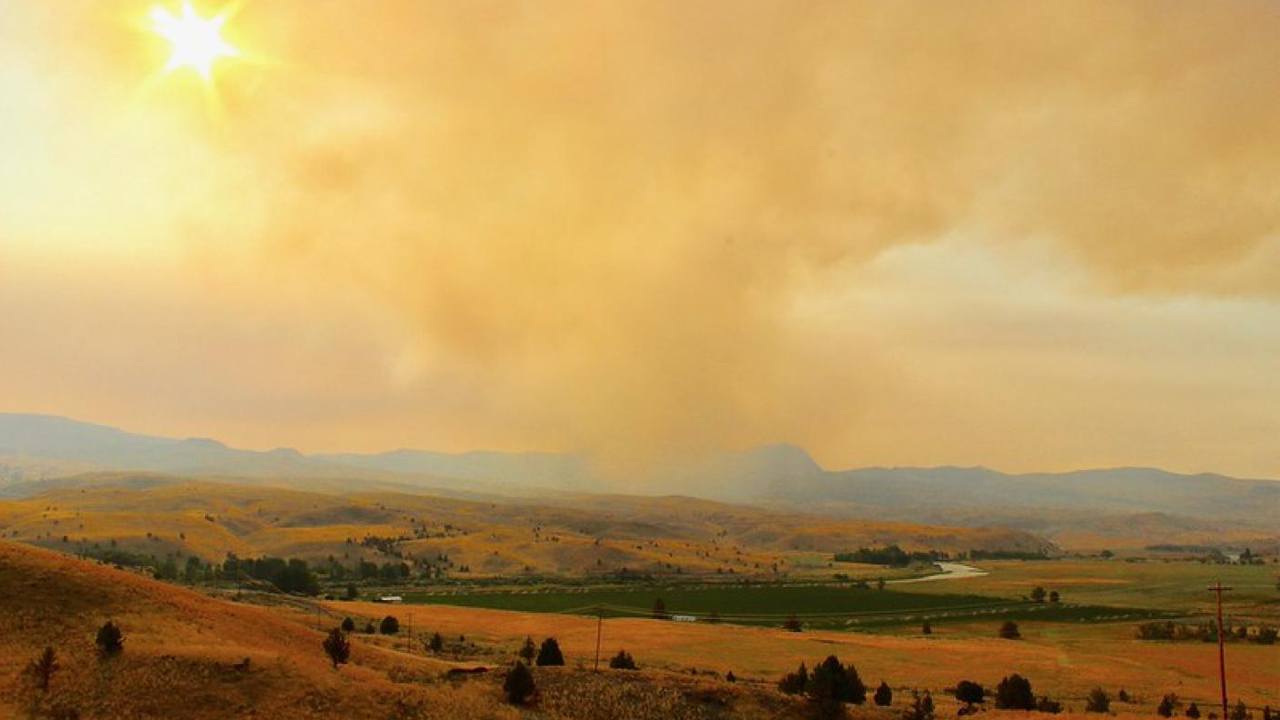
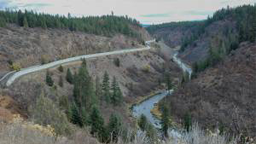
In the aftermath of historically severe wildfires in 2020, a study of Cascade Range watersheds found that stream vertebrates are doing surprising well, highlighted by flourishing fish populations.

“Our work looked at the three years following megafires in western Oregon and suggests that fishes are thriving and amphibians are persisting,” said Oregon State University postdoctoral researcher Allison Swartz, who led the study.

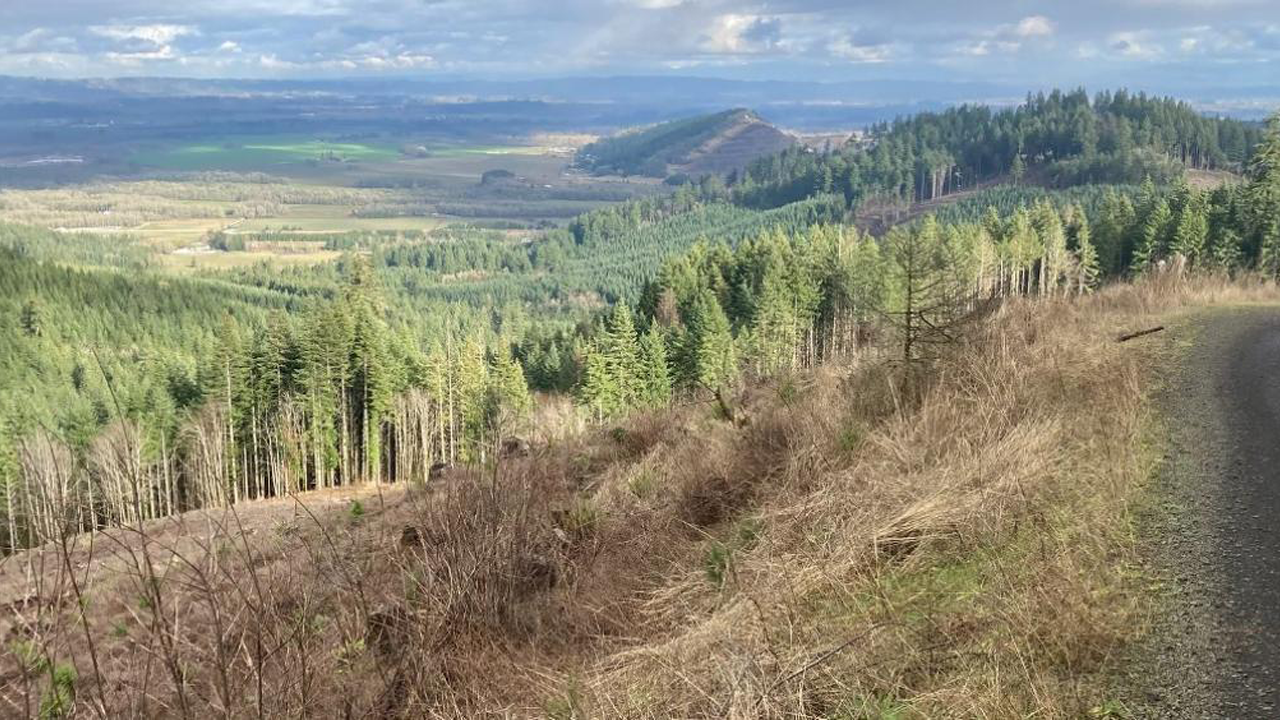
Swartz and collaborators at OSU, the National Council for Stream Improvement, Inc., the U.S. Forest Service’s Pacific Northwest Research Station and the U.S. Environmental Protection Agency examined 30 watersheds in moist conifer forests on the western slope of the Cascades.

Federal, state and private lands comprised the study area.

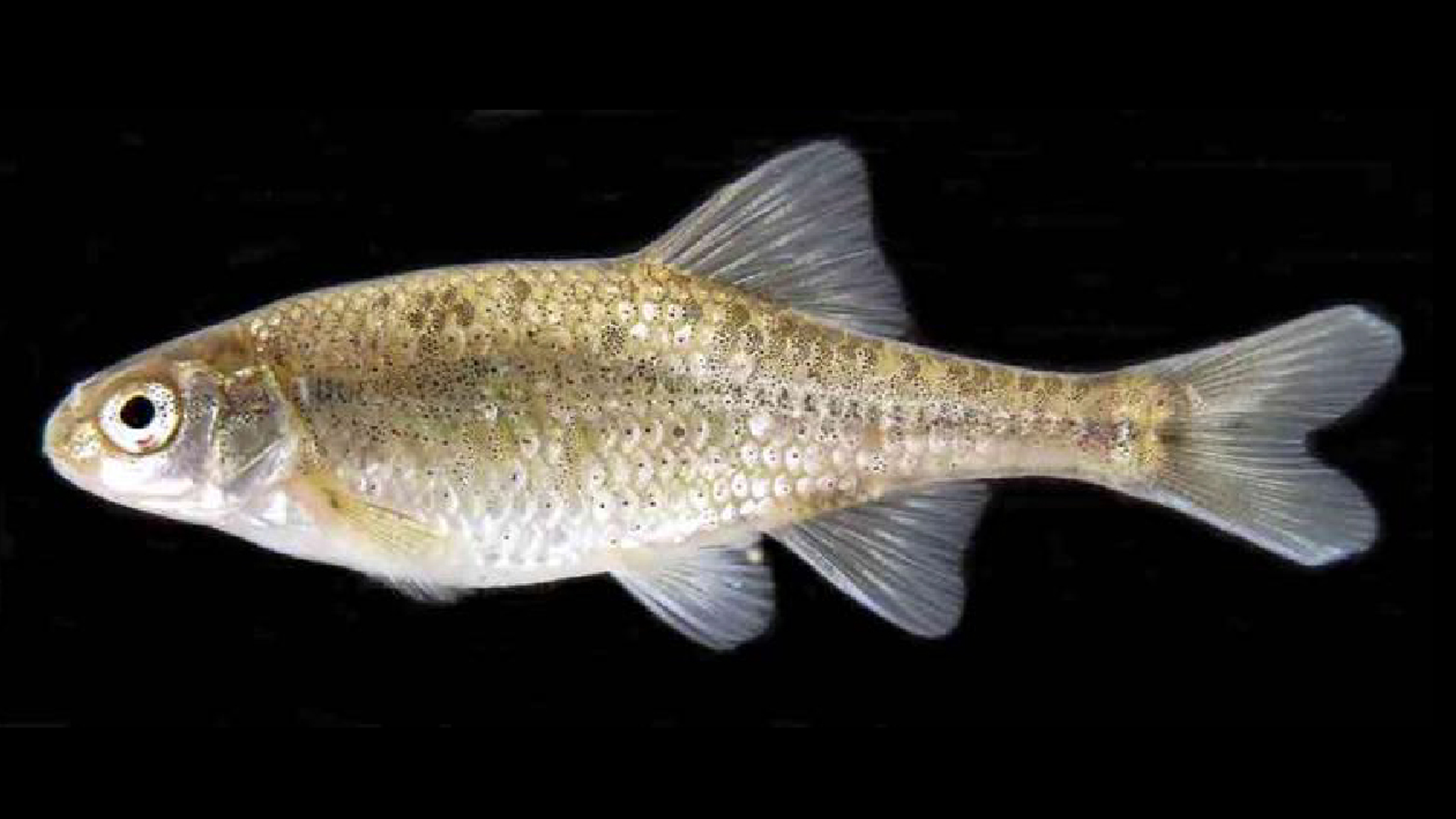
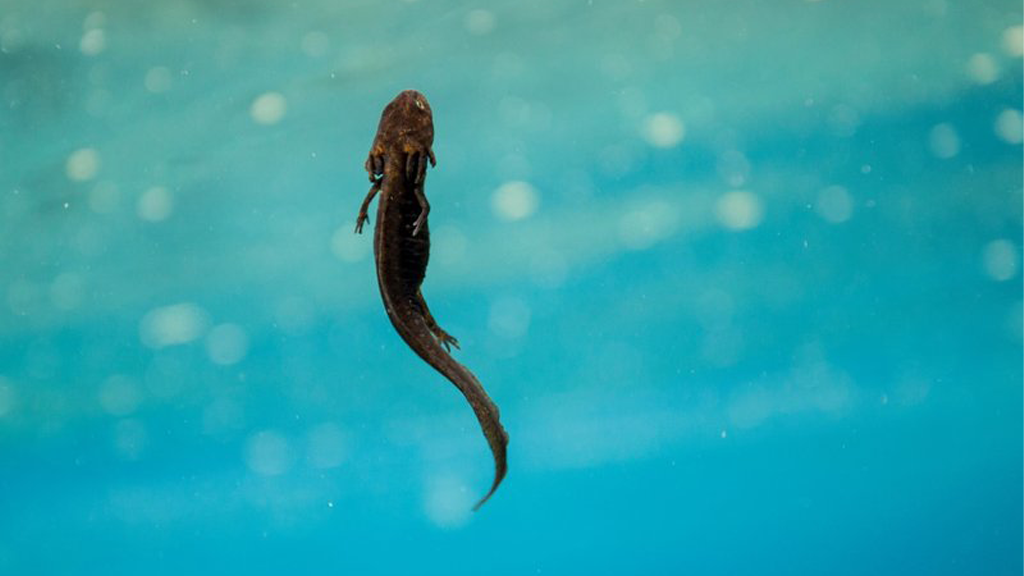
Unique aspects of the research were its focus on larger streams that host non-salmonid fishes like dace, sculpin and lamprey, as well as salamanders, frogs and crayfishes, omnivorous crustaceans important to understanding aquatic food webs; crayfish appear to be persisting too.

Previous ecological studies, the researchers note, have tended to mainly focus on economically and culturally important trout, salmon and steelhead.

The watersheds, among the nearly half-million acres burned by the Riverside, Beachie Creek and Holiday Farm fires around Labor Day in 2020, experienced varying levels of burn severity and post-fire salvage logging and replanting.

“Understanding the fire ecology of freshwater ecosystems is critical to our learning to co-exist with fire in ways that are socially and ecologically just,” said co-author Meg Krawchuk, an associate professor in the OSU College of Forestry.

The scientists found that total vertebrate, total fish and trout densities were greater in streams draining more severely burned watersheds than those draining less burned or unburned watersheds. Channel reorganization events, such as landslides after wildfire, are known to affect fish and amphibian densities but had not occurred in the study area.

“Despite experiencing high-severity megafires, vertebrate assemblages and populations seem to be buffered from fire-induced changes if adequate physical habitat and food availability are maintained post-fire,” Swartz said. “Sculpin, amphibian and crayfish densities did not appear to be influenced by burn severity. In areas with higher degrees of salvage harvesting and replanting, there were lower frog densities but greater densities of trout less than a year old.”

The researchers note that a combination of increased temperatures, shifts in precipitation, higher fuel aridity and prior forest management practices is resulting in longer fire seasons and greater frequency, size and intensity of fires in many parts of the world, including the Pacific Northwest.

Wildfire can change the structure and function of riparian and freshwater ecosystems in a number of ways that can affect stream vertebrate populations, the scientists say.

“More research exists on connections between burn severity and streamflow, sediment and stream temperature,” Swartz said. “Less work has been done looking at how burn severity and post-fire salvage harvest influence populations of all of stream vertebrates present and the overall assemblage.”

The National Council for Air and Stream Improvement, the Pacific Northwest Research Station, the Environmental Protection Agency and Weyerhaeuser provided funding for the study, which was published in Nature Communications Earth and Environment.

Brooke Penaluna and Becky Flitcroft of the Forest Service, Ashley Coble of the National Council for Air and Stream Improvement and Joe Ebersole of the EPA also contributed to the research.

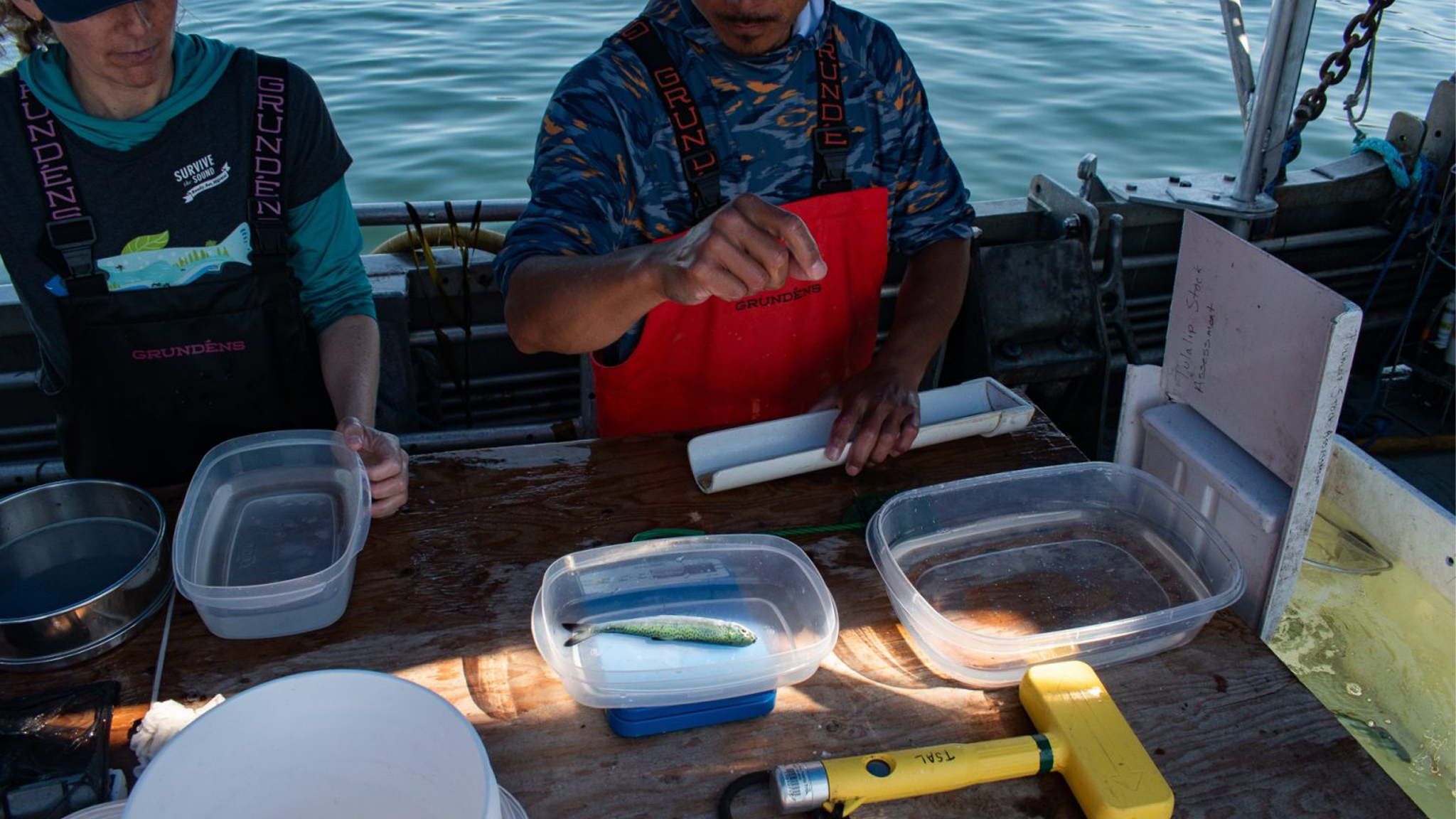
Marine Conditions Not Working For ESA-Listed Columbia River Smelt, Yet Another Year Of Low Return

The decline, the report says, is due to marine conditions that have been mixed and trending downwards since 2023, including adverse upwelling patterns and copepod community structure.

Read the full article…

Become a Member and get unlimited access to all articles.

Register

Already a member? Log in here

Judge Sets Oral Arguments Over Preliminary Injunction Request That Would Alter Columbia/Snake Dam Operations For Salmon, Steelhead

U.S. District Court Judge Michael H. Simon on Dec. 19, 2025, released his order that sets the date for oral arguments in the case for the afternoon of Feb. 6 in Portland.

Read the full article…

Become a Member and get unlimited access to all articles.

Register

Already a member? Log in here

Annual Survival Study For Columbia Basin Salmon/Steelhead Notes Struggle To Reach Regional Smolt-To-Adult Return Goals

An annual report by fisheries managers confirmed for the sixth year running that under climate change and poor river flows, smolt-to-adult return rates of Columbia River basin salmon and steelhead will not meet regional goals.

Read the full article…

Become a Member and get unlimited access to all articles.

Register

Already a member? Log in here

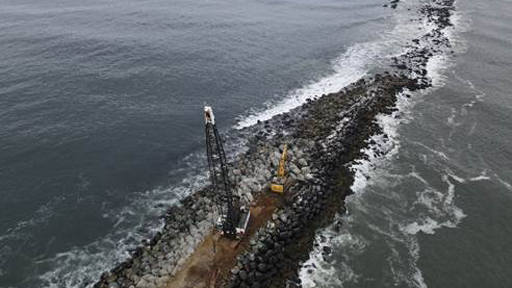
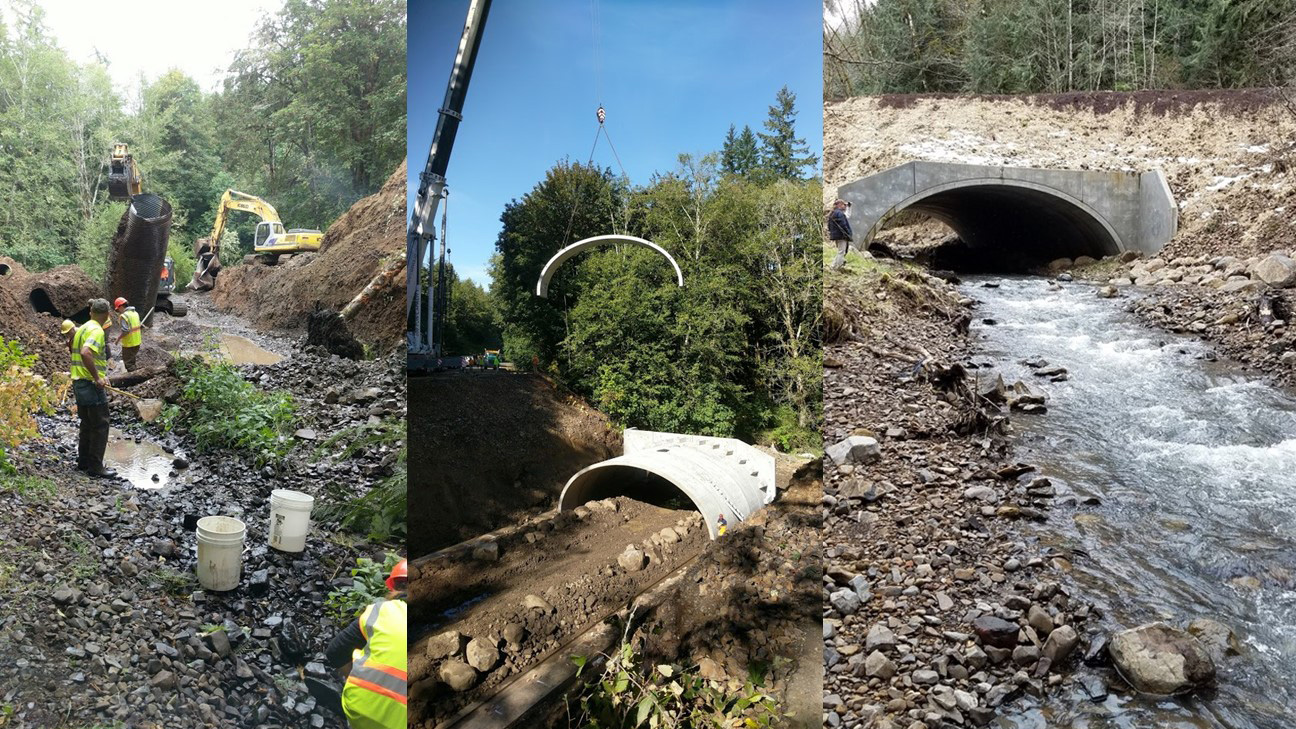
Work Begins To Improve Passage Conditions For Migrating Salmon, Steelhead In Yakima River Delta

Many years ago, people built a dead end where two rivers met — and blocked an ancient pathway for migrating salmon and steelhead.

Read the full article…

Become a Member and get unlimited access to all articles.

Register

Already a member? Log in here

Klamath Indigenous Land Trust Purchases 10,000 Acres Along Klamath River For Ecological Restoration Post Dam Removal

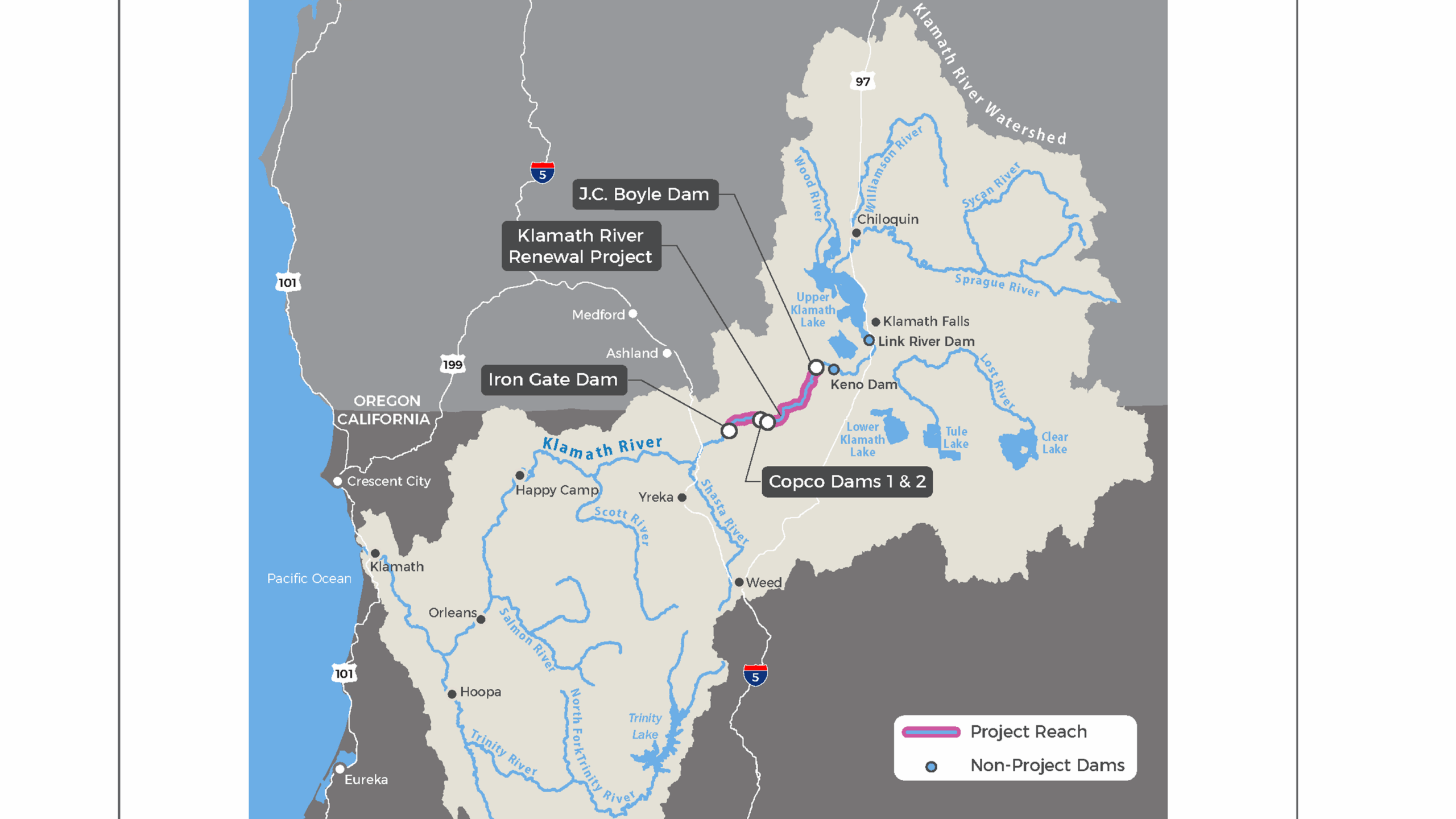
As salmon return to the headwaters of the Klamath River for the first time in over a century, the newly formed Klamath Indigenous Land Trust (KILT) and PacifiCorp announced the landmark purchase of 10,000 acres in and around the former reservoir reach of the river.

Read the full article…

Become a Member and get unlimited access to all articles.

Register

Already a member? Log in here

Naturally Reproduced Juvenile Coho Found In California’s Russian River Upper Basin First Time In 34 Years, Taken To Captive Breeding Program

This summer, several juvenile coho salmon were spotted in the Russian River’s upper basin — a first in more than 30 years.

Read the full article…

Become a Member and get unlimited access to all articles.

Register

Already a member? Log in here

No Two-Rod License This Year For Willamette River Salmon Fishing, Spring Chinook Forecast Doesn’t Meet Minimum Return Threshold

The two-rod validation will not be available for the Willamette River in 2026 as the forecast for hatchery-origin adult fish does not meet the minimum return threshold.

The 2026 Columbia River spring-summer forecast anticipates 43,700 adult Willamette-origin spring Chinook will return to the mouth of the Columbia River. Of the total adult return, approximately 32,000 are expected to be hatchery-origin fish. A minimum return of 34,000 adult hatchery fish is typically needed to collect enough broodstock for future releases. In 2025, the return to the Willamette was 50,527 fish.

“Usually less than 40% of hatchery-origin spring Chinook that reach the Columbia River mouth make it to upper Willamette Basin hatcheries,” said John North, ODFW Deputy Fish Division Administrator. “To meet our total adult hatchery-origin broodstock goal of 14,000 fish, we need approximately 34,000 adult hatchery fish at the mouth of the Columbia River.”

“The two-rod license is popular with anglers so while we would like to offer it every year, our first priority is to make sure we meet our broodstock needs to maintain hatchery releases,” continued North. “We also want to be transparent and let anglers planning next year’s fishing trips know as early as possible if it will be available.”

When fishery managers implemented the 34,000 threshold in 2024, they expected the forecast would meet it in 12 out of 15 years.

The 2026 total forecast for Columbia River spring chinook is 222,300 fish. The actual 2025 return was 245,379 fish.

The 2026 return of upper Columbia River spring chinook is 16,300 fish, compared to a 2025 return of 22,193 fish.

For Snake River spring/summer chinook the 2026 forecast is 61,600 fish, compared to a return of 82,973 in 2025.

Anglers should always check for any in-season changes to permanent regulations by visiting the Recreation Report / Fishing Report for their zone and clicking the Regulation Updates tab.

Center For Biological Diversity FOI Data Shows USFWS Loses 18 Percent Of Staff Under Trump Administration

The U.S. Fish and Wildlife Service lost 18% of its staff under the Trump administration, dropping from 9,957 to 8,179, nationwide between 2024 and the end of May. The reduction in biologists and other staffers was discovered in data obtained through a Freedom of Information Act request by the Center for Biological Diversity.

The staff losses are the result of DOGE-driven cuts, retirement and resignation incentives and a hiring freeze that was just lifted, but with the caveat that any new hire would have to come with cuts of four other positions. While some resignations preceded Trump’s inauguration, such losses would normally have been replaced.

“Monarch butterflies, hellbender salamanders and so many more plants and animals are staring down the barrel of extinction while the Trump administration slashes staff dedicated to preserving America’s struggling wildlife,” said Noah Greenwald, endangered species co-director at the Center. “This is an agency that needs more resources to help endangered species and the places they live, not fewer. By pushing biologists and other wildlife experts out of public service, Trump is inflicting enormous harm on some of America’s most beloved creatures. The result could be extinction.”

According to the data, nearly 900 of the 2,330 staff that were on the roster in 2024 but not 2025 are biologists. Fewer biologists means the Service has significantly less staff tracking the status of plants and animals or working to restore or manage habitats to help wildlife, says the Center.

Many of the staff who left the agency were senior level and in some cases likely responded to the administration’s early retirement offer. For example, Hawaiʻi — which is often referred to as the extinction capital of the world — lost 10 senior level scientists and managers. Florida lost 20 senior level scientists and managers, California lost 40, and Oregon and Washington combined lost 51, according to the Center’s data.

“Losing staff is bad enough, but losing senior experts with the experience and knowledge needed to save endangered species is devastating,” said Greenwald. “The Trump administration’s attacks on our environmental laws and the agencies that carry them out is beyond reckless. These staff cuts are completely irresponsible in the midst of our world’s twin climate and extinction crises.”

According to documents provided to the court in a lawsuit brought by government employee unions and others, the administration plans to eliminate another 143 positions at the Service. But it is blocked from doing so until Jan. 30 by the agreement to reopen the government.

Groups File Petition With Oregon FW Commission To Adopt Measures To Reduce Whale Entanglements In Commercial Crab Fishing Gear

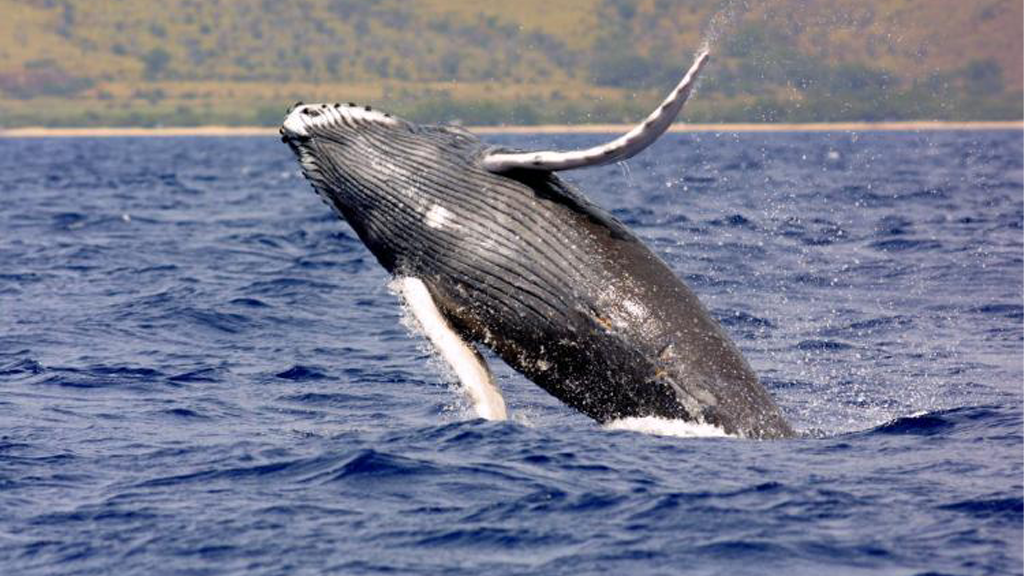
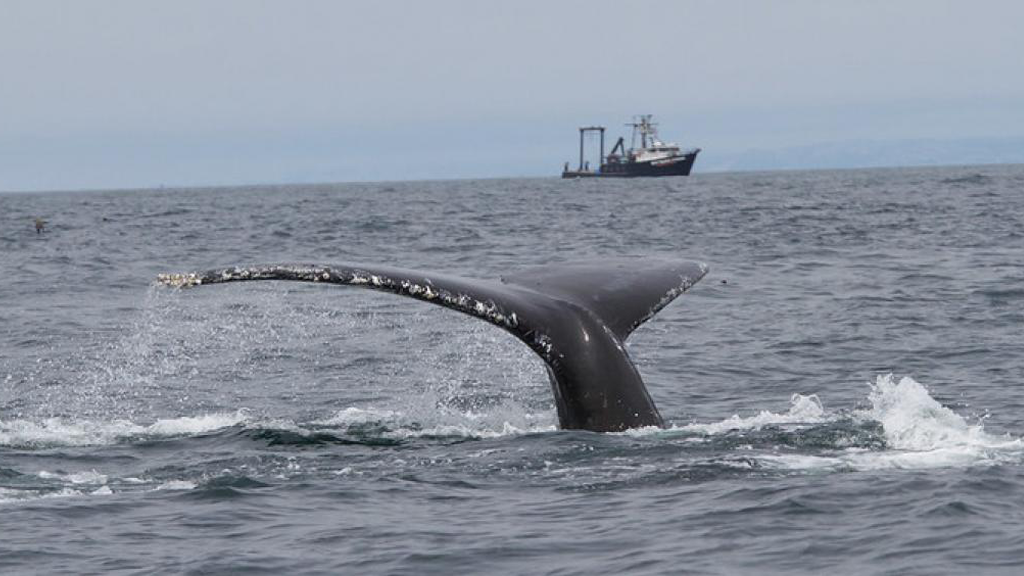
After four humpback whales were entangled this year in Oregon commercial Dungeness crab fishing gear, conservation groups have formally petitioned the Oregon Fish and Wildlife Commission to adopt measures to reduce risk to the endangered animals.

“This year’s horrific entanglements show that humpbacks are in a lot of danger from Oregon crab gear,” said Ben Grundy, an oceans campaigner at the Center for Biological Diversity. “If state officials don’t move to adopt whale-safe fishing gear, like pop-up buoys for Dungeness crab pots, endangered whales will continue to suffer and die preventable deaths.”

The petition urges the state to reduce the amount of fishing gear during feeding and migration seasons and open a pathway for fishers to use pop-up fishing gear, which eliminates untended buoy lines. It was filed by the Center for Biological Diversity, Oceana, Natural Resources Defense Council and the American Cetacean Society.

Pop-up gear has been tested in the California Dungeness crab fishery with positive results. Recent experimental gear trials have demonstrated the gear is reliable, profitable and safe for whales and other marine animals, including sea turtles.

“The latest dead humpback whale should be a wake-up call that entanglements in Oregon crab gear are a major problem,” stated Ben Enticknap, fisheries director at Oceana. “Oregon fishery managers should act quickly to strengthen conservation measures to reduce whale entanglements.”

The true number of entanglements in Oregon commercial Dungeness crab gear this year is likely much higher than just the four humpback whales confirmed entangled, says the Center. The federal government released preliminary results in September showing that accurate estimates may be five times as high. In other words, four reported entanglements may mean there were as many as 20 entangled whales in one year.

“The four humpback whales found tragically entangled in Oregon crab gear are a signal of a much greater entanglement problem, as only a small fraction of them are ever detected,” said Francine Kershaw, a senior scientist at NRDC. “The state should take swift, science-based management action to effectively protect endangered whales in Oregon waters.”

The Oregon Department of Fish and Wildlife is investigating the entanglement of a young humpback whale stranded on Nov. 15 and euthanized on Nov. 17. Additional humpback whale entanglements in Oregon commercial Dungeness crab fishing gear were reported off Baja California, Mexico, on Sept. 25 and Moss Landing, California, on Sept. 26, meaning the whales traveled hundreds of miles dragging fishing gear.

Entanglements may cause starvation, infections, amputations and slow painful deaths, as well as reduce a whale’s ability to reproduce, further impeding recovery.

On Dec. 5, the department put out a fleet advisory for the commercial Dungeness crab fishery, urging fishers to be vigilant and take precautions to avoid entanglements. The advisory does not include enforcement measures, but the statement says the department is considering further regulatory action to reduce entanglement risk.

Each entanglement of a humpback whale or sea turtle in Oregon’s commercial Dungeness crab fishery violates the federal Endangered Species Act.
State law requires the commission to respond to today’s petition in writing within 90 days and either deny it or begin rulemaking proceedings.

Study Shows Killer Whales, Dolphins Cooperatively Hunting For Chinook Salmon In British Columbia Waters

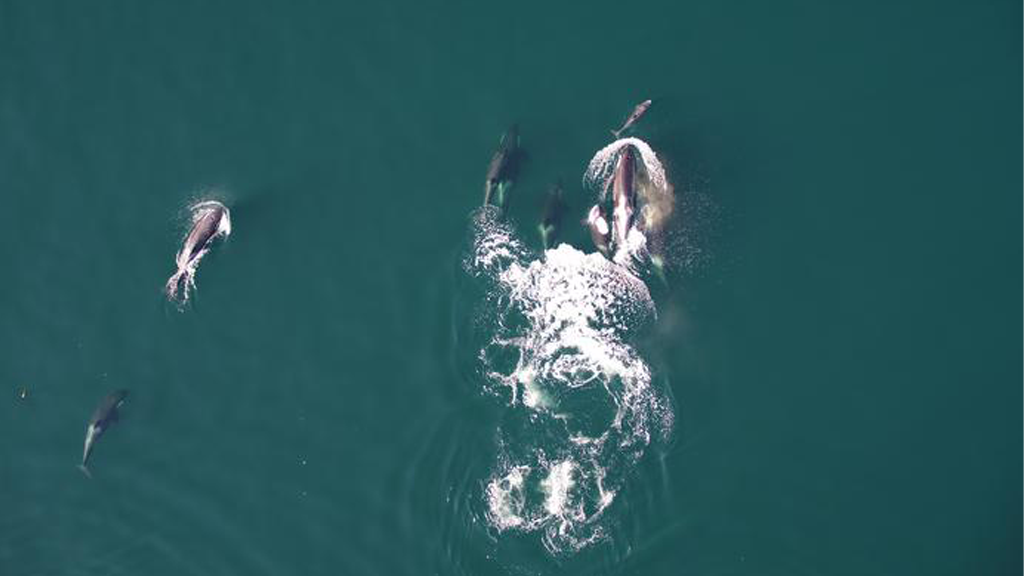
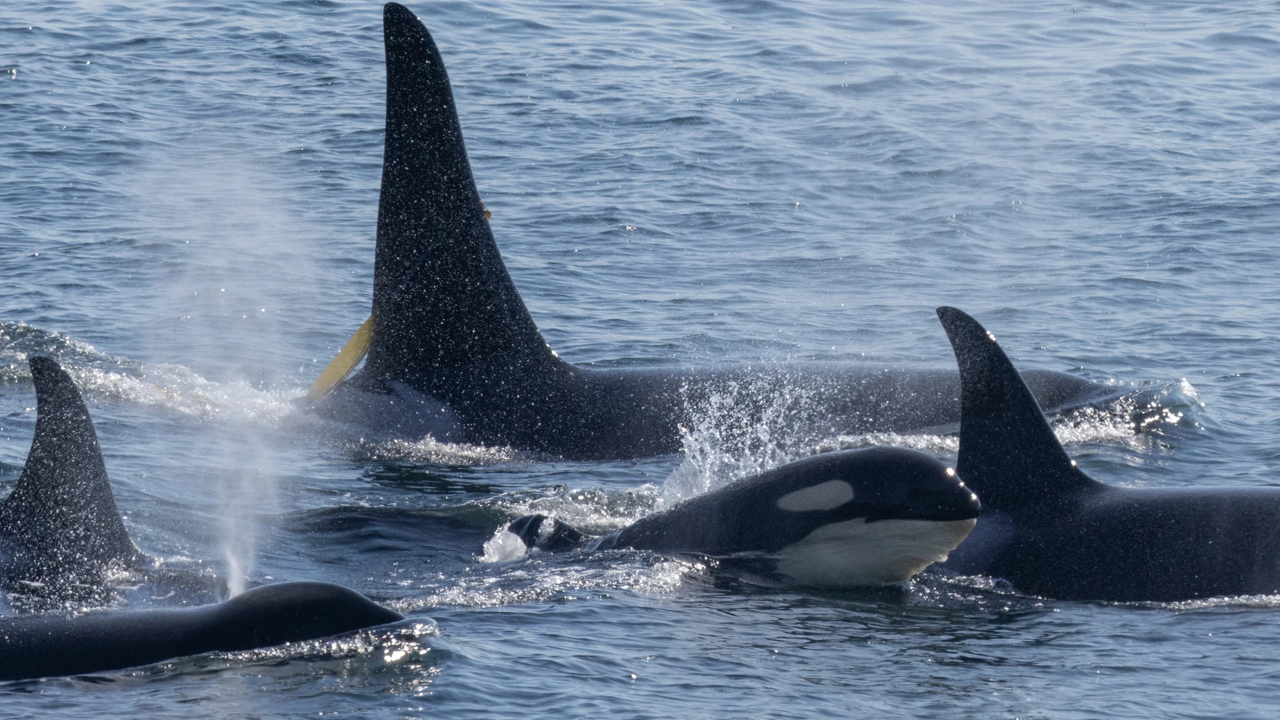
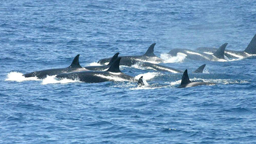
Above photo: Dolphin with a pod of northern resident killer whales. Credit: University of British Columbia (A.Trites), Dalhousie University (S. Fortune), Hakai Institute (K. Holmes), Leibniz Institute for Zoo and Wildlife Research (X. Cheng)

Killer whales or orca have been observed hunting with Pacific white-sided dolphins in the waters off British Columbia, Canada and sharing fish scraps with them after making a kill, according to research published in Scientific Reports. The authors suggest that the findings represent the first documented recording of cooperative hunting between orca and dolphins.

Pacific white-sided dolphins are often seen hunting along the coastline of British Columbia within meters of orca. Although orca frequently share their prey captures with pod members, they hunt independently. As the two species have not shown signs of fighting or avoiding each other, researchers have speculated that this may be due to them cooperating rather than competing for food.

Sarah Fortune and colleagues investigated the hunting behaviors of nine northern resident orca and their interactions with Pacific white-sided dolphins around Vancouver Island, Canada in August 2020. They used movement data, underwater footage, acoustic recordings, and aerial drone footage to establish how the orca moved and hunted.

The authors observed 25 instances of orca changing course after encountering dolphins to follow them on foraging dives. They suggest this may be due to orcas dampening their own noises to listen out for dolphin echolocations, which may help orca to detect Chinook salmon, prey too large for dolphins to capture and swallow whole. The authors also recorded eight instances of orca catching, eating, and sharing Chinook salmon with other orca — dolphins were present for four of these instances. On one occasion the dolphins scavenged the remains of an adult Chinook salmon broken into scraps small enough for them to eat by the orca. The authors propose this is an act of prey sharing.

The authors suggest the presence of local orca may offer dolphins protection from other orca pods passing through the area, while their interactions may help orca locate salmon more easily while providing an opportunity for dolphins to feed on scraps. However, they note that future research is needed to investigate this.

See the study, “Cooperative foraging between dolphins and fish-eating killer whales” here: 10.1038/s41598-025-22718-4

Oregon Appeals Court Overturns State Rule Allowing Trap/Haul Of Fish At Artificial Barriers

A 2022 rule by the Oregon Fish and Wildlife Commission that allows trap, haul and trucking of fish over barriers, in addition to the already allowed volitional passage for fish, was overturned by the Oregon Court of Appeals.

The Court of Appeals reinstated Oregon’s long-standing requirement that artificial barriers to fish migration, like dams, be upgraded to allow fish to swim freely past, according to a Columbia Riverkeeper news release.

The court’s Nov. 26 decision struck down the Oregon Department of Fish and Wildlife’s December 2022 rule that allows dam operators to trap salmon and load them into trucks for transport around dams—a process with much lower survival rates, Riverkeeper said.

The rule was reversed because the court determined that ODFW had failed to notify the public about making the rule change.

The court wrote in its decision that “It is unclear from the record exactly when, why, and by whom the additional revisions were made. The revisions were made without additional public notice and were adopted at the December 16, 2022 [Commission], meeting. Those amendments became effective on January 1, 2023.”

“The lack of notice [deprived] people whose interests are historically, culturally, and integrally intertwined with the policies at issue of a role in the process…,” the court wrote

“In one assignment of error, petitioners argue that the amendments to those rules were adopted without compliance with applicable rulemaking procedures, in violation of ORS 183.335,” the Appeals Court wrote in its decision (2025.11.26-Columbia-Riverkeeper-v.-ODFW-A182213-Opinion.pdf). “We conclude that the commission did not substantially comply with the notice requirements for amendment of administrative rules under the Oregon Administrative Procedures Act (APA). As a result, the January 1, 2023, amendments to OAR 635-412-0005(20), OAR 635-412-0005(51), and OAR 635-412 0035(6) are invalid.”

ODFW’s new rule or amendment was overturned because ODFW failed to notify Tribes or the public before making this important rule change, Riverkeeper said.

“The CTUIR appreciates the Oregon Court of Appeals for upholding the importance of transparency and public participation in decisions that affect our rivers and fish,” Confederated Tribes of the Umatilla Indian Reservation Board of Trustees Chair Kat Brigham said. “This ruling affirms that agencies must follow the law and respect the voices of all stakeholders, including sovereign tribal nations. It is the right decision for the health of our waterways and the cultural and natural resources that sustain our people and others in Oregon.”

Challenging ODFW’s amendment to the state’s fish passage program in court were Columbia Riverkeeper, Native Fish Society, Northwest Environmental Defense Center, Oregon Wild, Pacific Coast Federation of Fishermen’s Associations and Institute for Fisheries Resources, The Conservation Angler, Nez Perce Tribe and the Confederated Tribes of the Umatilla Indian Reservation.

“By ODFW’s own count, there are 42,780 artificial barriers to fish migration along rivers, streams, and creeks in Oregon,” said Mark Sherwood, Executive Director for Native Fish Society. “The Department should be doing everything possible to aid these struggling fish populations, not creating more barriers by cutting corners in laws meant to protect these fish.”

The Oregon Commission’s public affairs officer, Michelle Dennehy, said in an email, “We are currently reviewing the ruling and options with our attorneys and are unable to comment at this time.”

In its decision, the court wrote that Oregon’s Fish Passage Rules “exist to protect the ability of native migratory fish to pass through human-made barriers to their migration, such as dams and roads, absent a waiver or exemption.” Fish passage policy was originally adopted into law in 2001 and codified in 2006 by the Fish and Wildlife Commission. “The 2006 rules required that fish be able to pass through obstructions volitionally, i.e., on their own, as opposed to being trapped or moved via human intervention, absent a waiver or exemption,” the court’s decision says.

“This is a highly significant, consequential, and protective decision for native migratory fish in Oregon, for Oregonians, and for Nez Perce people throughout the Tribe’s treaty-reserved territory in Oregon,” Nez Perce Tribal Chairman Shannon Wheeler said. “For us, the decision confirms, for future fish passage requirements on rivers throughout Nez Perce territory in Oregon, and right now at the Wallowa Lake Dam reconstruction in the heart of the Nez Perce homeland, that Oregon’s fish passage regulation requires volitional passage unless an exemption can be proved publicly, and that state regulations cannot be revised by an agency at the last minute in a back room with no public notice and comment.

“The Court of Appeals’ decision is grounded in common sense and clear reasoning, and is a reminder of the indispensable oversight and protective role the courts play for all of us,” Shannon said.

Research Uses 40 Years Of Data From NASA, Landsat Satellites To Track Water Temperatures At Columbia/Snake River Dams Impacting Salmon

Above: The Columbia River’s Coulee Dam provides hydroelectric power and irrigation to the surrounding region. In this image, red segments of the river are hotter while white segments are cooler. On the right of the dam is a reservoir, whose surface waters are warmed by the sun. On the left of the dam flows the Columbia River. The stretch of river directly west of the dam is hotter than the following stretches. The background image was acquired by Landsat 8 on April 17, 2025. The surface temperature data was derived from the THORR tool by developer and University of Washington PhD student George Darkwah. NASA Landsat Project Science Office Support/ Ross Walter

New research uses more than 40 years of data from NASA and the U.S. Geological Survey’s Landsat satellites to help dam operators improve the health of salmon fisheries.

The Columbia and Snake rivers in the Pacific Northwest contain nearly 20 dams, which provide flood control, hydroelectric power, and water for irrigation. But they also change the way the rivers flow. For the study, researchers tracked temperature up and downstream of dams using surface temperature data from Landsat satellites.

Data from these satellites support the agricultural industry, including farmers and food production. Researchers found warm water downstream of dams stressed salmon, making them swim faster. The scientists developed a tool called THORR, or Thermal History of Regulated Rivers, to perform this research.

“NASA’s focus on advancing our understanding of Earth’s freshwater resources is reflected in tools like THORR, which leverage decades of satellite data to improve water management strategies,” said Erin Urquhart, program manager, Earth Action Water Resources Program at the agency’s headquarters in Washington. “By making this information accessible and useful, NASA is ensuring its science directly benefits the communities and industries that depend on these resources.”

The recent study, funded by NASA, provides regularly updated information about river temperature that dam operators can use to fine-tune their operations. Faisal Hossain, a civil and environmental engineering professor at the University of Washington and one of the study authors, explained that when water spills over the dam from the top layer of the reservoir, the water tends to be hotter, as it was warmed by the Sun. That warmer water can stress and even kill salmon, while water that’s discharged through the turbines cools the river downstream.

Strategically discharging water from lower levels of the reservoir could help salmon thrive, saving dam operators time and other, costlier interventions, Hossain said.

It has been historically difficult to use satellite data to monitor river temperature, due to cloud cover and the narrowness of river channels relative to satellite resolution. To account for this, a University of Washington team applied a machine-learning algorithm to 42 years of Landsat thermal data. Scientists trained the algorithm using measurements from temperature gauges along the Columbia River Basin, and data on climate, nearby land use, nearby land temperature, and elevation. The resultant tool was developed in consultation with the Columbia River Inter-Tribal Fish Commission. The commission provided on-the-ground feedback to help validate the satellite measurements and to ensure the final tool was user-friendly and served their fisheries’ needs.

“We’re collaborating with the end-users to make this research usable,” Hossain said.

Having a better grasp of local water conditions could influence future fishing regulations. Angela Forristall, staff officer for the Pacific Fishery Management Council working on the Salmon Fishery Management Plan, said the council develops fishing regulations every year based on the best available science. If a salmon stock is determined to be “overfished,” the council develops a rebuilding plan, which takes into consideration conditions that might have led to low numbers of salmon. A tool like THORR could be considered by the council for integration into future models to account for the impacts of river temperature on salmon abundance.

The research team built THORR to be compatible with data from the Surface Water and Ocean Topography mission (SWOT), a joint operation by NASA and CNES (Centre National D’Etudes Spatiales) with contributions from CSA (Canadian Space Agency) and the UK Space Agency. The SWOT satellite, which can measure the amount of water flowing through a stream, delivers data in 6.2 mile increments, as does THORR. Researchers at the USGS, meanwhile, have developed a dataset of lake surface temperature across the continental U.S. based on Landsat data. They’re currently developing a similar dataset for rivers.

While the Columbia River Basin was the testing ground for THORR, the methodology used could be expanded to other river systems. The code and data are publicly available so anyone can use satellite data to monitor Earth’s freshwater.

IDFG Launches New Study Aimed At Improving Understanding Of Largemouth Bass Movements Among Chain Lakes Connected To Coeur d’Alene Lake

Idaho Fish and Game has launched a new study to better understand largemouth bass populations in the eight Chain Lakes connected to Coeur d’Alene Lake. The project was developed through ongoing conversations and collaboration with local bass anglers and bass fishing groups.

Currently, Fish and Game manages each of the Chain Lakes as an independent fishery, with lake-specific harvest regulations for largemouth bass and other species. This study seeks to determine whether that long-standing management approach aligns with how bass actually use the system.

“If bass movements among the lakes are occurring, this study will help us better understand how that could impact management options moving forward,” said Mike Thomas, Regional Fisheries Biologist for the Panhandle Region.

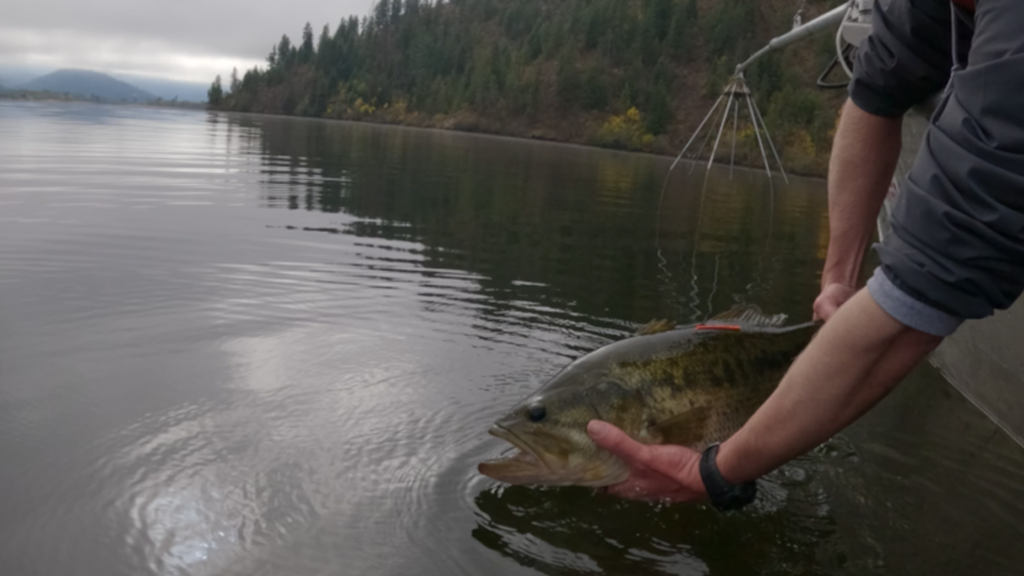
The study involves capturing largemouth bass, recording their length and weight, surgically implanting tracking transmitters, releasing the fish in the lake where they were caught and monitoring their movements over the next year.

“I hope that 15–20 years from now these fisheries are still producing amazing largemouth bass for everyone to enjoy, and this study will help us strive for that,” Thomas added.

Located at the southern end of Coeur d’Alene Lake along the Coeur d’Alene River near the town of Harrison, the Chain Lakes provide excellent fishing opportunities for a variety of warmwater species. The system is especially well-known for producing trophy-sized largemouth bass.

For more information or questions about the study, please contact the Panhandle Regional office

California Board Approves $87 Million In Grants For Wildlife Projects, Advances Salmon Strategy For Hotter Future

California’s Wildlife Conservation Board has approved $87,125,538 in grants for 16 projects across 14 counties to protect critical wildlife habitat, restore rivers and streams, and conserve culturally and ecologically significant lands.

Among these, seven projects advance the California Salmon Strategy for a Hotter, Drier Future, restoring fish passage, reconnecting rivers to floodplains, and improving spawning and rearing habitat for endangered salmon and steelhead.

The WCB’s grants advance Gov. Gavin Newsom’s goal of conserving 30 percent of California’s lands and coastal waters by 2030, a globally adopted target known as 30×30. The initiative seeks to protect biodiversity, expand access to nature for all Californians and adapt to climate change.
Loyalton Ranch Acquisition Returns Ancestral Lands to Washoe People

The board approved a $5.5 million grant to the Wášiw-šiw Land Trust(opens in new tab) to support the purchase of 10,274 acres at Loyalton Ranch, a historic return of ancestral lands to the Washoe Tribe of Nevada and California (Tribe) in the northern Sierra Nevada. The property, which is located northeast of Lake Tahoe and approximately 20 miles north of Reno, features sagebrush lowlands, conifer forests, mountain meadows, springs, and perennial creeks, providing habitat for pronghorn, mule deer, mountain lion, as well as culturally important plants such as pinyon pine.

“The reclamation of these Washoe homelands is of great importance,” said Tribal Chairman Serrell Smokey. “Wá·šiw people were once forcefully removed from these lands. Now the land is calling the Washoe people home and we are answering that call. We are deeply grateful to WCB for providing essential funding for this historic land purchase by the Wášiw-šiw Land Trust.”

“This project reflects what’s possible when state, tribal, and conservation partners work together to protect land that holds deep cultural and ecological importance,” said Jennifer Norris, executive director of WCB. “We are honored to support the Wášiw-šiw Land Trust in reclaiming this landscape and carrying forward the cultural knowledge and land management practices that have shaped it for thousands of years.”

The Loyalton Ranch acquisition, a culmination of a four-year collaboration between the Tribe, the Northern Sierra Partnership and the Feather River Land Trust, is part of the Tribe’s plan to reclaim and steward lands across the northern Washoe homelands, with the purchase expected to close in early 2026.

Featured Conservation Projects to Support Salmon and Steelhead Recovery in Central Valley

• A $15-million grant to River Partners to acquire 1,715 acres of land and water rights along Battle Creek in Tehama County will provide instream flows to protect spawning and rearing habitat for endangered salmon and steelhead.

“The acquisition of the historic Battle Creek Ranch represents a transformative step in restoring the health of Battle Creek and reconnecting habitats essential for building back populations of endangered salmon, steelhead, and other wildlife,” said Julie Rentner, president of River Partners.

WCB also approved a $584,999 grant to retire water rights on the property, boosting stream flows and improving habitat for aquatic species.

• A $15-million grant to Meridian Farms Water Company for the Meridian Farms Fish Screen Project in Sutter County will replace two unscreened water diversions on the Sacramento River with a single modern, screened diversion. The project removes one of the river’s last high-priority unscreened diversions, improving passage and survival for all four runs of Chinook salmon and supporting long-term drought resilience and water-management flexibility.

“This project helps to enhance passage and protect all four runs of Chinook salmon and will also enhance drought resilience for the region,” said Andy Duffey, general manager of Meridian Farms Water Company. “This brings to a close a more than two-decade effort by Meridian Farms to provide these protections to fish in the Sacramento River.”

• A $31.9-million grant to the Sutter Butte Flood Control Agency for the Robinson’s Riffle Restoration Project in Butte County will restore 1 mile of the Feather River and reconnect it to 51 acres of floodplain, improving salmon and steelhead habitat.

“We are excited to partner with WCB to implement the project and realize the benefits to the Feather River and the fish it supports,” said Michelle Forsha, fisheries restoration and reintroduction supervisor for the California Department of Fish and Wildlife (CDFW). “We hope this project is the start of a long partnership toward bringing about restoration in the Central Valley.”

“Recovering salmon runs in the Central Valley will take bold, coordinated investment,” said Charlton H. Bonham, chair of WCB and director of CDFW. “WCB continues to deliver on-the-ground results, putting resources directly into the places that matter most for salmon recovery.”

Jennifer Norris, executive director of WCB, added: “These projects represent how California agencies are working together to restore functional river systems and resilient habitats that support both fish and people.”

Established in 1947, the Wildlife Conservation Board protects, restores and enhances California’s spectacular natural resources for wildlife and the public’s use and enjoyment. WCB works in partnership with Tribes, conservation groups, government agencies and the people of California to safeguard biodiversity and expand access to nature.

Environmental DNA: Washington Takes On First-Of-Its-Kind Effort To Use E-DNA To Conduct Aquatic Species Census For Every River

Above photo: A view of the cold and incredibly clear waters of the Dungeness River (WDFW photo). Despite the clear appearance, there are millions of fragments of genetic material from all walks of life suspended in this water.

Washington Department of Fish and Wildlife scientists are using environmental DNA (eDNA) to take an unprecedented look at what lives in the state’s rivers, with the goal of conducting a census of every major river and drainage in Washington over the next seven years.

The project, called the Aquatic Biodiversity Study, is the first of its kind in the Pacific Northwest — and possibly the entire country — to use eDNA for a comprehensive, ongoing survey of an entire state’s native resident freshwater species.
“This is the most comprehensive aquatic biodiversity study using eDNA technology ever implemented in Washington,” said Marie Winkowski, WDFW’s native freshwater fish and shellfish specialist.

Beyond its scale, Winkowski notes, this landmark effort “is revolutionizing how wildlife agencies monitor native freshwater fish, shellfish, and invertebrate populations across vast landscapes, creating a more sustainable model for managing at-risk species and those of greatest conservation need.”

WDFW scientists have already surveyed Washington’s Dungeness, Elwha, Yakima, Naches, Wenatchee, Willapa, and Skokomish river systems. Each watershed offers a different mix of habitats — from alpine-fed snowmelt rivers to slow, meandering coastal streams — and each has its own community of species, some of which have never been documented in those waters before.

“We’re getting a level of detail about aquatic biodiversity that was simply not possible before,” said Vince Butitta, one of two WDFW leads of the study. “This technology lets us detect not just fish, but shellfish, freshwater invertebrates, amphibians, and even signs of animals that live near rivers, such as beavers, snakes, loons, ducks, and others.”

“A single sample in just one river has helped us detect hundreds of species,” adds Butitta. “Now imagine thousands of samples across the entire state. When you put them together, it really creates a mosaic of information of entire river systems. It’s an incredibly efficient system.”

Every living thing leaves behind microscopic genetic material in its environment — biological material like skin cells, mucus, eggs, and waste, all containing DNA. Scientists refer to this as “environmental DNA.” In rivers, these fragments are carried by the current. In a process called metabarcoding, scientists filter water samples, capture those eDNA fragments, and identify the species that shed them.

Unlike traditional surveys, which can require a lot of time and effort to physically catch and identify animals, eDNA samples are collected quickly by a small team of scientific technicians, all without disturbing the species being studied. It can also detect species that are rare, elusive, or have low populations — species that might otherwise be missed.

For fish and wildlife managers, this study represents a leap forward towards freshwater conservation efforts. Washington’s State Wildlife Action Plan (SWAP) lists more than 30 freshwater native aquatic species of greatest conservation need, from lamprey and freshwater mussels to amphibians like the cascade torrent salamander and the Oregon spotted frog. For many of these species, there are large gaps in basic knowledge, such as where they occur or how abundant they are.

“For some species, we haven’t had updated range data in decades,” said Skylar Wolf, WDFW’s aquatic eDNA co-lead. “With eDNA, we can close those basic knowledge gaps and start building a clearer picture to guide future work and conservation actions”.
On a recent late summer morning along the Dungeness River, a WDFW field team unloaded their gear near a shaded bend where crystal clear water fanned over smooth gravel. The centerpiece of their setup was a pivoting tripod system with a long boom arm — a piece of equipment that could easily be mistaken for an audio recording rig. But instead of a microphone, the boom suspended a siphon connected to a sealed housing containing a water filter.

Once in place, the team let the river current do the work. Enough water was drawn through the filter to capture an invisible record of every living thing that had recently been upstream. The filter, now coated with microscopic traces of DNA, was carefully removed with sterile gloves, placed into a clean, labeled bag, and sealed for transport to the lab.

At each site, the team collected several samples: a control sample using laboratory-grade deionized water, to ensure no contamination from equipment; and multiple field samples or “replicates” at upstream and downstream locations, to cover different habitats across the site.

Alongside the DNA collection, the scientists recorded water temperature, flow rate, turbidity, pH, and river width at multiple points. This environmental data helps researchers interpret the DNA results in the context of habitat conditions.

Once the filters arrive at the lab, the DNA is extracted and analyzed through a scientific process called metabarcoding. Specialized software matches the genetic sequences to known species in reference databases. The analysis produces a list of species at that site at that moment in time — a molecular snapshot of the river’s biodiversity.

The implications are enormous. These surveys will allow WDFW to identify where species of greatest conservation need and species of greatest information need are found, detect changes in species distribution over time, understand habitat associations and species interactions, and provide baseline data for future restoration or management work.

And because DNA can be archived, these samples can be re-analyzed decades later with improved technology to answer new questions — or detect species that are currently unknown to science.

“This work not only helps management decisions today, but has important long-term value,” Butitta said. “We’re creating a record that future scientists will be able to revisit 10, 20, even 50 years from now to see how ecosystems have changed.”
While eDNA has been used in targeted studies, WDFW’s Aquatic Biodiversity Study is the first to apply it statewide in a systematic, ongoing way to native resident freshwater species. That comprehensive scope makes it a model for other states looking to implement conservation actions recommended in their SWAPs.

In Washington, the study is already helping to reveal the hidden complexity of rivers and the species that depend on them. Over time, it will allow managers to track shifts in biodiversity due to climate change, habitat restoration, and other environmental pressures.

“It’s a little bit ‘Ghostbusters’ with the gear we use,” Wolf said with a laugh, “but what we’re doing has very real consequences for conservation. The more we know about what’s in our streams and rivers, the better equipped we are to protect these resources.”

Environmental DNA: UW Researcher Pulls Salmon E-DNA Out Of The Air To Estimate Number Of Fish

During the annual salmon run last fall, University of Washington researchers pulled salmon DNA out of thin air and used it to estimate the number of fish that passed through the adjacent river. Aden Yincheong Ip, a UW research scientist of marine and environmental affairs, began formulating the driving hypothesis for the study while hiking on the Olympic Peninsula.

“I saw the fish jumping and the water splashing and I started thinking — could we recover their genetic material from the air?,” he said.

The researchers placed air filters at several sites on Issaquah Creek, near the Issaquah Salmon Hatchery in Washington. To their amazement, the filters captured coho salmon DNA, even 10 to 12 feet from the river. Scientists collect environmental DNA, or eDNA, to identify species living in or passing through an area, but few have attempted to track aquatic species by sampling air.

This study, published Nov. 26 in Scientific Reports, shows that eDNA can move between air and water — a possibility scientists hadn’t accounted for even though aquatic animal DNA sometimes appears in airborne study data.

The researchers then merged air and water eDNA with the hatchery’s visual counts in a model to track how salmon numbers rose and fell during the fall migration. Although the amount of salmon DNA in the air was 25,000 times less than what was observed in the water, its concentration still varied with observed migratory trends.

“This work is at the edge of what is possible with eDNA,” said senior author Ryan Kelly, a UW professor of marine and environmental affairs and director of the eDNA Collaborative. “It pushes the boundaries way further than I thought we could.”
Researchers have streamlined the process of sampling eDNA over the past decade. Water and air are reservoirs for discarded bits of skin, hair and other DNA-rich detritus. Like a footprint, eDNA flags the presence of a species nearby.

After hatching, young salmon migrate to the ocean for one to several years before returning to the same stream to spawn. They leap and thrash near the surface of the water, likely shedding eDNA in the process. Every year, as the fish pass through migratory bottlenecks, people count them to gauge population health, set catch limits and monitor rehabilitation efforts.

Ip began to wonder about remote monitoring efforts while watching the fish wiggle upstream. eDNA has become a valuable tool for tracking endangered and invasive species. He developed an experiment to test the air for salmon DNA in conjunction with colleagues at the UW.

“This is Aden’s baby,” said Kelly. “He arrived saying ‘I know you can get eDNA from the water, but I want to do something nobody has done before.’”

Researchers placed filters 10 to 12 feet from the stream and left them out for 24 hours on six different days between August and October, testing four filter types each time. Three were vertical filters and the fourth was an open 2-liter tub of deionized water to capture settling particles.

In the lab, they washed eDNA from the filter and measured its concentration with a coho salmon-specific tag to a DNA amplification method called polymerase chain reaction. They referenced air and water eDNA concentration and visual counts to track population changes, assuming that each method has its own margin of error, and the true number of fish is unknown.

The airborne eDNA concentration fluctuated with the visual counts reported by the hatchery, suggesting that this could become a useful tool for tracking salmon populations. The strategy is more remote-friendly than other methods because it does not require electricity.

“This technique quantitatively links air, water and fish,” Ip said. “Airborne eDNA doesn’t give us a headcount, but it does tell us where salmon are and what their relative abundance is in different streams.”

There are still a number of variables to account for, such as rain, wind, humidity and temperature, that the researchers plan to continue exploring in future studies.

“Right now, we’re pushing the boundaries of possibility,” Kelly said. “Eventually, we will develop the technique, as we have for waterborne eDNA, into something that can help guide management and policy.”

For more information, contact Aden Yincheong Ip at adenip@uw.edu

Co-authors include Gledis Guri, a UW postdoctoral researcher in the School of Marine and Environmental Affairs and Elizabeth Andruszkiewicz Allan, chief scientist at the eDNA collaborative in the School of Marine and Environmental Affairs at UW.
This research was funded by the David and Lucile Packard Foundation and Oceankind.

Groups Restore Fish Passage For ESA-Listed Bull Trout With Emergency Flume To Reconnect Habitat

Above photo: WDFW staff and partners post-construction. Photo by WDFW.

July through September are the dryest and hottest parts of the year, with 2025 being the third consecutive year of drought in the Yakima River Basin.

Many summers in the Yakima River Basin, particularly in drought years, Box Canyon Creek, which flows into Kachess Reservoir in Kittitas County, dries up to the point that it no longer connects to the reservoir. This spells serious trouble for migrating bull trout traveling from the reservoir into the creek to spawn.

Bull trout are listed as threatened under the Endangered Species Act. Washington Department of Fish and Wildlife estimates that only about 75 to 100 adult bull trout are left in the Box Canyon Creek population, with their survival on a precipice.
While many outdoor enthusiasts appreciate Kachess Reservoir for its stunning beauty and refreshing waters, they may not realize its importance for bull trout spawning as well as irrigation throughout the Yakima River Basin. Reservoir operations reduce water levels, leaving fish stranded.

Reservoir conditions, combined with drought, can result in Box Canyon Creek completely disconnecting from Kachess Reservoir, like it did this fall. This combination has the potential to devastate the local population of bull trout that travel from the reservoir into the creek to spawn.

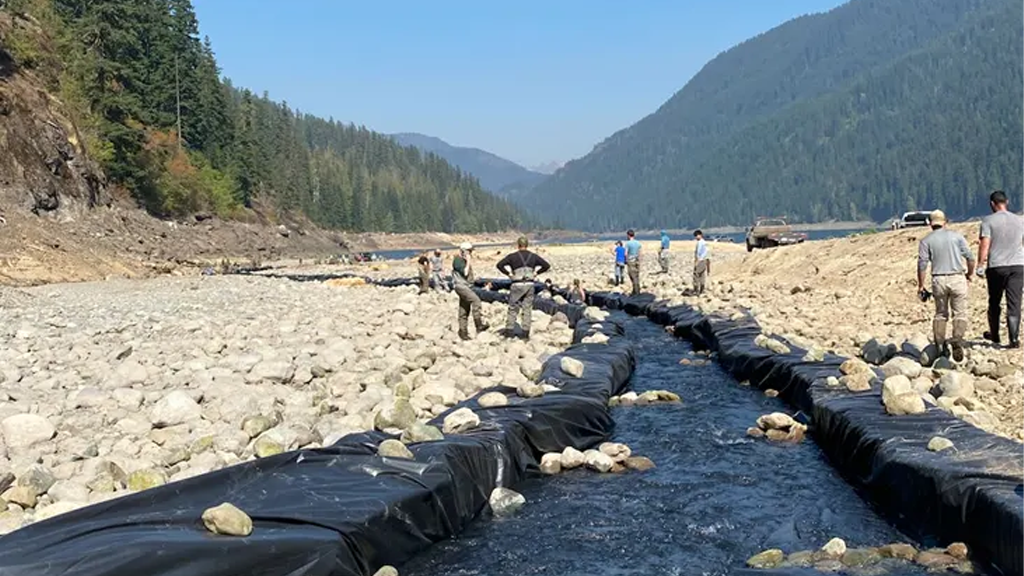
Fortunately, dedicated groups come to the rescue, providing physical labor and construction equipment to create a flume (or channel) for bull trout to swim through on their way home.

The emergency flume is made of straw bales, plastic lining, and rocks and functions as a kind of ’slip and slide’ for the fish. The flume, combined with rains, helps bull trout swim freely from the reservoir to their Box Canyon Creek home where they’re able to build redds, or ‘fish nests’ to reproduce.

WDFW staff, contracted by United States Bureau of Reclamation have been monitoring Box Canyon Creek and drought conditions in the area, since 2015. Staff biologists watch carefully each summer for potential fish passage problems during the summer and fall. The monitoring enables the Department to be prepared when the fish need extra support.

In 2025, WDFW again led a massive effort to reconnect this bull trout habitat — the creek and reservoir alongside partners including the USBR, Mid-Columbia Fisheries Enhancement Group, Kittitas Conservation Trust, Roza Irrigation District, Kittitas Reclamation District, U.S. Fish and Wildlife Service, Yakima Tieton Irrigation District, Yakima Basin Fish and Wildlife Recovery Board, U.S. Forest Service, and other volunteers.

The team built an approximately 700-foot-long flume in two sections across the reservoir bed. They secured a plastic lining over straw bale walls and drove T-posts through to hold the walls in place. They placed rocks and other structures strategically inside the flume to create different water flows that provide places for fish to hide and rest.

Staff and partners monitored the flume daily for fish, predators, poaching, and vandalism. They adjusted the flume and rock features, maintaining fish passage as weather changed and natural shifts occurred.

“The shared commitment and enthusiasm of the team made this year’s project another success,” said Josh Rogala, WDFW fish passage biologist. “Months of coordination calls, meetings, and preparation culminated in a rigorous, half-day construction of a temporary but effective fish passageway. We’re inspired by the way our partners continually come together to help support a better future for bull trout recovery here in the reservoir.”

WDFW removed the flume in late October after the fall rains returned and the bull trout had completed their migration to spawn.

This year, project participants detected seven bull trout redds and nine adult bull trout in Box Canyon Creek — a great sign that the fish are successfully using the flume and starting to reproduce. Other fish were also detected recently accessing the creek habitat.

Last year, after WDFW and partners installed the flume, project participants detected two bull trout upstream in Box Canyon Creek and three bull trout in the flume. Biologists counted a total of 10 redds (a nest where fish lay their eggs) in Box Canyon Creek in 2023. In 2024, that number was eight.

Some of the redds would not exist without the artificial creek. While those numbers may seem extremely low, they reflect just how low bull trout populations are in this area.

This year’s project builds on nearly a decade of similar efforts. WDFW built a temporary fish passage flume at Box Canyon Creek seven times before, in 2001, 2003, 2005, 2015, 2019, 2023, 2024, and 2025. Construction in the early years was extremely arduous, taking several long days. Thanks to many cooperators pitching in, recent years’ efforts are much more efficient.

Invasive, Destructive Chinese Mitten Crab Found In Willamette River, Biologists Work To Determine How Widespread

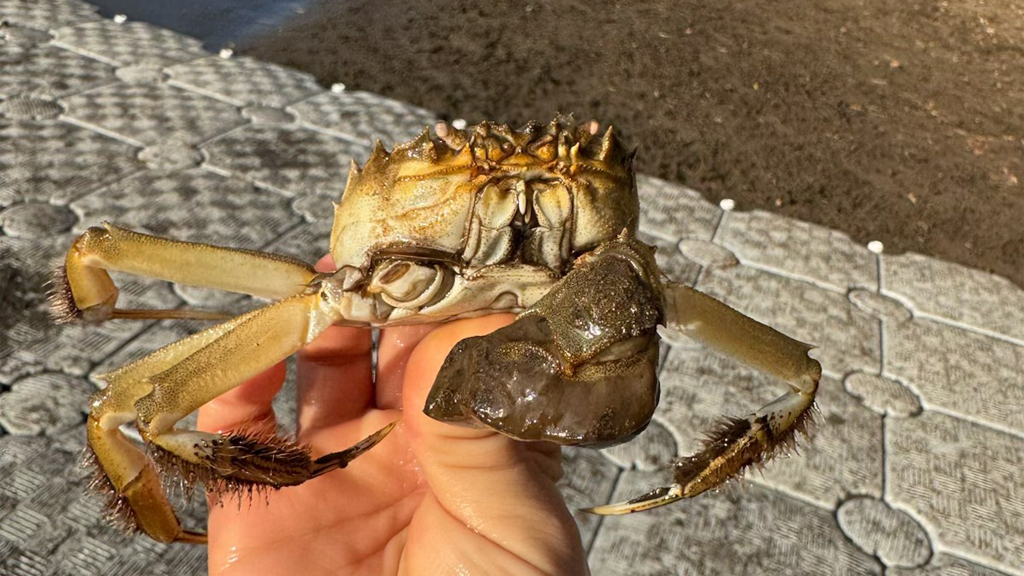
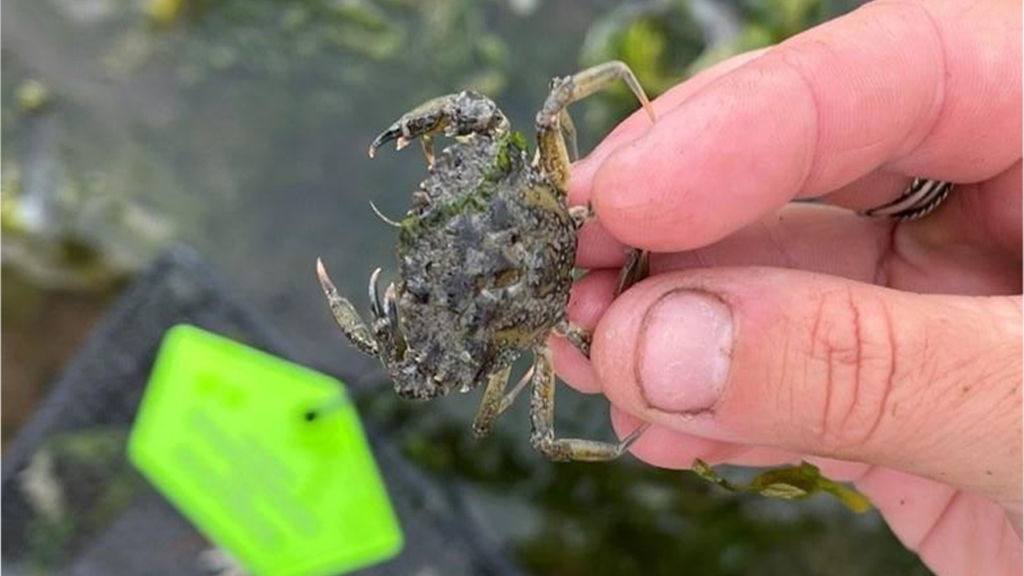
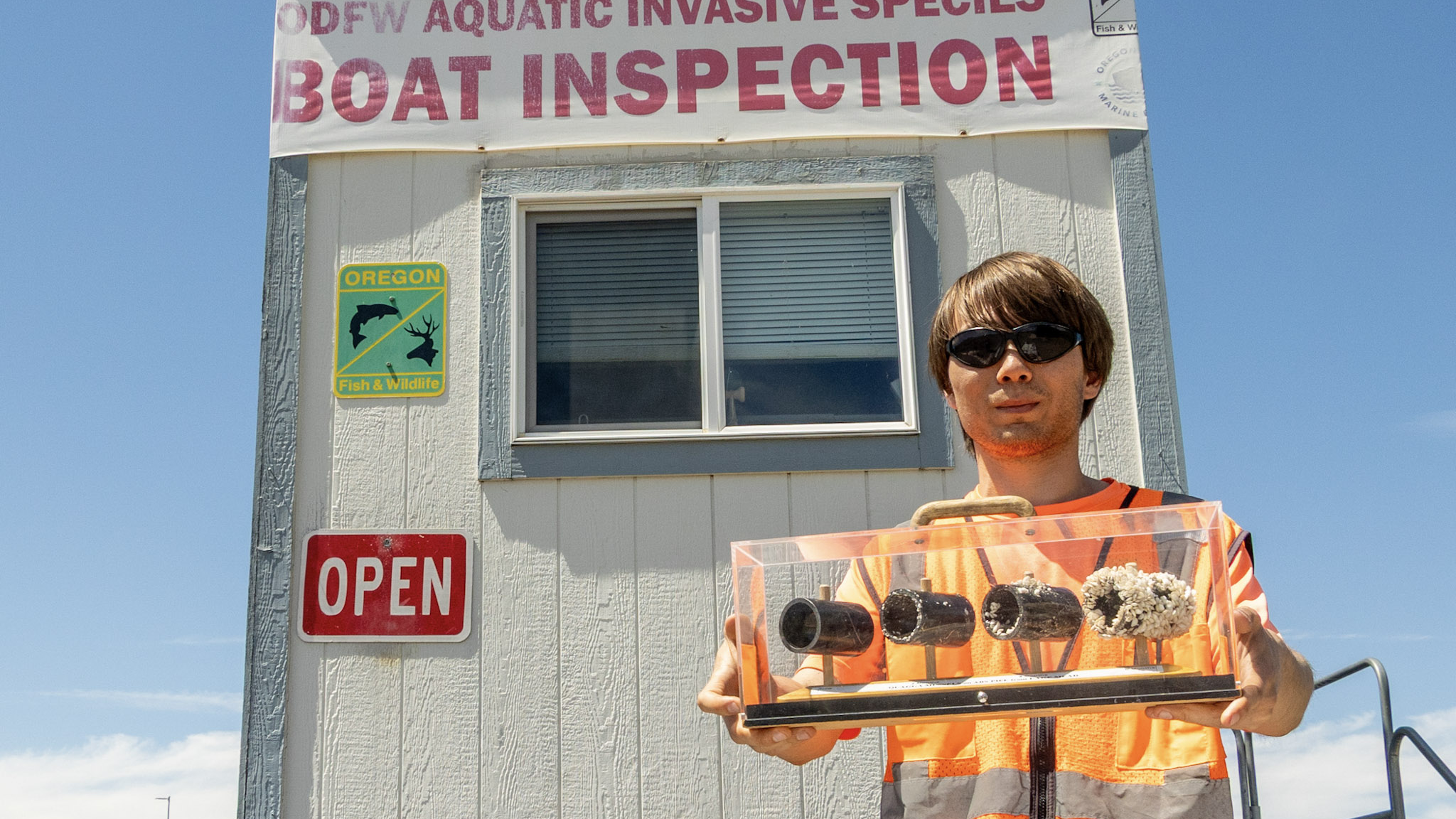
A Chinese mitten crab, a prohibited species in Oregon, was found in the Willamette River near Portland’s Sellwood Bridge and reported to the Oregon Department of Fish and Wildlife on Nov. 17.

Chinese mitten crabs are known to burrow into dikes, levees or stream banks which can increase erosion and damage flood control and water supply systems. These medium-sized crabs, about 3-inches wide, prey on native species, consume fish eggs and compete for food, potentially impacting native fish and crayfish populations.

The crab was spotted in shallow water and captured by hand. It was alive and not released back into the river. Mitten crab is a non-native crab species that lives its adult life in freshwater and migrates to brackish water to breed, unlike Oregon’s native crab species that live in the ocean, bays, and estuaries.

This recent confirmation is concerning for ODFW as another Chinese mitten crab was found in Oregon waters in April 2025 in a different location – marking the second confirmation of this invasive species in Oregon.

ODFW biologists are working with the U.S. Fish and Wildlife Service, Portland State’s Center for Lakes and Reservoirs and the Oregon Invasive Species Council to determine if other mitten crabs are in the Willamette River.

Detection methods include setting up artificial habitats to attract mitten crabs and collecting water and substrate samples to look for environmental genetic markers specific to Chinese mitten crab. PSU initiated a monitoring program for mitten crab in the Columbia and Willamette rivers by conducting shoreline walks and looking for signs of mitten crab including molted carapaces (top shell).

It is unlawful to possess mitten crabs in Oregon, so they are unlawful to sell in Oregon. There is a risk of mitten crabs being illegally imported and sold in the food trade and then released alive into Oregon waters. The agency asks the public to report any suspected unlawful sales.

It is important to correctly identify this species and report it to 1-866-INVADER or report it online via the Oregon Invasive Species reporting hotline form. Photographs can be submitted through the hotline and people are encouraged to do so as crab identification can be difficult and native crabs have been misidentified as invasive.

Mitten crabs vary in color from brownish orange to greenish brown and are named for their hairy mitten-like features located on the outside of their claws. They have a notch between their eyes and four spines on each side of the carapace.
When identifying non-native mitten crabs, it is important to note that the hairy shore crab, a native species to Oregon, also have a patch of hair on the inside of their claws.

Trump Administration Proposes Four Revisions To Endangered Species Act It Says Will Restore ESA’s ‘Original Intent’

The U.S. Fish and Wildlife Service has announced four proposed rules that it says “will restore Endangered Species Act regulations to their proven 2019 and 2020 framework.” If approved, the new rules would prohibit critical habitat designation for species threatened by climate change and allow economic impacts to be considered in species protections.

The proposals, two of which were issued in coordination with NOAA Fisheries, “would revise Biden administration regulations finalized in 2024 that expanded federal reach, created unnecessary complexity and departed from the statute’s clear language,” says a Department of Interior press release.

“This administration is restoring the Endangered Species Act to its original intent, protecting species through clear, consistent and lawful standards that also respect the livelihoods of Americans who depend on our land and resources,” said Secretary of the Interior Doug Burgum. “These revisions end years of legal confusion and regulatory overreach, delivering certainty to states, tribes, landowners and businesses while ensuring conservation efforts remain grounded in sound science and common sense.”

The four proposed rules are:

Listing and critical habitat (50 CFR part 424):

The services jointly propose to restore the 2019 regulatory text governing listing, delisting and critical habitat determinations. The proposal, says the press release, “ensures decisions are based on the best scientific and commercial data available while allowing transparent consideration of economic impacts. It reestablishes the longstanding two-step process for designating unoccupied habitat, restores clarity to the definition of “foreseeable future” and reinstates flexibility to determine when designating critical habitat is not prudent.”

Interagency cooperation (50 CFR part 402):

The services jointly propose to return to the 2019 consultation framework by reinstating definitions of “effects of the action” and “environmental baseline,” removing the 2024 “offset” provisions and restoring section 7 procedures consistent with the statutory text.

Threatened species protections (50 CFR part 17; section 4(d)):

The Fish and Wildlife Service proposes to eliminate the “blanket rule” option and require species-specific 4(d) rules tailored to each threatened species.

Critical habitat exclusions (50 CFR part 17; section 4(b)(2)):

The Fish and Wildlife Service proposes to reinstate its 2020 rule “clarifying how economic, national security and other relevant impacts are weighed when determining whether to exclude areas from critical habitat,” says the Interior press release. “The revised framework provides transparency and predictability for landowners and project proponents while maintaining the service’s authority to ensure that exclusions will not result in species extinction.”

“The 2024 regulatory packages had reimposed provisions previously deemed inconsistent with the ESA’s statutory text. The Administration’s proposed rules would replace those provisions with standards that reflect decades of implementation experience, consistent judicial precedent and the Supreme Court’s reaffirmation that agencies must follow the law as written,” says the press release.

The proposed rules can be found in the Federal Register: https://www.federalregister.gov/public-inspection/current.

A new Center for Biological Diversity analysis identifies seven endangered animal species that the group says would be pushed to the brink of extinction by the “Trump administration’s effort to radically weaken protections for imperiled wildlife.”
“The Trump plan to dismantle the Endangered Species Act would significantly harm hundreds of species. But the Center’s analysis focuses on seven that would be particularly at risk under the changes: the alligator snapping turtle, the California spotted owl, the Florida panther, the monarch butterfly, the Saltmarsh sparrow, the Sunflower sea star, and the wolverine,” says the Center.

“Animals often go extinct by human choice and Trump has chosen a deadly path for our nation’s most cherished wildlife,” said Stephanie Kurose, deputy government affairs director at the Center. “If the president gets his way, the next generation won’t ever witness the magic of a fluttering monarch or realize that the wolverine is more than a comic book character.”

The proposed regulations would prohibit critical habitat designation for species threatened by climate change and allow economic impacts to be considered in species protections. They would also remove nearly all protections for species newly designated as “threatened” under the Act and allow special interest groups to block habitat protections by overriding recommendations from scientists, says the Center.

The public comment period on the proposals is underway with a Dec. 22 deadline. The Center is seeking a 60-day extension.
To show the possible impacts of the proposed rules, the Center in a press release detailed how seven species could be affected:

Alligator snapping turtle: These prehistoric-looking freshwater turtles, built like a tank and often covered in camouflaging algae, are known for their spiked shells, large claws, and strong, beaked jaws. Alligator snapping turtles spend much of their time under water, luring prey with their worm-like tongues and occasionally surfacing to breathe. These turtles face a predicted 95% decline in 50 years and may be doomed to extinction in as few as 30 years even under the most optimistic predictions. The Fish and Wildlife Service proposed to list the alligator snapping turtle as threatened in 2021 but has failed to finalize protections four years later. Under the Trump administration’s newly proposed regulations, the turtle may never get the full protections it desperately needs to avoid extinction.

California spotted owls: In 2023 California spotted owls were proposed for protection as endangered in southern and coastal California mountains and threatened in the Sierra Nevada. Like their northern cousins, they need old-growth forests to survive, and have seen their forests homes dwindle from logging and climate-driven, high-severity fires. Under the Trump proposal, the U.S. Fish and Wildlife Service will have to conduct an economic analysis before protections are finalized, further slowing urgently needed protections that are already two years late. The Center has been fighting to protect these owls for a quarter century.

Florida panthers: There are likely fewer than 200 Florida panthers left in the wild. On average 20 to 30 panthers a year are killed by cars when they try to cross roads that slice across their last remaining occupied range in southwest Florida. Under the Trump administration’s proposed regulations, increased traffic on roads won’t be considered when new developments are permitted. This could be a nail in the coffin for these unique and beautiful cats. Large-scale residential and commercial developments are currently being planned throughout their last stronghold, including one that is less than a mile from Florida Panther National Wildlife Refuge. Panthers cannot survive, let alone recover back into their southeastern range, without strong protections that consider the deadly impacts of poorly planned development.

Monarch butterflies: These butterflies have declined by more than 90% because of pesticide spraying that eliminates the milkweed they need during their migration, one of the longest of any insect. The monarchs also struggle from loss of forest on their wintering grounds in Mexico. Last year, the monarch was proposed as threatened with final protections due Dec. 12, a deadline the Trump administration is not expected to meet. The proposal included a special rule that would protect the butterfly against take, but given the new Trump species proposals, these monarch protections could be rolled back. The administration reopened comments on the monarch proposal in March.

Saltmarsh sparrow: These little songbirds breed in the salt marshes of the Northeast but their habitat is quickly disappearing because of climate change and sea-level rise. The sparrow has undergone steep declines in the last quarter century with more than four out of every five birds having disappeared since 1998 — an estimated population decline of 87%. These birds need endangered species protections immediately, but Trump’s regulations specifically state that species threatened by climate change won’t receive critical habitat designation.

Sunflower sea star: One of the largest sea stars in the world, the sunflower sea star was once common from the coast of Southern California to southern Alaska. Sunflower sea stars — who have up to 24 arms, can be a meter wide, and come in a variety of bright colors — are voracious predators whose consumption of sea urchins helps prevent the overgrazing of kelp forests where they live. Since 2013, 90% of the Pacific population has been lost to the gruesome and disfiguring sea star-wasting disease, leading NOAA Fisheries to propose the sea star as threatened in 2023. The sea star-wasting disease outbreak is driven by climate change, with warmer oceans making the effects more severe and deadly. Because these are the primary threats to the sea star, the Trump administration will likely refuse to protect the kelp forests that these sea stars need to survive and recover.

Wolverine: With fewer than 300 animals in the lower 48 states, the American wolverine is in dire straits. These feisty predators are known to take down moose, but they’re no match for climate change. The wolverine needs persistent spring snowpack for denning, but the snow is melting earlier and earlier as our planet warms. Under the Trump administration’s proposed regulations, the wolverine may not get protected critical habitat, and development projects that fragment habitat won’t be planned or built with their needs in mind.

Norwegian Researchers Use ‘Neural Network” Of Salmon Scales To Distinguish Wild From Escaped Farmed Salmon (300,000 Fish A Year)

Above photo: A single salmon scale can reveal a great deal about the fish’s life. As the salmon grows, its scales form concentric rings whose number and spacing reflect its body growth over time. Credit: Eva Setsaas, Eva Thorstad, and Bengt Finstad/ Biology Methods and Protocols

A new paper in Biology Methods and Protocols, published by Oxford University Press, finds that researchers can now distinguish wild from farmed salmon using “deep learning,” potentially greatly improving strategies for environmental protection.

Norway is home to the largest remaining wild populations of wild salmon and is also one of the largest producers of farmed salmon. Atlantic salmon abundance in Norway has declined by over 50% since the 1980s and is now at historically low levels. Escaped farmed salmon are an important reason for this decline. Norway produces over 1.5 million metric tons of farmed Atlantic salmon annually. Each year, however, approximately 300,000 farmed salmon escape into the wild.

Escaped salmon are a substantial ecological and genetic threat to wild populations since they increase competition for limited resources, such as food and spawning habitats, potentially displacing wild salmon or reducing their reproductive success. Farmed salmon also introduce pathogens and parasites such as sea lice, worsening pressures on wild salmon populations already vulnerable due to climate change and habitat degradation.

Farmed salmon differ genetically from wild populations and interbreeding between escaped farmed salmon and wild salmon leads to genetic changes that make wild salmon less fit to adapt to environmental changes or address threats around them. Genetic analysis shows that approximately two-thirds of wild salmon in Norway carry genetic signatures that indicate interbreeding with farmed salmon.

Scientists monitor escaped farmed salmon using genetic analysis and examination of fish scales. Monitoring differences in fish scale patterns by hand is time consuming and extremely expensive, however. Investigators can distinguish wild from farmed salmon because salmon scales grow by forming concentric rings on their surface. Like with tree rings, the number and spacing of these rings correspond to the growth of the fish. Farmed salmon have scales that represent rapid and steady growth, resulting in regularly spaced scales with limited seasonal markers. In contrast, wild salmon experience pronounced seasonal variation in growth driven by inconsistent temperatures, prey availability, and migration.

To help researchers distinguish between different types of salmon at a larger scale, researchers here trained a new convolutional neural network using nearly 90,000 Atlantic salmon scale images from the Norwegian Veterinary Institute and the Norwegian Institute for Nature Research. They established a standardized processing pipeline and evaluated the model against human scale readers and known-origin fish.

The total dataset consisted of almost 90 thousand images, covering hundreds of rivers across Norway and going back to the early 1930s. Farmed salmon comprised approximately 8.5% of the total images compared to wild salmon.

The investigators found that the data pipeline and model can rapidly process images and provide predictions with associated confidence estimates. The model performed exceptionally well, and was able differentiate farmed from wild salmon across most salmon rivers in Norway from 2009 to 2023 with 95% accuracy.

The paper, “Identifying escaped farmed salmon from fish scales using deep learning,” is available at http://doi.org/10.1093/biomethods/bpaf078.

ODFW Getting Reports Of Avian Flu Bird Deaths, Most Cases Occurring In Willamette Valley Among Geese, Raptors

People across Oregon are being urged to avoid contact with sick or dead birds as highly pathogenic avian influenza (HPAI) continues to impact wild and domestic bird populations across the state. There is currently no effective treatment for wild and domestic birds, and the virus can spread rapidly among bird populations and potentially to other wildlife.

The Oregon Department of Fish and Wildlife is currently receiving reports of HPAI-related bird deaths across Oregon, with most cases occurring in the Willamette Valley among migrating cackling geese and some raptors. Additional detections have been reported in eastern Oregon, where early-season duck and raptor mortalities and snow goose deaths have occurred. Sporadic reports along the Oregon Coast also include cases in gulls and other waterbirds.

Since 2022, Oregon has experienced widespread outbreaks of HPAI in wild birds and domestic poultry. This virus has been detected in nearly every Oregon county. It has caused the deaths of more than 15,000 wild birds and the euthanasia of more than 183 million domestic poultry in North America.

Other non-avian wildlife confirmed with HPAI in Oregon include raccoons, skunks, foxes, marten and bobcats. However, nearly any mammalian species that feed on affected animals or is in a heavily contaminated environment may be susceptible to disease.
Nationwide, affected wildlife also includes coyotes, wild cats, and bears that have likely fed on infected birds. Marine mammals have also been impacted in North and South America. Domestic animals affected by HPAI include poultry, waterfowl, cattle, pigs, goats, alpacas, and cats.

What to do if you encounter groups of sick or dead wild birds

• Report groups of sick or dead wild birds to the Wildlife Health lab at 866-968-2600 or wildlife.health@odfw.oregon.gov. ODFW staff are monitoring and tracking continued mortalities. Samples may be collected in cases involving large numbers of dead birds or multiple species. Single dead bird reports are useful for tracking suspicious cases; however, due to limited staff, and resources ODFW will not be able to respond to all such reports.

• Do not handle wildlife that is sick or found dead. If it is necessary to dispose of a carcass, use a shovel or wear impermeable gloves, wash hands with soap and water, and change clothing before having contact with domestic poultry or pet birds. 

• Keep dogs away from sick or dead birds. There are no known cases of domestic dogs becoming sickened by contact with sick birds. But hunters should not feed dogs any raw meat, organs, or other tissues from harvested waterfowl, and they should not allow retrieving dogs to interact with sick or dead birds.

Typical symptoms in wild waterfowl include lethargy, inability to fly, erratic behavior, loss of coordination, cloudy eyes, swimming in circles, and head shaking. However, some dabbling ducks may carry the virus without symptoms, spreading it through their feces to other birds and wetlands. Infected wild mammals may appear sick or neurologically abnormal, or be found dead after consuming infected birds, and should also be reported.

Birds typically die within 72 hours of showing clinical signs. Currently, rehabilitators in Oregon are advised not to accept waterfowl with bird flu symptoms due to the risk of the disease spreading to other birds in their facilities.

How to report illness in domestic animals

Death or illness among domestic birds (chickens, turkeys, Guinea fowl) should be reported immediately to ODA. Please report by calling 503-986-4711 (alt. phone 1-800-347-7028). Find more information on avian influenza in domestic birds and tips on protecting backyard flocks from ODA.

Risk to humans

The risk to people from this strain of avian influenza is low. Since 2024, there have been 71 human cases of avian influenza in the United States, including two deaths. Most of these cases were exposed to infected dairy herds or domestic poultry farms. The U.S. Centers for Disease Control and Prevention (CDC) provides updated information on human cases of HPAI.

ODFW is part of the State of Oregon’s multi-agency response to HPAI, along with the Oregon Department of Agriculture, the Oregon Health Authority, and the U.S. Department of Agriculture’s Animal Plant Health Inspection Service (USDA-APHIS).

Company Proposes Underwater Power Line In Columbia River From The Dalles To Portland, Would Bring Eastside Power Closer To Population Centers

Details of the proposal for a 100-mile high tension power line that would be laid beneath the Columbia River, rather than travel over land, was aired last week by developers of the project in three public meetings.

The underwater power line would bring energy produced on the east side of Oregon and Washington nearer to population centers of Portland and Seattle.

It would also move that power past bottlenecks in Portland to a north-south high-voltage transmission route, and then on to data centers on the Portland’s west side.

In its argument to build the transmission line, the Cascade Renewable Transmission project said that Oregon and Washington have passed laws calling for clean energy goals for electric utilities and demand for electricity in the Northwest will increase dramatically over the next 10 years. What’s missing the developer says is adequate transmission to meet those needs.

Washington’s goal is for the state’s utilities to be 80 percent carbon neutral by 2030 and 100 percent by 2045. Oregon’s goal takes an extra step, but gets to the same goal in 2040; 80 percent carbon neutral by 2030, 90 percent by 2035 and 100 percent by 2040.

Minimal east side to west side transmission capacity and a difficulty in siting new overland transmission lines is resulting in a bottleneck from east side generating facilities, such as wind generation, Cascade Renewable said in its presentation to Washington’s Energy Facility Site Evaluation Council. (20251117_CRTPresentation.pdf).

That’s how Cascade Renewable is framing its project to lay transmission cable under the Columbia River. It says its project meets the renewable energy goals, provides transmission flexibility, helps to meet the region’s growing energy needs and will not interfere with other infrastructure.

The project is not without its distractors, according to a Nov. 15 article by Henry Brannan in The Columbian newspaper. Brannan wrote that “environmental and Native rights groups oppose the project because of the harm it stands to cause to the river’s struggling ecology and long-neglected treaty-reserved rights for Native nations around the Columbia River Basin,” and that the U.S. Army Corps of Engineers said the proposed project’s permitting application lacked information.

The project consists of about 100-miles of an underwater and underground high voltage direct current transmission line carrying 1,100 megawatts of energy generated east of the Cascades to customers west of the Cascades, the developer says. The capacity is enough to serve about 800,00 homes.

The line would consist of a 12-inch bundle of two 6-inch diameter HVDC cables plus a 1-inch fiber optic cable buried beneath the Columbia River from The Dalles to Portland. The line would bypass Bonneville Dam via a 7.5 mile underground route on existing public right of ways.

Direct current power lines are more efficient than the more traditional alternating current power lines, but require conversion to AC for use in homes and businesses. That would occur in The Dalles where the Bonneville Power Administration already has a DC power station, and at the Rivergate industrial facility in Portland.

Regarding the power line’s construction, Cascade Renewables says:

* A hydro-plow fluidizes a 24-inch-wide trench while the cable bundle is simultaneously installed 10-15 feet below the Corps-authorized river bottom. The sediment, primarily sand, then settles, covering the cable and refilling the trench.

* A single vessel and tug, of typical size on the Columbia River, will be used to install the cable bundle. The vessel moves very slowly, with approximate speeds of 1 – 1.5 miles per day.

* The in-water portion of the project can be completed in 8-9 months, split over the duration of two permitted winter work windows.

“The lead developer, PowerBridge, LLC has successfully developed, financed, built, and currently owns and operates two similar underwater HVDC transmission systems in New York and New Jersey,” Cascade Renewable says.

To air differences, the EFSEC Council held three public information meetings November 17, 18 and 19, to discuss Cascade Renewable’s proposal.

New Study Details Stellar Sea Lion Consumption Of Young Chinook Salmon Off Washington Coast 

Steller and California sea lions are known to take a big chunk of early migrating adult salmon and steelhead in the Columbia River, but a recent study has also found that Steller sea lions are eating more than 2 million young Chinook salmon along Washington’s northwest coastline.

During the study period, between December 2020 and August 2021, Steller sea lions consumed 284 metric tons of age-0 Chinook salmon (salmon that have spent less than one year in the ocean), the study found. That equates to 2,064,418 individual ocean age-0 Chinook and that high number of juveniles further equates to 14,771 adult (ocean age 2–4 years) Chinook salmon, the study’s authors estimate.

Despite reductions in commercial, recreational and tribal fishing, the number of Chinook salmon along the coast has declined “precipitously,” the study says. Mortality of ocean-age-0 salmon has been identified as a driver of this decline for both hatchery and wild Chinook along Washington’s coastline used by a diverse mix of Chinook salmon in their early marine life stage, the study says.

Natural mortality at this life stage is due to a number of factors, such as ocean temperatures, salinity, weather conditions, prey availability and predation and that mortality varies by location. Predation, hatchery release timing and human caused impacts like habitat degradation may be the strongest predictors of this decline, the study says.

“Further, the effects of climate change on early marine phase salmon through a combination of bottom-up and top-down trophic processes, including marine mammal predation, may limit the population growth of the species,” the study says. “Therefore, determining causal mechanisms of early mortality is critical for conservation and recovery efforts, and sustainable harvest management.”

While there has been a declining population of Chinook salmon along the Washington coast, steller sea lion abundance increased at a rate of nearly 8 percent per year from 2010 to 2017. Steller sea lions in Washington are part of the Eastern distinct population segment, which was delisted in 2013 from the federal Endangered Species Act. The delisting, according to the study, followed a population growth of 4.2 percent per year from 1979 to 2010.

The study, “Steller sea lion (Eumetopias jubatus) consumption of ocean age-0 Chinook salmon (Oncorhynchus tshawytscha) along the northwest coast of Washington State,” was published Nov. 12 in Plos One (Steller sea lion (Eumetopias jubatus) consumption of ocean age-0 Chinook salmon (Oncorhynchus tshawytscha) along the northwest coast of Washington State | PLOS One).

Study authors are Zoë K. Lewis, Biology Department, Western Washington University, Bellingham; Benjamin W. Nelson, Independent Consultant, Seattle; Adrianne M. Akmajian, Makah Fisheries Management, Makah Tribe, Neah Bay; Elizabeth M. Allyn, Makah Fisheries Management, Makah Tribe, Neah Bay; Sarah Brown, Washington Department of Fish and Wildlife, Olympia; Dietmar Schwarz, Biology Department, Western Washington University, Bellingham; and Alejandro Acevedo-Gutiérrez, Biology Department, Western Washington University, Bellingham.

The study’s objectives were three-fold: to measure what part of the sea lion diet was made up of Chinook (Dec. 2020 to Aug. 2021); to estimate the total biomass of prey consumed by steller sea lions; and to model the contribution of ocean age-0 Chinook to Steller sea lion diet using DNA metabarcoding.

Scientists took scat samples from Tatoosh Island at the mouth of the Strait of Juan de Fuca to Sea Lion Rock, 45 kilometers south. A DNA metabarcoding analysis was performed to estimate the proportion of DNA that could be attributed to Chinook salmon in the scat samples.

Some 274 steller sea lion scat samples were collected during the study (92 in the winter — December-February, 90 in the spring — March-May, and 85 in the summer June-August), the study results say. Chinook salmon were most prevalent in scats during spring and winter, and was highest relative to other salmon species in the spring. Summer detection of Chinook DNA was much lower. Some 51 percent of Pacific salmon remains were from age-0 individuals. That was highest in the winter.

Daily consumption was highest in December and it was the least in May. Adult males had the highest estimated daily consumption of age-0 Chinook per day and juvenile females had the lowest per day in all months; the total daily consumption of age-0 Chinook was similar for juvenile males and adult females, the study concludes.

The authors say that prior studies estimated lower consumption by all marine mammal species (includes all pinnipeds and killer whales), with just over 0.7 million Chinook salmon of all age classes along the entire outer Washington coast in 2015. That same study estimated that across the entire north Pacific, steller sea lions only consumed about 0.7 million Chinook (all ages) in 2015.

However, “across all alternative models, the median estimate for Chinook salmon consumption ranged from 1.5 to 3 million fish, reinforcing the conclusion that the contribution of age-0 Chinook to the Steller sea lion diet is greater than earlier estimates suggested.”

“Our study marks the first biomass modeling framework incorporating Steller sea lion DNA metabarcoding data to match previous work produced for other pinniped species,” the authors said. “Our consumption estimates of Chinook salmon by Steller sea lions were higher than estimates reported in previous studies of the region, which may be a factor of increased sea lion abundance, better data resolution, an increase in predation rates or some combination of those factors.”

New OSU Study On Floating Solar Panels In Reservoirs Shows Environmental Impacts Vary By Location

Above photo: The Canoe Brook Floating Solar Photovoltaic (FPV) project, the largest in the United States at the time of completion at 8.9 MW, is located on a water storage reservoir is New Jersey. (Photo by Prateek Joshi / NREL)

Floating solar panels are emerging as a promising clean energy solution with environmental benefits, but a new study finds those effects vary significantly depending on where the systems are deployed.

Researchers from Oregon State University and the U.S. Geological Survey modeled the impact of floating solar photovoltaic systems on 11 reservoirs across six states. Their simulations showed that the systems consistently cooled surface waters and altered water temperatures at different layers within the reservoirs. However, the panels also introduced increased variability in habitat suitability for aquatic species.

“Different reservoirs are going to respond differently based on factors like depth, circulation dynamics and the fish species that are important for management,” said Evan Bredeweg, lead author of the study and a former postdoctoral scholar at Oregon State. “There’s no one-size-fits-all formula for designing these systems. It’s ecology – it’s messy.”

While the floating solar panel market is established and growing in Asia, it remains limited in the United States, mostly to small pilot projects. However, a study released earlier this year by the U.S. Department of Energy’s National Renewable Energy Laboratory estimated that U.S. reservoirs could host enough floating solar panel systems to generate up to 1,476 terawatt-hours annually, enough to power approximately 100 million homes.

Floating solar panels offer several advantages. The cooling effect of the water can boost panel efficiency by an estimated 5 to 15%. The systems can also be integrated with existing hydroelectric and transmission infrastructure. They may also help reduce evaporation, which is especially valuable in warmer, drier climates.

However, these benefits come with questions about potential impacts on aquatic ecosystems, an area that has received limited scientific attention.

“Understanding the environmental risks and the variability in ecological responses to floating photovoltaic deployment is crucial for informing regulatory agencies and guiding sustainable energy development,” Bredeweg said.

The new study used advanced modeling techniques to assess the implications of floating solar panel deployment on entire reservoirs. Researchers examined reservoirs in Oregon, Ohio, Washington, Idaho, Tennessee and Arkansas, analyzing two-month periods in both summer and winter.

They found that changes in temperature and oxygen dynamics caused by floating solar panels can influence habitat availability for both warm-water and cold-water fish species. For instance, cooler water temperatures in summer generally benefit cold-water species, though this effect is most pronounced when panel coverage exceeds 50%.

The researchers note the need for continued research and long-term monitoring to ensure floating photovoltaic systems support clean energy goals without compromising aquatic ecosystems.

“History has shown that large-scale modifications to freshwater ecosystems, such as hydroelectric dams, can have unforeseen and lasting consequences,” Bredeweg said.

Co-authors of the paper include Ivan Arismendi of Oregon State’s Department of Fisheries, Wildlife, and Conservation Sciences; Sarah Henkel of the Hatfield Marine Science Center at Oregon State; and Christina Murphy of the U.S. Geological Survey’s Maine Cooperative Fish and Wildlife Research Unit.

Even With Below-Average Water Year Bonneville Power Hits Financial Targets In FY 2025

The Bonneville Power Administration shared its end-of-year financial performance results for fiscal year 2025 at its Nov. 13 Quarterly Business Review, saying it had hit all financial targets.

BPA ended FY 2025 with agency net revenues of $74 million, exceeding the overall target by $4 million. This result was largely driven by Transmission Services revenues, which came in $22 million over target. However, this is $211 million below the rates-based forecast of $285 million.

In FY 2025, BPA successfully achieved all its financial targets, demonstrating a strong financial position even amid a dry year that challenged our financial risk mechanisms. In addition to achieving agency revenue and cost targets, BPA sustained high investment-grade credit ratings, reduced its debt-to-asset ratio, and concluded the year with significant U.S. Treasury borrowing authority, said the agency.

Furthermore, BPA fulfilled its annual payment to the U.S. Treasury on schedule and in full, a $1.2 billion payment “that affirmed its complete adherence to financial obligations for the year,” the agency said at the forum.

BPA operates under a comprehensive long-term Financial Plan, which includes policies and tools designed to guide decision-making and maintain stable, competitive power and transmission rates over an extended period. The agency also sets annual targets to monitor its progress.

“This year’s below-average water supply presented a significant challenge,” said Chief Financial Officer Tom McDonald. “Through several strategic actions taken this year and in prior years, however, we minimized the use of financial reserves, ending the year on much stronger footing than we otherwise would have. I’m proud of the work our staff did to mitigate difficult circumstances.”

Poor hydrological conditions for a third consecutive year caused BPA to make more market power purchases than anticipated. While some of these expenses were negated by strategic debt-management actions that provided additional liquidity and higher net revenues, Power Services ultimately fell $18 million short of its financial target, ending the year with net revenues of $59 million.

Transmission Services ended the year with net revenues of $15 million, exceeding the business line’s financial target by $22 million. This result was primarily driven by higher-than-expected operating revenues and debt-management actions that offset cost pressures.

FY 2025 marked a record year for agency direct capital execution, totaling $1.08 billion and falling within the target range. This result was driven by strong execution on several large projects, including McNary Dam turbine design and replacement, Chief Joseph Dam generator rewinds, Longhorn Substation, Pearl Sherwood-McLoughlin transmission line upgrade, South of Tri-Cities reinforcement, Vancouver Control Center construction and many others.

BPA ended the year with sufficient operating liquidity, with agency financial reserves for risk coming in at $489 million and exceeding the target of at least 60 days cash on hand.

Transmission Services ended the year with $220 million in reserves for risk, equating to 94 days cash on hand. Power Services reserves, however, were strained by three years of below-average water and significantly higher-than-expected power purchase expenses. Power Services ended the year with $270 million in reserves for risk, or 50 days cash on hand, which is below the 60-day threshold. This triggered a rate-adjustment mechanism included in BPA’s Financial Reserves Policy known as the FRP surcharge.

The calculated Power surcharge amount, which will be applied in FY 2026 only, would increase the annual average effective wholesale Tier 1 Non-Slice power rate by 2.2%, rebuilding Power financial reserves by $40 million over the course of the year. The administrator will issue the final surcharge amount and rate by Dec. 15, following a public review and comment period.

BPA’s end-of-year results are available on the Quarterly Business Review webpage.
For more information about BPA’s 2025 performance, see the Annual Report published Nov. 14.

Tool Use By Wolves? Study (With Video) Shows Wolves In British Columbia Pulling Crab Traps Out Of Ocean

Above photo: A wild wolf on BC’s coast. Credit: Heiltsuk First Nation and Kyle Artelle

Wild wolves living in Haíɫzaqv (Heiltsuk) Territory on BC’s central coast have learned to pull crab traps out of the ocean—behavior that represents the first documented case of potential tool use in the species, according to a new study.

The study, Potential Tool Use by Wolves (Canis lupus): Crab Trap Pulling in Haíɫzaqv Nation Territory, published in Ecology and Evolution, presents video evidence of a wolf retrieving a buoy, hauling in the trap line and pulling the fully submerged crab trap to access bait.

See the video here: https://www.youtube.com/watch?v=SzPOYuoFWlM

The findings—co-authored by Paul Paquet, adjunct professor in the University of Victoria’s Department of Geography, and Kyle Artelle, assistant professor at the State University of New York College of Environmental Science and Forestry—were prompted by repeated damage to traps set by Haíɫzaqv Guardians as part of their European Green Crab eradication program.

“Immediately on watching this, I knew something important was happening here. The video really speaks for itself—an incredible display from an incredibly intelligent species,” said Paul Paquet, adjunct professor in the University of Victoria’s Department of Geography.

This research was produced as part of the “Place of Wolves: Haíɫzaqv Wolf and Biodiversity Project,” a collaboration between the Heiltsuk Integrated Resource Management Department and State University of New York College of Environmental Sciences and Forestry, with support from the Woodland Park Zoo and Living with Wolves. The project studies the ecology, behaviour, and biocultural context of coastal wolves to inform conservation and governance in this territory and broadly. More information at Placeofwolves.ca.

Photoperiodism In Fish: Researchers First To Discover Salmon Use Pituitary Glands To ‘See’ When It’s Time To Migrate

Above photo: When the pituitary glands of salmon are themselves exposed to daylight, they light up with TSH (red and green).Credit Stephen McCormick

One of the enduring ichthyological mysteries is how migratory fish know when it is time to move from their winter to summer habitats. The ability to tell when the seasons are changing is crucial for a wide range of major life events, including feeding and spawning, as well as migration.

Many animals are sensitive to photoperiods, or the changing length of the days across seasons, but while scientists have a good understanding of how photoperiodism works in birds and mammals, how exactly fish recognize changes in day length has remained a mystery—until now.

A team of researchers led by Stephen McCormick, a biologist at the University of Massachusetts Amherst, has just uncovered how fish know when to migrate—with the surprising discovery that their pituitary gland, located at the base of their brains, is studded with photoreceptors that can “see” the changing daylight.

The research, published recently in the journal Proceedings of the Royal Society B, not only sheds light on the enduring migration mystery, but also will help in planning for the increasingly disruptive role climate change is already having on migrating fish populations.

“Many animals, especially in the temperate zones, need to be able the sense the changing of the seasons,” says McCormick. “They need to prepare for winter or know when the spring is arriving, and this is crucial for everything from mating to finding food. One reliable way to do this is to be able to judge the season by the amount of daylight.”

Researchers have known for years that, in birds and mammals, increased daylight triggers a whole chain of hormone activity. First, the pituitary gland produces a hormone, called thyroid stimulating hormone (TSH), that flows to the brain, which in turn alters the production of a deiodinase enzyme that converts the thyroid hormone thyroxine (T4) to its more active form, known as T3. It’s this increasing level of brain T3 that seems to stimulate all sorts of seasonal responses, from migration to growth and reproduction.

Not only are McCormick and his colleagues, who hail from the University of Tokyo, Toho University, and the University of Gothenburg, the first to confirm that this basic pathway is the same in fish, but they also discovered that the way fish sense changes in daylength is very different from how birds and mammals do it.

For their research, the team focused on Atlantic salmon. “I have a lifelong interest in the species,” says McCormick, who notes that they’re endangered and that what holds true for them should also hold true for many other anadromous, migratory fish.

Salmon normally live in freshwater streams and lakes for one to three years and, upon reaching a critical size, will migrate in the spring to the ocean. As part of this transformation, they change from being dark sided to a bright silver color, acquire a high tolerance for saltwater and begin to change their behavior by schooling and swimming downstream.

“All of this is stimulated by changes in the daylight,” says McCormick, “and now we know how and why.”

It turns out that salmon can perceive daylight with more than just their eyes—between 7-9% of the sunlight penetrates the fish’s head and reaches the pituitary gland itself, which is studded with photoreceptors. McCormick and his team discovered this by removing the pituitary glands, exposing them to various lengths of daylight, and observing as the glands’ TSH levels changed in response to long days.

This capacity of the pituitary to directly perceive changes in day-length has not been previously seen in any vertebrate.
All of this has implications for the survival of migratory fish, say researchers. Over eons, migratory animals have evolved to begin their migrations so that they arrive at their destinations in time to feast on their favorite food source, or when conditions are right for mating or raising their young. Climate change has uncoupled seasonal changes from the length of the day, however, and it is now not uncommon for migratory species to arrive in their summer feeding grounds after their food sources has itself migrated somewhere else.

“Now that we know how photoperiodism works in fish,” McCormick says, “we can get a much better sense of the pace of their evolution, and this can help us determine the best methods for helping fish to survive a warming world.”

Research Documents Rapid Melt At Mount Rainier; Ice-Capped Peaks In U.S. Will Be Rare In Coming Years 

For a century there have been just five places in the continental United States with year-round frozen peaks — all in Washington state. But newly published research documents that these ice-capped summits are changing — melting — faster than many thought possible.

New work from Scott Hotaling from the Quinney College of Agriculture and Natural Resources, in collaboration with Eric Gilbertson from Seattle University, used satellite data, laser measurements and historical photographs to document the ways ice-capped summits in the Western United States are being impacted by climate change.

Since the mid-20th century, the summit of Mount Rainier has declined more than 20 feet, the team found. Columbia Crest is no longer the high point — because of snowmelt, the new summit is now 400 feet to the south. A perennial favorite for technical mountaineers, Mount Rainier is the centerpiece of its namesake national park, the most glaciated peak in the contiguous U.S., and headwater to five major rivers.

Four of the five frozen summits the team measured had lost 20 feet or more in elevation due to snowmelt, with only two still holding year-round ice as their highest point in 2024 — Liberty Cap and Colfax Peak.

“The average air temperature on these summits is significantly higher than it was in the 1950s, almost 5.5 degrees Fahrenheit,” Gilbertson said. “This means there are more and more days that reach above freezing, and we’re seeing ice melt even at the highest elevations.”

The biggest changes for these peaks happened in just the past 30 years, the authors reported. Factors influencing the shifts are increasingly evident — summer temperatures warmed significantly and more precipitation now falls as rain rather than snow.

“This is an obvious and visceral sign of how climate change is impacting these well-known, and once pristine places,” Hotaling said. “It’s pretty shocking that even one of the highest, coldest places in the Western U.S. are seeing the effects of a warming atmosphere. This work adds another layer to a growing list of climate impacts around the world.”

Getting the necessary data for these remote places was a grueling task. Measurements for Columbia Crest required Gilbertson’s team to face 18 miles of terrain, crossing ladders and chasms of ice for the last 10, with 30 pounds of research equipment strapped to their backs. But the effort was necessary to meet the level of accuracy the team required.

“Measurements taken on site used base stations around the state to correct the data. So it gets the number down to the nearest inch,” Gilbertson said.

It is well-documented that the West has been losing glaciers over the past half century — but there is no global inventory of ice-capped summits. Hotaling is working to change that.

“It’s already clear that ice-capped peaks will likely become increasingly rare in the coming years,” Hotaling said.

British Columbia Researchers Confirm Two Distinct Subpopulations Of West Coast Transient Killer Whales: Inner Coast And Outer Coast

Above photo: Inner coast transient killer whale hunting close to a Steller sea lion haulout off the outer coast of Washington. Credit by Jonathan Scordino Makah Fisheries Management.

New research has confirmed that West Coast transient killer whales who live between British Columbia and California are two distinct subpopulations: inner and outer coast transients.

Based on 16 years of data from more than 2,200 encounters, the study published in PLOS One challenges previous assumptions about this group of mammal-eating killer whales.

“I’ve been thinking about this possibility for 15 years,” says first author Josh McInnes, who conducted the research as part of his masters at University of British Columbia’s Institute for the Oceans and Fisheries (IOF). “Now our findings show the West Coast transients are two distinct groups, split along an east-west divide. They eat different things, hunt in different areas and very rarely spend time with each other.”

There are three ecotypes of killer whales which frequent the West Coast of North America: transients, residents and offshore, although a fourth potential ‘oceanic’ population was recently posited. The transients consist of six populations around the world, including the West Coast transients, which is the most studied and shares distinct DNA.

This West Coast group, which are found from southeast Alaska to southern California, were previously suspected to be split in a north-south divide, but the research found they differ in a number of ways.

“The inner coast killer whales are like city dwellers,” said co-author Andrew Trites, IOF professor and director of the Marine Mammal Research Unit. “They’re experts at navigating busy, maze-like streets of nearshore inlets, bays and sheltered waterways—whereas the outer coast killer whales are more like backcountry dwellers thriving in deep canyons and rugged underwater terrain along the edge of the continental shelf.”

The research team undertook a social network analysis of orca sightings using photos from a range of sources including scientific surveys and public sightings to identify specific animals from 2005 to 2021. “We essentially drew friendship maps to see which whales spent time together, and then looked at where they were seen to figure out if they hung out in specific neighborhoods,” said Trites.

The researchers found that the inner coast transients, numbering about 350 animals, were observed on average about six kilometres from shore and in significantly shallower waters than the outer coast whales, such as the Salish Sea. They ate a diet of smaller marine mammals such as harbour seals and harbour porpoises, and foraged in small groups of about five whales on average.

Outer coast transients, numbering about 210, are mainly found within 20 kilometres of the continental shelf break, frequently near submarine canyons. They were seen up to 120 kilometres from shore and travelled over extensive distances. They ate larger prey such as California sea lions, northern elephant seals, gray whale calves and Pacific white-sided dolphins and hunted in groups of about nine on average.

These differences could be due to the different habitats the animals occupy or human effects on the ecosystem, including culling and harvesting of key prey species.

Despite some overlap in their hunting grounds, which run from Southeast Alaska to southern California, the two subpopulations rarely associated with each other, with co-mingling seen in less than one per cent of encounters. “I have seen outer coast transients acting strangely around inner coast animals,” said McInnes, co-founder of the Oceanic Research Alliance. “One of the sightings reported a group of single male outer coast orcas slapping each other with their dorsal fins and charging at inner coast females.”

Given the difficulty of surveying in offshore waters, it’s possible there are even more subpopulations hunting beyond the reach of current observations.

In the meantime, the authors emphasize that their findings highlight the transboundary nature of transient killer whales and the importance of tailoring conservation and management efforts to the distinct ecological traits of each subpopulation. “These two communities of transient killer whale inhabit very different worlds and lead distinctly different lives,” said Dr. Trites. “Protecting them will take more than a one-size-fits-all approach. Each needs a tailored plan that reflects their unique needs and the specific threats they face.”

Preliminary 2025 Alaska Commercial Salmon Harvest Pegged At 194.8 Million Salmon, 88 Percent Increase Over Last Year

The Alaska Department of Fish and Game has published preliminary harvest and value figures for the 2025 Alaska Commercial Salmon Fishery.

A total of 194.8 million salmon were harvested in the 2025 season, an 88% increase from the 2024 total harvest of 103.5 million salmon.

The 2025 commercial salmon fishery harvest for all species was valued at approximately $541 million, a significant increase from $304 million in the 2024 season. The 2025 statewide exvessel average price per pound for all salmon species improved from 2024 values.

Sockeye salmon accounted for approximately 58% of the total value at $315 million and 27% of the harvest at 53 million fish.
Pink salmon accounted for approximately 21% of the value at $114 million and 61% of the harvest with 119 million fish.

Chum salmon contributed 14% of the value at $78 million and approximately 10% of the harvest at 20 million fish.

Coho salmon accounted for approximately 4% of the value at $21 million and 1% of the harvest at 2 million fish.

Chinook salmon harvest was estimated to be approximately 182,000 fish with an estimated preliminary exvessel value of $12 million (2% of total exvessel value). A total of 5,249 individual permit holders made commercial salmon landings in 2025, a decrease from 2024 (5,304 permits).

When compared to the long-term time series (1985–2024), the 2025 all-species commercial salmon harvest of approximately 195 million fish and 793 million pounds was the 12th highest on record for total fish harvested, and near average for total pounds harvested. Adjusted for inflation (CPI, 2025 prices), the 2025 exvessel value estimate of $541 million was the 13th lowest exvessel value reported since 1975.

The 2025 commercial harvest was 9% lower than the preseason harvest projection of 214.6 million fish.

Sockeye, coho, and chum salmon harvests in 2025 were spot on the preseason harvest projections. Chinook salmon harvest exceeded the preseason harvest projection by 26%, whereas pink salmon harvest in 2025 was 14% below the preseason harvest projection.

These are preliminary harvest and value estimates which will change as fish tickets are processed and finalized. Dollar values provided by ADF&G are based on estimated exvessel prices and do not include post-season price adjustments. The final value of the 2025 salmon fishery will be determined in 2026 after seafood buyers and processors report the total value paid to fishermen in 2025.

Study: British Columbia Pacific Salmon Face Escalating Threats Without Coordinated Conservation Policy, Enforceable Thresholds

New research from Simon Fraser University Biological Sciences researchers finds that Pacific salmon are facing escalating threats due to a lack of coordinated conservation policy and oversight.

Their study, published in FACETS outlines how the existing suite of environmental regulations across multiple jurisdictions in British Columbia is failing to manage the cumulative impacts of industrial development and climate change on salmon and watersheds, and suggests opportunities for reform.

“There’s no single smoking gun for salmon,” says lead author Marta Ulaski, who notes that salmon face pressures from multiple different stressors, including forestry, mining, urban development, aquaculture and climate change. Each of these sectors is regulated separately without coordinated oversight.

“All these different industries have their own laws and regulations that are enabling harms that, even if incremental, are adding up,” adds coauthor and SFU biological sciences professor Jonathan Moore. “There is no single policy tracking the state of salmon watersheds that looks across industries and sets hard thresholds that clearly say enough is enough.”

To address gaps in regulation the authors suggest a cumulative effects management cycle that includes collaborative on-the-ground monitoring, regional cumulative effects assessments, enforceable legal thresholds through spatial planning, regional governance, and climate-adapted policy frameworks.

“There are great tools out there that are bringing data together on the status of watersheds,” says Ulaski, “but these frameworks need to be given policy teeth so that they set enforceable thresholds.”

Underutilized tools such as Water Sustainability Plans and Modernized Land-use Planning can also play a role in reform. The authors point to collaboration between the Cowichan Tribes and the Province of B.C. on the Xwulqw’selu (Koksilah) watershed Water Sustainability Plan, and the Skeena Sustainability Assessment Forum as good examples of regional plans that integrate climate science and Indigenous knowledge into watershed management.

In addition to the situation outlined in their paper, Ulaski and Moore note that this is a critical moment as both the federal and provincial governments move to fast-track major infrastructure and energy projects considered to be in the national or provincial interest.

“Without clear definitions of national or provincial interest and robust protections for ecosystems and Indigenous governance these legislative shifts risk exacerbating the cumulative harms this study warns against,” they say.

“We are asking too much of salmon and their ecosystems,” says Ulaski. “Our current piecemeal approach to industrial development and environmental regulation is not working. There is urgent need to adopt a more holistic approach to environmental regulations in B.C. to protect salmon and the people who rely on them.”

This study was the result of a collaborative project involving 14 experts in science and policy from institutions that included Simon Fraser University, University of British Columbia, Fisheries and Oceans Canada, West Coast Environmental Law, Central Coast Indigenous Resource Alliance and the POLIS Project of Ecological Governance at University of Victoria as part of the Watersheds Futures Initiative.

Washington Forest Practices Rule Would Increase Logging Buffers On Smaller, High Elevation Streams, Goal Is Minimal Stream Warming

A forest practices rule targeting small, non-fish bearing perennial streams in western Washington was approved by the state’s Forest Practices Board Nov. 12. The rule includes wider logging buffers and provides options to reduce warming in the streams that are generally found in higher elevations where the streams originate, but which feed larger streams that host trout, salmon and steelhead.

The widths of the new buffers vary, but the rule generally requires setbacks from the current 50 foot rule to 75 feet, seeking an “expanded continuous buffer of trees around these streams,” the state’s Department of Ecology wrote, announcing the water quality proposal and the Board’s decision meeting.

The proposal will come with significant costs to landowners and logging companies that could be as high as $23 million in lost timber sales as well as a loss of land values, the Board’s analysis says.

Washington’s original Forests and Fish law, adopted in 1999, established a collaborative framework bringing together landowners, tribes and local governments to balance environmental protection with sustainable forestry practices, according to 19th District State Representatives Jim Walsh and Joel McEntire, who represent timber-reliant counties in Southwest Washington that will be heavily affected by the new restrictions. For more than two decades, they said, that partnership has guided “responsible forest management across the state.”

Of the Forest Practices Board’s decision, they said:

“Today’s proposal adopted by the Washington Forest Practices Board is a disaster — an affront to science, proven forest practices, and the financial well-being of all Washingtonians.

“This reckless decision will devastate small forest landowners and the rural communities they sustain. By removing millions in local tax revenue tied to timber harvests, the board has effectively cut funding from classrooms, teachers, and essential local services. Washington deserves better than this. The Forest Practices Board should have gone back to the table and done the hard work of collaboration — balancing environmental stewardship with economic survival. Instead, they chose politics over people.”

Ecology’s role in the proposed rule is to ensure that it would meet state water pollution control laws. The agency’s analysis of the proposed rule tested whether the new rule would cause warming of water that was already of high quality and, if warming does occur, would it be necessary or in the public interest to allow it.

“Our analysis found that the Forest Practices Board’s proposed rule would substantially improve water quality for non-fish bearing perennial streams in Western Washington,” Ecology wrote in its proposal for the new rule. “The proposed buffer options should result in minimal stream warming, and any warming that may occur is likely to be shorter than what happens under current rules. We determined it is necessary and in the overriding public interest to allow the rule to be adopted, should the Board decide to do so. And finally, we note that further Adaptive Management Program research is necessary, some of which is already underway.”

According to the Board, the regulations include requirements for riparian buffers, where timber harvest would be restricted. The sizes of the buffers will vary depending on whether a stream is known fish habitat or a non-fish bearing type.

“Riparian buffers on Type N (non-fish bearing) waters are designed to protect water quality, stabilize stream banks, provide habitat for riparian and aquatic species, and maintain stream temperatures,” the proposal said. “Buffering requirements differ between Type N streams that are perennial (Type Np) and that flow only seasonally (Type Ns). Type Np streams are typically found in the upper watersheds and headwaters in western Washington because they begin at the uppermost point of perennial flow.”

In its comments on the proposed rule, the Forests and Fish Conservation Caucus said, “The Adaptive Management Program has demonstrated, and all participants have agreed, that existing Type Np buffers fail to meet water quality standards. Reinforcing that point, decades of research show that current 50-foot buffers do not protect water quality. Ecology has both the responsibility and authority to determine whether forest practice regulations meet water quality standards….”

The new rule, however, does come at a cost. It will impact small timber harvesting businesses and forest landowners in the state and result in “more than minor costs to businesses, stemming from limitations on timber harvest in riparian forest,” an analysis by the Forest Practices Board says. “The analysis also identifies that the rule is likely to result in lost jobs due to restrictions in timber harvest across industries reliant on timber harvest for employment.”

Generally, the existing rule that the new rule replaces requires a 50-foot, no-harvest buffer and the proposed rule, in most cases, increases buffer width and length. For details see the Western Washington Type Np water buffer rule here: bc_fpb_cr102_np_20250606.pdf.

Much of the economic impact is due to harvest restrictions. The Board analysis found that a protected non-fish bearing mile is likely to require an additional 3.6 to 3.9 acres of no-harvest restrictions and an up to 3.7 to 4 acres with partial harvest restrictions. The analysis estimates that some 19,000 to 44,000 miles of non-fish bearing streams could be impacted, with a loss of land value per mile of $17,000 to $23,000.

At the low end, there could be 67,000 acres of no-cut buffers and 2,900 acres of partial-cut buffers. At the high end, there could be 170,000 acres of no-cut buffers and 8,600 acres of partial-cut buffers, the analysis says.

The new rule could also result in lost timber sales for landowners in western Washington ranging from $5.1 million to $23 million, based on 2021 stumpage sales and harvest levels.

“Therefore, under this approach, it is highly likely that small businesses will experience more than minor costs stemming from the proposed rule,” the Board analysis says.

Comments to Ecology about their analysis is here: : Draft Tier II Analysis of Forest Practices Board’s draft rule

Agrivoltaics: WSU Report Looks At Ways To Develop Solar Power That Coexists With Farms, Orchards, Ranches

Above photo:A new report co-authored by WSU researchers concluded that Washington state could add solar panels to tens of thousands of acres of orchards and farms, making a significant dent in future energy needs without taking farmland out of production. (Photo by Sun’Agri)

What if solar power production could be developed in ways that coexist with existing farms, orchards and ranches? A new state-funded report, co-authored by Washington State University researchers, evaluates the feasibility of such an approach, known as “agrivoltaics.” Researchers found that it could work across tens of thousands of acres of Washington farmland — producing power, offering shade to protect certain crops and livestock, and keeping agricultural land in operation.

“Pulling land out of food production is not something we should be doing,” said Chad Kruger, the director of WSU’s Center for Sustaining Agriculture & Natural Resources and assistant director for WSU’s Institute for Northwest Energy Futures, who co-authored the report. “How can we potentially integrate energy generation and food production in a way that isn’t a proposition where one side wins and the other loses — where it really is a dual benefit?”

More study is required, and significant obstacles remain, including a high-upfront cost. But the report — titled “Low-hanging fruit for Washington’s energy future?” — concludes that there is reason for “cautious optimism” about implementing agrivoltaics in the state. In addition to preserving farmland, the approach would help prevent the conversion of undeveloped natural areas, like shrubsteppe and Palouse prairie, into single-use solar projects.

The project involved reviewing scientific literature, mapping agricultural land where agrivolataics might work, and surveying farmers. It lays out a series of recommendations for advancing the technology, including establishing demonstration projects, providing more information to farmers, and creating policy and financial incentives.

The report estimates that agrivoltaics could work on 87,000 acres of agricultural land in Washington state that are within one mile of an electrical substation. It is particularly promising for apples, berries and other perennial fruiting crops; half the land identified as feasible was orchards, primarily in central and eastern parts of the state. Dairy farms may also be a good fit.

That acreage could produce between 8.7 and 17.4 gigawatts of power; that would go a long way toward meeting estimates that Washington needs to produce 20 gigawatts of solar power to meet state-mandated clean-energy goals.

Agrivoltaics has been applied in limited places around the world, including Japan and Europe, but no such project is currently operating in Washington. Kruger is working to establish a pilot project at the WSU Sunrise Research Orchard near Wenatchee. The project has been designed, and Kruger is pursuing funding sources for construction.

Such a project could go a long way in demonstrating the approach to wary farmers.

“That’s the thing we heard repeatedly from the farmers: They’re excited by the idea and they want to see someone else do it first,” said Max Lambert, Washington’s director of science for The Nature Conservancy and lead author of the report. “One thing we learned from the survey was farmers deeply, deeply trust WSU and they trust the conservation commission and conservation districts here in Washington. We have good science suggesting this should work well, but actually seeing it happen on the ground would be that enabling condition to get them going.”

Other partners involved in the report were the American Farmland Trust, which conducted surveys of farmers, and the University of California, Santa Barbara.

The approach would not work well on all farms. Crops that rely on large equipment for harvesting would not be well-suited for adding solar panels. But apples and some other fruits could work well — solar panels could be installed in ways that don’t impede harvest or other field activities, and they would be particularly beneficial in preventing sunburn.

Apple growers now battle sunburn with netting or evaporative cooling systems. Solar panels above the trees could provide shading that gives growers control over how and when the shade is applied, while providing power or additional income from power generation.

There may be additional synergies. For instance, not only do solar panels provide shade protection to fruit, but the solar infrastructure could reduce irrigation costs and replace the cost of trellising, shade cloth itself, and installing and removing shade cloth seasonally.

One hundred farmers were surveyed for the report; most knew little about the technology and were not willing to alter their crop types to accommodate solar infrastructure. Still, more than half of respondents expressed moderate to strong interest in the technology.

Study Details Damage To Forests Caused By 2021 Heat Dome; Reduced Photosynthesis, More Pests, Disease

A satellite imagery analysis shows that the 2021 “heat dome” scorched almost 5% of the forested area in western Oregon and western Washington, turning foliage in canopies from a healthy green to red or orange, sometimes within a matter of hours.

Damage to foliage leads to a range of problems for trees including reduced photosynthesis and increased vulnerability to pests and disease, scientists at Oregon State University say.

The study by researchers at OSU and the U.S. Forest Service identified 293,546 hectares of damaged forest, a total area of more than 1,000 square miles that’s nearly the size of Rhode Island. They took a deep dive into the affected areas to learn the factors that made some stands more vulnerable than others to the extreme heat event experienced by the Pacific Northwest in June 2021.

Over three days, the heat dome brought temperatures as high as 116 degrees Fahrenheit in Portland, 117 in Salem and 121 in Lytton, British Columbia, the highest temperature ever recorded in Canada. The coastal town of Quillayute, Washington, checked in at 110 – 45 degrees above its average high temperature for the day.

The forest analysis showed that sun exposure, microclimate and aspect – the direction a slope faces – were factors that made some areas more sensitive to the heat dome. Other factors were tree species, stand age, the timing and pattern of budburst – when dormant buds open and begin to grow – and the presence of foliar pathogens such as the fungus that causes Swiss needle cast in Douglas-fir trees.

“The extent of foliar mortality shown in this study, particularly in iconic, old-growth forests, suggests that longer-lasting or hotter heat waves in the future could lead to even more widespread impacts on invaluable Pacific Northwest forests,” said OSU College of Forestry doctoral graduate Adam Sibley.

The researchers found that culturally and economically significant species like western redcedar, western hemlock and Sitka spruce were disproportionately prone to heat damage, including in old-growth stands where they dominate the canopy. The scientists say the findings highlight the multifaceted challenges posed to forests by extreme heat waves, as well as the need to better understand their impact on forest ecosystems as the climate warms.

“The heat dome was an uncontrolled test of the thermal tolerance of trees in their native environments,” said Chris Still, a tree physiologist in the College of Forestry. “To our knowledge, there are no examples of heat wave-induced foliar death at this scale in the historical record. This study provides the first spatially comprehensive estimate of forest canopy damage from the heat dome and provides land managers with important information in advance of future extreme heat waves.”

The research revealed extensive foliar scorch on Washington’s Olympic Peninsula, home to Olympic National Park, recognized as both a World Heritage Site and an International Biosphere Reserve. Sixty-nine percent of the park’s forest is old growth dominated by western hemlock, western redcedar and Sitka spruce, among the species shown to be most sensitive.

“If heat waves increase in frequency and severity, we may see major changes in the composition of old-growth forests, as well as reduced productivity for plantation forests,” said Sibley, a former research associate at Oregon State and now a remote sensing scientist at Chloris Geospatial in Boston.

Also contributing to the study were the College of Forestry’s Matthew Gregory, David Shaw, Nina Ferrari, Alex Dye and Mark Schulze; David Rupp of the College of Earth, Ocean, and Atmospheric Sciences; and Chris Daly of the College of Engineering.
The National Science Foundation, the U.S. Geological Survey and the Forest Service’s Pacific Northwest Research Station funded this research, which was published in Global Change Biology.

UW Study Investigates How Reducing Air Pollution (Aerosols) Lets More Light Into Atmosphere, Spurs Surface Warming

Above photo: The streaks in this satellite image are from ships, which emit sulfate aerosols that can be toxic to humans and the environment. Aerosols also make the clouds more reflective. Efforts to curb pollution have reduced the amount of sunlight Earth reflects and accelerated warming, a new University of Washington study shows.NASA

Earth is reflecting less sunlight, and absorbing more heat, than it did several decades ago. Global warming is advancing faster than climate models predicted, with observed temperatures exceeding projections in 2023 and 2024. These trends have scientists scrambling to understand why the atmosphere is letting more light in.

A new study, published Nov. 5 in Nature Communications, shows that reducing air pollution has inadvertently diminished the brightness of marine clouds, which are key regulators of global temperature.

Between 2003 and 2022, clouds over the Northeastern Pacific and Atlantic oceans, both sites of rapid surface warming, became nearly 3% less reflective per decade. Researchers attribute approximately 70% of this change to aerosols —fine particles that float through the atmosphere and influence both cloud cover and cloud composition.

When research emerged showing that some aerosols are harmful, efforts to limit particulate pollution — specifically targeting the products of fossil fuel combustion — followed. Aerosol levels will likely continue to fall as clean energy replaces oil and gas. To improve the accuracy of global temperature forecasts, scientists need to capture the true relationship between aerosols, clouds, and heat from the sun in climate models.

“This paper is a substantial contribution to the evidence that reductions in particulate air pollutants are contributing to accelerated warming.” said Sarah Doherty, a principal research scientist at the UW Cooperative Institute for Climate, Ocean and Ecosystem Studies.

Researchers knew that low clouds over the ocean would dissipate as temperatures rose, exposing more surface area to warming sunlight and amplifying its effect. They also knew that particles in the atmosphere insulate Earth both by deflecting light and making the entire cloud more reflective.

The cooling effect from particulate pollution masked warming from greenhouse gases for decades. Accelerated warming was a potential consequence of improving air quality.

“It is clearly a good thing that we have been reducing particle pollution in the atmosphere,” Doherty said. “We don’t want to go back in time and take away the Clean Air Act.”

Passed in 1963, the Clean Air Act marked the first of many worldwide efforts to control pollution.

“Our goal is to understand what is driving current climate changes to estimate how much warming we will see in the future,” Doherty added.

The Northeastern Pacific and Atlantic Oceans are warming faster than almost anywhere else on Earth, threatening fishery stocks and the health of marine ecosystems. The researchers analyzed 20 years of satellite data documenting cloud dynamics above these bodies of water to identify the drivers behind the observed reduction in reflectivity.

They found that aerosols influence clouds in two ways. Small particles give water droplets something to cling to, and with a fixed amount of water, more aerosols means more small, shiny droplets in the clouds. By the same logic, reducing aerosols increases cloud droplet size. Large droplets are heavier, and quicker to fall to Earth as precipitation, which decreases the longevity of clouds, or cloud cover.

In the absence of aerosols, each cloud droplet carries more water but with aerosols, that water is dispersed between more droplets, impacting how reflective the cloud is and how long it lasts for.

“When you cut pollution, you’re losing reflectivity and warming the system by allowing more solar radiation, or sunlight, to reach Earth,” said lead author Knut von Salzen, a UW senior research scientist of atmospheric and climate science.
Updating aerosol formation and cloud droplet size in climate models improved simulations of cloud reflectivity — a critical variable for projecting future temperatures.

“We may be underestimating warming trends because this connection is stronger than we knew,” von Salzen said. “I think this increases the pressure on everyone to rethink climate mitigation and adaptation because warming is progressing faster than expected.”

While these changes to global cloud reflectivity have prompted rapid warming on Earth, scientists are researching the feasibility of interventions that could make the clouds shinier without polluting the air. One such intervention is known as marine cloud brightening, in which ships spray seawater into the air to make low-lying oceanic clouds more reflective and help minimize warming from the sun.

“You could think of it as replacing unhealthy pollutant particles with another type of particle that is not a pollutant — but that still provides a beneficial cooling effect,” said Robert Wood, a UW professor of atmospheric and climate science.
However, before they are implemented, more research is needed to confirm that these methods are safe and without unintended consequences. In the meantime, this study will help scientists better forecast the impacts of climate change at a global scale.

Additional co-authors include; Luke Fraser-Leach at the University of Toronto; Edward Gryspeerdt at Imperial College London; Ayodeji Akingunola, Jason N. S. Cole, Ruth A. R. Digby and Michael Sigmond at Environment and Climate Change Canada.
This study was funded by the University of Washington Marine Cloud Brightening Research Program, Environment and Climate Change Canada, the National Oceanic and Atmospheric Administration, an Imperial College Junior Research Fellowship and a Royal Society University Research Fellowship.

Trump Administration Sued Over Lack Of ESA Action On Olympic Peninsula Marmots, Only 2,000 To 4,000 Remain

Above photo: An Olympic marmot reaches for a snack. Credit: John Gussman.

The Center for Biological Diversity has sued the Trump administration for what it says is a failure to decide whether to protect Olympic marmots, a rare species that lives only on the Olympic Peninsula in Washington state. The marmots are threatened by climate change and predation by coyotes.

“These adorable Pacific Northwest marmots need Endangered Species Act protections because not even the mighty Olympic Mountains can shield them from climate change and coyotes,” said Aaron Kunkler with the Center for Biological Diversity. “Protecting Olympic marmots will also make sure the beautiful alpine meadows they call home survive into the future.”

Olympic marmots are a unique species of large, ground-dwelling squirrels that occur almost entirely within Olympic National Park. The Center for Biological Diversity petitioned to protect them under the Endangered Species Act in May 2024.

“The park’s alpine meadows would be empty without their iconic guardians, the Olympic marmots,” said John Bridge, president of Olympic Park Advocates.

Olympic marmots require alpine and subalpine meadow ecosystems, which are rapidly changing because of warming temperatures, loss of snow, increased and prolonged wildfire seasons and tree lines moving uphill into their meadows. The marmots have the smallest range and population of any marmot species in the United States. Just 2,000 to 4,000 of the marmots are thought to be alive today.

“These fluffy marmots need action now to save them from extinction,” said Kunkler. “We have to move quickly away from dirty fossil fuels if this species and so many other animals are to have any chance at survival. Reintroducing wolves to the park would also help.”

The loss of wolves, compounded by the loss of snow, has led to more marmots being eaten by coyotes, because coyotes can now easily access marmots at high elevations. Federally sponsored eradication campaigns wiped out wolves from the park by the early 20th century, allowing coyotes to expand their range. Before the eradication of wolves, coyotes were rare west of the Cascades.

Despite the threats they face, Olympic marmots are not harmed by tourism and are frequently seen sprawling out or foraging in popular hiking areas like Hurricane Ridge in the Olympic National Park. The Washington State Legislature declared them the state endemic mammal in 2009.

The lawsuit “stems from the federal government’s failure to make an initial determination on the Center’s petition to protect the Olympic marmot under the Endangered Species Act. This is the first step in a long process to protect the marmots,” says the Center.

If the Fish and Wildlife Service decides to protect Olympic marmots, the Endangered Species Act would allow the agency to craft strong safeguards and a recovery plan to ensure that the marmots survive into the future, says the lawsuit.

From 99 Sockeye In 1980s To 91,000 Today: Recovery Efforts Lead To Record Number Of Sockeye Returning To Washington’s Baker Lake This Year

The Washington Department of Fish and Wildlife, the Upper Skagit Indian Tribe, the Swinomish Indian Tribal Community, and Puget Sound Energy announced that this year a record number of sockeye salmon returned to northwest Washington’s Skagit Bay and the Skagit River on their annual spawning migration.

From June through October 2025 more than 91,880 sockeye returned to the Skagit River system on their journey to the Baker River and Baker Lake.

Sockeye populations in the Baker River system had declined to just 99 returning fish in the mid-1980s, bringing the species to near extinction in these waters near Mount Baker.

“The rebound of the Baker sockeye population — and 2025’s record return of salmon — is a testament to successful co-management between the state and treaty tribes as well as close collaboration with Puget Sound Energy,” said Edward Eleazer, Regional Fish Program Manager for WDFW. “Together we’ve led operation of the Baker Hatchery and collaborated on fish passage and habitat restoration projects, resulting in successful seasons of fruitful fishing opportunities for the state and tribes, and a bright future ahead.”

“As the historical tribe of the Baker River Valley we are extremely pleased that PSE responded to our ask in 2003 to recover this run up to an annual average return of 75k-100k to enhance our culture, allowing our members to fish in the same locations as their ancestors did since time immemorial,” said Scott Schuyler, Natural Resources & Cultural Policy Representative for Upper Skagit Indian Tribe.

“These returns have significant meaning, spiritually and culturally, for our native people because those record returns allow us to not worry about where we’re going to get our fish this year — and that is priceless,” said Tandy Wilbur, Swinomish Natural Resources History Manager. “Having traditional fish available to us is something we’re taught by our ancestors and what we believe in wholeheartedly. It’s what the Swinomish people are all about.”

The success builds on PSE’s 2024 final expansion and completion of the Baker River Fish Hatchery, which now includes eight raceways, and four “naturalized” spawning beaches that provide enhanced conditions for artificial propagation and fish development before their release as juveniles to the Baker Project reservoirs.

“Our biologists and fisheries technicians have worked for decades with the local tribes along with government agencies to boost salmon and trout populations, particularly in rivers where we have hydropower operations,” said Ron Roberts, Puget Sound Energy’s Senior Vice Present of Energy Resources. “This partnership shows the great success and is a testament to the collaborative efforts of the various stakeholders.”

A key component of the restoration effort was PSE’s 2010 installation of an enhanced fish trap below Lower Baker Dam, which captures migrating adult sockeye and coho salmon for upstream transport around both Baker River dams — essentially providing a “fish taxi” service that allows these regionally significant salmon stocks to reach their historic spawning grounds.

Importantly, while a proportion of the juvenile fish originate from the hatchery, natural production is also a key contributor, as a proportion of the fish released to Baker Lake are conserved for natural spawning in the Baker River system. These adults spawn in the feeder streams including the Upper Baker River, contributing to the overall juvenile out-migration numbers and helping maintain natural behaviors while supporting population sustainability.

The adult releases of sockeye have also provided a relatively new and expanding recreational fishing opportunity for salmon in Baker Lake.

Earlier this year, PSE’s fish propagation and passage facilities achieved another milestone when over 1.5 million juvenile fish passed through the Baker Lake and Lake Shannon Floating Surface Collectors during their May outbound migration — also a new record.

The young salmon will journey down the Skagit River to the Pacific Ocean, with some traveling as far as the Gulf of Alaska. After spending two to three years maturing in marine waters, they return to their natal Baker River waters to complete the spawning cycle.

2024 Hottest Year In 125,000 Years: Window Is Closing On Ability To Limit Future Warming Of Climate

Above photo: Palisades Fire. Photo taken Jan. 8, 2025. Photo by Cal Fire.

2024 was the hottest year on record and likely the hottest in at least 125,000 years, according to an annual report issued by an international coalition led by Oregon State University scientists.

“Without effective strategies, we will rapidly encounter escalating risks that threaten to overwhelm systems of peace, governance, and public and ecosystem health,” said co-lead author William Ripple. “In short, we’ll be on the fast track to climate-driven chaos, a dangerous trajectory for humanity.”

Despite the sixth annual report’s ominous findings – 22 of the planet’s 34 vital signs are at record levels – Ripple stresses that “it’s not too late to limit the damage even if we miss the temperature mitigation goal set by the 2015 Paris Agreement,” an international treaty that set targets for reducing greenhouse gas emissions.

But with many vital signs, including greenhouse gas concentrations in the atmosphere, ocean acidity and ice mass, continuing to trend sharply in the wrong direction, the authors note that time is definitely of the essence.

“What’s urgently needed are effective climate mitigation and adaptation strategies, including ones that embed climate resilience into national defense and foreign policy frameworks,” said Ripple, distinguished professor in the OSU College of Forestry. “We also need grassroots movements advocating for a socially just phaseout of fossil fuels and limits on the fossil fuels industry’s financial and political influence.”

Published in BioScience, “The 2025 state of the climate report: A planet on the brink” cites global data from the Intergovernmental Panel on Climate Change, a United Nations organization for assessing the science related to climate change, in proposing “high-impact” strategies, including:

Energy: Renewable energy sources such as solar and wind have the potential to supply up to 70% of global electricity by 2050, the report notes. A rapid phaseout of fossil fuels would yield one of the largest contributions to climate mitigation.

Ecosystems: Protecting and restoring ecosystems such as forests, wetlands, mangroves, and peatlands could remove or avoid around 10 gigatonnes of carbon dioxide emissions per year by 2050, which is equivalent to roughly 25% of current annual emissions, while also supporting biodiversity and water security.

Food systems: Reducing food loss and waste, which currently accounts for roughly 8-10% of global greenhouse gas emissions, and shifting toward more plant-rich diets can substantially lower emissions. These strategies also promote human health and food security, according to the report.

“The human enterprise is in a state of ecological overshoot where the Earth’s resources are being consumed faster than they can be replenished,” said co-lead author Christopher Wolf, a former OSU postdoctoral researcher who is now a scientist with Corvallis-based Terrestrial Ecosystems Research Associates, known as TERA. “Population, livestock, meat consumption and gross domestic product are all at record highs, with an additional 1.3 million humans and half a million ruminant livestock animals added every week.”

To address ecological overshoot, the report calls for equitable and transformative changes across many areas of society, including reducing overconsumption by the wealthy. Among the report’s other key elements:
• In 2024, fossil fuel energy consumption hit a record high. Combined solar and wind consumption also set a new record but was 31 times lower than fossil fuel energy consumption.
• Warming is accelerating, likely driven by reduced aerosol cooling, strong cloud feedbacks and declines in albedo, the reflection of sunlight back into space.
• Ocean heat content and wildfire-related tree cover loss are at all-time highs. By August 2025, the European Union’s wildfire season was already the most extensive on record, with more than 1 million hectares burned.
• Deadly and costly weather disasters surged in 2024 and 2025, with Texas flooding killing at least 135 people; Los Angeles wildfires causing damages in excess of $250 billion; and Typhoon Yagi killing more than 800 people in Southeast Asia.
• The Atlantic Meridional Ocean Overturning Circulation is weakening, threatening major climate disruptions.
• Social tipping points can drive rapid change. Sustained, nonviolent movements can shift public norms and policy in a positive direction.

The report warns that every fraction of a degree of avoided warming matters for human and ecological well-being. Small reductions in temperature rise can significantly reduce the risk of extreme weather, biodiversity loss, and food and water insecurity. The authors emphasize that delaying action will lock in higher costs and more severe impacts, while swift, coordinated measures can yield immediate benefits for communities and ecosystems worldwide.

“Climate mitigation strategies are available, cost effective and urgently needed, and we can still limit warming if we act boldly and quickly, but the window is closing,” Ripple said. “The cost of mitigating climate change is likely much, much smaller than the global economic damages that climate-related impacts could cause.”

In addition to Ripple and Wolf, the report’s other authors are Jillian Gregg of TERA; Michael Mann of the University of Pennsylvania; Johan Rockström and Nico Wunderling of the Potsdam Institute for Climate Impact Research; Chi Xu of Nanjing University; Sarah Perkins-Kirkpatrick of the Australian National University; Roberto Schaeffer of the Federal University of Rio de Janeiro; Wendy Broadgate of Future Earth Secretariat; Thomas Newsome of the University of Sydney; Emily Shuckburgh of the University of Cambridge; and Peter Gleick of the Pacific Institute.

Alaska Study Finds Oldest Salmonid In Fossil Record, 73 Million Years Ago When Arctic Was Warmer

Above photo: Scientists excavate at the site on the Colville River where many of the fish fossils were found. UAF photo by Kevin May

The Arctic landscape during the Cretaceous Period may have been dominated by the dinosaurs, but the rivers and streams held something more familiar.

Alaska’s fresh waters 73 million years ago were teeming with the ancient relatives of today’s salmon, pike and other northern fish. A new paper published in the journal Papers in Palaeontology has named three new species of fish from that time period, including a salmonid, dubbed Sivulliusalmo alaskensis.

“This is not only a new species; it’s the oldest salmonid in the fossil record,” said Patrick Druckenmiller, director of the University of Alaska Museum of the North and the paper’s senior author. The paper also documents multiple other species of ancient fish new to the Arctic, including two new species of pike and the oldest record of the group that includes carp and minnows.

“Many of the fish groups that we think of as being distinctive today in the high-latitude environment in Alaska were already in place at the same time as dinosaurs,” he said.

The discovery of Sivulliusalmo alaskensis — the genus is named from the Inupiaq and Latin words for “to be first” and “salmon,” respectively — adds another 20 million years to the fossil history of the salmon family. Previously, the oldest salmonid documented was in fossils found in British Columbia and Washington.

It’s notable that salmonids, which tend to prefer colder water, were thriving even during the warmth of the Cretaceous, and that they lived for millions of years in regions that have gone through dramatic changes in geography and climate, said Andrés López, curator of fish at the UA Museum of the North, associate professor in the UAF College of Fisheries and Ocean Sciences and a co-author of the paper.

Despite it being warmer in the Arctic at that time, there would have still been big seasonal swings in temperature and light, just like there are today, he said.

“Salmon were already the kind of fish that do well in a place where those dramatic shifts were happening,” López said. “Despite all of the changes that the planet has gone through, all of the changes in the geography and the climate, you still had the ancestors of the same groups of species that dominate the fresh waters of the region today.”

The new species are the latest discovery to come from the Prince Creek Formation, which is famous for dinosaur fossils found at a series of sites along the Colville River in northern Alaska. In the Cretaceous, Alaska was much closer to the North Pole than it is today. For more than a decade, UAF scientists have been poring over thousands of sometimes microscopic fossils to paint a picture of a polar ecosystem during the age of the dinosaurs, including mammals, birds, and fish.

“These types of fossils are often overlooked,” Druckenmiller said. He and his colleagues intentionally aim to recover all the vertebrate fossils available, no matter how small.

“You couldn’t begin to understand a modern Arctic ecosystem without understanding the smallest animals that live there,” he said. The same is true for ancient ecosystems.

Fish fossils are one of the most abundant types of fossils at the Prince Creek Formation, Druckenmiller said, but they are very difficult to see and distinguish in the field. So, the scientists hauled buckets of fine sand and gravel back to their museum lab, where they used microscopes to find the bones and teeth.

The findings in the current paper are primarily based on tiny, fossilized jaws, some of which would easily fit on the end of a pencil eraser, Druckenmiller said. To get a good look at the fossils, members of the research team from Western University in Ontario and the University of Colorado Boulder used micro-computed tomography to digitally reconstruct the tiny jaws, teeth and other bones.

“We found a really distinct jaw and other parts that we recognized as a member of the salmon family,” he said.

The presence of salmonids in the Cretaceous polar regions and the absence of common lower-latitude fish from this same time period indicate that the salmon family likely originated in the North, Druckenmiller said. “Northern high latitude regions were probably the crucible of their evolutionary history.”

The lead author of the paper is Donald Brinkman of the Royal Tyrrell Museum of Palaeontology. Other UAF co-authors include Lauren Wilson and Zackary Perry. Scientists from Florida State University, the University of Colorado, Princeton University, Western University and LISA CAN Analytical Solutions Inc. also co-authored the paper.

‘Unprecedented Level Of Livestock Attacks:’ In California Agencies Kill Four Wolves, ‘Far Outside Comparable Experience In West’

Following an “unprecedented” level of livestock attacks across the Sierra Valley, the California Department of Fish and Wildlife, in coordination with the U.S. Fish and Wildlife Service, has lethally removed four gray wolves from the Beyem Seyo pack. This action follows months of intensive non-lethal management efforts to reduce livestock loss and, the agency says, “is grounded in the best available science and understanding of wolf biology.”

Between March 28 and September 10, 2025, these wolves were responsible for 70 total livestock losses. With 110 confirmed or probable wolf-caused livestock losses statewide during this period, these specific wolves account for 63% of the total livestock losses across California during this timeframe. From September 10, 2025, to October 14, 2025, 17 additional confirmed or probable livestock losses have been documented.

Despite “extensive adaptive management deterrence efforts,” said the agency in a press release, “including the use of drones, non-lethal bean bags, all-terrain vehicles, foot presence, diversionary feeding, fladry installation, and field presence 24-hours a day, seven days a week, these wolves became habituated to cattle as a primary food source, a behavioral shift that threatens both livestock and the ecological integrity of wolf recovery.”

Gray wolves are protected as endangered species under both state and federal law, the California Endangered Species Act and the federal Endangered Species Act. Lethal removal is permitted only under strict conditions. California state law provides for the conservation of endangered species like the gray wolf, including statutory recognition that the methods and procedures necessary to achieve conservation may include regulated take. CDFW says it worked with USFWS to ensure the actions taken were necessary and consistent with federal law.

The impacted wolves included a breeding pair (WHA08M and LAS23F), female (BEY01F) and male (BEY12M). During the course of the operation, a juvenile wolf (BEY12M) was mistaken for the breeding male (WHA08M), which was of similar color and size, and was unintentionally lethally removed. Remains of two additional juveniles in this pack (BEY15M and BEY17M) were found and they were determined to have died prior to the start of the operation. The cause of their deaths is unknown; however, juvenile gray wolf death due to natural causes is common.

Operations continue by CDFW staff to safely capture and relocate the outstanding juveniles to wildlife facilities for their own welfare and to prevent any learned behavior from dispersing to other wolves across California, says the agency.

Gray wolves naturally prey on wild ungulates like deer and elk, not livestock. These wolves had become habituated to preying on cattle, a feeding pattern that persisted and was being taught to their offspring which would leave to form their own packs and could teach them the same cattle-preying behavior.

“This shift not only undermines recovery efforts for the species in California but also risks altering generational feeding patterns and broader ecological dynamics. Moreover, habituation to livestock inadvertently draws wolves closer to human communities, increasing the potential for conflict despite their natural avoidance of people,” said the agency.

“This decision was not made lightly nor was it easy,” said CDFW Director Charlton H. Bonham. “Despite extensive non-lethal efforts, including hazing and adaptive tools used by our Summer Strike Team, these wolves continued to prey on livestock. The situation with this pack is far outside any comparable experience across the state or the West, making the long-term recovery of gray wolves much harder.

“Several things can be true simultaneously,” Bonham continued. “Wolves are here in California and that is an amazing ecological return. Yet, their reemergence is a significant, disruptive change for rural communities. Wolves are one of the state’s most iconic species and coexistence is our collective future but that comes with tremendous responsibility and sometimes hard decisions. The Beyem Seyo pack became so reliant on cattle at an unprecedented level, and we could not break the cycle, which ultimately is not good for the long-term recovery of wolves or for people.”

This management action follows months of effort by CDFW’s Summer Strike Team, which came to a close on September 30. The Summer Strike Team program, designed to prevent livestock attacks on ranching properties in the heavily impacted Sierra Valley, deployed over 18,000 staff hours across 114 days, engaging in 95 hazing events that helped to prevent an even greater loss in cattle deaths. Eighteen Sierra Valley ranches enrolled in the program.

CDFW staff also assisted ranches in evaluating the use of wolf-deterring fladry and ensuring livestock carcasses are correctly disposed of to avoid attracting scavenging wolves. Additionally, the program helped facilitate depredation investigations, says the agency, enabling ranchers to access compensation through CDFW’s Wolf-Livestock Compensation Program.

Partners in the Summer Strike Team include the USFWS, the U.S. Department of Agriculture, the National Resources Conservation Service, Sierra County, the Sierra County Sheriff’s Office, Plumas County, the Plumas County Sheriff’s Office, the California Wolf Center, and Sierra Valley Ranchers.

About 100 years ago, because of efforts to eradicate the species, gray wolves disappeared from the California landscape. They returned to California through natural migration from Oregon in 2011. Most of California’s wolf population lives in the northeast portion of the state, with one pack residing in the southern Sierra Nevada.

For more information on gray wolves living in California, and actions individuals can take to deter wolves from their ranching properties, please visit CDFW’s web page on Gray Wolf(opens in new tab).

Federal Court Sends Montana Logging Project Back To Federal Agencies To Ensure Protections For Grizzly Bears

A federal court ruled this week that the U.S. Forest Service and U.S. Fish and Wildlife Service broke multiple environmental laws in approving the Knotty Pine logging project in the Kootenai National Forest. The proposed project is deep in the Cabinet-Yaak grizzly bear recovery zone of northwest Montana.

“This decision is a critical win for the Cabinet-Yaak’s struggling grizzly bears,” said Kristine Akland, Northern Rockies director at the Center for Biological Diversity. “For decades federal agencies have turned a blind eye while roads carved up bear country, and grizzly bears have paid the price. The court’s ruling sends a clear message that the government can’t ignore facts or the law when it comes to protecting grizzlies.”

In a detailed 40-page decision, U.S. District Judge Dana L. Christensen found that both agencies unlawfully ignored the harms of illegal motorized road use on threatened grizzly bears — a long-standing problem across the Kootenai National Forest. The ruling held that the agencies’ analyses under the Endangered Species Act, National Environmental Policy Act and National Forest Management Act excluded known unauthorized road use from key habitat and road-density calculations.

The Knotty Pine Project authorized logging, burning and new road construction across more than 7,000 acres of the Yaak Valley. The court ordered the agencies to revisit their analyses and ensure they comply with the Kootenai National Forest land management plan and its access amendment. The amendment sets strict limits on road density and requires meaningful accounting of illegal motorized use.

“The Forest Service has tried to paper over the problem of illegal road use for decades,” said Michael Garrity, executive director for the Alliance for the Wild Rockies. “The court made clear that the agency can’t pretend those roads don’t exist, and that the science and the law both require real accountability for protecting grizzly bears.”

The Cabinet-Yaak grizzly bear population — one of six recovery zones in the lower 48 states — is among the most imperiled, with only about 50 bears remaining. Decades of logging, road building and motorized recreation have fragmented its habitat and limited recovery.

“For too long the Forest Service has ignored illegal off-road vehicle use, the presence of unauthorized roads and the harm they inflict on grizzly bears,” said Adam Rissien, rewilding manager with WildEarth Guardians. “This ruling affirms that the Forest Service must account for illegal road use, including on ‘zombie roads,’ which the agency pretends don’t exist until they come back to life for logging projects.”

“These projects on the Kootenai require significant capacity from our field crew, but we’re grateful that our citizen oversight was successful in protecting Yaak grizzlies and other components of a healthy ecosystem, utilizing the best available science,” said Rick Bass of the Yaak Valley Forest Council. “We’re grateful also to the attorneys who brought forth our case.”

Today’s ruling stems from a 2022 lawsuit conservation groups filed in U.S. District Court in Missoula to challenge the agencies’ failure to analyze the damages that logging and road use authorized by the project would do to the struggling, isolated grizzly population. In 2023 the judge halted logging and road construction pending a ruling on the merits of the case.

In another logging proposal, the Center for Biological Diversity and Alliance for the Wild Rockies filed comments opposing the U.S. Forest Service’s proposed Wilkes Cherry Project, which would authorize widespread commercial logging and new roads across more than 76,000 acres in the Lolo National Forest south of Thompson Falls.

The groups say the plan relies on outdated, unpublished science, ignores climate change and threatens imperiled wildlife.
“This massive industrial logging plan will wreak havoc on Montana wildlife by destroying and degrading hundreds of thousands of acres of this beautiful national forest,” said Akland, “This project is a textbook case of the Forest Service using a crisis narrative to push through damaging industrial logging. It’s a terrible plan based on century-old data, and it’ll deliver a major blow to elk, Canda lynx and other wildlife in western Montana.”

The Wilkes Cherry Project was approved under an “emergency” provision of the 2021 Infrastructure Investment and Jobs Act — yet it would take up to 10 years to implement.

“There’s nothing urgent about a decade-long clearcutting plan,” said Akland. “If this were truly an emergency, the agency wouldn’t be logging low-risk areas over the next 10 years.”

The Forest Service bases the project on an unpublished 1993 report that misrepresents logged 1930s landscapes as “natural,” using those inflated figures to justify large-scale cutting, say the groups. The agency’s own data contradict these claims, showing that previous regeneration harvests have created dense, Douglas-fir-dominated stands — the opposite of the “resilient” forests the project promises.

Despite citing climate resilience, the plan offers no modeling or analysis of how future drought, warming or regeneration failure will shape results, the groups say in their comments.

“The agency’s environmental assessment fails to meaningfully evaluate harms to species like grizzly bears, Canada lynx, bull trout, elk and pileated woodpeckers.

“The agency predicts bears will recolonize the area within a decade but never analyzes whether logging and new roads will block their recovery. It also violates Northern Rockies Lynx Management Direction standards by not mapping or quantifying habitat loss, omits required watershed-scale analysis for bull trout, and relies on outdated, incomplete data for elk and old-growth species.”

The groups urged the Forest Service to withdraw the environmental assessment and prepare a full environmental impact statement.

“True restoration means restoring function, connectivity and resilience, not repeating the mistakes of the past,” Akland said. “The Forest Service should start over and base this project on modern climate science and genuine public involvement.”

California Salmon Reintroduction Continues A Second Year With Eggs Hydraulically Injected Into Gravel Substrate

The California Department of Fish and Wildlife and its partners have initiated a second year of spring-run Chinook salmon reintroduction efforts into historic habitat in the North Yuba River.

Roughly 350,000 spring-run Chinook salmon eggs were collected and fertilized recently at the Feather River Fish Hatchery in Oroville. The eggs will be hydraulically injected into the North Yuba River’s gravel substrate next month, as was done successfully last fall.

The North Yuba River Spring-run Chinook Salmon Reintroduction Program is a multiagency, multifaceted effort to bring the state and federally listed threatened species back to its historic cold-water spawning and rearing habitat in the mountains of Sierra County. Access to this habitat has been blocked by two dams for almost a century.

Since launching in late 2024, the ambitious program has advanced several successful reintroduction methods.

Last fall, CDFW and its partners – including the Yuba Water Agency, NOAA Fisheries and the U.S. Forest Service – conducted the first large-scale hydraulic egg injection in the North Yuba River, planting approximately 300,000 fertilized spring-run Chinook salmon eggs over a 12-mile stretch of gravel riverbed along Highway 49 just east Downieville.

In the months that followed, juvenile salmon were detected through both screw trap collections and snorkel surveys, confirming the method’s success and the river’s potential to support salmon at early developmental stages.

Building on that success, the program marked another milestone this spring with the release of 42 adult spring-run Chinook salmon from the Feather River Fish Hatchery into the North Yuba River.

This represents the first time in California that adult spring-run Chinook salmon have been reintroduced above a rim dam – a landmark achievement for salmon recovery in the state.

Acoustic telemetry has since detected the salmon moving throughout the system, and biologists expect them to spawn naturally this fall — an event not seen in generations. Their offspring will be monitored alongside those from the hydraulic egg injections to compare survival and rearing outcomes.

“The return of adult salmon to the North Yuba River is an exciting milestone, but it’s just one piece of the larger reintroduction strategy,” said Michelle Forsha, Senior Environmental Scientist with CDFW’s North Central Region. “Our goal is to evaluate multiple approaches that can help reestablish a self-sustaining population in this watershed.”

The North Yuba River effort is part of a larger statewide initiative to return salmon to cold-water habitats upstream of dams and other barriers – work that is central to the long-term survival of salmon in California and a key priority of Governor Gavin Newsom’s California Salmon Strategy for a Hotter, Drier Future (PDF)(opens in new tab)

Salmon Hit More Milestones After Klamath River Dam Removals; Spreading Into Upper Klamath Lake, Throughout Basin

Image: The circles show monitoring stations in the basin and the green shows detection of a tagged salmon.

Salmon are making further progress in their return to the upper Klamath Basin, with fisheries biologists from ODFW and The Klamath Tribes celebrating a series of firsts as salmon reach areas where they have been absent for over a century.

A few weeks after a Chinook salmon was spotted passing Keno Dam on Sept. 24, another was seen on camera at the Link River fish ladder (Oct. 6). Soon after, a radio-tagged salmon was detected in the Williamson River (Oct. 10) along with multiple other salmon. This week, tagged fish were found in tributaries on the west side of Upper Klamath Lake (Pelican Bay, Oct. 14) and in the Sprague River (Oct. 14).

The milestones Klamath River salmon keep reaching have biologists scrambling to keep up. Tools like monitoring cameras and radio tags are helping track the salmon’s journey.

“The run so far this year has been incredibly exciting and we’re expanding our monitoring program on an almost daily basis to keep adapting,” said Mark Hereford, ODFW Klamath fisheries reintroduction project leader. “It is incredible to be a part of this historic return and see where these salmon go and what they do.”

Beyond passing dams, salmon are navigating through the Keno reach and Upper Klamath Lake. Biologists have been unsure how quickly salmon would navigate the less favorable conditions in upper Klamath Lake and above Keno Dam prior to reaching the abundant spawning habitat in the Williamson River and elsewhere. Salmon have exceeded expectations and are spreading throughout the basin.

The scenario playing out is exactly what ODFW, Tribes and many conservation partners had been hoping for when the dams were removed.

“What we’re seeing now is incredibly encouraging and the result of strong collaboration among state and federal agencies, Tribes, and conservation partners who have all been working towards this moment for an incredibly long time,” Hereford said.
Monitoring efforts are guided by an implementation plan developed by ODFW and The Klamath Tribes in 2021 in preparation for the 2024 dam removals.

ODFW is reminding anglers that all salmon fishing remains closed in the Oregon portion of the Klamath River Basin to support salmon recovery. Other regulations in place will help protect salmon as they return: Spencer Creek closed to fishing early this year (Sept. 30 rather than Oct. 31) to protect spawning Chinook. Other Klamath River tributaries (Williamson, Wood, Sprague) are routinely closed to all angling Nov. 1–May 21 to protect spawning redband trout and these closures will offer additional protection for returning salmon.

WDFW To Hold Virtual Town Halls To Discuss Coastal Steelhead, Survival Dropping Below Escapement Goals

Washington Department of Fish and Wildlife fishery managers will hold two virtual town halls on coastal steelhead to review 2024-25 returns, present 2025-26 run forecasts, and summarize proposed fishing regulations.

Register for the 6 p.m. Oct. 30 and 6 p.m. Nov. 20 town halls via Zoom.

WDFW staff will present coastal steelhead status updates and a broad outlook for potential 2025-26 fisheries at the first meeting and will share progress on agreed-to management plans and proposed fisheries at the second meeting. Both meetings will include time for public comment and questions.

Steelhead survival rates have declined in rivers flowing into Washington’s Pacific Coast, Grays Harbor, and Willapa Bay over the past five decades, with many populations returning below escapement goals in recent years. Preliminary information from 2024-25 steelhead returns indicates most coastal areas are below escapement goals.

“Despite these challenges, we remain focused on balancing conservation of wild steelhead with providing meaningful fishing opportunities,” said Chad Herring, WDFW’s regional fish program manager for the Coastal Region. “We appreciate the public’s engagement and input as we’ve strived toward sustainable fishing seasons.”

WDFW continues to operate under its Statewide Steelhead Management Plan, which requires the Department to prioritize the sustainability of wild coastal steelhead runs by focusing on healthy levels of abundance, productivity, diversity, and distribution.

Steelhead, a sea-going rainbow trout that can exceed 30 pounds, is the state fish and a Pacific Northwest icon that has been culturally and economically important throughout the region’s history, including in popular recreational fisheries.
For more information about coastal steelhead management, visit WDFW’s webpage

OSU Study: Cascadia, San Andreas Faults May Be Seismically Linked, Posing Twin Threat

Two fault systems on North America’s West Coast – the Cascadia subduction zone and the San Andreas fault – may be synchronized, with earthquakes on one fault potentially triggering seismic events on the other, a new study found.

“We’re used to hearing the ‘Big One’ – Cascadia – being this catastrophic huge thing,” said Chris Goldfinger, a marine geologist at Oregon State University and lead author of the study. “It turns out it’s not the worst case scenario.”

Goldfinger and a team of researchers drilled deep-sea sediment cores representing 3,100 years of geologic history, and analyzed layers known as turbidites that are deposited by underwater landslides often triggered by earthquakes. They compared turbidite layers in cores from both fault systems and found similarities in timing and structure, suggesting the seismic synchronization between the faults.

In most cases, it’s difficult to determine the time separation between the Cascadia subduction zone and northern San Andreas fault ruptures, but Goldfinger said there are three instances in the past 1,500 years, including a most recent one from 1700, when the researchers believe the ruptures were just minutes to hours apart.

The findings have significant implications for hazard planning, he said.

“We could expect that an earthquake on one of the faults alone would draw down the resources of the whole country to respond to it,” Goldfinger said. “And if they both went off together, then you’ve got potentially San Francisco. Portland, Seattle and Vancouver all in an emergency situation in a compressed timeframe.”

Geologists have hypothesized for several decades that faults could synchronize, but there has only been one observed example of the phenomenon – in Sumatra, three months apart in 2004 and 2005.

Goldfinger has been focused on the question for decades. In fact, the origins of the just-published paper date back to a 1999 ocean research cruise. Goldfinger and the research team were drilling sediment cores in the Cascadia subduction zone off the coast of Oregon and northern California, but a navigational error took them off course, about 55 miles south of Cape Mendocino in California and into the San Andreas zone.

They decided to drill a core in that area. Subsequent analysis of the core revealed a unique structure. Turbidites have a typical layering pattern, with coarser sediment on the bottom and fine-grained sediment on the top. But the researchers found the opposite pattern in this core: coarse, sandy sediment at the top and finer, silty sediment at the bottom.

This led them to conclude the fine-grained layer at the bottom was caused by a large earthquake on the Cascadia subduction fault and the coarser sediment at the top was caused by subsequent movement on the nearby San Andreas.

They then used radiocarbon to date the turbidite layers of that core and others they collected north and south of Cape Mendocino, the location where the northern San Andreas and Cascadia subduction zone faults converge.

That further analysis made it clear that the formation of that unique upside-down layering, which they call “doublets,” is best explained by earthquakes on both systems spaced closely in time, as opposed to aftershocks or other causes.

Other authors of the paper are: Ann Morey, Christopher Romsos and Bran Black of Oregon State’s College of Earth, Ocean, and Atmospheric Sciences; Jeff Beeson of the National Oceanic and Atmospheric Administration Oregon State; Maureen Walzcak, University of Washington; Alexis Vizcaino, Springer Nature Group in Germany; Jason Patton, California Department of Conservation; and C. Hans Nelson and Julia Gutiérrez-Pastor, Instituto Andaluz de Ciencias de la Tierra in Spain.

Building New Islands For Fish/Wildlife: BPA Funds Third Phase Of Project Improving Habitat In Lake Pend Oreille

A large habitat restoration effort is set to begin this fall on northern Idaho’s Pack River delta, continuing work to improve fish and wildlife habitat in Lake Pend Oreille. Construction on the third phase of the project will begin late this month or early next month, just east of the area locals refer to as Mud Lake.

This new phase builds on past restoration work completed at both the Pack River and Clark Fork deltas. Crews will construct three new islands above the summer lake level, creating important new habitat for fish and wildlife. The project will also open new opportunities for anglers, trappers, hunters and anyone who enjoys exploring North Idaho’s outdoors.

To complete the work, contractors will haul gravel south along Sunnyside Road from Highway 200 and build a temporary staging area on the delta floor to store materials and equipment. Drivers can expect to see signage marking the haul route, but no road closures are planned on Sunnyside Road.

Much of the natural habitat once found on the Pack River delta was lost after Albeni Falls Dam was built in the 1950s. Raising and holding the lake’s summer water level above its historic mark flooded the delta and killed much of the native plant life that supported fish and wildlife.

The dam is owned and operated by the U.S. Army Corps of Engineers, and power produced there is marketed by the Bonneville Power Administration. As part of its legal obligation, Bonneville funds projects like this one to help restore and replace habitat that was lost.

Petitioned Filed To Protect Two Pacific Northwest Fish Under Endangered Species Act

The Center for Biological Diversity has petitioned the U.S. Fish and Wildlife Service to protect two declining freshwater fish species in Oregon and California under the Endangered Species Act. Petitions were submitted for the Umpqua chub in southwestern Oregon and the northern roach in northeastern California and southern Oregon.

“These two unique Pacific Northwest minnows are suffering because of the rapid decline of our freshwater habitats and they need protections now,” said Jeff Miller, a senior conservation advocate at the Center. “The good news is that we know federal Endangered Species Act protections are incredibly effective at preventing extinction. The Fish and Wildlife Service should move fast to make sure these irreplaceable fish survive.”

The Umpqua chub is a small minnow found only in the waterways of the Umpqua River basin: They are identifiable by a distinctive upside-down heart shaped mark on top of the head behind their eyes. Five distinct Umpqua chub populations inhabit the Smith River, Elk Creek, Calapooya Creek-Olalla Creek, Cow Creek-South Umpqua River and North Umpqua River.

Umpqua chub surveys conducted in 1987, 1998 and 2006 showed a decrease in distribution over three decades, corresponding with habitat loss from stream channelization and wetland drainage, and an increase in nonnative and predatory smallmouth bass throughout the Umpqua River drainage.

The northern roach is a small, bronze-colored minnow that occurs only in the upper Pit River basin, upstream of the Pit River Falls in northeastern California, and in a few northern tributaries of Goose Lake in southern Oregon.

In Oregon, northern roach were formerly widespread and common in northern tributaries of Goose Lake such as Dry Creek, Drews Creek, Hay Creek, Dent Creek, Muddy Creek and Augur Creek. But re-survey efforts in 2022 and 2023 documented their disappearance. Northern roach have disappeared from stream reaches in the North Fork Pit River, South Fork Pit River, and mainstem Pit River from Alturas downstream to Pit River Falls.

In California, they may remain only in Ash Creek and Rush Creek in Lassen and Modoc counties; the Bear Creek tributary to the Fall River in Shasta County; and Beaver Creek in Lassen County.

“It’s important we preserve these native fish because they’re an integral part of our Pacific Northwest river ecosystems,” said Miller. “Protecting their habitat can also safeguard the clean water we need for drinking, growing food and recreation.”

Freshwater ecosystems across the United States are highly imperiled, and one in three freshwater fish species face extinction globally, says the Center.

Umpqua chubs use off-channel stream habitats with slow water velocities, low flow, silty organic substrate, abundant vegetation and cover and feed along river bottoms on midge larvae, diving beetles and mayflies.

The Umpqua chub was thought to be wiped out in the North Umpqua River, but in 2019 a small number of these rare chubs were documented in a short stream reach of the North Umpqua for the first time in 93 years.

Northern roach prefer spring pools, margins of streams, and swampy stream reaches for habitat, feeding on algae, crustaceans and aquatic insects.

Habitat for northern roach has been destroyed and degraded by water diversions for agricultural irrigation, channelization of streams, logging and livestock grazing. Northern roach are eliminated by non-native predatory fishes that have escaped from stock ponds, such as green sunfish, largemouth bass and bluegill.

Community Celebration Set For Return Of Fall Chinook To Shasta River After Klamath River Dam Removals

The California Department of Fish and Wildlife and California Trout, joined by several community and conservation partners, invite the public to join in celebrating the fall return of Chinook salmon to the Shasta River in the Klamath Basin.

CDFW’s Big Springs Ranch Wildlife Area in Siskiyou County will host the free community event Saturday, Oct. 25 from 10 a.m. to 3 p.m.

“We’re excited to highlight the return of Chinook salmon to the Klamath Basin as well as the strong conservation and community partnerships that will help safeguard this iconic species into the future,” said Michael Harris, Environmental Program Manager of CDFW’s Klamath Watershed Program.

–See CBB, Oct. 8, 2025, Video Camera Captures First Image Of Salmon Passing Keno Dam On Upper Klamath River Since Four Dams Downstream Removed Last Year https://staging.columbiabasinbulletin.org/video-camera-captures-first-image-of-salmon-passing-keno-dam-on-upper-klamath-river-since-four-dams-downstream-removed-last-year/

–See CBB, Oct, 18, 2024, First Salmon Since 1912 Spotted In Oregon’s Klamath Basin Months After Dam Removal https://staging.columbiabasinbulletin.org/first-salmon-since-1912-spotted-in-oregons-klamath-basin-months-after-dam-removal/

“This event is about connecting people to the river and the incredible wildlife that depend on it,” said Ada Fowler, Senior Project Manager at CalTrout. “By bringing the community together to experience salmon spawning firsthand, we’re celebrating both the resilience of these fish and the importance of protecting and restoring our shared natural heritage.”

Partnering with CDFW and CalTrout on the day’s family-friendly and educational activities are the Quartz Valley Indian Reservation, the Siskiyou Science Festival, the Scott River Watershed Council, The Nature Conservancy, Mount Shasta Bioregional Ecology Center and the Salmon and Steelhead Coalition (Trout Unlimited, The Nature Conservancy, and CalTrout).

Attendees can look forward to:
• Guided Chinook salmon viewing along the Shasta River during their spawning season
• Educational presentations on the geology of the Shasta Valley and its importance to salmon
• Family-friendly activities such as nature journaling hosted by community partners
• Opportunities to learn about the ecological significance of salmon in the Klamath Basin

Families, neighbors and community members of all ages are encouraged to attend. For questions about the event, including requests for reasonable accommodation, please reach out to CDFW staff.
Event Details:
• When: Saturday, Oct. 25 from 10 a.m. to 3 p.m.
• Where: Big Springs Ranch Wildlife Area, 4415 E Louie Rd, Montague, CA 96064
• Admission: Free

For more information and directions, visit caltrout.org/events/big-springs-community-day-2025(opens in new tab).

BPA Notes Three Years Below Average Runoff, Less-Than-Predicted Revenue In Making Its Annual Treasury Payment Of $1.2 Billion

On Sept. 30, the Bonneville Power Administration made its annual payment to the U.S. Department of the Treasury for the 42nd consecutive year on time and in full, bringing cumulative payments to approximately $36.6 billion since 1984. The total payment for fiscal year 2025 was $1.2 billion.

“Making this payment on time and in full after three consecutive years of below-average runoff and lower-than-expected revenues demonstrates BPA’s financial resilience,” said Tom McDonald, chief financial officer. “As we prepare to deploy a large-scale grid expansion program, we will be looking to augment our financial plan over the coming year, ensuring BPA maintains financial strength while bolstering the region’s abundant, reliable and secure energy resources.”

This year’s payment includes $885.4 million in principal, $258.7 million in interest and $54.3 million in other payments. The principal includes approximately $82.8 million of additional federal debt payment made possible by Transmission Services’ strong financial performance in FY 2024, which triggered the financial plan’s Reserves Distribution Clause.

BPA is a self-financed power marketing administration that receives no annual appropriation funding from Congress. Instead, BPA recovers its costs primarily through the sale of electric power and transmission services.

Each year, BPA pays back to the U.S. Treasury a portion of taxpayers’ investment in the Federal Columbia River Power System, which includes the federal Columbia/Snake River hydropower dams and the transmission system that delivers power to communities across the Northwest.

Human-Wildlife Coexistence: How Bear Spray Was Developed At University Of Montana 40 Years Ago

Above photo: Carrie Hunt invented bear spray as a master’s student at the University of Montana in the 1980s. Since then, she has used her expertise in bear behavior to develop novel techniques to promote human-wildlife coexistence. (UM photos by Ryan Brennecke)

Before bear spray, encounters between people and bears often ended in bullets. That changed when graduate student Carrie Hunt developed the life-saving deterrent at the University of Montana in the 1980s.

Over 40 years later, bear spray is one of the most important tools for human-wildlife coexistence.

Hunt grew up in Chile, where she spent her childhood reading “The Jungle Book” and training street dogs. As a zoology student in Montana, she learned how animals are wired and the science behind their behavior. These early experiences sparked a lifelong dedication to promoting coexistence between people and wildlife.

After college, Hunt spent three seasons with the Interagency Grizzly Bear Study Team in Yellowstone National Park. Over those three years, she saw nearly every female bear she knew get relocated and later put down after conflicts with people.

“By that time I was starting to become aware that this was a big problem for bears everywhere,” Hunt said. “I knew if I wanted to do something for bears, I would have to go back to school.”

Inspired by the work of famed bear researchers Frank and John Craighead, Hunt joined UM in 1981 under the direction of biologist and bear advocate Chuck Jonkel. With only $500 in funding for her research, Jonkel asked her to test the efficacy of skunk repellent on charging bears.

“This wasn’t what I wanted to do,” Hunt said. “But I thought about all those bears getting in trouble in Yellowstone and decided it wouldn’t be a bad idea to start looking at deterrents.”

Before widespread bear safety policies, the No. 1 reason for human fatalities in bear attacks was food-conditioned bears entering campsites at night. Hunt set out to find something that would deter a bear in a situation like that where it’s difficult to deploy a firearm. She also didn’t want to kill the bear during the process.

“I started testing old-timey remedies like moth balls around the tent, railroad flares, human urine and boat horns,” Hunt said. “I was willing to try anything.”

The light-bulb moment came when Hunt discovered Halt, a capsaicin-derived pepper spray that postmen used to deter dogs. A biologist in the Canadian arctic had once used the spray on a charging polar bear with some success. With so little literature on bear deterrents and even fewer field tests, Hunt figured it was worth a try.

At testing sites like trash dumps, she built triggers into their systems that would deter a bear if it tried to come inside.
“I wrote down if they charged, if they came back and how long they stayed away,” Hunt said. “And those were the first tests of bear spray.”

A host of organizations and agencies came together to support Hunt’s research, including Montana Fish, Wildlife and Parks; the British Columbia Ministry of the Environment; Glacier National Park; the Confederated Salish and Kootenai Tribes; and Jonkel’s Border Grizzly Project. Agencies and the public hoped for a solution to deadly bear conflicts.

Hunt’s early trials with Halt showed consistent results: The spray turned every bear she tested. But Halt could only spray a pencil-thin stream up to 6 feet, which required her testers to get very close to the bear to be effective. Hunt knew she was close to the right recipe, but she needed a better delivery system.

Hunt was approached by Bill Pounds, a Vietnam veteran suffering from Agent Orange exposure who was confident he could repackage bear spray with the right specifications. Together, they designed a canister with Hunt’s specifications that could spray a 3-foot-wide cone-shaped cloud up to 20 feet, eliminating the need to aim for a bear’s eyes and nose.

Pounds went on to found Counter Assault, one of the most popular brands of bear spray on the market and the first registered with the Environmental Protection Agency. Having no interest in running a business, Hunt happily handed over her recipe with the understanding that she would get free bear spray for life.

Following field tests of the newly repackaged bear spray, Hunt published her findings as her master’s thesis in 1984. Her work was featured in Life Magazine, and she wrote a report for the U.S. Fish and Wildlife Service that is the basis for federal bear spray requirements to this day.

Hunt spent the rest of her career developing nonlethal bear deterrents and repellants, including the use of rubber bullets and trained wildlife service dogs. She founded the Wind River Bear Institute in 1996, which trains Karelian bear dogs and their handlers to haze problem bears away from human spaces. Over the last 30 years, Hunt has built a network of biologists who learn her methods and carry on her vision for coexistence with bears.

“When I started all this, there was no science of human-wildlife conflict,” Hunt said. “I wanted to make a difference for bears and for how humans and animals relate to one another.”Non-lethal bear deterrants.

Amazing Angling: Recreational Fishing Brings Over $1 Billion To Montana’s Economy In 2024

Angling in the Big Sky state has a sizable economic impact. A recent study from the University of Montana, Bureau of Business and Economic Research and Montana Fish, Wildlife & Parks shows that in 2024 more than 450,000 resident and nonresident anglers spent a combined $1.27 billion on fishing trips in Montana.

“Montana’s amazing angling opportunities are no secret, but this research shows just how important fishing is to communities and businesses around Montana,” said FWP Director Christy Clark.

The BBER study found that cold water fishing (primarily for trout) accounted for most economic activity, which was generated primarily from nonresidents. Cold-water fishing generated about $1.1 billion in trip-related expenditures. More than 70% of the cold-water fishing expenditures came from nonresident anglers.

While the total economic output was lower for warm-water fishing, it still supports steady economic activity on a more local level. Warm-water species include northern pike, walleye and bass. Angling for these species generated more than $170 million in expenditures, with two-thirds of that coming from Montana residents. These trips are typically more frequent and localized, making them an important economic driver for rural communities that may not see other tourism activities.

“The large economic impact of fishing reflects the high quality of Montana’s fishery resource and related services,” according to BBER Director Jeffrey Michael. “The biggest spending categories are accommodations, outfitters and guides, and restaurants, which support thousands of Montana jobs.”

The survey was administered to a sample of adults (18 years of age or older) who purchased a Montana fishing license during the 2024 season. Survey respondents were asked to report the number of trips they took, the types of water bodies fished, species targeted, and the number of days spent fishing. They also provided detailed spending information related to travel, lodging, food, guides, equipment, and other trip-related expenses. The survey was conducted from November 2024 to May 2025. These selected participants were mailed a survey. Nearly 1,200 people completed the survey.

Trip and expenditure results from the survey were also incorporated into economic modeling to estimate the number of jobs created, personal income generated, value-added contributions to the state economy and total economic output from cold water and warm water fishing.

The study found the following:
Cold-water Fishing

Cold-water fishing generated $1.1 billion in trip-related expenditures and:
• Supported 14,355 jobs,
• Generated $385.3 million in personal income,
• Contributed $828.4 million in value-added,
• Resulted in $1.35 billion in total output, and
Nonresidents accounted for more than 70 percent of cold-water-related spending.

Warm-water Fishing
Warm-water fishing generated $170 million in trip-related expenditures and:
• Supported 1,623 jobs,
• Generated $41.9 million in personal income,
• Contributed $90.7 million in value-added,
• Resulted in $147.6 million in total output, and
Two-thirds of warm-water spending came from Montana residents.

View the full report here:
www.bber.umt.edu/pubs/econ/MT-Fishing-Econ-Impact.pdf

The Bureau of Business and Economic Research is a research center located in UM’s College of Business. BBER researchers engage in a wide range of applied research projects that address different aspects of the state economy, including survey research, economic analysis, health care research, forecasting, wood products research and energy research.

Federal Judge Orders USFWS To Reconsider Determination Streaked Horned Lark Not Threatened, Endangered; Less Than 2,000 Birds

Above photo: Streaked horned lark. Photo credit: David Maloney, U.S. Fish and Wildlife Service.

In response to a lawsuit by the Center for Biological Diversity and Bird Alliance of Oregon, a federal judge found that the U.S. Fish and Wildlife Service’s 2022 determination that the streaked horned lark is threatened and not endangered is unlawful. The court ordered the Service to reconsider within one year whether the lark warrants endangered species protections.

Once a common species in the prairies of Puget Sound and the Willamette Valley, the lark has been reduced to very small, scattered populations by urbanization and agricultural conversion of their habitat. The birds are at immediate risk of extinction.

“I’m thrilled the court recognized that the Fish and Wildlife Service shortchanged these stunning larks by dismissing how their small populations clearly increase extinction risk,” said Ryan Shannon, a senior attorney at the Center for Biological Diversity. “I hope these striking little birds will get the protections they so desperately need.”

The court found that the Service failed to consider how the lark’s chance of survival is harmed by small isolated populations, which result in inbreeding and increase the likelihood that groups will be wiped out by weather or other chance events. Many of the larks’ remaining populations are dangerously small, particularly in South Puget Sound and on the Washington coast.

“This court decision is welcome and provides some hope for this imperiled species that is, unfortunately, quickly moving towards extinction,” said Joe Liebezeit, statewide conservation director for the Bird Alliance of Oregon. “The Service now has no excuse but to uplist the streaked horned lark from threatened to endangered.”

Larks are unique because they need open ground created by floods and fire that has largely disappeared. In the absence of natural short-grass prairie habitats, the birds are now primarily found in anthropogenic ones, including grass seed fields, airports and bombing ranges on Joint Base Lewis-McChord.

Based on the threatened listing, the Service issued a rule exempting all agricultural activities, including those clearly harmful to the larks. Examples include converting grass seed fields to other crops that don’t support the birds or mowing when the larks are nesting. An endangered listing would remove such exemptions and ensure that these larks have the full protections they need to survive into the future.

This lawsuit marks the culmination of years of work by the groups to protect the lark, beginning in 2002 when the Center and other organizations first asked the Service to protect the species. In a 2019 lawsuit, the Center successfully challenged the Service’s decision to list the lark as threatened but was forced to go back to court after the Service doubled down on its decision in 2022.

Streaked horned larks are small, ground-dwelling songbirds with conspicuous feather tufts, or “horns,” on their heads. Generally pale brown with yellow washes in the male’s face, adults have a black bib, black whisker marks and black tail feathers with white margins.

Formerly a common nesting species in prairies west of the Cascade Mountains from southern British Columbia through Washington and Oregon, the larks were so abundant around Puget Sound that they were considered a nuisance by turn-of-the-century golfers.

With the conversion of extensive prairies in the Willamette Valley and Puget Sound Lowlands to agricultural fields, floodplain control and cities, the larks lost most of their habitat. They’ve now dwindled to an estimated 1,170 to 1,610 birds, and possibly far fewer. They are part of a growing list of species that are imperiled by loss of prairies in the Willamette Valley and Puget Trough to urban and agricultural sprawl.

Washington Agency Announces Upcoming Grant Cycle For $40 Million For Streamflow Restoration Projects

Above photo: The Kachess River restoration project improved streamflow, habitat conditions, and ecosystem function on about one mile of the upper Kachess River.

For the fifth time, the Washington Department of Ecology is getting ready to offer competitive grants for streamflow restoration projects. The upcoming grant cycle includes up to $40 million in available funding for projects that aim to improve streamflows throughout the state.

The Streamflow Restoration Competitive Grants Program began in 2018 with the passage of the Streamflow Restoration Law. The Washington state legislature authorized $300 million in bond funds over the course of 15 years to help implement projects that improve streamflow. Ecology administers these funds through streamflow restoration competitive grants. Including the $40 million available this cycle, the Legislature has authorized $180 million to date.

While Ecology won’t begin accepting applications until January 15, 2026, it is not too early for applicants to begin preparing. Now is the time to consider potential projects, attend workshops, schedule pre-application meetings and start working on applications. The application period will close March 17, 2026.

Funding guidelines have been updated and published and are available now. The changes include updated scoring criteria to reflect lessons learned as well as new and emerging priorities. Those eligible to receive Streamflow Restoration Competitive Grants include Tribal governments, public entities and non-profit organizations. The grants can fund a range of water supply projects focused on improving streamflows, with priority points awarded to projects that:

• Are identified in an adopted watershed plan or rulemaking process that was completed to meet the requirements of Streamflow Restoration Law

• Actively manage water to provide quantitative improvements to streamflows that will benefit instream resources

• Benefit native fish or aquatic species of concern

• Benefit ESA threatened or endangered salmonids

• Benefit overburdened communities or vulnerable populations

Examples of projects funded in the previous grant round include:

• $1,926,025 to Kittitas Conservation Trust for the Kachess River Restoration Project to improve streamflow and habitat conditions for ESA-listed bull trout and improve ecosystem function on about one mile of the upper Kachess River

• $1,186,233 to the Methow Salmon Recovery Foundation to restore streamflow and floodplain connection in degraded stream channels impacted by fire in the Okanogan and Methow river watersheds

• $735,000 to the City of Hoquiam to complete the final design and permitting to remove the West Fork Hoquiam River Dam and restore the stream

• $5 million to the Kittitas Reclamation District to enclose a portion of the reclamation district’s South Branch Irrigation Canal to eliminate water loss and use the saved water to supplement streamflows on Manastash Creek to improve salmonid habitat

To support potential applicants as they prepare their project ideas, Ecology will offer virtual applicant workshops November 4 this year and January 22, 2026. These workshops will be designed to provide potential applicants information on the funding opportunity, including funding guidelines, eligibility requirements, application requirements and how projects will be evaluated.

The November workshop will be recorded and posted on our streamflow restoration grants webpage. Preapplication meetings will also be available and remain the forum for discussing specific applicant needs.

Pikeminnow Reward Fishery On Columbia River Extended, One Angler Already Nets $130,000, 13,000 Fish

The 2025 Northern Pikeminnow Sport-Reward Fishery season has been extended through Oct. 12 at select registration stations. The reward program, funded by Bonneville Power Administration, pays anglers to catch predatory northern pikeminnow, a native fish that consumes millions of juvenile salmon and steelhead in the Columbia and Snake rivers each year.

So far in 2025, anglers have turned in over 125,000 qualifying northern pikeminnow, a total expected to increase with 12 additional fishing days. The season’s top angler has earned $130,760 — the second-highest reward in the program’s 35-year history — by catching 13,000 fish.

Registration stations open through Oct. 12 include Cathlamet, Rainier, Ridgefield, Washougal, The Dalles, Boyer Park, and Swallows Park. All other stations closed after Sept. 30 as planned. Details about each station, including operating hours and locations, are available online.

“This extension gives anglers more opportunities to earn cash rewards during a time of year when catch rates are typically highest,” said Eric Winther, Pikeminnow Program Manager with the Washington Department of Fish and Wildlife. “Each fish harvested contributes to the protection and recovery of juvenile salmon and steelhead in the Columbia River basin.”

The extended season will also help the program reach its goal of removing 10-20% of the larger, predator sized northern pikeminnow in the Columbia and Snake rivers. Removing larger fish shifts the population toward smaller individuals, which eat fewer salmon and steelhead smolts.

Anglers are paid for each qualifying northern pikeminnow they catch, with payouts increasing as they catch more fish. Anglers earn $6 for the first 25 fish, $8 for fish 26 to 200, and $10 for every fish over 200. Anglers can also catch tagged northern pikeminnow worth up to $500 each.

Anglers must register each day they plan to fish, either at a registration station or using the Pikeminnow Registration mobile application, available on Apple and Android devices.

To qualify for a cash reward, northern pikeminnow must be at least nine inches long, and caught within program boundaries. Fish must be turned in fresh on the date indicated on their registration and will only be accepted at the station where the angler registered. Only fish personally caught by the registered angler are eligible for reward payment. A valid fishing license is required, and all state fishing regulations must be followed.

The sport-reward fishery is part of a larger BPA-funded effort approved by the Northwest Power and Conservation Council to help mitigate the impacts of Columbia River dams on salmon and steelhead. The Pacific States Marine Fisheries Commission administers the program and partners with the Oregon Department of Fish and Wildlife and WDFW, which jointly manage registration, check stations, fish tagging, biological evaluation, and other research used to track program effectiveness.
For more information about the sport-reward fishery, including regulations, locations and maps, registration, and catch data, refer to pikeminnow.org or call the hotline at 800-858-9015. Additional information is available on WDFW’s website.

Also see:
–CBB, May 5, 2025, 2025 Columbia/Snake River Pikeminnow Sport Reward Fishery Opens, Last Year’s Top Angler Earned $164,260 https://staging.columbiabasinbulletin.org/2025-columbia-snake-river-pikeminnow-sport-reward-fishery-opens-last-years-top-angler-earned-164260/

Coho Salmon Struggling In Low Water On Oregon Creek Closed To Angling After Reports Of Illegal Snagging

Angling has been closed on the lowest reach of Eagle Creek in Oregon’s Clackamas basin from Sept. 27 through Oct. 31 to give coho salmon a safe resting area amid ongoing low water flows. The closure is from SE Dowty Road downstream to the Clackamas River confluence.

Similar to last year, early light rain events followed by hot, dry weather caused good numbers of coho to migrate out of the Clackamas mainstem into lower Eagle Creek. As flows in Eagle Creek dropped, fish remained in this area, concentrating them and making them susceptible to illegal snagging.

Unfortunately, illegal behavior on the part of some anglers has resulted in daily calls to Oregon State Police, numerous citations, and a threat to vulnerable fish. Coho salmon are listed as threatened under both the state and federal Endangered Species Acts and are an economically, culturally, and ecologically important species in Oregon.

Visit the Willamette zone regulations updates page to see the updated information https://myodfw.com/recreation-report/fishing-report/willamette-zone.

If you know of or suspect crimes against fish, wildlife or habitat, please report to the Turn In Poachers (TIP) Line. 1-800-452-7888 or *OSP (*677) from a mobile phone. Or email: TIP@osp.oregon.gov. Reporting parties can remain anonymous and may qualify for a cash reward or hunter preference points if their tip leads to an arrest or citation.

Columbia River Fall Chinook Return Downgraded A Bit, Warm Water Slowing Passage To Lower Snake River

The Columbia River adult fall chinook return is decent this year for the most part, based on passage numbers at Bonneville Dam, but warm water temperatures are making it hard on the fish moving toward the lower Snake River and Upper Columbia.

Last week Columbia River harvest managers (the two-state Columbia River Compact) approved four more days of salmon fishing (Thursday to Sunday) from Buoy 10 at the mouth to Pasco, Wa. Though the run forecast was downgraded a bit, Washington and Oregon allowed more fishing since further harvest during this period would not exceed limits under the Endangered Species Act aimed at protecting natural spawning, ESA-listed salmon and steelhead.

The Compact’s Technical Advisory Committee Wednesday provided the first in-season update to the 2025 upriver bright and tule stock fall Chinook Bonneville Dam passage expectation. “Based on passage to date, assumptions of passage timing at Bonneville Dam, and harvest below Bonneville Dam, TAC expects the Columbia River mouth return of adult-aged fall Chinook to total 637,870 adult fish (13% lower than preseason forecast).”

Through September 16 a total of 341,725 adult and 60,022 jack fall chinook have passed Bonneville Dam. The adult count is the 5th highest count to date in the last 10-years, according to the Compact’s fact sheet. https://wdfw.wa.gov/fishing/management/columbia-river/compact/notices

Upriver, in contrast, through September 16, a total of 33,466 adult and 4,308 jack fall chinook have passed McNary Dam. The adult count is the lowest count to date in the last 10 years. At Lower Granite Dam a total of 11,106 adult and 1,507 jack fall chinook have been counted through September 16. The adult count is the fourth lowest count to date in the last 10 years.

In a Sept. 12 blog post for Idaho Fish and Game, fisheries manager Joe Dupont noted, “Fall Chinook Salmon passage over Bonneville Dam is nearing completion (about 90% complete), and as such, we have a good understanding of how many fish bound for the Snake River basin will return from the ocean this year. It looks like this year’s return past Bonneville Dam will be about 36,000 adult fish which is lower than the preseason forecast (about 47,000 fish). Regardless, this size of return is large enough to provide some exciting fishing opportunities.

“A troubling issue we are seeing this year is the fall Chinook Salmon are taking longer to migrate to Lower Granite Dam than has occurred in the past. This is troubling because the slower these fish migrate the fewer that tend to make it to Idaho. Most suspect this slow migration is due to the warm water temperatures occurring in the Columbia and Snake rivers. At this point, we don’t know how many fall Chinook Salmon will make it to Idaho, but in years when we saw slower travel times, survival rates during their migration from Bonneville Dam to Lower Granite Dam approached 50%.

“This year the migration rates are the slowest we have seen since we started PIT tagging these fish. As such, we fear their survival rate could even be less than 50%. If we assume the survival rate this year will be 48%, about 24,000 adult fall Chinook Salmon would make it to Lower Granite. If this survival rate is accurate, it would come in considerably below the 10-year average (34,000 adult fish). Additionally, the adult wild return to Lower Granite Dam would be around 4,700 fish which is the lowest we have seen since 2009.”

Dupont explained that the “the number of adult wild fall Chinook Salmon that can be killed during our sport fisheries (through harvest and catch-and-release fishing) is determine by the number of fish that pass over Lower Granite Dam. A sliding scale was developed in coordination with NOAA fisheries that limits harvest of wild fish on down run years and provides more harvest when the wild run is better.

“One of the important points on this sliding scale is 5,040 adult wild fish. When more than 5,040 adult wild fish pass over Lower Granite Dam, the sport fisheries can kill over 10% of the run. When the adult wild return is less than 5,040 fish, the sport fisheries can only kill 6% of them. In the past, when the adult wild returns over Lower Granite Dam were greater than 5,040 fish, the sport fishery did not reach its allowable wild fish impacts and no changes to the fishing seasons were required. When the return was below 5,040 fish, it was necessary to shut down harvest of adult fish with an adipose fin to protect the wild fish. If survival rates come in similar to what we are projecting, the number of wild fish that pass over Lower Granite Dam will be less than 5,040 fish, and it is highly likely that changes to the fishing regulations will occur that would prevent the harvest of adult fish with an adipose fin.”

At the end of last week, IDFG announced it was closing harvest of unclipped adult fall Chinook salmon statewide beginning Friday, Sept. 19 through Friday, Sept. 26. During this period, fisheries for adipose-clipped fall chinook will remain open, but all unclipped adult fall Chinook salmon must be released.

“Warm water in the Columbia and Snake rivers has led to longer travel times and fewer fish making it to Idaho than expected under normal conditions. Closing harvest on unclipped adult fall Chinook reduces overall mortality of wild chinook; ensures the fishery stays within the agreed upon harvest shares; and helps ensure sufficient chinook available for spawning. This closure will also reduce the need to shut down the entire fishery for the rest of the year,” said IDFG in a press release.

“Fisheries managers will review harvest through the rest of this week and continue to track fish passage through the Columbia and Snake rivers. If there are enough wild fish impacts left after next week, we may be able to reopen harvest of unclipped adult fall Chinook.”

Some Columbia River fall chinook passage numbers:

At Bonneville Dam as of Sept. 17, 351,076 fish. Last year on same day, 413,856. 10-year average on same date, 342,817.

At McNary Dam as of Sept. 17, 37,938. Last year on same day, 100,616. 10-Year average, 99,414.

At Lower Granite Dam as of Sept. 17, 11,664 fish. Last year on same day, 24,910. 10-year average, 18,446.

At the Upper Columbia’s Priest Rapids Dam as of Sept. 17, 4,100. Last year on same day, 12,078. 10-year average, 14,597

Pilot Trap-And-Haul Project Carries Okanagan River Sockeye Past Thermal Barriers, Ensures Broodstock For Hatchery Operations

Above photo: Okanagan Nation Alliance staff, Tyson Prince helps secure a fish transport tube from Chelan PUD’s transport truck to the hatchery’s raceway.

Adult sockeye salmon migrating to Canada’s Okanagan River Basin will have a better chance to survive and spawn during drought years following a successful, “trap-and-haul” pilot project carried out July 16, 2025 by Grant PUD, Chelan PUD and Canada’s Okanagan Nation Alliance with ample support from agencies on both sides of the border.

The pilot project mitigates for the “thermal barrier” that occurs during periods of drought or otherwise elevated water temperatures in the Okanogan River, where it meets the larger, colder Columbia River, just north of Brewster, Wa. Elevated water temperatures cause sockeye to pause or even halt their migration up the Okanogan to spawn, potentially resulting in death.

“Obtaining the necessary approvals for this pilot was a complex process, but it shows what’s possible when agencies on both sides of the border work together with a shared commitment to restoring Okanagan Sockeye,” said Catherine Willard, senior fisheries biologist with Chelan PUD.

“This pilot study illustrates the strong partnership and commitment that has been forged among Chelan PUD, Grant PUD and the Okanagan Nation Alliance to restore sockeye populations to the Okanagan River Basin,” said Tom Dresser, Grant PUD’s manager of Fish, Wildlife and Water Quality. “We’re seeing the results of that collaboration.”

Through a collaborative effort, 105, migrating adult sockeye were trapped at Douglas County PUD’s Wells Dam and successfully transported by tank truck across the border to the ONA’s “kł cp̓əlk̓ stim̓ Sockeye Hatchery” near Penticton British Columbia, for spawning.

The project proves that a trap-and-haul strategy can circumnavigate thermal barrier and ensure enough sockeye broodstock are available to support hatchery production.

From the Upper Columbia River, the Okanogan River, spelled “Okanagan” in Canada, is a salmon’s only unaided route into Canada to spawn. No fish passage exists at the federal dams of Chief Joseph and Grand Coulee, both upriver of Wells Dam.
Return of the sockeye to its historic spawning range in the Okanagan River Basin is a well-documented success story. The effort began in the early 2000s with experimental fry (young salmon) releases into Canada’s Skaha Lake, followed by work to strategically improve river flow through the Okanagan Basin, restore habitat, remove barriers to spawning.

To fulfill the sockeye-survival obligations of their licenses to operate their Columbia River dams, Grant and Chelan PUDs funded the construction and operation of the kł cp̓əlk̓ stim̓ Sockeye Hatchery, which has the capacity to rear up to 5 million, or as many as 8 million with future upgrades.

The two public utilities signed agreements with the Okanagan Nation Alliance to continue funding and monitoring the operation through 2060.

Other collaborating agencies on the “trap and haul” pilot included, the Washington Department of Fish and Wildlife, U.S. Department of Agriculture and the Canadian Food Inspection Agency.

First Detections West Of Continental Divide Of Fungus Causing White-Nose Syndrome In Bats; At Montana’s Libby Dam, Oregon’s North Coast

Montana Fish, Wildlife & Parks has confirmed the presence of the fungus that causes white-nose syndrome on two bats captured at Libby Dam in Lincoln County.

The detection at Libby Dam is a concerning development in the spread of the disease for a couple reasons. This is the first detection west of the Continental Divide in Montana. Secondly, Libby Dam is one of Montana’s largest known maternity roosts.

A recent detection in Bonner County, Idaho, also suggests the fungus is progressing from both eastern and western fronts across the region.

“Finding the fungus here is concerning because both Yuma myotis and little brown myotis, the species roosting within the dam’s Visitor Center, are susceptible to white-nose syndrome,” said Shannon Hilty, FWP’s state bat biologist.

“This reinforces the importance of monitoring populations to track trends as well as working to implement management actions that will either mitigate the effects of the disease or aide in population recovery.”

There are no public health concerns associated with white-nose syndrome in bats.

FWP staff have been monitoring and sampling bat populations across the state to track the spread and impacts of this disease. Work to date has suggested declines in Montana’s susceptible bat species in the eastern half of the state due to white-nose syndrome. This year’s sampling effort included 19 sites, the majority of which were located in the western part of the state where the fungus had yet to be detected. FWP is still awaiting results for some additional sites.

Libby Dam hosts a large mixed-roost of Yuma myotis and little brown myotis bats. While no visible symptoms of the disease were observed, many of the bats appeared dehydrated. FWP staff were unable to identify the precise species of affected bats during this latest survey due to overlapping traits and high social activity, known to impact acoustic ID, but historical data suggests the majority are likely Yuma myotis. Both species face heightened risk from white-nose syndrome, which has devastated bat populations across North America.

First documented in New York in 2006, white-nose syndrome has since spread to 40 states and eight Canadian provinces, killing millions of bats and causing declines upwards of 90-98 percent in some populations in eastern North America.
The fungus, Pseudogymnoascus destructans, which causes the disease, was first confirmed in Montana in 2020 in samples from bridges in several eastern Montana counties. The first confirmed case of the disease itself in Montana came about a year later, in spring 2021 in eastern Montana.

The fungus attacks bats during hibernation, disrupting their energy balance and often leading to starvation, dehydration, or death.

“Bats play a vital role in Montana’s ecosystems, consuming vast amounts of insects and supporting healthy forests and agriculture,” said Hilty.

“A disease like this can damage our ecosystems, our economy, and ultimately, have large impacts on the wildlife and people that reside within our state. Protecting bats from white-nose syndrome is critical.”
What can the public do?

Cavers, climbers, and recreationists that visit areas with roosting bats should remove dirt and mud from shoes, gear, and clothing before leaving a site; bag these items to take home; and clean items promptly. People that visit multiple areas where bats might reside should follow decontamination protocols to help stop the spread.

Meanwhile, in Oregon, the fungus that causes white-nose syndrome has been detected in bats in Clatsop County.
Samples analyzed by U.S. Geological Survey confirmed the presence of the fungus in guano collected from a bat roost at Lewis and Clark National Historical Park. This is the first documented case of the fungus in Oregon.  

National Park Service biologists collected the sample as part of a federal and state multi-agency bat disease and surveillance effort in the Pacific Northwest coordinated by USGS. The sample was likely from a Yuma myotis, which migrate from winter roosts to maternity roosts in the spring. No bats in Oregon have been observed with signs of white-nose syndrome, however, bats can carry the fungal spores on their skin, groom themselves, and shed them briefly afterward in their feces or guano.  

White-nose syndrome has killed millions of bats in North America since its detection in New York in 2007 and continues to spread. At least 40 states have detected the disease and five others have detected the fungus but no disease. The fungus spreads primarily through bat-to-bat contact during hibernation.

Bats suffering from disease can have the fungus growing on their muzzle, ears and wings during hibernation, causing irritation and damage to the bat’s skin. Bats with white-nose syndrome also wake up more frequently during hibernation and use up critical stored fat reserves faster than normal. The excessive energy expenditure and dehydration during winter in diseased bats can lead to starvation and death. 

Since 2011, Oregon Department of Fish and Wildlife and federal partner agencies (National Park Service, U.S. Geological Survey, Bureau of Land Management, U.S. Forest Service, and U.S. Fish and Wildlife Service) have surveyed for the fungus and white-nose syndrome across the state with the assistance of wildlife rehabilitators, the Northwest Bat Hub and the Oregon Department of Health. Surveys are completed throughout the year in places where bats spend the winter, spring sites where they raise pups, and other roost sites.  

ODFW Wildlife Health and Population Lab biologists and veterinarians along with federal scientists will identify additional sites for surveillance around the positive sample area this winter and are planning increased bat population monitoring across the state. Samples submitted by bat biologists are tested by the Oregon State University Veterinary Diagnostic Laboratory in Corvallis and the USGS National Wildlife Health Center in Madison, WI. 

The White-nose Syndrome Response Team is led by the U.S. Fish and Wildlife Service and combines the knowledge and resources of experts across the continent to conserve bats and address the threat of white-nose syndrome through the implementation of a national response plan. Information on some of the treatment innovations developed by the response team to manage white-nose syndrome is available here: Preventing and treating white-nose syndrome.

Oregon is home to 15 species of bats, most of which are Species of Greatest Conservation Need. Learn more about them in the State Wildlife Action Plan, which serves as a roadmap for protecting Oregon’s at-risk species and their habitats. 
In North America, 12 bat species, including two federally endangered species and one threatened species, have been confirmed with white-nose syndrome. The fungus has been found on an additional nine species without confirmation of the disease.  

Learn more about white-nose syndrome and how it affects bats at whitenosesyndrome.org

Border-Crossing Basin: States, Umatilla Tribes Collaborating In Funding, Work To Restore, Manage Rivers, Streams In Walla Walla Basin

The Walla Walla basin is a complex watershed that crosses the border between Oregon and Washington. Its rivers and streams connect the two states, but the watershed is chronically short on water and struggles to meet the needs of local communities. Watershed restoration and water management projects are increasingly important to the basin and those efforts will soon receive new support from both Washington and Oregon.

The Washington Department of Ecology is awarding $1.46 million in grants to 10 projects that address long-standing challenges like meeting water demands, managing floodplains, and restoring habitat. In addition, Oregon’s recently signed House Bill 5006 provides a further $2.5 million to fund water projects in the basin.

“This investment underscores the power and value of collaboration to tackle difficult water supply challenges and build climate resilient ecosystems,” said Ecology Director Casey Sixkiller. “By joining forces across state lines and partnering with local communities, we can strengthen water reliability, restore habitats, and manage our floodplains for the long term.”

The work to bolster water supplies and improve habitat and floodplain management in the Walla Walla River Basin is a collaborative effort between Washington, Oregon, the Confederated Tribes of the Umatilla Indian Reservation (CTUIR), and an advisory committee representing agriculture, environmental interests, recreation and quality of life, economic development, and local governments.

“We’re extremely pleased by the strong support we’ve seen for our work in the Walla Walla, despite the difficult budget conditions in both states this year. To ensure these precious dollars go as far as possible, Washington’s funding will be complemented by matching funds from Oregon,” Anton Chiono, CTUIR Habitat Conservation Project leader, said. “Together, these investments will be tremendously important to both our ongoing planning work, as well as our implementation of critical projects to improve water conditions for fish, farms, and people. This a great example of what we can accomplish by working together.”

Chris Kowitz, North Central regional manager for the Oregon Department of Water Resources, explained that the combined investment in the Walla Walla basin by both states underscores the significant progress that has been made over the past few years.

“With the support of many basin partners, the two states and the CTUIR have been able to leverage funding to make meaningful progress on implementation of the Walla Walla Basin Watershed Strategy,” Kowitz said. “The state of Oregon is committed to working with our colleagues in Washington on policy and infrastructure needs over the next biennium and beyond.”

Annie Byerley, Walla Walla County Conservation District Manager, explained how the funding will allow the conservation district to contact landowners that may not be familiar with the conservation district or the Walla Walla Basin Watershed Strategy.

“The more opportunities we have to share water quantity concerns and information about the Walla Walla Basin Watershed Strategy with the community, the more the needle moves on conserving this resource,” Byerley said. “Many community members likely don’t realize the impact that they could have on water conservation. Water conservation is a basin wide problem, and it will take basin wide approach to address the problem.”

All of the projects that received funding were identified as priorities in the Walla Walla Basin Watershed Strategy. The sponsors and projects receiving grant funds in 2025 from Ecology include:

Project Sponsor Project summary

Tri-State Steelheaders Mill Creek Fish Passage Improvement at Gose Street will remove a fish passage barrier to open 60 miles of upstream habitat, while restoring floodplain and riparian areas with sloped banks and plantings to improve habitat quality, floodplain function, and fish populations.

Washington Water Trust Water Right Transactions-Project Development will work with water right holders in Washington and Oregon to keep more water in local rivers, helping endangered fish and making streams healthier and more resilient to climate change.

CTUIR Walla Walla Subbasin Salmonid Monitoring and Evaluation will improve CTUIR’s ability to monitor both juvenile and adult migrations through the Walla Walla Basin.

Walla Walla County Conservation District Aquifer Recharge Water Quality Monitoring will support comprehensive water quality monitoring at the Stiller Pond recharge site within the Walla Valley.

Walla Walla County Conservation District Touchet River Mile 42 Restoration Project will restore a 1.4-mile stretch of the Touchet River starting at river mile 42.

City of College Place Garrison & Stone Creek Streamflow Gauging will develop and install river gauges, which will help track and manage instream flow targets.

Tri-State Steelheaders Walla Walla River Bridge-to-Bridge Phase 3 Restoration will improve instream complexity with 28 large wood structures, improve 8.7 acres of riparian habitat, and achieve a healthy, natural floodplain.
Washington Water Trust Touchet River-Hofer Dam Assessment & Design Study will analyze the effects of flow on sedimentation and fish passage at Hofer Dam.

CTUIR Túuši Wána Restoration will support a 2.7-mile-long floodplain and fish habitat restoration project on the mainstem Touchet River.

Walla Walla County Conservation District Heritage Gardens will promote residential landscaping that prioritizes native plant diversity, low water usage, and habitat for pollinators and other wildlife.

Saving Native Yellowstone Cutthroat By Killing Non-Native Rainbows: Idaho To Use Rotenone In Teton River Canyon

Idaho Fish and Game is launching a conservation project this fall to protect native Yellowstone cutthroat trout in the Teton River Canyon. On Oct. 8, biologists will conduct a rotenone treatment on the lower 5.5 miles of Badger Creek to reduce non-native rainbow trout that pose a threat to the genetic integrity of native cutthroat.

The Teton River Canyon, between Felt Dam and the Teton Dam site, is the last section of the Teton River where Yellowstone cutthroat trout remain the dominant trout species. Elsewhere in the drainage, cutthroat populations have declined due to competition and hybridization with rainbow trout.

Badger Creek, a tributary that flows into the Teton River just upstream of Bitch Creek, has one of the highest densities of rainbow trout in the area—estimated at more than 4,500 fish per mile in its lower section. These fish compete directly with cutthroat for food and habitat and interbreed with them, diluting important local genetics. Fish and Game, with help from partners like Friends of the Teton River, has already documented rainbow trout moving from Badger Creek into Bitch Creek, a critical cutthroat spawning and rearing tributary.

The goal of this project is to limit threats to cutthroat in Teton Canyon by significantly reducing the rainbow trout population in the lower 5.5 miles of Badger Creek. To accomplish this, Fish and Game will conduct a rotenone treatment on Oct. 8.

Rotenone is a naturally occurring compound found in plants that has been used by the native peoples of Central and South America for centuries to capture fish for food. It works by inhibiting gilled organisms (like fish) from being able to effectively uptake oxygen. Fisheries managers began using rotenone as a conservation tool as early as the 1930s, and it’s been one of the most effective, safest, and fiscally responsible ways to control fish populations.

For more information on the use of rotenone as a tool for fisheries management, check out this article.

In the coming weeks, visitors will see see an increased presence of Fish and Game staff collecting preliminary data and staging gear/materials in and around lower Badger Creek. Signs will be posted warning the public not to enter the water on the day of the treatment. On treatment day, people may observe a slight purple color in the Teton River for a short distance downstream of the mouth of Badger Creek, which will be caused by the addition of potassium permanganate to detoxify the rotenone.

In the coming years, Fish and Game will conduct manual suppression as necessary to ensure the rainbow trout population in Badger Creek remains in check.

“Given populations of rainbow trout upstream in Teton Valley, we recognize that complete eradication of rainbow trout in Teton Canyon is not a feasible objective,” says Fisheries Biologist Nathan Tillotson. “However, if we can push the reset button on Badger Creek and allow cutthroat to re-establish as the dominant trout species, the entire population of cutthroat in Teton Canyon will be more resilient going forward.”

Sharp Salmon Decline In Yukon: New Study Says Situation Could Get Worse As Climate Change Warms Arctic Rivers

Above photo: Rivers in Alaska are changing rapidly. (Credit: Peyton Thomas)

For millennia, Indigenous people living in Alaska and Canada’s Yukon territory have relied on Chinook salmon. The large, fatty fish provide essential nutrients for Arctic living and have influenced traditions and languages across generations.

But over the past three decades, many communities have been unable to fish Chinook amid a sharp salmon population decline.
The situation could worsen as climate change warms rivers in the Arctic, stunting salmon growth, according to a University of Colorado, Boulder-led study published in Scientific Reports.

The study, “Warming Alaskan rivers affect first-year growth in critical northern food fishes,” can be found here: https://www.nature.com/articles/s41598-025-14711-8

“The fish are really important for maintaining the culture and language of Indigenous communities,” said Peyton Thomas, a research associate at the Institute of Arctic and Alpine Research.

In collaboration with locals on the ground, the team is now working to help communities prepare for the changes ahead.
Over the past two summers, Thomas and her team visited many Alaskan tribes to understand changes to the lands and communities.

“People pointed to not being able to teach their children the names of the fish or the practices of how to process them,” Thomas said.

The silver lining: Some rivers in the area could remain suitable for young salmon, and a less popular fish species, Dolly Varden, might benefit from warming waters.

Over the past 50 years, the Arctic has warmed nearly four times faster than the global average. Climate change has melted sea ice, thawed frozen ground and eroded coastlines, reshaping the Arctic landscapes Indigenous peoples have called home for generations.

In Alaska, Indigenous community members told Thomas that these changes have disrupted many aspects of their life: In winter, they haven’t been able to access neighboring villages, because the river connecting them didn’t freeze. Thinning and fragmented sea ice has made travel and hunting harder and riskier, cutting off sources of food and income. The area has seen more frequent and intense extreme weather events like typhoons, further damaging already limited infrastructure.

Prior research has suggested that increased river temperatures can affect fish species adapted to cooler environments. Chinook salmon in the Arctic are a prime example. These fish spend their first one to two years in cold river water bulking up, before embarking on a journey of hundreds of thousands of miles to the ocean. There, they spend the next six years growing, to up to 100 pounds, before returning to the rivers to spawn.

In recent decades, river communities in Alaska have seen a major decline in the number of young and adult salmon in the water. One study estimated that Chinook salmon populations in the Yukon River, Alaska’s largest, plummeted by more than 57% between 2003 and 2010.

When Thomas and team visited Indigenous tribes near the Alaska-Yukon border along the Yukon River, community members told them that they hadn’t been able to fish Chinook in 30 years.

“The loss of fish, as well as the loss of access to fishing and foraging grounds, means people are relying more on buying food from the store, which is really expensive and doesn’t meet their nutritional needs,” Thomas said.

Working closely with Indigenous communities in Alaska, Thomas and her team set out to better predict how climate change would affect fish populations in the seven river basins spanning watersheds in Alaska and Yukon.

After talking to tribal members, the team focused on two species important for subsistence, Chinook salmon and Dolly Varden, a type of trout.

Using computer models, the team simulated how the region’s climate and rivers might change by mid-century. They found that summer river temperatures could rise by 1.26 °C (2.27 °F) by mid-century compared to the average between 1990 and 2021.
When they combined these data with a fish growth model, they found that in the warmest future years, four out of seven river basins would experience water temperatures surging above what juvenile Chinook salmon can tolerate.

On the other hand, Dolly Varden thrive in slightly warmer water than Chinook salmon. The simulations suggested that these fish might nearly double their growth in many rivers.

“It is good news that not all species are going to decline under warming,” Thomas said. “But communities have different preferences about fishing Dolly Varden. We’re trying to show that maybe in warm years, Dolly Varden could be an alternative.”

The team also identified some rivers that may serve as refuges for Chinook. For example, the Aniak and Andreafsky rivers, both tributaries of the Yukon River in Alaska, are likely to remain suitable habitats. Protecting and restoring juvenile salmon in these rivers could bring the greatest benefit, Thomas said.

“We are hoping to provide communities with some applicable information, like when and where the water would be too warm for salmon, which could help them decide whether to reduce fishing,” she said.

This study comes just a year after Alaska and Canadian authorities agreed to pause Chinook salmon fishing, both commercial and subsistence, for seven years in a bid to allow their populations to recover.

The fishing ban only applies to Canadian-origin Chinook. Commercial fishing continues for the Alaska stock.
“Everything has an impact on fish populations. We need more studies to look into not just the environmental factors, but also how fishing activities play a role,” Thomas said.

Wild Fish Conservancy, a nonprofit conservation group, has filed a petition with the National Oceanic and Atmospheric Administration to have Alaska Chinook salmon receive federal protection under the Endangered Species Act, which would ban commercial fishing of this species. The decision is still pending.

Meanwhile, Thomas plans to return to Alaska next year.

“The coolest part of this work is just being able to see how we’re all trying to connect with each other,” Thomas said. “We learned so much from history and people’s daily lived experiences in these places. Everyone should be a part of all of this work, because we can’t do it just by modeling.”

Washington DOE Report Rebukes Federal Draft Climate Report, Issues Own Analysis Detailing Worsening Impacts

Above: A barren tree stands alone in Steptoe Butte, WA.

The Washington Department of Ecology issued an official rebuke of a draft report by the U.S. Department of Energy being used to justify the Trump Administration’s rollback of federal climate regulations. At the same time, Ecology also released a new analysis that details worsening local impacts now and in the future due to rising global emissions.

“Climate change is real. The continued assault on science by the Trump Administration is putting the lives of Washingtonians at risk,” Gov. Bob Ferguson said.

Casey Sixkiller, the director of WDOE, says the impacts of climate change are already being felt in Washington.

“This is not a game – wildfire smoke, heat waves and drought are putting lives and livelihoods at risk here in Washington,” said Sixkiller. “Denying climate change by cherry-picking information won’t alter the reality on the ground, where our communities and ecosystems are experiencing the damage firsthand.”

In a letter to Energy Secretary Chris Wright, Ecology Director Casey Sixkiller explained that the draft report omits decades of peer-reviewed evidence, ignoring legal requirements designed to protect scientific integrity. Its erroneous conclusions contradict the overwhelming scientific consensus that human-caused climate change is a serious threat to the environment, public health, and the economy.

“This so-called ‘science review’ lacks integrity, ignores current climate impacts on Washington communities, and fails to protect Americans,” said Sixkiller.

Ecology worked with the University of Washington’s Climate Impacts Group to analyze the Intergovernmental Panel on Climate Change’s Sixth Assessment Report and the U.S. Global Change Research Program’s Fifth National Climate Assessment before it was taken offline by the federal government earlier this year. The resulting report shows that warming temperatures in Washington will result in more extremes that strain infrastructure, hurt local industries, and harm people’s health and safety. We can expect more intense winter flooding, more frequent summer droughts and more severe wildfire seasons.
Ecology’s experts reviewed Energy’s report and found factual errors and inconsistencies with the latest national and international peer-reviewed research.

Energy’s report claims: climate change impacts are overstated.

The real science shows: Washington has already warmed nearly 2°F since 1900, and our extreme heat days are projected to increase 6-9 times by the 2050s. The 2021 heat dome was our deadliest weather-related disaster, killing 126 people, contributing to hundreds of additional deaths, and spiking emergency room visits 69-fold.

Energy’s report minimizes: risks to water, energy, and food systems.

The real science shows: Washington’s spring snowpack will likely decline 40–60% by the 2080s, jeopardizing drinking water, hydropower, salmon, and agriculture.

Energy’s report ignores: the ways climate change damages important economic sectors.
The real science shows: major losses for natural resource- and outdoor-dependent industries. For example, marine heatwaves recently cost West Coast fisheries $641 million, and the 2015 drought cost Washington’s agricultural sector $633-733 million.
Energy’s report minimizes: the influence of greenhouse gas emissions on climate change

The real science shows: human sources of greenhouse gas emissions are unequivocally causing climate change.

Washington has legal limits on statewide greenhouse gas emissions based on peer-reviewed, validated and credible climate science. Ecology regularly reviews the latest research and recommends whether lawmakers should adjust the state’s limits. Washington achieved its mandate to reduce total emissions to 1990 levels by 2020, despite record population and economic growth, and the state has a suite of major climate policies that promise to reduce emissions further. However, Ecology’s analysis shows that Washington needs to accelerate emissions reductions between now and 2030 to achieve the additional 45% reduction required by law. Ecology’s report draws particular attention to short-lived climate pollutants, like methane, which do far more damage than carbon dioxide in much less time.

See Ecology’s report here: https://apps.ecology.wa.gov/publications/SummaryPages/2514064.html

OSU Study Says Targeted Snow Monitoring At Hotspots Better For Water Supply Forecasting Than Basin-Wide Mapping

Above photo: Students traveling along a forest road in the Cascade Mountains in Oregon to conduct snow survey measurements. Photo: Mark Raleigh.

Measuring mountain snowpack at strategically selected hotspots consistently outperforms broader basin-wide mapping in predicting water supply in the western United States, a new study found.

The study, “Snow monitoring at strategic locations improves water supply forecasting more than basin-wide mapping,” can be found here: https://www.nature.com/articles/s43247-025-02660-z#:~:text=Here%20we%20show%20that%20adding,with%20and%20without%20existing%20stations
.
Researchers analyzed more than 20 years of snow estimates and streamflow data across 390 snow-fed basins in 11 western states to evaluate two potential strategies for expanded snow monitoring. This analysis revealed locations the researchers are calling hotspots — localized areas where snowpack is not yet measured but is especially predictive of water supply — and their importance.

They found that hotspot monitoring can improve water supply predictions in most basins, with typical gains of 11-14% compared to 4% from basin-wide mapping of snow.

“Measuring snow in the right places can benefit forecasts more than measuring it everywhere,” said lead author Mark Raleigh, a snow hydrologist at Oregon State University. “This could guide our thinking about how snow monitoring might evolve to become more optimal for water forecasting.”

Snowmelt is a key water source for about two billion people globally, including in many agricultural regions, such as the western United States. On average, about half of the water in western streams is driven by snowmelt, Raleigh said.

“Our findings can help water agencies make informed decisions for more efficient water monitoring,” Raleigh said.
For about 100 years, statistical water supply forecasting in the west has relied on snow measurements at ground-based stations. The researchers analyzed data from these snow stations and found that they accurately predict year-to-year shifts in water supply, but the stations are sparsely located and sample a small area.

As a result, there is untapped potential to improve forecasts through expanded snow monitoring across a basin, though the predictive value of each location is not usually known in advance. The study provides a framework to assess a basin’s potential for improvements and identify where the greatest and smallest gains might be found.

Basin-wide surveys are the most comprehensive method to quantify the total amount of snow in a basin. This total snow volume over a basin is most accurately measured from airplanes. Satellite data can also support snow estimates over large areas. However, deploying these types of large-scale mapping technologies can be costly compared to the sort of localized monitoring included in this study.

In the new study, published in Communications Earth & Environment, the team compared the water supply predictive ability of the basin-wide surveys versus the hotspot approach. The researchers found that although both strategies can enhance water supply predictions, the hotspot approach typically yields better or similar improvements, despite measuring snow over a much smaller portion of the basin.

“Focusing new snow measurements at hotspots is a cost-effective alternative to basin-wide surveys, with potential for more accurate water forecasts,” Raleigh said. “This efficiency is critical as we move into a time when budgets are tightening and the demand for reliable water information remains high.”

Co-authors of the paper are Eric Small and Karl Rittger, University of Colorado Boulder; Edward (Ned) Bair, Leidos Inc., a national security and health company; and Cameron Wobus, CK Blueshift, a consulting group focused on the intersection of climate and water.

$22 Million USDA Award To Fund Acquisition Of 11,438 Acres In NE Oregon For New Protective Wildlife Area; Co-Managed By State, Tribes

Oregon may soon have a new wildlife area in Union County called the Qapqápa Wildlife Area (pronounced cop-COP-a). The property would be owned by the Oregon Department of Fish and Wildlife and co-managed with the Confederated Tribes of the Umatilla Indian Reservation, continuing a decades-long partnership.

Qapqápa, which means “place among the big cottonwoods,” would protect 11,438 acres of critical fish and wildlife habitat, restore Tribal access to traditional lands, and support local communities through forestry and recreation.

The Qapqápa Wildlife Area Forest Legacy Project was awarded $22 million from the USDA Forest Legacy Program’s State-Tribal Partnership, which is part of the Land and Water Conservation Fund, to acquire and establish a wildlife area. The State-Tribal Partnership Program funds the conservation of lands that will be owned by a state or federal agency and co-managed with a Tribal nation.

The Qapqápa Wildlife Area project is being made possible thanks to the strong partnership between CTUIR, ODFW, Oregon Dept. of Forestry, and Rocky Mountain Elk Foundation. The project ranked first nationwide to receive funding this year. CTUIR, ODFW, RMEF and the Harry A. Merlo Foundation are working to complete the acquisition in 2026.

The Harry A. Merlo Foundation, the current property owners, first reached out to RMEF about selling the land. Harry Merlo, a lifetime member of RMEF, stewarded the land for decades using grazing and timber management to sustain critical habitat for elk and other wildlife. The Merlo Foundation’s priority is ensuring the property remains protected as working lands that support fish and wildlife. Through partnership with CTUIR, ODFW, and RMEF, the new wildlife area would continue Harry Merlo’s legacy of conservation.

ODFW and CTUIR will manage the land for both fish and wildlife conservation and Tribal First Foods—water, salmon, deer, elk, roots, and berries—while providing public access for hunting, fishing, and wildlife viewing. For CTUIR, the property restores access to lands within the territory that the Tribes were required to cede in the Treaty of 1855, reconnecting Tribal members to historical fishing, hunting, and gathering sites.

“The project would not have been possible without the diverse group of stakeholders that recognized the great value of our shared public lands and came together in support of the Qapqápa Wildlife Area,” said Anton Chiono, Habitat Conservation Project Manager, CTUIR Department of Natural Resources. “In a first ever for the State of Oregon, the Tribes and ODFW will co-manage the new wildlife area for the benefit of all. This is a terrific example of what Oregonians can accomplish by working together.”

Located about 10 miles southwest of La Grande in the Blue Mountains, Qapqápa Wildlife Area links two portions of the Wallowa-Whitman National Forest, creating a vital corridor for migrating elk and mule deer, threatened salmon and steelhead, and dozens of species of conservation need such as woodpeckers, owls, bats and amphibians.

“ODFW is grateful for the funding to support this important acquisition. Qapqápa’s conservation values cannot be overstated, providing important habitat for imperiled fish populations, big game winter range and many other species of conservation concern,” said ODFW Director Debbie Colbert. “ODFW and the Tribes will collaboratively manage the wildlife area, maintaining a working lands approach that benefits habitat, improves wildlife connectivity, and provides access to both the public and Tribal members to hunt, fish and view wildlife.”

The property includes 5.6 miles of the Grande Ronde River and 6 miles of Beaver Creek, key spawning and rearing habitat for threatened spring Chinook salmon, summer steelhead, and bull trout. Planned restoration projects will reconnect streams with their floodplains, improve water storage, and provide cooler flows critical to native fish facing hotter, drier conditions.
With more than 75 percent of the land base forested, active forest management will continue under the direction of CTUIR and ODFW. Capitalizing on the previous landowner’s vision and active forest management principles, fish and wildlife habitat will continue to be enhanced, while reducing wildfire risk, revitalizing habitat for First Foods, and supporting local timber jobs.

“This project shows how working forests can provide both economic and ecological benefits,” said ODF’s Forest Resources Deputy Chief of All-Lands Restoration and Assistance Unit Mike Kroon.

Beyond fish, wildlife, and cultural values, the new wildlife area will also support local recreation economies.
“The commitment of LWCF Forest Legacy funding is a vital step toward completion of this conservation project that will conserve big game wildlife habitat, while also providing continued active forest management and public access for hunters, anglers and others,” said Rocky Mountain Elk Foundation President and CEO Kyle Weaver. “We salute the Harry A. Merlo Foundation for sustaining years of habitat and forest stewardship on the property and look forward to collaborating with partners to establish the new wildlife area.”

The proposed acquisition would prevent subdivision or private sale of the land, which could have fragmented habitat, restricted access, and threatened fish and wildlife. Instead, it would become one of Oregon’s most significant new public lands in decades.

$15 Million Awarded To Build A New Fish Ladder At Mill Creek Dam In Walla Walla, Will Aid Salmonids Returning To Spawn

The U.S. Army Corps of Engineers, Walla Walla District has awarded a $15 million construction contract to Syblon-Reid Co. to build a new fish ladder at the Mill Creek Diversion Dam in Walla Walla.

The current fish ladder at the Diversion Dam, built in 1982, no longer meets the standards set by the National Marine Fisheries Service for successful fish passage – raising concerns for steelhead, Chinook salmon and bull trout returning to spawn in Mill Creek.

The new fish ladder will feature improved attraction flow and passage design, significantly reducing the time fish spend navigating the diversion dam and improving access to critical spawning habitat in upper Mill Creek. In addition, the project includes improvements to the dam’s downstream stilling basin, a bypass channel for juvenile fish traveling downstream, and bypass gates for flushing sediment past the dam.

The project requires replacing a small section of the earthen portion of the diversion dam on the Rooks Park (North) side for the upstream end of the new ladder, as well as replacing a section of the levee in Rooks Park on the downstream end. It also will pave the way for future fish identification, counting and PIT (passive integrated transponder) tag facilities, allowing for better monitoring and management of fish populations.

Construction is scheduled to take place between the summer of 2025 and the fall of 2027. Site preparation work, such as surveying and staging area preparation will begin in September. Closure notifications will be issued in advance of any on-site work impacting public access.

To ensure continued flood risk management and minimize impacts to fish, in-water work will be carefully phased.
“Upon completion, the new fish ladder will not only benefit fish populations but also will enhance USACE’s ability to manage flows during flood events, improving both fish passage and flood risk reduction for the Walla Walla Valley. This project represents a significant investment in both environmental stewardship and community safety,” said the Corps in a press release.

Due To Funding Shortfall ODFW Forced To Close Salmon River Hatchery, Production Shifted To Other Hatcheries

The Oregon Department of Fish and Wildlife’s recent legislatively adopted budget did not include funding to continue the operation of Salmon River Hatchery near Lincoln City, one of more than 30 hatcheries that ODFW maintains in the state.

The cost of operating and maintaining the hatchery exceeded available revenue, but funding is just one of the issues facing the state’s hatchery system. Impacts from wildfire, decreasing stream-flows, rising stream temperatures, and a large deferred maintenance backlog are other challenges.

“Closing a hatchery is a very difficult decision, and it’s also very rare. In the past three decades or more, ODFW has closed only one hatchery, and that was because of ongoing disease issues,” said Shaun Clements, ODFW Deputy Director. “Today however, the system faces many challenges, including funding shortfalls, and we are working harder than ever to continue producing fish and delivering fisheries.”

Salmon River Hatchery has been raising fall Chinook for Salmon River, coho for the lower Columbia, summer steelhead for the Siletz River, and rainbow trout for mid- and north coast locations. After carefully considering these and the hatchery programs at other facilities in northwestern Oregon, ODFW has developed a plan for hatchery production that maximizes opportunity in ongoing fisheries while serving cultural interests and international treaty obligations.

“Robust fisheries are extremely important to us. We’ve been working hard to maintain as many of the fisheries as we can in the face of these challenges by shifting the hatchery’s production to other facilities,” said Clements. “We are also working to keep the facility open for fishing and public access.”

“No hatchery program will be eliminated as we shift production to other facilities, though some production will have to be reduced,” he added.

Under the plan to shift production to other facilities:

• Salmon River fall Chinook and Siletz River summer steelhead rearing will be moved to nearby Cedar Creek Hatchery in Hebo. No changes will be made to the release sites for these stocks.
• There will be a partial reduction of stocks reared at Cedar Creek Hatchery (Nestucca spring Chinook and Nestucca and Wilson summer steelhead) to allow the two Salmon River Hatchery programs to be reared there. Annual Cedar Creek spring Chinook production will be reduced from 230,000 to 185,000 smolts (20 percent) and summer steelhead will be reduced from 100,000 to 50,000 (50 percent). These stocks cost the most to produce relative to their return to anglers and are also the most susceptible to ongoing and future warming conditions.
• Lower Columbia coho will be moved to a Columbia River hatchery (likely Clackamas Hatchery).
• Annual State funded rainbow trout production across the mid and north coast as well as the N. Willamette will be reduced by about 11 percent (the amount that was reared at the hatchery), a reduction of 20K pounds (split between legal and trophy size fish) out of the total 183K pounds produced and released.

Some work will continue at Salmon River Hatchery for the next five years to collect brood and acclimate and release fall Chinook smolts in Salmon River. The Salmon River fall Chinook program is used as an “Exploitation Rate Indicator Stock” under the U.S./Canada Pacific Salmon Treaty, making it vital for managing fishing in international waters and assuring Oregon’s fish are not over-harvested and return to Oregon in sufficient numbers. It will take time to transition away from using Salmon River Hatchery, and ODFW will work to identify a new location or stock during the five-year time period.

ODFW is also working to keep parts of Salmon River Hatchery open to the public while it continues limited operations for the next five years (or longer, depending on the final decision about the facility’s future). The site is a popular place for fishing, and ODFW wants to keep fishing access available. The agency plans to maintain a volunteer host at the hatchery, along with limited staff.

Originally built in 1975, Salmon River Hatchery now has a number of problems. Its water supply is at risk due to aging diversion infrastructure and high water temperatures in the summer that make it inhospitable to fish. The facility is also already prone to flooding, which is only expected to worsen with anticipated sea level rise and increased winter flows from a changing environment. Given these ongoing and long-term challenges to keep the facility raising fish, Salmon River Hatchery was selected for possible funding reduction when ODFW developed its 2025-27 budget.

Hatcheries are critical to providing fishing opportunities and conserving fish species. They are also a very expensive part of ODFW’s budget, representing over one-third of Fish Division’s budget (~$95 Million/biennia). Because of this, the Department, with legislative support, has invested in gathering information to inform where and how future investments can be made to make the system more sustainable in the long run.

A legislatively mandated and funded Oregon hatchery vulnerability and resiliency study, completed last year, is helping inform the strategy for investing in a more resilient hatchery system moving forward. The study identified Salmon River Hatchery as one of the state’s more vulnerable hatcheries.

Corps Completes 6-Year, $171 Million Rehabilitation Of South Jetty At Mouth Of Columbia River, Stabilizes Navigation Channel

The U.S. Army Corps of Engineers, Portland District, has completed major rehabilitation to the South Jetty at the mouth of the Columbia River, marking the end of a decade-plus effort to restore the three jetties that protect one of the nation’s busiest trade corridors. Work on the $171.3 million South Jetty wrapped up in August 2025 after six construction seasons.

“The completion of the South Jetty rehabilitation reflects our commitment to delivering vital engineering solutions that support both the local economy and interstate commerce,” said Col. Dale Caswell, Portland District commander. “Thanks to our partners and the hands-on effort of hundreds of experts – from geologists to excavator operators – we completed this extraordinary mission.”

Construction work carried out by contractor J.E. McAmis included rebuilding three miles of the jetty’s trunk and head with more than 462,000 tons of stone, some weighing up to 40 tons each. The project required stone from seven quarries across Oregon and Washington; stone was chosen for density and resistance to weathering to withstand the Pacific Ocean’s relentless waves. The most dangerous and technically demanding work came at the head of the Sout Jetty, where crews battled heavy surf and overtopping waves, while using GPS-guided excavators to place the largest stones with precision.

The South Jetty, built between 1885 and 1895, stretches 6.6 miles along the Oregon side of the Columbia River entrance. It was the last of the system’s three jetties to undergo major rehabilitation. Jetty A’s $20 million rehabilitation was complete in 2016, and the North Jetty’s $42 million rehabilitation wrapped up in 2019.

The jetties stabilize the six-mile-long federal navigation channel at the river’s mouth, where extreme conditions routinely generate 10- to 20-foot waves. According to the Port of Portland, more than 40,000 jobs in the region depend on seaport activity along the lower Columbia River. The Columbia/Snake River system is the nation’s top export gateway for wheat and barley and a leading hub for wood products, minerals, and automobile imports.

Repairs began after years of damage from powerful waves and increasing storm activity weakened the century-old structures. Previous interim fixes were completed in the mid-2000s, but full rehabilitation required new contracts beginning in 2016.
With the South Jetty work now complete, USACE has restored all three jetties to reliable condition for the first time in decades.

“Restoring the Mouth of the Columbia jetties secures safe passage and economic stability for our region—this milestone protects what matters most to our communities and nation,” said Neil Maunu, Executive Director of the Pacific Northwest Waterways Association “The jetties are vital to supporting the nation’s largest wheat export gateway, and in 2023 facilitated more than 51 million tons of cargo movement, worth over $25 billion, and maintaining them is key to preserving past investments and creating future opportunities for economic growth.”

On Sept. 5, USACE recognized the completion of the jetty construction with a ribbon-cutting ceremony near the Columbia River South Jetty Observation Tower at Fort Stevens State Park, Oregon. Among the attendees were U.S. Rep. Suzanne Bonamici from Oregon’s 1st Congressional District, Maunu from PNWA, USACE leadership, Clatsop County Commission Chair Mark Kujala, Warrenton Mayor Henry Balinsifer, and representatives from the project contractor, J.E. McAmis.

Trump Administration Proposing Changing Sage Grouse Protection Plans ‘To Better Align With State Policies’

The Trump administration released draft plans that could strip away protections for the greater sage grouse on about 50 million acres of public lands across the West. The Obama- and Biden-era greater sage grouse proposals were intended to prevent the extinction of the iconic dancing bird.

This week’s document, which opens an opportunity for public comments, presents numerous substantial revisions that “gut the plans, including giving states authority to decide when and where protections apply,” says the Center for Biological Diversity. The draft plan applies to greater sage grouse habitat on Bureau of Land Management lands in Idaho, Montana, North Dakota, South Dakota, Nevada, California, Utah and Wyoming.

“The Bureau of Land Management (BLM) is soliciting comments on significant changes to the Proposed Resource Management Plan Amendment (RMPA) for Greater Sage-grouse Rangewide Planning released in November 2024,” says BLM in announcing the draft. “The environmental consequences of the proposed changes have been analyzed as part of the RMPA/environmental impact statement (EIS) process. Following consideration of any comments on these changes, the BLM will issue Records of Decision (ROD) for the Approved RMPAs for Idaho, Montana/Dakotas, Nevada/California, Utah, and Wyoming.

“The BLM has determined that it will clarify and make changes to the adaptive management language in the Proposed RMPAs for Idaho, Montana/Dakotas, Nevada/California, Utah, and Wyoming to better align with state policies and programs to manage sage-grouse populations.”

“The Trump administration is obliterating the only thing standing between the greater sage grouse and extinction,” said Randi Spivak, public lands policy director at the Center . “Trump’s cronies in the mining and fossil fuel industries have been licking their chops over stripping away these protections ever since the election. He’s giving these rich donors what they want and moving to kill off one of the American West’s most iconic birds.”

Because of precipitous population declines, the greater sage grouse was under consideration for listing under the Endangered Species Act in the early 2010s. Rather than protect the bird under the Endangered Species Act, revised land management plans in 2015 implemented needed protections from extractive uses throughout the range of the greater sage grouse across 10 states.

These protections limited where mining, oil and gas, transmission lines, and other heavy industry could operate within priority habitat areas. They specified limits on the amount of permittable disturbance within these habitat areas, which were designated to protect the sensitive birds and their mating grounds, called leks.

The fossil fuel, energy transmission and mining industries continued to pressure the BLM to weaken these plans, which were again revised in 2018 and in 2024, says the Center. The iconic birds’ populations continue to spiral down; the U.S. Geological Survey found that the population declined nearly 80% between 1968 and 2023.

Trump’s proposed plan amendments “would hand the states discretion to amend or waive some of the protections, making the process rife with conflicts of interest due to the influence of extractive industries,” says the Center. “The plans would also allow for new rights of way within important habitat areas, paving the way for destructive projects like the Greenlink North transmission line through the heart of central Nevada.”

“Greater sage grouse are a vital part of the Great Basin and intermountain West and they’re teetering on the brink of an extinction spiral,” said Spivak. “Trump is putting these beautiful dancing birds in his crosshairs, throwing open the doors of our public lands to more mining and fossil fuels. We intend to stop him.”

Protecting the greater sage grouse and its habitat benefits hundreds of other species that depend on the Sagebrush Sea ecosystem. This includes pygmy rabbits, pronghorns, elk, mule deer, golden eagles, native trout, and migratory and resident birds.

On California River Scientists Discover Micro-Scale Nutrient Factory Keeping Rivers Healthy, Providing Food For Salmon

Northern Arizona University and University of California Berkeley scientists working along the region’s California’s Eel River have discovered a micro-scale nutrient factory that keeps rivers healthy and allows salmon to thrive.

The scientists’ new study in Proceedings of the National Academy of Sciences reveals how a partnership between algae and bacteria works like nature’s clean-nitrogen machine, turning nitrogen from the air into food that fuels river ecosystems without fertilizers or pollution. The hidden nutrient factory boosts populations of aquatic insects, which young salmon rely on for growth and survival. The diatom Epithemia plays a massive role in keeping rivers productive.

At the heart of the scientists’ discovery is a type of diatom—a single-celled aquatic plant in a glass-like shell—called Epithemia. The golden-brown diatom, smaller than a grain of table salt and approximately the width of a human hair, plays a massive role in keeping rivers productive. Inside each diatom live bacterial partners housed within the cell called diazoplasts—tiny nitrogen-fixing compartments that transform air into plant food. The diatom Epithemia captures sunlight and makes sugar, which the diazoplast uses to turn atmospheric nitrogen into a nutrient form. In return, the diazoplast provides nitrogen that helps the diatom keep photosynthesizing.

“This is nature’s version of a clean nutrient pipeline, from sunlight to fish, without the runoff that creates harmful algal blooms,” said Jane Marks, biology professor at Northern Arizona University and lead author of the study.

By late summer, Marks said, strands of the green alga Cladophora are draped with rusty-red Epithemia along the Eel River. At this stage, the algae–bacteria duos supply up to 90% of the new nitrogen entering the river’s food web, giving insect grazers the fuel they need and powering salmon from the bottom up.

“Healthy rivers don’t just happen—they’re maintained by ecological interactions, like this partnership,” said Mary Power, co-author of the study and faculty director of UC Berkeley’s Angelo Coast Range Reserve, where the field study took place. “When native species thrive in healthy food webs, rivers deliver clean water, wildlife and essential support for fishing and outdoor communities.”

“It’s like a handshake deal: Both sides benefit, and the entire river thrives,” said Mike Zampini, a postdoctoral researcher at NAU and the study’s isotope tracing lead. “The result is a beautifully efficient cycle of energy and nutrients.”

This partnership isn’t unique to the Eel River. Epithemia and similar diatom–diazoplast teams live in rivers, lakes and oceans across the world, often in places where nitrogen is scarce. That means they may be quietly boosting productivity in many other ecosystems.

Beyond its role in nature, this clean and efficient nutrient exchange could inspire new technologies such as more efficient biofuels, natural fertilizers that don’t pollute or even crop plants engineered to make their own nitrogen, cutting costs for farmers while reducing environmental impacts.

When nature engineers solutions this elegant, Marks said, it reminds us what’s possible when people, places and discovery come together.

Other researchers involved in the study included NAU faculty Bruce Hungate and , staff members Michael Wulf and Victor Leshyk and graduate students Raina Fitzpatrick and Saeed Kariunga; University of Alabama professor Steven Thomas and graduate student Augustine Sitati; and Lawrence Livermore National Laboratory researchers Ty Samo, Peter Weber, Christina Ramon and Jennifer Pett-Ridge. The research was funded in part by a grant from the National Science Foundation’s Rules of Life/Microbiome program (#2125088). Research at Lawrence Livermore National Labs was conducted under U.S. Department of Energy Contract DE-AC52-07NA27344.

Corps Issues License For Project Improving Fish Passage In Yakima River Delta; Creating Cool Water Refuge Site

Above photo: The west fork of Amon Creek near Richland, Wash.

The U.S. Army Corps of Engineers, Walla Walla District, has issued a five-year construction license to the Benton Conservation District for the Amon Creek Habitat Restoration Project, a $1.2 million initiative aimed at improving fish habitat and migration conditions at the Yakima Delta Habitat Management Unit near McNary Lock and Dam.

The project will reroute approximately 1,400 feet of the lower Amon Creek channel to connect with a deeper pool in the Yakima River. A low-flow deflector will also be installed to maintain Amon Creek’s cooler waters during summer months while creating natural scour at higher flows. These changes are expected to increase average water depth from 0.5 to 1.6 meters, creating cooler, deeper habitat for salmon and trout.

“[USACE] is committed to environmental stewardship and supporting collaborative efforts that benefit both the ecosystem and the communities we serve,” said Jennifer Keller, a Realty Specialist with the Walla Walla District. “By issuing this license, we’re enabling a project that will have a lasting positive impact on fish populations and the overall health of the Yakima Basin.”

The project is led by BCD in coordination with Mid-Columbia Fisheries and Yakama Nation Fisheries, with support from the Yakima Basin Integrated Plan, the Washington Department of Ecology, and the Salmon Recovery Funding Board.

“This project, paired with [other ongoing projects], is a significant step toward improving fish passage through the Yakima River Delta,” said Zack Zacavish of Yakama Nation Fisheries. “These efforts help preserve the Yakama Nation’s way of life while striving to return salmon stocks to harvestable levels.”

In addition to cooler waters, initial assessments determined the project could also reduce physiological stress while improving reproductive outcomes for salmonid populations. Work will also include planting native vegetation to improve channel stability, water quality, and riparian habitat.

“Amon Creek was identified as an ideal location for a cool-water refuge site,” said Marcella Appel of Benton Conservation District. “It combines cooler water, sufficient volume, accessibility, and the cooperation of partners like USACE to make habitat improvements.”

“Cool water refuges are vital for salmon during their upstream migration,” said Rebecca Wassell of Mid-Columbia Fisheries. “They provide a place for fish to rest and recover, increasing their chances of reaching their spawning grounds.”

Construction is scheduled to begin in winter/spring 2026 and be completed by spring 2027. The project will be built in three phases: creating the new channel, installing the deflector, and dewatering and replanting the old channel.

For more information you can contact the Walla Walla District at 509-527-7020 or visit us on Facebook at www.facebook.com/WallaWallaUSACE or www.facebook.com/millcreekdam.

UBC Research Shows Climate Change Makes Rollercoaster Harvests New Normal, Creating Unstable Food Production

From corn chips to tofu, climate change is messing with the menu.

A new global study led by the University of British Columbia shows that hotter and drier conditions are making food production more unstable, with crop yields fluctuating more sharply from year to year.

For some, it may mean pricier burgers; for others, it can bring financial strain and hunger.

Published in Science Advances, the study is the first to show at a global scale how climate change is affecting yield swings of three of the world’s most important food crops: corn, soybean and sorghum.

For every degree of warming, year-to-year variability in yields rises by seven per cent for corn, 19 per cent for soybeans and 10 per cent for sorghum.

While previous research has focused on climate-driven declines in average yields, this study highlights a compounding danger: instability.

For many farmers, those swings aren’t abstract. They’re the difference between getting by and going under.

“Farmers and the societies they feed don’t live off of averages—they generally live off of what they harvest each year,” said Dr. Jonathan Proctor, an assistant professor at UBC’s faculty of land and food systems and the study’s lead author. “A big shock in one bad year can mean real hardship, especially in places without sufficient access to crop insurance or food storage.”

While average yields may not plummet overnight, as year-to-year swings grow, so does the chance of ‘once-in-a-century’ crop failures, or very poor harvests.

At just two degrees of warming above the present climate, soybean crop failures that once struck once every 100 years would happen every 25 years. Corn failures would go from once a century to every 49 years, and sorghum failures to every 54 years.
If emissions continue to grow, soybean failures could hit as often as every eight years by 2100.

Some of the regions most at risk are also the least equipped to cope, including parts of Sub-Saharan Africa, Central America and South Asia, where many farms rely heavily on rainfall and have limited financial safety nets.

The consequences won’t be limited to lower-income regions. In 2012, for example, a drought and heatwave in the U.S. Midwest caused corn and soybean yields to drop by a fifth, costing the U.S. billions and sparking concern in markets around the world. Within months, global food prices jumped nearly 10 per cent.

To understand how these overlapping stresses affect crops at a global scale, the researchers combined global harvest records with high-resolution measures of temperature and soil moisture from stations, satellites and climate models.

“A key driver of these wild swings? A double whammy of heat and dryness, increasingly arriving together,” said Proctor.
Hot weather dries out the soil. Dry soil, in turn, makes heatwaves worse by allowing temperatures to rise more quickly. And climate change intensifies these processes.

“If you’re hydrated and go for a run your body will sweat to cool down, but if you’re dehydrated you can get heatstroke,” said Proctor. “The same processes make dry farms hotter than wet ones.”

Even brief spells can slash yields in these conditions—disrupting pollination, shortening growing seasons and stressing plants beyond recovery.

For soybeans and sorghum in particular, the growing overlap between heat and moisture explains a large portion of the increase in volatility.

Irrigation can effectively reduce yield instability, the study shows, where irrigation water is available. Many of the most at-risk regions, however, already face water shortages or lack irrigation infrastructure.

To build resilience, the authors call for urgent investment in heat- and drought-resistant crop varieties, improved weather forecasting, better soil management and stronger safety nets, including crop insurance.

But the most reliable solution is to cut emissions driving global warming.

“Not everyone grows food, but everyone needs to eat,” said Proctor. “When harvests become more unstable, everyone will feel it.”

The study was co-authored with Lucas Vargas Zeppetello (University of California, Berkeley), Duo Chan (University of Southampton), and Peter Huybers (Harvard University).

Puget Sound Project Shows Importance Of Stable Funding For Monitoring Salmon Survival, Climate Change Influence

With what may have been the last round of federal funding support, a research team gathered offshore monitoring data throughout Puget Sound once more this summer.

The Puget Sound Juvenile Salmon and Herring Offshore Monitoring Program is part of an ongoing effort to understand factors that affect salmon survival in marine environments—and the evolving influence of climate change. The Tulalip Tribes, the nonprofit Long Live the Kings and the crew of the Viking Spirit are partners in the program, conducted for the fifth consecutive year this summer.

“This program is really important because it improves our understanding of how annual marine conditions are affecting prey availability and juvenile salmon growth and survival,” said Mike Crewson, fisheries enhancement biologist for the Tulalip Tribes.

While obtaining five years of data is a good start, consistent annual monitoring is needed to identify trends in how marine conditions affect salmon survival and inform future management of fisheries and ecosystem health.

“We need to continue this essential monitoring to understand how climate is affecting our fish,” said Jason Gobin, Tulalip’s executive director of natural resources.

At 20 sites between Olympia and Bellingham, the partners collect water quality data, plankton, and information about the quantity, size and condition of salmon and forage fish. They also take samples of stomach contents and scales for ongoing research into diet and growth rates.

This offshore monitoring program grew out of the Salish Sea Marine Survival Project, which ran from 2014 to 2019. The Salish Sea Marine Survival Project brought together about 200 U.S. and Canadian scientists conducting a variety of research to identify factors behind poor marine survival of chinook and other salmonids in the Salish Sea.

Continued offshore monitoring is an important part of the puzzle.

“This program is needed by Tulalip and other tribes to better understand where and when salmon marine survival problems are developing that are hindering the efficacy of our salmon recovery efforts, so that we can adapt habitat, harvest and hatchery management under this rapidly changing climate,” Crewson said.

The offshore monitoring program was supported from 2021 through 2025 with funding from the Bureau of Indian Affairs’ Tribal Climate Resilience grant program. Like many federal resources aimed at environmental science and public health research, those funds have become unreliable under the current administration.

Elisabeth Duffy, associate director of science for Long Live the Kings, said the offshore monitoring program partners are seeking a combination of state, tribal and local funds to keep the annual surveys afloat beginning next year.

“It’s really important that this time series continues growing, unbroken,” Duffy said during a break from assessing fish captures at an offshore site between Camano Island and the Tulalip Reservation.

Program partners spend about two weeks in late July aboard the Viking Spirit during monitoring. Each day, they painstakingly unwind, loop and pull in a quarter-mile-long purse seine, then sort and estimate the size of the catch and gather a portion of fish for closer examination. They also collect plankton samples, which are kept for later analysis in a lab.

As the subset of fish are examined, their species, length and weight are recorded. Chinook and coho salmon are checked for tags and marks that indicate whether they are of hatchery origin.

The stomachs of all Endangered Species Act-listed chinook and some other fish are then pumped with water from a syringe—a non-lethal procedure called gastric lavaging—so what they’ve been eating can be collected and preserved for later review in a lab.

“This one has been eating a lot of little crab and shrimp,” Duffy said, eyeballing pale contents washed from one fish into a metal sieve.

The Salish Sea Marine Survival Project previously concluded that juvenile salmon survival is impacted by pressures from both sides of the food web; the effects of climate change are altering the supply of plankton and forage fish for salmon to eat, and the growth of seal populations has increased predation.

The timing of the offshore monitoring provides a snapshot of how out-migrating salmon are faring in the food webs of Puget Sound before they move into the open ocean. Most of the fish captured are released to continue their journeys.

USFWS Says ESA Protection For Northern California-Southern Oregon Fisher Not Warranted, Live In Old-Growth Forests

Following a “thorough review of the best available scientific and commercial information,” the U.S. Fish and Wildlife Service says it has determined that listing the Northern California-Southern Oregon distinct population segment of fisher under the Endangered Species Act is not warranted.

Fishers are relatives of mink, otters and wolverines, and live in old-growth forests.

West Coast Fishers once roamed forests from British Columbia to Southern California but now their U.S. range is limited to two native populations in the southern Sierra Nevada mountains, plus another in Northern California and southwestern Oregon. There are also small, reintroduced populations in the central Sierra Nevada, in the southern Oregon Cascades, and in the Olympic Peninsula, Mt. Rainier and the North Cascades in Washington state. The Northern California-Southwestern Oregon population — centered in the biodiverse Klamath-Siskiyou Mountains region — is the largest remaining one but is severely threatened by habitat loss and fragmentation caused by logging, high-severity fire and post-fire salvage logging.

–See CBB, June 16, 2023, Under Legal Agreement, USFWS To Reconsider Whether To List West Coast Fisher, Rare Forest Carnivore, Under ESA https://staging.columbiabasinbulletin.org/under-legal-agreement-usfws-to-reconsider-whether-to-list-west-coast-fisher-rare-forest-carnivore-under-esa/

Although fishers face threats including wildfire and toxicants, the Service found that the Northern California–Southern Oregon is not currently in danger of extinction or likely to become endangered in the foreseeable future throughout all or a significant portion of its range. This assessment considered population trends, distribution, connectivity and habitat conditions across the DPS.

“The Service’s decision reflects a rigorous science-based assessment of the species and the power of collaborative stewardship,” said the Service’s Oregon State Supervisor Kessina Lee. “While threats to fisher remain, coordinated efforts across public and private lands are helping to sustain and support this population.”

Fishers are managed as a sensitive species across many federal lands, which are roughly half of this population’s range. Additionally, several tribal governments recognize the cultural importance of fishers and have incorporated fisher-specific considerations into forest management practices. These practices support the restoration of old-forest structures such as retaining cavities in large trees and preserving woody debris — while enhancing overall habitat and forest health.

Long-term voluntary conservation planning has occurred with state and private partners, resulting in candidate conservation agreements with assurances covering more than 3.4 million acres and habitat conservation plans spanning over 575,000 acres. These partnerships with the timber industry and other land managers include a wide range of measures that actively contribute to the protection and recovery of fishers in the region.

The Service says it “remains committed to collaborating with state and federal agencies tribes and industry partners to support the long-term conservation and resilience of fishers, while also promoting sustainable, productive working lands.”

A notice of this finding and relevant documents is available in the Federal Register at www.federalregister.gov or www.regulations.gov by searching docket number FWS–R1–ES–2023–0123.

For more information on fisher, please visit: https://www.fws.gov/species/fisher-pekania-pennanti.

Trump Administration Moves To Rescind Forest Service Roadless Rule, Could Open 45 Million Acres To Roads, Logging, Development

U.S. Secretary of Agriculture Brooke L. Rollins this week announced the U.S. Department of Agriculture has taken the next step in the rulemaking process for rescinding the 2001 Roadless Rule by opening a public comment period.

“We are one step closer to common sense management of our national forest lands. Today marks a critical step forward in President Trump’s commitment to restoring local decision-making to federal land managers to empower them to do what’s necessary to protect America’s forests and communities from devastating destruction from fires,” said Rollins. “This administration is dedicated to removing burdensome, outdated, one-size-fits-all regulations that not only put people and livelihoods at risk but also stifle economic growth in rural America. It is vital that we properly manage our federal lands to create healthy, resilient, and productive forests for generations to come. We look forward to hearing directly from the people and communities we serve as we work together to implement productive and commonsense policy for forest land management.”

The USDA Forest Service is publishing a notice seeking public comment on its intention to develop an environmental impact statement for the proposed rescission of the rule. The notice details the reasons for rescinding the rule, the potential effects on people and resources, and how national forests and grasslands are managed. The USDA Forest Service will publish the notice in the Federal Register on Friday, August 29, 2025.

“For nearly 25 years, the Roadless Rule has frustrated land managers and served as a barrier to action – prohibiting road construction, which has limited wildfire suppression and active forest management,” said Forest Service Chief Tom Schultz. “The forests we know today are not the same as the forests of 2001. They are dangerously overstocked and increasingly threatened by drought, mortality, insect-borne disease, and wildfire. It’s time to return land management decisions where they belong – with local Forest Service experts who best understand their forests and communities. We encourage participation in the upcoming public process. Your input will help to build a stronger, safer future for our forests and the communities that depend on these forests for jobs, recreation, and clean water.”

While the rescission would apply to roadless areas in Alaska, state-specific rules for Colorado and Idaho, which were part of the Administrative Procedure Act petitions, would not be affected by the proposal. In total, the 2025 rescission would apply to nearly 45 million acres of the nearly 60 million acres of inventoried roadless areas within the National Forest System.

The Administration says the proposal aligns with President Trump’s Executive Order 14192, Unleashing Prosperity Through Deregulation and Executive Order 14153, Unleashing Alaska’s Extraordinary Resource Potential which directs the Forest Service to exempt the Tongass National Forest from the 2001 Roadless Rule.

The public is invited to comment on the potential effects of the proposal to guide the development of the environmental impact statement no later than Sept. 19, 2025. Public comments will be considered during the development of the draft environmental impact statement. Additional opportunities to comment will occur as the rulemaking process continues.

The proposal would open nearly 45 million acres of wild, unfragmented national forests to road construction, logging and other development.

Critics say if enacted, Trump’s plan would imperil hundreds of endangered species, pollute drinking water and increase wildfire risk.

“This would be the single largest evisceration of public lands protections in American history,” said Randi Spivak, public lands policy director at the Center for Biological Diversity. “Roadless forests are the beating heart of biodiversity. Forest areas free of roads and logging provide crucial refuge and connected habitat for more than 500 imperiled species, from grizzly bears and wolves in the Pacific Northwest to migratory songbirds in the Appalachian Mountains.”

National forests are the headwaters of the country’s great rivers and the largest source of municipal water supplies, serving more than 60 million people in 33 states. Because the roadless rule protects many headwaters from roads — a major cause of water pollution — the rule is important for maintaining clean drinking water.
More than 370,000 miles of roads fragment U.S. national forests, with a maintenance backlog in the billions of dollars. Contrary to the Trump administration’s claims, says the Center, roads increase human-caused wildfires, with studies showing wildfires were four times as likely in areas with roads than in roadless forest tracts.

“Roadless forests are the last strongholds of America’s wild heritage and it’s heartbreaking to see Trump try to throw that away. These forests protect clean water, shelter wildlife and fight climate change by storing vast amounts of carbon,” said Spivak. “We’ll fight like hell to defend these forests from chainsaws and bulldozers and make sure these wild places are protected for generations to come.”

‘Bears One Of The Hardest Species To Survey’: Idaho Pilot Project Testing Trail Cameras To Estimate Black Bear Numbers

This summer, Idaho Fish and Game biologists are testing whether trail cameras can help estimate the number of black bears in one of the state’s most popular bear hunting areas, Unit 32A.

The pilot project is designed to determine if remote cameras can produce a reliable population estimate for the 60-mile-long unit, located east of Council. Known for quality bear hunting, the unit’s population trends have drawn increased attention from both hunters and wildlife managers following recent changes in hunting seasons.

In wildlife management, “abundance” refers to the number of animals of a species in a given area. Knowing how many animals are in a population, and how that number changes over time, helps biologists set hunting seasons and harvest limits that ensure sustainable populations.

Some species lend themselves to straightforward surveys. For example, deer and elk bunch up on open winter ranges where aerial counts work well. Black bears don’t. They’re mostly solitary, favor dense cover, are active mostly at dawn and dusk, and hibernate for months, which makes traditional counting methods tough.

“Bears are one of the hardest species to survey,” said Regional Wildlife Manager Regan Berkley. “And that makes obtaining adequate population data to inform decision making one of the biggest challenges of black bear management.”

Across the state, Fish and Game biologists mostly rely on harvest data to monitor trends in bear numbers. It’s useful data for wildlife managers, but it isn’t perfect: Harvest data focuses on the portion of the population that are being harvested, and it doesn’t offer a complete picture of the overall population size or dynamics.
Over the years, Fish and Game has continued to work on efficient and reliable methods of estimating black bear populations to supplement the metrics they get from harvest data. Prior to now, one preferred method has been using hair-snare sampling for DNA analysis.

The new camera-based method could offer another reliable way to estimate populations, adding another tool to Idaho’s black bear monitoring toolbox.

In early summer 2025, Fish and Game deployed 150 trail cameras at randomly assigned locations across 32A. The cameras span a variety of habitats, from sagebrush-covered rangelands to dense forests and alpine meadows.
Cameras will operate through the summer and early fall before being retrieved. Each unit is expected to record up to tens of thousands of images.

Biologists will begin reviewing and analyzing the images this fall. Processing the data will take months, meaning the first population estimate from this project is unlikely before spring 2026.

Until then, hunters and recreationists in Unit 32A may spot cameras in unexpected places. If you do, they are likely part of this study — quietly gathering information that could help shape the future of bear management in Idaho.

For details on how black bears are managed statewide, see the Idaho Black Bear Management Plan.

Reacting To Federal Court Ruling, Idaho Stresses Wolves To Remain Under State Control For Now, Montana Finalizes Wolf Hunting, Trapping Regs

Idaho’s wolves will remain under state authority despite a judge’s recent decision that calls for the U.S. Fish and Wildlife Service to reconsider a previous determination that relisting wolves in Idaho, Montana and Wyoming under the Endangered Species Act was not warranted.

–See CBB, Aug. 11, 2025, Montana Federal Court Rules USFWS Violated ESA Over Gray Wolf Decision, Orders Agency Back To Drawing Board https://staging.columbiabasinbulletin.org/montana-federal-court-rules-usfws-violated-esa-over-gray-wolf-decision-orders-agency-back-to-drawing-board/

Idaho could eventually be affected because the court case involves the ESA status of wolves across the Western U.S. where there’s a mix of federally protected wolves – and federally unprotected wolves – depending on which state they’re in.

“We’re extremely disappointed with the decision considering Idaho has managed a wolf population above federal recovery goals for decades and sustained more-than-adequate wolf populations since Congress removed them from Endangered Species Act protection in 2011,” said Jim Fredericks, Director of Idaho Fish and Game.

Idaho’s most recent wolf population estimate from spring 2024 is 1,235 wolves, which is well above the recovery goal of 150 wolves, and more than twice the number identified in the federal delisting rule written in 2009.

“We monitor wolves and continue to manage them in accordance with our management plan to ensure the population exceeds federal recovery criteria while staying within the ecological and social carrying capacity of Idaho,” Fredericks said. “Wolves are polarizing, and some people simply don’t believe wolves should be hunted or trapped at all. Where we have sustainable populations, we believe those decisions should be left to the states, and not dictated by the federal government or the Courts.”

In responding to a petition for relisting, the U.S. Fish and Wildlife Service concluded that the Northern Rocky Mountain distinct population segment, which includes Idaho, is no longer a separate population, but part of the larger wolf population for the entire Western states outside of Alaska. The Service found that wolves in the western U.S did not belong on the Endangered Species List, but the judge disagreed with the Service’s reasoning.

Idaho argued against identifying the entire Western U.S. as a distinct population segment, and advocated that Fish and Wildlife Service continue to separate the Northern Rocky Mountain population, consistent with the delisting directed by Congress in 2011.

Meanwhile, the Montana Fish and Wildlife Commission finalized wolf hunting and trapping regulations during a lengthy meeting this month where commissioners heard passionate comments from people around the country.

The Commission debated several amendments to the 2025/2026 Furbearer and Wolf Hunting and Trapping Regulations proposal that FWP released in early July. Though the regulations cover all furbearer trapping and wolf hunting and trapping, the central focus of the discussion was crafting a new set of wolf regulations.

For the 2025/2026 wolf hunting and trapping season the Commission approved a 452 statewide wolf quota, which includes a sub-quota of 60 wolves in Region 3, and separate quotas of three wolves each in Wolf Management Units 313 and 316.

The Commission established that a person may harvest 15 wolves via trapping and 15 wolves via hunting, provided that five wolves from each method of take are harvested in FWP Region 1 or Region 2. Hunters must purchase a wolf license for each wolf they harvest via hunting, but they may purchase up to 15 licenses before going afield.

The Commission approved a regulation allowing a trapper to gain prior authorization from FWP to temporarily leave the live wolf in the trap for the purpose of radio collaring by FWP. In this circumstance the wolf would not be harvested, but the trapper would immediately notify FWP, per the prior authorization arrangement, and a FWP official would radio collar the wolf and release it from the trap.

The Commission approved regulation changes to require that all harvested wolves must be presented to FWP for inspection within 10 days of harvest for pelt tagging, tissue sampling, and tooth extraction. A trapper must present the hide and skull for tagging and sampling within 10 days of harvest. It is now illegal to leave a wolf hide and skull in the field after harvest, even if the hunter or trapper doesn’t want to keep the animal.
The Commission removed trapping setbacks on roads closed to motor vehicle and OHV traffic (except snowmobiles and unless in a designated no trapping area) in Mineral County and on the Spotted Bear Ranger District in northwest Montana.

FWP staff will finalize the regulations and release them online in the coming days. Printed regulations will be available later this summer.

Archery wolf season opens Sept. 6. Trapping season will open Dec. 1, except within the geographic area identified by federal court order. Just like last season, trapping within the geographic area will be limited to Jan. 1 to Feb. 15. The geographic area is all of FWP regions 1, 2 and 3, and portions of regions 4 and 5. This area, with limited trapping dates, is the same as last year, according to the FWP proposal.
Outside this geographic area, wolf trapping closes March 15, 2026, or when a quota is met.

UW Researchers Use Artificial Intelligence Model To Simulate 1000 Years Of Current Climate, Interannual Variability In 12 Hours

Above: The new AI model from Dale Durran, University of Washington professor of atmospheric and climate science, and graduate student Nathaniel Cresswell-Clay, simulates up to 1000 years of the current climate using less computing power than conventional methods. It captures atmospheric conditions like the low pressure system over the central US pictured above. NASA Earth Observing System/Interdisciplinary Science (IDS) program under the Earth Science Enterprise (ESE)

So-called “100-year weather events” now seem almost commonplace as floods, storms and fires continue to set new standards for largest, strongest and most destructive. But to categorize weather as a true 100-year event, there must be just a 1% chance of it occurring in any given year. The trouble is that researchers don’t always know whether the weather aligns with the current climate or defies the odds.

Traditional weather forecasting models run on energy-hogging supercomputers that are typically housed at large research institutions. In the past five years, artificial intelligence has emerged as a powerful tool for cheaper, faster forecasting, but most AI-powered models can only accurately forecast 10 days into the future. Still, longer-range forecasts are critical for climate science — and helping people prepare for seasons to come.

In a new study published on Aug. 25 in AGU Advances, University of Washington researchers used AI to simulate the Earth’s current climate and interannual variability for up to 1,000 years. The model runs on a single processor and takes just 12 hours to generate a forecast. On a state-of-the-art supercomputer, the same simulation would take approximately 90 days.

“We are developing a tool that examines the variability in our current climate to help answer this lingering question: Is a given event the kind of thing that happens naturally, or not?” said Dale Durran, a UW professor of atmospheric and climate science.

Durran was one of the first to introduce AI into weather forecasting more than five years ago when he and former UW graduate student Jonathan Weyn partnered with Microsoft Research. Durran also holds a joint position as a researcher with California-based Nvidia.

“To train an AI model, you have to give it tons of data,” Durran said. “But if you break up the available historical data by season, you don’t get very many chunks.”

The most accurate global datasets for the daily weather go back to roughly 1979. Although there are plenty of days between then and now that can be used to train a daily weather forecast model, the same period contains fewer seasons. This lack of historical data was perceived as a barrier to using AI for seasonal forecasting.

Counterintuitively, the Durran group’s latest contribution to forecasting, Deep Learning Earth SYstem Model, or DLESyM , was trained for one-day forecasts, but still learned how to capture seasonal variability.

The model combines two neural networks: one representing the atmosphere and the other, the ocean. While traditional Earth-system models often join atmospheric and oceanic forecasts, researchers had yet to incorporate this approach into models powered by AI alone.

“We were the first to apply this framework to AI and we found out that it worked really well,” said lead author Nathaniel Cresswell-Clay, a UW graduate student in atmospheric and climate science. “We’re presenting this as a model that defies a lot of the present assumptions surrounding AI in climate science.”

Because the temperature of the sea surface changes slower than the air temperature, the oceanic model updates its predictions every four days, while the atmospheric model updates every 12 hours. Cresswell-Clay is currently working on adding a land-surface model to DLESyM.

“Our design opens the door for adding other components of the Earth system in the future,” he said, especially components that have been difficult to model in the past, such as the relationship between soil, plants and the atmosphere. Instead of researchers coming up with an equation to represent this complex relationship, AI learns directly from the data.

The researchers showcased the model’s performance by comparing its forecasts of past events to those generated by the four leading models from the sixth phase of the Coupled Model Intercomparison Project, or CMIP6, all of which run on supercomputers. Climate predictions of future climate from these models were key resources used in the last report from the Intergovernmental Panel on Climate Change (IPCC).

DLESyM simulated tropical cyclones and the seasonal cycle of the Indian summer monsoon better than the CMIP6 models. In mid-latitudes, DLESyM captured the month-to-month and interannual variability of weather patterns at least as well as the CMIP6 models.

For example, the model captured atmospheric “blocking” events just as well as the leading physics-based models. Blocking refers to the formation of atmospheric ridges that keep regions hot and dry, and others cold or wet, by deflecting incoming weather systems. “A lot of the existing climate models actually don’t do a very good job capturing this pattern,” Cresswell-Clay said. “The quality of our results validates our model and improves our trust in its future projections.”

Neither the CMIP6 models nor DLESyM are 100% accurate, but the fact that the AI-based approach was competitive while using so much less power is significant.

“Not only does the model have a much lower carbon footprint, but anyone can download it from our website and run complex experiments, even if they don’t have supercomputer access,” Durran said. “This puts the technology within reach for many other researchers.”

Other authors include Bowen Liu, a visiting UW doctoral student in atmospheric and climate science; Zihui (Andy) Liu a UW doctoral student in atmospheric and climate science; Zachary Espinosa, a UW doctoral student in atmospheric and climate science; Raúl A. Moreno, a doctoral student in atmospheric and climate science and Matthais Karlbauer, a postdoctoral researcher in neuro-cognitive modeling at the University of Tübingen in Germany.

This work was funded by the U.S. Office of Naval Research, the U.S. Department of Defense, the University of Chinese Academy of Sciences, the National Science Foundation of China, Deutscher Akademischer Austauschdienst, International Max Planck Research School for Intelligent Systems, Deutsche Forschungsgemeinschaft, U.S. Department of Energy, Office of Science, Office of Advanced Scientific Computing Research and the NVIDIA Applied Research Accelerator Program.

WSU Entomologist Launches Massive Pacific Northwest Pollen Atlas, Maps Pollen Nutrition Across North America; Volunteers Needed

Pollinators like honey bees require healthy food to survive and thrive. To learn more about the pollen they gather and the nutrients within it, Washington State University is leading a new endeavor dubbed the Pacific Northwest Pollen Atlas.

The new project, which aims to map and describe pollen, could impact pollinator health, and in turn, the food humans eat that depend on pollination.

“If people can one day look up plants that grow well in a specific location and also know their nutritional value for pollinators, that’s a huge advancement in understanding the bee forage landscape,” said Priya Chakrabarti Basu, an assistant professor in WSU’s Department of Entomology. “We hope to create a database of plants and share the nutrient content in their pollen so gardeners can plant a healthy variety.”

Researchers will map all of the different pollen varieties collected by citizen scientists in every Washington county over a four-year period. Basu is currently seeking out volunteers statewide, with colleagues around the Pacific Northwest also recruiting to increase the project’s scope. These efforts are part of Basu’s larger effort to map pollen nutrition across North America.

A critical component of plant reproduction and crop production, pollen provides the necessary proteins needed for bee brood growth. Pollen flows across months and locations will be mapped to understand flowers’ bloom times, then tested for the different nutrients provided pollinators.

This project will help beekeepers choose ideal hive locations and nutritionally manage their colonies better during periods of pollen scarcity in the landscape. It will also help conservationists and gardeners understand the forage quality for all bee species and choose plants based on their nutritional value.
Basu aims to find at least two volunteer beekeepers in each county to collect pollen from their hives once a month over the four-year period.

“We want to learn what plants are in bloom at which time of year, and how nutritious that plant is for bees,” she said. “Having this information would be a massive expansion of our knowledge database.”

Ellen Miller has already signed up as a citizen scientist volunteer. A hobbyist beekeeper from eastern Spokane County, Miller is currently vice president of the Washington State Beekeepers Association.

“I told Priya I would do anything I could to help,” Miller said. “Honey bee nutrition is so important; they’re sentinels for all sorts of native pollinators. Pollen is their protein, so it’s not just nice; it’s life or death.”

Miller already enjoys looking at pollen collected by her bees, but mostly has no idea what plants it comes from. She’s often surprised by the variety of shapes, sizes, and even colors.

“A friend sent me photos of blue pollen,” Miller said. “I want to grow the plant it came from and find out if it’s good for bees. This project can help with both of those goals. And, honestly, I really want to see blue pollen myself.”

Dawn Beck is another hobbyist beekeeper who has already signed up to help. Now living in the Skagit Valley, Beck retired there after spending most of her life in Seattle. She’s willing to spend time each month collecting pollen since she knows how important the project could be for pollinators.

“Studies have shown that better nutrition helps colonies manage stressors like varroa mites or the effects of climate change,” Beck said. “I know it’s a long-term project, but the potential benefits are very positive. I can’t wait to get started.”

Anyone interested in collecting pollen for the project can contact Basu. She hopes to begin as early as September.

“This is not a quick project; it will likely take decades,” Basu said. “But hopefully over the next few years, we’ll significantly impact what plants gardeners grow, benefiting all pollinators around the Pacific Northwest.”

Support Basu’s efforts to map the bee nutrition habitat and learn more about the WSU Bee Program.

Federal Judge Says Animal/Plant Health Inspection Service Must Consider Preventative Measures Before Spraying Insecticides On Rangelands

A federal judge in Oregon last week confirmed the Animal and Plant Health Inspection Service’s legal duty to consider preventative measures — rather than a “spray first, ask questions later” approach — in its program allowing insecticide spraying to kill native grasshoppers and crickets on millions of acres in 17 western states.

The court’s rulings also require APHIS to be more open with the public about where, when and why it is spraying pesticides on public lands.

“We’re looking ahead to an APHIS grasshopper program that centers non-chemical prevention as a primary focus, because pesticides also harm bees, butterflies, and all the other wildlife that depend on insects,” said Sharon Selvaggio, pesticide reduction specialist at the Xerces Society. “The court’s rulings will help keep public rangelands and wildlife healthy for the long term.”

In August 2024 the court ruled that APHIS violated the law by focusing only on spraying pesticides to suppress grasshoppers and Mormon crickets under the program, which seeks to prevent these insects from competing with livestock for forage. It also found unlawful APHIS’s state-level environmental assessments for Oregon, Idaho, Montana and Wyoming.

“The court’s message is clear. APHIS can no longer blanket millions of acres of western rangelands and important wildlife habitats with toxic pesticides and only then question the impacts of its actions,” said Andrew Missel, staff attorney at Advocates for the West. “For far too long, the agency has acted above the law. This should serve as the start of a new chapter for APHIS. We will be watching closely.”

The judgment finalizes the court’s ruling in the remedies phase requiring APHIS to complete a new environmental impact statement covering the 17-state program within two years. Importantly, the court also confirmed that APHIS has a legal duty to use integrated pest management — an approach to managing pests that combines multiple strategies to minimize economic, health and environmental risks — in controlling grasshopper populations. This should mean a reduction in harm to sensitive rangeland pollinators, especially native bees, butterflies and moths, and all the species that rely on them for food, including imperiled greater sage grouse.

“This ruling is a major win for anyone who cares about the American West and the amazing biodiversity that makes these lands so special,” said Lori Ann Burd, environmental health director at the Center for Biological Diversity. “Any authorization of pesticide spraying, especially when it’s covering millions of acres of our federal public lands, will now require careful analysis of alternatives and methods to minimize damage to the environment. It shouldn’t have taken a lawsuit to force federal officials to be open with the public, but now that we’ve prevailed we’ll be watching APHIS closely to make sure it complies.”

Represented by Advocates for the West, the Xerces Society and the Center for Biological Diversity sued APHIS in May 2022 over the agency’s failure to properly assess the broad environmental harm from the spraying, as required by the National Environmental Policy Act. States where the insecticide spraying is conducted include Arizona, California, Colorado, Kansas, Idaho, Montana, Nebraska, Nevada, New Mexico, North Dakota, Oklahoma, Oregon, South Dakota, Texas, Utah, Washington and Wyoming.

In recent years APHIS’s secrecy and disregard for key cultural and environmental considerations has resulted in public outcry. It also prompted Congress to issue a statement in March 2024 directing APHIS to operate its program with greater transparency.

In June 2023 the Bureau of Land Management and the New Mexico State Land Office withdrew from a 25,000-acre aerial spray planned by APHIS on public lands in the Rio Chama watershed of northern New Mexico days before it was scheduled to begin. The spray area included a wilderness study area on Navajo Peak and a designated area of critical environmental concern, but Tribal, recreational and environmental communities were not informed about the spray by APHIS or land managers. In March 2024, APHIS pulled an environmental assessment for Arizona’s program after significant omissions dealing with Tribal interests and national monuments were identified during the comment period.

Public rangelands in western states are important, multi-use lands that provide critical habitat for bees, butterflies and other insects that –– along with native grasshoppers –– support a rich diversity of birds, wildlife and plants. Greater sage grouse, monarch butterflies and many other species inhabiting western lands are already in steep decline and vulnerable to harm from APHIS’s pesticide spraying. Multiple bumble bee species native to western states have disappeared or declined from areas they once occupied.

APHIS, an agency within the U.S. Department of Agriculture, oversees and funds the application of multiple pesticides harmful to a wide range of wildlife on western rangelands. In recent years, APHIS has approved and carried out spraying adjacent to or within national wildlife refuges, popular public recreation areas, endangered species habitats and wilderness areas.

Oregon State Gets National Community Engagement Award For Efforts To Reduce Whale Entanglement

Above photo: Leigh Torres, researcher in Oregon State University’s Marine Mammal Institute and Oregon Sea Grant Extension marine mammals specialist, takes photos of a whale during the whale entanglement project.

A collaborative research and outreach effort led by Oregon State University to protect whales and sustain Oregon’s commercial Dungeness crab fishery has been recognized as one of four regional winners of the 2025 W.K. Kellogg Foundation Community Engagement Scholarship Award.

The Oregon whale entanglement project, a transdisciplinary team led by Leigh Torres, researcher in OSU’s Marine Mammal Institute and Oregon Sea Grant Extension marine mammals specialist, now advances to the national stage, where it will compete for the C. Peter Magrath Community Engagement Scholarship Award and a $20,000 grand prize to further its work.

This is the second consecutive year OSU has received a Kellogg regional award and the third time in the university’s history.

“We are beyond excited when faculty like Dr. Leigh Torres get national recognition for their engaged scholarship,” said Marina Denny, associate vice provost for engagement in the OSU Division of Extension and Engagement. “This honor reflects the strength of OSU’s partnerships with our Oregon coastal communities and our shared commitment to environmental stewardship and economic resilience.”

The project began when Oregon’s largest commercial fishery faced a threat: rising reports of whale entanglements in fishing gear. Entanglement can drown whales, cause injury, and impair their ability to swim or feed.

Since 2016, OSU scientists have worked alongside the Oregon Department of Fish and Wildlife, commercial fishing industry members and environmental organizations to identify high-risk areas and seasons for entanglement and develop strategies to reduce them.

Oregon Sea Grant convened the Oregon Whale Entanglement Working Group in 2017, uniting fishermen, scientists, state regulators and nonprofits to develop best practices and build trust. These efforts identified a significant knowledge gap about whale distribution in Oregon waters that limited informed and effective management to reduce whale entanglements.

The project team spearheaded research initiatives in direct response to this identified stakeholder need. Torres’ leadership ensured that co-created knowledge on whale distribution and overlap with fishing gear directly informed timely policy and management decisions, helping to protect Oregon’s iconic whales while ensuring the sustainability of the state’s commercial fishery and coastal communities.

The research project produced findings that informed ODFW regulations adopted in 2020 to protect whales while sustaining the fishery’s economic health.

Researchers logged more than 42,000 miles of surveys over 376 days, flying in U.S. Coast Guard helicopters and working aboard OSU small boats and research vessels owned and operated by the National Oceanic and Atmospheric Administration (NOAA) to track more than 3,500 whales. They combined these sightings with oceanographic data to map monthly whale densities from 2011 to 2020, then overlaid the maps with crab fishing locations to pinpoint “hot spots” of entanglement risk.

Findings revealed that risk peaks in nearshore waters during April, when whales move into Oregon waters for seasonal feeding, overlapping with the end of the crab fishing season. Risk also varied with ocean conditions, such as upwelling events and marine heat waves.

“Although there can be inherent tension between commercial fishing and whale entanglements, no one wants to catch a whale, and we all want a thriving, sustainable Dungeness crab fishery,” Torres said. “Our findings are an important step toward achieving both goals. I am so grateful for the trust our project partners — like fishermen and managers — have put in me and our research team to work together and produce results to inform solutions to this problem.”

The Oregon whale entanglement project team included:

• Torres, associate professor in the Department of Fisheries, Wildlife, and Conservation Sciences
• Amanda Gladics, associate professor of practice and Oregon Sea Grant Extension specialist
• Solène Derville, post-doctoral researcher, Marine Mammal Institute
• Lindsay Wickman, post-doctoral researcher, Marine Mammal Institute
• Craig Hayslip, faculty research assistant, Marine Mammal Institute
• Scott Baker, professor, Marine Mammal Institute
• Troy Buell, Kelly Corbett, and Brittany Harrington, Oregon Department of Fish and Wildlife

The W.K. Kellogg Foundation Community Engagement Scholarship Award, presented by the Association of Public and Land-grant Universities (APLU) and the Engagement Scholarship Consortium, honors institutions that have redesigned their teaching, research and outreach missions to foster deep, lasting partnerships with their communities.

Since 2007, four regional winners have been selected annually, each receiving a $5,000 prize to further their work. The Magrath Award, named for former APLU president C. Peter Magrath, is the top national honor in engagement scholarship. The three other regional winners are Indiana University, the University of Tennessee, Knoxville and West Virginia University.

“Congratulations to the winners of the Kellogg Community Engagement Scholarship Awards,” said APLU President Waded Cruzado. “Community engagement is core to the public university mission, and we’re thrilled to recognize the critical work these institutions have done to help their communities tackle stubborn challenges and unleash the potential of their regions.”

About Oregon Sea Grant: Headquartered at Oregon State University since 1971, Oregon Sea Grant is one of 34 Sea Grant programs in the U.S. under the umbrella of the National Oceanic and Atmospheric Administration. Oregon Sea Grant funds research and scholarships, supports coastal communities, provides marine education opportunities, and manages the public education wing of the Hatfield Marine Science Center in Newport.

Collaborative Success: State, Tribes, College Build Hatchery Program Leading To Record Chinook Salmon Return To Creek

Above photo: A family fishes for hatchery Chinook in lower Whatcom Creek in downtown Bellingham. Photo by Northwest Indian Fisheries Commission.

More than 7,000 Chinook salmon are expected to return to Whatcom Creek in downtown Bellingham, Washington this season thanks to an ongoing collaboration between Bellingham Technical College, Washington Department of Fish and Wildlife, Northwest Indian Fisheries Commission, and the Lummi Nation and Nooksack Indian Tribe.

“We’re forecasting the largest return of Chinook on record back to Whatcom Creek over the next two months and are thrilled by how successful this partnership has been,” said Edward Eleazer, WDFW’s North Puget Sound Region Fish Program manager.

“These hatchery salmon provide prey for Southern Resident killer whales in important foraging areas, support recreational salmon fisheries in marine areas and lower Whatcom Creek as well as tribal treaty and youth fisheries, and help train the next generation of fisheries professionals at BTC — it’s a win-win-win,” said Eleazer.

“We have been working collectively and diligently to bring back salmon for all of our tribal people, as well as all Washington state residents and our future generations,” said Lisa Wilson, vice chair of the Northwest Indian Fisheries Commission and a member of Lummi Nation leadership. “We created a 10-year, co-managed hatchery plan for these Chinook and we are now seeing the results of this hard work.”

Chinook begin arriving at the mouth of Whatcom Creek in mid-August and will continue returning into October. Though they’re following the same instinctive urge as their cousins in nearby rivers, these hatchery-produced salmon are not intended to reproduce in the wild or even make it more than a mile up the urban creek.

The Chinook in Whatcom Creek originate from the Samish River, where WDFW’s Samish Hatchery staff take eggs and milt (sperm) from adult broodstock. At the hatchery WDFW is joined by students from BTC’s Fisheries and Aquaculture Sciences program who assist with the egg collection, spawning and fertilizing process before transferring more than half a million eggs annually to BTC’s Perry Center in Maritime Heritage Park.

There, students and faculty incubate the eggs until they hatch and grow into fry, then feed and rear the tiny Chinook until they are big enough to survive on their own. With support from NWIFC and Lummi Nation, they carefully clip their adipose fins to mark them as hatchery-raised salmon. Finally, the students and staff release the fish near where Whatcom Creek flows into Bellingham Bay—all with three specific goals in mind:

  • To provide an additional food source for struggling Southern Resident killer whales (SRKWs) during the salmon’s return migration through the Salish Sea. Increased hatchery production to increase food for orcas — particularly near foraging areas important for SRKW such as the San Juan Islands — was recommended by the Southern Resident Orca Task Force in its final report (PDF).
  • To support tribal and recreational salmon fishing opportunities throughout Puget Sound and in an accessible urban area in lower Whatcom Creek where a boat or other expensive fishing gear is not required.
  • To create opportunities for BTC students to learn how to raise salmon and operate a fish hatchery, preparing them for jobs with the state, Native American tribes, or other agencies or private aquaculture businesses.

“We ask Bellingham residents and visitors to please be respectful of state and tribal fishers,” said Julie Klacan, district fisheries biologist for WDFW. “The hatchery Chinook salmon returning to Whatcom Creek are a collaborative success story between Bellingham Technical College, the state, co-manager tribes, and the City of Bellingham.”

“The Chinook program has provided a wonderful expansion of the hands-on hatchery training for our students,” said Brittany Palm-Flawd, BTC Fisheries & Aquaculture Sciences Faculty and Hatchery Manager. “Not only does it help them build valuable skills, but they also get to see Washington’s co-management system in action. As the Chinook return to the college hatchery each year, BTC students really see their work make an impact on our fisheries and aquatic ecosystems.”

The state-managed salmon fishery in lower Whatcom Creek is open Saturdays and Sundays only through Sept. 14. Fishing is closed Monday through Friday.

A valid fishing license and salmon Catch Record Card are required. Only hatchery Chinook may be retained; any other salmon caught must be released. Fishing is closed at night from one hour after official sunset to one hour before official sunrise.

An Anti-Snagging Rule is in effect during the state fishery, meaning fishing gear is restricted to a lure or bait with one single-point hook; check the regulations or Fish Washington mobile app for details. Snagging is defined as an effort to take fish with a hook and line in a manner that the fish does not take the hook or hooks voluntarily in its mouth.

The fishery is open from the Whatcom Creek mouth upstream to the footbridge below Dupont Street. WDFW and City of Bellingham have posted signs (PDF) near the fishing area boundaries.

Tribal fishers enrolled with the Lummi Nation or Nooksack Indian Tribe may fish Whatcom Creek according to their fishery rules and schedules. These co-managers have several special fisheries planned such as Tribal Youth Chinook Fishery days.

More information on tribal fishing and salmon fisheries co-management is available on this WDFW webpage or at nwtreatytribes.org.

Chum and pink salmon may also return to Whatcom Creek and must be released if caught by recreational anglers unless opened to retention under an emergency Fishing Rule Change.

Pallid Sturgeon Recovery No Easy Task For Montana Fish Biologists, Less Than 100 Wild ‘Heritage’ Fish Remain

For many reasons, 2023 was the “Holy Grail Year” for Montana Fish, Wildlife & Parks’ pallid sturgeon recovery efforts in the Yellowstone River drainage. That’s fisheries manager Mike Backes’ term for it. Fisheries crews were able to validate the spawning of two wild heritage females with a wild heritage male and an unknown male in the Tongue River after capturing larvae that matched the parental genetics from three of the fish.
For the endangered pallid sturgeon, successful spawning in the wild hadn’t been documented in Montana in at least 30 years, so this was a major breakthrough. Time will tell whether the larvae from those spawns will survive to adulthood, but 2023 marked a promising start.
“Beginner’s luck,” Backes calls it now.
This summer, fisheries staff spent weeks intensively monitoring the same three wild pallids in the Tongue River using radio telemetry. As in 2023, these three fish initiated their spawning migration from the Missouri River, beginning near Williston, N.D. Ultrasound showed both females were full of eggs. In the end, however, neither female deposited eggs for fertilization before heading back downstream.
Backes doesn’t know why the females didn’t spawn, but one difference he noted is that Tongue River flows in 2025 were less than 1,000 cubic feet per second, while 2023 flows ranged from 2,500-3,000 cfs.
While crews were monitoring these pallids in the Tongue, another wild heritage female never used for spawning and three genetically high-priority males were brought to the Miles City Hatchery to spawn. It’s part of the pallid stocking and recovery program, which began in 1997 to augment wild populations with hatchery-reared yearlings in the Yellowstone and Missouri rivers.
“Finding this new female that could be more than 60 years old, and possibly never touched by human hands, was extremely rare,” Backes said.
Wild female code 297, as she was dubbed, was a very welcome addition to spawning efforts at the hatchery. On June 13, she did her part, releasing more than 88,000 eggs. Her eggs were combined with milt from one wild male and sperm from other wild males that had been cryogenically preserved.
The process was overseen by Miles City Fish Hatchery Manager Cory Hagemeister, Miles City fish culturists Josh Culver and Larry Bennert, and Jason Ilgen, federal fish biologist at Gavins Point National Fish Hatchery in Yankton, S.D. FWP and U.S. Fish & Wildlife Service coordinate on pallid recovery efforts. This is the second year they have conducted hatchery spawning together, sharing labor and embryos to help diversify populations in both states. Last year, the spawning was done at Gavins Point, and Ilgen brought some embryos to Miles City to hatch.
Ilgen has worked with pallid sturgeon for almost 20 years, 18 in Montana, and has collaborated with FWP on a variety of fisheries projects. Backes has worked with pallid sturgeon for most of his 30-plus-year career. Both had high expectations for this spawning, but a little over a week later they learned the bad news: None of code 297’s fertilized eggs had hatched.
“We had high hopes,” Hagemeister said. “Everything that we know to check looked good. As the date that the eggs should hatch came and went, I hoped that they were just late, but I know it isn’t the way it works. That date is based on temperature, and the development of the egg will happen. Something failed to work in the egg during the development of the larval fish.”
“It was heartbreaking,” Ilgen said. “I wanted to justify all the hard work put in by the field crews, geneticists and hatchery staff by producing some healthy fish to stock in the river.”
By all appearances, the complex spawning process had gone well. Ilgen’s excitement was palpable that day as he and Hagemeister watched cell division take place inside the eggs, projected from a microscope onto a computer monitor.
“We’ve got fertilization,” Ilgen said as he tapped the screen and counted viable embryos.
In fact, there was a more than 90 percent fertilization rate in the five groups of eggs checked.
“It went so smoothly, I thought nothing could go wrong,” Ilgen said. “In the end, though, I was reminded of the reality of working with pallids: There are no guarantees.”
It’s not known yet why the eggs didn’t hatch, but that will be another avenue to explore as their work continues.
“We’ve had years where they hatch out, they might be a week old, and they all die,” Hagemeister said. “You could lose them all one day, or one night.”
“It’s interesting, and it’s definitely a challenge to work with sturgeon,” he said. “Each species of fish presents a unique challenge to propagate, but sturgeon is just quite a bit different than most of the others.”
There’s still a possibility that spawning occurred in the wild with untelemetered fish – wild unknowns or hatchery fish reaching sexual maturity – but for this season Backes and his crew have done all they can. There’s plenty of data to compile for 2025, and then they will need a new game plan for future years.
“We’ll learn what we can from 2025 spawning events at the hatchery and in the Tongue River,” Backes said, “and in 2027 the same three females will be on our priority list to monitor.”
Females only spawn every two to five years, and they take 15 to 20 years to reach sexual maturity.
“The good thing is, we can try to spawn this female again in two or three years, hopefully with better results,” Ilgen said. “My goal is continuous improvement of spawning and rearing practices. I feel that if we are going to go through these propagation and stocking efforts, we should produce the most river-ready sturgeon possible.”
“We’ve got so many fish to raise that you don’t really have time to dwell on it too long,” Hagemeister said.
River monitoring will continue, along with the stocking program at the hatchery, where significant strides have been made. To date, 20,000 yearling pallids representing 14 different age classes and multiple genetic lines have been successfully stocked by hatcheries in the Yellowstone and Missouri rivers. Some of the oldest age classes are reaching sexual maturity, and a handful of fish have been observed making upstream runs during the spawning window.
The goal has always been for pallids to resume natural spawning and recruitment in the wild. With completion of a bypass channel at Intake Diversion Dam on the Yellowstone River in 2022, pallid sturgeon now have access to upstream reaches and the Tongue and Powder River tributaries.
Sadly, there are estimated to be fewer than 100 wild heritage fish left in this system, and many are nearing the end of their lifespans, Backes said.
Even with a bypass channel, natural spawning and recruitment is far from guaranteed. There must be adequate river flows and water temperatures to trigger migration. Females and males must coordinate their runs. Spawning must occur far enough upstream to allow for larval drift and development before they drift into the anoxic (no-oxygen) zone at the bottom of the river at the headwaters of Lake Sakakawea in North Dakota. Fertilization needs to occur, the embryos need to hatch, and the larvae must settle out in the river to survive and recruit into the population.
“Much has been learned, but there are still many unknowns,” Backes said.
In 2023, all the puzzle pieces fell into place for pallid sturgeon; now it’s a waiting game to see when it might happen again with wild heritage adults, or with the increasing number of sexually mature hatchery fish released in the river, or both.

Utility Group Tells Council Regional Utilities Feeling Uncertainty Over Coming Surge Of Demand, Pressure To Add Generating Resources

At July’s Northwest Power and Council meeting in Portland, staff from the Pacific Northwest Utilities Conference Committee discussed a new 10-year outlook they’ve produced showing regional utilities’ forecasted electricity demand and planned resources.

Further, they discussed recent trends, opportunities, including key issues they’re working on, and emphasized the importance of regional collaboration to address the twin challenges of significant future load growth and a shifting resource mix in the Northwest, says a Council press release.

PNUCC Executive Director Crystal Ball noted that the information included in PNUCC’s annual Northwest Regional Forecast (NRF) is provided by utilities and the Bonneville Power Administration. The annual outlook provides a way of tracking trends using consistent assumptions for annual energy, winter and summer peak, but is not an evaluation of resource adequacy.

The forecast projects that regional loads could increase by about 7,800 aMW to 31,600 aMW by 2035, more than a 30% increase, which is in line with the 2024 NRF. Summer peak demand is projected to grow by 9,400 megawatts (MW), and winter peak demand by about 9,100 MW by 2035.

At the same time, regional utilities have approximately 30,000 MW of resources planned in the pipeline by 2035.

“Along with the surge in expected demand, we also have these ambitious resource acquisition plans,” said Gillian Charles, a consultant working with PNUCC.

“However, regional utilities are facing growing pressure. The success of these plans really depends on many factors, including coordinated regional action. The data adds up to an unprecedented number of 30,000 megawatts of nameplate capacity in the next 10 years, an extraordinary number of added resources to develop within that timeframe.”

Charles noted several challenges to getting these projects onto the grid and delivering power: project development timelines are getting longer, and local opposition can delay or defeat proposed projects in permitting, siting, and approval processes. Transmission interconnection queues are congested, she said.
PNUCC Analytics and Policy Director Aliza Seelig highlighted the utilities’ efforts to pursue demand response, seeing it as an important resource for addressing the peak needs in the future.

“Winter demand response programs are becoming more prominent in this picture,” Seelig said. “This is an important and growing resource for utilities, along with the investments that they’ve made in energy efficiency to help keep the grid reliable. It is an important resource for the future.”

Ball cited several key takeaways that utilities have identified to help navigate through this uncertainty successfully:

  • Regional utilities are feeling uncertainty and mounting pressure to add generating resources.
  • Resource additions are at risk of not being deployed, thus threats to reliability are increasing.
  • Natural gas and electric systems are increasingly interdependent, so they need to be carefully coordinated to mitigate reliability risks.
  • Regional collaboration is essential for serving the needs of customers and Northwest communities.

BPA’s Third Quarter Financial Outlook Shows New Revenue Forecasts For Power, Transmission Above Targets

The Bonneville Power Administration says its third quarter financial report indicates the agency’s fiscal position remains positive. Despite seeing some decline in positive net revenues and end-of-year days cash on hand since the second quarter forecast, the agency “continues to see encouraging key performance indicators for its finances.”
The third quarter forecast for agency net revenues is $184 million, a $26 million decrease since the second quarter but still significantly higher than the $70 million target. BPA predicts it will end the year with 89 days cash on hand, falling from 116 days cash on hand at the end of fiscal year 2024 but well above the target of 60 days under BPA’s Financial Reserves policy.
BPA’s above-targets results are mainly due to higher power and transmission revenues, lower-than-predicted Integrated Program Review expenses and debt-management actions. Notably, BPA was able to use liquidity tools to offset its largest power purchases in January and February through a federal debt-management transaction that allowed BPA to realize significant gains.
For Power Services, the third quarter net revenue forecast is $105 million – $27 million above target. The slight decrease in forward-looking estimates for Power’s net revenue since the second quarter is primarily the result of higher power purchases and an uptick in IPR expenses. Power is expected to end the year with 78 days cash on hand.
Transmission Services’ net revenue forecast is $80 million above target with a third quarter forecast of $73 million. This $62 million improvement since the last financial report is the result of higher operating revenues for short-term Southern Intertie services, decreased expenses, and debt-management actions. Transmission is expected to end the year with 115 days cash on hand.
With net revenue forecasts for Power and Transmission services being above their targets, there is a very low probability that either business line will trigger a distribution or surcharge according to BPA’s Financial Reserves Policy.
“While BPA remains optimistic it can maintain its current financial position, the agency will remain vigilant with respect to managing costs in the face of potential volatility for the remainder of the year,” said Tom McDonald, BPA’s chief financial officer.

Moving The Needle On Long-Term Species Recovery: WDFW Awards Wildlife Diversity Grants

The Washington Department of Fish and Wildlife announced the next round of Wildlife Diversity Grant recipients, awarding approximately $1 million in funding for the next two years. This investment supports eight collaborative projects focused on some of Washington’s most at-risk wildlife species.

Several projects funded during the initial grant round from last year’s cycle have been awarded second-phase funding, enabling project partners to build on early results and expand recovery efforts. WDFW is also funding a number of new proposals that address emerging conservation needs statewide.

“These follow-up phases are essential,” said Jenna Judge, assistant division manager for WDFW’s Wildlife Diversity Division. “This kind of work doesn’t end in one season. It takes years of persistence and collaboration to get real results.”
All funded grants, both continuing phases and new projects, are designed to move the needle on long-term species recovery. By continuing a competitive selection of high-impact projects and supporting a host of new ones, WDFW is investing in both momentum and innovation in biodiversity conservation, Judge noted.

Grant recipients

From protecting rare snakes and monitoring endangered shorebirds to creating artificial burrows for burrowing owls to controlling invasive bullfrog populations, the funded projects represent a wide range of conservation priorities across Washington:

  • Bumble bee long term monitoring – Xerces Society for Invertebrate Conservation
  • Bullfrog control for endangered pond turtle recovery – Mt. Adams Resource Stewards
  • Artificial burrow installation for declining burrowing owl populations – U.S. Fish and Wildlife Service
  • Coastal dune shorebird monitoring – Ecostudies Institute
  • Streaked horned lark population monitoring at Olympia Airport – Ecostudies Institute
  • Oregon spotted frog recovery actions – Billy Frank Jr. Nisqually National Wildlife Refuge
  • Monitoring and protecting desert-striped whipsnakes – Amphibian and Reptile Conservancy and Central Washington University
  • Tufted puffin reintroduction feasibility assessment – Oikonos Ecosystem Knowledge

These grants reflect WDFW’s “broader strategy to restore and protect biodiversity through sustained, collaborative, science-based action,” said the agency in a press release. Funding for the Wildlife Diversity Grant Program comes from a legislative investment in species of greatest conservation need and species of greatest information need and the department anticipates continued funding in future biennia as long as funding is available.

This year, WDFW received 60 applications requesting more than $12 million—”demonstrating both the capacity and energy that exist across Washington for species recovery work. Due to budget constraints, the Department was only able to fund a fraction of the proposed projects, investing $1 million in this round,” said WDFW.

“The infrastructure we’ve built to run this program means we can successfully manage a larger portfolio of projects if more funding becomes available,” said Hannah Anderson, wildlife diversity division manager. “Species recovery doesn’t happen overnight. It takes a coordinated community of conservationists, researchers, landowners, tribes, and volunteers—backed by consistent support. This grant program helps make that possible, and with continued and growing investment, we can make progress on the conservation needs created by decades of under-investment in this kind of work.”

A full list of grant recipients, project results is available on WDFW’s website.

Above Grand Coulee: Tribes Reintroducing Salmon Since 2017, Last Month First Report Of A Juvenile Chinook In Kettle River Near B.C.

The Colville Tribes and the Tribes’ project partners, the Spokane Tribe and the Coeur d’Alene Tribe, have been reintroducing Chinook salmon to the waters upstream of Grand Coulee Dam since 2017. On July 8th, a juvenile Chinook salmon was caught and photographed in the Kettle River, just downstream from Cascade Falls in British Columbia. It’s the first report of a Chinook in the Kettle River since the reintroduction began.

In recent years, the hatchery program has grown to produce approximately 165,000 juvenile hatchery Chinook per year, with about 25,000 released at Kettle Falls in the fall and 60,000 released from the Sherman Creek net pens in the spring. Most released fish swim to the ocean shortly after release, but some stay and rear in the reservoirs and streams for an extra year. Some will stay in freshwater until they are ready to spawn, which can take 2-4 years.

Over the past several years, reports have been received of juvenile Chinook being caught by anglers in the transboundary Columbia River, even upstream of Keenleyside Dam, which means they moved through the boat lock.

The reintroduction effort includes releasing juvenile hatchery fish and also transporting and releasing adult Chinook, which can spawn naturally and produce wild offspring.

The juvenile hatchery fish are tagged with a coded wire ring in the snout and a PIT (passive integrated responder) tag in the abdomen. The adipose fin is not clipped, so it is not possible to tell if a fish is hatchery or wild just by looking at them.

The only way to know if a fish such as the Chinook caught near Cascade Falls was a hatchery release or the wild offspring of an adult transplant is for a biologist to inspect the fish for tags, which has not been done with this Chinook.

Any angler who legally catches a Chinook in Canada is encouraged to report the catch information to the attention of Herb Alex at the office of the Sinixt Confederacy and the Colville Tribes in Nelson, British Columbia, 202-514 Vernon Street, telephone (509) 419- 9801. Chinook sightings in the United States can be reported to the Fish and Wildlife Department of the Colville Tribes in Nespelem, WA at (509) 634-2110. Reports of salmon spawning are helpful as well.

“It is very exciting to see that our fish are colonizing areas beyond where we stock them. This moves us closer to the day when salmon are fully restored to the rivers they swam in time immemorial, on both sides of the Canadian/American border,” said Jarred-Michael Erickson, Chairman of the Colville Confederated Tribes.

“We appreciate the efforts of Colville’s Fish and Wildlife Department on both sides of the border to responsibly and professionally manage these salmon and all natural resources. We also appreciate the generous support of our project partners. The Spokane Tribe and the Coeur d’Alene Tribe have worked closely with us, and the support of the State of Washington and multiple branches of the United States government has also been very valuable,” he said.

About the Colville Tribes: Today, more than 9,151 descendants of 12 aboriginal tribes of Indians are enrolled in the Confederated Tribes of the Colville. The twelve tribes which compose the Confederated Tribes of the Colville Reservation include: ščəlá̕ mxəxʷ (deep water) or Chelan; walw̕ áma (Wallowa people) or Chief Joseph Band of Nez Perce; sx̌ʷyʔiɬp (sharp pointed trees) or Colville; šnt̕iyátkʷəxʷ (grass in the water) or Entiat; snʕáyckst (speckled fish) or Lakes; mətxʷu (blunt hills around a valley) or Methow; škwáxčənəxʷ (people living on the bank) or Moses-Columbia; nspilm (prairie) or Nespelem; uknaqin (seeing over the top) or Okanogan; palúšpam (people from Palouse) or Palus; sənpʕʷilx (grey mist as far as one can see) or San Poil, and šnp̓ əšqʷáw̓ səxʷ (people in between) or Wenatchi.

Big Breakthrough: Team Of Scientists Have Finally Found The Cause Of Ecologically Devastating Sea Star Wasting Disease

Above photo: Adult sunflower sea stars feeding on mussels at UW Friday Harbor Laboratories. The stars suck out and ingest the soft tissues of mussels, then discard the shells, which collect at the bottom of the tank. The sea star on the bottom, “Charlotte,” is a mother of the lab’s stars grown in captivity.Dennis Wise/University of Washington

Sunflower sea stars are the largest sea stars in the world — they have up to 24 arms and grow to the size of a bicycle tire. Starting in 2013, these creatures and other sea star species along the west coast of North America died in epidemic proportions.

The stars had harrowing symptoms: Their arms contorted before falling off completely. Over the past decade, sea star wasting disease has killed billions of sea stars in up to 20 species by effectively “melting” their tissues.

The disease has wiped out more than 90% of the once-common sunflower sea stars, most critically in the continental U.S., landing them on the International Union for Conservation of Nature’s Red List of critically endangered species. The loss of sunflower sea stars, which support kelp forests by feeding on kelp-eating sea urchins, has had widespread and lasting effects on coastal ecosystems.

Until now, no one knew what caused sea star wasting disease. But on Aug. 4, an international research effort including scientists from the University of Washington has finally revealed the cause: a strain of the bacterium Vibrio pectenicida. Vibrio is a genus of bacteria that has devastated coral and shellfish as well as humans (for example, Vibrio cholerae is the pathogen that causes cholera).

The researchers published this finding in Nature Ecology & Evolution.

“This is the discovery of the decade for me,” said co-author Drew Harvell, a UW affiliate professor in the School of Aquatic and Fishery Sciences and Friday Harbor Laboratories. “We have studied both the cause and the impacts of this disease for the entire epidemic. What’s crazy is that the answer was just sitting right there in front of us. This Vibrio is a sneaky critter because it doesn’t show up on histology like other bacteria do.”

“From initial studies, we thought the culprit was a virus,” Harvell continued. “So it was a surprise to find the pathogen in a more common group of bacteria.”

The long-awaited result showing V. pectenicida strain FHCF-3 as the causative agent comes after a four-year research process. Scientists explored many possible pathogens, including viruses. At first, the researchers looked in sunflower sea star tissues before they homed in on the high levels of V. pectenicida in sick sea star “blood,” or coelomic fluid.

“When we looked at the coelomic fluid between exposed and healthy sea stars, there was basically one thing different: Vibrio,” said senior author Alyssa Gehman, a marine disease ecologist at the Hakai Institute and the University of British Columbia. “We all had chills. We thought, ‘That’s it. We have it. That’s what causes wasting.’”

Harvell attributes the team’s success to:

– Having the right facilities at the U.S. Geological Service with proper quarantine and high-quality water flow

– A talented research team that had pathology, virology and bacteriology experience

– Having access to a source of the right test animals, including sunflower sea stars raised in captivity by co-author Jason Hodin, UW senior research scientist at Friday Harbor Laboratories.

“I observed and collected health data on nearly every single sea star twice a day for the majority of experiments for all four summers,” said co-author Grace Crandall, a UW doctoral student in the School of Aquatic and Fishery Sciences. “I have loved sea stars and have been fascinated by diseases since childhood. To get to participate so actively in research that combines both of these interests has been a dream come true. I’m excited about getting to work on a project with such consequential findings for the conservation of these important sea stars: to find both the cause of sea star wasting disease, and to better understand their immune response.”

To confirm that V. pectenicida was the culprit, co-author Amy M. Chan, a research scientist at UBC, created pure cultures of V. pectenicida from the coelomic fluid of sick sea stars. The team then injected the cultured pathogen into healthy sea stars, which developed symptoms of sea star wasting disease — the final proof.

“When we lose billions of sea stars, that really shifts the ecological dynamics,” said lead author Melanie Prentice, an evolutionary ecologist at the Hakai Institute and UBC. “In the absence of sunflower stars, sea urchin populations increase, which means the loss of kelp forests, and that has broad implications for all the other marine species and humans that rely on them. So losing a sea star goes far beyond the loss of that single species.”

Now that scientists have identified the pathogen behind sea star wasting disease, they can look into the drivers of disease and potential hallmarks of resilience. Researchers are particularly interested in studying the link between sea star wasting disease and rising ocean temperatures. The effects of the disease seem to be stronger in warmer water, and other species of Vibrio are also known to proliferate in warm water, Gehman said.

Researchers and project partners hope the discovery will help guide management and recovery efforts for sea stars and the ecosystems affected by their decline.

“It’s just heartbreaking to watch them die,” Harvell said. “Sunflower sea stars are enchanting creatures and they’re quite interactive. At feeding time, they will come toward you. If you throw clams to the stars, they can catch them. It’s so gratifying to finally have an answer.”

Additional co-authors on this paper are Katherine M. Davis and Jan F. Finke at UBC and the Hakai Institute; Paul K. Hershberger at the U.S. Geological Survey; Andrew McCracken at the University of Vermont; Colleen T. E. Kellogg, Rute B. G. Clemente-Carvalho and Carolyn Prentice at the Hakai Institute; and Kevin X. Zhong and Curtis A. Suttle at UBC. The research was supported by The Nature Conservancy of California, the Tula Foundation, the Natural Sciences and Engineering Research Council of Canada Discovery Grant, the Canadian Foundation for Innovation and British Columbia Knowledge Development Fund Infrastructure award, the University of British Columbia, the U.S. Geological Survey, Biological Threats Research Program, Ecosystems Mission Area and the Quantitative and Evolutionary STEM Traineeship.

Heat Dome: New Study Looks At Causes, Consequences Of PNW Heat Wave In 2021, Blistering Hot Days To Be More Common

Above: Map of temperature anomalies, higher or lower than average, during 2021 heat wave (Courtesy U.S. Department of Agriculture, NASA Earth Observatory)

The deadly, record-breaking heat wave that hit the Pacific Northwest in June 2021 continues to be the subject of intense interest among scientists, policy makers and the public. A new study from some of the region’s top climate scientists synthesized more than 70 publications addressing the causes and consequences of the extreme heat wave and the potential for similar high-heat events to happen in the future.

“It’s still the event of interest for anyone who studies heat waves or the atmospheric patterns that cause them,” says Paul Loikith, associate professor of geography in Portland State’s School of Earth, Environment and Society and a co-author of the study.

Researchers in the Pacific Northwest and around the world agreed that the heat wave was caused by a rare and complex combination of meteorological factors. The primary driver was a persistent, extraordinarily strong ridge of high pressure — often called a “heat dome” — that trapped hot air over the region. Other contributing factors included moisture from the tropical Pacific Ocean, high solar radiation, low pressure offshore, sinking air over land and unusually dry soils.

Loikith says there’s no consensus that ridges of high pressure similar to the one that drove this event will become significantly more common, but as the climate continues to warm, the temperatures experienced during the 2021 heat wave, such as 108, 112 and 116 degrees Fahrenheit over three consecutive days in Portland, will become more frequent.

“Essentially, you don’t need a high pressure ridge of that magnitude to create a heat wave of that magnitude,” Loikith said. “As you get into a warmer climate, you could have a weaker feature in the atmosphere lead to the same temperatures because the overall background climate is getting hotter.”

He says the likelihood of reaching 116 degrees Fahrenheit in Portland again is increasing over time, but the probability is still fairly low.

“By the end of the 21st century, a heat wave of this magnitude potentially could be experienced once a decade or maybe even more frequently under a higher emissions scenario,” Loikith said.

Whether the region experiences another heat wave of equal magnitude this summer or next summer can’t be predicted more than one or two weeks in advance.

“Portland summers have warmed by a lot over the last 80 years — four, even five degrees Fahrenheit — but the 2021 event was almost 40 degrees Fahrenheit above average,” Loikith said. “Putting that into context, we’re seeing this steady, gradual warming. We will still have some cooler summers and warmer summers. The cooler summers are warmer than cooler summers were in the past, and the warmer summers are warmer than the warm summers in the past.”

The researchers say that there is still much to learn about the atmospheric drivers and long-term impacts of these extreme weather events.

The 2021 heat wave had compound effects on human health and ecosystems. Mortality, heat-induced illness and the number of visits to emergency departments were anomalously high, with the greatest impact among older adults, individuals living alone, those with lower incomes, and those without working air conditioning. Browning or scorching of tree leaves and needles following the heat wave was extensive, although the extent of long-term tree mortality is not yet clear.

Following the heat wave, Oregon, Washington and British Columbia established new initiatives to reduce the risk of heat-related illness, including workplace regulations and new programs to provide cooling devices to populations at greatest risk, but the researchers anticipate it will be several years before the effectiveness of these new interventions is known.

“This is an example of why we need to study these things so that we can better understand them and better predict what their likelihood is going to be in the future,” Loikith said. “The studies that we reviewed in this paper help us understand things as basic as atmospheric theory, like things that we still don’t fully understand about the atmosphere, all the way to impacts on ecosystems and on people and everything in between. We are still learning, and that’s making us more prepared.”

The study was published in the Bulletin of the American Meteorological Society. Loikith was joined in the study by Oregon State University’s Erica Fleishman, director of the Oregon Climate Change Research Institute and lead author; David Rupp, an associate professor and researcher with OCCRI; Larry O’Neill, Oregon’s state climatologist; and Karin Bumbaco, Washington’s deputy state climatologist.

Research Details How Record Warm Ocean Temperatures Fueled Long-Lasting 2023 Heatwave In U.S.

Above diagram depicts the role of the extremely warm Atlantic sea surface temperatures and a developing El Niño in the tropical Pacific on the occurrence of the longest lasting 2023 heat wave event that impacted the southwestern US. The yellow-red shading over land represents the location of extremely warm land surface temperatures.

Extreme heat is the leading weather-related cause of death in the United States. In a new study published in Nature Communications, scientists found a link between the long-lasting 2023 heatwave over the southwest US and Mexico and the record warm sea surface temperatures in both the Atlantic and Pacific Ocean.

In 2023, a severe heat wave event occurred over the southwestern United States and Mexico, which lasted from mid-June to early August, affecting over 100 million people, and was responsible for over 300 deaths. The compounded effect of extreme heat and drought was responsible for $14.5 billion in economic loss, making this event the costliest North American weather and climate disaster of 2023. This event featured extreme temperatures, with Phoenix, Arizona experiencing both the longest continuous stretch of daily maximum temperature exceeding 104°F (55 days) and the warmest nighttime minimum temperature on record (97°F). This heat wave was far reaching, setting new all-time record temperatures throughout the southern US in places like New Orleans, Louisiana and the Caribbean.

In this study, scientists at NOAA’s Atlantic Oceanographic and Meteorological Laboratory (AOML) and the University of Miami Cooperative Institute for Marine and Atmospheric Studies (CIMAS) show a physical link between the long duration extreme heat over the southwest US and Mexico and the record warm North Atlantic sea surface temperatures and a growing El Niño in the Pacific.

El Niño is the warm phase of the El Niño-Southern Oscillation (ENSO) cycle, a recurring climate pattern that occurs on average from 2 to 7 years, which involves changes in the sea surface temperature in the central and eastern Pacific Ocean.

Through observations and model simulations, scientists show that the extremely warm sea surface temperatures in the Atlantic and Pacific oceans were responsible for the persistence of the heat wave in the region. The warm sea surface temperatures impacted large-scale wind patterns which created a high-pressure system that persisted for more than six weeks, greatly increasing land surface temperatures, reducing precipitation, and causing the heat wave to grow and last.

The high tropical Atlantic sea surface temperature was found to be the dominant factor, which increased the likelihood of heat waves over the region. Meanwhile, the influence of El Niño was much smaller. However, the combination of a warm Atlantic and a warm Pacific significantly amplified regional heat waves, doubling their number, tripling their days, and increasing their duration by about 50%.

“This 2023 heat wave lasted twice as long as usual, putting a real strain on human health and essential services/infrastructure,”said Hosmay Lopez, AOML oceanographer and lead author of the study. “The main culprit? Record-warm Atlantic Ocean temperatures. A developing El Niño in the Pacific also played a smaller role.”

“Our study reveals that closely watching how the ocean and atmosphere interact is vital, “Lopez added. “These interactions are crucial for making better long-range forecasts of extreme weather.”

According to the World Meteorological Organization, 2023 was ranked as the second warmest year in the global surface temperature record since 1850 (only surpassed by 2024), setting warm surface temperature records over more than 20% of the global land surface.

Heat waves can significantly impact human health, the environment and the economy in sectors like healthcare, agriculture, energy and much more. Improving the knowledge of these events can greatly benefit these industries. Improving heatwave predictions and future projections hinges on understanding both shorter-term weather and climate variability, and longer-term drivers of heatwave patterns. The aim is to enhance predictions beyond the typical weather forecast range, the research authors said.

Montana Federal Court Rules USFWS Violated ESA Over Gray Wolf Decision, Orders Agency Back To Drawing Board

A federal district court in Missoula has ruled that the U.S. Fish and Wildlife Service violated the Endangered Species Act when it determined that gray wolves in the western U.S. do not warrant federal protections. The ruling means that the Service’s finding that gray wolves in the West do not qualify for listing is vacated and sent back to the agency for a new decision, consistent with the ESA and best available science.

In January, 10 conservation groups challenged the U.S. Fish & Wildlife Service’s denial of their petitions to list a western U.S. distinct population segment (DPS) of gray wolves under the ESA, or alternatively, to relist the northern Rocky Mountain DPS, which Congress “delisted” in 2011.

Despite denying that the petitioned protections were warranted, the agency also concluded that laws and regulations in Montana and Idaho “designed to substantially reduce” wolf populations are “at odds with modern professional wildlife management.”

The court ordered the agency to go back to the drawing board and re-analyze threats to the gray wolf population in the West in accordance with the requirements of the ESA, including the requirement to use the best available science.

Specifically, the court noted the agency failed to consider the species’ lost historic range throughout the West in its assessment, neglected to properly evaluate whether wolves in Colorado qualify as a significant portion of its range, failed to properly evaluate threats to wolves on the West Coast, failed to apply the best available science on population estimates and genetic threat from small population size, incorrectly assumed connectivity amongst wolves in the West would continue (despite high levels of mortality in the Northern Rockies), arbitrarily relied on state commitments to stop killing wolves at certain thresholds (without considering what would happen if they were breached), failed to account for unlawful take, and relied on inadequate state and federal regulatory mechanisms.

Wolves remain in the political crosshairs. In January, U.S. Rep. Lauren Boebert, R-Colo, introduced H.R. 845 to strip ESA protections from gray wolves across the lower 48. If passed, this bill would congressionally delist all gray wolves in the lower 48 the same way wolves in the Northern Rockies were congressionally delisted in 2011, handing management authority over to states. Regulations in Montana, for example, allow hunters and trappers to kill several hundred wolves per year—with another 500-wolf quota proposed this year—with bait, traps, snares, night hunting, infrared and thermal imagery scopes, and artificial light.

The conservation organizations that filed the case are Western Watersheds Project, WildEarth Guardians, International Wildlife Coexistence Network, Predator Defense, Protect the Wolves, Trap Free Montana, Wilderness Watch, Alliance for the Wild Rockies, Friends of the Clearwater, and Nimiipuu Protecting the Environment. They are represented by the Western Environmental Law Center. Two other groups of conservation organizations also sued the U.S. Fish & Wildlife Service for its decision to deny the petitions to protect wolves across the West. The three cases were consolidated and heard together on June 18 in Missoula, Montana.

“We feel vindicated by today’s ruling. Anti-wildlife politicians in the Northern Rockies are managing wolves back to the brink of extinction, and it has to stop before the wolf population collapses under state management,” said Lizzy Pennock, carnivore coexistence attorney at WildEarth Guardians. “Today’s ruling is a huge step in the right direction, finally putting us back on the path to protecting this imperiled and iconic native species at a time when Montana’s wildlife agency has proposed hunting and trapping regulations that could wipe out Montana’s wolf population.”

“Today’s ruling represents a hopeful step towards giving wolves in the Northern Rockies the federal protections they so desperately need,” said Patrick Kelly, Montana director for Western Watersheds Project. “These native carnivores have been subject to years of brutal, unscientific anti-wolf hysteria that has swept legislatures and wildlife agencies in states like Montana and Idaho. With Montana set to approve a 500 wolf kill quota at the end of August, this decision could not have come at a better time. Wolves may now have a real shot at meaningful recovery.”

$35 Million Installation Underway At Libby Dam To Improve Reliability, Aid Downstream Flows, Temps For Fish

A major installation project is underway at Montana’s Libby Dam to add flexibility to project operations and improve the dam’s overall electrical reliability.

The Generator Unit 6 installation project signals a milestone in the U.S. Army Corps of Engineers’, Seattle District’s continued efforts to enhance overall efficiency, reliability and performance of the dam’s hydropower-generating infrastructure.

The $34.8M installation project, which involves designing and constructing a new hydropower generating unit, along with all associated equipment to modernize its operation, was awarded May 29, 2024. Installation is expected to be completed April 2027.

“The new unit will allow us to maintain the five existing units more frequently, and ensure we remain a good steward of the environment and equipment entrusted to us,” said Ayden Capps, electrical engineer with Libby Dam.

In addition to the installation project, USACE is upgrading the selective withdrawal system at Libby Dam, to enable continued and enhanced ability to manage river temperatures downstream of the dam, which is critical for aquatic ecosystem, including resident trout species, threatened bull trout and endangered Kootenai River white sturgeon.

The U.S. Fish and Wildlife Service’s Biological Opinion for Kootenai River white sturgeon requires that five generating units be available for the annual sturgeon pulse. In addition to this requirement, having five units available during the spring reservoir refill period allows USACE to more consistently provide flood risk management in the Kootenai River valley downstream of Libby Dam.

“Libby Dam has provided flows for Kootenai River white sturgeon recovery in conjunction with flood risk management operations each spring since the 1990s,” said Libby Dam Fishery Biologist Greg Hoffman. “The addition of Unit 6 enables the Army Corps to continue to reliably provide ecosystem function flows and reservoir refill as we operate to provide flood risk reduction and hydropower production.”

Libby Dam spans the Kootenai River 17 miles upstream from the town of Libby in northwestern Montana.

USACE began construction of Libby Dam in 1966 and completed the structure in 1972, with the first commercial power coming on-line on August 29, 1975. By March 1976, three more units were put on-line, and the fifth unit was finished in 1984. The powerhouse was originally designed to accommodate eight generators.

On Aug. 23, 2025, USACE Seattle District will recognize Libby Dam’s 50 years of operations, providing flood risk management, hydropower, recreation, navigation and environmental stewardship, with a Memorial unveiling and Open House.

While megawatt-Hours (mwhs) generated by the dam vary by water year, in Fiscal Year 2019, the dam generated 161,51,000 mwhs, with an estimated market value of up to $57,322,000 (according to historical monthly market prices).

Public tours of the powerhouse will cease for summer 2025 and potentially throughout 2026, but there will be no power service interruptions to residents.

Bonneville Power Raising Rates For Fiscal Years 2026-28; 8.9 Percent Average For Power, 19.9 Percent Average For Transmission

The Bonneville Power Administration say it is “strategically raising power and transmission rates to meet customer needs and support national priorities for more abundant, reliable and secure energy.”

Lower than initially anticipated, the final rates for fiscal years 2026, 2027 and 2028 follow more than a decade of holding increases at or below the rate of inflation – “an accomplishment that stands out among the rising rates of regional utilities during the same period,” says the agency.

The average effective increase for the Priority Firm Tier 1 power rate, which represents the majority of BPA’s power sales, is 8.9%. The average transmission service rate increase across all products is 19.9%.

The rates were developed through a series of settlements among rate case parties and BPA staff, resulting in lower rate increases than BPA initially proposed while continuing to support investments in the federal power and transmission systems.

The settlements, the agency says, balance the need to keep rates as low as possible while recovering projected cost increases to maintain reliable, safe operations as BPA delivers power across more than 15,000 circuit miles of high-voltage transmission in a nine-state region of more than 300,000 square miles.

“We appreciate the incredible collaboration with our ratepayers across an array of power, transmission and tariff related matters,” said Administrator and CEO John Hairston. “We’ve developed a bedrock of support for the programs, projects and initiatives we’re implementing as Bonneville continues to meet the power and transmission needs of our utility customers, and to provide reliable, affordable and safe electricity to Northwest communities.”

BPA initiated the BP-26 Rate Case as well as the TC-26 Tariff Proceeding with the issuance of Federal Register notices in November 2024. TC-26 concluded on March 7 with a final record of decision that adopted a settlement among all parties. BPA worked with rate case parties to develop settlements for both power and transmission rates by mid-April. Those settlements are reflected in the final record on the BP-26 Rate Case signed and issued late July by the administrator.

The BP-26 Rate Case represents a one-time shift to a three-year rate period to coincide with the close of historic long-term Regional Dialogue power sales contracts. These contracts introduced tiered power rates and established two decades of certainty in power delivery for investor-owned and public utility customers and the federal power marketer.

The next rate case, BP-29, will set rates for the first two-year rate period under new long-term Provider of Choice contracts that go into effect Oct. 1, 2028.

Under the Northwest Power Act, BPA is required to establish rates using sound business principles for the sale of power and transmission services. BPA’s rates are designed to recover costs associated with the generation or conservation of electrical power as well as costs associated with the transmission of non-federal power across BPA’s bulk electric grid.

The average effective rate increases for both power and transmission services are measured across all BPA ratepayers. The actual rate impact for each of BPA’s 142 power and 410 transmission customers varies based on the services they purchase. BPA provides a model that shows the estimated impact of the rate change for each customer.

The changes captured in the final BP-26 ROD will be effective Oct. 1 and remain in effect until Sept. 30, 2028. Specific to rates, BPA will file the case with the Federal Energy Regulatory Commission, requesting interim approval for the rates while awaiting final FERC approval.

The final record of decision for the TC-26 Tariff Proceeding can be found here: https://www.bpa.gov/energy-and-services/rate-and-tariff-proceedings/tc-26-tariff-proceeding

The final record of decision for the BP-26 Rate Case can be found here: https://www.bpa.gov/energy-and-services/rate-and-tariff-proceedings/bp-26-rate-case

ODFW-Coquille Indian Tribe Management Efforts Lead To First Chinook Salmon Fishing On Coquille River Since 2021

Above photo: ODFW Director Debbie Colbert (at podium) and Coquille Tribe Chairwoman Brenda Meade (to the right in black jacket) on July 31, 2025 in Bandon, Ore. to announce a major step forward in their combined management effort on salmon recovery in the Coquille River. The first fall Chinook fishery since 2021 will be proposed for the Coquille River following the efforts of the Coquille Tribe, ODFW staff and STEP (Salmon Trout Enhancement Program) volunteers to improve the performance of the hatchery program.

Leadership of the Oregon Department of Fish and Wildlife and the Coquille Indian Tribe came together near the mouth of the Coquille River last month to announce a major step forward in the combined management effort on salmon recovery.

ODFW is proposing to restart Chinook salmon fishing in the Coquille River this fall following the efforts of the Coquille Tribe, ODFW staff and extensive community volunteer work to improve the performance of the hatchery program.

Under a Chinook proposal to be considered by the Oregon Fish and Wildlife Commission on Sept. 12 in Ontario and a wild coho proposal to be considered Aug. 15 in Salem, the following regulations would be in effect on the Coquille River this fall:

  • Open for salmon fishing Sept. 13-Oct. 15 from the Hwy 101 bridge upstream to the Hwy 42S Sturdivant Park Bridge near the town of Coquille
  • Daily bag limit of two adult salmon (hatchery Chinook and wild coho only, but only one may be a wild coho) and a season limit of 3 wild coho

If approved, the season would mark the first fall Chinook opportunity on the Coquille River since 2021 and add to wild coho fishing opportunities that returned in 2024. Members of the public can comment on the proposals via the ODFW rulemaking page.

Fall Chinook fisheries on the Coquille River have primarily been supported by abundant wild populations. But wild Chinook returns to the Coquille River fell dramatically in 2018 due to the illegal introduction and spread of smallmouth bass, a voracious predator of juvenile salmon. Warming river temperatures, low flows and poor ocean conditions also played a role.

The long-running hatchery program, which relied heavily on wild broodstock, also experienced several setbacks. ODFW was unable to collect sufficient broodstock/eggs, so fewer smolts were released.

ODFW and the Coquille Tribe signed a historic Memorandum of Agreement in June 2022 to collaborate, share resources and work as partners to enhance fish and wildlife populations. They quickly leaned into their relationship and started working together more closely, alongside volunteers from local STEP (Salmon Trout Enhancement Program) groups.

This broader effort increased brood collection efforts so more hatchery fish could be spawned and more smolts released. Improvements in design and operations at the Ferry Creek broodstock collection trap helped meet broodstock collection targets. A new smolt acclimation and adult collection site was also developed on the Tribe’s Lampa Creek property.

The effort is just one of several actions ODFW, the Coquille Tribe, and volunteers are taking to restore fisheries in the Coquille River. Other efforts include:

  • Habitat restoration and protection: Collaborative projects between the Tribe, ODFW, SWCD in Coos County and other partners using federal and other grant funds to improve fish passage and restore habitat.
  • Electrofishing to remove smallmouth bass: Nearly 40,000 smallmouth bass have been removed from the Coquille River.
  • Conservation hatchery program: An additional hatchery program to supplement the wild population is underway, rearing some fish at Elk River Hatchery and releasing them in the upper basin at a size and time when they are less vulnerable to smallmouth bass.
  • Experimental hatchboxes: Unfed fry are being released from hatchboxes (aka streamside incubators) at several locations with genetic sampling of adult returns planned to help determine the experimental program’s effectiveness.

During a press conference announcing the proposals in Bandon, Ore., ODFW Director Debbie Colbert and Coquille Indian Tribe Chairwoman Brenda Meade expressed their commitment to continuing to work together to enhance salmon and steelhead populations and fishing opportunities. They say given the unique past, current, and anticipated future conditions of the Coquille system, a unified, holistic management approach is essential to achieve this mission.

“Coquille people have a sacred duty to care for fish and wildlife that aligns with the mission of the ODFW well,” said Chair Brenda Meade. “Our shared vision is that the Coquille and Coos systems will be widely recognized as a premier salmon and steelhead fishery and a cornerstone of the cultural, social and economic well-being of the region. We are calling this the “Hot Zone” – a Harvest Opportunity Zone. Our MOA and work we do under it is not only about government-to-government work and respect, but also about truly listening to this community and involving the community in our work as valued partners with knowledge, ideas, and contributions to give too.”

“We needed to act after the Coquille River reached a tipping point a few years ago with the drastic decline of wild Chinook from an average of about 10,000 returning adults to just 300 in 2019 due to low flows, warming river temperatures and invasive predators,” said Colbert. “The situation called for an all-out effort to pull Coquille River’s salmon and fishing opportunities back from the brink.”

I’m thrilled we can celebrate this positive step in the right direction,” Colbert continued. “I hope the collective efforts of the Tribe, ODFW and volunteers bring more results for salmon in the future, including for wild runs which remain very low.”

ODFW and the Tribe remain committed to management actions and projects that grow salmon and steelhead abundance and enhance harvest opportunities, with both natural and hatchery produced salmon playing an important role.

Group Sues Trump Administration On Delays To Give ESA Protections To Oregon’s Crater Lake Newt

The Center for Biological Diversity has sued the Trump administration for “delaying critically needed Endangered Species Act protections” for the Crater Lake newt. The newts live only in Oregon’s Crater Lake, and their population has crashed to as few as 13 animals in recent years because of the introduction of signal crayfish and warming lake temperatures from climate change, says the Center.

“Crater Lake newts are on the brink of extinction and if the government waits any longer to protect them it’ll be really tough for these imperiled amphibians to recover,” said Chelsea Stewart-Fusek, an endangered species attorney at the Center. “These tiny newts are part of what makes Crater Lake so special to Oregonians and the hundreds of thousands of people who visit every year. They’re absolutely worth protecting.”

Following a Center legal petition in 2023, the U.S. Fish and Wildlife Service announced that the Crater Lake newt may qualify for protection under the Endangered Species Act. But the Service has yet to enact any protections for the species, and the Trump administration’s cuts to federal agencies will make it harder to recover imperiled wildlife and maintain Crater Lake National Park’s ecosystems.

Crater Lake newts, also known as Mazama newts, are a subspecies of the more widely distributed rough-skinned newt. While the rough-skinned newt produces a potent neurotoxin to deter predators, the Crater Lake newt is adapted to being at the top of the lake’s aquatic food chain and lacks any predator defense mechanisms.

In the late 1800s fish were introduced to the lake to attract visitors, and in 1915 park managers introduced signal crayfish as a food source for the fish. Both fish and crayfish prey upon the newt, but it wasn’t until lake temperatures warmed because of climate change, says the Center, that the number of crayfish exploded, devastating newt populations.

Crayfish now occupy more than 95% of the lake’s shoreline and scientists project they could occupy 100% in less than two years. Crayfish also compete with newts for food, as both species feed on invertebrates. Surveys in 2023 detected 35 newts and in 2024 scientists found just 13.

Crater Lake is renowned for being one of the world’s deepest and clearest lakes. Scientists have found that by preying on the lake’s native plankton-consuming invertebrates, crayfish are increasing algae growth in the lake, threatening its famous clarity. Introductions of non-native species to water bodies have had devastating consequences for native wildlife and ecosystems. If the newts are protected under the Endangered Species Act, federal funding could help with a captive breeding program and crayfish removal.

“We’re in a biodiversity crisis because of our government’s short-sighted actions,” said Stewart-Fusek. “Nearly half of the world’s amphibians are at risk of extinction, and the situation is even worse for salamanders and newts, with three out of five species at risk. We must do what it takes to reverse course and remember that what harms wildlife harms us, too.”

Non-Native Brown Trout Detected In Flathead River, Threatening Native Fish; Montana FWP Deploys E-DNA To Find Additional Presence

Montana Fish, Wildlife & Parks has confirmed the detection of a non-native brown trout in the Flathead River upstream of Pressentine Fishing Access Site near Evergreen, and anglers are encouraged to submit any additional brown trout caught within the drainage.

To assess the extent of the issue, FWP is deploying environmental DNA (eDNA) sampling technology to detect any additional presence of brown trout in the Flathead River and tributaries This method will help identify areas where brown trout may be present, guiding future management actions.

FWP strongly urges anglers who catch a brown trout in the Flathead River or its tributaries to kill the fish immediately and report the catch to the FWP Region 1 office at 406-752-5501. Anglers are asked to provide the fish as well as the location and date of the catch to assist in monitoring efforts.

Brown trout can harm native trout species, such as bull trout and westslope cutthroat trout, by outcompeting them for resources and preying on juvenile fish.

“Protecting our native trout populations is a priority,” said FWP Regional Fisheries Manager Mike Hensler. “Brown trout pose a threat to native species in the Flathead drainage, and we need the public’s help to manage this invasive species.”

Moving live fish from one waterbody to another is illegal. The illegal introduction of non-native fish and other invasive species can have devastating ecological, recreational and economic impacts. These species disrupt aquatic ecosystems by altering food webs, reducing biodiversity, and threatening native species critical to Montana’s fisheries.

Brown trout are identified by their golden brown to yellow-brown color, with dark spots often surrounded by lighter halos, and sometimes with red or orange spots.

California White Sturgeon Monitoring Shows Sharp Population Declines, Candidate For State ESA Listing

Recent results from white sturgeon monitoring surveys by the California Department of Fish and Wildlife suggest the white sturgeon population has continued to decline. CDFW fisheries biologists now estimate there are approximately 6,500 white sturgeon between 40-60 inches long in California — down sharply from the previous estimate of approximately 30,000 fish in that size range, based on the 2016-2021 survey average.

There may be many reasons for the downward trend, including mortality from harmful algal blooms, poaching, past sport fishing harvest and poor river and Delta conditions, says CDFW.

In 2024, CDFW implemented a new method for surveying the white sturgeon population in collaboration with the Pacific States Marine Fisheries Commission and local sturgeon fishing guides. Surveys take place in the spring and fall from San Pablo Bay to Rio Vista and surrounding areas.

The methods are based off white sturgeon surveys conducted in Oregon and Washington and modified for use in California. The study design has been peer-reviewed and is the most robust and comprehensive white sturgeon population monitoring survey ever conducted in California.

While CDFW’s efforts in 2024 established a new baseline of data, multiple years of this new survey approach are needed to confirm the findings and accurately track population trends.

The surveys utilize a “mark-recapture” technique combined with statistical analyses to estimate population size. Each spring, baited setlines (lines with multiple baited hooks) are used to capture sturgeon. The fish are then measured, scanned for existing tags, tagged if necessary, and then released. In the fall, the number of tagged sturgeon that are recaptured is compared to the number of untagged sturgeon caught, allowing scientists to estimate the overall population size.

In addition to providing an estimate of fish between 40-60 inches, the new survey method caught a greater size range of fish, allowing CDFW to estimate the abundance of a broader segment of the population than in the past. Based on the new methods, 19,000 white sturgeon between 10-87 inches fork length (the length from the tip of the snout to the fork in the tail) are estimated to be in California.

Based on historical surveys conducted by CDFW between 1954–2022, the number of white sturgeon in California has been in decline for many years. The species is currently a candidate for listing as threatened under the California Endangered Species Act and receives full CESA protection while its status is reviewed. Sturgeon fishing is now limited to catch-and-release only with protective seasons, fishing areas and handling restrictions.

At its Aug. 13 meeting, the California Fish and Game Commission is expected to consider whether to continue recreational catch-and-release regulations for white sturgeon. These regulations have been discussed in public meetings with opportunity for public comment.

To read the full sturgeon survey report download the document(opens in new tab). To learn more about conservation efforts for this prehistoric species, visit wildlife.ca.gov/Conserve-the-Sturg.

Clear-Cutting Forests Can Make Catastrophic Floods 18 Times More Frequent Says New UBC Study

Clear-cutting can make catastrophic floods 18 times more frequent with effects lasting more than 40 years, according to a new University of British Columbia study.

In one watershed, these extreme floods also became more than twice as large, turning a once-in-70-years event into something that now happens every nine.

“This research challenges conventional thinking about forest management’s impact on flooding,” said senior author Younes Alila, a hydrologist in the UBC faculty of forestry. “We hope the industry and policymakers will take note of the findings, which show that it matters not only how much forest you remove but also where, how and under what conditions.”

The UBC-led study draws on one of the world’s longest-running forest experiments at the Coweeta Hydrologic Laboratory in North Carolina and is published in the Journal of Hydrology.

The research team analyzed two adjacent watersheds, one north-facing, the other south-facing, that were both clear-cut in the late 1950s.
“We found seemingly minor landscape factors—like the direction a slope faces—can make or break a watershed’s response to treatment,” said first author Henry Pham, a doctoral student in the faculty of forestry.

In the north-facing watershed, which receives less direct sunlight and retains more moisture, floods became four to 18 times more frequent. Average flood sizes increased by 47 per cent compared to pre-treatment levels, and the biggest floods grew by as much as 105 per cent.

In the south-facing watershed, the same treatment had virtually no impact on flood behaviour.

Most conventional flood models use simplified assumptions: cut X per cent of trees, expect Y per cent more water runoff. But this study found that such models fail to account for extreme and erratic flood patterns that emerge after landscape disturbances.

“This experimental evidence validates our longstanding call for better analysis methods,” said Alila. “When we apply proper probabilistic tools to long-term data, we find much stronger and more variable impacts than older models suggest.”

In short, he adds, forest treatments don’t just raise average flood levels—they can fundamentally reshape a watershed’s entire flood regime, making rare and catastrophic events much more common.

The most concerning finding was that flood effects in the north-facing watershed persisted for over 40 years, confirming that forestry treatments can lead to long-term changes in a watershed’s flood response, especially as climate change brings more extreme weather, putting downstream communities at greater risk.

The findings have immediate relevance for forest management practices, particularly in B.C. where there are similar terrain types and forestry operations in the form of clear-cut logging.

Alila noted that the model used in this study can be used to predict which parts of B.C. are currently more at risk of extreme flooding. It can also be used to investigate how much of the severity of Sumas Prairie floods in 2021 and the more recent Texas floods can be attributed to global warming and/or land use and forest cover changes. “Our findings highlight how multiple landscape factors interact in complex ways. As climate conditions shift, understanding those dynamics is becoming increasingly important for forest and water management.”

Idaho’s Payette Lake Producing Huge Lake Trout Again; New State Record A 42-Incher

Above photo: Aaron Goettsche of Stansburry Park, Utah hoists a 42-inch Lake Trout from Payette Lake to clinch a new catch-and-release state record.

Aaron Goettsche is no stranger to monster Lake Trout. An avid angler, fishing rod maker, and longtime veteran on Utah’s/Wyoming’s famous Flaming Gorge Reservoir – a world-renowned fishery known for producing Lake Trout over 30 pounds and occasional giants up to 60 – Aaron knows what a trophy looks like.

But in recent years, another lake has stolen his heart: Payette Lake in McCall, Idaho.

Aaron has spent the past three years chasing Lake Trout in Payette Lake, steadily dialing in the fishery and landing some incredible catches along the way. Then, on June 19, 2025, while trolling solo in the morning in about 80 feet of water, he caught the fish of a lifetime, just barely beating the standing catch-and-release record set by Dylan Smith in 2018. Aaron’s 42-inch lunker earned him the new Idaho state record for catch-and-release Lake Trout, solidifying Payette Lake as a legitimate trophy water once again.

Though Payette Lake has produced big Lake Trout for over 30 years, things weren’t always so rosy. In the early 2000s, biologists noticed signs of trouble. Lake Trout were getting thin from poor prey available, and the kokanee numbers – their main prey food item – were dropping quickly.

“It wasn’t uncommon to catch a 30-inch fish that looked like a snake,” said Jordan Messner, Regional Fisheries Manager for Idaho Fish and Game in McCall.
With the lake out of balance, Idaho Fish and Game launched a major plan to boost kokanee numbers while improving the quality of the Lake Trout population.

In 2018, Idaho Fish and Game biologists started a two-pronged approach:

  1. Stock more kokanee – to rebuild the prey base
  2. Suppress smaller Lake Trout – to reduce competition and predation on kokanee

The suppression program targets Lake Trout under 27 inches to remove them from the lake. So far, over 3,000 Lake Trout have been removed since 2018. The goal is to reduce the Lake Trout population to reduce competition and increase kokanee survival. With fewer mouths to feed, the remaining Lake Trout should be healthier and grow faster.

“We’re thinning out the juvenile Lake Trout so the ones that survive have more food – and they grow big,” said Messner. At the same time, biologists are working hard to stock more kokanee in the lake.

Ongoing monitoring confirms the success of the strategy: average relative weight (a measure of how “fat” a fish is) has steadily improved since the program began.

Anglers are noticing the improvements in both the kokanee and Lake Trout fishing. In June 2023, biologists caught and released a 54-pound Lake Trout, just three pounds shy of the Idaho state weight record! That means another record is likely just around the corner.

If you’re dreaming of record-breaking Lake Trout, it’s time to get serious about your gear and tactics. Here’s some tips for targeting these deep water predators:

  • Technique: Trolling or jigging near the bottom are the go-to methods.
  • Depth: Focus on 35–80 feet, where Lake Trout tend to hold tight to structure.
  • Locations: Target underwater ridges, drop-offs, and boulder piles.
  • Bait: Mimic kokanee. Use realistic lures, tipped jigs, and scent—Lake Trout can be selective, especially when food is abundant.

Be prepared for a potential record fish. Catch-and-release records will need a photo of the fish on a tape measure, or measuring board. You can find all the info and how to apply on the State Record Fish Page.

California Man Gets 3 Years In Prison For Kicking, Clubbing Stranded Pregnant Sea Lion

Above photo: Channel Islands Marine & Wildlife Institute staff measure the thickness of the sea lion’s blubber in preparation for an x-ray. Photo courtesy Channel Islands Marine & Wildlife Institute

A California man was sentenced on July 14 to 3 years in state prison for kicking and clubbing a stranded California sea lion, with a 4-foot-long piece of driftwood. The incident took place near the Ventura Pier in Ventura, California.

In June 2025, Christopher Hurtado, 32, of Santa Paula, California, pleaded guilty in state court to felony counts of animal cruelty and drug possession. Aggravating factors—such as the female sea lion being pregnant—led to a more severe sentence.

NOAA Fisheries Office of Law Enforcement, Ventura Police Department, and California State Parks conducted this joint investigation. Hurtado was charged under the state’s animal cruelty law because of the aggravating factors.

“The violent acts committed in this case were not only cruel, but violate the law,” said Eric Morgan, acting assistant director, NOAA’s Office of Law Enforcement, West Coast Division. “This kind of offense demands accountability, and we have greatly appreciated working this joint investigation to a successful conclusion with the Ventura Police Department and California State Parks.”

Deputy District Attorney Patrick Benjamin, a member of the Ventura County District Attorney’s Office General Trials Unit, prosecuted the case. “Our office takes acts of cruelty to animals very seriously and we are committed to holding those individuals accountable when animals are unnecessarily harmed,” Benjamin said.

A beachgoer’s report on March 6 led Ventura Police Department dispatchers to monitor the sea lion on rocks near the Ventura Pier through surveillance cameras. The sea lion appeared to be affected by domoic acid, a neurotoxin produced by a harmful algal bloom that can cause animals to become disoriented and experience seizures.

Dispatchers watched as Hurtado approached the stricken animal and kicked it in the head. After sitting down briefly on the rocks nearby, he stood and picked up a 4-foot piece of driftwood. He lifted the driftwood above his head and then brought it down, striking the sea lion’s body twice. Ventura Police who arrested him found 0.06 grams of methamphetamine in his pocket.

Channel Islands Marine and Wildlife Institute stated to officers that a marine mammal stranding response team brought the injured sea lion in for treatment of domoic acid poisoning. An ultrasound examination found that the animal was pregnant. However, the animal had to be euthanized. The Institute is part of the West Coast Marine Mammal Stranding Network coordinated by NOAA Fisheries.

Sea lions and other marine mammals are federally protected by the Marine Mammal Protection Act. If you see someone harming or harassing a marine mammal, report it to the NOAA Fisheries Office of Law Enforcement Hotline at (800) 853-1964. Beachgoers should always give marine mammals plenty of space, especially if they appear to be sick or affected by harmful algal blooms.

Lawsuit Filed To Stop BPA From Joining Southeast Power Market, Says Violates NW Power Act, Salmon Recovery

Northwest nonprofits have challenged in federal court the Bonneville Power Administration’s decision to join a Southeast power market and sell Northwest hydropower to customers as far away as Louisiana, saying the change would result in higher energy bills, higher transmission costs, reduced access to renewable energy and threaten the agency’s commitment to salmon and steelhead recovery.

In March, BPA declared in a draft policy that it would join the Southwest Power Pool’s Markets+, a day-ahead energy market located in Little Rock, Arkansas, and move away from the real-time market located in California of which it is currently a member. In May the power marketing agency solidified that decision.

The five energy and conservation groups filed the lawsuit in the Ninth Circuit Court of Appeals in Seattle on July 10. The groups are the NW Energy Coalition, Idaho Conservation League, Montana Environmental Information Center, Oregon Citizens’ Utility Board and the Sierra Club. They are represented by Earthjustice.

The groups’ petition to the court is here: https://earthjustice.org/wp-content/uploads/2025/07/2025.07.10-6341-bpa-day-ahead-petition-final-with-exs.-a-b.pdf

The lawsuit alleges that BPA’s decision “runs counter to BPA’s obligations under the Northwest Power Act to ensure cost effective and reliable power for the Northwest and to also protect, mitigate and enhance fish and wildlife affected by the Columbia Basin hydro system.”

BPA had failed to consider the foreseeable environmental impacts of its decision as required by the National Environmental Policy Act, the groups said in a press release. “These impacts should have been studied before BPA made its market choice.”

Bonneville said in its May 9 announcement that it had chosen Markets+, and that it had conducted “a multi-year open and transparent public process to evaluate day-ahead market participation leading up to the development of the policy.”

The agency had posted its draft policy for comment in March. In its record of decision, BPA said that Markets+ will provide economic benefits, will allow for market design modifications through an independent stakeholder process and has been created from the ground up with design features that limit downside financial exposure.

“The policy sets the agency’s strategic direction for future processes and provides the best option to meet BPA’s long-term strategic business interests and statutory mission,” said BPA Administrator and CEO John Hairston.

The policy and ROD are here: https://www.bpa.gov/learn-and-participate/projects/day-ahead-market

However, the challenging petition says that BPA’s choice of Markets+ will likely affect salmon and steelhead and lead to the use of available flexibility in the operation of the federal dams in ways that are harmful to salmon in the Columbia and Snake Rivers, “especially during periods of peak power demand and low water flow, or during periods where Bonneville can make additional money by maximizing power generation within allowable operational limits but to the disadvantage of salmon and other species.”

“BPA doesn’t get carte blanche to sell power outside the Northwest and further compromise salmon and steelhead,” said Mitch Cutter, Salmon & Energy Strategist for the Idaho Conservation League. “Joining an energy market without analyzing the environmental impacts of doing so is illegal. Instead of leveraging energy markets to bring clean energy into the region and help both salmon and ratepayers, BPA’s shortsighted decision will increase power costs and harm endangered, iconic fish.”

At the time (2021) that BPA joined the Western Energy Imbalance Market, developed by the California Independent System Operator, it had said that participating in that market would help it optimize surplus capacity and load service, providing operational and economic benefits for surplus power and savings on short-term purchases.

A day-ahead electricity market is a formalized mechanism for matching electricity demand with supply on a day-ahead basis through the purchase and sale of electricity across an area larger than an individual utility’s service area, the petition says. It can create efficiencies and lower costs.

Regional energy markets allow utilities and energy authorities like BPA to buy and sell electricity across a wider area, which can help lower costs for consumers, provide more access to renewable energy sources and ensure a stable and reliable energy supply, the groups said. They added that choosing an energy market is a big decision for any utility — and for a large power broker like BPA, the effects of choosing the wrong energy market can cascade through dozens of utilities and across multiple states,” they added.

Prior to BPA’s May 2025 decision to join Markets+, Northwest governors, lawmakers, utility regulators and nonprofit conservation groups had asked the agency to reconsider its plans.

BPA expects to make the transition to the Southeast market by October 2028, but says after the move it would still sell energy first to the 140 consumer-owned Northwest utilities, a legal requirement before selling any surplus power, and it would continue to sell surplus power to other Northwest utilities, although not on a priority basis.

The petitioners said that BPA’s own analysis shows that choosing Markets+ was more expensive for consumers and would drive up costs in the entire Pacific Northwest. They pointed to an analysis by Washington and Oregon using BPA’s data in which the states found that joining Markets+ would mean foregoing $4.4 billion in accrued savings on power costs.

The states’ comments to BPA are here: https://publiccomments.bpa.gov/Comment/ViewComment?CommentId=12274#:~:text=BPA%20DAM%20Draft-,Decision,-%2D%20FINAL%204%2D7A

“Studies show that BPA joining Markets+ will result in higher costs, decreased reliability, increased risk of blackouts during extreme weather and more greenhouse gas emissions. This is a terrible decision for Montanans who already pay more in energy costs than most other states in the nation,” said Anne Hedges, Executive Director of the Montana Environmental Information Center. “BPA serves 300,000 square miles across eight states including Montana. BPA’s decisions will have severe economic and environmental consequences across the region. We deserve a decision that considers the people who have to pay the bills and that doesn’t cause negative environmental consequences.”

The Northwest Power Act requires consideration of “(A) environmental quality, (B) compatibility with the existing regional power system, (C) protection, mitigation, and enhancement of fish and wildlife and related spawning grounds and habitat” when planning for the development or acquisition of resources, the petition says.

BPA decided against joining the Extended-Day-Ahead Market (EDAM), a larger Western market — which its own studies showed would save customers and the agency millions of dollars on an annual basis, would advance energy reliability, and would provide greater access to clean energy sources within and near the eight Western states where BPA sells and transmits electricity if it joined EDAM, the groups said.

“Advocates say the decision to forego cost savings for the region, and instead choosing a market that will drive up costs for the entire region, was arbitrary, and therefore illegal,” the lawsuit says.

“BPA is making a decision with profound impacts on all utility customers in the Northwest for decades to come and appears to have made its decision on factors that will not meet its obligation to provide affordable energy to customers, promote renewable energy, and protect cultural, fish, and wildlife resources,” said Nancy Hirsh, executive director of the NW Energy Coalition. “The ripple effects of this decision could hamstring our region for years to come if nothing is done. Given the stakes for the region, we need the Court to hold BPA accountable to its legal duties under the Northwest Power Act and NEPA.”

“Energy prices have already skyrocketed across the Northwest over the past few years. People are struggling,” said Bob Jenks, Executive Director of Oregon Citizens’ Utility Board. “BPA benefits immensely from the power generated in our region, but its responsibilities to Northwest utility customers rise above what works best for BPA. It must ensure the people in our region aren’t financially harmed by this hasty decision.”

The conservation groups said in their petition that BPA chose an alternative that increases power and transmission costs for customers and others in the region, reduces system reliability, creates costly seams across the Western power and transmission grid and erodes the agency’s access to its current trading partners.

“The decision by BPA to join Markets+ is bad for Northwest ratepayers, our clean energy future, and our environment,” said Robin Everett Deputy Director, Sierra Club Beyond Coal Campaign. “BPA is ignoring its legal responsibilities to deliver least cost resources to ratepayers and protect our endangered salmon and steelhead. These neglected priorities must be addressed.”

Oregon and Washington’s four Senators have expressed strong concerns over BPA’s rushed decision to join Markets+ instead of further studying the issue, the groups said. In a May 2025 letter to BPA the Senators wrote, “This decision will likely have profound and lasting impacts on the reliability, affordability, and greenhouse gas emissions of electricity used throughout the Pacific Northwest… Between increasing energy demand, increasing strain on ratepayers, and significant resource adequacy constraints in the Northwest, it is paramount that BPA continue to operate according to sound business principles, as required by statute. That includes ensuring there is the opportunity to consider the full range of market structure options before making a long-term commitment on electricity markets.”

For background, see:

— CBB, May 4, 2022, Rapidly Changing Energy Landscape: BPA Joins Regional Power Sales Market, Balances Supply/Demand Every Five Minutes, https://staging.columbiabasinbulletin.org/rapidly-changing-energy-landscape-bpa-joins-regional-power-sales-market-balances-supply-demand-every-five-minutes/

— CBB, Sept. 30, 2021, BPA Decides To Join Western Energy Imbalance Market, Aim Is To Increase Revenues, Reduce Costs https://staging.columbiabasinbulletin.org/bpa-decides-to-join-western-energy-imbalance-market-aim-is-to-increase-revenues-reduce-costs/

— CBB, August 6, 2020, BPA CEO Mainzer To Leave Agency At End Of Month, Will Become New Ceo Of California Independent System Operator https://staging.columbiabasinbulletin.org/bpa-ceo-mainzer-to-leave-agency-at-end-of-month-will-become-new-ceo-of-california-independent-system-operator/

— CBB, Oct. 3, 2019, Bonneville Power Signs Western Energy Imbalance Market Implementation Agreement https://staging.columbiabasinbulletin.org/bonneville-power-signs-western-energy-imbalance-market-implementation-agreement/

— CBB, Aug. 1, 2019, BPA To Install New Meters At Transmission Substations For Eight Dams, Necessary For Joining Western Energy Imbalance Market https://staging.columbiabasinbulletin.org/bpa-to-install-new-meters-at-transmission-substations-for-eight-dams-necessary-for-j

BPA Seeks Major Changes To Council Fish/Wildlife Program, Wants Goals ‘Narrowly Tailored’ To Hydro Influence

In its recommendations for change to the Northwest Power and Conservation Council’s 2014/2020 Columbia Basin Fish and Wildlife Program, the Bonneville Power Administration says the Program’s estimates and goals are beyond the power marketing agency’s statutory responsibility.

Read the full article…

Become a Member and get unlimited access to all articles.

Register

Already a member? Log in here

Army Corps, Bureau Of Reclamation Withdraw Efforts To Complete Supplemental EIS On Hydro Impacts To Salmon, Steelhead

Federal agencies this week backed away from their efforts to prepare a supplemental environmental impact statement for Columbia River basin dam operations and their impact on salmon and steelhead, citing a June 12 Presidential Memorandum as their justification.

Read the full article…

Become a Member and get unlimited access to all articles.

Register

Already a member? Log in here

NOAA In Court Agreement To Determine ESA-Listing Of Coastal Spring Chinook Salmon By Late 2025, Early 2026

NOAA Fisheries agreed in Oregon District Court to complete its long-awaited decisions to list coastal spring Chinook salmon in Washington, Oregon and Northern California under the federal Endangered Species Act.

NOAA must complete its decision by Nov. 3, 2025 to list or not to list Oregon Coast and southern Oregon/Northern California coast Chinook salmon, and by Jan. 2, 2026 for Washington coast spring-run Chinook salmon.

Protecting the salmon would also help the imperiled Southern Resident Killer Whales, who feed on the fish, according to the Center for Biological Diversity, one of the environmental groups that petitioned for a decision earlier this year.

“This is an important victory for these icons of the Pacific Northwest and brings them one step closer to lifesaving Endangered Species Act protections,” said Jeremiah Scanlan, a legal fellow at the Center for Biological Diversity. “The government has taken far too long deciding whether to protect these imperiled Chinook salmon, but these deadlines will hold officials accountable.”

The June 26 stipulated settlement agreement is the result of a lawsuit filed in Oregon District Court by plaintiffs Center for Biological Diversity, Native Fish Society, Umpqua Watersheds and Pacific Rivers against NOAA Fisheries in February, but the listing determination has a long history.

Three of the plaintiffs – Center for Biological Diversity, Native Fish Society and Umpqua Watersheds – petitioned NOAA Aug. 4, 2022, requesting that the agency list the Oregon Coast and Southern Oregon and Northern California Coastal evolutionary significant units of Chinook salmon as threatened or endangered under the ESA.

Several months later, on Jan. 11, 2023, NOAA published a “90-day finding” concluding that plaintiffs’ petition “presented substantial information that listing the [Oregon Coast and Southern Oregon and Northern California Coastal Chinook] salmon ESUs may be warranted under the ESA,” the settlement agreement says.

Two of the plaintiffs – Center for Biological Diversity and Pacific Rivers – petitioned the court July 17, 2023, asking NOAA to list the Washington Coast spring-run ESU of Chinook salmon as threatened or endangered.

NOAA followed Dec. 7, 2023, with a “90-day finding” concluding that the petition presented substantial information that listing the Washington Coast spring-run Chinook salmon ESU may be warranted under the ESA.

Little happened and so the plaintiffs notified NOAA on Nov. 15, 2024 their intent to sue to compel the agency to complete its “12-month findings” with respect to the petitions to list the spring-run Chinook salmon ESUs. They followed up Feb. 18, 2025 with the actual lawsuit, and in June all parties reached an agreement.

“This agreement requires a decision that is already overdue,” said Michael Morrison, chair of Pacific Rivers. “Science and law are crystal clear. These unique and endangered salmon urgently need and deserve protection.”

The Center for Biological Diversity, in a news release, said that “spring-run” Chinook salmon are ecologically essential to the overall health of coastal Chinook populations and the ecosystems of the Pacific Northwest.

“Once abundant, Chinook salmon populations are now threatened by habitat destruction from logging and road construction, water diversions, interbreeding with hatchery-raised fish, overharvest in commercial fisheries and dams obstructing their return migrations,” the news release said.

“King salmon are not just icons, they’re indicators of the health of the Pacific Ocean and Northwest ecosystems,” said Mark Sherwood, Native Fish Society’s executive director. “We’re eager to see NMFS’s overdue decision, so we can take the next step in this determined effort to revive these fish and the habitats that sustain us all to health and natural abundance.”

“Over the past 20 years I’ve personally watched this population decline, and we only had 28 spawners return in 2018,” said Stanley Petrowski from Umpqua Watersheds of the Southern Oregon ESU. “The threats to this magnificent keystone species have lurked in the shadows for decades. This settlement recognizes that these threats have been neglected for far too long.”

Spring-run Chinook salmon are also a preferred and primary food for endangered Southern Resident orcas, which has a population of only 73 individuals. “Diminishing salmon numbers and smaller body sizes of spring Chinook means that fish-eating orcas must travel farther and work harder to find sufficient food,” the Center for Biological Diversity said. “Pacific Northwest orcas have suffered in recent years from malnourishment and reproductive failures.”

In addition, the Wild Fish Conservancy recently filed a lawsuit in U.S. District Court in Washington D.C. in an effort to speed up NOAA Fisheries’ review of the Washington-based conservation group’s proposal to list Chinook salmon in Alaska under the federal Endangered Species Act. The lawsuit was filed in May.

The group said in a news release that NOAA is failing to meet an essential legal guideline under the ESA and delaying the federal protections a listed species would have, in this case “at-risk Alaskan Chinook salmon.” The Conservancy formally petitioned NOAA on Jan. 11, 2024, nearly one-and-a-half years ago, to list the fish and to grant it federal protection under the ESA in rivers that flow into the Gulf of Alaska.

NOAA issued a finding May 24, 2024 that the petition filed by the Conservancy contained substantial information indicating that federal listing and protection could be warranted. According to the group, that triggered a review at NOAA that should have been completed by Jan. 11, 2025.

Also recently, two other conservation groups – The Conservation Angler and the Wild Fish Conservancy – made a similar court filing after NOAA Fisheries had taken what the groups said was too much time to act on a listing of Western Washington’s Olympic Peninsula summer and winter steelhead. In a biological status review of the fish, NOAA had found in November 2024 that the fish are at moderate risk of extinction, but the agency had yet to list the fish as threatened or endangered under the ESA. That status review was in response to the groups’ petition in August 2022 that asked the court to direct the federal agency to reevaluate the status of Olympic Peninsula steelhead.

According to the new complaint, the final ESA listing was to occur nearly a year ago, but as of Jan. 17 the action required under the ESA was 536 days late. The two groups filed their complaint Jan. 17 in the District Court of Western Washington.

For background, see:

— CBB, May 23, 2025, Lawsuit Seeks Quicker Action On NOAA Pending Determination Whether Alaska Chinook Salmon Warrant ESA-Listing, https://staging.columbiabasinbulletin.org/lawsuit-seeks-quicker-action-on-noaa-pending-determination-whether-alaska-chinook-salmon-warrant-esa-listing/

— CBB, CBB, February 7, 2025, Conservation Groups File Lawsuit Calling For NOAA Fisheries To Speed Up ESA Listing Of Olympic Peninsula Summer, Winter Steelhead, https://staging.columbiabasinbulletin.org/conservation-groups-file-lawsuit-calling-for-noaa-fisheries-to-speed-up-esa-listing-of-olympic-peninsula-summer-winter-steelhead

— CBB, December 15, 2024, NOAA Status Review Of Four Northern California/Southern Oregon Salmon/Steelhead Species Says All Should Remain ESA-Listed, https://staging.columbiabasinbulletin.org/noaa-status-review-of-four-northern-california-southern-oregon-salmon-steelhead-species-says-all-should-remain-esa-listed/

— CBB, December 9, 2024, New NOAA Status Review Shows Olympic Peninsula Wild Steelhead Numbers In Steep Decline, Now At Moderate Risk Of Extinction, https://staging.columbiabasinbulletin.org/new-noaa-status-review-shows-olympic-peninsula-wild-steelhead-numbers-in-steep-decline-now-at-moderate-risk-of-extinction/

— CBB, October 26, 2023, Conservation Groups Say Very Low Return Of Wild Spring Chinook To Southern Oregon Coastal River Shows Need For ESA Listing, https://staging.columbiabasinbulletin.org/conservation-groups-say-very-low-return-of-wild-spring-chinook-to-southern-oregon-coastal-river-shows-need-for-esa-listing/

— CBB, February 17, 2023, NOAA Fisheries To Conduct Status Review Of Olympic Peninsula Wild Steelhead To Determine If ESA Listing Warranted, https://staging.columbiabasinbulletin.org/noaa-fisheries-to-conduct-status-review-of-olympic-peninsula-wild-steelhead-to-determine-if-esa-listing-warranted/

— CBB, January 13, 2023, NOAA To Consider ESA-Listing For Oregon Coast, Northern California Spring/Fall Chinook Salmon, https://staging.columbiabasinbulletin.org/noaa-to-consider-esa-listing-for-oregon-coast-northern-california-spring-fall-chinook-salmon/

— CBB, April 16, 2020, NOAA Fisheries Announces Status Review Of Oregon Coast Spring-Run Chinook To Determine If Petitioned ESA Protections Warranted; Currently Managed With Fall-Run, https://staging.columbiabasinbulletin.org/noaa-fisheries-announces-status-review-of-oregon-coast-spring-run-chinook-to-determine-if-petitioned-esa-protections-warranted-currently-managed-with-fall-run/

River Managers Adopt Operations Aimed At Cooling Lower Snake River Water During Return Of Endangered Adult Sockeye

As happens every summer, cold water from Dworshak Dam on the North Fork Clearwater River in Idaho began being released in late June to help keep the tailwater cooler for migrating salmon and steelhead at Lower Granite Dam downstream on the lower Snake River.

Read the full article…

Become a Member and get unlimited access to all articles.

Register

Already a member? Log in here

Anchovy Boom In Ocean Leading To Thiamine Deficiencies In Pacific Salmon, Fish Swimming Upside Down

A vitamin deficiency likely killed as many as half of newly hatched fry of endangered winter-run Chinook salmon in the Sacramento River in 2020 and 2021. These new findings were published in the Proceedings of the National Academy of Sciences.

Read the full article…

Become a Member and get unlimited access to all articles.

Register

Already a member? Log in here

Improved Return Forecast Allows A Few Days Of Summer Chinook Fishing, Oregon Adopts Regs To Protect Steelhead

More summer Chinook salmon will enter the Columbia River than was previously forecasted, allowing Oregon and Washington to open the river to recreational angling from its mouth to the two-state border near Pasco, WA for eight days.

Read the full article…

Become a Member and get unlimited access to all articles.

Register

Already a member? Log in here

With NOAA Funding, Cowlitz Indian Tribe Removes Dam In Washougal River Basin, Restoring Fish Passage, Habitat

Above photo: The Kwoneesum Dam after its reservoir was drained. Credit: Cowlitz Indian Tribe

In Southeast Washington, NOAA funding is supporting the Cowlitz Indian Tribe’s goal of restoring 30 percent or more of the salmon and steelhead habitat on its traditional lands in the lower Columbia River watershed. NOAA Fisheries’ Office of Habitat Conservation awarded the Tribe $3.3 million to remove the 55-foot-tall, 425-foot-long Kwoneesum Dam on Wildboy Creek. The dam, which was removed in 2024, blocked upstream salmon and steelhead migration on the creek for almost 60 years.

The Kwoneesum Dam project:

  • Restored access to 6.5 miles of spawning and rearing habitat for threatened summer steelhead and coho salmon
  • Restored 1.3 miles of stream channel
  • Constructed 75 logjam structures and 12 pools for juvenile fish rearing
  • Planted 37,550 native trees and shrubs to reforest the dam reservoir footprint
  • Placed approximately 15,000 cubic yards of rock and spawning gravels to rebuild the degraded stream bed

This year, staff members have already spotted adult steelhead and their redds as well as coho in the restored area. The populations are beginning to grow to where they may support tribal fisheries, as well as broader commercial and recreational fisheries.

“We see restoration as the key to the future of our Tribe,” says William Iyall, Chairman of the Cowlitz Indian Tribe. “We hope that future generations will be able to reap the benefits of these resources. We want to be sure that it is substantial enough for everybody to use.”

Wildboy Creek feeds into the Washougal River watershed, one of the major sub-basins of the Lower Columbia River. The watershed once hosted thousands of winter and summer steelhead, as well as Chinook, chum, and coho salmon, which migrated up its cold-water tributaries to spawn.

Since time immemorial, the Cowlitz Indian Tribe burned vegetation in ways that promoted the growth of edible plants and created grazing areas for game animals. It also made habitat more diverse and productive for fish.

The Tribe lost access to their lands in the late 1800s after the land was opened for settlement. Over time, the Washougal watershed was dammed and degraded. Lower Columbia River salmon and steelhead populations declined and some species were added to the federal Endangered Species list.

A lumber company first dammed Wildboy Creek to float logs downstream to lumber mills. In 1965, the Camp Fire Girls organization built the Kwoneesum Dam to create a 9-acre reservoir for recreational summer camp activities. The dam cut salmon off from upstream access to spawning and juvenile rearing habitat, while starving downstream channels of wood and gravel.

Salmon and steelhead require specific-sized gravels for constructing their redds, while woody debris traps gravel and creates complex underwater habitat for juvenile fish. Without these, the downstream portion of Wildboy Creek also became inhospitable for fish. Rising stream temperatures exacerbated these issues. Water in the sun-baked reservoir warmed to 70°F or higher, too hot for cold water-loving salmon and steelhead.

The dam’s age made it vulnerable to failure, threatening homes and other structures downstream. In 1997, the reservoir was accidentally emptied. Millions of gallons of warm water and backed-up sediment flowed downstream, resulting in a massive fish kill.

After years of effort, the Tribe’s partner, Columbia Land Trust, acquired the 1,300-acre site in 2020. Through the Infrastructure Investment and Jobs Act, NOAA awarded the tribe $2.3 million to complete the demolition of the dam and rehabilitate the degraded stream habitat.

The Tribe successfully removed the dam and completed the major restoration tasks in September 2024.

“It’s such a rare opportunity to completely remove a dam, especially in partnership with a tribe,” says NOAA Marine Habitat Restoration Specialist Chemine Jackels. “NOAA is incredibly excited to see how salmon and steelhead will use and repopulate the habitat, knowing that this project brings them a little closer to recovery.”

“This was an extremely challenging project, but our restoration mantra is ‘intensive and extensive,’” said Peter Barber, Habitat Restoration Program Manager for the Tribe. “Large-scale restoration is the only way we’re going to move the recovery dial for salmon and steelhead.”

After fish and other species were removed from the project site, contractors pumped 20 million gallons of water out of the reservoir. They temporarily rerouted the three tributaries that feed Wildboy Creek. The team had to carefully manage the dewatering process to prevent sediment from entering the tributaries, which could result in fish kills.

Following the dam removal, they began restoring the Wildboy Creek channel downstream of the dam. The channel had sections of exposed bedrock from previous historic log drives and restricted sediment transport due to Kwoneesum dam.

“We delivered and installed 850 logs, 15,000 cubic yards of rock, gravel, and boulders, and rebuilt an entire half-mile of Wildboy stream bed and almost a mile of tributary channel,” says Barber. Workers reconnected the three tributaries to Wildboy Creek in the reservoir footprint and planted thousands of trees and shrubs. The trees will eventually shade the creek, cooling water temperatures.

It will take time for significant numbers of salmon and steelhead to begin using the newly opened habitat. However, the project team spotted salmon and steelhead exploring the area this spring.

“I never would have assumed coho would occupy this site in the first year—I am completely shocked, but excited,” says Barber. “We know steelhead have spawned and I expect to see juveniles swimming around in a few more weeks. I believe this site could potentially be loaded with rearing juvenile salmonids in another 2 months.”

In the meantime, the Cowlitz Indian Tribe is moving forward with another NOAA-funded project. This summer, the Tribe plans to remove a 135-foot-long culvert and abandoned railroad crossing. They block access to 13.9 miles of habitat located upstream on Ostrander Creek, a tributary of the lower Cowlitz River.

“We protect this land with the hope that one day we’ll have the right to come and fish on our homelands,” says Iyall. “It’s critical to do our part. We’ve always given more than we take.”

Montana Releases 2024 Wolf Report Showing Slight Decline In Numbers, 297 Harvested

Montana’s wolf population has remained relatively stable in the past few years with only slight declines in the statewide population estimates, according to the 2024 Montana Fish, Wildlife & Parks annual wolf report.  

Read the full article…

Become a Member and get unlimited access to all articles.

Register

Already a member? Log in here

California Report Documents 10 Years of Wolf Recovery, 7 Packs, 50-70 Wolves

A century after wolves were wiped out in California, the animals have mounted a promising comeback in the state, with a small population that has grown to at least 50 wolves.

Read the full article…

Become a Member and get unlimited access to all articles.

Register

Already a member? Log in here

Study Looks At How Strategic Transactions Of Water Rights During Shortages Can Both Conserve Water, Restore Fish Habitat

The study, published June 20 in Nature Sustainability, details a new system for leasing rights to water from the basin while reallocating some water to imperiled habitats.

Read the full article…

Become a Member and get unlimited access to all articles.

Register

Already a member? Log in here

NOAA Launches New Ocean Modeling System For West Coast, Alaska, Predicts Future Ocean Changes

NOAA has developed a new high-resolution ocean model to understand and predict West Coast ocean changes.

Read the full article…

Become a Member and get unlimited access to all articles.

Register

Already a member? Log in here

Will Marbled Murrelet Go Extinct In Washington? WDFW Seeks Comment On Draft Status Review

The Washington Department of Fish and Wildlife is seeking public input on a draft periodic status review for the marbled murrelet, which includes a recommendation to keep the bird on the state endangered species list.

Read the full article…

Become a Member and get unlimited access to all articles.

Register

Already a member? Log in here

NW Power/Conservation Council Hires New Executive Director

The Northwest Power and Conservation Council has hired Peter Cogswell as its new executive director. Cogswell’s first day at the Council will be Monday, July 7th.

Cogswell brings experience in regional energy policy to the role, most notably working at Bonneville Power Administration from 2007-2021 where he was the Council liaison for many years and served as Director of Intergovernmental Affairs. His resume also includes time spent with PacifiCorp, as Deputy Chief of Staff and Senior Policy Advisor to former Oregon Governor Ted Kulongoski, and more recently as an energy consultant. At Bonneville, his portfolio included state, national, and tribal affairs; as Council liaison, he helped navigate the development of two Northwest Power Plans.

At the Governor’s Office, he led efforts to adopt several early clean energy policies, including Oregon’s first renewable energy standard, said the Council in a press release.

Cogswell is a University of Oregon graduate and attended the University of Idaho’s Utility Executive Course. He and his family live in southeast Portland.

“I am very fortunate to have engaged extensively with the Council over the course of my career,” said Cogswell. “I am excited about the opportunity to build on that experience by working with members, staff and a broad group of partners, including tribes, states, utilities, and advocates, to ensure the Council continues its important work in the region.”

“After meeting with many qualified candidates, the Council is thrilled to be able to bring Peter on board as the next Executive Director,” said Council Chair Mike Milburn of Montana. “He is an experienced leader with an impressive energy policy background who is deeply connected to the region. We’re confident that Peter will be able to hit the ground running at this critical time as we ramp up our work on the next Columbia River Basin Fish and Wildlife Program and Ninth Northwest Regional Power Plan.”

Cogswell replaces Bill Edmonds, who stepped down from the role in April after five years with the Council.

NOAA: Gray Whale Population Migrating Along West Coast Continues To Decline, Lowest Since 1970s

The eastern North Pacific population of gray whales that migrates along the West Coast of the United States has continued to decline, with reproduction remaining very low. Two new Technical Memorandums from NOAA Fisheries’ Southwest Fisheries Science Center report the estimated population size and calf productivity in 2025.

The initial population estimate of gray whales, following an Unusual Mortality Event that ended in late 2023, suggested that their numbers may have begun to rebound last year. However, the most recent count from winter 2025 instead reveals a continuing decline. The new count estimates an abundance of about 13,000 gray whales, the lowest since the 1970s.

Only about 85 gray whale calves migrated past Central California on their way to feeding grounds in the Arctic earlier this year. That’s the lowest number since records began in 1994. Low calf numbers since 2019 indicate that reproduction has remained too low for the population to rebound.

The estimates are based on models that combine visual sightings from NOAA Fisheries research posts in Central California with assumptions about how the whales migrate. The assumptions create some margin for error, but the models indicate that in 2025 the population is most likely between 11,700 and 14,500. They indicate the number of calves produced was between 56 and 294.

The annual estimates are most valuable in revealing population trends over time rather than pinpointing the number of whales or calves in a given year, scientists said.

Scientists attributed the Unusual Mortality Event from 2019 to 2023 to localized ecosystem changes that affected the Subarctic and Arctic feeding grounds. Most gray whales rely on prey in this region for energy to complete their 10,000-mile round-trip migration each year. The changes contributed to malnutrition, reduced birth rates, and increased mortality. Related research has linked fluctuations in the gray whale population to the availability of prey in its summer feeding grounds in the Arctic.

The gray whale population has proved resilient in the past, often rebounding quickly from downturns such as an earlier UME from 1999 to 2000. That makes the ongoing decline in abundance and reproduction following the more recent UME stand out, said David Weller, director of the Marine Mammal and Turtle Division at the Science Center and an authority on gray whales.

“These whales depend, over the course of their lives, on a complex marine environment that is highly dynamic, and we expect the population to be resilient to that over time,” he said. “The most recent Unusual Mortality Event was much longer than the previous one from 1999 to 2000. The environment may now be changing at a pace or in ways that is testing the time-honored ability of the population to rapidly rebound while it adjusts to a new ecological regime.”
Researchers in Mexico reported numerous dead gray whales early this year in and around coastal lagoons. Females nurse their calves in these lagoons in winter before beginning their migration north to the Arctic each spring. They also reported few gray whale calves, suggesting that many female whales may not be finding enough food in the Arctic to reproduce.

So far this year, 47 gray whales have stranded dead on the U.S. West Coast, up from 31 last year and 44 in 2023, the last year of the UME. While some of the stranded whales appeared skinny or emaciated, others did not.

The reduced abundance and calf count underscore the value of long-term monitoring in detecting trends, said Aimée Lang, a research scientist who helps lead the gray whale counts. A decade ago the eastern North Pacific gray whale population was a conservation success story, having recovered from commercial whaling and nearing all-time highs of 27,000 whales. NOAA Fisheries determined in 1994 that the species had fully recovered and no longer needed protection under the Endangered Species Act.

Today, however, the ongoing decline has scientists both puzzled and concerned. Ecosystem changes in the Arctic feeding areas the whales depend on to put on weight and maintain fitness are likely the root cause, Weller said.
The gray whale migration between Mexico and the Arctic crosses the California Current ecosystem and Arctic ecosystem. These areas have both experienced unpredictable changes in recent decades. “Certainly the whales are feeling that too, but may not be able to respond in ways that resemble those of the past,” Weller said.

For First Time In World, Lab-Grown Salmon Being Served At (Portland) Restaurant

Cultivated salmon is now being served at Kann, a Haitian restaurant in Portland, Oregon, led by the culinary talents of James Beard award-winning Chef Gregory Gourdet. This milestone marks the very first for cultivated seafood anywhere in the world, signaling meaningful progress in bringing cultivated meat and seafood from pilot facilities into real-world kitchens.

Cultivated seafood, also known as cell-cultured seafood, is real seafood produced by growing fish cells in a controlled environment, rather than harvesting it from the ocean or raising it through aquaculture. This process involves taking cells from a living fish and providing them with the necessary nutrients and conditions to multiply and form muscle and fat tissues, mimicking the natural growth process.

The lab salmon breakthrough created by Wildtype joins Mission Barns’ Federal Drug Administration’s “no-questions” letter for its cultivated pork fat earlier this year, with the company now awaiting routine U.S. Department of Agriculture inspection before its product hits grocery store shelves.

Overfishing, ocean warming, and pollution continue to threaten seafood supply chains just as global seafood demand is projected to rise 14% by 2030 (relative to 2020 levels). Relying on wild fisheries and aquaculture alone isn’t sufficient or sustainable — cultivated seafood can help meet growing demand and ensure American protein security while lessening pressures on at-risk ocean ecosystems, says the Good Food Institute. (Check out GFI’s white papers on the climate and biodiversity benefits of alternative seafood.)

As outlined in GFI’s recent report on cultivated meat and seafood, scientific innovation is happening faster than expected. The industry has made significant strides in reducing input costs, with 2024 data showing cell media costs dropping by over 99% from a pharma-grade baseline, driven by key ingredients being derived from affordable, food-grade alternatives.

“Cultivated salmon on the menu of a U.S. restaurant – what a moment. It’s a first glimpse into how we can meet rising global seafood demand, deliver on the table stakes of taste and nutrition, and ease pressure on an overfished ocean,” said Claire Bomkamp, GFI’s lead scientist for cultivated meat & seafood. “As cultivated seafood production scales up, American consumers can enjoy foods they love made in far more efficient, lighter footprint ways. The U.S. is showing how scientific innovation and an entrepreneurial spirit can deliver delicious wins for consumers and healthy ocean ecosystems. This is a milestone moment for science, for chefs, and for anyone with a stake in sustainably feeding billions of people.”

With U.S. Butterfly Populations Plummeting, Scientists In New Report Lay Out A Roadmap For Recovery

Above photo: Female Karner Blue Butterfly. (Photo by Jill Utrup/USFWS)

A new report, co-authored by Washington State University conservation biologist Cheryl Schultz, provides a roadmap for recovering butterfly populations across the U.S.

Released by the Xerces Society for Invertebrate Conservation, the report is a response to a recent study published in Science that found populations of butterflies across the United States are experiencing dramatic declines — an astonishing 22% decline in abundance from 2000 to 2020. That means that for every five butterflies seen 20 years ago, now there are only four.

The report is the first ever attempt to identify the core conservation actions needed for butterfly recovery across hundreds of species and diverse U.S. landscapes. Previous research has pinpointed pesticide use, habitat loss, and climate change as the major causes of butterfly declines.

“This report provides us an accessible roadmap for conservation success,” said Schultz, a professor in WSU’s School of Biological Sciences. “But we must act quickly across all parts of our landscape if we hope to preserve the existence and the wonder of butterflies in decades to come.”

Recommendations include ensuring that host plants for caterpillars and nectar plants for adults are available throughout the entire growing season, as well as protecting the spaces butterflies use from pesticides. Access to high quality, pesticide-free habitat can help butterflies and other pollinators be more resilient to climate change. Managing areas to increase habitat can also help declining butterfly populations.

“Butterflies need host plants on which to lay eggs, wildflowers on which to feed, a refuge from pesticides, and sites to overwinter,” said Scott Black, director of the Xerces Society and study co-author. “There is hope for these animals if we focus on providing habitat for butterflies across all landscapes, from cities and towns to agricultural lands to natural areas.”

The report includes a full overview of the research on butterfly declines as well as regional profiles that can help conservation planners understand which species are seeing the most severe declines or are doing well in their areas. It also includes information on the ecological and social importance of butterflies, causes of decline, natural history, and what butterflies need.

The report outlines specific actions for anyone — including wildlife agency staff, farmers and gardeners — to help recover butterflies. It provides detailed solutions by landscape type, which includes natural areas, working lands, and towns and cities. Additionally, there are recovery success stories and a detailed appendix with actions to help butterflies.

Butterflies play a significant role in the pollination of flowering plants, including agriculture. In the Texas cotton industry, butterflies provide $100 million of pollination services per year, visiting flowers that would otherwise go unpollinated. Butterflies and caterpillars are also food for other wildlife and are a particularly vital food source for birds.

The Xerces Society provides resources on how to help butterflies and other pollinators, including the book Gardening for Butterflies that includes advice for conservation in all landscapes.

Much of the information in this report comes from the Status of Butterflies in the U.S. working group, which formed to bring together all available butterfly monitoring datasets and develop a picture of the health of butterfly populations across the contiguous United States. Nearly two dozen researchers participated in the working group, hosted by the U.S. Fish and Wildlife Service Center for Pollinator Conservation and U.S. Geological Survey John Wesley Powell Center for Analysis and Synthesis.

Late Push Of Spring Chinook Over Bonneville Dam Allows Fishing On Oregon’s Lookingglass Creek

Lookingglass Creek, a tributary to northeast Oregon’s Grande Ronde River at Palmer Junction, opened for spring Chinook fishing from Wednesday, June 18 through Sunday, June 29. The open area is from the mouth upstream to the confluence of Jarboe Creek.

After early season projections made it appear impossible for a fishery to be open, a late push of Lookingglass fish recently crossed over Bonneville Dam. Not only are more fish coming up the river, but there have also been a decent number of fish trapped at the Lookingglass weir. With these two factors combined, projections are now looking good for a fishery.

“This has been a unique year for predicting the run to Lookingglass. Based on data from tagged fish, Lookingglass Creek Chinook are still coming over Bonneville Dam,” said Ethan Brandt, ODFW District Fish Biologist in La Grande. “A few weeks ago, when using the average run timing, the chance for enough fish to return to make up the gap to have a fishery was slim to none.”

For Oregon spring run Chinook to still be coming over Bonneville this late is rare. Most years, the run of Lookingglass fish over Bonneville is completely done by mid-June. After thinking that this fishery would not be open this year, it is exciting that the streak of open years can continue for the fourth year.

Anglers may retain two adipose fin-clipped Chinook adults and five adipose fin-clipped jacks per day. Jack salmon are less than 24 inches in length. Anglers do not need to record jack catch on their combined angling tags, but it is illegal to continue fishing for jack Chinook once the adult bag limit is met. Unmarked (wild) fish must be released carefully and unharmed.

Lookingglass Creek anglers are restricted to artificial flies and lures while fishing for salmon. The use of bait is prohibited in order to protect bull trout, a threatened species.

Anglers should be aware that private timberlands open to public access border a majority of the area open to sport fishing, and private residences downstream of the Moses Creek Lane Bridge are not open to public access. Anglers are reminded to respect all private property by picking up trash when leaving and respecting the privacy of nearby residents.

Additionally, there is construction occurring at the Lookingglass hatchery. Large equipment may be going up and down the road during the day. Anglers will need to make sure they are parked well off the road so that equipment can get through.

Anglers are also reminded to ensure they have both Columbia Basin Endorsement and Combined Angling Tag in addition to their fishing license.

For the latest on Northeast Oregon and Snake River fishing in-season regulation changes, visit:
https://myodfw.com/recreation-report/fishing-report/northeast-zone
https://myodfw.com/recreation-report/fishing-report/snake-zone
https://www.dfw.state.or.us/news/2025/06_Jun/061725.asp

Studying Ancient Groundwater In Southwest, Northwest Reveals Regional Vulnerabilities To Climate Change

Above photo: WHOI scientists and colleagues sampled wells containing ancient groundwater from the Eastern Washington/Idaho region to understand past hydrogeological response to climate. Shown above is the Grand Coulee Dam in Eastern Washington. Credit: Alan Seltzer

During the last ice age, storms soaked the now-arid Southwestern U.S., while today’s rainy Pacific Northwest remained relatively dry. As global temperatures rose and ice sheets retreated, those storms shifted north—reshaping the climate patterns that define both regions today.

New research published in Science Advances reveals that groundwater levels responded differently in the two regions during this dramatic shift. While the Pacific Northwest saw little change in water table depth despite increased rainfall, the Southwest experienced significant groundwater loss. The findings suggest that Southwestern aquifers—critical to millions of people—may be more vulnerable to future climate shifts.

“On average, climate models suggest the Southwestern U.S. may get drier while the Pacific Northwest may get wetter by the end of the century,” said Alan Seltzer, associate scientist at Woods Hole Oceanographic Institution (WHOI) and lead author of the study.

Seltzer and his co-authors, including seven WHOI-affiliated scientists, built new records of groundwater levels from the Last Glacial Termination, a period of warming, ice sheet loss, and major environmental change that occurred between 20,000 and 11,000 years ago.

“The last ice age gives us a window to explore groundwater dynamics that might be quite relevant to future change,” said Seltzer.

Groundwater is Earth’s largest source of usable freshwater, supplying up to half of the water people use for drinking, agriculture, and industry. But with millions of wells at risk of drying up due to our changing climate, understanding how groundwater responds to long-term climate shifts is critical for future planning.

Modern groundwater records are limited to just the last few centuries and are complicated by human activity. To examine longer-term trends, the research team analyzed fossil groundwater from 17 wells across Washington and Idaho, dating back as far as 20,000 years. Using a novel method developed by Seltzer, they measured isotopes of xenon and krypton—noble gases sensitive to gravitational separation—to calculate past water table depths.

The team’s analysis showed that the Pacific Northwest’s groundwater levels remained remarkably stable from the Last Ice Age through the early Holocene, despite increased precipitation. They combined the results with previous work led by Seltzer, which found water table levels in Southern California dropped sharply in response to a loss of precipitation during the deglaciation.

“Going back in time to large amplitude changes helps us understand the behavior of a system, like groundwater, which we may struggle to capture with short modern records,” Seltzer said.

To validate these findings, the researchers compared the ancient groundwater data to simulations from an Earth system model that includes large-scale groundwater processes. “The model gave almost exactly the same answer as the isotope measurements,” said Seltzer. “This was an exciting result that suggests even relatively simple groundwater models can capture key dynamics.”

The study underscores the vulnerability of Southwestern aquifers and demonstrates how combining paleoclimate data with modern models can improve future water resource planning worldwide.

“While this study focused on western North America, using these model simulations combined with the new insights from the ancient water table depth records, we were able to map out areas of concern globally,” said co-author Kris Karnauskas, who is an associate professor of Atmospheric and Oceanic Sciences at CU Boulder. “By going beyond just precipitation, these results should help direct research and adaptation efforts to regions with heightened water insecurity in the future.”

An associated study on fossil groundwater, led by Seltzer’s lab in collaboration with the University of Manchester, was published just a week prior and focused on geological insights from ancient groundwater in the Pacific Northwest. Published in the journal Nature Geoscience, the study analyzes groundwater from 17 wells in the Palouse Basin Aquifer that spans the Washington-Idaho border, and makes use of a new analytical technique pioneered at WHOI to identify volcanic gas input to the aquifer despite a lack of modern volcanic or tectonic activity in the region. These findings could give scientists a better idea of the geological and chemical processes that take place deep inside the Earth, indicating that diffuse gas fluxes from the shallow mantle may occur broadly throughout volcanically inactive regions.

UW-Led Study Shows Increasing Wildfires In Canada, Siberia Will Slow Global Warming 12 Percent Globally, 38 Percent In Arctic

Above: This chart compares the black carbon emissions from boreal wildfires. The red line shows actual recorded emissions. The solid blue line is the estimate from the CMIP6 model, while the dotted blue line is the estimate adjusted based on the recent increase in fires.Blanchard-Wrigglesworth et al./PNAS

A new University of Washington–led study projects that in the next 35 years increasing boreal fires will actually slow global warming by 12% globally and 38% in the Arctic. Because the aerosols in smoke reflect more sunlight and make clouds brighter, summer temperatures during fire season drop, leading to reduced sea ice loss and cooler winter temperatures.

Even if you live far from the boreal forests in Canada and Siberia, you’ve likely noticed an increase in smoke from their forest fires. During major blazes in 2023, the smoke oranged the New York sky and drifted as far south as New Orleans. These blazes have surged in the last decade due to the effects of climate change — warmer summers, less snow cover in the spring, and the loss of sea ice. Experts expect that trend to continue.

Yet recent climate change projection models have not accounted for the increase. For instance, the widely used sixth Coupled Model Intercomparison Project, or CMIP6, released in the late 2010s, kept these fires constant at a relatively low severity.

The UW projects that in the next 35 years these increasing boreal fires will actually slow warming by 12% globally and 38% in the Arctic. The study is the first to identify the divergence between the observed boreal fire increase and the constant fires used in climate models. Because the aerosols in smoke brighten clouds and reflect sunlight, summer temperatures during fire season drop in northern regions, leading to reduced sea ice loss and cooler winter temperatures. This effect is despite the warming effects of the fires themselves from factors such as soot that falls on the ice.

Researchers published their findings, “Increasing boreal fires reduce future global warming and sea ice loss,” June 3 in Proceedings of the National Academy of Sciences. https://www.pnas.org/doi/10.1073/pnas.2424614122

“This study helps us begin to better project the impacts of climate change. The dramatic increase in these fires in the last years is itself a symptom of that,” said lead author Edward Blanchard-Wrigglesworth, a UW research associate professor of atmospheric and climate science. “It’s important to remember that these increasing fires still have a lot of negative impacts for human health and for forest biodiversity. And if the fires continue to increase, eventually they could burn through the forests and the trend could reverse. So I wouldn’t say this is good news. But it helps us better understand nature and these trends.”

Every six or seven years, climate modeling centers around the world collaborate to update their projections, using numbers going back to the 19th century and projected numbers through 2100. These data comprise things like wildfires and human-caused carbon emissions. For CMIP6, which was modeled before boreal fires became a clear anomaly, the wildfires were kept constant from 2015 to 2100.

“If you look at the time series of the fires, it starts increasing around 2015, but it really spikes in 2019 and 2021, just as this modeling was being completed,” Blanchard-Wrigglesworth said. “Those are the big years of Siberian fires. And then 2023 was the even bigger Canadian fire season.”

Because climate scientists don’t expect the causes of this increase in fires to abate anytime soon, the team re-ran one of the CMIP6 models with a new boreal fire projection based on the recent observed trends, resulting in a four-fold increase from 2015 to 2060. This adjusted the modeling for the smoke aerosols. It also accounted for factors like the fires’ soot, which settles on Arctic ice and darkens it, causing it to absorb more heat from sunlight (the same way sun heats asphalt). But the increased reflection of sunlight from aerosols overwhelmed this warming.

While the fires occur only in the summers, researchers actually found a greater cooling effect in the winters, because the fires block some of the summer sun, resulting in thicker Arctic ice that lasts into the following winter.

The study found impacts far from boreal forests. The smoke cools temperatures across all seasons from the Arctic down to the latitude of Northern California at 40 degrees north. The fires also push tropical rains further south because tropical precipitation depends in part on the temperature difference between hemispheres.

The authors say future work should adjust other climate models to account for increasing boreal fires and investigate possible effects of changes in the land after fires.

“I hope our work raises awareness of this issue for further study and of the potential effects of any future human management of these remote fires,” Blanchard-Wrigglesworth said. “If the increase in boreal fires continues unabated over the next decade or two, society may decide we want to manage boreal fires more. But before we put a lot of resources toward that, we need to try to understand the possible consequences.”

Patricia DeRepentigny, of Université Catholique de Louvain, and Dargan Frierson, a UW associate professor of atmospheric and climate science, are co-authors on this paper. This research was funded by the National Science Foundation and the European Union.

Portland State Researchers Study Delayed Tree Mortality After Large, Severe Wildfires, Live Trees Continue To Die

Above: This photo of the aftermath of the 2020 Riverside Fire shows fire refugia — the green islands of live trees that remain after forest fires. (Courtesy of Andrés Holz)

Across the western U.S., wildfires are becoming larger and more severe — and even trees that initially survive are dying in subsequent years, making it harder for forests to regenerate, according to new research from Portland State University.

Building on previous research exploring fire refugia — the green islands of live trees that remain after forest fires — researchers in PSU’s Global Environmental Change lab mapped annual changes in the extent of live tree cover up to three years after the unprecedented 2020 Labor Day fires in Oregon’s western Cascades. The study https://link.springer.com/article/10.1007/s10980-025-02111-2, published in Landscape Ecology, is believed to be the first study of its kind to quantify changes in the spatial distribution and attributes of fire refugia as a result of delayed tree mortality.

The researchers say that if a fire event doesn’t immediately kill a tree, there is potential for delayed fire effects to cause trees to die in subsequent years, including direct burn injuries as well as a combination of direct and indirect effects related to climate, insects, pathogens and heatwaves. Under warmer and drier conditions, both immediate and delayed fire effects are expected to proliferate into the future.

“These refugia act like lifeboats, protecting trees and seeds that can help the forest regrow,” said Andrés Holz, associate professor of geography. “This ‘delayed tree death’ is changing where these lifeboats are and how effective they can be.”

Alec Dyer, who graduated in 2024 with a master’s in geography and works as a geospatial data scientist at Leidos, led the study. The researchers found that the amount of living forest decreased by an additional 8.5% in the three years following the fires due to delayed tree death. Though prevalent across all forest types, older, mature conifer trees and those species that are naturally more sensitive to fire were the most likely to die later.

The team mapped where live trees were standing right after the five megafires and then checked those same areas again each year for up to three years following the fires. This allowed them to see how the areas of living trees changed as some fire-damaged trees eventually died.

The analysis revealed a trend of increasing isolation among fire refugia patches over time, potentially hindering seed dispersal. However, fire refugia patches large enough to encompass core areas of deep, unburned forest were resilient to delayed fire effects, providing critical habitats for species dependent on shaded and cool conditions for nesting and foraging. In response to delayed mortality, the area with few or no nearby seed sources for new trees to grow increased dramatically by 375% — an area of nearly 19,000 acres.

“Understanding that different tree species have different abilities to survive fire and its aftermath can help forest managers develop better plans for managing forests after fires,” Dyer said. “This is especially important as fire patterns continue to change, and we need new ways to help our conifer forests stay healthy and resilient.”

Co-authors included Sebastian Busby, a former PhD student who now works for the Nature Conservancy; Cody Evers, a research associate at PSU; and Matthew Reilly and Aaron Zuspan with the U.S. Forest Service.

California Launches ‘Strike Team’ To Combat Livestock Depredations By Gray Wolves, GPS Wolf Location Map For Ranchers, Public

The California Department of Fish and Wildlife announced that it is launching a summer strike team in partnership with federal and local agencies to combat livestock depredations by gray wolves in Siskiyou County and the Sierra Valley (spanning both Sierra and Plumas counties). With landowner permission, the task force will provide round-the-clock CDFW staff support seven days a week for livestock producers experiencing frequent conflicts with wolves, among other program benefits.

“Today’s announcement showcases the power of collaboration in effectively and safely managing California’s growing gray wolf population,” said CDFW Director Charlton H. Bonham. “This strike force allows CDFW to work more closely with our key partners and impacted ranchers and provide new tools to protect cattle and other livestock from harm. Together, we are doing everything we can to keep both livestock and wolves safe. Thank you to our partners in this effort for making this strike team possible.”

Recent depredation of livestock in the Sierra Valley and Siskiyou County signals the need for additional and increased support for livestock producers during the summer and fall of 2025. Interested producers are encouraged to participate in the program. The summer strike team will take a multifaceted approach to combat livestock depredations, including through:

  • In-person, on-the-ground support from CDFW staff. Working both day and night seven days a week, CDFW staff will be available to support ranchers facing livestock depredations. The strike team will use a combination of radio telemetry and real-time information from local ranchers to locate wolves (collared and uncollared) to proactively push them away from livestock.
  • Developing conflict risk management plans for participating ranchers. Livestock producers who volunteer to participate in the program and take any necessary training will have a plan tailored to their unique property and livestock needs to help mitigate future conflict through nonlethal methods. These plans may include a variety of tools, including livestock management, additional barriers, predator aversion devices or injurious harassment
  • Outreach, education and training. In partnership with experts in livestock production and management like the University of California Cooperative Extension, training and outreach events will be held in Sierra Valley to help provide producers techniques and strategies ranchers can take to reduce wolf-livestock conflicts through nonlethal practices.

CDFW is also working in conjunction with Sierra and Plumas counties to create a county agricultural protection position that will support depredation investigations and capture and collar methods, as well as develop carcass removal programs to mitigate wolf attraction to ranch properties.

The task force will be led by CDFW’s law enforcement and scientific staff and will increase CDFW presence in communities to effectively implement these measures. The program began June 9 and is anticipated to run through the summer.

“This program is still in its early stages, so there will be a need to learn by doing together. More details will be shared as it progresses. But this is a good start, and I appreciate that,” said Plumas County Supervisor Dwight Ceresola.
Sierra Valley, which spans both Plumas and Sierra counties, has had higher-than-normal levels of livestock depredations by gray wolves in the Beyem Seyo pack over the past year. As ranchers move their cattle to the valley floor for summer grazing, additional support from this pilot program will be needed to protect livestock from wolves.

“I am thankful the state and county can do something together. We are hopeful that this additional presence will reduce the immediate losses and provide CDFW with a clear understanding of the day-to-day challenges ranchers have faced for months,” said Sierra County Supervisor Paul Roen.

Siskiyou County also has a higher level of livestock depredations compared to other counties, in relation to the Whaleback pack in particular. The county has made significant efforts in slowing depredations and working collaboratively with CDFW staff, including the hiring of a county wolf liaison, but the need for additional support remains. As part of this task force, CDFW will be providing enhanced information on wolf data to Siskiyou County staff, and Siskiyou will assist the department in investigating and collecting additional data.

“This pilot effort in all three counties is made possible through sustained coordination between county supervisors, county sheriffs, local ranchers and state and federal agencies. Importantly, it also reflects the growing calls from local sheriffs calling for CDFW to step up and help,” said Director Bonham. “I thank Sheriffs Mike Fisher, Todd Johns and Jeremiah LaRue for their help to get going on our efforts this summer. I also thank all the Northern California sheriffs and county supervisors who have been key voices for their communities.”

In addition, last month CDFW announced the release of a brand-new mapping tool designed to provide regular location information on GPS-collared gray wolves in California to help prevent wolf-livestock conflict.

The Wolf Location Automated Mapping System, available to the public on CDFW’s website, shows the approximate location of GPS collared wolves across the state. The goal of the map is to better enable livestock producers to understand the movement of collared wolves near their properties and to assist them in mitigating wolf-livestock conflicts.

“California’s rural livestock producers living near wolves have faced real challenges as the wolf population grows in California. This is one more tool in our shared toolkit to protect their herds from wolf-livestock conflict,” said Director Bonham said. “CDFW is focused on transparency, best practices, and ensuring impacted communities have the knowledge they need to help prevent conflict. We will continue to partner with ranchers and communities to navigate a positive path forward.”

CDFW already provides regular and timely updates to livestock producers, law enforcement offices, and local officials regarding the movement of collared wolves near their communities, but this is the first time CDFW is providing automated data on wolf movements to the public.

CDFW’s GPS collars collect wolf location data roughly four times a day and transmit those locations to CDFW each morning. When received, the location data will be automatically transmitted to the online map. The most recently received location of an individual wolf is shown as a hexagonal cell and, when clicked, provides information about the wolf’s pack, the general area they are in, and the last transmission date. As wolves regularly travel hundreds of miles across the state, information on their location can be a critical tool for ranchers to protect their property and livelihoods.

“Knowing where California’s collared wolf population is means that ranchers have access to critical information,” said California Farm Bureau President Shannon Douglass. “We appreciate CDFW’s focus on transparency to help farmers and ranchers navigate the growing number of wolves in the state.”

The map provides information exclusively on collared wolves, a subset of the overall gray wolf population. As of May 2025, 14 wolves across California have GPS collars. Collaring wolves with GPS devices helps CDFW and the state better understand wolf populations, movement, and habitats.

“As wolves increase in number and range, California ranchers are in dire need of additional tools to protect the animals under their care. Knowledge is power, and this mapping tool will empower ranchers throughout wolf territory to better understand where wolves might threaten their livestock, enabling them to increase human presence and adjust their herd management as necessary to deter wolf attacks,” said Kirk Wilbur, Vice President of Government Affairs, California Cattlemen’s Association. “CCA appreciates the Department’s communication and transparency, which we hope will ease the burdens borne by cattle ranchers who steward California’s wolf habitat.”

The location of a wolf on the map is approximate and not reflective of the exact or current location of any individual wolf or pack. Generalizing the location data helps protect California’s gray wolf population, classified as both federally and state endangered, from potential harm, a crime punishable by law. It also helps prevent trespassing on private property. Data from specific areas, such as at known den sites where wolf pups are believed to be present, will not be available during certain times of the year. CDFW reserves the right to modify or discontinue the publication of the mapping tool if it is believed to result in any harassment of gray wolves or other wildlife or trespassing on private property.

Archery Angler Sets New Idaho Record By Striking Massive Grass Carp On Snake River

Riley Farden of New Plymouth was bow fishing for carp on the Snake River when he shot an arrow that not only hit its mark, it set a new state record for grass carp.

The fish weighed a whopping 67.65 pounds, was 49 inches long with a 32.75 girth. Idaho Fish and Game segregates the carp state records by archery and rod/reel anglers. Farden’s fish shattered the previous archery record of 39.5 pounds, also taken in the Snake River, and easily eclipsed the current grass carp rod/reel record of 46.7 pounds.

Coincidentally, the fish exactly matched the current common carp archery record, which also weighed 67.65 pounds. Carp are a nongame species, so archery fishing is allowed.

To learn more about Idaho’s state fish records for both certified weight and catch-and-release, see the Record Fish in Idaho webpage. https://idfg.idaho.gov/fish/record

Lead-Based Ammunition Poisoning Eagles In Northwest Montana

Montana Wild Wings Recovery Center in Kalispell has treated six bald eagles and one golden eagle with elevated lead levels in 2025.

Of those, one bald eagle and the golden eagle succumbed to lead poisoning, one bald eagle remains in treatment, and four bald eagles have been successfully rehabilitated and released.

Lead poisoning is a common cause of death for eagles in northwest Montana, following vehicle collisions. Of the 45 eagles tested at the center from 2017 to 2025, 55 percent showed lead levels above normal environmental levels. This year, two eagles had lead levels so high they were unreadable. Even low-level lead exposure can impair coordination for eagles, increasing the risk of fatal accidents, such as vehicle strikes.

Eagles are exposed to lead primarily by scavenging carcasses and gut piles containing fragments from lead-based ammunition. Spikes in lead poisoning occur during and after the fall rifle hunting season, when lead-shot deer and elk remains are prevalent, and to a lesser extent in spring, when Columbian ground squirrels are targeted with lead bullets. Hunters can help reduce eagle deaths by switching to nonlead ammunition, such as copper.

Please report any dead, injured, or sick eagles to the FWP Region 1 office at 406-752-5501.

OSU Study Suggests Outdoor Recreation Should Be Treated As Behavioral Medicine, Essential Public Health

New research strongly suggests policymakers should view outdoor recreation spaces not as luxuries but as essential public health infrastructure.

Led by scientists at Oregon State University, the study analyzed behavior and well-being during the COVID-19 pandemic and found that outdoor recreation’s mental health benefits were significant and measurable.

The research, published in PLOS One, is part of the Play2Cope project led by OSU’s HEAL research lab, which has been investigating leisure engagement patterns among U.S. adults during the pandemic.

Xiangyou (Sharon) Shen directs the lab, which collected data through an online survey from a sample representative of the adult population by age, sex and race in early 2021, a period characterized by the peak of the second wave of COVID-19 cases and an early stage of vaccination rollout.

“The new study, along with another from our group published six months earlier in SAGE Open, provides a comprehensive picture of how Americans engaged in and adapted their outdoor recreation behaviors during one of the most challenging periods in recent history,” said Shen, an assistant professor in the OSU College of Forestry.

The latest paper documents observations of prevalent engagement in near-home outdoor activities, widespread reductions in outdoor engagement relative to before the pandemic, and marked differences in engagement patterns related to age, racial background and financial situation.

The researchers learned that reduced outdoor recreation was directly associated with higher levels of perceived stress and depressive symptoms, while more frequent outdoor activities predicted better well-being.

“Even after controlling for numerous COVID-specific risk and protective factors, outdoor recreation emerged as an important protective factor for mental health during the crisis,” Shen said. “The study provides compelling evidence that the mental health benefits were significant and measurable. This evidence supports treating outdoor recreation as behavioral medicine and classifying outdoor recreation spaces alongside facilities such as hospitals and pharmacies.”

The public policy implications are huge, she notes, especially given that global public health experts think it likely that other pandemics are on the horizon. Early in the COVID-19 pandemic, many managers of recreation locations enacted highly restrictive policies that closed vast outdoor spaces or prohibited small groups from using expansive areas like parks and schoolyards.

“Our research provides new evidence about the mental health costs that should be considered when developing outdoor space policies during health emergencies,” Shen said. “For future similar crises, we recommend protocols that prioritize keeping outdoor recreation spaces open with appropriate safety modifications, recognizing their role as essential mental health infrastructure.”

The research found that 68% of survey respondents said near-home activities like walking and gardening were their most frequent outdoor recreation, compared to just 32% engaging in traditional outdoor sports or nature-based activities. Walking accounted for 57% of all reported outdoor recreational activities.

“That’s a remarkable percentage that speaks to how people adapted when traditional recreation options were constrained,” Shen said.

It also, she added, highlights the importance of neighborhood-level greenness: Parks, greenways and even tree-lined streets in residential areas became the foundation of public mental health.

“The 3-30-300 rule – three trees visible from every dwelling, 30% neighborhood tree canopy and 300 meters or less to the nearest greenspace – takes on new urgency when viewed through this lens,” Shen said.

The component of the findings that the researchers found most disconcerting was a general reduction in outdoor recreation among U.S. adults during the pandemic, particularly among racial minorities and people perceiving that their financial situation was worsening.

The pattern likely contributed to the disproportionate mental health impacts experienced by communities of color during the pandemic, according to Shen.

“This raises concerns about the persisting effect of structural inequity in people’s ability to engage in outdoor recreation as a health behavior,” she said. “It is crucial to maintain or even increase access to outdoor recreation spaces during future crises like the COVID-19 pandemic, especially in park-poor areas or communities where vulnerable groups concentrate.”

Conversely, one of the most hopeful aspects of the findings was that individual adaptive engagement, like adjusting timing or finding new locations for outdoor activities, was a strong predictor of maintained or increased outdoor recreation, stronger even than structural factors like park access.

That suggests policy support for recreational adaptation and access can make a real difference, Shen said. Developing public education campaigns about outdoor recreation options during crises is one possibility; creating flexible use policies for public spaces is another.

“Our research shows that outdoor recreation isn’t some kind of bonus, it’s a public health necessity,” she said. “During the COVID-19 pandemic, when traditional mental health services were strained and social connections were limited, outdoor recreation served as a critical buffer against psychological distress. Policymakers who want to improve population mental health and advance health equity should prioritize outdoor recreation access with the same urgency they apply to other essential health services.”

Colby Parkinson, now a doctoral student at Penn State, helped lead the research while finishing his studies at Oregon State. The project also included Oregon State’s Megan MacDonald, Sam Logan and Lydia Gorrell and Kreg Lindberg of OSU-Cascades.

Tribes, Conservation Groups, Industry React To Trump’s Termination Of Columbia Basin Salmon Agreement

Reaction was swift over President Trump’s decision to terminate the federal government’s “Resilient Columbia Basin Agreement,” with parties both condemning and celebrating the move.

Confederated Tribes and Bands of the Yakama Nation:

The Trump Administration today issued a Presidential Memorandum terminating the federal government’s December 2023 Resilient Columbia Basin Agreement with the Yakama, Umatilla, Warm Springs, and Nez Perce tribes, and the states of Washington and Oregon. This landmark agreement supported federal investments in a comprehensive plan for salmon restoration, energy development, and transportation infrastructure in the Columbia Basin.

Crucially, it also provided a long-term stay of ongoing Endangered Species Act litigation over federal hydrosystem operations – litigation the United States has consistently lost in federal court for the past several decades.

“The Administration’s abrupt termination of the Resilient Columbia Basin Agreement jeopardizes not only tribal Treaty-reserved resources but also the stability of energy, transportation, and water resources essential to the region’s businesses, farms, and families,” stated Yakama Tribal Council Chairman Gerald Lewis. “This agreement was designed to foster collaborative and informed resource management and energy development in the Pacific Northwest, including significant tribal energy initiatives. The Administration’s decision to terminate these commitments echoes the federal government’s historic pattern of broken promises to tribes, and is contrary to President Trump’s stated commitment to domestic energy development.”

“The Yakama Nation is deeply disappointed by this unilateral decision to terminate the Resilient Columbia Basin Agreement, particularly without prior consultation,” Chairman Lewis emphasized. “The federal government’s historic river management approach is unsustainable and will lead to salmon extinction. Courtroom battles cannot provide the innovative, holistic solutions we need. This termination will severely disrupt vital fisheries restoration efforts, eliminate certainty for hydro operations, and likely result in increased energy costs and regional instability.”

“The Yakama Nation remains committed to collaborative efforts to restore healthy and abundant Columbia Basin fisheries, working alongside our tribal, state, federal, and regional partners,” affirmed Yakama Fish & Wildlife Committee Chair Jeremy Takala. “The economic and ecological well-being of our region and our Nation depends on healthy salmon populations, as mandated by our Treaty rights. We reserved the right to actually catch fish, not merely the right to dip our nets into barren waters.”

Nez Perce Tribe:

“This action tries to hide from the truth. The Nez Perce Tribe holds a duty to speak the truth for the salmon, and the truth is that extinction of salmon populations is happening now,” stated Shannon Wheeler, Chairman of the Nez Perce Tribe. “People across the Northwest know this, and people across the Nation have supported us in a vision for preventing salmon extinction that would at the same time create a stronger and better future for the Northwest. This remains the shared vision of the states of Washington and Oregon, and the Yakama, Umatilla, Warm Springs and Nez Perce tribes, as set out in our Columbia Basin Restoration Initiative. It is a vision we believe is supported, publicly or privately, by most people in the Northwest. And it is a vision underlaid by the treaties of our Northwest tribes, by the U.S. Constitution that protects those treaties, and by the federal statutes enacted by Congress to protect salmon and other species from extinction.”

Confederated Tribes Of Warm Springs:

Earlier today, the Trump administration announced, through Executive Order, that the federal government would be withdrawing its commitments from the Resilient Columbia Basin Agreement (RCBA), a memorandum of understanding (MOU) between the states of Oregon and Washington, the Nez Perce Tribe, the Confederated Tribes and Bands of the Yakama Nation, the Confederated Tribes of the Umatilla Indian Reservation, the Confederated Tribes of Warm Springs, the National Wildlife Federation and the U.S. government.

This MOU, signed on Dec. 14, 2023, led to the court ordered stay of over 30 years of litigation in the Columbia Basin. It was a plan to comprehensively restore Columbia River Basin salmon and other native fish populations to healthy and abundant levels, honor federal commitments to Tribal Nations, deliver affordable and reliable clean power, and meet the many resilience needs of stakeholders across the region.

Please consider the following statement from the Confederated Tribes of Warm Springs:

“The right to take fish from our traditional usual and accustomed fishing areas was reserved in our 1855 Treaty with the United States government. We gave much, including millions of acres of our land, but reserved these rights to steward the Creator’s gifts: the fish we rely upon to feed our people and continue our culture, and the clean water to sustain them.

“The RCBA was a commitment from the United States government to honor its obligations to ensure healthy, thriving fish stocks through investing in hatcheries, improving fish passage throughout the Columbia River, and improving fish habitat and was the result of years of coordination and collaboration among the regions’ sovereigns and fish managers. We hope that the federal government recognizes the importance of these agreements and will work with our nations to identify new ways to collaborate to improve the health of our fisheries.

“The Columbia River Treaty Tribes’ very future depends on our salmon. While this decision will challenge our efforts, we remain committed to our efforts to restore these critical Treaty resources.”

Plaintiffs Represented by Earthjustice:

President Trump signed a Presidential Memorandum today to unilaterally and abruptly withdraw the federal government’s support for the Resilient Columbia Basin Agreement, a comprehensive partnership to restore the basin’s imperiled salmon, steelhead and other native fisheries to health and abundance. The agreement promised increased funding for fisheries projects and infrastructure, a federal-state partnership to analyze replacement of the energy, transportation, irrigation and recreation services provided by four dams on the lower Snake River, and investments in new tribal clean energy projects.

When the historic agreement was signed in December 2023, it was widely hailed as a turning point in the long-standing effort to protect and restore Columbia Basin salmon that could face extinction without urgent and bold action. Parties to the agreement included multiple federal agencies, four Columbia Basin tribes — the Confederated Tribes and Bands of the Yakama Nation, the Nez Perce Tribe, the Confederated Tribes of the Umatilla Indian Reservation, and the Confederated Tribes of the Warm Springs — the states of Washington and Oregon, and Earthjustice plaintiffs including conservation, fishing, and clean energy groups.

In a fact sheet that accompanied the Presidential Memorandum, the White House also said that it is revoking a Presidential Memorandum signed by President Biden in September 2023 that preceded the agreement and supported native fish restoration across the basin.

The Columbia agreement had set the Northwest on a path to implement a comprehensive blueprint developed by the tribes and states for Columbia Basin recovery that addressed native fish recovery alongside the region’s energy, transportation, irrigation, and recreation needs. The agreement, while it was in place, also formed the basis for a long-term stay of litigation over the operation of federally-owned hydroelectric dams that are lethal to salmon.

For months, Earthjustice and its partners have sought to secure the continued implementation of the agreement even as the Trump administration cut funding for salmon restoration programs and replacement service studies, forced out experienced federal employees, and created chaos within the federal government. While the administration’s decision to abandon the agreement continues its pattern of breaking promises, ignoring science, and devaluing our iconic lands and wildlife, the fight for Columbia Basin salmon is far from over. Earthjustice and the conservation, fishing, and clean energy groups it represents will continue to use all available tools to prevent extinction and advocate for rebuilding healthy and abundant salmon populations in the Columbia River Basin.

The following statements are from Earthjustice and our plaintiffs:

“The Trump administration is turning its back on an unprecedented opportunity to support a thriving Columbia Basin — and ignoring the extinction crisis facing our salmon,” said Earthjustice Senior Attorney Amanda Goodin. “Unfortunately, this short-sighted decision to renege on this important agreement is just the latest in a series of anti-government and anti-science actions coming from the Trump administration. This administration may be giving up on our salmon, but we will keep fighting to prevent extinction and realize win-win solutions for the region.”

“Withdrawing from this agreement that set the Northwest on a path to restore the Columbia Basin’s once fabled salmon and steelhead is wrongheaded and counterproductive,” said Sierra Club Snake/Columbia River Salmon Campaign Director Bill Arthur. “Commitments were made by the federal government in December 2023 to restore these salmon and honor tribal treaty rights. This decision sets all of that back, but the good news is that Northwest tribes and the states of Oregon and Washington will continue to lead these basin restoration efforts – and we will rally to support them.”

“The Northwest power system is in transition and the Columbia Basin Agreement created a unique opportunity to lead the nation in coordinating clean energy development and salmon recovery efforts.” said NW Energy Coalition Executive Director Nancy Hirsh. “Withdrawing from this collaborative effort is short-sighted and harmful to the reliability of our grid. This agreement was always broader than dam removal — it offered a comprehensive, strategic and positive approach to not only restore salmon and the basin, but to also ensure abundant, affordable and reliable clean energy across the region.”

“We are proud to continue to support the Columbia Basin Restoration Initiative and its goal of restoring abundant, harvestable runs of salmon,” said Columbia Riverkeeper Legal Director Miles Johnson. “The Trump administration’s short-sighted decision to end this agreement will hurt river communities and interrupt — but not derail — our region’s progress and strong partnerships for salmon recovery and Lower Snake River dam removal,”

“The administration’s decision to abandon these commitments is exceptionally shortsighted and deeply troubling,” said Idaho Rivers United’s Executive Director Greg McReynolds. “We know wild Columbia-Snake River salmon exist on borrowed time. We also know what we must do to reverse their march toward extinction – and we had started down that path under the agreement. The federal government’s withdrawal from these commitments will harm these iconic and incredibly important species and set back economic development and wellbeing of the entire Pacific Northwest as we face growing needs to modernize our energy grid and transportation infrastructure.”

“This agreement had set us on a path to restore a strong fishing economy, honor tribal treaty rights and secure a bright future across the Northwest. To throw away this innovative agreement that engaged stakeholders across the region to restore Columbia Basin fisheries to abundance while also building a clean energy future and modernizing our region’s transportation is a waste,” said Northwest Sportfishing Industry Association Policy Director Liz Hamilton. “It’s a big loss for the Northwest’s economy, and a dagger to the heart of our industry. The sportfishing industry is a cultural and economic engine generating over $5 billion in economic output for the region, creating jobs for nearly 37,000. If we lose our irreplaceable salmon, we’ll lose this too.”

“This move by the Trump administration to throw away five years’ worth of progress is shortsighted and reckless,” said Idaho Conservation League Salmon & Energy Strategist Mitch Cutter. “The Resilient Columbia Basin Agreement was a landmark achievement between the federal government, states, Tribes, and salmon advocates to find solutions for salmon and stay out of the courtroom. Now, it’s gone thanks to the uninformed impulses of a disconnected Administration that doesn’t understand the Pacific Northwest and the rivers and fish that make our region special. The Idaho Conservation League will continue to do what it must to safeguard our wild fish and restore them to true abundance.”

U.S. Rep. Dan Newhouse, representing Tri-Cities and central Washington:

Today, Rep. Dan Newhouse (WA-04) released the following statement on President Donald Trump’s memorandum revoking the Biden administration’s executive actions targeting the Lower Snake River dams.

“Throughout my time in Congress, I have stood firm in my support for the Lower Snake River Dams and the critical role they play in our region’s economy,” said Rep. Newhouse.

“Today’s action by President Trump reverses the efforts by the Biden administration and extreme environmental activists to remove the dams, which would have threatened the reliability of our power grid, raised energy prices, and decimated our ability to export grain to foreign markets. I want to thank the President for his decisive action to protect our dams, and I look forward to continuing to work with the administration for the benefit of the Fourth District.”

The Memorandum signed today revokes the Biden Administration’s “Restoring Healthy and Abundant Salmon, Steelhead, and Other Native Fish Populations in the Columbia River Basin” Memorandum.

This Memorandum directs the Secretary of Energy, the Secretary of the Interior, the Secretary of Commerce, and the Assistant Secretary of the Army for Civil Works to withdraw from agreements stemming from Biden’s misguided executive action, including the December 14, 2023, Memorandum of Understanding (MOU) filed in connection with related litigation.

The specified agencies will coordinate with the Council on Environmental Quality to review and revise environmental review processes related to the matters in the MOU, save federal funds, and withdraw from the MOU.

During his tenure in Congress, Newhouse has led the charge in combating efforts to breach the four Lower Snake River dams.

In March of this year, Newhouse led a coalition of lawmakers from the Pacific Northwest, backed by regional stakeholders, in introducing a package of legislation to protect the Lower Snake River dams and strengthen hydropower as a reliable, affordable source of base load energy.

In January of this year, Newhouse and Senator Jim Risch of Idaho introduced the Northwest Energy Security Act to require the Bureau of Reclamation, the Bonneville Power Administration, and the U.S. Army Corps of Engineers to ensure the Lower Snake River dams remain operational and continue to support the region’s energy needs.

In October 2024, Newhouse criticized the Biden administration for wasting taxpayer dollars on more studies to find ways to replace the energy produced by the dams.

In June 2024, Newhouse opposed the Biden administration’s creation of a politically motivated Columbia River Taskforce, made up only of administration officials, to find ways to breach the dams.

In March 2024, Newhouse called out Secretary Jennifer Granholm in a hearing for refusing to acknowledge the long-term implications of the Columbia River Systems Operation Agreement are a de-facto breach of the Snake River Dams.

In December 2023, Newhouse slammed the Biden administration’s announcement of a package of actions and commitments in the Columbia River System Operations (CRSO) mediation.

In September 2023, Newhouse led a letter to then-Council on Environmental Quality Chair Brenda Mallary addressing the lack of public and stakeholder input throughout the mediation process of the four Lower Snake River dams.

In June 2023, Newhouse hosted the House Natural Resources Committee for a field hearing in Pasco, Washington on the importance of protecting the dams on the Snake River.

In August 2022, Newhouse held a rally with over 100 community members from the Tri-Cities in Howard Amon Park to show support for the Lower Snake River Dams.

Inland Ports and Navigation Group:

The Inland Ports & Navigation Group (IPNG) supports President Trump’s executive action today to rescind the Memorandum of Understanding (MOU) with the six sovereigns regarding the management of the Columbia Snake River system.

“The MOU put our region on a path toward breaching the 4 lower Snake River dams, failing to consider the devastating economic impact such action would have on the region and the vital role that the river system plays in supporting the Pacific Northwest and national economy”, said IPNG Co-Chair, Leslie Druffel of the McGregor Company. “We’d like to thank our congressional advocates, including Representatives Baumgartner (5th-WA), Bentz (2nd-OR), Newhouse (4th-WA), and Fulcher (1st-ID) as well as Senators Crapo (ID) and Risch (ID) for the continuous support for reliable and efficient navigation on the river system.”

President Trump’s decision to rescind the MOU is a significant step towards ensuring the continued prosperity of the Pacific Northwest. The Columbia Snake River system is a critical transportation route for the region, as well as for agriculture producers in the upper Midwest, supporting tens of thousands of jobs and contributing billions of dollars to the economy each year. It is the largest wheat export gateway in the U.S.

“Dams and salmon can co-exist,” said IPNG Co-Chair Patrick Harbison, of the Port of Kalama (WA). “In fact, salmon runs have actually increased since the construction of the dams due to state-of-the-art bypass systems and fish ladders that were installed at each of the dams on the system.”

Pacific Northwest Waterways Association (of which IPNG is a part) Executive Director Neil Maunu stated, “The divisive issue of dam breaching has prevented the type of partnerships necessary to work together on productive strategies and actions to improve salmon populations for the benefit of all Pacific Northwest residents.” IPNG supports a comprehensive approach to salmon recovery in the region that focuses on projects that truly benefit salmon, such as reintroduction above Grand Coulee, habitat access and restoration, predator abatement, toxics reduction, and hatchery improvements. “We can have salmon and a robust economy at the same time”, said Maunu.

Washington Association of Wheat Growers:

The Washington Association of Wheat Growers (WAWG) applauds today’s Presidential Memorandum revoking the Dec. 14, 2023, Memorandum of Understanding filed by the Biden administration.

“We appreciate the efforts of the Trump administration to ensure that the dams remain intact while protecting the integrity of the river system and salmon populations. Washington’s wheat industry relies on the continued operation of dams along the Columbia-Snake River System,” said WAWG Executive Director Michelle Hennings. “Over 60 % of Washington wheat exports utilize the river system, which is essential for supporting a thriving overseas export market along with providing nearly 4,000 jobs in the region.”

WAWG has been engaged on this issue for many years and is encouraged by the actions of the administration to protect the dams. The actions taken through this announcement reflect an understanding of not only the needs of family farmers and ranchers, but the totality of the regional economy. We look forward to working with the Trump administration to protect critical transportation networks for U.S. agriculture products as well as the many other benefits the dams provide, such as clean energy generation and recreational access. WAWG thanks Congressman Dan Newhouse for his long-standing advocacy of Marine Highway 84 and as well as support from Congressman Michael Baumgartner and the rest of the Washington state congressional delegation for their continued leadership in Washington, D.C., to protect the integrity of the Columbia Basin River System, particularly the lower Snake River dams.

Idaho Republican U.S. Sen. James Risch:

U.S. Senator Jim Risch (R-Idaho) released the following statement today celebrating President Trump’s move to undo the Biden administration’s disastrous “Columbia Basin Restoration Initiative.”

“The Biden administration’s one-sided, backroom agreement blatantly disregarded the essential role the lower Snake River dams play and the Idaho communities that rely on them,” said Risch. “Today’s announcement by President Trump represents a return to sound science and common-sense. I’ve long fought the attempts by radical Democrats, unelected bureaucrats, and activist litigants to tear down our dams. Congress authorized these dams, and only Congress has the power to remove them.”

The four hydroelectric dams on the lower Snake River provide multiple benefits to Idaho and the region, including:

  • Transportation of agricultural products, including more than 15 million metric tons of wheat in 2020 with nearly 10% of all U.S. wheat moving out on the Snake River alone;
  • $686 million in jobs and businesses associated with Idaho’s Port of Lewiston, the furthest inland port on the West Coast;
  • A 95% emission-free power portfolio generated by the Bonneville Power Administration (BPA), allowing small public utilities across the Northwest to lead in clean energy production;
  • Clean, always-on energy that can uniquely keep the lights on during extreme weather events where relying on wind and solar would cause blackouts; and
  • Irrigation.

Risch has been a staunch defender of the lower Snake River dams and introduced the Northwest Energy Security Act to protect the operation of the Federal Columbia River Power System.

Following the release of the agreement, approved by the Biden administration on December 14, 2023, Risch chastised the Biden administration’s dam breaching efforts and its failure to consult Idahoans who rely on the Columbia River System.

Northwest RiverPartners:

The Trump Administration announced today it would withdraw from the 2023 Federal Columbia River Power System settlement, known as the “12/14 Agreement.”

The agreement was reached by the Biden Administration and the Six Sovereigns, which includes the States of Oregon and Washington, the Nez Perce Tribe, Confederated Tribes and Bands of the Yakama Nation, Confederated Tribes of the Umatilla Indian Reservation, and the Confederated Tribes of the Warm Springs Reservation.

The 12/14 Agreement and its resulting commitments were developed during six months of secret negotiations that excluded the States of Idaho and Montana and organizations representing the voices of millions of people in the Pacific Northwest, including NW RiverPartners. The agreement and its implementation threatened to dramatically increase the chance of blackouts and customer electricity bills.

“Now is the time to come together and chart a sustainable path toward effective solutions that protect salmon and maintain affordable and reliable hydropower needed by millions of people in the Pacific Northwest,” says Clark Mather, executive director of Northwest RiverPartners. “This politicized agreement between the former administration and only a fraction of impacted sovereign entities, devalued hydropower, our region’s largest source of affordable, clean electricity. Northwest RiverPartners remains committed to working with all sovereign Tribes, state leaders and other stakeholders to identify science-based, durable solutions.”

During the process, NW RiverPartners submitted nearly 40 comments and studies on behalf of its members. Yet, no meaningful effort was made to include the perspective of the millions of electric utility customers, ports, agricultural organizations and businesses that NW RiverPartners represents. Lacking representation and transparency, concerns were raised about the durability and outcome of the agreement.

Strong public support for hydropower and growing affordability challenges further highlight how critical a secure and sustainable energy ecosystem is for our region’s future. An October 2024 survey, administered by research firm DHM, found that three in four Pacific Northwest residents support hydropower produced by dams across Oregon, Washington, Idaho and Montana. 84 percent of Pacific Northwest residents ranked electricity affordability as their top concern in the same survey.
In addition to undermining our region’s energy needs, the agreement threatened food production, regional water supplies and our river transportation system, which would have drastically impacted the region’s economy. Further, according to the National Oceanic and Atmospheric Administration, the agreement ignored the serious threat of rising sea surface temperatures, deemed the most significant cause of salmon declines in the Pacific Basin.

Fish returns have more than tripled since federal dams on the Columbia and Snake Rivers began operating. More than 456,000 adult salmon and steelhead were counted in 1938 when Bonneville Dam, the first federal dam on the Columbia and Snake Rivers, was built. In 2024, that number topped 1,770,000, which is 3.8 times more fish than in 1938.

“The livelihood of Washington wheat growers and rural communities depends on their ability to utilize key benefits from the Columbia River System, including transportation, irrigation, and reliable energy, but without the Lower Snake River dams that won’t be possible. We look forward to working with the federal government and all policymakers to ensure dams and salmon can continue to coexist, and we stand firm in our support of sound science and reliable data to make informed decisions,” says Michelle Hennings, Executive Director, Washington Association of Wheat Growers.

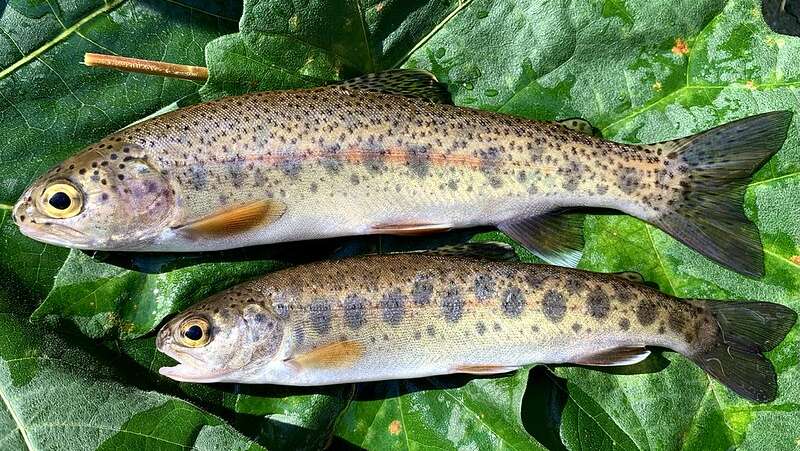
Research Shows Southeast Alaska Inside Waters May Have Provided Juvenile Salmon Buffer From Marine Heatwaves In Gulf Of Alaska

Above photo: The R/V Medeia, operated by the Alaska Department of Fish and Game; one of the research vessels used to conduct the trawl survey for juvenile salmon.

New research found that the cold, low salinity inshore waters of Icy Strait in Southeast Alaska may have provided a temporary buffer from marine heatwave conditions in the Gulf of Alaska for four species of migrating juvenile salmon.

The marine heatwaves occurred in 2014–2016 and 2019. Prior studies have found connections between juvenile Pacific salmon survival and growth rates to oceanographic conditions and food availability in the marine environment.

Recent marine heatwaves with persistent warm seawater temperatures above normal conditions in the Gulf of Alaska resulted in multi-year warming throughout the water column. This persistent warming was correlated to reduced condition and abundance of some key prey species, which led to widespread effects throughout the food web.

Following the warm anomalies in 2014–2016 and 2019, multiple adult salmon stocks in the Gulf of Alaska declined. This prompted U.S. state and federal agencies to issue statewide fishery disaster declarations for multiple fisheries.

Warming trends were likely linked to the declines of adult salmon in the Gulf of Alaska. “We expected that this might be due to changes to their prey, potentially at the juvenile stage, because we have evidence that changes in diets are related to marine temperature. However, we found that the body condition of juvenile salmon did not show a significant relationship with temperature in the inside waters of Southeast Alaska,” said Mariela Brooks, research chemist, Auke Bay Laboratories, Alaska Fisheries Science Center.

During heatwave years, temperature of marine waters increased in Southeast Alaska, but were still cooler than waters offshore in the Gulf of Alaska. Brooks and her fellow scientists suspect that the unique geography and oceanography of Southeast Alaska kept waters relatively cool. This supported a diversity of prey for juvenile salmon, which allowed them to switch between food sources and buffer the potential negative effects of heatwaves. Within this unique marine habitat, the body condition of observed juvenile fish in Southeast Alaska inside waters did not decline during marine heatwaves prior to migrating into the northeast Pacific Ocean.

Researchers’ long-term surveys support salmon harvest forecasts in Southeast Alaska by tracking juvenile abundance. The findings of this study confirm the value of these inside waters as early marine habitat. They also suggest that declines in adult salmon returns during marine heatwaves were likely driven by conditions beyond Southeast Alaska. These results indicate that survival bottlenecks may emerge after juveniles migrate offshore, especially during marine heatwave events.

Understanding the full migratory pathway, and when and where mortality occurs, is essential for improving predictions of salmon survival and forecasting, say the authors.

Trump Budget Proposes Elimination Of Pacific Coastal Salmon Recovery Fund

At a June 4 hearing, U.S. Sen. Patty Murray (D-WA), Vice Chair of the Senate Appropriations Committee, questioned Commerce Secretary Howard Lutnick on the decision to eliminate the Pacific Coastal Salmon Recovery Fund. The proposal is included in President Trump’s fiscal year 2026 budget request for the department.

During a Senate Appropriations Commerce, Justice, Science, and Related Agencies Subcommittee hearing on Trump’s 2026 budget request, Murray detailed NOAA’s role in the nation’s fisheries and the importance of salmon to Washington state’s way of life, noting Trump’s request to zero out funding for this key regional salmon program.

“Now, I do want to ask you while you’re here, one of the agencies you oversee is NOAA. It is absolutely essential to supporting sustainable fisheries, protecting our natural resources, and making sure that we have accurate weather forecasts. Cutting away at NOAA—as you have been doing and as your budget proposes to do further—is going to do serious harm. Among other cuts, your budget would completely eliminate the Pacific Coastal Salmon Recovery Fund. That would be a catastrophic failure—it would abandon our communities, our Tribes, and our industries who rely on salmon. And across the Pacific Northwest, salmon are not just fish—they are a way of life, and they are foundational to our economy and our culture. So, I would like you to explain quickly why you proposed that cut, and I want to ask you, did you consult with our Tribes or fishing communities who count on it before making that decision?”

Lutnick replied, “The issues are that we do the same thing in multiple ways in NOAA. We have not cut any hydrologists, which are the people who study the water.”

“You eliminated the Pacific Coastal Salmon Recovery Fund. That is what I’m precisely asking you about. Did you talk to our tribes or fishermen before you did that?” Murray asked.

“Of course,” said Lutnick.

Murray said, “Well, I have spoken to the tribes, I’ve talked to the scientists, I’ve talked to the fishermen. No one—no one—in the Pacific Northwest supports those cuts. And I want everyone to know I will not vote for an appropriations bill that eliminates that funding.”

“NOAA Fisheries’ Pacific Coastal Salmon Recovery Fund (PCSRF) provides funding to states and tribes to protect, conserve, and restore Pacific salmon and steelhead fish populations,” currently says NOAA Fisheries’ website.

“The Pacific Coastal Salmon Recovery Fund (PCSRF) https://www.fisheries.noaa.gov/west-coast/endangered-species-conservation/pacific-coastal-salmon-recovery-fund funds the protection, species conservation, and restoration of salmon and steelhead species for the benefit of local communities, including tribal communities. Each PCSRF project advances the common goal of full recovery and sustainability of Pacific salmon and steelhead populations. The continued commitment and collaboration from our partners are vital to reversing the decline of salmon and steelhead species.

“As of 2023, PCSRF has appropriated $1.8 billion to state and tribal salmon recovery programs and projects. With this funding, states and tribes have leveraged additional resources to collectively implement nearly 16,000 salmon recovery projects to conserve West Coast salmon. This has resulted in significant changes in salmon habitat conditions and availability. As of October 2023, nearly 1.2 million acres of spawning and rearing habitat have been restored, created, or protected for salmon. Additionally, access to more than 12,000 miles of previously inaccessible streams has been re-established.”

NOAA Fisheries’ website notes that in 2000, “Congress established PCSRF to reverse the decline of Pacific salmon populations. PCSRF is a competitive grant program through which NOAA Fisheries administers funding to states and tribes to protect, conserve, and recover these populations.”

The site also documents: “Several studies indicate that a $1.0 million investment in watershed restoration, in which PCSRF and state matching funds play a significant role, creates between 13 and 32 jobs and between $2.2 and $3.4 million in economic activity. Furthermore, habitat restoration projects exemplify ecosystem services and mitigate forces against natural disasters and climate change. For example, floodplain restoration reduces flood risk and can lower flood insurance rates. Planting native trees and vegetation naturally sequesters carbon and stores it in plants and soils, increasing nature’s carbon storage. The greatest socio-economic implication of salmon recovery is in securing healthy ecosystems that ultimately provide vast public and private benefits for current and future generations.”

In another hearing this week, Washington’s other Democratic Sen. Maria Cantwell, ranking member of the Senate Committee on Commerce, Science, and Transportation and a senior member of the Senate Finance Committee, joined meteorologists from across the country for a virtual presser to “sound the alarm” on cuts to the National Weather Service as the United States heads into peak hurricane and wildfire season – and call on the Trump Administration to restore the agency to full capacity.

“For at least a half a century, the National Weather Service has provided forecasts for 24 hours a day, seven days a week — until now. At least eight weather forecasting offices no longer have a meteorologist to cover overnight shifts. They are planning on eliminating the NOAA buoy program. You can’t map a hurricane if you don’t have the buoy information,” Cantwell said. “NOAA has been transparent that they can’t keep up. They have said that they can’t keep the lights on in a number of forecast offices. The Department of Commerce needs to be clear to the American people that the staffing shortages will impact our ability to compute that science [and] get those wildfire crews and emergency response where they need to go.”

Over the past several months, the NWS lost over 560 employees due to layoffs and retirements under the Trump Administration. On Monday, they announced they’d hire 126 – amounting to “a flimsy band-aid,” Cantwell said.

“This dangerous decision to leave critical jobs unfilled comes as the National Interagency Fire Center, a partnership which includes NWS, released its Fire Maps for the next four months predicting above normal significant fire potential across the West, in Hawaii, the coasts of North and South Carolina, and parts of Texas and Florida., said a Cantwell press release.

Boaters Reminded Of Requirement Since 2023 To Stay 1,000 Yards From Southern Resident Killer Whales, 22 Whales In Poor Shape

With summer boating and fishing seasons ramping up, the Washington Department of Fish and Wildlife is reminding boaters of new laws requiring vessels to stay 1,000 yards away from endangered Southern Resident killer whales in Washington waters.
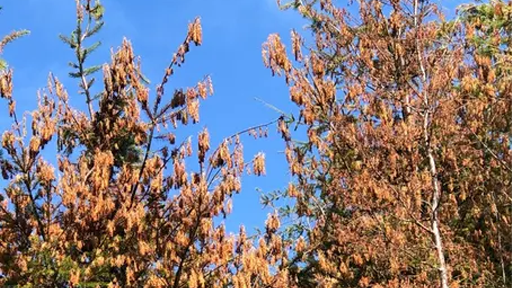
The reminder comes as 22 SRKW were observed in poor body condition through drone photography conducted by SR3 Sealife Response, Rehabilitation, and Research (SR3) between June and November 2024.

In past years, WDFW issued emergency rules requiring commercial whale watching vessels to stay more than 1,000 yards away from SRKW due to observations of whales in poor body condition. But thanks to legislation passed in 2023, all vessels, including recreational vessels and paddlecraft such as kayaks and paddleboards, are now required to keep that 1,000-yard distance year-round when the whales are in Washington waters.

“Southern Resident killer whales rely on sound — echolocation— to find food, and the noisy waters of Puget Sound can mean missed meals and hungry whales, especially during peak boating season,” said Julie Watson, WDFW’s killer whale policy lead. “When boaters avoid the whales and stay at least 1,000 yards away, they are immediately helping increase these whales’ ability to forage and communicate with each other.”

If a vessel finds itself within 1,000 yards of SRKW, the vessel operator must move away at a speed of 7 knots or less until they are 1,000 yards away. If an SRKW approaches within 400 yards of a vessel, boaters are required to disengage the transmission if it is safe to do so and wait until the whales move out of the area.

The 22 whales observed in poor condition are the most since this aerial photogrammetry began in 2008. In addition to the whales in poor condition, two orca calves were born in J Pod since late 2024, bringing the total number of remaining SRKW to 74 spread across J, K, and L pods. Numerous calves born in recent years have not survived, making it even more important to give these whales space and quiet. Seven of the 22 whales observed in poor condition are reproductive-age females.

“Unfortunately, we are continuing to see a disturbing trend in the body condition of SRKWs, with almost one-third of the population recently measured to be in poor body condition,” said Holly Fearnbach, marine mammal research director with SR3. “This includes continued pod-level declines for J-pod (for the fifth year in a row) and the majority of whales in both J- and L-pods in poor body condition for the second year in a row. SRKWs in poor body condition have an elevated likelihood of mortality, making it imperative that SRKWs have access to an adequate supply of prey throughout the year. We continue monitoring SRKW body condition year-round, and hope to see improvements in the coming months.”

WDFW Enforcement officers will be on the water this summer to help ensure boaters know how to follow the new 1,000-yard distance. WDFW has developed a number of resources available on the Department’s website, including helpful tools such as an orca rangefinder card, tips and tricks for telling distance from whales, and answers to frequently asked questions about the new regulations.

To report violators, call WDFW Enforcement at 877-933-9847 or report online.

While the new law in Washington requires boaters to stay 1,000 yards from the Southern Residents, Canadian waters have their own regulations, and there are different regulations in place for transient, or Bigg’s, killer whales that also frequent the Salish Sea and Washington coast.

Because of the difficulty identifying differences between SRKW and Bigg’s killer whales at a distance, WDFW encourages boaters to treat all unidentified killer whales as though they are SRKW and stay 1,000 yards away.

For more information about regulations in other waters and viewing rules for other marine mammals, as well as steps recreational boaters can take to keep the whales — and themselves — safe, visit BeWhaleWise.org.

Boaters are encouraged to watch for the Whale Warning Flag, an optional tool from the San Juan County Marine Resources Committee, that lets others know that there might be whales nearby. If boaters see the flag, they should slow down and continue to follow Be Whale Wise guidelines and local regulations. Boaters can also plan their routes to avoid Southern Residents by checking the Whale Alert app.

Destructive European Green Crabs Found For First Time In South Central Puget Sound, Threatens Native Shellfish

The Washington Department of Fish and Wildlife has captured invasive European green crabs (EGC) at two new locations between northern Hood Canal and Admiralty Inlet during an early detection trapping effort.

WDFW Aquatic Invasive Species Division crews working in collaboration with the Port Gamble S’Klallam Tribe caught two of the green crabs near Port Gamble this week. Another green crab was caught in Races Cove west of Hansville. These detections are the first time the crabs have been found in WDFW’s South Central Puget Sound Management Area for EGC control.

“We designed our early detection monitoring to identify European green crabs in areas where they’re most likely to spread next,” said Raquel Crosier, the state’s European Green Crab Emergency Incident Commander and a WDFW Aquatic Invasive Species management coordinator. “While these new detections are disheartening, finding them early gives us the best chance at suppressing the population and preventing further spread into southern Hood Canal and Puget Sound.”

WDFW, the Port Gamble S’Klallam Tribe, other co-managers, and permitted partners are planning additional collaborative trapping events this summer to assess the number of EGC in the area and to remove as many as possible.

The European green crab is a globally damaging shore crab species that threatens native shellfish, estuary habitats, eelgrass, aquaculture industry and businesses, and other tribal, cultural, economic, and environmental values.

WDFW published a long-term management plan to control this invasive species in September 2024 following input from dozens of co-managers, tribes, and partners.

A map showing EGC detections and WDFW monitoring efforts in 2024 is available online (PDF), as well as a map showing all EGC management areas (PDF). An interactive green crab catch count and more information is available on WDFW’s EGC online hub.

“Thanks to continued funding from the Washington State Legislature, WDFW, along with our co-managers and partners, is working to reduce the spread of European green crabs and keep populations low enough to prevent harm to critical nearshore habitat, fisheries, shellfish aquaculture, and cultural resources,” said Incident Commander Crosier.

More than 1.7 million EGC have been captured and removed from Washington waters since a Governor’s emergency order was declared in early 2022 directing state agencies and partners to prioritize coordinated efforts to control invasive green crabs on the Washington Coast and within Washington’s portion of the Salish Sea.

WDFW is also coordinating with Canada, Alaska, Oregon, and California on invasive species management efforts throughout the West Coast, as well as to request additional federal support.

If you find a suspected European green crab or its shell in Washington, take photos and report it as soon as possible at wdfw.wa.gov/greencrab or through the Washington Invasive Species Council’s WA Invasives mobile app. Crab identification guides and resources are also available on the European green crab online hub and the WDFW EGC webpage.

As a prohibited invasive species, it is illegal to possess a live EGC in Washington. Currently, WDFW is not asking the public to kill suspected EGC. This is to protect native crabs, which are often misidentified. More information on EGC regulations is available on WDFW’s webpage and in the Washington Sport Fishing Rules.

Targeting EGC with traps requires a permit from WDFW. For those who own or manage shellfish beds, beaches, or tidelands, support and permits for European green crab control may be available. Please contact ais@dfw.wa.gov.

Also see:
–CBB, May 23, 2025, “Washington State’s Green Crab Invasion: WSU Study Finds Juvenile Green Crabs Do As Much Damage As Adults” https://staging.columbiabasinbulletin.org/washington-states-green-crab-invasion-wsu-study-finds-juvenile-green-crabs-do-as-much-damage-as-adults/

Corps Extends Public Comment Period On SEIS For Willamette River Basin Dams

A public comment period for ending hydropower production at federal dams in the Willamette River basin, and thoughts on deep drawdowns at Detroit Reservoir on the North Fork Santiam River, has been extended from June 6 to June 21.

Comments on the two subjects will help the U.S. Army Corps of Engineers complete its Supplemental Environmental Impact Statement focused on two new requirements related to the operations and maintenance of the Willamette Valley System of dams and reservoirs, a Corps news release says.

“As part of the National Environmental Policy Act (NEPA) process, we collect public comments to help us shape what we study in the SEIS – we call this process public scoping,” said Liz Oliver, the Portland District project manager leading the SEIS process. “Because these proposed changes are important, we want to make sure everyone has enough time to share their thoughts. Extending the deadline gives more people a chance to participate and helps us make better, more informed decisions.”

In April 2025, Portland District completed a six-year study on the operations and maintenance of the Willamette Valley System of dams and reservoirs and published an Environmental Impact Statement. The EIS helps the Corps understand how its operations effect the environment, people, and ecosystems—and examines “alternatives,” or different ways the Corps could adjust operations. Shortly before the EIS was finalized, two new federal requirements were introduced. These additions prompted the need for a SEIS, which is now open for public scoping.

The Corps’ SEIS will evaluate:

  • Implementing a deeper fall drawdown at Detroit Reservoir: To support endangered fish, as required by the National Marine Fisheries Service. The drawdown is not expected to occur until fall 2026, and the Corps will evaluate its effects—such as potential impacts to water quality and local communities—in the SEIS.
  • Studying a permanent end to hydropower production at Willamette Valley dams: As directed by Congress in the Water Resources Development Act of 2024. This step is necessary to complete federal consultations and environmental compliance under NEPA.

For more detail, see: CBB, May 23, 2025, CORPS SEEKS PUBLIC COMMENTS ON SUPPLEMENTAL EIS FOR WILLAMETTE RIVER BASIN DAMS, WANTS VIEWS ON ENDING HYDROPOWER, HTTPS://COLUMBIABASINBULLETIN.ORG/CORPS-SEEKS-PUBLIC-COMMENTS-ON-SUPPLEMENTAL-EIS-FOR-WILLAMETTE-RIVER-BASIN-DAMS-WANTS-VIEWS-ON-ENDING-HYDROPOWER/

The Corps will accept comments via email or mail through June 21.

Email: willamette.eis@usace.army.mil

Mail: U.S. Army Corps of Engineers
Attn: CENWP-PME-E / Willamette EIS
P.O. Box 2946 Portland,
OR 97208-2946

More information, including a video of a previous public scoping comment sessions, is available at https://www.nwp.usace.army.mil/WVS-EIS/

Study Shows Western Oregonians Support For Marine Reserves Increases Over Time

Above ODFW photo: Otter Rock Marine Reserve is a favorite local spot to surf.

What do western Oregonians think about the five iconic protected areas, known as marine reserves, that dot the state’s coastline? A new study shows the answer depends on when and where the question was asked.

Researchers from Oregon State University and the Oregon Department of Fish and Wildlife have been collecting data on local residents’ attitudes toward the state’s marine reserves for more than a decade. Their work showed these Oregonians viewed the marine reserves in an increasingly positive light over time. Residents who live near the reserves and residents of densely populated metropolitan areas had the most favorable views overall.

Their new research paper presents a fresh analysis of these attitudes and how they have changed over time. The researchers, including Kristen McAlpine, Mark Needham, Lori Cramer, and Thomas Swearingen, surveyed different representative samples of thousands of western Oregon residents at different points in time. The novel feature of this research is that they also surveyed the same set of Oregonians over time.

Across different samples, researchers found similar patterns of general attitudes that were favorable overall and becoming even more favorable over time. These residents also said they were more likely to vote in support of the marine reserves when asked in 2021 as compared to 2016 or 2013.

Mark Needham, Professor at OSU and lead principal investigator for this study, said “We found that every year we sampled residents, they felt positively about Oregon’s marine reserves, and these positive attitudes increased every year we replicated this study. What makes these results unique is most studies like this are only conducted once and never repeated, whereas we have data across almost 10 years.”

For marine resource managers at ODFW, broad and increasing public support is crucial to the ongoing success of these areas. This study highlights the importance of continued trust-building and information sharing with Oregonians. Sarah Klain, a social scientist in ODFW’s marine reserves team, who was not part of this study, said, “a one-time snapshot of public attitudes toward a habitat management initiative is a good start, but this kind of longer term research on how attitudes change over time is even more valuable for policy makers, researchers, and managers.”

BPA Approves $700 Million Project To Increase Output Of Region’s Only Operating Nuclear Plant

Energy Northwest and the Bonneville Power Administration say they are taking a significant step toward strengthening the Pacific Northwest’s supply of energy by increasing the output of the region’s only nuclear facility.

On May 20, BPA approved implementation of an Extended Power Uprate project that increases the output of Columbia Generating Station. The EPU is an approximately $700 million project that will increase the station’s electrical output by 162 megawatts. CGS is the region’s third largest generating resource and only operating nuclear energy plant.

“We applaud BPA for its decision to approve this project and for its strategic vision in advancing our region’s future with additional reliable capacity that nuclear energy can provide,” said Bob Schuetz, Energy Northwest CEO. “Their leadership in supporting this initiative underscores a commitment to affordable electricity for the Northwest region, including our public power member utilities and their customers.”

Following 18 months of in-depth analysis, BPA’s approval allows the project to move into its next phase. Over the next six years, Energy Northwest and BPA will collaborate on planning and implementation. Once completed in 2031, the additional 162 megawatts of firm capacity could power approximately 125,000 homes, strengthening the Pacific Northwest’s energy portfolio.

“This is a great value for ratepayers in the Pacific Northwest,” said John Hairston, BPA administrator and CEO. “Upgrading an existing resource to provide additional reliable energy will help BPA keep pace with its customers’ growing electricity needs and keep rates low.”

Columbia Generating Station, a 1,207-megawatt nuclear energy facility near Richland, Washington, is owned and operated by Energy Northwest. The EPU will increase electrical output by upgrading and replacing equipment — including turbines, heat exchangers and the generator — while maintaining high safety standards and improving reliability. Nuclear energy facilities have successfully implemented uprates since the 1970s to boost energy generation from existing plants.

The project will involve approximately 30 individual upgrades, primarily focused on increasing the size of pumps and motors. These enhancements coincide with biennial refueling outages, creating new job opportunities for skilled workers.

Alongside the EPU, energy efficiency upgrades incorporated during the next three refueling outages in 2027, 2029 and 2031 are expected to add 24 megawatts of output capacity, bringing the total increase to 186 megawatts. This expanded capacity will be added to BPA’s federal system power, serving consumer-owned utilities across six Northwest states.
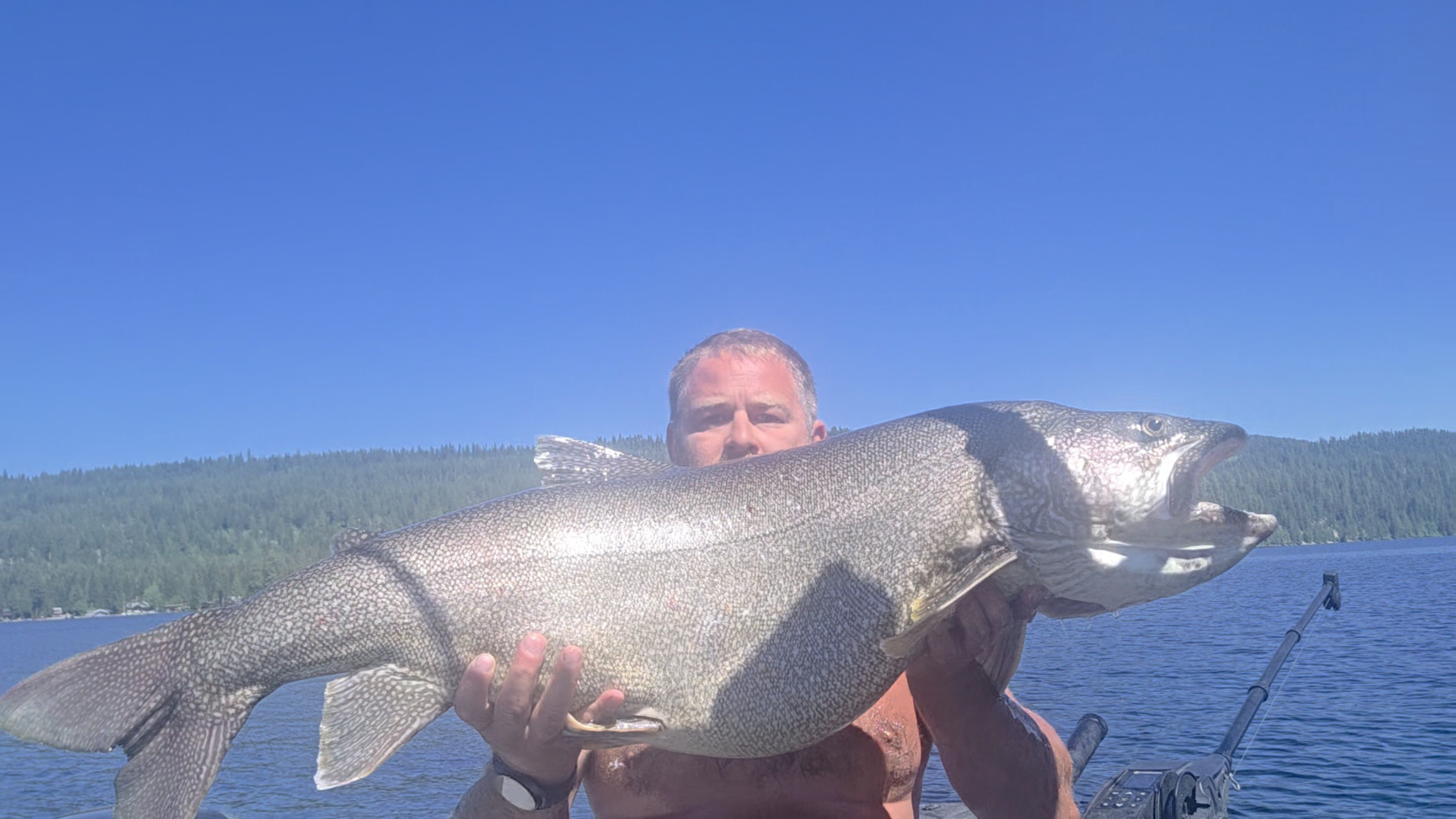
The EPU project marks a significant milestone in the ongoing partnership between Energy Northwest and BPA, showcasing a shared commitment to advancing reliable energy solutions. The combined efforts of both organizations will ensure that the Pacific Northwest continues to benefit from affordable and secure electricity.

“President Trump and Secretary Wright have made it clear: expanding America’s nuclear energy capacity will be essential for meeting growing demand for affordable, reliable and secure energy,” said Michael Goff, Department of Energy acting undersecretary for infrastructure. “This project exemplifies the energy vision for America by unleashing new power generation for the people of the Pacific Northwest without raising costs.”

Oregon Boat Inspection Stations Open To Protect Waters From Aquatic Invasive Species, Golden Mussels New Threat

The Oregon Department of Fish and Wildlife is ramping up its efforts to protect the state’s lakes, rivers, and streams from aquatic invasive species. Seasonal boat inspection stations are now open, and roving crews will be out this year at boat ramps offering watercraft inspections and decontamination.

Even though Oregon agencies have not detected the presence of invasive freshwater mussels in our waterways, the risk is now higher than ever before. In addition to the longstanding concern over quagga and zebra mussels, golden mussels were found in California last year.

“Golden mussels were detected for the first time in North America last year which means the threat to Oregon is very serious,” said Keith DeHart, ODFW Invasive Species Coordinator. “Golden mussels are similar to zebra or quagga mussels, but they can establish in a much wider range of temperatures and water salinity,” added DeHart.

Combined with quagga mussel detections in Idaho in the Snake River last year and in 2023, the risk of aquatic invasive species spreading to Oregon waterways has been steadily increasing.

Invasive freshwater mussels can damage water infrastructure, such as irrigation and hydropower systems. Invasive freshwater mussels can also degrade water quality and limit recreational activities such as fishing and boating.

ODFW and the Oregon State Marine Board manage the state’s watercraft inspection stations at five entry points around the state. Anyone transporting any type of watercraft—motorized or non-motorized—must stop at open boat inspection stations. This includes kayaks, canoes, rafts, and stand-up paddleboards.

DeHart recommended that boaters can make the process of boat inspections quick and easy by cleaning and draining watercraft before leaving a waterbody. He noted that all boaters must pull their watercraft’s drain plug before leaving Oregon’s waterbodies.

“Clean, drain, and dry is the most effective way to prevent the spread of invasive species,” said DeHart. “And having a clean and dry boat is also the fastest way to get through an inspection station.”

How to know a boat inspection station is open:

  • Open stations are clearly marked with large, orange Boat Inspection Ahead signs, followed by Inspection Required for All Watercraft.
  • Inspection station hours vary by day and season. Inspections and any necessary decontamination are free of charge, funded by Oregon’s Waterway Access Permit program.

Inspection Station Locations:

For more information on protecting Oregon’s waterways and to buy a Waterway Access Permit, visit ODFW’s aquatic invasive species page.

To learn more about invasive species, Key Conservation Issues affecting Oregon, and the State Wildlife Action Plan, visit: https://www.oregonconservationstrategy.org/key-conservation-issue/invasive-species/

OSU Wildlife Researchers Improve AI’s Ability To Better Identify Animal Species In Trail Camera Photos

Above: In this trail-camera photo provided by OSU undergraduate Owen S. Okuley, bighorn sheep are seen at the Kerr Guzzler in the Mojave Desert.

Oregon State University scientists have improved artificial intelligence’s ability to identify wildlife species in photos taken by motion-activated cameras.

Their study, which introduces a less-is-more approach to the data on which an AI model is trained, opens the door to wildlife image analysis that’s more accurate and also more cost effective.

Motion-activated cameras are an important wildlife monitoring tool, but reviewing thousands of images manually can be prohibitively time consuming, and current AI models are at times too inaccurate to be useful for scientists and wildlife managers.

“One of the biggest problems in using AI in wildlife research is limited accuracy when we use the model to classify images at a novel location – one the model has never ‘seen’ before,” said study co-author Christina Aiello, a research associate in the Oregon State University College of Agricultural Sciences. “The approach we used improved accuracy at novel sites as well as non-novel sites, and made for a more consistently accurate model across diverse locations.”

The research , led by Owen Okuley, an undergraduate student under Aiello’s mentorship in the Department of Fisheries, Wildlife and Conservation Sciences(Link is external), was published in Ecological Informatics. The study used bighorn sheep as an example species but the AI training described in the paper is widely applicable, the scientists say.

“Owen is exploring ways to curate training datasets so that we improve AI accuracy faster, with less data, which I think is a much-needed shift in how our field uses AI,” Aiello said. “We’ve been getting as much convenience imagery of wildlife as possible for use in training, and as the number of training images goes up, most scientists expected the accuracy of the AI models to improve.

“But at a certain point there are minimal improvements as more data are added. I think we need to be more selective with the information we feed these models to achieve better results.”

Aiello, Okuley, OSU professor Clinton Epps and collaborators learned the best identification results stemmed from limiting an AI model’s training to one species – rather than all species – and to include images taken in a range of local, project-specific environments. The model was able to identify bighorn sheep from novel sites within a region with similar accuracy to training sites when the images included enough background variation.

“By narrowing objectives while still ensuring training data variety, we achieved almost 90% identification accuracy with a small fraction of the training data – 10,000 training images – required by similar-performing AI models,” Okuley said. “And fewer images means a model requires less computing power and less energy, both of which are beneficial to the wildlife we seek to study.”

Okuley, who is graduating in June, and Aiello were paired up through the Fisheries and Wildlife Undergraduate Mentoring Program(Link is external). Working in Epps’ lab, Okuley learned how to manage camera trap data and survey for bighorn genetic samples with a graduate student on a military base before leading his own AI research project.

“Being able to tackle a project from start to finish has allowed me to grow immensely as a scientist,” he said. “I was able to not only make strong connections with my co-authors and mentors, but got to engage with the aspects of research most undergrads never see, like conceptualization, grant writing and publication.”

Okuley will pursue a Ph.D. in ecology and environmental biology at the University of Texas at El Paso, where he will try to create a suite of AI programs sequentially classifying specific traits of waterfowl with the goal of identifying not just individual species but hybrids as well.

Researchers from Johns Hopkins University, the California Department of Fish and Wildlife, and the National Park Service also took part in the bighorn study, which was supported by the National Park Service through the Pacific Northwest Cooperative Ecosystem Studies Unit, Oregon State University, and the College of Agriculture Sciences Continuing Researcher Support Program.

Large-Scale Habitat Restoration Project Launched On Lower East Fork Lewis River To Aid Threatened Salmon, Steelhead

Above photo: Aerial view of the Ridgefield Pits in the foreground on the East Fork Lewis River before restoration. The Daybreak Pits can also be seen and are located adjacent to the Ridgefield Pits. The project will focus on restoring the nine Ridgefield Pits. Credit: Lower Columbia Estuary Partnership

This spring, the Lower Columbia Estuary Partnership broke ground on a large-scale salmon habitat restoration project on the lower East Fork Lewis River in Washington State. This project will support the recovery of threatened steelhead and salmon on one of the few undammed rivers in the Lower Columbia River watershed.

The work is expected to inject millions of dollars into the local economy and generate hundreds local jobs in construction, heavy equipment operations, trucking, engineering, forestry, and other industries.

In addition, the work is intended to help maintain fishing opportunities that further contribute to the local economy.

In 1996, Steve Manlow, Executive Director of the Lower Columbia Fish Recovery Board, watched in horror as a 500-year flood event destroyed crucial salmon and steelhead habitat on the lower East Fork Lewis River. Flood waters breached the levees around nine abandoned gravel mining pits, fundamentally shifting the river’s course.

This once-braided, multi-channel river began flowing through the excavated pits. It formed a series of interconnected warm-water ponds that prevent salmon and steelhead from migrating upstream for much of the year. The river channel deepened, cutting off floodplain habitat and causing severe erosion downstream.
Now, after nearly 30 years struggling to raise the funds, Manlow and dozens of project partners and advocates will witness the rebirth of this section of the river. NOAA’s Office of Habitat Conservation awarded $7.6 million through the Infrastructure Investment and Jobs Act to support the Lower East Fork Floodplain Reclamation project.

The effort will:

  • Improve fish passage to high quality upstream habitat for fall Chinook, winter and summer steelhead, coho, and chum salmon
  • Reconnect 300 acres of floodplain and 1.3 miles of side channel habitat
  • Restore 2.5 miles of spawning and rearing habitat
  • Reestablish 100 acres of floodplain forest to absorb and distribute flood waters
  • Reduce flood and erosion risks to homes, businesses, a popular hiking trail, and other infrastructure
  • Support the genetic diversity of a wild steelhead population

“It’s a good feeling to know that through persistence and long-term dedication, it’s possible to undo decades of damage,” said Manlow. “By increasing the amount and variety of habitat in this key stream corridor, we can improve the survival of five salmonid runs protected under the Endangered Species Act.”

Over the next 2 years, workers will:

  • Fill in the gravel pits while retaining areas of cooler water
  • Recontour the floodplain
  • Reactivate historic channels
  • Install habitat features
  • Plant trees and other vegetation along the river

This growth of trees and plants will provide future shade and lower water temperatures, allowing cold-water-loving salmon and steelhead to migrate through this portion of the river. Filling in the pits and recreating a more natural environment will help reestablish salmon in this area.

Contractors will also excavate floodplain habitat and place up to 5,000 logs and pieces of large woody debris in the river channel. This type of habitat provides juvenile salmon with safe places to grow, hide from predators, and feed on their favorite food source: insects drifting by in a cool, flowing river.

“By filling the pits and reconstructing the river channels, salmon will be able to use the site immediately,” said NOAA Marine Habitat Resource Specialist Paul Cereghino. “After restoring the river and floodplain processes, the system can reshape itself for the rest of time.”

The work will also help support a wild steelhead “gene bank.” No hatchery-born steelhead have been introduced to the lower East Fork Lewis River since 2014. The steelhead here have been able to evolve naturally and adapt to changing conditions in the Lower East Fork Lewis River watershed.

“This is a unique native fishery—the biggest steelhead ever caught and recorded in the state of Washington came out of this river,” said Paul Kolp, Restoration Program Lead for the Lower Columbia Estuary Partnership.

“This river is world-famous for fly fishing, and the fishing companies are looking for those wild steelhead. Completing this project will help ensure more winter and summer steelhead can reach their natal grounds upstream and successfully reproduce.”

The entire project will improve recreational opportunities for the community and protect nearby infrastructure. Tapani is moving a public hiking trail further from the river’s edge, where severe erosion has been progressively eating away at the stream bank. Enabling this river access to its full historic floodplain habitat can also help reduce future flooding for homes and businesses up to 4 miles downstream.

In total, the project is expected to generate more than $40 million for the local economy around Southwest Washington. These economic numbers are estimates based on a study done in Oregon which found that every $1 million spent on watershed restoration results in 16.7 new or sustained jobs and $2.2 to $2.5 million in economic activity.

“NOAA funding helps our partners implement transformational habitat projects and take part in restoring beloved natural areas,” said NOAA Marine Habitat Resource Specialist Adrianne Grimm. “Salmon restoration projects like this one do more than bring back fish—they bring jobs, stability, and a sense of pride to local communities.”

Additional partners include:

  • Clark County
  • Columbia Land Trust
  • Cowlitz Indian Tribe
  • Lower Columbia Fish Recovery Board
  • Storedahl and Sons
  • Washington Department of Fish and Wildlife
  • Washington Department of Natural Resources

Murray Says Trump Administration’s Spending Plans For Corps Moving Project Funding From Blue States To Red States

U.S. Sen. Patty Murray (D-WA) says the Trump Administration’s spending plans for the Army Corps of Engineers would steer hundreds of millions of dollars more in construction funding to red states while cutting hundreds of millions of dollars in construction funding for blue states.

Murray is Vice Chair of the Senate Appropriations Committee and Ranking Member of the Subcommittee on Energy and Water Development.

The Trump Administration, says Murray, plans to take $437 million away from blue states and move $258 million toward red states—overall, 64-33 percent red to blue split in the administration’s Army Corps work plan versus roughly 50-50 split in FY25 House and Senate appropriations bills.

The plans, says Murray, show how the “Corps under Trump intends to zero out and significantly cut funding for essential projects in Washington state and across the country.”

Murray says the Corps’ plans include the complete elimination of construction funding for the Howard Hanson Dam fish passage facility on the Green River in Washington state–which was otherwise poised to receive $500 million this year in funding Murray secured in the fiscal year 2025 appropriations bill she wrote as Chair. It passed through committee in August 2024, as well as in House Republicans’ fiscal year 2025 bill.

Overall, says Murray, the Corps’ plans would “steer hundreds of millions of dollars more in construction funding to red states while cutting hundreds of millions of dollars in construction funding for blue states, relative to the president’s fiscal year 2025 request. This includes the complete elimination of Army Corps construction funding for states like California. The president’s budget request has, historically, been fully funded–and was fully funded in both the Senate and House draft fiscal year 2025 appropriations bills.”

“This is some corrupt B-S from the President,” said the Washington State U.S. Senator. “We are witnessing a historic and serious, politically motivated abuse of our taxpayer dollars by President Trump. I am going to fight to make sure our communities get the resources they need.

“Trump is ripping away taxpayer dollars from blue states like mine for absolutely critical Army Corps projects that maintain and build foundational water infrastructure–whether it’s dredging for our ports, protecting communities from flood waters, or maintaining major dams. President Trump is setting a dangerous precedent—one that Republicans need to think carefully about. This is not how things should ever work in America,” said Murray.

The plans, says Murray, show how Corps of Engineers under Trump “intends to zero out and significantly cut funding for essential projects in Washington state and across the country.”

The funding for Howard Hanson was needed for the Army Corps to execute a construction contract option this year, allowing construction to begin in 2026 as scheduled.

But, says Murray, “instead of working with Democrats to pass full-year funding bills that would have directed that funding, Republicans in Congress passed a yearlong continuing resolution (CR) that enabled the administration to determine how to allocate the funding it did provide—a scenario Murray repeatedly warned about. The Army Corps’ work plans —which lay out how the Army Corps will spend the funding provided by Congress under Republicans’ yearlong continuing resolution for fiscal year 2025—include zero funding for the project.”

Washington’s other Democrat Senator, Maria Cantwell, ranking member of the Senate Committee on Commerce, Science, and Transportation and senior member of the Senate Finance Committee, released this statement following news that the Trump administration is withholding $500 million in planned federal funding to construct fish passage at Howard Hanson Dam.

“Constructing fish passage at Howard Hanson Dam was key to reopening at least 60 miles of prime salmon and steelhead habitat, nearly doubling Green River spawning grounds for endangered salmon and steelhead,” said Cantwell. “Withholding funding for this project is a stab in the back to tribal, commercial, and recreational fishing families. It also amounts to an abandonment of our commitment to tribal treaty rights, and ignores federal law intended to protect salmon.”

“Tacoma Public Utilities (TPU) has made significant investments in the Howard A. Hanson Dam for decades. This project is one of the most significant steps toward ensuring long-term water reliability for over one million people across our broader region—not just for today, but for generations to come,” said Heather Pennington, TPU Water Superintendent.

“Without this key part of the project, the District may not have enough summertime supply to meet our current and future customer needs starting as early as the mid-2030s. That’s not very far from now folks. For the District, it feels like we purchased a 4 bedroom home, but having the builder tell us we can occupy 2 bedrooms. Not to mention, this action will further delay access for endangered salmon to over 100 miles of pristine spawning habitat above Howard Hansen Dam. It is just unfair on many levels,” said Thomas Keown, General Manager of the Covington Water District. “For instance, the decision is also unfair to the many local stakeholders who have invested time and money, hundreds of millions, if not billions of dollars in infrastructure and watershed benefits in and along the Green River in preparation of the project coming online. This is now unfortunately shaping up as a waste of a perfectly good ‘shovel ready’ project that is likely to be mothballed for who knows how long.”

In another budget matter, the (Vancouver,WA) Columbian reports that the “Trump administration has cut tens of millions of dollars from a key Columbia Basin salmon-restoration program run by the U.S. Army Corps of Engineers, a move experts say puts the treasured Northwest fish in further jeopardy.”

The Columbia River Fish Mitigation program attempts to balance out significant harm inflicted by the Columbia River hydropower dam system on endangered salmon and steelhead runs.

See the full story, “Columbia River salmon restoration hit hard by $1.5B cut to Army Corps of Engineers” here: https://www.columbian.com/news/2025/may/20/columbia-river-salmon-restoration-hit-hard-by-1-5b-cut-to-army-corps-of-engineers/

Alaska Expects This Year’s Commercial Salmon Harvest To Be Nearly Double Last Year’s Harvest, Big Boosts To Pinks, Coho

The Alaska Department of Fish and Game says forecasted 2025 total Alaska commercial salmon harvest will be approximately 214.6 million fish, which is 111 million more salmon than the 2024 harvest.

The Alaska all-species salmon harvest for 2024 totaled approximately 103.5 million fish. This harvest was composed of 42.2 million sockeye, 40.0 million pink, 19.3 million chum, 1.8 million coho, and 244,000 Chinook salmon.

Most of the pink salmon harvest occurred in the Southeast region, and Bristol Bay continued to be the largest sockeye salmon producing region in Alaska.

The 2025 commercial salmon harvest forecast is 138.4 million pink, 52.9 million sockeye, 20.8 million chum, and 2.4 million coho salmon. If realized, the forecasted 2025 total Alaska commercial salmon harvest will be approximately 214.6 million fish.

For additional information and area-specific details about harvest projections and forecasts, see Run Forecasts and Harvest Projections for 2025 Alaska Salmon Fisheries and Review of the 2024 Season.

USDA Terminates Largest Grant In University of Idaho’s History, $59 Million For “Climate-Smart’ Commodities Program

The largest grant in University of Idaho’s history, intended to provide payment directly to Idaho producers for developing sustainable agricultural practices, was terminated last week as a result of new criteria implemented by the United States Department of Agriculture.

The Partnerships for Climate-Smart Commodities (PCSC) program included nearly $59 million for U of I’s Innovative Agriculture and Marketing Partnership (IAMP) project.

USDA recently identified new criteria to evaluate the Climate-Smart grants, referred to as Farmer First policy priorities. The new criteria include a requirement that at least 65% of grant funds must go directly to producers. In the original IAMP proposal, more than 50% of funding was allocated for direct incentive payments to producers, with the rest of the grant, excluding direct administrative costs, intended to provide technical and marketing services to enrolled producers — saving them the cost of contracting those services independently.

U of I faculty, staff and graduate students were providing technical support and guidance to producers to collect and analyze data generated by these practices through this program. The data from this project would have helped producers make informed decisions about how these practices would affect their bottom line, reducing the risk to the producers to engage in new practices.

USDA is relaunching the former PCSC program as the Advancing Markets for Producers (AMP) Initiative. U of I has the opportunity to resubmit a proposal by June 20, with adjustments to meet the new criteria.

As of March, the IAMP project received applications from 201 Idaho producers representing 34 Idaho counties, across seven commodities. Several producers had completed all the paperwork and were enrolled, and others were in the final stages. In a press release announcing the PCSC program cancellation, USDA committed to honoring all eligible expenses incurred prior to April 13. U of I is in contact with its implementing partners and several producers to ensure any eligible expenses incurred prior to this date are reimbursed.

“While we are disappointed by the USDA decision to terminate the IAMP grant, we are thankful for the opportunity to resubmit our proposal,” IAMP Co-director Sanford Eigenbrode said. “The objectives of the IAMP project are in line with the expected guidelines from USDA/NRCS and their Farmer First priorities, and we are in a good position to reconfigure the project to meet those guidelines.”

OSU Analysis Suggests Thousands Of Animal Species Threatened By Climate Change, Invertebrates Increasingly Invulnerable

Above photo: A humpback whale mother and calf in Glacier Bay National Park, Alaska, with the Fairweather Mountains in the background. Photo Credit: (National Park Service photo under NMFS Scientific Research permit #945-1776-01)

A novel analysis suggests more than 3,500 animal species are threatened by climate change and also sheds light on huge gaps in fully understanding the risk to the animal kingdom.

The study as published in BioScience.

“We’re at the start of an existential crisis for the Earth’s wild animals,” said Oregon State University’s William Ripple, who led the study. “Up till now, the primary cause of biodiversity loss has been the twin threats of overexploitation and habitat alteration, but as climate change intensifies, we expect it to become a third major threat to the Earth’s animals.”

Ripple, distinguished professor of ecology in the OSU College of Forestry, and collaborators in the U.S. and Mexico used publicly available biodiversity datasets to examine animal data for 70,814 species from 35 existing classes. They categorized the species by class and climate change risks as assessed by the International Union for Conservation of Nature.

The researchers found that at least one-quarter of the species in six different classes are threatened by climate change; these classes include arachnids and chilopodans (centipedes) as well as anthozoans and hydrozoans (marine invertebrates related to jellyfish and corals). Smaller percentages of other classes’ species are also directly at risk from a warming climate.

“We are particularly concerned about invertebrate animals in the ocean, which absorbs most of the heat from climate change,” Ripple said. “Those animals are increasingly vulnerable because of their limited ability to move and promptly evade adverse conditions.”

Sudden impacts on animal communities can take the form of mass mortality from extreme events like heat waves, wildfires, droughts and floods.

“The cascading effects of more and more mass mortality events will likely affect carbon cycle feedbacks and nutrient cycling,” Ripple said. “Those effects also likely will have an impact on species interactions such as predation, competition, pollination and parasitism, which are vital for ecosystem function.”

The 90% reduction in mollusk populations along Israel’s coastline because of escalating water temperatures shows how susceptible invertebrates are, he said. Other examples include the deaths of billions of intertidal invertebrates during the 2021 Pacific Northwest heat dome, and the catastrophic die-off of corals across 29% of the Great Barrier Reef following a severe 2016 marine heat wave.

Mass mortalities have not been limited to invertebrates, Ripple notes. In 2015 and 2016, about 4 million common murres off the west coast of North America starved to death via an altered food web caused by an extreme marine heat wave.

The same heat wave caused a 71% decline in Pacific cod because of an increase in metabolic demand and a reduced prey base, and marine heat waves have likely played a role in the deaths of approximately 7,000 humpback whales in the North Pacific.

Further cause for concern, the authors note, is the comparatively small amount of information that’s been gathered regarding climate change risk to wildlife. Most wildlife classes (66 of 101) have not yet had any species assessed by the IUCN, and the 70,814 species that have been assessed represent 5.5% of all described wildlife species alive today.

“Our analysis is meant to be a preliminary effort toward assessing climate risk to wildlife species,” Ripple said. “Understanding the risk is crucial for making informed policy decisions. We need a global database on mass mortality events due to climate change for animal species in all ecosystems, and an acceleration in assessing currently ignored species.”

The IUCN Red List of Threatened Species, he notes, has a bias toward vertebrates, which make up less than 6% of the Earth’s named animal species.

“There is also a need for more frequent climate risk assessments of all species and better consideration of adaptive capacity,” Ripple said. “We need the integration of biodiversity and climate change policy planning on a global scale.”

Roger Worthington, an attorney in Bend, Oregon, provided partial funding for this study, which also included Christopher Wolf and Jillian Gregg of Terrestrial Ecosystem Research Associates and Erik Torres-Romero of the Biotechnology Engineering-Polytechnic University of Puebla in Puebla, Mexico.

IDFG Offering Cash Incentives To Harvest Rainbows, Hybrids From South Fork Snake River, Helps Native Cutthroat

The South Fork Snake River is one of the last major conservation strongholds for Idaho’s state fish – the cutthroat trout — but they are losing ground and only occupy 34% of their historical range in the lower Snake River drainage. Anglers willing to harvest rainbow trout can help change this trajectory.

Anglers can turn in the heads of legally harvested rainbow trout and hybrids from the South Fork Snake River for a chance to win cash. If your rainbow trout or hybrids have a tag, you win.

This program was created at the request of anglers so they could contribute to cutthroat trout conservation and manage the threats from rainbow trout by increasing harvest.

Each year, about 1,000 rainbow and hybrid trout are tagged and released back into the river. The microscopic tags (called “coded wire”) are placed safely in the snout of the fish and can be worth between $50 to $1,000 per fish. There is no limit to how many you can harvest or how much money you can win.

Turn in Your Catch Two Ways:

  • Bring in the rainbow and hybrid trout heads to the Fish and Game regional office in Idaho Falls, during regular business hours Monday through Friday, 8 a.m. to 5 p.m. Winners will be notified and will receive money by mail. If anglers prefer to watch live as Fish and Game staff scan their fish for tags, bring fish heads to the office on the first Friday of each month during the live scan event.
  • Turn in rainbow and hybrid trout heads to freezers set up at Conant and Byington boat ramps (May through September only). Anglers are advised to fill out a contact form, available at these locations, so Fish and Game can notify winners by phone and send their money by mail.

South Fork Snake River Daily Bag Limits

For additional information, visit the South Fork Harvest Incentive web page.

BPA Financial Outlook Improves Second Quarter With Higher Than Expected Revenues

Higher than expected revenues, lower expenses and debt management have resulted in the Bonneville Power Administration forecasting net revenues of $210 million, $70 million above agency targets. The encouraging results improve on the first quarter net revenue forecast of negative $44 million, which was impacted by the dry winter weather.

While BPA is cautiously optimistic, it is still early in the year and questions remain about the shape of the runoff.

BPA says it will continue to manage this uncertainty by following its financial plan and using the liquidity tools it provides.

The updated net revenue forecast has resulted in BPA no longer forecasting to trigger the Financial Reserves Policy Surcharge, which is triggered when financial reserves decline below established thresholds.
BPA is forecasting to end the year at 101 days cash on hand, with Transmission Services at 117 days and Power Services at 94 days.

Power Services’ net revenue forecast is $195 million, which is $118 million above target. The net revenue increase is primarily driven by higher Trading Floor sales due to higher power prices and a gain from debt management actions on Power Services’ federal bonds.

Transmission Services’ net revenues are forecast to be $11 million, which is $18 million above target. This is due to increased Short-Term Point-to-Point and Southern Intertie revenues and decreased expenses.

Agency direct capital expenditures are forecast to be $1.18 billion, which is in line with BPA’s target. This includes the execution of BPA’s Evolving Grid projects, energization of the Longhorn Substation in northcentral Oregon and the completion of the Midway to Ashe transmission line in southeast Washington.

BPA’s second quarter results are available at https://www.bpa.gov/about/finance/quarterly-businessreview.

BPA is a federal non-profit power marketing administration that sells hydropower produced by federal dams in the Columbia River Basin, as well as the output from the region’s only nuclear plant.

Administration’s Proposed Budget Would Eliminate ‘The Bee Lab’ That Funds, Conducts Native Bee Research

President Trump’s proposed budget would end funding of research for America’s bees coordinated by the U.S. Geological Survey Bee Lab. The budget proposal eliminates all $307 million in funding to the Ecosystem Management Area, a division within the USGS that funds biological research, including the Bee Lab.

The USGS Bee Lab is an interagency venture based out of Laurel, Maryland, that funds and conducts native bee research. It is the only agency in the federal government with the expertise to identify the more than 4,000 native bee species in the United States. It plays a vital role in protecting America’s imperiled pollinators.

“How can the administration make good on its promise to make America healthy again while cutting support for the bees that are essential to producing fruits and vegetables?” said Jess Tyler, a staff scientist at the Center for Biological Diversity. “As pollinator population declines get worse, we need to double down on research and protections for bees to ensure a healthy and affordable food supply.”

Native bees pollinate 75% of flowering plants, including fruit and vegetable crops that are important to a healthy diet. Through crop and wild plant pollination, native bees contribute $3 trillion to the global economy.

The Center says the Trump administration is following a proposal from Project 2025 to eliminate this program within the USGS. The administration states, “The budget eliminates programs that provide grants to universities, duplicate other federal research programs and focus on social agendas (e.g., climate change) to instead focus on achieving dominance in energy and critical minerals.”

“You can’t have an America first agenda if America can’t feed itself,” said Tyler. “I implore the Trump administration to reconsider its slashing of the Bee Lab’s budget. To ensure an abundant supply of food, we have to protect pollinators.”

Study: Glaciers Will Take Centuries To Recover Even If Global Warming Reversed

Above photo: A calving glacier in Svalbard, Norway. Credit: Fabien Maussion

New research reveals mountain glaciers across the globe will not recover for centuries – even if human intervention cools the planet back to the 1.5°C limit, having exceeded it.

The research, led by the University of Bristol in the United Kingdom and the University of Innsbruck in Austria, presents the first global simulations of glacier change up to 2500 under so-called ‘overshoot’ scenarios, when the planet temporarily exceeds the 1.5°C limit up to 3°C before cooling back down.

The results, published in Nature Climate Change, show that such a scenario could result in glaciers losing up to 16% more of their mass compared to a world that never crosses the 1.5°C threshold.

“Current climate policies are putting the Earth on a path close to 3°C. It’s clear that such a world is far worse for glaciers than one where the 1.5°C limit is held,” said author Fabien Maussion, Associate Professor in Polar Environmental Change at the University of Bristol.

“We aimed to discover whether glaciers can recover if the planet cools again. It’s a question many people ask—will glaciers regrow in our lifetime, or that of our children? Our findings indicate sadly not.”

Rising global temperatures now indicate a significant chance of overshooting of the Paris Agreement limits adopted a decade ago. For example, last year was the hottest year ever recorded on Earth and the first calendar year to exceed the 1.5°C mark.

The climate scientists assessed future glacier evolution under a strong overshoot scenario in which global temperatures continue rising to 3.0°C by around 2150, before falling back to 1.5°C by 2300 and stabilizing. This scenario reflects a delayed net-zero future, in which negative emission technologies like carbon capture are only deployed after critical warming thresholds have been exceeded.

The results show glaciers would fare much worse than in a world where temperatures stabilize at 1.5°C without overshooting, with an additional 16% of glacier mass being lost by 2200, and 11% more by 2500 – on top of the 35% already committed to melting even at 1.5°C. This extra meltwater eventually reaches the ocean, contributing to even greater sea-level rise.

The research used a pioneering open-source model developed at the University of Bristol and partner institutions, which simulates past and future changes in all of the world’s glaciers, excluding the two polar ice sheets. It was combined with novel global climate projections produced by the University of Bern in Switzerland.

“Our models show it would take many centuries, if not millennia, for the large polar glaciers to recover from a 3°C overshoot. For smaller glaciers such as those in the Alps, the Himalaya and the Tropical Andes, recovery won’t be seen by the next generations but is possible by 2500,” lead author Lilian Schuster said.

Glacier meltwater in these mountain regions is vital to downstream communities – especially during dry seasons. When glaciers melt, they temporarily release more water, a phenomenon known as glacier ‘peak water’.

“If glaciers regrow, they start storing water again as ice – and that means less water flows downstream. We call this effect ‘trough water’, in contrast to peak water,” Schuster said. “We found that roughly half of the basins we studied will experience some form of trough water beyond 2100. It’s too early to say how much impact this will have, but our study is a first step toward understanding the many and complex consequences of climate overshoots for glacier-fed water systems and sea-level rise.”

This research was conducted as part of the EU-funded PROVIDE project, which investigates the impacts of climate overshoots on key sectors around the world.

“Overshooting 1.5°C, even temporarily, locks in glacier loss for centuries. Our study shows that much of this damage cannot simply be undone – even if temperatures later return to safer levels. The longer we delay emissions cuts, the more we burden future generations with irreversible change,” Maussion said.

The study, “Irreversible glacier change and trough water for centuries after overshooting 1.5°C” in Nature Climate Change can be found here. https://www.nature.com/articles/s41558-025-02318-w

For First Time, California Releases Millions Of Juvenile Fall Chinook Into Mainstem Sacramento River, Timed With Water Flow Increases

In a significant shift of California’s salmon strategy, the California Department of Fish and Wildlife has begun releasing juvenile fall-run Chinook salmon from CDFW-operated hatcheries into the main stem of the Sacramento River for the first time.

The release of approximately 3.5 million fall-run Chinook salmon smolts into the main stem of the Sacramento River occurred in mid-April near Redding and Butte City. The fish originated from increased production at CDFW’s hatchery operations at the Feather River Fish Hatchery and the Mokelumne River Fish Hatchery. CDFW-operated salmon hatcheries historically have supported populations on their home rivers elsewhere in the Central Valley.

“We strongly support the California Department of Fish and Wildlife’s bold decision to release salmon smolts directly into the main stem of the Sacramento River – a historic first that gives juvenile fish a fighting chance at survival,” said Scott Artis, executive director at Golden State Salmon Association. “With Sacramento fall-run Chinook returns at crisis levels, and fishing families and businesses having been impacted since 2023, this innovative move is exactly the kind of action we need. We applaud the tireless hatchery staff who made this possible and stand with them in the effort to rebuild our salmon runs and revive California’s commercial and recreational fisheries.”

Last month, for the third year in a row, the federal Pacific Fishery Management Council recommended the closure of all commercial salmon fishing in California while also recommending an extremely limited ocean sport fishing season due to continued low abundance of salmon populations.

While fisheries managers are seeing some positive signs for fall-run Chinook salmon in other parts of the Central Valley due in part to increased hatchery production from state-operated hatcheries and better in-river conditions with wetter years, returns to the main stem of the Sacramento River remain at concerningly low levels.

“The naturally spawning Sacramento River salmon populations have been the primary driver of California’s commercial and recreational salmon fisheries for decades,” said Jay Rowan, CDFW Fisheries Branch Chief. “Poor spawning and migration conditions for fall-run Chinook during the past two droughts have resulted in low returning adult numbers the last three years. These low adult returns not only affected fishing seasons but also reduced the number of spawning adults and, consequently, the number of juvenile salmon available to take advantage of the good river conditions to rebound this part of the run. The extra effort by our hatchery staff to maximize production has allowed us to take measures this year to speed up the rebuilding of these critical Sacramento River natural spawning areas. This significant shift in strategy speaks to CDFW’s long-term commitment to boosting these important salmon populations.”

The 3.5 million fish being released into the main stem of the Sacramento River are part of an additional 9.7 million salmon produced in 2025 above normal production goals, funded in partnership with ocean and inland fishing groups. CDFW’s hatchery operations, in coordination with the state Department of Water Resources, East Bay Municipal Utility District, and the federal Bureau of Reclamation, will raise and release more than 28 million fall-run Chinook salmon in total in 2025.

CDFW’s Sacramento River salmon releases are being timed with increases in water flows that have been shown to improve survival in their journey to the Pacific Ocean and also with salmon releases from the U.S. Fish and Wildlife Service’s Coleman National Fish Hatchery in Shasta County to overwhelm predators with a massive volume of released fish.

Additionally, CDFW has provided the Coleman National Fish Hatchery with 10 million salmon eggs to help meet its production goals and offset low adult salmon returns to the federal fish hatchery located on Battle Creek about 3 miles east of the Sacramento River in Anderson.

The juvenile salmon released into the Sacramento River are expected to imprint on the main stem during their migration to the ocean, which in three years upon their return to freshwater is expected to increase the number of adults utilizing important natural spawning areas within the main stem.

Federal Agencies Extend Comment Period On Columbia/Snake Hydro System Supplemental EIS

The U.S. Army Corps of Engineers and the Bureau of Reclamation are extending the public comment period for the Columbia River System Operations Supplemental Environmental Impact Statement to August 15, 2025.

The public may also attend virtual meetings, which the agencies will announce this summer. More information is available here: https://www.nwd.usace.army.mil/columbiariver/.

In early April, the co-lead agencies delayed the meetings and extended the scoping period in response to the Council on Environmental Quality’s removal of National Environmental Policy Act implementing regulations. This delay allowed the agencies time to assess any NEPA process changes, align agency objectives, and better describe their proposal to the public for more informed feedback during the scoping period.

“USACE and Reclamation are committed to transparency and meaningful public engagement, and both agencies remain available to discuss the SEIS and provide information related to this process. The co-lead agencies’ goal is to ensure the use of updated information to continue balancing the Columbia River System’s authorized purposes in accordance with all relevant laws and regulations and to continue operating and maintaining their facilities to meet Congressionally authorized purposes,” said a Corps press release.

“The co-lead agencies continue to seek public input and invite federal and state agencies, Native American Tribes, local governments, and the public to submit comments relevant to the supplemental NEPA process. The agencies will also publish the end date of the comment period in the Federal Register and will post an updated schedule for the public scoping meetings on the project website.”

The two agencies announced in December that they intend to reopen the 2020 Columbia River System Operations (CRSO) Final Environmental Impact Statement that addressed the ongoing operations, maintenance and configuration at the 14 multiple purpose dams. While not recommending breaching the four lower Snake River dams, the 2020 FEIS laid the groundwork if breaching was decided on later.

Piggy-backing on the FEIS, NOAA Fisheries and the U.S. Fish and Wildlife Service, at the same time in 2020 had completed biological opinions of the dam operations and their impact on fish and wildlife.
Scoping meetings are the first steps in the Corps’ and BOR’s reopening of the Columbia River EIS to address environmental effects from proposed changes to the selected alternative in the CRSO EIS.

For more background see CBB, April 12, 2025, “Corps/BOR Scoping Meetings On Changes To Columbia River Salmon/Steelhead EIS To Be Rescheduled” https://staging.columbiabasinbulletin.org/corps-bor-scoping-meetings-on-changes-to-columbia-river-salmon-steelhead-eis-to-be-rescheduled/

Trump Administration Budget Proposes Eliminating Marine Mammal Commission, Staff On Oct. 1

The Trump administration’s proposed budget released would cut all funding for the Marine Mammal Commission, a federal agency dedicated to the protection of marine mammals.

“I’m truly shocked to see Trump officials trying to kill this crucial protection for whales, dolphins and other marine mammals that just about every single American adores,” said Miyoko Sakashita, oceans director at the Center for Biological Diversity. “The commission Trump wants to destroy costs taxpayers just a penny per person, which is far less than a lot of folks spend on stuffed animals. Healthy oceans depend on healthy marine mammals, and I believe most people understand that and care about the survival of these beautiful creatures.”

The Marine Mammal Commission was established by Congress in 1972 to provide oversight of federal government science, policy, and management actions affecting marine mammals and their ecosystems.

If passed, the proposed budget would eliminate the commission and its staff starting Oct. 1, 2025. No other federal agency performs the functions of the commission.

The Marine Mammal Protection Act requires the U.S. government to ensure the health and survival of all marine mammals within U.S. jurisdiction. Without the commission, it is unclear how federal officials would be able to comply with the law.

The Trump administration has already reportedly crippled the ability of NOAA Fisheries to carry out its mandate of protecting marine species. In February DOGE fired at least 600 NOAA employees and previously gave buyouts to around 170 workers.

“Particularly for coastal states, marine mammals provide immense value to marine ecosystems and help regulate the climate. They also serve as beloved icons for residents and visitors alike, creating a draw for recreational industries,” says the Center.

In 2024 the commission worked to globally reduce entanglement in fishing gear through state and federal actions and by providing grants. The commission also assessed the impacts to marine mammals of proposed activities associated with offshore energy development, suggested ways to minimize harms, and called for partnerships to survey marine mammals in areas proposed for development.

“Eliminating the commission takes away the nation’s strongest voice for marine mammals. It’s another industry giveaway and this time whales’ lives are paying for it,” said Sakashita.

OSU Study Details How Many Additional Deaths Attributed To Warming Climate, Wildfire Pollution

Above photo: Plumes of smoke are seen from miles away as a rangeland wildfire burns outside of the small town of Antelope in Wasco County, Oregon. Photo by Emily Jane Davis, Oregon State University.

Scientists say human-caused climate change led to 15,000 additional deaths from wildfire air pollution in the continental United States during the 15-year period ending in 2020.

About 35% of the additional deaths attributed to climate change occurred in 2020, the year of the historic Labor Day fires in the Pacific Northwest as well as major blazes in California, Colorado and Arizona.

The study, led by an Oregon State University researcher and published in Nature Communications Earth & Environment(Link is external), is the first to quantify how many people are dying because a warming climate is causing fires to send increasing amounts of fine particulate matter into the air, especially in the West.

The scientists estimate that during the study period a total of 164,000 deaths resulted from wildfire PM2.5, particles with a diameter of 2.5 micrometers or smaller that can be inhaled deeply into the lungs and even enter the bloodstream. They determined that 15,000 of those deaths were attributable to climate change – meaning that absent climate change, the total would have been 149,000.

The average annual death rate from wildfire PM2.5 during the study period was 5.14 per 100,000 people; by comparison, that’s roughly double the annual U.S. death rate from tropical cyclones such as hurricanes

The research also found a $160 billion economic burden associated with those 15,000 extra wildfire PM2.5 deaths. Economic burden from mortality considers factors such as productivity losses, health care costs and a concept known as value of a statistical life that assigns a monetary value to reduction in mortality risk.

The study, which looked at mortality risk on a county-by-county basis, showed the economic burden was greatest in California, Oregon and Washington.

“Without efforts to address climate change, wildfires and associated fine particulate matter will continue to increase,” said Bev Law, professor emerita in the OSU College of Forestry and the study’s leader. “Projections of climate-driven wildfire PM2.5 across the continental U.S. point to at least a 50% increase in mortality from smoke by midcentury relative to the decade ending with 2020, with resulting annual damages of $244 billion.”

Using publicly available datasets, Law and collaborators looked at how much additional area burned and how many people died from climate-change related wildfire PM2.5 during the 2006-20 study period, integrating climate projections, climate-wildfire models, wildfire smoke models, and emission and health impact modeling.

The authors note that as climate change exacerbates wildfire risk, PM2.5 emissions from fires have surged to the point that wildfires now account for almost half of all PM2.5 across the United States and have negated air quality improvements in multiple regions. They also say that absent abrupt changes in climate trajectories, land management and population trends, the impacts of climate change on human health via wildfire smoke will escalate.

“Exposure to PM2.5 is a known cause of cardiovascular disease and is linked to the onset and worsening of respiratory illness,” Law said. “Ongoing trends of increasing wildfire severity track with climate projections and underscore how climate change manifestations like earlier snowmelt, intensified heat waves and drier air have already expanded forest fire extent and accelerated daily fire growth rates.”

Researchers at the University of California, Merced, the U.S. Environmental Protection Agency, the Woodwell Climate Research Center and Beth Israel Deaconess Medical Center of Harvard Medical School also took part in the study.

Invasive, Destructive Chinese Mitten Crab Found In Columbia River Near Astoria, First Time Found In PNW

A Chinese mitten crab, a prohibited species in Oregon, was caught on April 22 in the Lower Columbia River east of Tongue Point, near Astoria. Chinese mitten crabs have not been confirmed in the Pacific Northwest until now. A single Japanese mitten crab was found in the same area in 1997.

While this is a rare event in Oregon, mitten crabs caused significant infrastructure and ecological damage in and around San Francisco Bay when the population was at its height in the late 1990s.

A commercial fisherman who caught the unusual looking crab did the right thing by bringing it to the Oregon Depatrment of Fish and Wildlife’s Columbia River staff. Staff then brought the crab to an ODFW shellfish biologist who identified it as a Chinese mitten crab.

Mitten crabs have unique features unlike any native crab: they have a notch between their eyes and four spines on each side of the carapace. They are named for their hairy mitten-like claws and vary in color from brownish-orange to greenish-brown. Crab identification can be difficult and native crab have been misidentified as invasive.

Chinese mitten crabs spend most of their lives in freshwater, but adults must be in saltwater to reproduce. Newly hatched larvae are in open saltwater in bays and estuaries and fully molted juveniles are found in brackish and freshwater areas within a few miles upstream of saltwater.

This single crab was a large male that could have been introduced to the Columbia illegally by a person or via ballast water as larvae.

ODFW encourages Columbia River users to keep an eye out for mitten crab and report any found to ODFW along with photos if possible and location, or report it online to the Oregon Invasive Species Council.

ODFW biologists are working with the Washington Department of Fish and Wildlife and NOAA to determine if other mitten crabs are in the Columbia River. Methods include setting up trap lines and potentially collecting water and substrate samples to look for environmental genetic markers specific to the mitten crab.

Lawsuit Urging ESA Protection For Central Oregon’s Crater Lake Newt; Introduced Signal Crayfish Causing Population Crash

Above Photo: Crater Lake newt (Mazama newt) photo by National Park Service.

The Center for Biological Diversity has notified the Trump administration that it intends to sue over what it says is the U.S. Fish and Wildlife Service’s failure to protect the imperiled Crater Lake newt under the Endangered Species Act. The newts live only in central Oregon’s Crater Lake, and their population has collapsed in recent years because of the expansion of introduced signal crayfish and warming lake temperatures from climate change.

“Crater Lake newts are unique little amphibians on the brink of extinction and urgent action is needed for them to have any chance of survival,” said Chelsea Stewart-Fusek, an endangered species attorney at the Center. “We’re at the point where newts may need to be bred in captivity until the explosion of crayfish can be addressed. The longer the government waits, the harder it’ll be for these irreplaceable amphibians to recover.”

Following the Center for Biological Diversity’s legal petition in 2023, the Service announced that the Crater Lake newt may qualify for protection under the ESA. However, the Service has yet to grant the species any protections and “the Trump administration’s cuts to the agency will make it harder to protect imperiled wildlife,” says the Center.

Crater Lake newts, also known as Mazama newts, are a subspecies of the more widely distributed rough-skinned newt. While the rough-skinned newt produces a potent neurotoxin to deter predators, the Crater Lake newt is adapted to being at the top of the lake’s aquatic food chain and lacks any predator defense mechanisms.

In the late 1800s fish were introduced to the lake to attract visitors, and in 1915 park managers introduced signal crayfish as a food source for the fish. Both fish and crayfish prey upon the newt, but it wasn’t until lake temperatures warmed because of climate change that the number of crayfish exploded, decimating newt populations.

Crayfish now occupy more than 95% of the lake’s shoreline and scientists project they could occupy 100% in less than two years. Crayfish also compete with newts for food, as both species feed on invertebrates. In 2023 surveys detected 35 newts and in 2024 scientists found just 13.
Crater Lake is famous for being one of the world’s deepest and clearest lakes. Scientists have found that by preying on the lake’s native plankton-consuming invertebrates, crayfish are increasing algae growth in the lake, threatening its clarity.

Introductions of non-native species to water bodies — often by public lands managers — have had devastating consequences for native species and ecosystems and play a significant role in amphibian declines and extinctions worldwide, the Center says. The harms from invasive species are worsened by climate change.

If the newts are protected under the ESA, federal funding could help with crayfish removal and a captive breeding program for them, says the notice to sue.

“Amphibians act as canaries in the coal mine, and right now more than 40% of the world’s amphibians are at risk of extinction,” said Stewart-Fusek. “This is a grave warning that should be taken seriously. What harms wildlife and their habitat endangers us, too.”

ODFW Investigating Cause Of Sick, Dead Brown Pelicans Along Oregon Coast

The Oregon Department of Fish and Wildlife is investigating reports of sick and dead brown pelicans along the Oregon coast.

Several pelican carcasses were collected for testing. Lab results from two pelicans found in Newport came back negative for Highly Pathogenic Avian Influenza (HPAI). Additional test results are still pending to determine if disease or domoic acid toxicity may be involved.

Brown pelicans breed in southern California and migrate north along the Oregon coast in the spring. It is not uncommon for juvenile birds to become fatigued—especially during strong north winds—and stop to rest. Some of the pelicans reported to ODFW have appeared to be tired but otherwise uninjured juveniles.

However, domoic acid toxicity caused by harmful algal blooms in southern California has recently sickened or killed dozens of brown pelicans and other wildlife. ODFW is awaiting further testing to determine if domoic acid or another illness is contributing to the cases of sick or dead pelicans in Oregon.

A current advisory is in place for the sport harvest of razor clams along the Oregon coast from Cascade Head to the California border due to elevated levels of domoic acid. This advisory is based on toxin levels accumulated last fall. Razor clams are slow to clear toxins from their systems, but ODFW’s phytoplankton monitoring currently shows no harmful algal species off the entire Oregon coast.

If you find a sick, resting or dead pelican, please leave it alone and keep dogs leashed and away from wildlife. Rehabilitation options are limited and the best thing to do is to leave pelicans alone. ODFW district wildlife biologists along the coast are aware of this situation and the public does not need to report sick, resting or dead pelicans.

2025 Columbia/Snake River Pikeminnow Sport Reward Fishery Opens, Last Year’s Top Angler Earned $164,260

The 2025 Northern Pikeminnow Sport-Reward Fishery opened May 1, offering anglers the chance to earn cash while helping protect vulnerable salmon and steelhead in the Columbia and Snake rivers. The fishery will be open daily through Sept. 30 at most locations.

Read the full article…

Become a Member and get unlimited access to all articles.

Register

Already a member? Log in here

Dead Dolphins Continue Showing Up On California Beaches Due To Ongoing Domoic Acid Event, Not Risk At Population Scale

Above Photo: Scientists at NOAA Fisheries’ Southwest Fisheries Science Center measure the carcass of a short-beaked common dolphin that stranded near San Diego during the ongoing domoic acid event. They will also collect additional information and samples to assess the dolphin’s condition. Credit: Southwest Fisheries Science Center.

The stranding team from NOAA Fisheries’ Southwest Fisheries Science Center recovered 16 dead dolphins from San Diego beaches on Sunday, April 20.

These deaths add to the likely toll of a domoic acid outbreak produced by a harmful algae bloom off Southern California. Most of the dolphins were already dead when responders arrived, or died shortly afterwards. None survived long enough for treatment. Most were adult male long-beaked common dolphins with a few short-beaked common dolphins. Two were pregnant females.

The Sunday toll brings the total dolphins collected by the San Diego team since the first impacts of the domoic acid event were seen in March to more than 50. The details provide a snapshot of how the ongoing harmful algal bloom is affecting one of the most popular stretches of the Southern California coastline. Of the 14 dolphins tested so far, 11 have had high levels of domoic acid. One showed both domoic acid and saxitoxin, a different neurotoxin produced by another marine microorganism that causes paralytic shellfish poisoning.

Hundreds of additional dolphins and sea lions have also died in other areas of California since the first domoic acid impacts were detected near Los Angeles in February. This is the fourth consecutive year with a harmful algal bloom off Southern California; the current bloom began earlier in the year than prior blooms. The Southern California Coastal Ocean Observing System monitors domoic acid levels off Southern California, and displays domoic acid forecasts online. The impacts are not likely to affect California dolphins or sea lions at a population scale.
NOAA Fisheries’ most recent stock assessment report suggests a population estimate of more than 80,000 long-beaked common dolphins, while short-beaked common dolphins were estimated at more than 1 million. Biologists also estimate that about 250,000 California sea lions live along the coast.

The stranding team is part of the West Coast Marine Mammal Stranding Network coordinated by NOAA Fisheries. The Network relies on the public to report stranded marine mammals to the Stranding Hotline at (866) 767-6114.

The rising number of strandings in recent days demonstrates the importance of Stranding Hotline and Stranding Network partners, including San Diego county lifeguards, California State Park officers, and biologists from the U.S. Navy. Toxicologists at NOAA Fisheries’ Northwest Fisheries Science Center analyze the biological samples.

Lawsuit Seeks Public Records On Impacts To NOAA’s Marine, Fisheries Work Due To Staff Reductions

The Center for Biological Diversity has sued the Trump administration for what it says is a failure to release public records about ocean conservation work “interrupted by firings and layoffs” at the National Oceanic and Atmospheric Administration.

“The rash and irresponsible firings at NOAA will have enormously damaging consequences for ocean life and people deserve to know the full extent of it,” said Mark Patronella, oceans attorney at the Center for Biological Diversity. “Trump has sacked scientists who protected endangered species, surveyed fish populations and restored habitat, but the truth behind NOAA’s dismantling needs to be out in the open. So many whales, sea turtles and corals are already struggling to survive and Trump’s attack on NOAA has cut huge holes in their safety net.”

The Center filed a Freedom of Information Act request with NOAA in March seeking this information, but has not received a response. The filing requested job descriptions and workplans of those fired by Elon Musk’s so-called Department of Government Efficiency, as well as communications discussing workforce and funding cuts and an agency reorganization plan Trump ordered.

In February DOGE, says the Center, fired at least 600 NOAA employees and previously gave buyouts to around 170 workers. A federal court blocked the firings a few weeks later, and many probationary employees were rehired, only to be fired again in April when another court reversed the first ruling.

Current and former employees say the firings are crippling NOAA’s ability to protect marine species such as critically endangered whales, sharks, sea turtles and corals, the Center says. The agency is also reportedly struggling to adequately manage fisheries, opening and closing them late and lacking accurate stock assessments, says the lawsuit.

The fired experts include the director of an ocean acidification research program, a marine biologist who worked on bycatch and entanglement of marine mammals, and a fisheries management specialist assessing salmon stocks in Alaska.

A Trump budget proposal, says the lawsuit, outlines additional budget cuts to NOAA that would likely eliminate several programs, including grants that fund species recovery and habitat conservation. The administration is also reportedly planning another round of firings that would cut an additional 10% of NOAA’s staff.

NOAA Fisheries is responsible for safeguarding and stewarding the marine species and protected areas off the coasts of the United States. It has jurisdiction over 165 endangered and threatened species.

Today’s lawsuit was filed in U.S. District Court in Greenbelt, Md.

Trump Executive Order Aims To Reduce Regulations On Commercial Fishing, Processing With America First Seafood Strategy

An April 17 Executive Order President Donald Trump calls for suspending or revising regulations on the U.S. seafood industry, saying that regulations “overly burden” America’s commercial fishing and fish processing industries, as well as the nation’s aquaculture industry.

While the commercial fishing industry generally applauds this step, some environmental groups worry that fish populations, already falling in abundance, could be impacted if regulations are lifted and harvest is opened in protected areas of the ocean.
The President has issued some 140 Executive Orders and directives since taking office Jan. 20 and this EO is one of the latest.

“The United States should be the world’s dominant seafood leader,” the President said when signing the EO, and saying that the nation’s seafood trade deficit is more than $20 billion.

Restoring the American Seafood Industry, as Trump’s EO is called, directs NOAA Fisheries to:

  • Incorporate better, cheaper, more reliable technologies and cooperative research programs into fishery assessments.
  • Expand exempted fishing permit programs to promote fishing opportunities nationwide.
  • Modernize data collection and analytical practices to improve the responsiveness of fisheries management to real-time ocean conditions.

The EO is at https://www.whitehouse.gov/presidential-actions/2025/04/restoring-american-seafood-competitiveness/

The EO “strengthens the U.S. fishing industry by reducing regulatory burdens, combating unfair foreign trade practices, and enhancing domestic seafood production and exports,” a White House fact sheet says. “The Order establishes an America First Seafood Strategy to boost U.S. seafood production, sales, and exports, ensuring long-term industry growth and global competitiveness.”

It says that Trump recognizes that overregulation and unfair trade practices have eroded the U.S. fishing industry’s global leadership. While U.S. controls over four million square miles of fishing grounds, it imports nearly 90 percent of its seafood and that results in a trade deficit of over $20 billion.

Further, the EO says that the U.S. seafood industry is one of the most heavily regulated sectors in the United States, with restrictive catch limits and outdated data hampering American fishermen’s productivity. To further trouble U.S. fishing, illegal, unreported and unregulated fishing, forced labor in foreign seafood supply chains and unfair trade practices abroad all undermine U.S. markets.

According to an Associated Press report, some environmental groups said the Magnuson-Stevens Fishery Conservation and Management Act has guided U.S. fishery management for nearly 50 years and was intended to combat overfishing.

Further, they said, the number of fish stocks on the federal overfished list grew from 40 in 2013 to 47 in 2023; conservationists said they fear that number will grow with weakened regulations.

“These executive orders don’t loosen red tape – they unravel the very safety net that protects our oceans, our economy, and our seafood dinners,” Beth Lowell, vice president of Oceana, a conservation group, told the Associated Press. “For decades, the U.S. science-based approach to fisheries management has rebuilt declining stocks, kept American fishers on the water, and protected important places and wildlife.”

The seafood industry is generally in favor of the Executive Order.

“The [EO] outlines key actions to benefit every link in the supply chain – from hardworking fishermen to parents who serve their family this nutritious and sustainable protein at home,” National Fisheries Institute President and CEO Lisa Wallenda Picard told Seafood Source News. “Importantly, the EO calls for reducing unnecessary regulatory burdens on fishermen and seafood producers while also promoting the many benefits of eating seafood as part of a healthy, balanced diet.”

U.S. Senator Dan Sullivan (R-Alaska) called the new executive order a “shot in the arm” for the U.S. seafood industry and said it will provide relief for fishermen.

“These great Alaskans have endured a perfect storm of challenges, which include unfair seafood trade practices by dictatorships like Russia and China, and onerous regulatory burdens from our own federal government,” Sullivan said in a statement. “I have been working relentlessly with the Trump administration, including with the Commerce and Agriculture Departments, and the U.S. Trade Representative, to get relief for our fisherman. They listened.

“Today, President Trump gave our fishermen a major shot in the arm, ordering his administration to remove unnecessary federal red tape and develop an America First Seafood Strategy with measures to enhance the competitiveness of our seafood in global markets and hold bad actors in seafood trade accountable. I appreciate the Trump administration’s continued strong focus on advancing the interests and priorities of Alaska across a range of economic sectors, including our fishermen and coastal communities.”

However, some in the seafood industry worry that cuts at NOAA will make it difficult to for the agency to complete many of the tasks outlined in the EO, especially given some of the short timelines proposed by Trump, according to an article this week in SeafoodSource News.
“NOAA has already lost so many people as a result of the probationary cuts, and even more will be retiring early,” Stimson Center Senior Fellow and Director of its Environmental Security Program Sally Yozell told SeafoodSource.

She is referring to the tasks laid out by Trump’s order for NOAA that could overwhelm an agency reduced by staff cuts from both Elon Musk’s Department of Government Efficiency and the Trump Administration. She said that the firing of NOAA employees “en masse” have already had impacts on commercial fisheries and fishers.

Yozell said the Reduction in Force (RIF) plans are still unknown for NOAA and its line officers, and the EO’s multi-faceted goals of expanding aquaculture, boosting fishing, and bringing processing back to the U.S. is a “laudable but very tall order” that would require a high degree of expertise, SeafoodSource reported.

The EO establishes an America First Seafood Strategy, a trade strategy to address unfair trade practices, a seafood import monitoring program and it orders a review of all existing marine national monuments to assess opening them to commercial fishing.

An April 22, 2025 Federal Register notification of the Executive Order is here: https://www.federalregister.gov/documents/2025/04/22/2025-07062/restoring-american-seafood-competitiveness

Extensive Survey Of Oregon’s Forests Shows Drought, Pests, Diseases Biggest Threats To State’s Trees

Based on an extensive aerial survey of Oregon’s forests completed last year by the Oregon Department of Forestry and the USDA Forest Service, a new report shows that drought, insect pests, and tree diseases continue to be the biggest threats to the state’s trees.

The full report is available at https://www.oregon.gov/odf/forestbenefits/documents/forest-health-highlights.pdf

“A large part of this report is devoted to looking at the impact from climate change, specifically drought. Drought is often paired with rising temperatures, and together these are often the underlying causes for tree mortality across our landscape. Drought reduces tree growth and increases susceptibility to insect pests and some diseases, which healthy trees may otherwise resist or tolerate,” said ODF Forest Entomologist Christine Buhl, who helped produce the report.

Buhl said the report also measures other causes of trees being injured or killed, such as insect pests, diseases, storms, and wildfires.

Last year a record 1.9 million acres were affected by wildfire. However, some of those acres contained sections that were not damaged, not all of the burned areas were forested, and not all forests burned with the same intensity.  Some areas that experienced low-intensity wildfires, in many places because of fuel-reduction work, may see a majority of their larger-diameter trees survive.

Areas hardest hit by drought, such as the eastern foothills of the Cascades and some parts of northeastern Oregon, saw the largest amount of non-wildfire tree damage—some 2.26 million acres. Within those 2.26 million acres is a mosaic of unaffected and current-year affected acres of forest. In 2024, 580,000 affected acres of damage from these agents were recorded. Damage consisted of 496,000 affected acres of tree injury, most of which (463,000 acres) was caused by Swiss needle cast, a foliar disease from which trees may recover. But 84,000 acres showed tree deaths.

“We may be under-reporting the impact of many tree-killing diseases, because the signs can often be missed from the air. For example, root diseases require ground-based assessment, such as excavating roots, to verify the presence of disease.  This is labor intensive so is not done routinely across all forestlands,” said Buhl.

Buhl emphasized the importance of on-the-ground collaborators to help round out the full picture of forest health in Oregon. “In addition to information ODF and the USDA Forest Service gather, we rely on Oregon State University Forestry Extension staff from across the state, and collaborate with other natural resource agencies, universities, public and private forest landowners, and members of the public to gather information,” she said.

In the aerial survey, trained observers fly over all forested lands in the Pacific Northwest in fixed-wing aircraft and record damage to trees from all sources. Flights are staffed with one observer on each side of the aircraft. Survey flights typically fly between 1,500 to 2,500 feet above ground level, following a systematic grid four miles apart and traveling at 90 to 140 miles an hour.

The Pacific Northwest Aerial Detection Survey is the longest continuous survey of its kind in the United States, having been established in 1947 and flown every year since, except 2020 when it was halted due to the COVID-19 pandemic.

Oregon Wolf Population Rises 15 Percent in 2024 But Ongoing Illegal Killings A Threat To Pack Stability

Oregon’s wolf population grew by 15% in 2024, marking the first year of double-digit growth since 2019, according to a report released by the Oregon Department of Fish and Wildlife.
In addition, twenty-six wolf mortalities were documented during the year, including 22 that were human caused.
The minimum known count of wolves in Oregon at the end of 2024 was 204 wolves, an increase of 15% over 2023. Twenty-five packs were documented, and 17 of those packs met the criteria as breeding pairs.
In addition, 18 groups of two or three wolves were identified, but did not meet the definition of a pack.
Wolves continued to expand westward in Oregon with five new packs in the West Wolf Management Zone.
Twenty-six wolf mortalities were documented during the year, including 22 that were human caused.
The department monitored 47 radio-collared wolves, including 23 that were captured and radio collared during 2024. By year’s end, 28 of these wolves were still being actively monitored (14% of the minimum wolf count), while contact with the rest of the collars was lost due to collar failure, wolf death, or dispersal to other states.
There were 69 confirmed events of livestock depredation during 2024 which was a slight decrease from 73 in 2023. Consistent with the Wolf Plan, livestock producers implemented non-lethal measures to minimize depredation prior to any department approval of wolf lethal removal.
Eleven wolves were lethally removed in response to chronic depredation in the East WMZ in 2024. In addition, three wolves were lawfully killed by livestock producers when they were caught in the act of attacking their livestock.
The Oregon Department of Agriculture’s compensation program awarded grants totaling $789,565 to 13 counties in 2024, up from $477,661 in 2023. The majority of the funds (61%) were used for non-lethal preventative measures to reduce depredation, and all requests for compensation of confirmed and probable depredations were granted in full.
In 2024 wolves continue to be protected as a special status game mammal statewide. Wolves west of Highways 395/78/95 are listed under the federal endangered species act making the U.S. Fish and Wildlife Service responsible for management decisions regarding harassment and take in that area.
The number of poachings and authorized killings remains concerning.
“I’m relieved to finally see a noteworthy increase in Oregon’s overall wolf population but we’re not in the clear by any means,” said Amaroq Weiss, a senior wolf advocate at the Center for Biological Diversity. “Far too many wolves are being killed illegally and, while state officials are concerned about wolf poaching, they continue to authorize high levels of legal wolf killing over livestock conflicts.”
This is the fourth year in a row with high levels of illegal wolf killings, with at least 51 wolves known to have been poached since 2012. Scientific research has shown that for every illegally slain wolf that’s found, another one to two wolves have been killed and remain undiscovered.
In 2024 the department issued kill orders on members of eight packs in response to conflicts with livestock. As a result, 11 wolves were killed in 2024 in Wallowa, Union, Baker and Grant counties by the agency or by USDA Wildlife Services staff. Ranchers killed an additional three wolves caught in the act of attacking livestock. This total of 14 wolves killed for livestock conflicts in 2024 nearly matches the 16 wolves killed for conflicts in 2023, which was twice as high any previously recorded calendar year since record-keeping began at the start of Oregon’s wolf recovery in 2008.
Of the seven known wolves killed illegally in 2024, one was poached in the area of Oregon where wolves are still fully protected under the federal Endangered Species Act. Six additional poachings occurred in the federally delisted portion of Oregon. Four of the poached wolves were poisoned, leading to gruesome, painful deaths. The eight wolves poached in 2021 and most of the wolves poached in 2023 also were poisoned.
Oregon lost an additional five wolves last year to other causes. One died wolf died after being struck by a vehicle and four died of natural or unknown causes.
Oregon’s state wolf plan has recovery objectives for each half of the state. While eastern Oregon has met the plan’s goals with respect to number of successful breeding pairs for a set number of years, western Oregon has lagged behind. The increase in packs and breeding pairs in western Oregon bodes well for meeting goals, but success will depend on ensuring the level of human-caused mortality does not increase there.
“I’m grateful that Oregon’s wolf population has regained some resiliency and I hope it stays that way because killing wolves breeds more conflict and encourages poachers,” said Weiss. “High wolf mortality can also prevent wolves from recovering statewide if breeding animals are killed. This year’s encouraging growth indicates things are going in a better direction, but success requires ending the epidemic of killing.”

PFMC Tentatively Sets 2025-2026 Salmon Fishing Seasons For Oregon, Washington; Need NMFS Approval

Anglers in Washington can expect similar salmon fishing opportunities in 2025-2026 compared to last season, that also includes a strong Puget Sound pink forecast, Washington Department of Fish and Wildlife fishery managers announced this week.
The 2025-2026 salmon fishing seasons, cooperatively developed by WDFW and tribal co-managers, were tentatively set Tuesday at the week-long Pacific Fishery Management Council (PFMC) meeting held in San Jose, California.
“It’s important that we ensure all salmon fisheries are consistent with ongoing efforts to protect and rebuild salmon stocks, especially those listed as threatened or endangered under the federal Endangered Species Act,” said WDFW Director Kelly Susewind. “During this season-setting process, we’ve worked closely with our tribal co-managers, sport fishing advisers, and the public to ensure there will be a number of sustainable salmon fisheries.”
Continued low returns of some key Puget Sound Chinook salmon stocks are expected to limit some salmon fisheries in the upcoming season. They include the Skagit summer and fall; Nooksack spring; Stillaguamish; Skokomish; and mid-Puget Sound stocks.
Negotiations between WDFW and tribal co-managers this year were guided in part by the Puget Sound Harvest Management Plan, which is expected to provide long-term fishery guidance for Puget Sound. In February 2023, the National Marine Fisheries Service found that the plan was sufficient to proceed with a formal review.
“Planning this year’s salmon season was challenging because of limiting numbers of Thompson coho and the need to rebuild Queets coho. Nooksack spring Chinook, Stillaguamish Chinook, Snohomish Chinook, and Skagit summer/fall Chinook were also major conservation concerns,” said Ed Johnstone, Northwest Indian Fisheries Commission chairman. “Salmon runs won’t be recovered through harvest management alone, but it is the co-managers’ responsibility to err on the side of conservation when we don’t have precise data.”
“Climate change also continues to be a huge concern, because of the threats to salmon from warming temperatures in oceans and the streams they return to spawn in,” Johnstone said. “We all have to work together to rebuild the salmon runs to harvestable numbers by restoring habitat and supporting hatchery production.”
The tentative 2025-2026 statewide salmon season recommendations adopted by the Council now move forward for approval by the NMFS.
Final rule making, including additional opportunity for public comment and consideration of those comments will be taken this spring. A link to provide public comment will be posted in May on the WDFW public meeting webpage. Salmon fishing regulations are scheduled to be adopted in early June.
“Each year we work extremely hard to plan marine and freshwater fishing opportunity for anglers around the state,” said Kyle Adicks, Intergovernmental Salmon Manager with WDFW. “While pre-season forecasts for Puget Sound Chinook this year are similar to last year, continued low abundance of many stocks combined with differences in ages of fish returning to Puget Sound in 2025 made fishery planning especially difficult this spring.”
Puget Sound salmon fisheries
The 2025 Puget Sound pink salmon forecast is 7.76 million — up 70% from the 10-year cycle average — and predicted to be the third largest total return on record (up from a 2023 forecast of 3.95 million and an actual return of 7.22 million). The Green and Nisqually rivers are expected to have strong pink returns. In southern British Columbia, the Fraser River pink forecast is 27 million.
With the expected strong return of pinks, WDFW added two additional pinks to the daily limit for all inner-marine areas except Marine Area 8–2 (Ports Susan and Gardner) through Sept. 30. Pink daily limits in freshwater areas will be watershed specific.
The Skykomish River from the mouth to the Wallace River will be open for hatchery summer steelhead and hatchery Chinook from June 10 to July 10 with a daily limit of two adult fish, night closure, and anti-snagging rule in effect. Continuation of the fishery is dependent on inseason updates. This section of the river was closed in 2024 and had a brief three-day opening in 2023. This section was corrected from a previous version. 
The 2025 sockeye forecast for the Baker River is 60,214 – actual return was 47,824 and forecast was 56,750 in 2024 – and the harvest split on sockeye for Baker Lake and the Skagit River is 75/25 percent, respectively. The Skagit River from Mount Vernon Memorial Highway Bridge to the Dalles Bridge at Concrete opens for sockeye June 16 to July 15 with a four sockeye only daily limit. Baker Lake is open July 12 to Aug. 31 with the opening occurring regardless of how many fish are in the lake. The daily limit is six sockeye in Baker Lake.
Ocean salmon fisheries
The ocean salmon seasons include a recreational Chinook quota of 53,750 (41,000 in 2024) and a marked coho quota of 99,720 (79,800 in 2024). Marine Area 1 (Ilwaco) will open seven days per week for all salmon fishery beginning June 25 through Sept. 30. Marine Area 2 (Westport-Ocean Shores) will open seven days per week beginning June 21 for all salmon except coho, and then open for an all salmon fishery beginning June 29 through September 15. Marine Area 3 (La Push), and Marine Area 4 (Neah Bay) will open seven days per week beginning June 21 for all salmon except coho, then open for an all salmon fishery beginning July 4 through September 15.
Species and size restrictions are dependent on the area. WDFW fishery managers will monitor the number of salmon caught in-season and may close areas earlier than the above dates if quotas or guidelines are met. To view additional information on the ocean salmon seasons including marine area specific quotas, refer to the PFMC website.
Columbia River salmon fisheries
Fall fisheries in the Columbia River from Buoy 10 to the Highway 395 Bridge in Pasco are planned for an Aug. 1 opener, with different dates by area for Chinook and coho. This includes steelhead restrictions throughout the river. The coho run size is expected to provide similar fishing opportunities. The Chinook run size is slightly improved since last year’s return and expected to provide good fishing opportunities.
The 2025 Columbia River sockeye forecast of 350,200 is about half of last year’s record return, however this year’s forecast is slightly higher than the 10-year recent average return and predicted to be a good return. The Okanogan River forecast is 248,000 (288,700 was forecast and the actual return of 572,552 in 2024).
The Columbia River sockeye fisheries on the mainstem at and above Hanford Reach and above Priest Rapids Dam will open with different dates this summer that are similar to past years with a four-sockeye daily limit.
The 2025 Lake Wenatchee sockeye forecast is 94,000 in 2025 and is well above the spawning escapement objective of 23,000 at Tumwater Dam. If the spawning objective is met there is a possibility for another late-summer sport fishery in the lake. The 2024 record breaking sockeye return was 190,117 (97,000 was the forecast in 2024).
The PFMC also finalized the 2025 ocean salmon seasons for ocean off Oregon.
Recommended salmon seasons are not official until final approval by the U.S. Secretary of Commerce (expected by May 16), and after adoption by the Oregon Fish and Wildlife
Commission on April 18 for waters within three nautical miles of shore.
Recreational and commercial fishing opportunity varies by area and time. The recreational all-salmon except coho season opened from Cape Falcon to Humbug Mountain on March 15 and Chinook retention will be allowed through mid-July and during September and October. However, from June 7 onward, when Chinook retention is allowed, anglers may keep only one Chinook as part of the two salmon per day bag limit. For the month of October, the daily bag limit is reduced to one salmon and the open area will be limited to shoreward of the 40-fathom management line.
From Humbug Mountain to the OR/CA border, the Chinook retention period is open mid-May through early June and reopens the very end of June through mid-July. During both periods, the daily bag limit is two salmon, though only one may be a Chinook in the latter opener.
From Cape Falcon to the OR/CA border, mark-selective coho retention is allowed early June through late August or until the marked coho quota of 44,000 is reached. For the month of September, from Cape Falcon to Humbug Mountain, an all-salmon season will occur with a 30,000 non-marked-selective coho quota.
Oregon ocean commercial salmon fisheries from Cape Falcon to Humbug Mountain will continue through the end of May and again from September through the end of October, with a non-mark-selective coho fishery and a 7,500 coho quota during the month of September. From Cape Falcon to the Heceta Bank management line, the fishery will be open in the latter parts of June and July for all salmon except coho. The area between Humbug Mountain and the OR/CA border will be open for the last two weeks of April only.
Conservation concerns based on the low forecasts for both Sacramento and Klamath River fall Chinook salmon stocks were the primary constraints on Chinook fisheries south of Cape Falcon, Oregon. More abundant Columbia Basin hatchery coho salmon and Oregon Coastal natural coho abundances will allow for good fishing opportunities this year. The Columbia Basin hatchery stock is forecast to be about 70 percent of last year’s actual return but 125 percent above the 2024 pre-season forecast. Federally listed lower Columbia River coho are forecast to be less abundant compared to the 2024 pre-season forecast, but still above recent historical average. The Oregon Coastal natural coho stock forecast is the largest since 2012.
All management measures for the recreational and troll fisheries adopted by the Council can be found here.

California Salmon Still In Trouble: PFMC Offers Limited Rec Fishing First Time Since 2022, Repeat Closure Of Commercial Fishing

The Pacific Fishery Management Council this week recommended limited fishing opportunities for California’s recreational ocean salmon fisheries through the end of 2025. This decision will allow for the first recreational salmon fishing in California since 2022. The PFMC also recommended a repeat year of closure for California’s commercial salmon fisheries, the third year in a row.
Salmon stocks in California continue to be impacted from ongoing issues associated with multi-year drought and climate disruption, including poor in-river spawning and migration conditions, severe wildfires, harmful algal blooms, ocean forage shifts, impacts to habitat and thiamine deficiency.
The low ocean abundance forecasts and low 2024 returns led the PFMC to recommend very limited fishing for California’s recreational ocean salmon fisheries and continued closure for commercial fishing to help salmon populations rebound from these difficulties.
“After years of full closure for salmon fishing, the opportunity for limited recreational salmon fishing brings hope. We know, however, that this news brings little relief for California’s commercial salmon fisheries,” said CDFW Director Charlton H. Bonham. “Salmon populations are still recovering from severe drought and other climate challenges and have not yet benefitted from our consecutive years of wet winters and other actions taken to boost populations. I’m deeply appreciative for the partnership of the fishing community in rebuilding these impacted populations and in fighting together for the future of salmon in California.”
“A third year without fishing is a serious blow to California’s commercial salmon fleet,” said George Bradshaw, President of the Pacific Coast Federation of Fisherman’s Association. “We were optimistic about a return to salmon fishing for California’s fleet, but the reality is, the low abundance and return estimates will not provide the economic impact we need. The risk of fishing this depleted population is simply not worth the reward.”
It is anticipated that the National Marine Fisheries Service will take regulatory action to enact the fishing alternative, effective in mid-May. In addition, the California Fish and Game Commission will discuss inland salmon fisheries at its April 16-17 meeting in Sacramento and is expected to take final action at its May 14 teleconference meeting.
The 2025 recreational ocean salmon season dates for the California coast are as follows:
  • For ocean waters between the Oregon/California state line and the U.S/Mexico border, the season will open June 7-8, with a 7,000 Chinook summer harvest guideline. If the limit is not attained in those two days, the fishery will open again July 5-6. Additional dates are available in late July and August for use until the summer harvest guideline is attained.
  • For ocean waters between Point Reyes and Point Sur (portions of the San Francisco and Monterey subareas), the fall fishing season will open September 4-7, with a 7,500 Chinook fall harvest guideline. If this guideline is not attained, the fishery will reopen September 29-30. Additional days are available in October between Point Reyes to Pigeon Point if any of the fall harvest guideline remains.
The short windows of open fishing followed by a period of closure are designed to allow for careful tracking and estimation of catch by CDFW to ensure the fishery does not exceed the harvest guidelines.
The minimum size limit is 20 inches total length. The daily bag limit is two Chinook salmon per day. No more than two daily bag limits may be possessed when on land. On a vessel in ocean waters, no person shall possess or bring ashore more than one daily bag limit. Retention of coho (silver) salmon is prohibited in all ocean fisheries off California.
“California’s recreational anglers welcome the opportunity to get back on the water,” said PFMC member Marc Gorelnik. “The number of open days is exceedingly limited in order to achieve negligible impacts on Klamath River Chinook salmon.”
Salmon are significantly important to California. They provide important commercial, recreational, economic, intrinsic and cultural benefits to fishing communities, California Native American tribes, and the state. California is taking significant and meaningful steps to rebuild salmon stocks across California. In March 2025, CDFW released the California Salmon Strategy for a Hotter, Drier Future: Progress Report, an update to Gov. Gavin Newsom’s California Salmon Strategy for a Hotter, Drier Future(opens in new tab) released in January 2024. In the Progress Report, CDFW announced that of the 71 action items outlined in the Salmon Strategy, nearly 70 percent are already underway, with another 26 percent of action items already completed. These actions provide tangible benefits for California’s salmon populations and habitats now and into the future.
More information is available on the PFMC website(opens in new tab)

American Rivers Lists Clearwater River Basin As Nation’s Seventh Most Endangered River

American Rivers this week announced America’s Most Endangered Rivers in its 40th annual listing, with Idaho’s Clearwater River Basin ranked the seventh most endangered.
The list:
  1. Mississippi River: Threatened by FEMA’s uncertain future and role in guiding floodplain protections and maintaining infrastructure that protects river health.
  2. Tijuana River: Threatened by out-of-control sewage and chemical pollution.
  3. Rivers of Southern Appalachia: Threatened by extreme weather impacts to unsafe dams and federal capacity to help recovery after recent hurricanes.
  4. Passaic River: Threatened by historical and rampant industrial pollution.
  5. Lower Rio Grande: Threatened by a  mega-drought and outdated water management.
  6. Rappahannock River: Threatened by declining groundwater levels and a lack of water supply strategy amidst rapid population growth and expanding industries like data centers.
  7. Clearwater River Basin: Threatened by loss of 700 miles of Wild and Scenic River candidacy protections.
  8. Susitna River: Threatened by road construction, mining and pollution.
  9. Calcasieu River: Threatened by toxic and heavy metal pollutants.
  10. Gauley River: Threatened by toxic pollution from strip mining for coal in the headwaters.
Idaho’s Clearwater basin includes the North, South and Middle Forks of the Clearwater River. Seven hundred miles of rivers within the basin are at risk from dredge-mining, dam-building and a four-fold increase in commercial logging due to a controversial new land management plan. Some of these rivers have been protected since the 1980s.
“The Clearwater River Basin’s cold, clear, high-elevation streams make it a Noah’s Ark for Chinook salmon, steelhead, and native trout, and it is a cherished destination for boaters and anglers from around the nation,” said Lisa Ronald, Northern Rockies Associate Conservation Director for American Rivers. “To have the Forest Service rescind long standing protections for some of its most remarkable rivers is a betrayal to everyone who loves this area, and all those downstream who depend on its clean water.”
At stake are the administrative protections for the headwaters of the Lochsa River  which joins the Selway River to form the Middle Forkas well as for the North and South Forks of the Clearwater, all of which have been found to be eligible for designation under the Wild and Scenic Rivers Act. Prior to the new land management plan that was finalized last January, these waterways had been protected for nearly 40 years.
The Lochsa, Selway, and Middle Fork Clearwater rivers are permanently protected as Wild and Scenic Rivers, but the scale of the mining, road-building, and commercial timber harvest that could now occur on the other forks threatens the health of the entire basin, says American Rivers.
“While we understand and appreciate the need for proactive management of our public lands, the Forest Service’s decision prioritizes damaging extractive practices over river protection, endangered fish, and beloved recreation,” said Nick Kunath, Conservation Director for Idaho Rivers United. “This approach is a stark departure from previous processes and severely undermines one of our nation’s most powerful and important river conservation tools.”
Road construction along these rivers would result in increased sedimentation, threatening fish eggs and aquatic insects—while logging in river corridors would remove shade and increase water temperatures, threatening coldwater fish and degrading world-class angling opportunities.
“These rivers are a national treasure that belong to all Americans. It’s painfully obvious to those of us that float these incredible rivers that it doesn’t make sense to roll back their protections just to make logging easier,” notes Kevin Colburn, National Stewardship Director for American Whitewater. “This is not a place to cut corners. The Forest Service should ensure these amazing rivers continue to thrive while managing timber and other resources. They’ve abandoned this reasonable approach.”
American Rivers, Idaho Rivers United, and American Whitewater are calling on the Nez Perce-Clearwater National Forest to: 1) Update the Comprehensive River Management Plan for the Wild and Scenic designated Lochsa, Selway, and Middle Fork Clearwater rivers to provide guidance on how to design projects to ensure these rivers are protected; and 2) Issue a forest plan amendment to provide project-specific guidance to mitigate harm to the 700 miles of streams now at risk throughout the basin.
American Rivers says with half of rivers in the U.S. containing unsafe levels of pollution, “freshwater species going extinct at a faster rate than ocean or land species, and extreme weather driving severe floods and droughts, rivers are among the most threatened ecosystems on the planet. Rivers are also the primary source of drinking water for millions of Americans. They power local businesses, help grow our food, and support fishing, hunting, and other beloved traditions.”
“Our water wealth is one of our greatest assets as a nation,” said Tom Kiernan, president and CEO of American Rivers. “But pollution and extreme weather are putting our rivers, clean water, and public safety at risk. When our rivers our sick, our own health and prosperity suffers. There is still hope for these ten endangered rivers, and rivers nationwide. We must come together to safeguard the rivers and clean water we all depend on.”
American Rivers reviews nominations for America’s Most Endangered Rivers from individuals and organizations across the country. Rivers are selected based upon the following criteria:
  •  A major decision that the public can help influence in the coming year.
  • The significance of the river to people and nature.
  • The magnitude of threat to the river and its communities.

Commerce Secretary Names New Administrator To Lead NOAA Fisheries

Secretary of Commerce Howard Lutnick has named Eugenio Piñeiro Soler as Assistant Administrator for NOAA Fisheries. Piñeiro Soler has assumed his new position, taking the helm from Acting Assistant Administrator Emily Menashes, who will return to her previous position as Deputy Assistant Administrator for Operations.
As Assistant Administrator, Piñeiro Soler will oversee the federal agency responsible for managing the nation’s marine fisheries and conserving protected marine species.
Piñeiro Soler “has enjoyed a long and illustrious life in fisheries management. In a career that has spanned over 30 years, he has been a successful commercial fisherman, fisheries captain, and entrepreneur in his home island of Puerto Rico and throughout the Caribbean,” said a NOAA press release.
Piñeiro Soler “has been part of multiple oceanic conservation and administrative organizations. These include the Caribbean Fishery Management Council, for which he served as Chair from 2001 to 2010, the International Commission for the Conservation of Atlantic Tunas, the International Whaling Commission, and the Marine Protected Area Federal Advisory Committee.”
In the first Trump Administration, Piñeiro Soler served as Deputy Assistant Secretary of Commerce for Oceans and Atmosphere.
He received his bachelor’s degree in Philosophy from Radford University, followed by his Juris Doctor from the Catholic University Law School of Puerto Rico. He has also conducted research on deepwater snappers with scientists from Texas A&M University and discovered Odontanthias hensleyi, a new species of jewelfish, while conducting research with the NOAA Fisheries Competitive Research Program.
Piñeiro Soler, says the press release, “brings extensive managerial and leadership experience to NOAA Fisheries, having worked at the intersection of policy and science throughout his career. Mr. Piñeiro Soler’s passion for these issues is evident and he will work with NOAA Fisheries’ various partners, industries, and constituencies to promote the economic benefits of U.S. fisheries and ensure smart management of our nation’s fisheries and trust resources.”

Washington’s Annual Wolf Report For 2024 Shows Increase In Gray Wolf Packs, Decrease In Overall Minimum Count

The number of gray wolf packs in Washington increased slightly in 2024, according to the Washington Gray Wolf Conservation and Management 2024 Annual Report, released by the Washington Department of Fish and Wildlife, while the state’s wolf count declined overall. Based on wolf biology and long-term population trajectory, WDFW wolf biologists do not believe wolf recovery is threatened at this time.

“The state’s wolf population grew by an average of 20% per year since the first WDFW wolf survey in 2008, until 2024,” said WDFW Statewide Wolf Specialist Ben Maletzke. “Despite reduced population counts statewide, the number of packs increased in the North Cascades in 2024, and both the North Cascades and Eastern Washington Recovery regions continued to meet or exceed recovery objectives for the fifth year in a row.”

As of Dec. 31, 2024, WDFW and partnering tribes counted 230 wolves (a 9% decrease from 2023) in 43 packs in Washington. Eighteen packs were successful breeding pairs. These numbers compare with 2023’s count of 254 wolves in 42 packs and 24 breeding pairs. WDFW counts wolves annually through activities like track, aerial, and camera surveys. As in past years, survey results represent minimum counts of wolves plus 12.5% for lone wolves and dispersers, due to the difficulty of counting every animal.

​WDFW documented 37 wolf mortalities in 2024, including four removals in response to wolf-livestock conflict, 19 legally harvested by tribal hunters, and seven mortalities attributed to unlawful killing or poaching, among other causes of death. Charges have been referred to prosecutors for consideration in one of the unlawful take cases.

“Poaching wolves is unacceptable – in Washington, illegally killing a wolf or other endangered species is a gross misdemeanor, punishable by up to a $5,000 fine and one year in jail,” said WDFW Director Kelly Susewind. “In addition, poaching slows the natural recovery of wolves in the state and hinders their ability to reach recovery goals that could allow them to be delisted as a state-endangered species.”

Three of the four wolves that WDFW documented in the Southern Cascades and Northwest Coast wolf recovery region in recent years were killed illegally, and the presence of the fourth has not been documented in more than a year. That region is the only one of three that did not reach minimum recovery goals in 2024.

The Eastern Recovery region had 31 packs, 13 of which were considered successful breeding pairs, while the North Cascades recovery region had 12 packs, five of which were considered successful breeding pairs. To reach statewide recovery objectives, the Southern Cascades and Northwest Coast need a minimum of four successful breeding pairs while the other two regions maintain a minimum of four successful breeding pairs and at least six additional successful breeding pairs located anywhere in the state.

Other highlights from the Washington Gray Wolf Conservation and Management 2024 Annual Report include:

  • Three new packs formed or re-established in 2024 including the Teanaway and Naneum packs in Kittitas County and the Reed pack in Okanogan County.
  • Fifteen wolves (28% of the collared wolves monitored during the calendar year) were documented dispersing from their pack territories in 2024, while seven wolves (13% of the radio-collared wolves) dispersed out of Washington state.
  • An error was made in the 2023 annual wolf report regarding the Strawberry pack, which resides primarily on Confederated Tribes of the Colville Reservations (CTCR) lands and is managed under tribal authority. Five wolves from that pack were harvested during 2023 that were not subtracted from the CTCR minimum count of eight. The year-end count for that pack should have been three rather than eight. That pack had also been noted as a breeding pair, but did not meet the criteria to be considered a breeding pair after these harvests were included. Correcting this error meant decreasing the overall minimum count from 260 to 254 (including 12.5% reduction of lone/dispersing wolves and number of successful breeding pairs by one to 24 successful breeding pairs in 2023. These numbers were corrected in the 2024 report.
WDFW documented 40 depredation events and confirmed that 17 cattle and one domestic dog were killed by wolves in 2024, while two calves were probably killed by wolves. Twenty-six cattle were confirmed injured by wolves, and 10 were probably injured by wolves. Up to 10 of the 43 (23%) known packs that existed in Washington during 2024 were involved in at least one confirmed or probable livestock injury or mortality. Seventy-seven percent of known packs were not involved in any known or probable livestock depredation even though many pack territories overlap various livestock operations. WDFW staff continued to work closely with livestock producers in 2024 to implement non-lethal conflict prevention measures.

Contributors to WDFW’s annual wolf report include the U.S. Fish and Wildlife Service, the National Park Service, the Spokane Tribe of Indians, Swinomish Tribe, Yakama Nation, and the Confederated Tribes of the Colville Reservation.

Study Looks At How Double Whammy Of Climate Change (Reduced Habitat), Non-Native Predators Could Imperil Native Salmonids

Climate change could pose a dual threat to native species by reducing their suitable habitats and increasing predation pressure from non-native species, a new study by Oregon State University researchers finds.
The effects of climate change and biological invasions on the geographical distribution of native species have been studied separately, but their combined effects remain overlooked, said Ivan Arismendi, an associate professor in Oregon State’s Department of Fisheries, Wildlife, and Conservation Sciences.
published in Global Change Biology, begins to change that. The researchers found that future climate conditions will reduce habitat suitability for native and non-native species, but an increase in habitat overlap might exacerbate the negative effects of non-native species, potentially leading to local extinctions of native species.
“Climate change and biological invasions are increasingly affecting ecosystems globally,” Arismendi said. “It’s critical to understand their combined impacts so that we can anticipate and adapt management strategies that account for shifting interactions between native and non-native species.”
Using ecological niche models, which are computational tools that use environmental data to predict where species live, Arismendi, Guillermo Giannico and Arif Jan developed a framework to assess how climate change influences the range of and habitat overlap among species.
For the study, they evaluated the invasion of non-native smallmouth bass and northern pike in the Pacific Northwest and their impact on native redband trout and bull trout. While they focused narrowly on those species, they noted that the model could be used to study other species and geographic regions.
They found that the distribution of suitable habitats for redband trout, bull trout, smallmouth bass and northern pike will undergo reductions under future climatic conditions, and this will be accompanied by these species shifting to higher elevation habitats, where the water is colder.
“Cold water refuges in upstream areas will serve as converging zones for native and non-native fishes,” said Jan, a doctoral student at Oregon State. “Past research has documented predatory interactions toward salmonids by smallmouth bass and northern pike where their habitat overlaps. This means potential year-round predation and competition pressures during the early life stages of salmonids.”
The researchers fear that this increased negative interaction could lead to local extinctions of native salmonids, similar to what has happened in southeastern Alaska and other parts of the world.
“This study highlights the need for integrated management strategies that address both direct and indirect effects of interactions among species,” said Giannico, a professor of fisheries at Oregon State. “Our approach is simple and cost-effective for prioritizing habitats for the early detection and monitoring of invasive species and their potential future impacts on native species.”

With Fishing Slow So Far, Six Days Added For Lower Columbia Spring Chinook Fishing

Fishery managers from Oregon and Washington took joint state action Wednesday (April 9) to add another six days of recreational spring Chinook salmon fishing in the mainstem Columbia River downstream of Bonneville Dam. This fishery had closed on Monday April 7 per the preseason schedule adopted in February.
The added days (April 11-13 and April 15-17) are broken into two blocks with a one-day break between them to allow fishery managers time to assess the catch and confirm the second block of days is able to continue as adopted.
With the additional days added, the following regulations are in effect:
Dates: Open, Friday April 11 – Sunday, April 13 and Tuesday, April 15 – Thursday, April 17
Bag limit: Two adult hatchery salmonids (Chinook or steelhead) per day, but only one may be a Chinook.
Open area: Buoy 10 line upstream to Beacon Rock plus only the Oregon and Washington banks from Beacon Rock upstream to the Bonneville Dam deadline. For exact boundaries visit https://myodfw.com/articles/regulation-updates#columbia-zone
Shad may also be retained.
Fishing has been slow this year due to poor river conditions, and the lower river fishery used less than 10 percent of its initial allocation of upriver-origin spring Chinook through April 7. Fishery managers will evaluate the spring Chinook fishery in May, after an in-season upriver Chinook abundance update, to see if additional fishing time is possible.
There have been 521 adult upriver spring Chinook counted at Bonneville Dam through April 7, compared to the recent 10-year average of 669 fish and the recent five-year average cumulative adult count of 415 fish.  It is still very early in the run—based on 10-year average run timing, less than half of 1 percent of the adult upriver spring Chinook have passed Bonneville Dam through this date.
The fishery upstream of Bonneville Dam (from the Tower Island power lines upstream to the Oregon/Washington border) started April 1 and is scheduled to continue through April 26.
All other permanent regulations are in effect including the use of barbless hooks when angling for salmon or steelhead in mainstem Columbia River waters from the mouth upstream to the OR/WA state line.
Anglers should always check for in-season regulation changes before fishing, see updates at https://myodfw.com/recreation-report/fishing-report/columbia-zone#Regulation-Updates
See CBB, Jan. 10, 2025, Columbia River Spring Chinook 2025 Forecast About Same As Last Year’s Actual Return; Lower For Summer Chinook, Sockeye https://staging.columbiabasinbulletin.org/columbia-river-spring-chinook-2025-forecast-about-same-as-last-years-actual-return-lower-for-summer-chinook-sockeye/

Forest Service Ordered To Increase Logging In Pacific Northwest National Forests By 25 Percent, Remove NEPA Processes

U.S. Secretary of Agriculture Brooke Rollins issued a Secretarial Memo to establish an “Emergency Situation Determination” on 112,646,000 acres of National Forestry System (NFS) land, including the national forests of the Pacific Northwest.
The memo comes on the heels of President Trump’s Executive Order to expand American timber production by 25%.
The Agriculture Department says the action “will empower the U.S. Forest Service to expedite work on the ground and carry out authorized emergency actions to reduce wildfire risk and save American lives and communities.”
“Healthy forests require work, and right now, we’re facing a national forest emergency. We have an abundance of timber at high risk of wildfires in our National Forests,” said Rollins. “I am proud to follow the bold leadership of President Trump by empowering forest managers to reduce constraints and minimize the risks of fire, insects, and disease so that we can strengthen American timber industry and further enrich our forests with the resources they need to thrive.”
This memo, says the agency, will spur the U.S. Forest Service to “increase timber outputs, simplify permitting, remove National Environmental Policy Act (NEPA) processes, reduce implementation and contracting burdens, and to work directly with states, local government, and forest product producers to ensure that the Forest Service delivers a reliable and consistent supply of timber.”
A memo to regional foresters by Christopher French, Acting Associate Chief of the Forest Service said he is directing the “Deputy Chief for the National Forest System, in consultation with other Deputy Chiefs, Regions and Forests, to develop a national strategy that outlines our agency’s goals, objectives and initial actions related to increasing active forest management.
“This will be completed in 30 days. I am directing all Regional Foresters to develop 5-year strategies, tiered to the national strategy, to increase their timber volume offered, leading to an agencywide increase of 25% over the next 4-5 years.
“These regional timber strategies will include an assessment of their current 5-year Regional Foresters and Deputy Chiefs 2 program of work (POW) that includes timber volume, opportunities to expand that POW, a wood utilization facility risk assessment, barriers to achieving a 25% increase in volume (including information beyond funding needed), and potential solutions to overcoming those barriers.”
In addition, said French, the agency “will fund up to $50 Million in Good Neighbor Authority Agreements that will fund road and bridge maintenance and reconstruction for active forest management projects. This work will emphasize the minimum standards necessary for safety and removal of wood products.”
“Don’t be fooled: the Trump Administration and its allies in Congress aren’t trying to solve the wildfire crisis or protect communities threatened by it. Instead, they are aiming to deepen the pockets of private industry to log across our shared, public forests, while sidestepping public review,” said Josh Hicks, Conservation Campaigns Director at The Wilderness Society. “Secretary Rollins’ memo is another ruthless attack, in line with President Trump’s recent logging Executive Order and the poison-pill Fix Our Forests Act. We need members in Congress, especially those who have constituents demanding real wildfire solutions in the West, to stand up and oppose these attempts to hand over our public forests to private industry.”
The Secretarial Memo, said The Wilderness Society, “is a part of a multi-pronged attack, alongside attempts to massively reduce capacity at the Forest Service to fight the wildfire crisis and properly manage the national forests. It would have the following damaging effects:
  • Making timber production – rather than community protection – the focus of Forest Service wildfire mitigation work.
  • Declaring nearly 60 percent of all national forest lands to be in a state of “emergency” requiring reduced public involvement and environmental safeguards.
  • Short-cutting numerous environmental laws, such as those designed to protect endangered species and cultural resources, under the guise of an “emergency” to increase timber production.
  • Advancing the Trump Administration agenda to reduce Forest Service personnel by eliminating public input and scientific review of logging projects.”

Sacramento River: Feds Announce Another $134 Million For Second Largest Off-Stream Reservoir In Nation, Now Up To $780 Million

Above photo: An aerial view of the area of the proposed Sites Reservoir near Maxwell. The project was awarded $134 million.
 
The Bureau of Reclamation today announced a $134 million award for the proposed Sites Reservoir Project. This new water storage project would be the second largest off-stream reservoir in the nation and would increase Northern California’s water storage capacity by up to 15 percent.
The award, funded by the Water Infrastructure Improvements for the Nation Act, previously received $389.65 million and was also authorized $256.5 million from the Infrastructure Investment and Jobs Act, for a total of $780.15 million in federal contributions to date.
Located 81 miles northwest of Sacramento, Sites Reservoir would store water diverted from the Sacramento River via the existing Red Bluff Pumping Plant and Hamilton City Pump Station after all other water rights and regulatory requirements are met. Water would be released to beneficiaries throughout the state primarily during drier periods when it is needed.
The majority of precipitation in California falls north of the Sacramento-San Joaquin Delta, making this project location strategic for capturing and storing stormwater, says the Bureau.
“Partnering with the Sites Project Authority on this exciting new water storage project will create a much-needed increase in water storage in California,” said Acting Regional Director Adam Nickels. “The many benefits of this off-stream reservoir include providing water supply, increased operational flexibility, plus environmental and recreation benefits for generations to come.”
Reclamation and the Sites Authority intend to start negotiating a Partnership Agreement in 2025 that will formalize Reclamation’s participation in the project. Further information about the Sites Reservoir Project can be found at Sites Reservoir Project.

Corps Says No Deep Drawdown For Oregon’s Detroit Reservoir This Year, Needs To Analyze Impacts For 2026 EIS

The U.S. Army Corps of Engineers, Portland District says it will not perform a deep drawdown at the Willamette Valley’s Detroit Reservoir in the fall of 2025.
For 2025, USACE will operate Detroit Dam the same as previous years, which includes the fall reservoir drawdown and management for downstream temperature.
The National Marine Fisheries Service issued a Biological Opinion on Dec. 26, 2024 that included a fall deep drawdown at Detroit Reservoir to improve passage through the dam for fish species listed under the Endangered Species Act.
Because USACE has not analyzed the effects of a Detroit Reservoir deep drawdown, the agency says it plans to gather public input and complete a Supplemental Environmental Impact Statement in early 2026, which will result in a long-term decision for 2026 and beyond.
After NOAA had evaluated a revised proposed action for Willamette Valley dams submitted to the agency by the Corps in August 2024, it determined the proposed action would jeopardize the continued existence of upper Willamette River Chinook salmon and steelhead, both listed as threatened under the federal Endangered Species Act, and that the proposed action would result in adverse modification of the species’ designated critical habitat.
NOAA went on to list other salmonid species in the Willamette and Columbia river systems that would be adversely impacted, including Lower Columbia River Chinook salmon, Upper Columbia spring-run Chinook salmon, Snake River spring/summer-run Chinook salmon, Snake River fall run Chinook salmon, Columbia River chum salmon (O. keta), Lower Columbia River coho salmon (O. kisutch), Snake River sockeye salmon (O. nerka), Lower Columbia River steelhead, Middle Columbia River steelhead, Upper Columbia River steelhead, Snake River Basin steelhead, and Southern Resident killer whales (Orcinus orca) and their designated critical habitat.
“However, the proposed action is not likely to jeopardize the continued existence of these species or result in the destruction or adverse modification of their critical habitat,” NOAA concluded in its BiOp.
NOAA’s 2024 BiOp focuses on the Corps’ preferred alternative from the Corps’ Draft Programmatic Environmental Impact Statement for the Willamette Valley System, with some key additions and clarifications that focus on implementation, the BiOp says.
The BiOp says the proposed action consists of the continued operation and maintenance of the Willamette system for the congressionally designated authorized purposes of flood control, hydropower, irrigation, navigation, recreation, fish and wildlife, water supply and quality, as well as actions to ensure the system’s operations comply with the ESA.
“This includes the continued operation of existing structures and facilities, modifications to operations and construction, and operation and maintenance of new structures,” the BiOp says. “The new elements of the proposed action were developed to improve fish passage through the WVS dams using a combination of modified operations and new structures. It also includes measures to improve downstream water quality, balance water management flexibility, and reduce project effects for ESA-listed fish.”
In more detail, the BiOp lists as components of the proposed action as:
— An adaptive management and implementation plan, which is a roadmap that lays out the strategy and schedule for implementation, ongoing assessment of the proposed action, and proposed improvements to the Willamette Action Team for Ecosystem Restoration governance and coordination process.
— In addition, the BiOp action includes downstream fish passage structures to be constructed at Detroit Dam, Lookout Point Dam, and on a smaller scale at Foster Dam.
— A structure to improve downstream water temperature management to be constructed at Detroit Dam.
— Changes to operations to facilitate downstream fish passage at Cougar and Green Peter dams.
— The other operational change is a new integrated temperature and habitat flow regime.
Also see:
–CBB, Feb. 25, 2025, Corps Still Determining How To Implement Changes At Willamette Valley Dams With Funding Still Uncertain

Trump Administration Pauses Columbia River Treaty Negotiations As It Reviews International Engagements

The U.S. has paused negotiations with British Columbia on a modernized Columbia River Treaty that was nearly complete after both the U.S. and Canada reached an Agreement in Principle in 2024. The AIP is yet to be ratified. The U.S. administration told British Columbia officials that it is conducting a broad review of its international engagement, according to a press release from the BC government.

The Columbia River Treaty governs flood control, water supply, hydropower and, in its newest iteration, provides more investment in ecosystem functions to restore salmon runs upstream of Grand Coulee Dam and into British Columbia.

During a virtual information session with nearly 600 participants hosted by British Columbia this week, Adrian Dix, Minister of Energy and Climate Solutions for B.C. said that such a pause in negotiations during a federal government transition is not unusual. He noted that a similar pause in Treaty negotiations occurred when President Joe Biden took office in 2021 after the first Trump administration. “It’s a regular practice to review processes,” he said. However, Treaty talks then resumed quickly.

This time is different, Dix said, especially with President Donald Trump’s trade wars and his reference to Canada as the U.S.’s 51st state.

“Quite a bit has changed with this new administration,” Dix said at the virtual session. “What’s different are the vicious attacks on Canada and our sovereignty and the threat of tariffs are making people think about the Treaty. Some say we should cancel the treaty and use it as a bargaining chip in our relations.”

On the other hand, Dix said, if Canada terminated the agreement, it would still take another ten years to finalize. Without a termination, the 61-year-old Columbia River Treaty between the two countries will continue indefinitely, except the first three years would include a changed flood risk management agreement.

“Canadian action to terminate the treaty would have little effect on the current dispute,” Dix said. “Our approach is to continue to work for the Treaty. The Treaty has support of politicians on both sides of the border.”

The Columbia River Treaty is a transboundary water-management agreement between Canada and the United States, ratified in 1964, that aims at coordinating flood-risk management and power generation on both sides of the border, to the benefit of both countries.

The treaty required Canada to build three dams – Duncan (1967), Hugh L. Keenleyside (1968) and Mica (1973) – in B.C. and allowed the U.S. to build a fourth dam, the Libby Dam (1975), that flooded into Canada.

Although international treaties are within the jurisdiction of the federal government, the 1963 Canada-British Columbia Agreement transferred most treaty rights and obligations to the province and requires the province’s agreement before terminating or amending the treaty, Dix noted.

The AIP enables B.C. to continue receiving a share of the additional hydroelectric power potential in the U.S. as a result of how B.C. operates its treaty dams, and includes newly negotiated access to U.S. transmission infrastructure. It also provides annual indexed compensation from the U.S. for a reduced volume of reservoir space for flood-risk management and for other benefits the U.S. receives, including benefits to irrigation, navigation, recreation and fish-population enhancements in the U.S. portion of the Columbia Basin.

According to the AIP, Canada will store several million-acre-feet of water that can be used in 2025 and for the next 20 years to help prevent floods in the Columbia River basin downstream in the U.S., according to federal dam operators speaking in December on the AIP’s flood risk management protections. That’s about half the amount of pre-planned flood control storage provided over the past 61 years when the 1964 Columbia River Treaty agreement was in effect.

Beginning this year Canadians will hold back some 3.6 MAF of preplanned space each year at the Hugh Keenleyside Dam (Arrow Dam) in British Columbia to aid flood risk management in the U.S. at Grand Coulee Dam and lower downstream in the Columbia River, mostly during spring runoff when water levels in the river rise. That’s a drop from the as much as 7.1 MAF of preplanned storage from Canada for flood risk management that was included in the previous Treaty agreement. In the earlier Treaty, about 5.1 MAF was dedicated for flood control management with an additional 2 MAF of accessible storage when needed in real time.

The new arrangement places more of the responsibility on the U.S. to manage its own flood risks and that will require changes to flood control protocols at Coulee and at the John Day Dam further downstream on the Columbia.

“The Canadian portion of the Columbia River in Canada may seem small, but it is responsible for much of the flooding lower in the river,” General William C. Hannon Jr. said at a mid-December virtual Treaty briefing. Hannon is commander of the U.S. Army Corps of Engineers’ Northwest Division office. “Nearly 40 percent of the floodwaters originate in Canada.”

In certain spring runoff conditions when flooding is threatened, the difference in storage between the 7.1 MAF of the previous Treaty and the preplanned 3.6 MAF of the new Treaty will have to be made up by drawing down both Lake Roosevelt, the reservoir backed up behind Grand Coulee Dam and the John Day Dam, effectively providing more of the storage needed to deter flooding in the U.S.

See CBB, December 15, 2024, “Agencies Explain How New Columbia River Treaty ‘Agreement In Principle’ Will Alter Flood Control Operations; Less Pre-Planned Storage In Canada,” https://staging.columbiabasinbulletin.org/agencies-explain-how-new-columbia-river-treaty-agreement-in-principle-will-alter-flood-control-operations-less-pre-planned-storage-in-canada/

There is little worry about flooding this year, Kathy Eichenberger, lead Treaty negotiator for British Columbia, said at the province’s virtual session this week, Tuesday, March 25.

“Columbia River reservoir operations will be easier to operate this year,” she said. “Although it’s still too early to forecast if the Columbia River basin will have low or an average water year, it appears that there will be no chance of flooding this year.”

For details of the AIP and regional and federal reaction, see: CBB, July 12, 2024, “U.S., Canada Reach ‘Agreement-In-Principle’ For Modernized Columbia River Treaty; Assures Pre-Planned Flood Control, Rebalances Power Benefits,” https://staging.columbiabasinbulletin.org/u-s-canada-reach-agreement-in-principle-for-modernized-columbia-river-treaty-assures-pre-planned-flood-control-rebalances-power-benefits/

The AIP that took effect in September 2024 is a roadmap for each country’s negotiation team to modernize the 60-year-old Columbia River Treaty, which has played an important role in guarding against and reducing flood damage in the U.S. and providing electricity to millions of households, businesses and industries in both countries.

Originally ratified in 1964, the countries have agreed to continue the transboundary water management agreement, but with the addition of provisions that protect and support communities and ecosystems in both countries. The AIP took B.C. and U.S. treaty negotiators some six years to negotiate.

See CBB, September 28, 2024, Canada Looking For A New Columbia River Treaty To Promote Ecosystem Functions, Cultural Values Of B.C., First Nations, https://staging.columbiabasinbulletin.org/canada-looking-for-a-new-columbia-river-treaty-to-promote-ecosystem-functions-cultural-values-of-b-c-first-nations/

While the original Treaty was in effect, Canada had committed for 60 years to store water to reduce the risk of flood downstream in the U.S. Prior to the 1964 Treaty, which led to the construction of several storage dams in British Columbia and the John Day Dam in the lower Columbia River, flooding would typically occur up and down the Columbia River, hitting especially hard in population areas such as Portland and Vancouver, as well as Washington’s Tri-Cities.

As an example, with the storage dams protecting downstream locations, flood stage at Vancouver is currently at 16 feet elevation. However, without the storage provided by Canadian, Grand Coulee and John Day dams, flood levels could reach 25 feet in elevation, a full 10 feet above flooding today, and the high flows could last as much as a week longer, Barton said.

The countries have also agreed to incorporate new provisions not considered in the original agreement, including those for increased unilateral flexibility for how British Columbia operates its treaty dams, ecosystem health, restoring and strengthening salmon populations, Indigenous cultural values, adaptive management and new collaborative engagement on Libby Dam operations.

Columbia River Treaty British Columbia website is at https://engage.gov.bc.ca/columbiarivertreaty/agreement-in-principle/

For background, see:

— CBB, August 9, 2024, Guest Column: Canada-U.S. ‘Agreement-In-Principle’ Sets Stage For More Balanced Columbia River Treaty, https://staging.columbiabasinbulletin.org/guest-column-canada-u-s-agreement-in-principle-sets-stage-for-more-balanced-columbia-river-treaty/

–CBB, Oct. 13, 2023, Without A New Columbia River Treaty Corps Will Need To Use ‘Real-Time’ Flood Control, Rather Than ‘Assured Storage’ In Canadian Reservoirs, https://staging.columbiabasinbulletin.org/without-a-new-columbia-river-treaty-corps-will-need-to-use-real-time-flood-control-rather-than-assured-storage-in-canadian-reservoirs/

— CBB, June 30,2021, NW Lawmakers Send Letter To Biden Urging ‘White House Led Strategy’ On Columbia River Treaty, Seek Reducing ‘Canadian Entitlement’; Conservationists’ Letter Stresses ‘Health Of The River’ https://staging.columbiabasinbulletin.org/nw-lawmakers-send-letter-to-biden-urging-white-house-led-strategy-on-columbia-river-treaty-seek-reducing-canadian-entitlement-conservationists-letter-str/

— CBB, June 16, 2023, New Agreements Give Canada’s Indigenous Nations Revenue Sharing From Benefits Of Columbia River Treaty, https://staging.columbiabasinbulletin.org/new-agreements-give-canadas-indigenous-nations-revenue-sharing-from-benefits-of-columbia-river-treaty/

— CBB, May 24, 2023, Columbia River Treaty Negotiators Meet In Kelowna; Discuss Salmon Reintroduction, Flood-Risk Management, https://staging.columbiabasinbulletin.org/columbia-river-treaty-negotiators-meet-in-kelowna-discuss-salmon-reintroduction-flood-risk-management/

— CBB, April 20, 2023, As Expiration Date Nears, U.S., Canada Pushing To Finish Columbia River Treaty Negotiations By June; Uncertainty Over Future Operations A Motivator, https://staging.columbiabasinbulletin.org/as-expiration-date-nears-u-s-canada-pushing-to-finish-columbia-river-treaty-negotiations-by-june-uncertainty-over-future-operations-a-motivator/

ODFW Deploying Large Nets On Wallowa Lake To Monitor Fish Populations, Assess Invasive Lake Trout Impacts

This spring, Oregon Department of Fish and Wildlife staff deployed large nets in northeast Oregon’s Wallowa Lake to monitor fish population trends and assess the impact of lake trout on other species.

Read the full article…

Become a Member and get unlimited access to all articles.

Register

Already a member? Log in here

For First Time WDFW Using ‘Management Strategy Evaluation’ To Assess Harvest Strategies For Lower Columbia River Tributary Fisheries

The Washington Department of Fish and Wildlife will hold a virtual public meeting on April 1, from 6–8 p.m., to discuss potential harvest management strategies for Lower Columbia River tributary fisheries.

Read the full article…

Become a Member and get unlimited access to all articles.

Register

Already a member? Log in here

Northwest Power/Conservation Council Gets Two New Oregon Members

The Northwest Power and Conservation Council has two new Oregon Members. Gov. Tina Kotek appointed Margaret Hoffmann and Chuck Sams, and the Oregon Senate has confirmed their appointments to the Council.

Read the full article…

Become a Member and get unlimited access to all articles.

Register

Already a member? Log in here

Joseph Y. Oatman Appointed as Manager of Nez Perce Tribe’s Fisheries Department


Joseph Y. Oatman. Photo: Nez Perce Tribe

Lapwai, ID – On March 18, 2025, the Nez Perce Tribe announced the appointment of Joseph Y. Oatman as Manager of the Nez Perce Tribe Department of Fisheries Resources Management (“DFRM”). Mr. Oatman replaces Dave Johnson who is retiring after serving as Manager for over two decades and working for the Nez Perce Tribe in various roles for nearly 40 years. Joe an enrolled member of the Nez Perce Tribe and a long-time leader within the DFRM, steps into the position having served as DFRM Deputy Manager and Director of the department’s Harvest Division since 2007.

The DFRM is one of the largest and most successful tribal fisheries programs in the United States. With nearly 200 employees, an annual budget exceeding $30 million, and a work area spanning north-central Idaho, northeastern Oregon, and southeastern Washington—traditional Nez Perce homelands—the department has been instrumental in restoring Columbia Basin salmonids and upholding the Tribe’s treaty-protected fishing rights. Recognized by federal and state fisheries co-managers, land management agencies, hydropower system entities, other tribes, and the public, the department plays a crucial role in restoring fisheries resources across the Pacific Northwest.

Key achievements of the DFRM include managing two hatcheries, co-managing one of the largest federal hatcheries, and releasing 12 million salmon and steelhead annually across multiple acclimation sites. These efforts have significantly bolstered populations of critical species, including Snake River fall Chinook, whose returns have increased from just 300 to 80,000. Similarly, coho salmon—once extirpated from the Snake River Basin—have rebounded to over 10,000, supporting both treaty and non-tribal harvests.

The DFRM has also pioneered large-scale watershed restoration, addressing the long-term impacts of logging, road construction, and mining. A unique partnership with the U.S. Forest Service has enabled the decommissioning of logging roads, removal of culverts to restore fish passage, replanting of riparian areas, reformation of streams once degraded by mining activities, and commitment to improve watershed health by restoring vital marine nutrient transport into interior habitats.

Dave Johnson, a Navajo Tribal member, said “I’ve had the highest honor of being on the ground floor of this nationally recognized, award-winning program.  We’ve been able to show that respect, care and dependency on the natural environment, along with a time-immemorial sense of place, make tribally run programs indispensable to our country’s management of its natural resources. Working for the Nez Perce Tribe and its fisheries staff has been the best career anyone could wish for”.

“We extend our heartfelt gratitude to Dave Johnson for his years of dedicated service to the Nez Perce Tribe and the Nez Perce people. His unwavering commitment and advocacy to protect our precious life sources, including the Chinook salmon have made a lasting impact,” stated Shannon F. Wheeler, Chairman of the Nez Perce Tribal Executive Committee. “As he embarks on a well-earned retirement, we wish him all the best in this new chapter. At the same time, we are confident that his successor, Mr. Oatman, will continue this important work by relying upon his lived experiences with salmon and salmon fishing, and the emphasis he will bring to restoring fish runs to support the needs of the Nez Perce people.”

Reflecting on his new role, Joseph Y. Oatman shared, “I am humbled by this opportunity my Tribe has given me to lead our Fisheries Department.  I come from a family and tribal community who fishes for salmon and other fish. Salmon is our food and our economy.  The health and well-being of our tribal fishers and their families depends upon the annual returns of salmon. I am committed to protecting, managing and enhancing our fishery resources for the current and future generations.”

Under Mr. Oatman’s leadership, the DFRM remains committed to its mission: restoring fish populations, protecting tribal fishing rights and tribal fishing, and ensuring the continued health of the region’s waterways. With a legacy of success and a clear vision for the future, the department will continue its vital work for the benefit of both the Nez Perce people and the broader Pacific Northwest.

Contact: Rachel E. Wilson

Telephone: 208.621.4772

Email: rachelw@nezperce.org

Website: www.nezperce.org

Upland Operable Unit Engineering Evaluation and Cost Analysis Report Public Comment Period

Public Notice

Bradford Island National Priorities List Site

Cascade Locks, Oregon

Upland Operable Unit Engineering Evaluation and Cost Analysis Report

Public Comment Period


Portland District, U.S. Army Corps of Engineers (USACE) invites the public to comment on the Engineering Evaluation/Cost Analysis (EE/CA) Report for the Upland Operable Unit (OU) of Bradford Island in Cascade Locks, Oregon. The EE/CA identifies and evaluates potential removal alternatives for sources of contamination within the Upland OU at the Bradford Island National Priorities List (NPL) site.

A Non-Time Critical Removal Action (NTCRA) has been determined to be appropriate at the Upland OU to address sources of contamination, including landfill waste debris, sandblast grit, spent bullet fragments, and contaminated soils that present a current and imminent threat to upland human and ecological receptors. The EE/CA has been prepared to document the removal action alternatives considered and the evaluation process for this NTCRA. The Upland OU encompasses the portion of Bradford Island east of the Bonneville Dam and contains the Landfill Area of Potential Concern (AOPC), Bulb Slope AOPC, Sandblast Area AOPC, and Pistol Range AOPC.

The EE/CA evaluated the removal action alternatives based on effectiveness, implementability, and cost criteria. The recommended removal alternatives for the Upland OU are:

  • Landfill AOPC: Alternative L1 – Removal of sources of contamination and contaminated soil, offsite landfilling, backfilling, slope reduction and stabilization, shoreline revetment, and site restoration.
  • Bulb Slope AOPC: Refurbishment and stabilization of the landfill access road along the top of the Bulb Slope AOPC as part of the Landfill AOPC Alternative L1 removal action; including excavation of associated waste debris and impacted soil.
  • Sandblast Area AOPC: Alternative S1 – Targeted removal of contaminated soil and spent sandblast grit, offsite landfilling, backfilling, shoreline revetment with vegetative buffer, asphalt pavement, and site restoration.
  • Pistol Range AOPC: Alternative P1 – Removal of contaminated soil, offsite landfilling, backfilling, and site restoration.

Written comments will be accepted during the 30-day public comment period, which begins March 10, 2025, and ends April 8, 2025. Comments may be submitted to USACE prior to the close of the comment period by submitting them to: BradfordIslandPublicCommentInbox@usace.army.mil  _____________________________________________________________________

To review the EE/CA and other cleanup documents for the site, please visit the online USACE Bradford Island NPL Administrative Record at:

If you do not have internet access, you can view these documents online at the Stevenson Public Library, 20 NW Vancouver Ave, Stevenson, WA 98648,  (509) 427-5471 or Cascade Locks Library, 300 SW Na Pa St, Cascade Locks, OR 97014.

If you have questions about the site, please contact Army Corps of Engineers, Portland  Public Affairs: CENWP-PA@usace.army.mil

ESA-Listed Tucannon Spring Chinook Close To Extinction; ‘Safety Net Offsite Strategy’ A Last Ditch Effort To Save Them

Tribal and Washington fishery managers are doubling down on recovering threatened spring Chinook salmon in the Tucannon River in Eastern Washington by raising juveniles originating from the river at a hatchery 300 miles downstream.

Read the full article…

Become a Member and get unlimited access to all articles.

Register

Already a member? Log in here

Fishery Managers Close John Day Pool For Sturgeon Retention As Anglers Reach Harvest Guideline, No Lower River Retention This Year

Oregon and Washington fishery managers on March 13 closed the only area where recreational anglers can currently catch and keep white sturgeon on the mainstem Columbia River – the John Day Dam pool up to The Dalles Dam.

Read the full article…

Become a Member and get unlimited access to all articles.

Register

Already a member? Log in here

Columbia Basin Water Supply Forecast, April-September, Remains Below Normal, Coming Precipitation Could Help

2025 is forming to be the third consecutive year of low Columbia River basin water supplies, with the latest forecast April-September at The Dalles Dam of just 85 percent of the 30-year average, according to a NOAA water supply briefing this week.

Read the full article…

Become a Member and get unlimited access to all articles.

Register

Already a member? Log in here

ODFW Studies Hatchery Economic Costs, Benefits; Trout Stocking The Highest Benefit, Summer Steelhead Not So Much

An economic study of its fish hatcheries that was funded over the past year by the Oregon Department of Fish and Wildlife found that trout are by far the least expensive fish to produce at less than $10 per fish harvested, while summer steelhead costs the state nearly $500 per fish harvested, according to a presentation by ODFW before the Oregon Fish and Wildlife Commission in February.

Read the full article…

Become a Member and get unlimited access to all articles.

Register

Already a member? Log in here

Work Continues To Improve Lamprey Passage At Columbia/Snake Dams, Corp Completing Changes To Bonneville Dam Fish Ladder

The U.S. Army Corps of Engineers is in the process of revamping the dam’s northern-most fish ladder near the Washington shore at a cost of some $8 million. According to the Corps, the project is changing out a portion of the fish ladder, which spans 800 feet from top to bottom, that was originally a serpentine passage of concrete walls, called baffles, with a newer baffle design more friendly to lamprey.

Read the full article…

Become a Member and get unlimited access to all articles.

Register

Already a member? Log in here

Oregon Study Shows Bird Flu Markers In Wastewater Comes Can Come From Wild Birds, Doesn’t Necessarily Mean Human, Poultry Or Dairy Cases

New research shows that wild birds can account for much of the avian influenza virus evidence found in wastewater in Oregon, suggesting wastewater detections of the virus do not automatically signal human, poultry or dairy cattle cases of bird flu.

Read the full article…

Become a Member and get unlimited access to all articles.

Register

Already a member? Log in here

Hydraulic Egg Injection: Pilot Project Uses Man-Made Salmon Redds To Bring Back Salmon In California River

Salmon are swimming again in California’s North Yuba River for the first time in close to a century. The fish are part of an innovative pilot project to study the feasibility of returning spring-run Chinook salmon to their historical spawning and rearing habitat in the mountains of Sierra County.

Read the full article…

Become a Member and get unlimited access to all articles.

Register

Already a member? Log in here

Lawsuit Filed In Effort To Stop Musk’s DOGE From Taking Further Actions Against Multiple Environmental Agencies

The Center for Biological Diversity has sued five cabinet-level agencies seeking to stop the so-called Department of Government Efficiency and its DOGE teams from taking further actions against multiple environmental agencies until each team fully complies with the Federal Advisory Committee Act.

Read the full article…

Become a Member and get unlimited access to all articles.

Register

Already a member? Log in here

California Wolf Report Show Stable Population With 7 Packs, About 50 Wolves

The California Department of Fish and Wildlife reports that the state currently has seven known wolf families amid changing pack dynamics and areas of new wolf activity. California now has around 50 known wolves, according to the state wolf coordinator — up from around 49 at the end of 2023. That modest increase comes despite…

Read the full article…

Become a Member and get unlimited access to all articles.

Register

Already a member? Log in here

Study Reveals Older Trees Retain Memory Of Past Water Conditions; As Climate Warms, Mature Trees May Struggle

As climate change accelerates, mature forests may struggle to survive. A recent study reveals that older trees retain a ‘memory’ of past water conditions, making it harder for them to adapt to drier environments.

Read the full article…

Become a Member and get unlimited access to all articles.

Register

Already a member? Log in here

Montana Seeks Public Comment On Proposed Conservation Easement For 53,000 Acres Of Timberland, Habitat For Fish, Wildlife

Montana Fish, Wildlife & Parks is seeking public input on a potential project that would place nearly 53,000 acres of private timberland in northwest Montana under a conservation easement and protect working lands, public recreation access, and wildlife habitat.

Read the full article…

Become a Member and get unlimited access to all articles.

Register

Already a member? Log in here

Columbia-Snake River Navigation System Closed For Two Weeks For Annual Lock Maintenance

The Columbia-Snake River System, a critical trade corridor supporting $24 billion in commerce annually, will pause operations for two weeks beginning March 9, as the U.S. Army Corps of Engineers, Portland District, conducts its annual navigation lock maintenance.

This scheduled closure ensures the continued reliability of the system, which moves over 50 million tons of cargo each year, including wheat, soy, corn, and minerals. The work will include routine inspections and maintenance, along with equipment upgrades at The Dalles Lock & Dam and guidewall repairs at Bonneville Lock & Dam following damage sustained over the past year.

“These maintenance periods allow our engineers and crews to inspect critical infrastructure, address minor issues before they escalate, and ultimately prevent unscheduled outages during the year,” said USACE project manager, Ross Foster. “This year, we’re also installing new monitoring instrumentation at The Dalles Lock & Dam to track key areas that have posed challenges in the past.”

The Portland and Walla Walla Districts have aligned their schedules to minimize disruptions. The Walla Walla District’s lock closure will run from March 8 through March 22, overlapping with Portland’s schedule. USACE works closely with inland shippers, cruise lines, and recreational users to ensure efficient planning around these annual maintenance periods.

During the closure, recreational boaters will be unable to pass through the navigation locks along the Columbia-Snake River System. Boaters should plan accordingly and seek alternative routes or launch sites upstream or downstream of the locks. Public access to some areas near the locks may also be restricted for safety reasons.

The Columbia River locks handle over 10 million tons of cargo annually, playing a key role in the $24 billion worth of goods transported through the Columbia-Snake River System each year. With a legacy dating back to 1871, navigation remains one of USACE Portland District’s most essential missions, supporting regional economies, agriculture, and global trade.

University Of Idaho Researchers Develop Model To Better Understand Glacier Behavior, Climate Change Implications

University of Idaho researchers have developed a mathematical model that simplifies the way scientists understand changes in glacier movement. This new approach demonstrates that diverse patterns of ice flow — ranging from short-term fluctuations to multiyear trends — can be explained using a single set of fundamental equations. 

Read the full article…

Become a Member and get unlimited access to all articles.

Register

Already a member? Log in here

Oregon Lawmakers Seek Reversal Of Administration Actions On Programs Serving Tribal Communities, Cite Trust, Treaty Obligations

Oregon’s U.S. Sens. Jeff Merkley and Ron Wyden—along with Oregon U.S. Reps. Suzanne Bonamici, Val Hoyle, Andrea Salinas, Maxine Dexter, and Janelle Bynum — joined over 100 Members of Congress to demand that the Trump Administration stop and reverse its “dangerous efforts to fire employees and defund programs” that serve Tribes and Tribal members.

Read the full article…

Become a Member and get unlimited access to all articles.

Register

Already a member? Log in here

Washington State Gathers Info For Implementation Of TMDL Plan To Address High Water Temperatures In Columbia, Lower Snake Rivers

The Washington Department of Ecology is hosting a public meeting March 17 to discuss how it will implement a long-awaited Total Maximum Daily Load plan for temperature in the Columbia and lower Snake rivers. The two rivers are included in Washington’s 303(d) list of impaired bodies of water due to their persistent high water temperatures…

Read the full article…

Become a Member and get unlimited access to all articles.

Register

Already a member? Log in here

Fisheries Society Gives Lifetime Achievement Award To Northwest Fisheries Science Center Scientist Weitkamp

From the Columbia River Estuary to the farthest reaches of the stormy Gulf of Alaska in the middle of winter, Dr. Laurie Weitkamp has gone far and wide to study and better understand the salmon and steelhead that are the lifeblood of Northwest rivers and cultures. Last month the Oregon Chapter of the American Fisheries Society presented Weitkamp with its Lifetime Achievement Award.

Read the full article…

Become a Member and get unlimited access to all articles.

Register

Already a member? Log in here

Pacific Salmon Commission Announces Funding For 83 Projects Aligning With Pacific Salmon Treaty

The Pacific Salmon Commission’s Northern and Southern Funds have selected 83 projects to receive a total of $9.5M USD in funding for 2025.

Read the full article…

Become a Member and get unlimited access to all articles.

Register

Already a member? Log in here

Study Shows How Record Abundance Of Pink Salmon In North Pacific Creating Adverse Impacts On Puget Sound Chinook, Killer Whales

Since the 1990s, the decline in numbers of southern resident killer whales in Puget Sound has followed a biennial pattern; births decline and deaths rise in even-numbered years. That biennial pattern matches the decline of Chinook salmon spawner abundance while abundance of pink salmon in the North Pacific and in Puget Sound rivers has risen, according to a study published this month.

Read the full article…

Become a Member and get unlimited access to all articles.

Register

Already a member? Log in here

UW Study Indicates That Before Whales Hunted To Near Extinction Their Excrement May Have Provided Key Fertilizer to Marine Ecosystems

Above photo: A blue whale photographed in September 2010.NOAA

The blue whale is the largest animal on the planet. It consumes enormous quantities of tiny, shrimp-like animals known as krill to support a body of up to 100 feet (30 meters) long. Blue whales and other baleen whales, which filter seawater through their mouths to feed on small marine life, once teemed in Earth’s oceans. Then over the past century they were hunted almost to extinction for their energy-dense blubber.

As whales were decimated, some thought the krill would proliferate in predator-free waters. But that’s not what happened. Krill populations dropped, too, and neither population has yet recovered.

A recent theory proposes that whales weren’t just predators in the ocean environment. Nutrients that whales excreted may have provided a key fertilizer to these marine ecosystems.

Research led by University of Washington oceanographers supports that theory. It finds that whale excrement contains significant amounts of iron, a vital element that is often scarce in ocean ecosystems, and nontoxic forms of copper, another essential nutrient that in some forms can harm life.

The open-access study, https://www.nature.com/articles/s43247-024-01965-9 the first to look at the forms of these trace metals in what’s commonly known as whale poop, was published in January in Communications Earth & Environment.

“We made novel measurements of whale feces to assess how important whales are to recycling important nutrients for phytoplankton,” said first author Patrick Monreal, a UW doctoral student in oceanography. “Our analysis suggests that the decimation of baleen whale populations from historical whaling could have had larger biogeochemical implications for the Southern Ocean, an area crucially important to global carbon cycling.”

The Southern Ocean encircling Antarctica harbors little human life but is thought to play an important role in the global climate. Strong circumpolar currents bring deep ocean water up to the surface. Huge blooms of plant-like organisms known as phytoplankton support populations of krill, which are still harvested in unprotected waters today for aquaculture and pet food.

To investigate what role whale poop may have played in this ecosystem, the study analyzed five stool samples. Two samples were from humpback whales in the Southern Ocean and three were from blue whales off the central Californian coast. The samples were collected when researchers out studying whale populations saw an opportunity.

“The nice thing, I guess, is that whale excrement floats,” said senior author Randie Bundy, an assistant professor of oceanography at the UW. Researchers collect it using a net attached to a jar to collect the substance typically found as a slushy or slurry material.

“The hypothesis is that the whales were actually adding nutrients to the ecosystem that these phytoplankton were able to use, so they would bloom more and then the krill could eat them,” Bundy said.

Previous research had found significant amounts of major nutrients, like nitrogen and carbon, in whale poop samples. The new paper instead looked for metals that are in short supply far from land and are often a limiting factor for the growth of ocean ecosystems.

“In the Southern Ocean, iron is considered to be one of the most scarce, or limiting, nutrients that phytoplankton need to survive,” Bundy said

Results showed iron was present in all the samples. The researchers also found another metal, copper.

“We were really shocked by how much copper was in the whale poop. We initially thought, ‘oh, no, is the whale poop actually toxic?’” Bundy said.

Further analysis showed that organic molecules known as ligands attached to the copper atoms transformed them into a form that is safe for marine life. Other ligands helped make the iron accessible to living organisms. The researchers don’t yet know the source of the ligands but suspect they may come from bacteria in the whales’ stomachs.

Bundy’s research focuses on trace metals in the ocean environment. This project began as Monreal’s introductory research project as a graduate student but it grew into a larger endeavor as the results came in.

“I think animals play a larger role in chemical cycles than many experts give them credit for, especially when thinking at the ecosystem scale,” Monreal said. “When I say animals, I really mean their gut microbiome. Based on what we see, it seems like bacteria in the whales’ guts could be important.”

Lead author Patrick Monreal, a University of Washington doctoral student in oceanography, stands in January 2025 on a ship in the Southern Ocean. Monreal’s research shows that whales that were once plentiful in these waters may have also helped fertilize the water to support photosynthetic life.Madeline Blount

Co-authors are postdoctoral researcher Angel Ruacho, former doctoral student Laura Moore and former undergraduate student Dylan Hull from the UW; Matthew Savoca and Jeremy Goldbogen at Stanford University; Lydia Babcock-Adams at Florida State University; Logan Pallin, Ross Nichols and Ari Friedlaender at the University of California, Santa Cruz; John Calambokidis at the Cascadia Research Collective in Olympia, Washington; and Joseph Resing at the National Oceanic and Atmospheric Administration and the UW’s Cooperative Institute for Climate, Ocean and Ecosystem Studies. Funders are MAC3 Impact Philanthropies, the MUIR Program at the Stanford Woods Institute for the Environment, the University of Washington Program on Climate Change and the Ford Foundation.

After The Palisades Fire: California Agencies Rescue The Last Known Population Of Steelhead In Santa Monica Mountains, 271 Fish

As part of statewide efforts to help Californians and wildlife recover from the Southern California fires, the California Department of Fish and Wildlife and its partners last month rescued 271 endangered Southern California steelhead trout from Topanga Creek, the last known population of this species in the Santa Monica Mountains.

These fish survived in the chilly waters of Topanga Creek as the Palisades Fire swept through Topanga Canyon, but rain brought the threat of localized extinction. Storm events in late January and future storms falling over the burn scar can carry ash, sediment and debris into the creek that would suffocate and wipe out the population. Fisheries biologists estimate the remaining population to be as few as 400 – 500 trout.

“The fires in Southern California have been incredibly devastating,” said CDFW Chief Deputy Director Valerie Termini. “CDFW stands with the victims who have lost their homes, and we’re here to help everyone recover. Part of that effort is to bring back habitats and wildlife. Our role is going to be for the long term — helping people and wildlife recover.

“People in California want to live where biodiversity is thriving,” added Termini. “It’s important for California, and it’s important for our wildlife.”

With the help of teams from the Resource Conservation District of the Santa Monica Mountains, California Conservation Corps, Watershed Stewards Program, Cachuma Operation and Maintenance Board, and California State Parks, CDFW staff set out to ensure the steelhead survive. Equipped with backpack electrofishers, nets and buckets, the trout were captured from the creek and relocated to CDFW’s nearby Fillmore Fish Hatchery to prevent a likely mortality event during the rains. There, they will be held in a specially designated area of the hatchery that is set aside for the conservation of imperiled fish until it is safe to be returned to their home waters or another suitable creek in the area. Most of the netted fish were no bigger than 12 inches in length.

“Southern California steelhead are critically endangered within the Santa Monica Mountains,” said CDFW Environmental Program Manager Kyle Evans. “Topanga Creek is their only remaining population, when historically trout were found in streams across the Los Angeles area.

“These fish are incredible. They are adapted to drier summers and warmer water temperatures; they have a really complex life where they can either stay in the creek their whole life or go to the ocean and come back,” added Evans. “They’re a very adaptable, important, iconic species whose success represents a healthy watershed, and healthy watersheds mean better water quality for us all. Protecting this population and their home habitats isn’t just good for the trout, it benefits the Californians of this community and beyond.”

In addition to this one-day operation to rescue the population of critically endangered fish, CDFW is working alongside California’s resource agencies to support state fire response and recovery efforts following the Southern California fires. CDFW staff are working to rescue and relocate animals impacted or displaced by the fires and are supporting and monitoring intake of injured wildlife to licensed wildlife rehabilitators.

As climate disruption continues to impact California residents, CDFW says it is working to help California be more resilient. Since 2021, CDFW’s Wildfire Resiliency Initiative has increased the pace and scale of vegetation management activities on its 1.1 million acres of state lands. Fire fuels reduction has been implemented on more than 100,000 acres annually across 90 high fire-risk lands statewide, providing protection to disadvantaged communities and adjacent natural lands.

Advances in veterinary medical science have come as a result of CDFW’s work in collaboration with the UC Davis School of Veterinary Medicine — the application of fish skin to treat animal burn victims, first used in North America on bears and a mountain lion injured in a 2017 wildfire and today on animal burn patients around the world.

CDFW’s work in wildlife science has helped save rare populations of animals during fires, floods and drought. In 2020, mountain yellow-legged frog tadpoles were pulled out of the blackened landscape of a 116,000-acre wildfire, where most breeding pools were destroyed by charred rubble. CDFW supported efforts to help riparian brush rabbits to higher ground during 2023 flooding events. Salmon spawning and rearing habitats have been restored in drought-impacted creeks and streams across California.

These advances not only support the species themselves, but the Californians living near and benefitting from healthy, biodiverse habitats, says the agency.

Research Shows Raptors Perched On Power Poles More Likely To Be Shot Than Electrocuted, Leading Cause Of Death For Golden Eagles

Above photo: X-ray of a hawk with 16 pellets lodged throughout its body. Researchers found hundreds of birds shot from power poles and lines in multi-state study. Photo credit: Lynn Thompson, Blue Mountain Wildlife rescue

New research from wildlife biologists shows that poachers play a bigger role in the deaths of eagles, hawks, and other birds of prey in the West than previously thought.

Volunteers at the Blue Mountain Wildlife Center in Pendleton got a close look recently at how gunshots can go unnoticed. When a volunteer brought in an injured red-tailed hawk, staff members thought the raptor had been electrocuted on that chilly November day. They sedated the struggling bird to examine its injuries more closely.

Lynn Tomkins, the nonprofit center’s Executive Director, administered an X-ray, to determine if there were broken bones, and to check for gunshot pellets. It is a practice they complete on every injured animal brought to the center.

Tomkins saw 16 bright pinpoints indicating gunshot pellets throughout the bird, embedded from legs to head. Some had healed over. Others were fresh. One pellet, lodged against what would be the shoulder bone on a human, had caused a wing fracture. Hawks with such a wound may survive, but they will never fly and will not survive in the wild. Tompkins increased the sedative to gently euthanized the bird.

The scene plays out often across Oregon.

Gunshot wounds and electrocution appear similar, according to Tompkins. Both have an entry wound, an exit wound, and leave everything in between tattered.

Idaho Power, whose lines connect communities across western states, has had policies and practices since the 1970s to reduce bird mortality, including providing safe nesting areas, and insulating wires. These practices comply with conservation laws for federally protected raptors and help to avoid costly power outages caused by birds flushing from wires, or touching more than one wire, completing an electrical circuit.

Utility programs did reduce electrocution cases, but carcasses continued to accumulate under insulated wires and towers across vast public lands.

Illegal shooting of birds on powerlines was known to occur but was thought to be uncommon. However, in 2014, Idaho Power discovered that in some parts of its service territory, illegal shooting was quite common. While assessing power lines for bird safety, dead birds were frequently found under poles considered safe for birds to perch on. Carcasses were collected and sent to forensics labs for testing. X-rays showed lodged pellets in many cases.

Bird deaths around power lines have long been associated with electrocution- especially if carcasses had burn marks or burned feathers. In 2019, researchers with Boise State University decided to study what portion of birds discovered under powerlines died from electrocution, shooting, or other causes.

From 2019 through 2022, researchers collected bird carcasses along more than 120 miles of power lines, within five study areas on public lands in Idaho, Oregon, Wyoming and Utah. Field teams recovered carcasses of 410 identifiable birds. Of those, 185 were raptors and 132 were corvids (crows and ravens). Because the recovered birds were in various states of decomposition, researchers radiographed each one to try to determine cause of death.

The results were startling.

Of the 91 fresh carcasses that had little decomposition, researchers concluded 53 birds died after being illegally shot. Most birds in all conditions for which a cause of death could be identified, had been shot. Shootings occurred at every study site and gunshots were the most identified cause of death in every location except for one in Wyoming. At that location, the same number of birds died of gunshot as died from electrocution. In some cases, birds were both shot and electrocuted indicating birds likely contacted power lines as they fell to the ground and caused power outages.

Raptor poaching is a crime that reverberates across western fields, prairies and plains. In 2021, Oregon conservationists created a reward fund for people who turn in poachers and information on poaching activities. Oregon Wildlife Coalition has a standing reward of $500 for people who report crimes against raptors, via the Turn In Poachers TIP Line if the report leads to an arrest or citation.  OWC has distributed $3,000 to reporting parties since the program started.

“Poaching affects all wildlife in Oregon, including precious animals like raptors,” said Danielle Moser, Wildlife Program Manager for Oregon Wild.  The Oregon Wildlife Coalition – a group of wildlife conservation organizations – created a rewards program to raise public awareness about this pervasive problem and encourage Oregonians to turn in poachers.

“Wildlife is an integral part of our natural heritage, and we must do everything we can to preserve that,” Moser said.

Killing for the thrill of it tops the list of motives, and birds, whether in flight or perched, offer an inviting target. But there are other motives for illegal kills that involve protected raptor species.

Poaching is the second leading cause of death of golden eagles, after poisoning, according to researchers. Raptors- especially eagles- are sacred to many Native Americans, and U.S. law prohibits anyone from killing, wounding, or disturbing the birds or taking eggs without having a permit. Markets for these products lead to indiscriminate and illegal poaching in remote areas.

In Nov. 2024, a Montana resident was sentenced to four years in prison and ordered to pay more than $700,000 in restitution to the federal government for his role in a wildlife parts trafficking ring. Along with his co-conspirators and supported by a market hungry for eagle and hawk feathers, talons and other parts, the ring poached thousands of raptors, then trafficked parts through illegal networks. According to prosecutors, the operation illegally killed and trafficked the parts of hundreds of birds each year, for at least 40 years.

Wildlife advocates wish it were a different story.

“What we do to the natural world we do to ourselves, Tomkins said, “We are all connected.”

Reports from the public are essential in stopping poachers. Provide the date, time, and location of the incident, and if possible, a description of the vehicle and people involved, and a license plate number. Activities that might indicate illegal shooting includes shooting or spotlighting at night, shooting outside of hunting season, or shooting toward power poles or lines. Learn more at: https://www.protectoregonswildlife.com/

How to Report a Wildlife and/or Habitat Law Violation or Suspicious Activity:

TIP Hotline: 1-800-452-7888 or *OSP (*677)

TIP email: TIP@osp.oregon.gov (monitored Monday through Friday 8 a.m. to 5 p.m.)

For more information visit: www.oregon.gov/osp/programs/fw/Pages/tip.aspx

The Protect Oregon’s Wildlife- Turn in Poachers campaign educates the public on how to recognize and report poaching. This campaign is a collaboration among state agencies, sportsmen and other conservationists, landowners, and recreationists to engage the public in combatting Oregon’s poaching problem. Our goal is to: Incentivize reporting on wildlife crimes through the TIP Line; Strengthen enforcement by increasing the number of OSP Fish and Wildlife Troopers; and Support prosecution in becoming an effective deterrent. The campaign helps to protect and enhance Oregon’s fish and wildlife and their habitat for the enjoyment of present and future generations.

Montana Researchers Show How Increasing Wildfires, Hotter Temperatures Limiting Forest Regeneration, Needs Could Triple By 2050

Two recent University of Montana studies are demystifying how increasing wildfires and hotter annual temperatures limit forest regeneration in the Western U.S., revealing that our capacity to plant trees can’t keep pace with reforestation needs.

The first UM study https://www.frontiersin.org/journals/forests-and-global-change/articles/10.3389/ffgc.2024.1402124/full was led by Solomon Dobrowski, a researcher in the W.A. Franke College of Forestry and Conservation. He found that between1984 and 2021 severe fires across the Western U.S. created 5.9 million acres of reforestation needs – a quarter of which was created by just 20 large wildfires since 2000. As the Earth warms and the fire season becomes longer and more severe, the findings project these reforestation needs could double or even triple by 2050.

“Forests in the Western U.S. are contending with a lethal combination of severe fires that kill existing trees, coupled with increasingly inhospitable post-fire conditions that limit tree regeneration,” Dobrowski said. “If we want to maintain the forests we know and love, we will need to get serious about scaling reforestation efforts.”

While severe fires create large areas in need of reforestation, a warming climate simultaneously limits a forest’s ability to regenerate on its own. The second study, https://www.fs.usda.gov/rm/pubs_journals/2024/rmrs_2024_holden_z001.pdf led by Rocky Mountain Research Station scientist Zach Holden with Dobrowski as a coauthor, shows that 13% to 20% of existing forested areas in the Western U.S. are subject to soil surface temperatures that exceed the thermal thresholds for conifer seedlings to grow. As tree overstories dwindle due to wildfire, larger areas are left unshaded and exposed, increasing soil temperatures and subjecting forests to regeneration failure.

“This means that relying on natural regeneration or tree planting may not be enough as the soil itself may be too hot for seedlings to successfully develop,” Holden said.

Historically, investments into timber and fiber industries helped to meet post-fire reforestation needs. However, a 50-year decline in these economies has resulted in a cumulative shortfall of about 3.8 million acres of unmet reforestation needs. Dobrowski said this growing cadence of wildfires is creating a gap between reforestation needs and the capacity of land managers to fill those needs.

Drought, warming and human use are exacerbating the issue. The immediacy of this phenomenon has spurred federal funding for this research led by UM forest scientists, with multiple related projects supported by the National Science Foundation, NASA and the U.S. Department of Agriculture.

Dobrowski said a key challenge to reversing the deforestation trend will be developing reforestation infrastructure like greenhouses and seed nurseries that can respond readily to the year-to-year variability of area lost due to wildfire, while still being agile enough to be maintained long-term. The study suggests new economic drivers that modernize and incentivize tree planting efforts could use conservation financing to expand the reforestation pipeline and promote wildfire-resilient landscapes.

“To improve the pace of the reforestation pipeline, the research underscores the need for a wider range of actions, such as increased public and private partnerships, as well as leadership and innovation,” Dobrowski said.

Innovative reforestation approaches such as the use of climate-adapted seed zones, increased diversity of tree species and fire-resistant planting patterns could better

This research comes amid the UM Foundation and Franke College’s “Treasure Montana: Cultivating Our Tomorrow” fundraising campaign. The campaign aims to inspire $20 million in private support to construct a new state-of-the-art, 60,000-square foot hub for environment and conservation research on campus. The effort will match $25 million committed to the project by the Montana Legislature in 2021.

Grasshopper Size Changes Offer Clues To Predicting Winners, Losers Under Climate Change

Above photo: A grasshopper, Melanoplus boulderensis, typical of the Rocky Mountains in Colorado. This species matures later in the year, in mid-June. Research shows that its body size has decreased over the decades as greenery emerges earlier in the spring and dries up earlier in summer.Thomas Naef

As insect populations decrease worldwide — in what some have called an “insect apocalypse” — biologists seek to understand how the six-legged creatures are responding to a warming world and to predict the long-term winners and losers.

A new study of grasshoppers in the mountains of Colorado shows that, while the answers are complicated, biologists have much of the knowledge they need to make these predictions and prepare for the consequences. The study, https://journals.plos.org/plosbiology/article?id=10.1371/journal.pbio.3002805 published in PLOS Biology, compares thousands of grasshoppers collected in Colorado between 1958 and 1960 with modern-day specimens.

“Understanding what species are likely to be winners and losers with climate change has been really challenging so far,” said corresponding author Lauren Buckley, a professor of biology at the University of Washington. “Hopefully this work starts to demonstrate some principles by which we can improve predictions and figure out how to appropriately respond to ecosystem changes stemming from climate change.”

Comparing museum specimens and newly collected insects allowed the research team to assess the impact of 65 years of climate change on the sizes of six species of grasshopper. Because insects are cold-blooded and don’t generate their own heat, their body temperatures and rates of development and growth are more sensitive to warming in the environment.

Despite much speculation that animals will decrease in size to lessen heat stress as the climate warms, the study found that some of the grasshopper species actually grew larger over the decades, taking advantage of an earlier spring to fatten up on greenery.

Growth was seen only in species that overwintered as juveniles and thus could get a head start on chowing down in the spring. Species that hatched in the spring from eggs laid in the fall did not have this advantage and became smaller over the years, likely as a result of vegetation drying up earlier in the summer.

“This research emphasizes that there will certainly be species that are winners and losers, but sub-groups within those species’ populations, depending on their ecological or environmental context, will have different responses,” said co-author Monica Sheffer, a postdoctoral researcher at both the UW and the University of California, Berkeley.

The authors of the new study predicted much of this based on the lifecycles of the grasshoppers and the environmental conditions at the site.

“We sat down and looked at all that was known about the system, such as elevational gradients and how that should modify responses and how different grasshoppers might respond, with all the wealth of information we knew about their natural history. And while not all our predictions were supported, many of them actually were,” said co-author Caroline Williams of the University of California, Berkeley.

The 65-year-old grasshopper collection was first assembled over three summers by the late entomologist Gordon Alexander of the University of Colorado Boulder. He not only collected and mounted the specimens from plots in the Rocky Mountains near Boulder, but also documented the timing of six different life stages of the grasshoppers. His death in a plane crash in 1973 left the specimens, pinned in neat rows in 250 wooden boxes, in limbo.

The collection languished until 2005, when César Nufio, then a postdoctoral fellow at CU Boulder, set about curating the collection and initiated a re-survey of the same sites to collect more grasshoppers.

Nufio and many others eventually collected about 17,000 new grasshopper specimens from the same or similar sites. While the new paper is the first to report the grasshopper size changes between 1960 and 2015, the authors conducted other studies to help explain the patterns.

The insects were from a large group of nondescript grasshoppers in the Acrididae family that are known as short-horned grasshoppers. Most graze on many types of plants, though some specialize in grasses. Two species (Eritettix simplex and Xanthippus corallipes) achieve adulthood as early as May; two (Aeropedellus clavatus and Melanoplus boulderensis) mature in mid-June; and two (Camnula pellucida and Melanoplus sanguinipes) mature in late July.

The researchers found that the grasshopper species that achieve adulthood in May increased in size at lower elevations, around 6,000 feet, while the early and late emergers in these locations decreased in size over the decades.

“The data are consistent with grasshoppers either being able to take advantage of warming by getting bigger and coming out earlier, or for grasshoppers to experience stress and get smaller,” Buckley said.

“We would expect similar trends for grasshoppers in mountains in Washington, but some later snow melt in Washington state might alter the importance of seasonal timing,” she added.

Other experiments Buckley performed on butterflies in Colorado show some of the same trends.

“We find a pretty similar message with butterflies, which is hopeful to me, in that if we can consider some basic biological principles, we really increase our ability to predict climate change responses,” Buckley said.

At the UW, Buckley’s research group is repeating surveys begun in 1995 of cabbage white butterflies in Seattle and western white butterflies in central Washington to see how those insects might have changed over the past 30 years.

Buckley also recently became an adjunct curator of entomology at the Burke Museum, where she hopes to continue leveraging museum collections for ecological research.

Other co-authors on the new study are Julia Smith, a graduate student in biology at the UW; Simran Bawa of UC Berkeley; and Ebony Taylor, Michael Troutman and Sean Schoville of the University of Wisconsin, Madison. The work was supported by the National Science Foundation.

WDFW Seeking Public Input On 2025-2026 State-Managed Salmon Seasons, Forecast Meeting Feb. 28

Fishery managers with the Washington Department of Fish and Wildlife have scheduled opportunities for the public to provide input in 2025-2026 state-managed salmon seasons, beginning with a hybrid statewide forecast meeting on Friday, Feb. 28 in Olympia.

The meeting, part of the season setting process known as North of Falcon, is just one of more than a dozen in-person, hybrid, and virtual meetings scheduled over the next two months to discuss Washington salmon fisheries. North of Falcon refers to waters north of Oregon’s Cape Falcon, which marks the southern border of management of Washington’s salmon stocks, including Puget Sound, Strait of Juan de Fuca, Columbia River, and coastal areas.

WDFW will consider input from recreational and commercial anglers and those interested in salmon fishing, while state fishery managers work with tribal co-managers to craft 2025-2026 fisheries.

“The Washington salmon season-setting process is an important time for us to hear from the public as we develop the upcoming salmon fisheries with tribal co-managers,” said WDFW Director Kelly Susewind. “Salmon recovery is our top priority and drives the development of these sustainable salmon fisheries. We will continue to provide recreational and commercial harvest opportunities where salmon populations are healthy enough to sustain them.”

“As treaty tribes in Western Washington begin the annual North of Falcon planning process with state co-managers, our negotiations remain challenged by declining salmon populations,” said Ed Johnstone, chairman of the Northwest Indian Fisheries Commission. “While we can’t recover these stocks with fisheries management alone, we all need to recognize that we need to make difficult decisions to achieve conservation. Weak stock management must include leaving some fish in the water to account for increasing uncertainty caused by other factors such as habitat degradation, climate change and marine mammal predation.”

WDFW will present initial salmon forecasts developed by WDFW and tribal co-manager fisheries biologists on Feb. 28 from 9 a.m. to 3 p.m. at the Office Building 2 Auditorium, 1115 Washington Street S.E. in Olympia. The main session of the Feb. 28 meeting will be available to watch via Zoom webinar. Participants must register in advance.

WDFW and tribal forecasters use a suite of scientific data, including watershed sampling and monitoring, ocean indicators, and previous year returns, to estimate the number of salmon and steelhead that will return to Northwest waters, and how many fish will be available for harvest.

In addition to attending meetings, the public can participate in the state’s process including:

Online comments: The public can now provide general comments on potential 2025-2026 North of Falcon recreational fisheries, coastal commercial fisheries, and Puget Sound commercial fisheries. Additional comment opportunities on specific seasons and fisheries will be available as forecasts and proposed season summaries are made available.

Virtual meetings and daily briefings: During the final days of negotiations, state fish managers plan to hold briefings each day, which will be available via virtual meetings at the April 10-15 meetings.

For a full timeline of the state’s North of Falcon process, including a public meeting schedule with opportunities to participate in meetings and provide public feedback, visit the new WDFW North of Falcon webpage. WDFW-hosted meetings will be held in-person or in virtual and hybrid formats for the public to watch or listen. For key terms and suggested resources refer to the WDFW’s North of Falcon FAQs and Glossary Information.

This process occurs in tandem with Pacific Fishery Management Council (PFMC) public meetings to establish fishing seasons for salmon in ocean waters three to 200 miles off the Pacific coast. The PFMC will discuss preliminary options for ocean fisheries during its March 6-11 meeting and is expected to adopt final fishing seasons and harvest levels at its April 10-15 meeting. More information on meetings is available on PFMC’s website.

All members of the public are invited to share their perspectives and participate in WDFW public feedback opportunities regardless of race, color, sex, age, national origin, language proficiency, religion, sexual orientation, gender identity and/or expression, status as a veteran, or basis of disability.

The Washington Department of Fish and Wildlife works to preserve, protect, and perpetuate fish, wildlife and ecosystems while providing sustainable fish and wildlife recreational and commercial opportunities.

Request this information in an alternative format or language at wdfw.wa.gov/accessibility/requests-accommodation, 833-885-1012, TTY (711), or CivilRightsTeam@dfw.wa.gov.

Earthwise Knowledge Initiative Acquires Columbia Basin Bulletin

FOR IMMEDIATE RELEASE

Earthwise Knowledge Initiative Acquires Columbia Basin Bulletin

Nonprofit Expands Commitment to Science-Based Reporting on the Columbia River Basin

Astoria, OR – March 1, 2025 – Earthwise Knowledge Initiative, a 501(c)(3) nonprofit dedicated to advancing public understanding of environmental and sustainability issues, has acquired the Columbia Basin Bulletin (CBB). This transition strengthens the publication’s ability to continue delivering in-depth, science-based reporting on the environmental, wildlife, and policy challenges shaping the Columbia River Basin.

For over two decades, the Columbia Basin Bulletin has been a trusted source for coverage of fisheries, water quality, power generation, and climate change impacts across the region. Under the leadership of Earthwise Knowledge Initiative, the publication will remain an independent news source while expanding its reach and deepening its commitment to factual, accessible reporting.

“The Columbia Basin Bulletin plays a critical role in informing the public and policymakers about the pressing issues affecting the Columbia River system,” said Andrew Bacon, Executive Director of Earthwise Knowledge Initiative. “Bringing the Bulletin into our nonprofit framework strengthens its ability to continue providing essential, science-based journalism to the communities that depend on it.”

As a nonprofit organization, Earthwise Knowledge Initiative depends on reader support to sustain its journalism. Contributions help fund essential reporting on environmental and policy issues. Those who value independent, science-driven journalism are encouraged to donate by contacting customercare@columbiabasinbulletin.com.

For more information, visit https://earthwiseki.org/2025/02/earthwise-knowledge-initiative-acquires-columbia-basin-bulletin/ 

Media Contact:

Communications & Public Affairs

Earthwise Knowledge Initiative

outreach@earthwiseKI.org

+1 541 674 5045

‘Killing Salmon To Lose Money’: A Costly, Questionable Plan On Oregon’s Willamette River

By Tony Schick (OPB)

Above graphic: Dams on the Willamette River where fish collectors are proposed by the U.S. Army Corps of Engineers. Lucas Waldron / ProPublica


This article was produced for ProPublica’s Local Reporting Network in partnership with Oregon Public Broadcasting. It is republished here with permission.

The U.S. Army Corps of Engineers said it could make hydroelectric dams on Oregon’s Willamette River safe for endangered salmon by building gigantic mechanical traps and hauling baby fish downstream in tanker trucks. The Corps started pressing forward over objections from fish advocates and power users who said the plan was costly and untested.

That was until this month, when President Joe Biden signed legislation ordering the Corps to put its plans on hold and consider a simpler solution: Stop using the dams for electricity.

The new law, finalized on Jan. 4, follows reporting from Oregon Public Broadcasting and ProPublica in 2023 https://www.opb.org/article/2023/10/31/willamette-river-salmon-dams-army-corps-fish-collector-vs-drawdowns/

that underscored risks and costs associated with the Corps’ plan. The agency is projected to lose $700 million over 30 years generating hydropower, and a scientific review found that the type of fixes the Corps is proposing would not stop the extinction of threatened salmon.

The mandate says the Corps needs to shelve designs for its fish collectors — essentially massive floating vacuums expected to cost $170 million to $450 million each — until it finishes studying what the river system would look like without hydropower. The Corps must then include that scenario in its long-term designs for the river.

The new direction from Congress has the potential to transform the river that sustains Oregon’s famously lush Willamette Valley. It is a step toward draining the reservoirs behind the dams and bringing water levels closer to those of an undammed river.

“There’s a very real, very viable solution, and we need to proceed with that as soon as possible,” said Kathleen George, a council member for the Confederated Tribes of the Grand Ronde, which have fished the Willamette for thousands of years. They’ve urged the Corps to return the river closer to its natural flow.

George credited OPB and ProPublica’s reporting, and said she believes that without additional public pressure, the Corps would have continued to stall on already overdue studies.

“Our salmon heritage is literally on the line,” she said.

Asked about how the Corps planned to respond to Congress, spokesperson Kerry Solan said in a statement that the agency was still reviewing the bill’s language.

The 13 dams on the Willamette and its tributaries were built for the main purpose of holding back floodwaters in Oregon’s most heavily populated valley, which includes the city of Portland. With high concrete walls, they have no dedicated pathways for migrating salmon.

Emptying the reservoirs to the river channel would let salmon pass much as they did before the dams. It would leave less water for recreational boating and irrigation during periods of normal rain and snow, but it would open up more capacity to hold back water when a large flood comes. And the power industry says that running hydropower turbines on the Willamette dams, unlike the moneymaking hydroelectric dams on the larger Columbia and Snake rivers in the Northwest, doesn’t make financial sense.

The dams generate less than 1% of the Northwest’s power, enough for about 100,000 homes. But lighting a home with electricity from Willamette dams costs about five times as much as dams on the Northwest’s larger rivers.

Congress asked the Corps in 2020 and 2022 to study the possibility of shutting down its hydroelectric turbines on the Willamette. The agency missed its deadlines for those studies while it proceeded with a 30-year plan for river operations that included hydropower.

Oregon Rep. Val Hoyle, a Democrat whose district includes much of the Willamette River Valley, said in an emailed statement it was “unacceptable” for the Corps to move ahead without first producing the thorough look at ending hydropower that lawmakers asked for.

“Congress must have the necessary information on hand to decide the future of hydropower in the Willamette,” Hoyle said.

The bill also requires the Corps to study how it can lessen problems that draining reservoirs might cause downstream.

Because of a 2021 court order to protect endangered salmon, the Corps has tried making the river more free-flowing by draining reservoirs behind two dams each fall. The first time the reservoirs dropped, in 2023, they unleashed masses of mud that had been trapped behind the dams. Rivers turned brown and small cities’ drinking water plants worked around the clock to purify the supply.

Congress wants the Corps to study how to avoid causing those problems downstream. That could include engineering new drinking water systems for cities below the dams.

The Corps has the authority to engineer infrastructure for local communities and cover 75% of the cost for such improvements, but it has never used this provision in Oregon.

A week before Biden signed the new bill, biologists with the National Oceanic and Atmospheric Administration published their own 673-page report https://www.fisheries.noaa.gov/s3//2024-12/WCRO-2023-00324-PERM-BiOp-WillametteValleySystem-20241226.pdf

saying the Corps’ preferred solution for the Willamette — the one involving fish traps — would jeopardize threatened salmon and steelhead.

NOAA proposed more than two dozen changes for the Corps, ranging from better monitoring of the species to altering the river flow to better accommodate migrating salmon. Solan said the agency is still reviewing NOAA’s opinion and deciding what action to take.

George, who has served on the council of the Grand Ronde tribes since 2016, said she was encouraged that the latest developments on the Willamette pointed to a future where salmon and people could coexist.

“In those darkest days of our families living here on the Grand Ronde reservation, it was truly returning to the Willamette to get salmon that helped keep our people alive,” George said. “It is our time and our role to speak up for our relatives and to say that a future with people and Willamette salmon is essential.”

Also see:

–CBB, Nov. 16, 2023, Some Say Keep Hydro, Others Say Focus On The Fish; Corps Hears Public Views On Whether Willamette Dams Should Keep Producing Power https://staging.columbiabasinbulletin.org/some-say-keep-hydro-others-say-focus-on-the-fish-corps-hears-public-views-on-whether-willamette-dams-should-keep-producing-power/

–CBB, Sept. 15, 2023, As Measures Implemented To Aid ESA Salmonids At Willamette Valley Dams, Corps Studying Whether To End Hydro Production https://staging.columbiabasinbulletin.org/as-measures-implemented-to-aid-esa-salmonids-at-willamette-valley-dams-corps-studying-whether-to-end-hydro-production/

–CBB, June 17, 2021, Groups Want Expedited Study To Deauthorize Power Production At Two Corps’ Willamette Dams To Reduce Costs, Aid ESA-Listed Salmon, Steelhead https://staging.columbiabasinbulletin.org/groups-want-expedited-study-to-deauthorize-power-production-at-two-corps-willamette-dams-to-reduce-costs-aid-esa-listed-salmon-steelhead/

Voracious Juvenile Sablefish Spreading Into Warming Northwest Coastal Waters Compete With Young Salmon For Prey

There is a new mouth to feed in the coastal waters of the Northwest where juvenile salmon first enter the ocean, and it’s a hungry one.

Read the full article…

Become a Member and get unlimited access to all articles.

Register

Already a member? Log in here

Agencies’ Draft ‘Lower Snake River Water Supply Replacement Study’ Out For Review, Four Reservoirs Irrigate Over 55,000 Acres

A federal agency and a state agency have jointly completed a study on the impacts that breaching the four lower Snake River dams would have on water supplies and irrigation.

Read the full article…

Become a Member and get unlimited access to all articles.

Register

Already a member? Log in here

USFWS Proposed Rule Rejects Delisting Grizzly Bear, Establishes Single Distinct Population Segment In Idaho, Montana, Washington, and Wyoming

The U.S. Fish and Wildlife Service has denied petitions to remove Endangered Species Act protections from grizzly bears, finding that the imperiled animals still need federal protection.

The agency simultaneously issued a proposed rule that would loosen restrictions on when grizzly bears can be killed. The proposal also creates a boundary limiting where grizzly bears receive federal protections, excluding places like California and Colorado, where the bears once lived and habitat remains.

For now, this decision ends an effort by Montana, Idaho and Wyoming to strip grizzly bears of federal protections.

The Service has previously attempted to delist grizzlies in the Greater Yellowstone ecosystem twice. The last time the agency issued a delisting rule, in 2017, Wyoming and Idaho immediately rushed to approve hunting seasons. In September 2018, before hunting seasons began, the U.S. District Court of Montana vacated the delisting rule and issued an injunction to prevent the hunts. The 9th Circuit Court of Appeals later affirmed the district court’s decision.

The proposed rule would permit the killing of grizzly bears in more situations than under current regulations. For example, property owners would be allowed to kill bears actively attacking livestock.

Historically grizzly bears ranged from Alaska to Mexico, with an estimated 50,000 bears occupying the western half of the contiguous United States. Today grizzly bears occupy just 6% of their historical range in the lower 48 states, surviving in four isolated locations in the northern Rockies, where the current population is just over 2,000 bears.

Grizzly bear numbers in and around Yellowstone and Glacier national parks have improved since the animals were first protected in 1975. But the bears continue to be threatened by isolation from other grizzly populations and human-caused deaths.

Science shows that connections among grizzly bear populations are needed for genetic health, but habitat destruction along with killing and removing bears that wander outside arbitrary protected areas continue to prevent this crucial connectivity. Connectivity between grizzlies in the Northern Continental Divide and Greater Yellowstone ecosystems could significantly improve the bears’ genetic diversity.

The Service calls the proposed rule a “new and comprehensive approach” to long-term grizzly bear recovery in the lower 48 states and the concerns of those living with and near bears.

The Service says the rule clarifies the geographic area where grizzly bears in the lower 48 states are subject to protection under the Endangered Species Act.

The Service has published an independently peer-reviewed updated species status assessment https://www.fws.gov/sites/default/files/documents/2025-01/usfws-2024_v2.2_ssa_for_grizzly_bear_in_the_lower-48_states.pdf

that it says compiles the best available scientific information, which helps to inform decision-making.

“This reclassification will facilitate recovery of grizzly bears and provide a stronger foundation for eventual delisting,” said Martha Williams, U.S. Fish and Wildlife Service Director. “And the proposed changes to our 4(d) rule will provide management agencies and landowners more tools and flexibility to deal with human/bear conflicts, an essential part of grizzly bear recovery.”

Grizzly bears were listed under the ESA in 1975 throughout the lower 48 states, including areas outside the historical range of grizzly bears.

The Service’s proposed rule would revise that listing to establish a single distinct population segment (DPS) encompassing areas in Idaho, Montana, Washington, and Wyoming, where suitable habitat exists and where grizzly bears currently reside or are expected to establish as populations recover. The grizzly bear DPS would retain threatened status under the ESA.

The proposed action removes ESA protections outside the newly proposed DPS, where grizzly bears do not occur and are not expected to inhabit in the future.

The proposed action is a first step towards fulfilling a settlement agreement with the state of Idaho requiring an evaluation of the grizzly bear listing in the lower 48 states by January 2026.

With this announcement, the Service also responds to petitions from the states of Montana and Wyoming to establish and delist DPSs for the Northern Continental Divide Ecosystem and Greater Yellowstone Ecosystem, respectively, and finds these petitioned actions “not warranted”.

After a thorough review of the best scientific and commercial data available, the Service found grizzly bear populations in those two ecosystems do not, on their own, represent valid DPSs.

Grizzly bear populations are now geographically closer to each other than ever, and the Service has documented grizzly bear movement between some populations, indicating recovery zones are no longer discrete. This increased movement of grizzly bears illustrates the success of conservation and management efforts to date while highlighting the importance of establishing and maintaining conservation measures and management practices that foster continued movement of bears.

Establishing a single DPS encompassing all six recovery zones will provide a comprehensive and scientifically based framework for recovery. Grizzly bear distribution has significantly expanded, largely due to the commitments of state, federal, and Tribal agencies. These partners, says the Service, have played a key role in the on-the-ground management of grizzly bears for over 40 years by dedicating significant resources toward monitoring and management; in addition, private landowners have made sacrifices to accommodate grizzly bears.

The Service also said that recovery of small and extirpated populations relies on contributions from highly resilient populations. Maintaining all recovery zones together in one DPS will increase the speed of recovery in remaining ecosystems and the overall viability of grizzly bears, increasing the likelihood of successfully delisting the entire DPS by addressing the species’ recovery needs as a whole.

4(d) Rule

The Service’s proposed 4(d) rule will revise the existing rule to give management agencies and landowners greater flexibility and tools to take bears in the context of research and conflict management.

Grizzly bear expansion is challenging for local communities and working lands, and the Service says it is committed to a collaborative approach and helping partner agencies, private landowners, and livestock producers by providing additional management tools. Management tools can be implemented along with important safeguards to promote connectivity and resiliency that are necessary for delisting.

The proposed 4(d) rule recognizes the need for added flexibility and responsiveness on private lands and areas where grizzly bear populations are impacting private landowners and livestock producers while continuing efforts to promote conservation in areas crucial to the eventual delisting of grizzly bears in the lower 48 as a whole.

The Service invites public comments on the proposed rule to designate a single DPS and the associated 4(d) revision during a 60-day comment period. Following the closure of the public comment period, the Service will review and address comments before publishing a final rule, which is expected by January 2026.

For more information on the proposed rule (including supporting materials) and how to participate in the public comment process, please visit the project webpage at https://www.fws.gov/grizzlyrulemaking.

Boaters In Washington State Waters Must Now Stay 1,000 Yards (Half-Mile) Away From Killer Whales At All Times

Above photo: Dante Aubert

As of Jan. 1, 2025, boaters in Washington waters must stay 1,000 yards away from Southern Resident killer whales (SRKW) at all times.

The busy waters of Puget Sound pose a significant threat to this endangered population of orcas, which relies on echolocation to hunt and communicate. The new rules, passed by the Washington State Legislature in 2023, are intended to reduce vessel noise and allow the whales to forage and rest with minimal disturbance.

“Vessel noise is one of the three key threats to the Southern Residents, along with toxic contamination, and a lack of prey,” said Julie Watson, killer whale policy lead with the Washington Department of Fish and Wildlife. “WDFW and partners are working to address these threats, and this new 1,000-yard buffer is a major step in reducing the impacts of vessel disturbance on SRKW behavior. Boaters reducing noise by staying farther away effectively makes more prey available to SRKW by making it easier for the whales to find and catch salmon.”

The new law applies to operators of motorized vessels, as well as non-motorized vessels and paddlecraft like kayaks and paddleboards. Under the law, all watercraft operators must:

  • Stay 1,000 yards away from SRKW in all directions.
  • If SRKW approach within 400 yards of the vessel, disengage the transmission, luff sails, or stop paddling (if it is safe to do so) until the animal moves away.
  • 1,000 yards is approximately one-half nautical mile. Boaters who think they may be closer than 1,000 yards to SRKW, but not within 400 yards, should attempt to navigate out of the path and away from SRKW at a speed of 7 knots or less.

WDFW Enforcement officers regularly patrol Puget Sound, including specific patrols when SRKW are present in Washington waters. WDFW Enforcement Capt. Alan Myers said officers will be primarily focused on educating people about the new regulations during the 2025 boating season.

“We recognize that there are some challenges associated with trying to predict what a group of wild animals might do, or in locations where moving 1,000 yards away could be difficult,” Myers said. “We will issue citations when necessary, especially for egregious violations or repeat offenders, but our officers will largely be focused on making sure people understand the new laws and are trying to do the right thing by giving these whales the space they need.”

In addition to SRKW, Washington is also home to the Bigg’s, or transient, killer whales, which are subject to a 200-yard buffer under federal law. SRKW feed almost exclusively on salmon, while transient killer whales primarily prey on marine mammals like seals and sea lions.

“There are some physical differences between SRKW and transient killer whales,” Watson said. “However, seeing these differences from outside 1,000 yards may be difficult, so we’re encouraging boaters to treat all unidentified killer whales as though they’re SRKW and opt to stay 1,000 yards away.”

WDFW is in the initial stages of creating an ambassador program with the goal of offering ongoing education to the state’s boaters about laws and best practices for sharing the water with killer whales.

In late November, WDFW submitted the 2024 SRKW Vessels Adaptive Management Report to the Legislature. The report includes an analysis of compliance with existing SRKW-related vessel regulations, a summary of an advisory group process to inform outreach efforts related to the updated regulations, and draft revisions to commercial whale watching rules.

Those proposed revisions to the commercial whale watching rules are currently under review as part of a formal rule making process.

Researchers Spot Killer Whale ‘Tahlequah’ Carrying Her Deceased Calf Near Seattle; Of 73 JPod Whales, 11 Under 5-Years-Old

The new year came with both joy and sadness for endangered Southern Resident killer whales. Researchers first spotted J35, also known as Tahlequah, carrying her deceased calf off Alki Point in West Seattle on December 31. Tahlequah is the same whale that garnered international headlines and concern in 2018 when she carried another deceased newborn calf for 17 days.

Yet, while scientists monitored J pod, they saw another newborn calf nearby in apparent robust health. We don’t know the gender or the mother of the calf yet. This newest member of J pod brings the number of Southern Resident calves under 5 years old to 11, six of which are female. The death of one Southern Resident calf—and the birth of another—brings into focus both the challenges and opportunities encountered in working toward species recovery.

“It’s important for people to understand that it’s not unexpected to have 50 percent mortality in calves,” said Brad Hanson, a wildlife biologist with the Northwest Fisheries Science Center. “Southern Residents are still reproducing. We are hoping that calf production and survivorship improve in the future, and the other new J pod calf gives us hope for that.”

J35 was spotted again on January 10 still carrying the body of her deceased calf in Haro Strait, Hanson said. The pod will likely migrate out of Puget Sound in the coming days, for feeding grounds on the coast. While J35 endured another loss, she has two other offspring: a 4-year-old calf, Phoenix (J57), and 14-year-old Notch (J47), both males.

The loss of J35’s calf underscores the serious challenges facing the Southern Resident killer whales. Only 73 whales remain. The death of J35’s calf highlights the difficult odds of recovering the population. Only one-third of pregnancies yield a viable calf, and about 50 percent of the calves that are born die before reaching maturity.

Killer whales are highly intelligent creatures with strong social bonds. The grieving behavior displayed by J35 is seen in other social mammals, such as elephants and primates. It’s an act that understandably evokes strong emotions. Like people, killer whales form incredibly strong, lifelong bonds. J35’s behavior reflects the depth of killer whale social structure and the grief they experience.

NOAA Fisheries is working with partners, such as the Center for Whale Research, the SeaDoc Society, the Orca Network, and many citizen scientists. They contribute images and real-time location information for individual whales. These collaborations allows the agency to study these whales at the individual level and build detailed health histories. This detailed work helps understand what contributes to losses like J35 experienced and how to address those risks and threats.

NOAA also works with many partners to provide the endangered population with the habitat, prey, and protection they need. For example, better securing, restoring, and protecting nearshore habitat is vital to increasing the survival of young salmon, which Southern Residents depend on for food.

A new law in Washington State requires boaters in Washington waters to stay 1,000 yards away from Southern Resident killer whales at all times. That will help give the whales the space they need to forage, communicate, and rest in their inland critical habitat. NOAA is also a partner of the Quiet Sound program, which is currently operating a seasonal, voluntary Large Commercial Vessel Slowdown in Puget Sound. It has reduced underwater noise in the slowdown zone by 50 percent.

“There’s a lot of work to be done. It can feel horribly challenging, but—taking the long view—I remain optimistic for the future of Southern Residents,” Hanson said.

Washington State, Agencies Finalize Agreement On Future Radioactive Tank Waste Cleanup At Hanford Site; 56 Million Gallons, 177 Underground Tanks

The U.S. Department of Energy, Washington State Department of Ecology, and U.S. Environmental Protection Agency have finalized an agreement that outlines a course for cleaning up millions of gallons of radioactive and chemical waste from large, underground tanks at the Hanford Site near the Columbia River.

Producing plutonium at the Hanford Site left a legacy of about 56 million gallons of radioactive and chemically hazardous waste stored in 177 underground tanks. USDOE is responsible for the Hanford Site and its cleanup. Ecology and EPA are regulatory agencies overseeing USDOE’s cleanup under the Tri-Party Agreement, a judicial consent decree, and various permits.

The final agreement comes after the agencies sought and considered public and tribal input in 2024 on proposed new and revised cleanup deadlines in the Tri-Party Agreement (TPA) and Washington v. U.S. Dept. of Energy consent decree.

Following voluntary, mediated negotiations that began in 2020, also known as Holistic Negotiations, the agencies signed a settlement agreement in April 2024 with the proposed TPA and consent decree changes.

The agencies held a public involvement effort in spring and summer 2024 to obtain feedback on the proposed changes, which included a 30-day preview, 90-day public comment period, and three hybrid (both in-person and virtual) public meetings across Washington and Oregon.

The agencies also offered consultation to the Confederated Tribes and Bands of the Yakama Nation, Confederated Tribes of the Umatilla Indian Reservation, Nez Perce Tribe, and the Wanapum Band.

The finalized changes uphold a shared commitment to the safe and effective cleanup of tank waste. Highlights include:

  • Maintaining existing timeframes for starting treatment of both low-activity waste (2025) and high-level waste (2033) by immobilizing it in glass via vitrification
  • Using a direct-feed approach for immobilizing high-level waste in glass, similar to the Direct-Feed Low-Activity Waste Program
  • Building a vault storage system and second effluent management facility to support treating high-level waste
  • Retrieving waste from 22 tanks in Hanford’s 200 West Area by 2040, including grouting the low-activity portion of the waste for offsite disposal
  • Designing and constructing 1-million gallons of additional capacity for multi-purpose storage of tank waste
  • Evaluating and developing new technologies for retrieving waste from tanks

Under the settlement agreement, the USDOE also committed to refrain from applying its interpretation of what constitutes “high-level waste” when disposing of treated waste or closing tank systems at Hanford.

The agencies collected 185 comments during the public comment period, all of which were considered by the agencies prior to issuing a comment responsiveness summary and finalizing the agreement. Comments received from Tribes were responded to via letter.

In response to comments received, USDOE has agreed to hold a 30-day review and comment period associated with the proposed plan for retrieving, grouting, and transporting some of Hanford’s low-activity tank waste for out-of-state disposal.

The USDOE-led 30-day comment period on this draft National Environmental Policy Act Supplement Analysis is anticipated to begin later this year.

The agencies revised the due dates for several of the proposed milestones to allow additional time for this public involvement process. One of these is the deadline for USDOE’s decision on where to grout the waste, which is now the end of 2025.

Following the issuance of the public comment responsiveness summary last month, the agencies implemented the TPA revisions, and the federal district court approved the amended consent decree.

Brian Vance, Hanford Field Office Manager, said,  “This historic agreement, reached through years of negotia-tions with our Tri-Party Agreement partners from the Environmental Protection Agency and the Wash-ington Department of Ecology establishes an achievable plan for our Hanford tank waste mission for the next 15 years. DOE also appreciates the time and effort that the public, stakeholders and Tribes took to review and provide comment on the agreement.”

Latest Oregon Climate Assessment: Precipitation Below Average 18 Of Last 24 Years, Snowfall To Decrease By 50 Percent By 2100

Oregon is becoming warmer and more prone to drought and will see less snow due to climate change, but people and businesses are also adapting to the challenges of a warming planet, the latest Oregon Climate Assessment indicates.

Read the full article…

Become a Member and get unlimited access to all articles.

Register

Already a member? Log in here

Study Details Salmonid Response To Columbia River Basin Habitat Restoration Projects, Shows Large Benefits For Coho, Steelhead

Floodplain restoration projects designed to improve instream habitat conditions for anadromous fish resulted in an increase in the numbers of juvenile salmon and steelhead, according to a recent study that examined segments of 17 habitat restoration projects in the Columbia River basin.

Read the full article…

Become a Member and get unlimited access to all articles.

Register

Already a member? Log in here

Illegal Wolf Killings, Rewards For Information On The Rise In Oregon, Washington, Colorado

The US Fish and Wildlife Service has announced a $10,000 cash reward for information regarding a wolf poaching incident on private property in eastern Oregon’s Morrow County. The Oregon Wildlife Coalition has a standing reward of $10,000 for wolf poaching in that area, raising the reward total to $20,000.

Wildlife officials discovered the carcass of a gray wolf, identified as OR 159, on Nov. 8. The wolf was on private land, about 20 miles south of Heppner, and law enforcement officials were quick to announce rewards for information leading to an arrest or citation in the case. Reporting parties can choose to remain anonymous and may opt for five ODFW hunter preference points instead of cash rewards.

The incident is a reminder that protected species like wolves draw significant interest and corresponding high dollar rewards when they are poached. Other standing rewards for 2024 Oregon wolf poaching cases include:

Prairie City: Rewards stand at $12,100 or five ODFW hunter preference points for information related to poachers shooting a yearling wolf south of Prairie City in Grant County, on or about May 19, 2024. ODFW biologists and OSP F&W Troopers located the carcass on private property, about 11 miles SE of Prairie City, adjacent to County Road 62. Officials believe the yearling male wolf died between late evening on May 18, and early morning on May 19 after being shot from the roadway.  OWC if offering $11,500 and Oregon Hunters Association (OHA) is offering an additional $600.

Wallowa County: Rewards stand at $38,700 for information related to the poisoning deaths of three gray wolves and two golden eagles in the Snake River Wildlife Management Unit and Wallowa-Whitman National Forest, about 11 miles northeast of the town of Imnaha.

From February through March 2024, OSP F&W Troopers located the remains of a female gray wolf, a male gray wolf, a juvenile gray wolf, two golden eagles, a cougar and a coyote in the Lightning Creek drainage, which is a tributary to the Imnaha River. Testing and examinations conducted by the Clark R. Bavin National Fish and Wildlife Forensics Laboratory determined all seven animals died from poison.

Wallowa County is located east of Highway 395 where gray wolves are not listed as endangered under the Endangered Species Act but are protected by Oregon state law. Eagles are federally protected by the Bald and Golden Eagle Protection Act and the Migratory Bird Treaty Act. USFWS is offering $25,000; OWC is offering $12,500, OHA is offering $1200, or a reporting party may opt for up to eight ODFW hunter preference points instead of cash for information that leads to an arrest or citation in the case.

Bly: Rewards stand at $60,000 for information regarding the deaths of three endangered gray wolves east of Bly in southern Oregon. The deaths occurred in an area of known wolf activity, as defined by ODFW, across portions of Klamath and Lake counties.

On Dec. 29, 2023, OSP F&W Troopers and an ODFW biologist discovered three wolf carcasses. The wolves were identified as the adult breeding female OR115 and the subadult OR142 from the Gearhart Mountain Pack. The third wolf was also a subadult.

Gray wolves are listed as endangered under the Endangered Species Act in the western two-thirds of Oregon (west of Highways 395-78-95). USFWS is offering a $50,000 reward; OWC is offering an additional $10,000; and OHA is offering $600 for information that leads to an arrest or citation. Reporting parties may opt for five ODFW hunter preference points instead of the cash.

Anyone with information about any of these cases should call the U.S. Fish and Wildlife Service at (503) 682-6131, or the Oregon State Police Dispatch at (800) 452-7888, or the Turn In Poachers TIP Line at *OSP (*677) or email TIP@osp.oregon.gov. Callers may remain anonymous.

In Washington state, the USFWS and the Washington Department of Fish and Wildlife are seeking information regarding the illegal killing of a federally listed endangered gray wolf in Klickitat County. The Service is offering up to a $10,000 reward for any information that leads to an arrest, a criminal conviction, or civil penalty assessment.

On December 17, 2024, WDFW staff investigated the death of an adult male gray wolf. This incident occurred northeast of Trout Lake, Washington. This wolf was the last remaining member of the Big Muddy Pack and is the second wolf that was illegally killed in Klickitat County this year.

In late September or October 2024, a second wolf located near Goldendale, Washington, died from a gunshot wound that led to its starvation over the course of days or possibly weeks after it dragged itself  to a water source without the use of its back legs. Five wolves have been illegally killed in Washington in the past year and four remain under active investigation.

The Service and WDFW are conducting a joint investigation. Anyone with information about this case should call the U.S. Fish and Wildlife Service using the FWS TIPs line at 1-844-FWS-TIPS (1-844-397-8477), or https://www.fws.gov/wildlife-crime-tips, or call WDFW at 877-933-9847 or send an email to reportpoaching@dfw.wa.gov. Callers may remain anonymous.

In Colorado, The Center for Biological Diversity, conservation partners and the USFWS are offering rewards amounting to over $100,000 for information leading to arrests and convictions in the 2024 shooting death of a gray wolf in Colorado.

The Service announced Thursday that a necropsy confirmed that a gunshot wound killed the father of the Copper Creek pack, who died a few days after he was captured at the end of August. The wolf was in poor condition when he was captured, and the necropsy revealed that was caused by a gunshot wound, which led to his death.

The reward amount offered by conservation groups soared over the weekend.

“Every Coloradan should be outraged that a selfish poacher gunned down one of our state’s first reintroduced gray wolves, the father of the historic Copper Creek pack,” said Alli Henderson, southern Rockies director at the Center for Biological Diversity. “Shooting this irreplaceable wolf wasn’t just morally wrong — it was also illegal. It’s time for the killer to face justice.”

The Center is offering a $15,000 reward, adding to a standing $50,000 reward from conservation organizations, as well as an undetermined amount offered by the Fish and Wildlife Service. Colorado Wild, Defenders of Wildlife, WildEarth Guardians, Western Watersheds Project and Colorado Wolf and Wildlife Center each added an additional $5,000 to the reward amount since Thursday. Another $10,000 has been pledged by individuals. Of the pledged $100,000, $85,000 would be rewarded upon state or federal officials charging an individual or individuals with a crime, while the remainder would be rewarded upon conviction.

“We are absolutely disgusted to learn that the U.S. Fish and Wildlife Service’s necropsy of the Copper Creek Pack breeding male has determined that he was killed by illegal shooting,” said Michael Saul, Defenders of Wildlife Rockies and Plains program director. “This loathsome news underscores the need for the Colorado Parks and Wildlife Commission to stay the course and not let the bad-faith efforts of anti-wolf extremists distract from carrying out its balanced and thoughtful restoration plan, while this cash reward exemplifies the number of groups committed to working with all Coloradans to ensure a successful wolf reintroduction program.”

The wolf who died, 2309-OR, fathered five pups this spring. The father, mother and four of the pups were captured in late August and early September by Colorado Parks and Wildlife after conflicts with livestock. The father died shortly after he was captured.

“Wolf 2309 (Shadow) was a hero,” said Delia Malone with Colorado Wild. “Against all odds he and his mate, 2312, created a family. We are committed to preserving his legacy. The majority of Coloradans know that the fate of our relative, the wolf, is our fate. Going forward, protecting wolves to ensure that once again their voices bless our vast public wildlands, 2309’s courage and commitment to family will be our guide.”

By wounding the father of the Copper Creek pack, the poacher likely contributed to the wolf-livestock conflicts. Wolf packs that are not strong and healthy enough to bring down wild ungulates, like elk and deer, are often forced to turn to vulnerable livestock. This is especially the case if livestock are not closely watched with guard dogs or range riders, or if other appropriate nonlethal coexistence measures are not properly used.

“Someone out there knows who has been shooting at wolves. Regardless of your sympathies, poaching is unethical, immoral and illegal. Informants can work with law enforcement to maintain anonymity, and to make things right,” said Courtney Vail, board chair of the Rocky Mountain Wolf Project. “Not only have the perpetrators wasted taxpayer funds meant for ranchers to adapt to wolves, they also inflamed the conflict, fueling online threats that perpetuate the culture war. This ugliness represents the worst of us and distracts from the success stories of livestock producers on the ground in Colorado who have prepared for wolves, implemented nonlethal conflict reduction tools, and experienced no livestock losses this past season.”

“Wolves belong in Colorado, and our outdoors is healthier with them here,” said Lindsay Larris, conservation director at WildEarth Guardians. “It should be concerning to all Coloradans that an individual can cruelly maim a living creature — an endangered species nonetheless — with impunity. We encourage anyone with information about the illegal shooting of this Copper Creek wolf to contact the U.S. Fish and Wildlife Service and receive your well-earned monetary award.”

“The shot taken at wolf 2309 caused conflict and tragedy, and we hope that this reward will bring the perpetrator to justice,” said Delaney Rudy, Colorado director with Western Watersheds Project. “Poaching is not tolerated in Colorado, and killing this wolf was a criminal action under the Endangered Species Act. We are confident that a wildlife hero will bring forward information that leads to justice.”

“As long as there are humans who want to rule, conquer, believe they are entitled, do not respect predators, and refuse to coexist, there will always be a war on wolves,” said Darlene Kobobel, president and founder of the Colorado Wolf and Wildlife Center. “We who believe that wolves belong and are part of the landscape that makes it whole need to forever be a voice. Never Let The Howl Go Silent!”

Anyone with information regarding the death of this wolf is urged to contact the Service’s wildlife crime hotline: (844) FWS-TIPS (397-8477), FWS_TIPS@fws.gov or https://www.fws.gov/wildlife-crime-tips

Decision On Delisting Grizzlies In Northern Rockies Coming; Montana Scientists Discuss Implications Of Living With The Bears

Above photo: A young grizzly frolics among wildflowers in Glacier National Park. (UM photo by Milan Vinks)

In early 2025, the U.S. Fish and Wildlife Service will decide whether to delist some populations of grizzly bears in the U.S. Northern Rockies. As Montanans consider their future with grizzly bears, University of Montana scientists are helping inform the social, ecological and policy aspects of the dialogue.

Grizzlies are emblematic to the West and particularly to Montana, where most grizzly bears in the lower 48 call home. Thanks to species protections and concerted, collaborative conservation efforts, grizzly bear populations have increased since its listing on the Endangered Species Act in 1975. But with that recovery, more conflicts have arisen between grizzly bears and humans – from unsecured attractants leading to habituation, to livestock depredations and human-grizzly bear encounters that can threaten the safety of humans and grizzly bears alike.

The Montana Department of Fish, Wildlife and Parks recently released a new management plan for grizzly bears that would direct state management of the species if they are delisted by the USFWS. At this crossroads, Montanans have the opportunity to help define their future with grizzly bears, keeping both humans and bears in mind. UM researchers with the W.A. Franke College of Forestry and Conservation and the Montana Cooperative Wildlife Research Unit are assisting with the conversation.

The grizzly bear’s historic range once covered most of western North America, stretching from Alaska to Mexico and from the Pacific Ocean to the Mississippi River. But as Americans expanded their range West and sought to remove large carnivores from the landscape, grizzly bear numbers crashed – dwindling to less than 1,000 in the lower 48 before the ESA protected them.

When first listed on the ESA, Congress set the bar for delisting grizzly bears: recovery over a “significant” portion of its original range. Later in the 1993 Grizzly Bear Recovery Plan, six recovery areas were identified as having sufficient habitat quality to support a “revived” grizzly population.

These zones include the Greater Yellowstone Ecosystem, Northern Continental Divide Ecosystem, Cabinet-Yaak Ecosystem, Selkirk Ecosystem, North Cascades Ecosystem and Bitterroot Ecosystem.

Today, grizzlies only occupy about 6% of their original range and are established in four out of six recovery zones. However, grizzly bear populations remain absent within the Bitterroot and North Cascades ecosystems since their extirpation – or complete removal – in these areas in the 1900s.

The Bitterroot Ecosystem spans more than 5,800 square miles along the border of Idaho and Montana. In the early 2000s, USFWS planned to reintroduce grizzlies to the ecosystem, but action was never taken. Grizzly bears now appear to have made some headway into the area on their own, and in 2023 a federal district judge ordered USFWS to actively reconsider plans to reintroduce grizzly bears there.

Sarah Sells, a U.S. Geological Survey research ecologist with UM’s Montana Cooperative Wildlife Research Unit, recently authored a study with Cecily Costello, a Montana FWP grizzly bear research biologist, to identify habitat grizzly bears are most likely to use as they naturally repopulate the Bitterroot Ecosystem. Sells and Costello’s study, “Predicting future grizzly bear habitat use in the Bitterroot Ecosystem under recolonization and reintroduction scenarios,” highlights the potential for this recovery zone in the continued success story of grizzly bear conservation.

Efforts to improve the genetic exchange between the two populations of grizzly bears in the Greater Yellowstone Ecosystem and Northern Continental Divide Ecosystem have been a critical lynchpin in the discourse surrounding the species’ recovery. Population exchange is a major factor when it comes to determining if a population is “genetically viable” – able to reproduce and maintain stability.

The risks of genetically isolated grizzly bear populations are a key concern. Without genetic interchange, populations are at risk of inbreeding, leading to malformations and a lack of resilience against environmental changes. Maintaining genetic variation is critical for wild populations to survive, reproduce and adapt to future habitat transitions, such as those caused by climate change.

Sells and Costello’s study expands on their previous research using movement data from 65 GPS collared bears in the Northern Continental Divide Ecosystem to predict habitat use across grizzly bears’ range as they recover. By using simulations to predict dispersal routes and habitat suitability in the Bitterroot Ecosystem, Sells and Costello’s research demonstrates how grizzly bears could move across the landscape. Their work suggests that the Bitterroot Ecosytem could serve as a natural bridge between the Northern Continental Divide and Greater Yellowstone populations.

“Reestablishing a population in the Bitterroot Ecosystem would make it that much more likely that the genetic flow could happen successfully, because they don’t have to get as far before they find another grizzly bear population to mix genes with,” Sells said.

The study also points to the chance for increasing interactions between grizzly bears and people, particularly as the species expands into areas that were once less developed. Sells’ and Costello’s work can help facilitate proactive mitigations to protect humans and grizzly bears alike, particularly by helping prevent grizzly bears from becoming habituated to human attractants.

“It takes societies and communities to find ways to work together to ensure the safety of both people and grizzly bears,” Sells said.

UM Associate Professor Alex Metcalf and his Human Dimensions Lab have conducted trailblazing work on the human implications of living with grizzly bears so communities can better understand a future living alongside them. This research helps paint the picture of what a social landscape with the species might look like as their numbers recover.

There is a wide spectrum of political and social discourse about grizzly bears, but Metcalf said Montanans hold very positive attitudes toward the species. This is based on a survey his lab conducted in 2020, in collaboration with FWP, where a large majority of Montanans agreed or strongly agreed that grizzly bears play an important role here.

According to the survey, 85% of Montanans said grizzly bears are part of what makes Montana special, 80% said grizzly bears are important for ecosystem health and 75% said it is important to maintain a self-sustaining grizzly bear population in Montana.

At the same time, the lab’s work shows that positive attitudes don’t mean people ignore the risks this apex predator can pose. Through a variety of different methodologies, including interviews and surveys of different populations, Metcalf’s lab investigates how people react to and feel about grizzly bears in a variety of contexts. Although many people believe the species should exist, they also believe it should be carefully managed. His work has found that as grizzly bear numbers grow, people’s perceptions of them will likely change over time – highlighting the complexities of living with them.

“Because grizzly bears can pose a real threat, there are deeper psychological implications for them,” Metcalf said. “What are identified as hot spots for conservation can also be hot spots for conflict.”

Coexisting with grizzly bears, he said, often comes down to understanding the actions citizens can take to prevent conflict – the biggest of which is securing attractants. The lab has looked at how wildlife professionals can promote this behavior among communities and what factors most influence people’s participation in helping to reduce conflict. The findings point to people’s relationship with their neighbors and what the social norms are within their community as the most influential indicators.

“When we look at individual factors such as people’s income, risk perspective or exposure to grizzly bears, they are often less powerful than the collective factors like social norms,” Metcalf said.

As people on both sides of the grizzly bear debate implore for more science-based management, Metcalf underscores the fact that science can’t tell us what the “right” answer is for what a future with grizzly bears should look like. But Metcalf’s work should help reduce conflict, emphasize the commonalities amongst people and build stronger relationships.

Montana’s grappling with grizzly bear expansion will make it a place to watch as this apex predator is rewritten onto the Western landscape – and UM research is on the forefront of helping to inform this complex dialogue.

Study Says Reduced Irrigation For Livestock Feed Needed To Save Great Salt Lake

Above photo: Great Salt Lake in 2024. Photo by Brian Richter, president, Sustainable Waters

The Great Salt Lake has lost more than 15 billion cubic yards of water over the past three decades, is getting shallower at the rate of 4 inches a year, and an analysis of its water budget suggests reducing irrigation is necessary for saving it.

The study, https://www.sciencedirect.com/science/article/pii/S2667010024002312?via%3Dihub, published in Environmental Challenges shows that 62% of the river water bound for the lake is diverted for human uses, with agricultural activities responsible for nearly three-quarters of that percentage.

“The research highlights the alarming role of water consumption for feeding livestock in driving the lake’s rapid depletion,” said co-author William Ripple, distinguished professor of ecology at Oregon State University, who notes that 80% of agricultural water use is for irrigating alfalfa and hay crops.

To stabilize the lake and begin refilling it, the authors propose cutting human water consumption in the Great Salt Lake watershed by 35%, including a reduction in irrigated alfalfa production, a fallowing of much of the region’s irrigated grass hay fields and taxpayer-funded compensation for farmers and ranchers who lose income.

“The lake is of tremendous ecological, economic, cultural and spiritual significance in the region and beyond,” said Ripple, a member of OSU’s College of Forestry. “All of those values are in severe jeopardy because of the lake’s dramatic depletion over the last few decades.”

The authors used data from the Utah Division of Water Resources to build a detailed water budget for the Great Salt Lake basin for the years 1989 through 2022. On average, inputs to the lake – river inflows and precipitation – during the study period lagged behind consumption and evaporation at the rate of 500 million cubic yards per year.

The water budget has been in a deficit situation for much of the past 100 years and the numbers have worsened with climate change and drought, the authors say.

“Abnormally large snowmelt inflow during the 1980s and 1990s served to temporarily obscure the long-term decline in lake levels, and the lake actually reached its highest level in more than a century in 1987,” Ripple said. “But it has been dropping by roughly 4 inches per year on average since then.”

The Great Salt Lake, which has no outlet, is the largest saline lake in the Western Hemisphere and the eighth largest in the world. Its 21,000-square-mile drainage basin includes the Wasatch Mountains, whose snowfall accounts for much of the basin’s water replenishment.

A biodiversity hotspot, the lake sustains more than 10 million migratory birds and 350 bird species. Declining lake levels threaten critical habitats and could disrupt food webs, Ripple said.

The lake directly supports 9,000 jobs and annually fuels $2.5 billion in economic activity in the form of recreation, mining and brine shrimp harvesting, the paper points out. It’s the world’s largest supplier of brine shrimp eggs, a food source that underpins global aquaculture, but as the lake shrinks and salinity increases, the shrimp become physiologically stressed and don’t produce as well.

Also as the lake gets smaller, human health risk grows in the form of wind-carried dust from the exposed saline lakebed, or playa. Five percent of the Great Salt Lake playa is fine particulate matter that can enter the lungs and cause a range of pulmonary problems, and particularly troublesome, the scientists say, is the presence of toxic heavy metals, residues of the region’s history of mining, smelting and oil refining.

Depending on which conservation measures are deployed – including crop shifting, reducing municipal and industrial use, and leasing water rights from irrigators – the authors propose that farmers and ranchers who lose income from using less water could be compensated at a cost ranging from $29 to $124 per Utah resident per year. The state’s population is 3.4 million.

“Revenues from growing both irrigated alfalfa and grass hay cattle feed in the Great Salt Lake basin account for less than 0.1% of Utah’s gross domestic product,” Ripple said. “But our potential solutions would mean lifestyle changes for as many as 20,000 farmers and ranchers in the basin.”

In that regard, he adds, the Great Salt Lake area exemplifies the socio-cultural changes facing many river basin communities in the West and around the world, where climate change is sending many water budgets into deficit status.

“The economic and cultural adjustments required are significant but not insurmountable,” said Ripple. “With the right policies and public support, we can secure a sustainable future for the Great Salt Lake and set a precedent for addressing water scarcity globally.”

Collaborating with Ripple on the paper was an interdisciplinary team of scientists from Northern Arizona University, Utah State University and Virginia Tech; the Utah Agricultural Experiment Station; and Sustainable Waters, a New Mexico-based nonprofit focusing on global water education.

The National Science Foundation and the Utah Agricultural Experiment Station provided funding.

NOAA Fisheries Accepting Project Applications From States, Tribes For Up To $99 Million Through Pacific Coastal Salmon Recovery Fund

Above photo: California Department of Fish and Wildlife Watershed Stewards Program crew members Natt McDonough and Ryan Blaich conduct restoration work in Santa Rosa Creek, San Luis Obispo County, California. Photo Credit: Hayley Barnes

The Department of Commerce and NOAA Fisheries has announced up to $99 million in funding through the Pacific Coastal Salmon Recovery Fund for conservation and recovery projects focusing on Pacific salmon and steelhead. The funding — which includes $34.4 million from the Infrastructure Law — is aimed at advancing state and tribal efforts to restore salmon populations and habitats.

“Since day one, the Biden-Harris Administration has been committed to salmon recovery along the West Coast and this new funding will help NOAA boost efforts to aid Pacific salmon survival and recovery,” said U.S. Secretary of Commerce Gina Raimondo. “This investment will help get Pacific salmon populations closer to the healthy and abundant levels our West Coast ecosystems and communities need, and help create new jobs that enhance climate resilience along our coasts.”

The PCSRF program funds projects and activities necessary for: conservation of 28 salmon and steelhead species listed as threatened or endangered, or identified by a state as at-risk to be listed; maintaining populations to support tribal treaty fishing rights or native subsistence fishing; or conservation of Pacific coastal salmon and steelhead habitat.

As part of the larger PCSRF objectives, the funding will specifically support projects that:

–Protect, restore and conserve Pacific salmon and steelhead and their habitats, using approaches that enhance ecosystem resilience to climate hazards.

–Support tribes’ role as fishery managers and stewards of tribal trust resources for cultural, spiritual, subsistence and recreational purposes.

NOAA will accept proposals from eligible applicants from the States of Alaska, California, Idaho, Nevada, Oregon and Washington, and federally-recognized tribes of the Columbia River Basin and Pacific coast (including Alaska). The application deadline is March 4, 2025. Recommended proposal selections are expected to be announced in summer 2025.

This announcement builds on 25 years of NOAA Fisheries’ PCSRF program driving habitat restoration across the West Coast, and Alaska. Since 2000, the program has provided over $1.8 billion in funding and supported nearly 16,000 projects that have protected, restored and created nearly 1.2 million acres of salmon habitat while reopening more than 12,000 stream miles for salmon and steelhead passage.

More information is here: https://www.fisheries.noaa.gov/west-coast/endangered-species-conservation/pacific-coastal-salmon-recovery-fund

This Year’s Ocean Indicators Show Low Prey Numbers For Pacific Juvenile Salmon, Suggest Moderate-To-Poor Conditions For Young Salmon

How did climate change impact ocean waters off the U.S. West Coast this past year? What does that tell us about the growth and survival of juvenile salmon for the years to come?

Read the full article…

Become a Member and get unlimited access to all articles.

Register

Already a member? Log in here

BPA Planning Budget For Next Year For Columbia Basin Fish/Wildlife Projects Set At $302 Million, An Increase Over Last Two Years

The Bonneville Power Administration plans to spend next year $41 million more in fish and wildlife projects in the Columbia River basin than it actually spent in 2023, and five million more than what was budgeted for 2024, for which actual spending is not yet available.

BPA, a federal power agency, by law is required to fund projects under the Northwest Power and Conservation Council’s Columbia River Basin Fish and Wildlife Program. The Council’s program takes up most of what BPA calls “direct program expenses” for mitigation of fish and wildlife losses due to basin federal dams. Losses to salmon and steelhead account for a majority of the expense.

The agency’s planning budget to cover these direct program expenses for fish and wildlife programs in the region is rising in fiscal year 2025 to more than $302 million, says Jason Sweet, Executive Manager of the Bonneville Power Administration’s Fish and Wildlife Program.

Sweet briefed the Northwest Power and Conservation Council at its meeting last month in Portland. Although the budgeted FY2025 direct expenses are just 2 percent more than FY2024 when the budget was $297 million, it is considerably more than what BPA had actually spent on fish and wildlife programs in FY2023. The power marketing agency actually spent $261 million in FY2023, according to a report to Northwest Governors released in November. BPA’s Fiscal Year begins October 1.

For comparison, the FY2024 budget, according to Sweet, was $324,346,736, which included $297,474,498 for direct expenses and $26,872,238 for capital. Capital projects include purchases of land and infrastructure.

Adding it all up from 1981, the inception of the Council’s Fish and Wildlife Program, to the latest actual expenses of FY2023, including all of BPA’s costs (lost revenue and additional power purchases to make up for fish operations at dams), expenses total more than $21.37 billion.

In 2022, Sweet told Council members that BPA would raise its fish and wildlife budget by 8.7 percent or $21 million beginning in fiscal years 2024-25. In January 2018, BPA released a strategic plan with an objective to hold agency costs at or below the rate of inflation through 2028, including the costs of its fish and wildlife program. Therefore, the agency’s fish and wildlife program expenditures had remained nearly constant.

Prior to Sweet’s announcement, the Council had notified BPA that its flat funding plan was degrading the region’s Columbia River Basin Fish and Wildlife program and insisted that it address the issue to protect what it called “productive work.”

In a letter to the Council dated Nov. 4 this year, Sweet said that “Consistent with past practice and experience, Bonneville uses a working budget that exceeds the start of year planning budget to ensure that, overall and across the F&W Program, as much of the available annual program budget is used for project implementation as possible.”

See Nov. 5, 2024 Council Memorandum at https://www.nwcouncil.org/calendar/council-meeting-2024-11-13/

The budget funds over 300 ongoing projects, most of which have been reviewed and recommended by the Council, according to the memo. They include projects that mitigate for the impacts of hydroelectric dams to fish and wildlife in the Columbia River basin.

“Mitigation also occurs via the Council’s Fish and Wildlife Program through the reimbursable program which includes the capital construction and operations and maintenance occurring on-site at the dams, as well as through actions called for in the Program that are directly implemented by the agencies that manage and operate the federal and non-federal dams, such as actions related to flow management and water quality. Those expenditures are not addressed in the direct program start of year budget,” the memo states.

In addition, BPA is funding $1.8 million to repair or replace fish screens in FY2025 based on the priorities recommended by an Asset Management Subcommittee made up of BPA and Council members.  Based on BPA’s FY2022 financial results, $50 million of the Rates Distribution Clause was allocated to non-recurring maintenance needs of existing Fish & Wildlife mitigation assets, such as at hatcheries and for fish screens throughout the four-state region.

The assets are those that:

  1. BPA anticipates would otherwise need to be addressed during future rate periods, and;
  2. will result in avoidance of those costs in future rate periods.

The $50 million was split evenly between the Fish and Wildlife and Lower Snake programs and are a distinct funding source separate from the Fish & Wildlife Program.

In addition, BPA’s FY23 financial results added $30 million of the RDC that was allocated to the Fish and Wildlife program. “These funds are being budgeted and expended over several years and must be separated from current year rate-funded start of year program budgets,” Sweets said in his letter to the Council.

See CBB, November 30, 2023, BPA SAYS FOURTH QUARTER BOOSTED 2023 REVENUES BEYOND FORECASTS, INTENDS TO “ACCELERATE FISH AND WILDLIFE MITIGATION’ HTTPS://COLUMBIABASINBULLETIN.ORG/BPA-SAYS-FOURTH-QUARTER-BOOSTED-2023-REVENUES-BEYOND-FORECASTS-INTENDS-TO-ACCELERATE-FISH-AND-WILDLIFE-MITIGATION/

The direct and capital expenses outlined in Sweet’s letter to the Council are budgeted amounts for FY2025 and FY2024, while the Report to Governors by the Council of FY2023 direct and capital expenses contains actual amounts spent during the fiscal year.

See “2023 Report on Bonneville Power Administration’s Fish and Wildlife Expenditures” here https://www.nwcouncil.org/reports/2024-6/

This is the 23rd annual report prepared for Washington, Idaho, Oregon and Montana governors that reviews what BPA spends to implement the Council’s Columbia River Basin Fish and Wildlife Program (https://www.nwcouncil.org/fish-and-wildlife/). The report provides information about the spending in FY2023, but does not assess or comment on the data, the report says. Data is provided by Bonneville and is not independently verified by the Council.

Some $260.9 million went to direct program expenses in FY2023, but, after adding in other costs, total spending was $1,430,100,000. Of that hefty amount, additional power purchases to make up for fish operations at 14 Columbia and Snake river dams was $879.3 million and foregone revenue for spill was $89.3 million.

Given this information, since 1981 through FY2023, the region has spent $21.37 billion for fish and wildlife programs including all BPA costs, but it has spent just $5.588 billion in Council program and Accord projects.

The report notes that forgone revenue, even though it is an estimate of lost revenue, it is not an actual expenditure. Forgone revenue is defined as forgone hydropower sales revenue that results from dam operations that benefit fish but reduce hydropower generation. Bonneville’s Fish and Wildlife Division considers forgone revenue a cost attributable to fish and wildlife mitigation, the report says.

Other expenditures in FY2023 are:

— $46 million to the U.S. Army Corps of Engineers as “Reimbursable/Direct-Funded Projects.” This includes the portion of expenses BPA pays to or on behalf of other entities that is determined to be for fish and wildlife purposes.

— $30.3 million in interest payments. These “Fixed Expenses” include depreciation, amortization and interest on investments on the Corps of Engineers’ projects, and amortization and interest on the investments associated with BPA’s direct Fish and Wildlife Program.

— $34.9 million for the Lower Snake Compensation Plan

— $6.5 million to the Bureau of Reclamation

–$5.9 million to fund the Council

— $77 million for amortization/depreciation

In comparison, FY2022 actual direct program expenses were $249 million; FY2021 expenses were $254 million, and the highest three years were in FY2018 at $259 million and FY2015 and 2016 expenses were $258 million.

Overall, $144.4 million or 53 percent of expenses were for Accord projects, $101.6 million or 37 percent were for non-accord projects, $14.8 million or 5 percent for general administrative costs and $14.7 million or 5 percent for BPA overhead. The RDC accounted for $24.5 million.

The program category that accounted for the largest chunk of expenses was the habitat program with 39 percent of expenses ($108.2 million). Other high-spending categories are research, monitoring and evaluation with 27 percent ($75.1 million) and production/supplementation with $35.6 million, 13 percent of spending.

Taking another cut at expenses in FY2023, $176,625,976 went for programs mitigating anadromous fish, $40,237,684 for resident fish, $17,233,714 for wildlife, $11,970,873 for program support, and $14,782,774 for general administrative costs. On the capital side of the ledger, $2,758,400 was for anadromous fish, $1,175,889 for resident fish and $10,715,958 was for wildlife.

About $129 million in FY2023 went to support NOAA Fisheries’ 2020 Biological Opinion.

Some $36.5 million was spent on middle Columbia River steelhead, listed as threatened under the federal Endangered Species Act. That’s the highest amount spent on any of the 13 listed salmon and steelhead species in the basin. Also on the high side of expenditures is Snake River steelhead at about $25.2 million and spring/summer Chinook salmon at about $25.1 million, both listed as threatened under the ESA. About $17.5 million went to bull trout, also listed as threatened.

The three species listed as endangered are upper Columbia River spring Chinook, receiving about $16 million, Snake River sockeye salmon, receiving about $8.4 million, and Kootenai River white sturgeon at about $11 million.

Projects located in Washington spent $91,412,689; spending in Idaho was $55,867,487; Oregon was $83,256,599; the ocean was $1,099,980; and Montana was $5,248,937.

For background, see:

— CBB, November 30, 2023, BPA SAYS FOURTH QUARTER BOOSTED 2023 REVENUES BEYOND FORECASTS, INTENDS TO “ACCELERATE FISH AND WILDLIFE MITIGATION’ HTTPS://COLUMBIABASINBULLETIN.ORG/BPA-SAYS-FOURTH-QUARTER-BOOSTED-2023-REVENUES-BEYOND-FORECASTS-INTENDS-TO-ACCELERATE-FISH-AND-WILDLIFE-MITIGATION/

— CBB, September 28, 2023, NW POWER/CONSERVATION COUNCIL RELEASES TWO REPORTS DETAILING FISH/WILDLIFE SPENDING; $932 MILLION BY BPA IN FY 2022, HTTPS://COLUMBIABASINBULLETIN.ORG/NW-POWER-CONSERVATION-COUNCIL-RELEASES-TWO-REPORTS-DETAILING-FISH-WILDLIFE-SPENDING-932-MILLION-BY-BPA-IN-FY-2022/

–CBB, Nov. 22, 2022, BPA 2022 NET REVENUES EXCEED TARGET BY $792 MILLION; PROPOSING FLAT RATES FOR 2023-25, 8 PERCENT INCREASE FOR SALMON MITIGATION https://staging.columbiabasinbulletin.org/bpa-2022-net-revenues-exceed-target-by-792-million-proposing-flat-rates-for-2023-25-8-percent-increase-for-salmon-mitigation/

— CBB, June 16, 2022, BPA TO RAISE ANNUAL FISH/WILDLIFE BUDGET BY 8.7 PERCENT STARTING 2024; HAS ASSESSED HATCHERY, FISH SCREEN MAINTENANCE NEEDS, HTTPS://COLUMBIABASINBULLETIN.ORG/BPA-TO-RAISE-ANNUAL-FISH-WILDLIFE-BUDGET-BY-8-7-PERCENT-STARTING-2024-HAS-ASSESSED-HATCHERY-FISH-SCREEN-MAINTENANCE-NEEDS/

— CBB, April 14, 2022, COUNCIL DECISION MEMO TO BONNEVILLE POWER ADMINISTRATION CALLS FOR AGENCY TO ADDRESS FLAT-FUNDING OF BASIN FISH/WILDLIFE MITIGATION PROJECTS, https://staging.columbiabasinbulletin.org/council-decision-memo-to-bonneville-power-administration-calls-for-agency-to-address-flat-funding-of-basin-fish-wildlife-mitigation-projects/

— CBB, March 31, 2021, MORE SPILL FOR SALMON BUMPED BPA FISH/WILDLIFE COSTS UP 18 PERCENT IN 2021; FOR ESA FISH, MOST SPENT ON MID-COLUMBIA STEELHEAD AT $36 MILLION, https://staging.columbiabasinbulletin.org/more-spill-for-salmon-bumped-bpa-fish-wildlife-costs-up-18-percent-in-2021-for-esa-fish-most-spent-on-mid-columbia-steelhead-at-36-million/

— CBB, Sept. 30, 2021, SCIENCE PANEL REVIEWING BPA-FUNDED BASIN FISH/WILDLIFE PROJECTS SAYS TIME TO DO THINGS DIFFERENTLY; MORE SYNTHESIS, SOLICIT NEW PROJECTS, https://staging.columbiabasinbulletin.org/science-panel-reviewing-bpa-funded-basin-fish-wildlife-projects-says-time-to-do-things-differently-more-synthesis-solicit-new-projects/

— CBB, June 20, 2021, “BPA Opens Fish/Wildlife Budget Process For FY2020, Hopes To Hold Spending Steady,” https://staging.columbiabasinbulletin.org/bpa-opens-fish-wildlife-budget-process-for-fy2020-hopes-to-hold-spending-steady/

— CBB, March 11, 2021, REPORT: 2020 TOTAL BPA FISH/WILDLIFE COSTS DROP BY $177 MILLION OVER 2019; $611.5 MILLION, 25 PERCENT OF WHOLESALE POWER RATES, https://staging.columbiabasinbulletin.org/report-2020-total-bpa-fish-wildlife-costs-drop-by-177-million-over-2019-611-5-million-25-percent-of-wholesale-power-rates/

— March 19, 2020, “Draft Report Pegs BPA’s 2019 Fish/Wildlife Costs At $788 Million, $17 Billion Since 1981; 25 Percent Of Wholesale Power Rate,” https://www.www.www.staging.columbiabasinbulletin.org/draft-report-pegs-bpas-2019-fish-wildlife-costs-at-788-million-17-billion-since-1981-25-percent-of-wholesale-power-rate/

Northwest Power/Conservation Council Executive Director Plans To Leave In Spring

Just the third executive director of the Northwest Power and Conservation Council in 45 years is about to leave. After nearly five years in the position, Executive Director Bill Edmonds is planning to step down in spring 2025.

Read the full article…

Become a Member and get unlimited access to all articles.

Register

Already a member? Log in here

Feedback: CBB Article On 2024 Juvenile Survival Rate Inaccurate

Comment Re: CBB article of November 26, 2024, entitled “2024 Survival Rate Of Migrating Juvenile Salmon In Columbia/Snake Rivers? Hard To Say With Yet Another Year Of Low Detection, Tagging Rates.” https://staging.columbiabasinbulletin.org/2024-survival-rate-of-migrating-juvenile-salmon-in-columbia-snake-rivers-hard-to-say-with-yet-another-year-of-low-detection-tagging-rates/

This article is misleading, incomplete, and factually erroneous.

It states, “Increased spill levels at Snake and Columbia river dams, along with lower water flow in the rivers, hampered the ability of scientists to tag and detect juvenile salmon and steelhead as they migrated downstream in 2024.”   The implication is that current spill regimes, originally increased by court order but now reduced in an agreement with OR, WA, and Treaty tribes to stay litigation, are still too high.  The assertion is that reducing spill further would allow better estimates of smolt survival.

This CBB article is simply inaccurate.   The federal Fish Passage Center can and does measure survival now, with current spill levels.  This is thoroughly detailed in at least two FPC memos, listed for public view on the FPC website:

1)           42-22-pdf:  June 28, 2022, RE: Review of May 26, 2022, SRWG, USACOE proposed evaluation of 125% spill, draft “one page” proposal, study code HYD-S-23-1

2)           19-24 pdf:  April 30, 2024, RE: Review of draft research summary proposal, “Evaluating the biological effects of increased spring spill proportions on juvenile migration and survival”

From page 2 of the first reference, see this summary statement: “Although the USACOE proposal presents the decrease in precision as the primary rationale for this proposal, no evidence is presented to support the contention [of reduced ability to estimate survival] and therefore the basis of the proposal. We conducted the attached analysis (pages 6-8) to evaluate the contention that higher spill proportions which resulted from the implementation of the stay of litigation operations reduced the capability to evaluate these operations. The attached data and analysis show that precision and sample sizes remained high in 2020-21 compared to prior years. The CSS/FPC design remains capable of testing the biological effects of increased spill.

From page 2 of the second reference: “The premise and stated need for this study is based on the erroneous assumption that high spill precludes the ability to monitor juvenile and life cycle survival.  The premise that [new] acoustic telemetry studies are needed to assess reach survival and travel time because “The current spill program however has precluded the ability to make statistical comparisons across years to validate assumptions used in life-cycle models”, as stated in the proposal one-pager, is not valid. First, because the CSS continues to be able to estimate PIT-tag based reach survivals and SARs with precision, and second, because acoustic tag studies are fundamentally flawed so that results will not improve our understanding of the impacts of “the current spill program”.

Regardless of the FPC’s demonstrated and well-known ability to continue accurately measuring smolt survival, scientists know that smolt survival between dams isn’t the proper metric to evaluate the effectiveness of spill.  SAR (smolt-adult return rate) is the far more meaningful metric.  SARs (and adult salmon returns) have improved as spills have increased – even though ESA-listed salmon species and lamprey are still at risk in many watersheds like the Snake R basin.

The very low rate of transport (fish barging and trucking) reported in the CBB article is good news, not bad — along with news of fewer smolts detected using lethal dam bypass plumbing.   Increased spill (up to 125% total gas saturation) increases salmon survival and adult returns.  We should celebrate the modest success spill has achieved, not question it using inaccurate data and claims.

Tom Stuart, Boise

2024 Survival Rate Of Migrating Juvenile Salmon In Columbia/Snake Rivers? Hard To Say With Yet Another Year Of Low Detection, Tagging Rates

Increased spill levels at Snake and Columbia river dams, along with lower water flow in the rivers, hampered the ability of scientists to tag and detect juvenile salmon and steelhead as they migrated downstream in 2024.

Read the full article…

Become a Member and get unlimited access to all articles.

Register

Already a member? Log in here

EPA Gives Notice Of Developing New Rule To Protect Salmon, Steelhead From Lethal Tire Chemical; ‘Unreasonable Threat To Water, Fish Resources’

The U.S. Environmental Protection Agency is acting on its commitment to three Northwest tribes by issuing an advance notice of proposed rulemaking (ANPR) to collect information on the risks of 6PPD quinone in tires, known to be toxic in stormwater runoff to coho salmon and steelhead in Puget Sound.

Read the full article…

Become a Member and get unlimited access to all articles.

Register

Already a member? Log in here

Groundwater Declines: Oregon Study Links Farm Irrigation Decisions, Groundwater Levels To Find Potential Solutions

Sustainable rates of groundwater withdrawal in southeast Oregon’s Harney Basin were surpassed 20 years prior to the time declining groundwater levels were generally recognized, a new analysis found.

Read the full article…

Become a Member and get unlimited access to all articles.

Register

Already a member? Log in here

Carbon Budget: CO2 Emissions Grow In 2023, Continue To Increase 2024, No Sign Burning Fossil Fuels Has Peaked

Above graphic: This infographic depicts the global carbon cycle, annual flows of carbon into the atmosphere and portions absorbed by the ocean and land for the decade 2014–2023 in billions of metric tons per year. The budget imbalance is the difference between the estimated emissions and sinks. Source: NOAA-GML; Friedlingstein et al 2024; Canadell et al 2021 (IPCC AR6 WG1 Chapter 5); Global Carbon Project 2024

Emissions of carbon caused by fossil fuel pollution continued to grow slightly in 2023 to 36.8 billion metric tons of carbon dioxide, setting yet another new record despite increasingly urgent warnings from scientists about the need for steep and immediate decreases.

Preliminary estimates compiled by the Global Carbon Budget project indicate that the amount of carbon dioxide (CO2) released into the atmosphere by fossil fuels will increase by another 0.8% in 2024, which would raise yearly emissions to 37.4 billion metric tons of CO2.

“The impacts of climate change are becoming increasingly dramatic, yet we still see no sign that burning of fossil fuels has peaked,” said Pierre Friedlingstein, of University of Exeter’s Global Systems Institute, who led the study. “Until we reach net zero CO2 emissions globally, world temperatures will continue to rise and cause increasingly severe impacts.”

The Global Carbon Budget is an annual report that tracks changes in how much carbon is emitted to the atmosphere and how much is absorbed by carbon sinks such as terrestrial plants, soils, and the ocean. Roughly 25% is absorbed by the ocean and just under 30% by land ecosystems. The rest remains in the atmosphere, where it continues to trap heat for hundreds of years.

NOAA provides about a quarter of all the atmospheric CO2 observations and about half of all the surface ocean CO2 observations used in the analysis. Several NOAA scientists are co-authors.

At current rates, the report estimates, there’s a 50% likelihood that global average air temperatures will regularly exceed the 1.5-degree Celsius target (2.7 degrees Fahrenheit) by 2031. That’s the target scientists have identified as a threshold which avoids the most severe impacts of climate change. If emissions are not curtailed, a 2-degree Celsius increase (3.6 degrees F) could happen by 2052, they said.

The latest data reflects gains realized from widespread adoption of electric cars and renewable energy displacing fossil fuels, as well as decreasing emissions from deforestation. The United States is one of 22 countries whose fossil CO2 emissions decreased during the past decade (2014-2023) while their economies grew. That was largely counterbalanced by increases from other countries, like India and China, which have stalled a change in the trajectory of emissions towards net zero.

The findings were announced at COP29, the United Nations Climate Change Conference in Baku, Azerbaijan.

The Global Carbon Budget relies on data from NOAA’s Global Greenhouse Gas Reference Network as a primary source for estimating emissions and atmospheric CO2 levels. The Global Monitoring Laboratory’s CarbonTracker global model of atmospheric CO2 is one of the models used to help estimate global sources and sinks. NOAA will be expanding atmospheric measurements following a recent agreement to fly sensors on a commercial jet liner to track emission sources from large metropolitan regions of the United States.

NOAA also provides roughly half of all the surface ocean CO2 observations, collected from hundreds of sensors primarily on ships and moorings, but more recently also from autonomous surface vehicles sponsored by NOAA’s Global Ocean Monitoring and Observing program, which are included in a global database used to calculate the ocean carbon sink.

These evolving baseline measurements are essential for understanding the amount of carbon emitted to the atmosphere and the amount removed by carbon sinks such as terrestrial plants, soils and the ocean.

Globally, atmospheric CO2 concentrations are estimated to have increased by 2.8 parts per million during 2024 and reached 422.5 ppm, 52% above the preindustrial level of around 278 ppm in 1750. The average global atmospheric CO2 concentration in 2023 was 419.3 ppm.

Why did the land sink shrink in 2023?

In 2023, the land sink absorbed 8.4 billion metric tons of CO2, 5.6 billion metric tons lower than in 2022. That represented a 41% decline over 2022 and the lowest estimate since 2015. The reduced sink was in response to the 2023 El Nino event that led to drought conditions and contributed to the large wildfires in the northern hemisphere. The preliminary estimate for the 2024 land CO2 sink suggests a recovery to around 11.9 billion metric tons of CO2 following the end of El Niño by the second quarter of 2024.

Over the past 25 years, the land CO2 sink increased during the 2014 to 2023 period primarily in response to rising concentrations of atmospheric CO2, though with large year-to-year variability.

What’s happening with the ocean sink?

Understanding how much carbon the oceans absorb every year is critical to understanding the carbon budget. Since 1850, the global ocean is estimated to have removed 26% of total human-caused emissions, or roughly 681 billion metric tons of CO2, with more than two thirds of this being taken up since 1960.

In 2023, the ocean absorbed an estimated 10.6 billion metric tons of CO2, a small increase over 2022, in line with the expected sink strengthening from the 2023 El Nino conditions. The report projects an ocean sink of 11 billion metric tons for 2024, again slightly higher than the previous year and consistent with El Nino to neutral conditions.

In respect to ocean work, one thing is becoming more clear: ocean carbon uptake is driven by rising atmospheric CO2, said Rik Wanninkhof, an oceanographer with NOAA’s Atlantic Oceanographic and Meteorological Laboratory in Miami.

“The ocean and land are providing a service by being a natural sink for anthropogenic CO2,” Wanninkhof said. “So far the ocean sink has kept pace with increasing atmospheric CO2. Will it always be that way, particularly if fossil fuel emissions are curtailed? It appears that the ocean is losing some of its ability to take up CO2 due to changes in ocean currents, biology and buffering capacity. We need to be tracking the ocean sink to understand that.”

But as the ocean absorbs more CO2, it comes with a cost, said Richard Feely of NOAA’s Pacific Marine Environmental Laboratory in Seattle.

“Recent studies have demonstrated that ocean acidity is increasing at a rate of about 4% per decade, which is much larger than any time over the past 4 million years,” Feely said. “Combined with increasing ocean temperatures, these human-caused changes are having significant negative impacts to critical marine ecosystems and important fishery resources that provide major contributions to the long-term food security of our planet.”

To learn more about this year’s Global Carbon Budget report, visit: https://globalcarbonbudget.org/

Center For Biological Diversity Report Says Water Reservoirs Significant Source Of Climate Warming Emissions

Reservoirs, a major component of California’s water storage system, are a significant source of climate-warming emissions, releasing more greenhouse gases across the state than 300,000 gas-powered cars in a year, says a report by the Center for Biological Diversity.

“Beneath the Surface” https://www.biologicaldiversity.org/programs/urban/pdfs/Beneath-the-Surface-Reservoirs-Report-Nov-2024.pdf?_gl=1*1ti4eyp*_gcl_au*Mzk5Njc4NzkyLjE3MjkwMjYxNTc outlines what the group says are the environmental threats of “big water infrastructure projects and why reservoirs’ water storage benefits will only diminish as climate change intensifies.”

The report comes as California plans three large reservoirs and dam expansion projects, including Sites Reservoir, that will cost a total of $7 billion.

The report says, “These and similar projects across the western U.S. would divert large quantities of water from nearby rivers and cause irreparable harm to imperiled fish and other wildlife.”

“Building new, expensive reservoirs won’t solve California’s water supply problems but will actually make things worse,” said Sofia Prado-Irwin, a staff scientist at the Center and lead author of the report. “As temperatures rise, these boondoggle projects will become less effective and they’ll emit massive amounts of polluting gases, making it harder to reach our climate goals. It’s time to move away from these outdated ideas and focus on floodplain restoration, water recycling and other climate-resilient measures that can truly secure our water supply for future generations.”

Reservoirs are often viewed as carbon neutral but recent studies have shed more light on their environmental harms. From construction to decommission, reservoirs emit methane and carbon dioxide for decades, says the report.

“When reservoirs are filled with water, the plants in the flooded area decompose, releasing harmful climate-warming emissions. While the reservoir is in operation, microbes in the sediment continue to release greenhouse gases, resulting in steady and ongoing emissions,” says the report.

“Water infrastructure projects that alter the flows of rivers and streams also have cascading effects on ecosystems, destroying habitat and disrupting wildlife connectivity.”

The report suggests climate-resilient solutions like creating permeable “sponge cities” that capture stormwater and nature-based flood management strategies to recharge groundwater.

“These solutions, when combined with water conservation, can help California meet its fluctuating water needs while still protecting ecosystem health,” says the report.

Groundbreaking Research: First Time Cloned Endangered Species (Black-Footed Ferret) Produces Offspring

The U.S. Fish and Wildlife Service and conservation partners have announced a groundbreaking achievement in endangered species research: the first-ever birth of black-footed ferrets produced by a cloned endangered animal.

This historic event occurred at the Smithsonian National Zoo and Conservation Biology Institute (NZCBI) in Front Royal, Virginia.

Antonia, a cloned black-footed ferret, has successfully given birth to two healthy offspring after mating with Urchin, a 3-year-old male black-footed ferret at Smithsonian’s NZCBI. This marks the first time a cloned U.S. endangered species has produced offspring, showcasing a critical step forward in using cloning to enhance genetic diversity in conservation efforts.

While one of the three kits passed away shortly after birth, two—one male and one female—are in good health and meeting developmental milestones under the care of NZCBI carnivore keepers. Antonia and her kits will remain at the facility for further research, with no plans to release them into the wild.

“The successful breeding and subsequent birth of Antonia’s kits marks a major milestone in endangered species conservation,” said Paul Marinari, senior curator at the Smithsonian’s NZCBI. “The many partners in the Black-footed Ferret Recovery Program continue their innovative and inspirational efforts to save this species and be a model for other conservation programs across the globe.”

Research partners cloned Antonia using tissue samples collected in 1988 from a black-footed ferret named Willa, whose genetic material was preserved in the Frozen Zoo at the San Diego Zoo Wildlife Alliance.

Partners at Revive & Restore and ViaGen Pets & Equine have pioneered this technology. Willa’s samples contain three times the genetic diversity seen in the current population of black-footed ferrets, all of which (except the three clones and new offspring) are descended from just seven surviving individuals. Introducing these previously unrepresented genes could play a key role in increasing the species’ genetic diversity, vital to healthy, long-term recovery.

The successful reproduction of a cloned endangered species is a landmark in conservation genetic research, proving that cloning technology can not only help restore genetic diversity but also allow for future breeding, opening new possibilities for species recovery. This represents a significant step in safeguarding the future of black-footed ferrets and overcoming the genetic challenges that have hindered recovery efforts.

This scientific achievement is the result of collaboration between the U.S. Fish and Wildlife Service and partners such as the Smithsonian’s NZCBI, Revive & Restore, San Diego Zoo Wildlife Alliance, ViaGen Pets & Equine, and the Association of Zoos and Aquariums. Cloning offers an important tool in addressing genetic bottlenecks and disease threats, such as sylvatic plague and canine distemper, that complicate recovery efforts for black-footed ferrets.

While this technology represents a promising new approach, it is one of many strategies being employed to aid species recovery. The Service continues to focus on habitat conservation, disease management, and the reintroduction of ferrets into the wild. Ongoing efforts include the development of disease resistance and habitat restoration across the Great Plains in collaboration with states, tribes, landowners, and other conservation partners.

The black-footed ferret is a specialist predator that preys primarily on prairie dogs and requires the burrow systems prairie dogs create for habitat. This important relationship links the recovery of black-footed ferrets to the conservation of prairie dogs and grassland ecosystems across western North America.

For more information on black-footed ferret conservation, visit the U.S. Fish and Wildlife Service’s National Black-footed Ferret Conservation Center. https://www.blackfootedferret.org/

Count Of Mother-Calf Gray Whale Pairs Off West Coast One Of Lowest On Record Due To Reduced Food Availability In Arctic

The number of gray whale calves migrating with their mothers along the California Coast this year was one of the lowest on record. The population is still regaining ground after an Unusual Mortality Event that resulted in a sharp decline in overall population numbers.

While the eastern North Pacific gray whale population that migrates annually along the West Coast has rebounded in overall abundance, the production of calves has remained low. A team from NOAA Fisheries’ Southwest Fisheries Science Center found that this year’s count was close to the record low reported in 2022 with an estimated number of 221 mother-calf pairs.

Most of the gray whale population feeds in the Bering and Chukchi seas off Alaska during the summer. Gray whale calf production has been tied to ice cover and food availability in the region. Females must find enough food there to successfully produce and sustain calves.

“While we are no longer seeing the high number of gray whale strandings that the population experienced during the Unusual Mortality Event, calf production has remained low—likely reflecting that some females have yet to regain the energetic resources needed to sustain pregnancy and lactation,” said Aimée Lang, lead author of the new NOAA Fisheries Technical Memorandum reporting the annual calf count.

Researchers have seen other declines in calf production since they started tracking the number of mother-calf pairs in 1994. One of the declines coincided with an earlier Unusual Mortality Event that ran from 1999 to 2000. Estimated calf production remained low in 2001 and then gradually rose in succeeding years.

Another decline from 2007 to 2010 was not tied to an Unusual Mortality Event but coincided with reduced food availability in the Arctic. The reduced food supply appeared to affect reproduction without depressing overall numbers of whales or resulting in increased observed strandings.

Scientists count the northbound pairs of female gray whales with calves from Piedras Blancas, site of a historic light station on the Central California Coast. “We have been tracking calf production in this population since 1994,” Lang said. “The data we’ve collected over the last 30 years have increased our understanding of the links between food availability, body condition, and reproduction in gray whales. They suggest that it may take time for the population to recover its reproductive capacity following events like this past Unusual Mortality Event.”

The science center will continue tracking gray whale numbers and reproduction to help understand changes in the population, including recovery from the recent die-off and its the relationship to climate driven changes in the environment.

States Set 2025 Columbia River Sturgeon Retention Seasons; Expect High Effort, Short Seasons

Oregon and Washington fishery managers set dates and harvest guidelines for recreational white sturgeon retention in pools backed up behind Bonneville, The Dalles and John Day dams.

Read the full article…

Become a Member and get unlimited access to all articles.

Register

Already a member? Log in here

Oregon Issues For Comment Draft Priority List Of 605 Most Critical Manmade Barriers To Fish Passage, Climate Change Used For Rankings

The Oregon Department of Fish and Wildlife has developed an update to the Statewide Fish Passage Barrier Priority List, which is revised every five years.

The list identifies the most critical manmade barriers to fish passage in the state and ranks them based on the amount of habitat quality and quantity blocked, current level of passage, number of species blocked and other factors. This list is used to help direct enforcement and restoration efforts throughout Oregon.

During this update, the methods for ranking the barriers on the list were updated to include two new factors to consider climate change in the methods for scoring. The new climate change variables include one factor for barriers that block access to current cold-water habitat and one factor that accounts for predicted changes in thermal suitability. The draft list and the draft methods paper are available online at https://www.dfw.state.or.us/fish/passage/inventories.asp

“It is the policy of the State of Oregon to provide for upstream and downstream passage of native migratory fish (NMF). NMF are fish species native to Oregon that migrate for their life cycle needs,” says the draft methods paper. “Oregon has approximately 41,839 inventoried artificial obstructions (AOs) that are fish passage barriers and can potentially inhibit or delay fish movement.”

An AO is any dam, diversion, culvert, or other human-made device placed in the waters of this state that precludes or prevents the migration of native migratory fish.

“Due to the volume of these AOs and the associated cost of repairing them, only a small proportion are addressed each year. Oregon Department of Fish and Wildlife has constructed a list of 605 priority fish passage barriers to identify locations that would maximize the return of NMF to critical habitats if addressed.

“Previous priority barrier lists approved by the Oregon Fish and Wildlife Commission in 2013 and 2019 were developed by ODFW staff selecting priority AOs and using a scoring methodology to rank them. In developing the 2025 priority list, ODFW updated the scoring equation to add two new factors to address climate change concerns.

“Climate change presents significant challenges for NMF populations, affecting habitat availability and quality, which can increase competition and strain to vulnerable NMF species. In response, the 2025 priority barrier list incorporates new scoring factors that account for current access to cold water and areas resilient to climate change. This allows ODFW to better target restoration efforts that enhance resilience in fish populations and their habitats,” says the draft paper.

The priority list puts in the “top 10” such major dams as Detroit and Lookout Point dams in the Willamette Valley, Cougar Dam in the McKenzie River basin, and the Hells Canyon dams on the Snake River.

A public comment period is open until Nov. 28, 2024 for people to share their thoughts and suggestions on the draft Priority List and new scoring methods. ODFW encourages water users, infrastructure owners, land use managers, conservationists, and other interested groups or individuals to provide their expertise and insight. This public involvement will help ODFW publish a Priority List that is accurate and effective to better support our mission to restore fish passage.

Public comments will be shared with the Fish Passage Task Force for consideration as they discuss the draft list and methods at their next public meeting to be held virtually on Dec. 6.  ODFW plans to present the updated list to the Fish and Wildlife Commission for their consideration at the April 18, 2025, Commission Meeting.

Submit public comments by 11:59 p.m. on Nov. 28, 2024 via email to Fish.Passage@ODFW.Oregon.Gov or by mail to: ODFW Fish Passage Program, 4034 Fairview Industrial Drive SE, Salem, Oregon 97302.

How Do Lakes Contribute To Water Cycle In Warming World? Study Says Implications For Freezing Later, Melting Earlier

The world’s freshwater lakes are freezing over for shorter periods of time due to climate change. This shift has major implications for human safety, as well as water quality, biodiversity, and global nutrient cycles, according to a new analysis from an international team of researchers.

Read the full article…

Become a Member and get unlimited access to all articles.

Register

Already a member? Log in here

Oregon Researchers To Study Whether Feeding Seaweed To Cattle Grazing In Sagebrush Ecosystems Reduces Methane Emissions

Oregon State University researchers have received a $1 million grant to study the impact of adding seaweed to the diets of beef cattle as a way to reduce greenhouse gas emissions.

Read the full article…

Become a Member and get unlimited access to all articles.

Register

Already a member? Log in here

Interior Announces $46 Million For Klamath Basin Restoration, Plans $162 Million Over Five Years For Water Reliability, Salmon Post Dam Removal

Above Photo: Klamath River, Credit: Anna Murveit, KRRC

The U.S. Department of the Interior and U.S. Fish and Wildlife Service this week announced nearly $46 million in investments from President Biden’s Infrastructure Law for ecosystem restoration activities that “address high-priority Klamath Basin water-related challenges in southern Oregon and northern California.”

In February, Interior announced an agreement between the Klamath Tribes, Yurok Tribe, Karuk Tribe and Klamath Water Users Association to advance collaborative efforts to restore the Klamath Basin ecosystem and improve water supply reliability for Klamath Project agriculture.

The funds announced today will support 24 restoration projects developed by signers of this agreement, as well as other Tribes and other conservation partners.

“President Biden’s Investing in America agenda is funding restoration projects that will provide lasting ecological solutions, critical habitat restoration needed for threatened and endangered species, and agriculture resilience for the Klamath Basin,” said Interior Secretary Deb Haaland. “With the help of our partners in the basin, our shared commitment to protecting this ecosystem will benefit the watersheds, agriculture, forests and abundant populations of species that call this landscape home.”

“It’s inspiring to help advance our efforts to achieve a drought-resilient and restored ecosystem in this region,” said Service Director Martha Williams. “I am grateful for the work with Tribes and many partners to collectively choose projects focused on holistic solutions in the basin that will continue for many generations to come.”

Under the Administration’s Investing in America agenda, Interior is implementing more than $2 billion in investments to restore the nation’s lands and waters. Interior says as part of that effort, is “a commitment to advance collaborative efforts to restore the Klamath Basin ecosystem and improve water supply reliability for Klamath Project agriculture through the Klamath Keystone Initiative. By working collaboratively with ranchers, state and local governments, Tribal nations, and other stakeholders, the Department is working to build ecological resilience in core habitats and make landscape-scale restoration investments across this important ecosystem.”

Through the Infrastructure Law, the Service “is investing a total of $162 million over five years to restore the Klamath region’s ecosystem and repair local economies. These investments will secure reliable water for the national wildlife refuges, advance the restoration of salmon post dam removal, address water quality and conveyance issues, and support co-developed restoration projects with Tribes, farmers and ranchers, and conservation partners.”

As part of the investments, $13 million will be used to complete restoration of the Agency-Barnes wetland units of Upper Klamath National Wildlife Refuge and provide fish habitat access in Fourmile and Sevenmile creeks. Covering 14,356 acres, the restored wetland will create vital habitat for waterfowl, federally endangered Lost River and shortnose suckers, and other species, making it one of the largest wetland restoration initiatives in the United States.

Other projects announced today will help to develop and restore wetlands, shorelines and native habitats around Lake Ewauna, Link River, Tule Lake, Scott River and upper Williamson River. These include:

  • Lake Ewauna Restoration for the Benefit of People, Fish and Wildlife, $3,000,000 –These funds will be used to develop and restore wetlands and shoreline around Lake Ewauna in downtown Klamath Falls, Ore., for the benefit of native fish and wildlife species and to tell the story of the local Tribes, farmers and communities in the Klamath Basin. Restorative improvements to habitat in Link River and instream habitat improvements within Lake Ewauna will benefit Lost River and shortnose suckers, native trout, migratory waterfowl and other species. With the recently removed Klamath dams, salmon and steelhead will also be migrating through Lake Ewauna for the first time in over a century.
  • Tule Lake Flow Through Infrastructure Improvement, $2,540,000 – This project encompasses a suite of infrastructure improvements and operational changes to provide natural ecosystem services with respect to water quality in the Klamath Basin. Water used for farmland irrigation would then flow through wetlands before returning to the Klamath River. In addition to water quality benefits for the Klamath River, this project will provide habitat for threatened and endangered fish, support migratory wildlife, recharge groundwater and provide other ecosystem benefits.
  • Scott River Habitat Restoration – Strengthening Resiliency of Farms and Fish, $1,850,000 – The Scott River supports the largest cohort of state and federally threatened wild coho salmon in California. However, seasonally low stream flows through the upper reach of the mainstem Scott River prevent access to vital headwater tributaries. This project will focus on recovery activities that enhance and extend surface flow connectivity to ensure sufficient instream flows are given priority, along with efforts to increase summer and winter rearing habitat that reduce lethal stream temperatures and fine sediment mobilization.
  • Upper Williamson River Restoration (Phase 2), $3,500,000 – This project will provide fish passage to over 26 miles of the upper Williamson River and reconnect several thousand acres of adjacent wetlands and riparian habitats within the Klamath Marsh National Wildlife Refuge project area. Existing irrigation infrastructure and hydrologic modifications, including delivery ditches, drains and levees, currently limit fish passage and floodplain connectivity, alter timing and duration of flooding, hinder volitional movement of native fish species, and restrain the storage capacity of the Klamath Marsh. Funds will be directed to the removal of existing irrigation infrastructure, installation of fish screens, and creation of roughened channels for fish passage.

A full project list is available on the U.S. Fish and Wildlife Service’s website. https://www.fws.gov/program/klamath-basin-project-awards/what-we-do

Cougar On Busy Oregon Coast Dock Presented Challenges For ODFW

On Oct. 17 the Oregon Department of Fish and Wildlife was alerted by Oregon State Police that a young adult male cougar was on a dock at the Embarcadero Resort in Newport. ODFW staff immediately responded and assessed the scene with local law enforcement.

With many people on the docks and in boats at close proximity to the cougar, decisions on how to deal with this tenuous public safety situation had to quickly be made by law enforcement and ODFW. Officials decided the best course of action was to dart the cougar, even though doing this on a dock surrounded by water was not ideal.

ODFW staff were very concerned about public safety and were also concerned the cougar would not safely make it out of the highly populated area. Although the cougar did not exhibit aggressive behavior, wildlife can be unpredictable, especially in a high stress environment around people.

Once darted, the cougar jumped into the water and was quickly pulled out by ODFW with assistance from the Lincoln County Sheriff’s Office. ODFW staff gave the cougar compressions to expel water and did everything they could to save the cougar, but despite their efforts it did not survive.

“This was not how ODFW wanted this situation to end,” said Brian Wolfer, ODFW Wildlife Division Deputy Administrator. “This cougar was in the wrong place at the wrong time and the intent was to move it to a more appropriate place away from people. It is unfortunate that this cougar did not survive, but all options to resolve the situation had risks.”

ODFW biologists are highly trained in wildlife immobilization and the risks involved. In this scenario quick action and public safety took priority as the location was not ideal for a normal controlled immobilization. Surrounding water can always be a risk and in general these sites are avoided for planned captures, but ODFW did not have a choice in this situation. There are many factors and variables that are considered during wildlife capture and immobilization, and each situation comes with a set of risks. Even in the best of locations and conditions not all animals will survive the capture event.

Another issue in this unique case is that the option to let the cougar leave the area on its own wasn’t possible. With many people and activities in the area, the potential risk to people and pets was too high.

It is extremely rare for ODFW to relocate cougars. This situation was very unique and the decision was made to move this cougar out of town because there was no recent cougar conflict in the area, it was not exhibiting aggressive behavior at the time and was in the wrong place. However, anytime a cougar or other large predator ends up in a populated area there is a serious concern for public safety.

Petition Filed Seeking ESA Protections For Washington State’s Cascade Red Fox

Above photo: Cascade red fox by Kevin Bacher/NPS.

The Center for Biological Diversity has filed a petition urging the U.S. Fish and Wildlife Service to protect the Cascade red fox under the Endangered Species Act. The Washington state foxes are threatened by climate change, small population size and a host of other threats.

“The cold, snowy landscapes where Cascade red foxes live are melting away before our very eyes and these animals and their homes need to be protected,” said Noah Greenwald, endangered species director at the Center. “For these foxes to have any future, we have to curb greenhouse gas pollution and protect more of the natural world, not only for their sake but for ours.”

Once found throughout high elevation areas of Washington’s Cascades, the foxes have been lost from the North Cascades, or about half their range. A small population of foxes survives in the state’s southern Cascades, centered on Mount Rainier National Park and several wilderness areas on the Gifford Pinchot National Forest.

In addition to climate change, Cascade red foxes are threatened by predation and disease, habituation to humans, poisoning, incidental hunting and trapping, habitat destruction and fragmentation due to logging, development and vehicle collisions. These threats are all magnified by the small size of their population. Scientists estimate that the foxes’ genetic diversity has dwindled to the equivalent of just 16 individuals.

“These pretty little foxes need the powerful protections of the Endangered Species Act to have any chance at survival,” said Greenwald. “With safeguards and monitoring, we can give the Cascade red fox a fighting chance in our warming world.”

Cascade red foxes come in three color phases — red, black or a cross between the two. They have bushy tails with white tips and are uniquely adapted to winter conditions with a dense coat and fur-covered paws that facilitate travel over snow.

The Center’s petition can be found here. https://biologicaldiversity.org/species/mammals/pdfs/Cascade-Red-Fox-Petition-Final-10-21-2024.pdf

Highly Pathogenic Avian Influenza Detected In Pig In U.S. For First Time In Oregon’s Crook County; Five Pigs, 70 Birds Euthanized

The National Veterinary Services Laboratories has confirmed Highly Pathogenic Avian Influenza (HPAI) in 1 of 5 pigs living on a small farm in central Oregon’s Crook County.

While NVSL confirmed HPAI in one pig, results on samples collected from the other four pigs are pending. This is the same farm where the Oregon Department of Agriculture, partnering with the U.S. Department of Agriculture, humanely euthanized 70 HPAI-affected backyard birds last week. ODA State Veterinarian Ryan Scholz placed a quarantine on the property, and ODA’s veterinary team is conducting surveillance.

While HPAI confirmation is not unexpected due to the previous detection on the premises, this is the first HPAI detection in pigs.

All five pigs and the 70 birds on the property were humanely euthanized to prevent the further spread of the highly contagious virus. None of the animals on the farm entered the food supply chain, nor were they intended for the commercial food market.

The livestock and poultry on this farm shared water sources, housing, and equipment; in other states, this combination has enabled transmission between species.

It’s important to note that when properly prepared and cooked, HPAI does not affect meat or egg products, and these food items remain safe. The U.S. Centers for Disease Control (CDC) also recommends choosing pasteurized milk and dairy products to protect your health and your family’s health.

HPAI is a serious disease. ODA, USDA, the Oregon Health Authority (OHA), and Crook County Public Health responded quickly and according to established One Health response plans. These plans include implementing quarantine restrictions, humanely euthanizing affected flocks and animals, disposing of affected birds and animals, cleaning and eliminating the virus from affected premises, conducting surveillance, and monitoring individuals exposed to infected animals. ODA provided the animal owners with personal protective (PPE) equipment, and Crook County Public Health and OHA are educating and monitoring exposed individuals.

While these response efforts are critical in ending the outbreak, there are also actions bird and livestock owners can take to help stop the spread of the virus.

Biosecurity measures can include:

  • Preventing exposure of domestic poultry and livestock to wildlife, especially wild waterfowl
  • Limiting the co-mingling of different species of livestock, especially poultry and pigs
  • Wash your hands before and after handling your flock
  • Cleaning vehicles, tools, or equipment
  • Limiting unnecessary visitors
  • Sanitizing shoes in clean foot baths
  • Changing clothes upon contact with birds.

The current strain of HPAI circulating in the U.S. and worldwide is endemic in wild birds, causing outbreaks in poultry, wild mammals, including seals and sea lions, and domestic animals, including dairy cows. HPAI has been confirmed in dairy cattle in 14 states, including California and Idaho. Oregon has no confirmed HPAI cases in dairy cattle. The U.S. Food and Drug Administration says it is safe to eat properly handled and cooked eggs and beef in the U.S., the risk of HPAI spreading to people from animals is extremely low.

The USDA says it continues to invest heavily in vaccine research and development as a tool to help stem and potentially stop the spread of this virus among animals. USDA has approved two vaccine field safety trials for vaccine candidates designed to protect dairy cows from H5N1, and continues to explore vaccine options for other species.

‘We Are On The Brink Of Irreversible Climate Disaster:’ OSU Report Says Of 35 Planetary Vital Signs, 25 At Record Extremes

An international coalition led by Oregon State University scientists concludes in its annual report published this month that the Earth’s worsening vital signs indicate a “critical and unpredictable new phase of the climate crisis” and that “decisive action is needed, and fast.”

Read the full article…

Become a Member and get unlimited access to all articles.

Register

Already a member? Log in here

Mixed-Source Reintroductions: Montana Research Shows How Genetic Diversity Affect Health, Viability Of Fish Reintroductions

Above Photo: UM alumnus Colter Feuerstein, a trout biologist with Montana, Fish Wildlife & Parks, holds a fish near Livingston earlier this year.

New research from University of Montana underscores the critical role of genetic variation in the conservation of threatened fish species.

Published recently in the journal Conservation Letters, the study focuses on westslope cutthroat trout, offering new insights into how mixing individuals from multiple genetically distinct populations can improve the viability of reintroduced fish populations.

Colter Feuerstein, a graduate of UM’s Wildlife Biology program, conducted this research as part of his master’s project through the W.A. Franke College of Forestry and Conservation. His study examined a conservation technique called “mixed-source reintroductions,” where fish from different populations are relocated into a new habitat.

The study, “Genetic variation and hybridization determine the outcomes of conservation reintroductions,” can be found here. https://conbio.onlinelibrary.wiley.com/doi/pdf/10.1111/conl.13049

The approach allows scientists to observe how genetic differences – meaning how varied the DNA is within a group – affect the health and success of these reintroduced populations.

The findings showed that trout with more genetic diversity were healthier and more likely to reproduce successfully. In addition, the mixing of individuals from distinct populations boosts genetic diversity and should give the reintroduced populations a better chance to persist as the environment changes.

“We found that fish with more genetic variation, including fish created by the mixture of different populations, were better at reproducing and are now thriving in new stream environments,” Feuerstein said.

His research suggests that genetic diversity plays a key role in boosting the survival rates of isolated populations of species like westslope cutthroat trout, which face pressures from habitat loss and environmental changes.

Andrew Whiteley, a UM associate professor of fisheries and conservation genomics and co-author of the study, said these findings are important for species reintroduction programs that go far beyond the focal fish species.

He said Feuerstein’s research provides a strong case for using individuals from multiple distinct populations, which each might have low genetic variation themselves, as a tool to help reintroduced populations thrive.

“Colter’s work is not only advancing our understanding of the importance of genetic variation for fish and wildlife populations but is also directly informing conservation strategies that can make a difference on the ground,” Whiteley said.

This research comes as the UM Foundation has launched the Franke College’s “Treasure Montana: Cultivating Our Tomorrow” fundraising campaign. The campaign aims to inspire $20 million in private support to construct a new state-of-the-art, 60,000-square-foot hub for environment and conservation research on campus. The effort will match $25 million committed to the project by the Montana Legislature in 2021. Learn more at TreasureMontana.org.

Oregon’s Crater Lake Newt May Qualify For ESA Protection, Introduced Crayfish Decimating Populations

In response to a legal petition from the Center for Biological Diversity, the U.S. Fish and Wildlife Service announced this week that the Crater Lake newt (also known as the Mazama newt) may qualify for protection under the Endangered Species Act.

The newts live only in Oregon’s Crater Lake and their populations have crashed in recent years due to the expansion of introduced signal crayfish and warming lake temperatures from climate change.

“Without endangered species protections this cute little newt will soon blink out of existence,” said Chelsea Stewart-Fusek, an endangered species attorney at the Center. “We need funding right now to remove signal crayfish from Crater Lake so these newts aren’t wiped out. Otherwise, this incredible lake will be changed forever.”

The Crater Lake newt is a subspecies of the more widely distributed rough-skinned newt. While the rough-skinned newt possesses a potent neurotoxin to deter predators, the Crater Lake newt is adapted to being at the top of the lake’s aquatic food chain and lacks any predator defense mechanisms.

In the late 1800s fish were introduced to the lake to attract visitors, and in 1915 park managers introduced signal crayfish as a food source for the fish. Both fish and crayfish prey upon the newt, but it wasn’t until lake temperatures warmed because of climate change that the number of crayfish exploded, decimating newt populations.

Newts have disappeared where crayfish live, and crayfish likely now occupy more than 95% of the lake’s shoreline. Scientists anticipate that crayfish will occupy 100% of the lake’s shoreline in less than two years. Crayfish also compete with newts for food, as both species feed on invertebrates. Where crayfish are present, invertebrate populations have been demolished.

Crater Lake is part of the National Park System and is famous for its status as one of the world’s deepest and clearest lakes. Crayfish threaten not only the newt, but the lake’s clarity as well. Scientists have found that by preying on the lake’s native plankton-consuming invertebrates, crayfish increase algae growth in the lake.

Introductions of non-native species to water bodies — often by public lands managers — have had devastating consequences for native species and ecosystems and play a significant role in amphibian declines and extinctions worldwide. Eradicating harmful introduced species requires significant investments of time and resources.

The center’s petition can be found here. https://www.biologicaldiversity.org/publications/petitions/listing/pdfs/2023-11-16-CraterLakeNewt_Petition.pdf?_gl=1*3x9njg*_gcl_au*Mzk5Njc4NzkyLjE3MjkwMjYxNTc

More Land Added To NE Oregon’s Minam River Wildlife Area, Habitat For ESA-Listed Snake River Salmon, Steelhead

Above photo: A cow elk grazes the Minam River upland area, photo by David Jensen, Rocky Mountain Elk Foundation.

The Oregon Department of Fish and Wildlife and the Rocky Mountain Elk Foundation added an additional 1,073 acres to the Minam River Wildlife Area in northeast Oregon, expanding the protected acreage to 16,646. This collaborative effort, finalized last month, builds upon significant land acquisitions from 2021 and 2023.

Visit MyODFW.com for more information about the Minam River Wildlife Area: https://myodfw.com/articles/minam-river-wildlife-area-visitor-guide

“The Minam is one of the most ecologically important rivers in the state, and ODFW has wanted to protect this special area since the 1960s,” said ODFW Director Debbie Colbert. “We thank RMEF, the USDA Forest Legacy Program, U.S. Fish and Wildlife Service, Manulife, other partners and the hard work of our northeast Oregon staff for bringing this project to completion.”

In 2023, ODFW shared a report by Conservation Science Partners that named the Minam River as the second-most ecologically important river in the state because of its water quality, recreational value and ability to support rare or at-risk species.

The Minam River Wildlife Area improves habitat connectivity and supplies critical winter range for up to 1,200 elk, serves as transitional and migration range for elk, mule deer and other species, and includes 114 miles of riparian habitat that benefits Snake River spring/summer run Chinook salmon (federal and state threatened), Snake River Basin steelhead (federal threatened), Grande Ronde bull trout (federal threatened) and Pacific lamprey (state sensitive).

In addition, ODFW and tribal co-managers documented coho salmon redds in the Minam River in 2021, after a 40-year absence.

Also see:

–CBB, August 12, 2021, “Oregon Commission Approves Purchase Of Minam River Land To Eventually Create 15,000-Acre Wildlife Area; Protect Salmon, Bull Trout” https://staging.columbiabasinbulletin.org/oregon-commission-approves-purchase-of-minam-river-land-to-eventually-create-15000-acre-wildlife-area-protect-salmon-bull-trout/

Biden Administration Designates Third Largest National Marine Sanctuary Off California’s Central Coast, 4500 Square Miles

Above photo: Aerial view of Government Point, located within Point Conception State Marine Reserve and Chumash Heritage National Marine Sanctuary. This marine protected area contains kelp forests, surfgrass beds, and rocky reefs surrounded by sandy seafloor. It also hosts an abundance of diverse fish, invertebrates, birds, and marine mammals. (Image credit: NOAA)

The Biden Administration has announced that NOAA is designating 4,543 square miles of coastal and offshore waters along 116 miles of California’s central coast as America’s 17th national marine sanctuary.

Chumash Heritage National Marine Sanctuary is intended to conserve the area’s diverse range of marine life and celebrate Indigenous peoples’ connections to the region. It is the third largest sanctuary in the National Marine Sanctuary System.

Biden’s “America the Beautiful Initiative” supports locally-led collaborative conservation efforts across the country and sets a national goal of protecting, conserving and restoring at least 30% of U.S. lands and waters by 2030. With this designation, the Administration has now conserved more than 45 million acres of lands and waters.

“This historic Chumash Heritage National Marine Sanctuary designation, made possible thanks to President Biden’s America the Beautiful Initiative, will help provide critical environmental protections and allow tribal and Indigenous community management of the new sanctuary,” said U.S. Secretary of Commerce Gina Raimondo. “This milestone in our commitment to Indigenous communities and natural lands will boost recreation, tourism and other local industries along California’s central coast.”

“The Chumash Heritage National Marine Sanctuary is the result of state, territorial, local and Indigenous leaders partnering with the Biden-Harris Administration to show that we can protect culturally and ecologically important waters while building a clean energy future,” said Brenda Mallory, Chair of the White House Council on Environmental Quality. “With today’s announcement, President Biden has now conserved more than 45 million acres of lands and waters while protecting sites that honor Indigenous communities and tell a fuller story of our nation.”

Stretching from just south of Diablo Canyon Power Plant in San Luis Obispo County to the Gaviota Coast in Santa Barbara County, the sanctuary will bring community- and ecosystem-based management to nationally significant natural, historical, archeological and cultural resources — including kelp forests, rocky reefs, sandy beaches, underwater mountains and more than 200 NOAA-documented shipwrecks.

“NOAA recognizes and celebrates this unique area’s modern day and historic cultural connections to Indigenous peoples. Tribal and Indigenous communities will be co-stewards, as informed by their values, knowledge and traditions,” said NOAA Administrator Richard Spinrad, Ph.D. “The sanctuary designation will support and conserve the area’s rich biodiversity, create new opportunities for research and economic development, including recreation and tourism, and co-exist with renewable energy, fisheries and other sustainable ocean uses.”

The sanctuary’s boundaries exclude areas where future subsea electrical transmission cables and floating offshore substations could be installed outside the sanctuary to connect the Morro Bay Wind Energy Area to the electrical power grid at Morro Bay and Diablo Canyon Power Plant, ensuring that the sanctuary meets both conservation and clean energy goals. NOAA will consider a potential expansion of the sanctuary in the coming years, after transmission cables have been laid.

This sanctuary designation is the result of a decade of work by Tribes, Indigenous Peoples, community leaders, organizations, businesses, state and local officials, and members of Congress — including then-Senator and now Vice President Kamala Harris — to develop and advance the vision for the Chumash Heritage National Marine Sanctuary.

“The announcement of NOAA designating Chumash Heritage National Marine Sanctuary couldn’t have come at a better time,” said Violet Sage Walker, chairwoman of the Northern Chumash Tribal Council, the organization that nominated the sanctuary in 2015 under the leadership of her father, the late Chief Fred Collins. “This recognition is a crucial moment for our community. It will not only raise awareness of the Chumash People around the world, but also honor the legacy of my late father and affirm our commitment to the stewardship of our land. I hope we will be remembered for our dedication to actively protecting and nurturing Mother Earth and Grandmother Ocean.”

“This sanctuary designation marks a hard-fought victory for the Chumash people, our conservation priorities, and the responsible development of offshore wind as California strives to meet its ambitious clean energy goals,” said California U.S. Sen. Alex Padilla. “Thanks to this designation and sanctuary management plan, the Santa Ynez Band of Chumash Indians will play an active role in preserving their traditions and managing these important cultural and ecosystem resources.”

California Gov. Gavin Newsom said the new sanctuary will be a step forward for communities and nature alike. “By respecting and supporting tribal leadership and stewardship, we are bringing California one step closer to meeting our aggressive clean energy goals while protecting biodiversity — and above all else, honoring the land and waters alongside those who have stewarded this area since time immemorial,” Newsom said.

“Generations of U.S. land and water policies have placed Native Americans at a great disadvantage throughout our history,” said Kenneth Kahn, Chairman of the Santa Ynez Band of Chumash Indians. “Today’s announcement is a sign that things are changing. The Chumash tribal government never relinquished its aboriginal right to manage our traditional homelands. We are grateful that NOAA recognizes this inherent sovereignty and welcomed us as a co-steward of the sanctuary that bears our name.”

Chumash Heritage National Marine Sanctuary is the fifth designated in California and one of the largest in the National Marine Sanctuary System. The sanctuary designation will take effect following 45 days of continuous session of the U.S. Congress, which is anticipated to be in December 2024.

Northwest Power/Conservation Council Issues Draft Annual Report To Congress On Council Progress With Fish, Power

A draft report to Congress briefly outlines progress the Northwest Power and Conservation Council made in fiscal year 2023 on its Power Plan and Columbia River Basin Fish and Wildlife Program. The draft report was approved to go out for public comment until Dec. 10 by the Council last week at its meeting in Portland.

Each year the Northwest Power and Conservation Council delivers a report to Congress on its fiscal year activities and progress for both power and its fish and wildlife program. The “Fiscal Year 2023 Annual Report to Congress” (https://www.nwcouncil.org/fs/18952/2024-5.pdf) is required to be submitted every January by the 1980 Northwest Power Act.

The final report will be submitted to Senate Committee on Energy and Natural Resources, House Committee on Energy and Commerce, and House Committee on Natural Resources. Comments should be submitted to info@nwcouncil.org.

The report is a brief overview of progress on the 2021 Northwest Power Plan as well as progress in the Council’s Fish and Wildlife Program mitigation efforts, and it includes reports on Council public affairs and administration. The draft report provides very little detail and instead puts a spotlight on selected accomplishments.

Fish and Wildlife

In his introduction to the draft report, Bill Edmonds, Executive Director of the Council, wrote that the Council’s “Columbia Basin Fish and Wildlife Program is one of the largest fish and wildlife mitigation efforts in the world. Ongoing staff work has focused on understanding and assessing the investments made over the last 40 years of the Program, no small feat given the breadth and diversity of projects and partnerships. While the challenges have been considerable and varied, and there is still much to be done, the Basin would no doubt have looked very different without the Council’s Program and decades of dedication and hard work from federal, state, and tribal fish and wildlife managers.”

The report touts 40 years of the Program, with the latest being the 2020 Addendum to the 2014 Program. Over that 40 years, the Columbia River basin has seen uneven returns of adult salmon and steelhead. In a graph, it shows Chinook, coho and sockeye salmon, along with steelhead returns from 1983 to 2001 that add up to under 1 million anadromous fish each year, and more generally around 500,000 total returns. More recently, the graph shows returns more consistently (not every year) at 1 million or more fish. 2015 returns are the highest at a total of 2.5 million fish. Returns in 2022 were about 1.8 million and in 2023 returns were just under 1.5 million fish.

The report highlights salmon reintroduction efforts in the upper Columbia River where fish habitat has been blocked since 1938 when Grand Coulee Dam was built. Since 2000, the Council’s Fish and Wildlife Program, at the recommendation of Upper Columbia tribes, has included a provision calling for consideration of the feasibility of reintroducing anadromous fish into areas where they had been blocked by dams, the report says. The Council’s Fish and Wildlife Program has continued to include reintroduction under a science-based, phased approach.

Reintroduction got a boost in September 2023 when the Upper Columbia United Tribes – the Confederated Tribes of the Colville Reservation, the Coeur d’Alene Tribe, and the Spokane Tribe of Indians – and the U.S. government struck a historic, 20-year agreement to reintroduce salmon in the Upper Columbia that could garner up to $300 million in federal funding. BPA committed $200 million over 20 years to the plan, while other federal agencies committed to seeking an additional $100 million from Congress, the draft report says.

The Council’s Fish and Wildlife Division is beginning the process of updating the 2014 Program and 2020 Addendum.

Power

In his introduction, Edmonds wrote that the “Council’s 2021 Power Plan was adopted as major shifts in the Northwest power system were underway. The decreasing cost of wind and solar made renewables more competitive, ambitious clean energy and decarbonization policies and goals were set at federal, state, and local levels, and utilities made plans to retire or convert coal plants across the West. These trends continued in FY 2023, with additional challenges including increased forecasts for load growth driven by data centers and electric vehicles, climate change and extreme weather events, and transmission system constraints.’

The Council is a leader in the nation to adopt a sophisticated multi-metric approach to loss of load probability. With a multi-metric approach, it is now possible to fully understand the shape and size of adequacy issues, which is a major advancement in helping the Council and the region plan for needed solutions, according to the report. The adequacy metrics were adopted in 2023.

The Council’s 2021 Power Plan recommended development of at least 3,500 MW of renewables. This was driven by low costs and a regional commitment to greenhouse gas emission reductions. Energy efficiency, demand response (lowering consumer energy use at peak times), and balancing reserves were also core components of the plan strategy, the draft report says.

The region is making progress on renewables, implementing demand response programs, achieving cost-effective efficiency and keeping sufficient balancing reserves available in the short-term. “Over the long-term, the Western Resource Adequacy Program and markets should send the signals necessary to ensure sufficient reserves,” the draft report says

Since 1983, the Regional Technical Forum, which advises the Council on energy efficiency, is reporting over 7,600 average megawatts in savings from energy efficiency, avoiding more than 24 million metric tons of CO2, which is the amount of carbon sequestered in 29 million acres of U.S. forestland annually.

The Power Division of the Council has begun an update of its 2021 Power Plan, which is due for completion in 2025.

Public Affairs

“Congress gave us a third charge in the Northwest Power Act: to inform and involve the public in our decision-making processes in each of our four states – Oregon, Washington, Idaho, and Montana,” Edmonds wrote in his introduction to the draft report.

In FY 2023, the Council held meetings in Corvallis, OR, Coeur d’Alene, ID, Victor, MT, and Wenatchee, WA, in addition to the Council’s main office in Portland. All meetings are open to the public and can be accessed via webinar, Edmonds wrote.

The Council’s website, www.nwcouncil.org, provides news, documents, databases, and other information. Since 2008, the Council has hosted an annual field trip for staff members of the Northwest congressional delegation during the August congressional recess.

Administration

The Bonneville Power Administration funds the Council based on an estimate of Bonneville’s forecasted annual firm-power sales. Funding for the Council does not come from annual federal appropriations or from state governments, the draft report says.

The Council says it is conservatively managing its budget that has grown over the past 40 years at a rate less than inflation, but it is now bumping up against the cap established by the Power Act. The Act envisioned that Bonneville’s firm power sales would increase as the region’s electric utilities were allowed to place additional loads on Bonneville, but that has not occurred. BPA’s forecasts for firm power sales over the past 20 years has not increased significantly and has even declined in some years, due in part to the Council’s energy efficiency work authorized and required by the Act.

The Council says it is engaging with Bonneville in “mutually identifying and developing a path forward that will allow the Council to carry out its responsibilities as mandated by Congress.”

ODFW Says Uncertified Moss Balls Have Been Shipped To Oregon, Raising Concerns About Zebra Mussel Infestation

Worried about invasive, destructive zebra mussels coming into the state, the Oregon Department of Fish and Wildlife is asking aquarium and pet store shoppers in North Bend and Stayton areas who may have purchased marimo moss ball products in the last six months to contact the agency.

This urgent call comes after the detection of zebra mussel-infested moss balls from a pet store in Renton, Wash., on August 8, 2024 . Unfortunately, two uncertified shipments related to this product made their way to Oregon.

Moss balls, commonly used in aquariums, are regulated as nursery stock with production and sale under the jurisdiction of the Oregon Department of Agriculture. Moss balls are considered a vector for zebra mussels based on previous interceptions and must go through proper importation and certification to make sure they are free of zebra mussels. In this case, ODA did not receive notification of the shipment, so was unable to inspect the shipment.

The primary concern is the inadvertent release of live adult mussels or their microscopic juvenile mussels into waterways through storm drains or flushing.

Zebra mussels can quickly take over once they get established in a waterbody. They will cause disruption of the food chain, change the chemistry of the water which can cause more blue green algae outbreaks or offensive taste, and clog water intake and delivery systems for drinking water, irrigation and hydro power.

After contacting ODFW regarding moss balls, consumers are advised to safely dispose of moss balls by either freezing or boiling them before disposing of them in the trash. Do not flush moss balls down toilet.

For aquarium owners cleaning tanks that contained moss balls, the agency srecommends removing fish and applying household bleach to the tank prior to disposing of the water (one cup of bleach per gallon of water). Let the bleach treat the water for 10 minutes before dumping down a sink or toilet. It also recommend disinfecting filters, gravel, and structures with a bleach solution before disposing of the water.

In 2021, zebra mussels were detected in moss balls in Oregon and supply stores quickly removed the products. At that time, ODFW created a how-to video on safely cleaning your aquarium and disposing of moss balls, https://youtu.be/DeLXmPDW23s


Help keep Oregon free from invasive mussels by contacting ODFW if you recently purchased moss balls (541-962-6583) and by properly disposing of them.

Independent Scientists Review NPCC’s Basin Fish/Wildlife Program, Recommend More Comprehensive Climate Change Strategy

In a recent review, a panel of scientists said the Northwest Power and Conservation Council’s Fish and Wildlife Program for the Columbia River basin is still changing and progressing after 40 years of implementation, but will need further updates and improvements, including a better strategy for incorporating climate change into the Program and a more comprehensive analysis of the outcome of removing the four lower Snake River dams.

Read the full article…

Become a Member and get unlimited access to all articles.

Register

Already a member? Log in here

BIA Announces $10 Million To Upgrade Tribal In-Lieu, Treaty Fishing Access Sites Along Columbia River

The Office of the Assistant Secretary for Indian Affairs last week announced a nearly $10 million investment to provide critical rehabilitation at Tribal fishing sites along the Columbia River.

In-Lieu and Treaty Fishing Access Sites were set aside by Congress for Tribal members of the Nez Perce, Umatilla, Warm Springs, and Yakama Tribes to exercise their rights to fish in the Columbia River. Many of these sites are currently in poor shape, needing improvements to ensure the health and safety of Tribal fishers and their families.

The funding, which comes from the Infrastructure Law, was announced by Assistant Secretary for Indian Affairs Bryan Newland during a groundbreaking event for new water and sewer system upgrades at the Cascade Locks Treaty In-Lieu site in Oregon, one of the locations to benefit from this announcement. The investment will help build restrooms and showers, fish cleaning and waste management stations, dish washing facilities, fire hydrants, as well as make lighting and safety upgrades.

“These fishing sites are critical to supporting traditional fishing and ways of life here along the Columbia River,” Newland said. “This investment is part of our ongoing work to ensure that Native people have the right to continue to exist, as Native people, in their Tribal communities.”

The Bureau of Indian Affairs funded a comprehensive condition and needs assessment for all 31 Columbia River in-lieu and treaty fishing access sites, which identified $16 million in needed improvements. In the past three years, Indian Affairs has provided $6.6 million to begin engineering and design for projects at sites with the greatest infrastructure needs, including rehabilitation of water and wastewater systems.

Last week’s announcement, which includes $9 million from the Infrastructure Law and $928,080 from annual appropriations will further provide funding to assist in addressing project needs identified by the needs assessment.

Projects will be funded at the Lone Pine, Cascade Locks, Lyle Maryhill, Celilo, Dallesport, Stanley Rock, White Salmon, Roosevelt, Wyeth, Le Page, Pasture Point, Underwood, Preachers Eddy, Faler Road, and Crow Butte in-lieu or treaty fishing access sites.

“These investments build on a broad effort by the Biden-Harris administration to support Tribally led efforts to restore healthy and abundant populations of salmon and other native fish in the Columbia River Basin,” said Interior. “In September 2023, President Biden issued a presidential memorandum to advance these efforts, and the Administration announced an agreement to restore salmon populations in the Upper Basin. In December 2023, the Administration also announced an historic agreement to restore salmon populations in the Lower Basin, expand Tribally sponsored clean energy production, and provide stability for communities that depend on the Columbia River System for agriculture, energy, recreation and transportation.”

Washington Issues Climate Response Strategy To Deal With Snowpack Loss, Rising Sea Levels, Heat, Flooding, Drought, Wildfires, Ocean Conditions

Dwindling snowpack, rising sea levels and dangerous heat events are among climate change challenges Washington state agencies are planning for under the guidance of a new “climate response” strategy.

Six of the past 10 years Washington has experienced drought conditions. Decades of research show that snowpack is dropping across the western United States. Flooding has caused hundreds of millions of dollars in property damage and loss of life. And in recent years, huge wildfires have destroyed entire neighborhoods and blanketed Washington with choking smoke.

To deal with those threats and prepare for the impacts still to come, 10 state agencies came together to develop a new climate response strategy for Washington, which was released this month.

“Using the latest science as a foundation, the state’s climate strategy identifies actions that agencies will take to address the top climate change threats facing Washington: drought, changing ocean conditions, flooding, extreme heat, and wildfires and smoke,” says the strategy.

The strategy says the state is already seeing the significant damage rising temperatures and shifting precipitation.

“Washington got lucky this summer. We had fewer major wildfires and more moderate drought,” said Laura Watson, director of Washington’s Department of Ecology. “We know that was just a temporary reprieve. We’ve seen devastating proof in recent years of how vulnerable our state is. We are very susceptible to rising temperatures, summer wildfires, drought, and winter floods. We have to prepare now so we’re ready for what’s to come.”

Recent severe weather events like the 2020 Labor Day smoke storm and the 2021 Pacific Northwest heat dome were linked to hundreds of additional deaths in Washington, noted Umair A. Shah, secretary of the Washington State Department of Health.

“These aren’t hazy, nebulous risks we face at some point in the far future,” Shah said. “Our families, neighbors, and communities are being harmed today. We must protect our most vulnerable residents and provide a healthy environment for our children to grow up in.”

Creating the new response strategy was directed by the Washington Legislature, bringing together the state departments of Agriculture, Commerce, Ecology, Fish and Wildlife, Health, Natural Resources, Transportation, the Washington State Conservation Commission, the Emergency Management Division, and the Puget Sound Partnership.

The University of Washington’s Climate Impacts Group grounded the work with up-to-date science and developed a framework to measure progress on climate adaptation. The Legislature also directed the 10 agencies to update the plan every four years to incorporate the latest science, resources and concerns into the strategy.

“This plan gives our state a roadmap to respond to major climate impacts like wildfires, smoke, severe heat, drought, and flooding,” said Jason Vogel, interim director of the University of Washington’s Climate Impacts Group, which acts as a hub for climate information and adaptation strategy for Washington state agencies and communities. “By understanding what the state can do, what resources are available, and where they can have the greatest impact, we can limit the damage caused by these events, protecting lives, livelihoods, and the environment that supports us all.”

In the plan, each of the responsible agencies will act as the lead for specific actions, based on their existing roles and expertise. An example is the Department of Health’s proposed efforts to save lives from extreme heat. The agency will work to expand access to cooling infrastructure for vulnerable communities and support residential weatherization for low-income individuals.

The strategy also identifies needs for future consideration by agencies, such as increased support for Tribes and local governments, solutions to reduced water availability, and novel flood management strategies.

The Climate Commitment Act (CCA) – the state’s most important tool to reduce carbon pollution – is also a vital source of funding for much of the state’s climate response work. The CCA has helped fund investments like relocating Quinault Indian Nation villages threatened by rising sea levels and coastal flooding, and supporting integrated floodplain projects that reduce flood risk to communities and promote the restoration of fish habitats and riparian areas.

Having a plan to prepare for climate impacts and better coordinating the state’s response will also help Washington attract federal investments, said Watson, helping to leverage national programs like the Infrastructure Law and the Inflation Reduction Act.

“This strategy can only work if everyone involved pulls together to turn preparation into action,” Watson said. “We’ve built a better roadmap; now it’s up to us to follow it toward a stronger future.”

Study Measures Impacts Of Harbor Seal Predation On Migrating Steelhead Smolts In Marine Waters

Above photo: Researchers prepare to implant a tracking tag in a steelhead smolt from the Nisqually River to study predation by harbor seals. Researchers found that seals may consume as many as a third of the steelhead. Credit: Megan Moore/NOAA Fisheries

Harbor seals consume as many as a third of young steelhead smolts migrating out of the Nisqually River’s delta in southern Puget Sound, new research shows.

The finding indicates that recovering populations of predators can derail salmon and steelhead recovery, especially when fish populations are small and struggling.

Scientists said the results, published in Marine Ecology Progress Series, demonstrate the need to test new management actions to exclude seals from areas where salmon are most vulnerable. Although seals are protected by the Marine Mammal Protection Act, some steps may help limit their impacts.

The study, “Harbor seal predation on migrating steelhead smolts entering marine waters,” can be found here. https://www.int-res.com/abstracts/meps/v743/p139-157/

“If we can identify areas with outsized predator impacts on salmon such as river deltas, managers can use that information to focus management actions where they can make the most difference,” said Megan Moore, a research scientist at the NOAA Fisheries Northwest Fisheries Science Center, and lead author of the new research.

The researchers used two different models to estimate harbor seal predation on threatened steelhead smolts. One involved tagging and tracking fish, and the other analyzed harbor seal scat to determine their diet. While the two approaches measured predation over different stretches of the steelhead migration, their findings generally aligned.

The tagging method estimated that seals consumed 11–25 percent of steelhead in their roughly 5-kilometer transit of the Nisqually River Delta, depending on the year. The diet analysis estimated that seals ate 9 to 33 percent of steelhead smolts each year along the 23 kilometers of the Nisqually Delta and areas in South Puget Sound.

Steelhead from the Nisqually River at the distant south end of Puget Sound have the longest trip to the ocean at about 275 kilometers. They probably face substantial additional predator impacts the rest of the way. The research adds to a growing number of studies showing that predation by harbor seals is a substantial source of mortality for many Puget Sound salmon and steelhead.

The Southern Puget Sound stock of harbor seals has grown from a few hundred animals to about 2,500 seals last year, according to a recent assessment. The population is still growing.

The 1974 Boldt Decision recognized that the tribes reserved half of the harvestable salmon and steelhead from Puget Sound in the treaties of 1854 and 1855.

However, “The Nisqually Indian Tribe has not harvested steelhead from the Nisqually River for more than 30 years,” said David Troutt, Natural Resources Director for the Tribe. He said the tribe now catches far fewer fish than before the Boldt decision because so many of the steelhead smolts fall prey to seals as they leave the river.

He said the new research demonstrates that predation by seals is eroding the Tribe’s rights to fish guaranteed by treaties with the U.S. government. He said that the study results document the urgent need “to use science to manage and reduce predation on our steelhead before they go the way of the bison.”

The loss of so many smolts over such small portions of the steelhead lifecycle can negate the effects of recovery efforts. The seals remove fish that could otherwise add to the small population already struggling with other threats, such as habitat loss and variable ocean conditions. Other studies have found substantial predation on Chinook salmon, with up to half of young Chinook from Puget Sound lost to seal predation, says the Northwest Indian Fisheries Commission.

The seal diet analysis found that Nisqually steelhead comprised less than 2 percent of the diet of harbor seals in South Puget Sound. The harbor seals in South Puget Sound are so numerous—there are approximately 1,600—that the toll adds up quickly. Some of the smolts may have been lost to other causes anyway. But, the researchers concluded that “it is possible and perhaps likely that predation by harbor seals upon marine entry is substantial enough to represent an additive source of mortality that ultimately reduces population productivity.”

Harbor seals’ protected status limits management options. However, the research findings support the need to test seal exclusion from the areas where they take the biggest toll, the scientists said. They concluded that excluding seals from key areas would be more practical than trying to manage their impacts along the entire steelhead migration corridor.

While special legislation authorized the removal of sea lions preying on imperiled salmon near Bonneville Dam, that authority does not extend to seals in Puget Sound.

WDFW To Use Drones To Survey Seals, Sea Lions To Help Estimate Consumption Of Salmon, Steelhead At Certain Locations

The Washington Department of Fish and Wildlife has finalized a drone use plan that authorizes staff to conduct pinniped research and management surveys in the state’s coastal and inland waters. Department staff and researchers will use drones to survey for seals and sea lions in the Department’s Southwest, Coastal, and North Puget Sound regions.

This fall, WDFW will fly drones in the Nisqually, Dosewallips, and Duckabush river estuaries to count harbor seals. These drone flights will occur a few times per month and are scheduled to continue through October 2025.

“Counting these harbor seals will help WDFW estimate the consumption of salmon and steelhead by seals in these locations,” said Casey Clark, WDFW lead marine mammal researcher.

These and future pinniped drone flights will be conducted over known haul outs and pinniped habitat in coastal and marine waters, as well as in rivers and estuaries where seals and sea lions are found. Where access may be restricted or additional regulations apply, WDFW will obtain appropriate permissions and/or permits before conducting operations. No flights will occur over private land without prior approval from the landowner.

All drone operations will comply with Federal Aviation Administration drone use regulations and with WDFW’s National Marine Fisheries Service research permit(s). Drone surveys are subject to necessary flight conditions and may be rescheduled or terminated if conditions change or are not conducive to fly. WDFW drone operators will consider potential impacts to user groups in the flight area, such as hunters, anglers, or recreationists, when planning flights.

Scientists Upgrade Genetic Research Tool Allowing Researchers To Identify The River An Individual Salmon Comes From

Above photo: NOAA Fisheries fish biologist Donald Van Doornik processing salmon genetic samples.


NOAA scientists have upgraded a crucial genetic reference tool for Chinook salmon conservation that allows researchers to pinpoint the river system individual fish come from, enabling more precise management and protection of threatened and endangered populations.

“It’s like giving every fish a unique genetic fingerprint,” says Donald Van Doornik, a NOAA Fisheries fish biologist and lead author of a new paper https://afspubs.onlinelibrary.wiley.com/doi/10.1002/nafm.11019

describing the work in the North American Journal of Fisheries Management. “We can use this fingerprint to figure out where that fish came from by comparing it to other fish’s DNA.”

Genetic stock identification is a scientific method used to determine the origin of an individual organism, such as a fish, by analyzing its genetic makeup.

Scientists compare the DNA of an unknown individual to a reference database of known populations. They can identify the most likely stock or population from which the individual originated or the composition of mixtures of fish caught in the ocean.

Identifying the specific Chinook populations contributing to mixed-stock fisheries, could help design more effective conservation and management strategies.

However, developing comprehensive genetic databases for species with wide geographic ranges, such as Chinook salmon, has been challenging. The species has a vast geographic distribution and a diverse genetic makeup. The limitations of existing genetic data and technology have also hindered the development of a reliable, range-wide genetic stock identification database for Chinook salmon.

Other researchers developed a coastwide genetic database for Chinook salmon using microsatellites, which are simple repeats of genetic bases in the genome, more than a decade ago. However, this technique is difficult to standardize among labs and provides limited information compared to new methods. The updated database uses newer technology that surveys genetic sequences and individual base differences among individuals and populations.

Federal, state, tribal, and academic researchers across the West Coast collected genetic data from various sources across the Chinook’s entire geographic range. Then, they assembled a genetic database that scientists can use to accurately identify a salmon’s origin. Rigorous testing and simulations ensured the database’s reliability. Finally, they employed a hierarchical analysis approach to pinpoint a salmon’s specific home.

By collecting, standardizing, and analyzing the DNA of thousands of salmon from various populations, researchers developed a standardized genetic reference for Chinook. Accurately identifying the origin of individual salmon allows managers to make informed decisions about harvest quotas, protect endangered populations, and monitor the health of different stocks. Scientists can also use this information to study migration patterns, genetic diversity, and the impact of specific fisheries and environmental factors on salmon populations.

WDFW Releases New Long-Term Management Plan For Invasive European Green Crabs, More Than One Million Removed Since 2022

The Washington Department of Fish and Wildlife has published a new long-term management plan for invasive European green crabs (EGC). This harmful shore crab species is a threat to native shellfish, estuary habitats, eelgrass, Washington’s aquaculture industry, and other tribal, cultural, and environmental values.

The European Green Crab 2025-2031 Management Plan for Washington https://wdfw.wa.gov/publications/02537

represents a year-long collaboration with tribal governments, U.S. federal agencies, Washington state agencies, shellfish growers, public universities, and additional partners.

“We’re excited to present our six-year management plan for green crab to tackle this significant threat to Washington’s ecosystems and coastal communities,” said Justin Bush, the state’s EGC emergency Incident Commander. “We have made significant progress since Gov. Jay Inslee’s 2022 emergency proclamation, but there is more to do. This plan is that roadmap.”

“We know that shellfish growers, tribes, and other local leaders are intimately familiar with our state’s marine waters, estuaries, and tidelands,” said Bush. “Our goal with this plan is to shift toward long-term management that protects native species and habitats, while fostering community engagement and providing an effective framework for coordinated local control efforts.”

The plan includes detailed guidance for EGC early-detection monitoring, rapid response and ongoing control trapping, and other efforts across defined management areas and coordination zones for Washington’s Outer Coast and Salish Sea.

WDFW facilitated development of the EGC management plan under direction from the Washington State Legislature, which appropriated approximately $12 million for EGC management efforts during the 2023-2025 biennium. The EGC plan recommends this level of state funding continues with additional funding provided to the Washington Department of Natural Resources for EGC control on state tidelands. It also recommends increased federal support through reinstatement of the U.S. Department of Commerce’s national Aquatic Invasive Species Program as well as funding from NOAA Fisheries, the Bureau of Indian Affairs, and other sources.

Much of the current state funding — nearly $9 million — is passed through to tribes, county conservation districts and shellfish growers associations, DNR, Washington Sea Grant, and other partners. WDFW uses remaining funds to support its EGC control efforts, including more than 1,000 traps and 25 staff deployed during the 2024 field season.

As of September 2024, WDFW, tribes, shellfish growers, and other agencies and partners have removed more than 1 million green crabs from Washington waters since Gov. Inslee issued a state emergency order in January 2022.

More than 450,000 EGC have been removed so far in 2024, most from Willapa Bay and Grays Harbor on the southern Washington coast. EGC numbers have decreased significantly in areas of the North Puget Sound Region in recent years due to sustained heavy trapping by WDFW, tribes, shellfish growers, and partners.

“Management of EGC along the vast coastline of Washington poses a difficult challenge requiring a long-term, collaborative approach,” said Chelsey Buffington, WDFW’s European Green Crab Project Lead. “Our approach emphasizes local management with WDFW oversight as the state lead agency. Not only must we detect and rapidly respond to green crab in new locations, but ongoing control efforts are necessary at locations where established populations threaten priority resources.”

The new six-year management plan, effective Oct. 1, 2024, replaces an EGC Strategic Action Plan and provides direction over the next three biennia. An interactive map showing management areas with catch counts updated monthly is available on WDFW’s European Green Crab Hub.

If you find a suspected European green crab or its shell in Washington, take photos and report it as soon as possible at wdfw.wa.gov/greencrab or through the Washington Invasive Species Council’s WA Invasives mobile app. Crab identification guides and resources are also available on the European green crab online hub and the WDFW EGC webpage. https://wdfw-egc-hub-wdfw.hub.arcgis.com/

As a prohibited invasive species, it is illegal to possess a live EGC in Washington. Currently, WDFW is not asking the public to kill suspected EGC. This is to protect native crabs, which are often misidentified. More information on EGC regulations is available on WDFW’s webpage and in the 2024-25 Sport Fishing Rules.

The Washington Department of Fish and Wildlife works to preserve, protect and perpetuate fish, wildlife and ecosystems while providing sustainable fish and wildlife recreational and commercial opportunities.

Request this information in an alternative format or language at wdfw.wa.gov/accessibility/requests-accommodation, 833-885-1012, TTY (711), or CivilRightsTeam@dfw.wa.gov.

EPA, Conservation Group Reach Agreement To Ensure Cyanide Levels In Washington Waters Not Harming Whales, Fish

The Center for Biological Diversity has reached an agreement with the U.S. Environmental Protection Agency that puts the agency on the path to protecting imperiled fish and southern resident killer whales from toxic cyanide in Washington state’s waters.

After more than 30 years of inaction, says the Center, “the agency will now have to ensure that water quality standards safeguard chinook and coho salmon, steelhead, bull trout, and the endangered orcas dependent on these fish.”

“For decades the EPA has approved the release of dangerous levels of cyanide into Washington’s waters, severely harming our salmon and orcas, so this is a big step,” said Ryan Shannon, a senior attorney at the Center for Biological Diversity. “Now the agency has to finally analyze those dangers and make sure Washington’s water quality standards are strong enough to protect imperiled wildlife.”

Since 1993 the EPA has repeatedly approved water quality standards for cyanide pollution set by the Washington State Department of Ecology under the Clean Water Act without analyzing how those lax standards harm endangered and threatened species, says the Center.

The state allows mines, iron and steel facilities, publicly owned wastewater treatment facilities and other industries to release “dangerous levels” of cyanide into Washington’s waters, alleged the Center. The agreement requires the EPA to finally evaluate those standards and protect dwindling populations of native salmonids, steelhead, bull trout and southern resident killer whales.

“The best available science indicates that Washington’s current cyanide pollution limits are harmful to endangered salmon and the orcas that depend on the fish as their primary food,” says the Center. “When approving these standards, the EPA never complied with its duty under the Endangered Species Act to ensure that they do not jeopardize the species’ survival or harm their critical habitat.”

“The arrival of baby orca L128 reminds us all that there is still hope to see a recovered and thriving population of orcas in Puget Sound,” said Andrew Hawley, senior staff attorney with the Western Environmental Law Center. “To achieve that goal, we need our federal and state agencies to take their responsibilities seriously to defend this iconic species. Today marks a long-overdue step in that direction.”

Under the Act, the EPA’s approval of Washington state’s standards for pollutants, including cyanide, must be first reviewed by the National Marine Fisheries Service and the U.S. Fish and Wildlife Service. This ensures the EPA’s approval doesn’t harm endangered species. These standards in turn limit discharge of cyanide and other pollutants into the state’s waterways.

The EPA initiated consultation on nationwide standards equivalent to those in Washington state in 2007. But after the two federal wildlife agencies determined the standards would jeopardize salmon, steelhead, Southern Resident killer whales and bull trout and harm their essential habitat, the EPA backed out of the consultation.

“Because of the EPA’s failure, the state Department of Ecology continues to rely on outdated and inadequate cyanide standards when issuing permits to facilities that are asking to discharge cyanide. This agreement puts the EPA on the path to updating those standards,” says the Center.

The 2022 lawsuit that spurred today’s agreement https://s3-us-west-2.amazonaws.com/s3-wagtail.biolgicaldiversity.org/documents/WA-EPA-cyanide-water-agreement-10-01-2024.pdf

was filed in the U.S. District Court for the District of Columbia. The Center for Biological Diversity is represented by Ryan Shannon, as well as Andrew Hawley with the Western Environmental Law Center.

Corps Holds Information Sessions To Explain Willamette Dams’ Drawdowns To Aid Salmon, Steelhead

Deep drawdowns at Green Peter and Lookout Point reservoirs to improve juvenile Chinook salmon and steelhead fish passage on the Willamette River will be explained at virtual public information sessions sponsored by the U.S. Army Corp of Engineers.

The first court-ordered drawdowns at the two dams were last year. The federal agency said it had gathered valuable information during the 2023 deep drawdown and had asked the court to approve revisions to the fall injunction operations for 2024 at Green Peter dam.

U.S. District Court of Oregon Judge Marco Hernandez granted the Corp’s proposed revisions on Sept. 24, 2024. Now, the Corps is reaching out to communities and the public to inform them of the 2024 drawdown operations. The agency also said it is regularly communicating with the cities of Albany, Lebanon, Lowell, Sodaville, and Sweet Home where water quality due to the 2023 drawdowns has been an issue. Also last year, the drawdown resulted in the death of thousands of kokanee at Green Peter reservoir.

See CBB, October 12, 2023, COURT ORDERED DRAWDOWN OF WILLAMETTE RESERVOIR TO AID ESA SALMON LEADS TO DEATH FOR THOUSANDS OF KOKANEE, HTTPS://COLUMBIABASINBULLETIN.ORG/COURT-ORDERED-DRAWDOWN-OF-WILLAMETTE-RESERVOIR-TO-AID-ESA-SALMON-LEADS-TO-DEATH-FOR-THOUSANDS-OF-KOKANEE/

The Corps will have three online sessions, two Wednesday, Oct. 9 and one Friday, Oct. 10 (see below). Corps staff will present current status and planned operations in the Willamette Valley System with a focus on the 2024 deep drawdowns at Lookout Point and Green Peter reservoirs.

A Corps injunction webpage that contains background on the injunction and links to real-time reservoir data for the dams operating under injunction measures is at https://www.nwp.usace.army.mil/Locations/Willamette-Valley/Injunction/

According to a Corps news release, the primary purpose of the Willamette Valley System is flood risk management. Water managers must keep reservoir elevations low to maintain storage space, capture rainfall, and minimize flooding potential through spring. This must be balanced with what seem to be conflicting purposes: refilling the reservoirs before summer for irrigation, hydropower generation, water quality improvement, and recreation.

The Corps’ court involvement is due to a lawsuit by Northwest Environmental Defense Center, WildEarth Guardians and the Native Fish Society. The groups asked the court to order the Corps and NOAA Fisheries to reevaluate the impacts of the Corps’ Willamette Valley dams on wild upper Willamette River winter steelhead and wild Spring Chinook, both listed as threatened under the federal endangered species act. They asked the court to order the two agencies to reinitiate consultation and to make immediate operational adjustments to dams on four tributaries of the Willamette River (North Santiam, South Santiam, McKenzie and Middle Fork Willamette) that the groups say block between 40 and 90 percent of spawning habitat.

In his summary judgement ruling in the case, Aug. 17, 2020, Hernandez said of the Corps that “Far short of moving towards recovery, the Corps is pushing the UWR Chinook and steelhead even closer to the brink of extinction. The record demonstrates that the listed salmonids are in a more precarious condition today than they were at the time NMFS issued the 2008 BiOp.”

— See CBB, July 15, 2021, “Federal Judge Orders Corps To Take Immediate Action To Protect ESA-Listed Willamette Valley Wild Spring Chinook, Steelhead; ‘No Patience For Further Delay,’” https://staging.columbiabasinbulletin.org/federal-judge-orders-corps-to-take-immediate-action-to-protect-esa-listed-willamette-valley-wild-spring-chinook-steelhead-no-patience-for-further-delay/

In his final order, Hernandez wrote: “The Court is disheartened by the fact that, when compared to how the Corps should have proceeded had it complied with the BiOp, much of the injunctive relief that the Court is now ordering can be considered, in many respects, a giant leap backward. Consequently, the Court has no patience for further delay or obfuscation in this matter and expects nothing short of timely implementation of the injunctive measures and the experts’ proposal outlining the parameters for those measures.”

The U.S. District Court for the District of Oregon issued an interim injunction Sept. 1, 2021 that requires the Corps to undertake specified actions to improve fish passage and water quality at several of the agency’s Willamette Valley Project dams for the benefit of the threatened fish. The injunction measures modify operations for improved downstream fish passage and water quality and range from deep reservoir drawdowns to increased spillway releases at various Willamette Valley system dams View real-time data for all Willamette Valley reservoirs.

In 2022, the Corps released a draft operations and maintenance programmatic environmental impact statement in public review until January 19, 2023.draft environmental impact statement for operations at its thirteen Willamette River basin dams in late 2022. Public review ended Jan. 19, 2023.

The draft’s preferred alternative – Alternative 5 – is the fourth costly of the alternatives. It uses improved fish passage through dams using a combination of modifying operations, such as deep drawdowns, and structural changes, along with other measures to balance water management flexibility and meet recovery obligations for fish listed under the Endangered Species Act, the Corps says in its DEIS.

Here are the details for the Corps’ online information sessions:

Wednesday, Oct. 9, 2024

Session #1: noon – 1:00 p.m.

Session #2: 5:00 p.m. – 6:00 p.m.

Friday, Oct. 11, 2024

Session #3: noon – 1:00 p.m.

Join online at: https://usace1.webex.com/usace1/j.php?MTID=m76365654edf175e73457a0803292a29b

Join toll-free by phone: 1-844-800-2712

Meeting number/access code: 2822 001 1537

Meeting password: nyDBJE5x?92

The Corps says it encourages questions, but asks participants to type the questions in the chat window or send an email with your question(s) and which session you will be attending (#1,#2 or #3) to cenwp-pa@usace.army.mil the day before the meeting you will be attending (Oct. 8 for Session #1 and #2 and Oct. 10 for Session #3 ).

For background, see:

— CBB, October 12, 2024, COURT ORDERED DRAWDOWN OF WILLAMETTE RESERVOIR TO AID ESA SALMON LEADS TO DEATH FOR THOUSANDS OF KOKANEE, HTTPS://COLUMBIABASINBULLETIN.ORG/COURT-ORDERED-DRAWDOWN-OF-WILLAMETTE-RESERVOIR-TO-AID-ESA-SALMON-LEADS-TO-DEATH-FOR-THOUSANDS-OF-KOKANEE/

–CBB, May 18, 2023, COURT ORDER HAS CORPS DRAWING DOWN TWO WILLAMETTE RESERVOIRS TO HISTORICALLY LOW LEVELS TO INCREASE JUVENILE SALMON PASSAGE, https://staging.columbiabasinbulletin.org/court-order-has-corps-drawing-down-two-willamette-reservoirs-to-historically-low-levels-to-increase-juvenile-salmon-passage/

— CBB, December 2, 2022, CORPS RELEASES DRAFT EIS FOR 13 WILLAMETTE BASIN DAMS INTENDED TO AID ESA-LISTED SALMON, STEELHEAD; DRAWDOWNS, STRUCTURAL CHANGES, LESS POWER, HTTPS://COLUMBIABASINBULLETIN.ORG/CORPS-RELEASES-DRAFT-EIS-FOR-13-WILLAMETTE-BASIN-DAMS-INTENDED-TO-AID-ESA-LISTED-SALMON-STEELHEAD-DRAWDOWNS-STRUCTURAL-CHANGES-LESS-POWER/

— CBB, September 2, 2021, JUDGE ISSUES FINAL ORDER FOR OPERATIONS AT CORPS’ WILLAMETTE VALLEY DAMS TO AID ESA SALMON, STEELHEAD; DEEP DRAWDOWNS, SPILL, HTTPS://COLUMBIABASINBULLETIN.ORG/JUDGE-ISSUE-FINAL-ORDER-FOR-OPERATIONS-AT-CORPS-WILLAMETTE-VALLEY-DAMS-TO-AID-ESA-SALMON-STEELHEAD-DEEP-DRAWDOWNS-SPILL/

— CBB, July 15, 2021, “Federal Judge Orders Corps To Take Immediate Action To Protect ESA-Listed Willamette Valley Wild Spring Chinook, Steelhead; ‘No Patience For Further Delay,’” https://staging.columbiabasinbulletin.org/federal-judge-orders-corps-to-take-immediate-action-to-protect-esa-listed-willamette-valley-wild-spring-chinook-steelhead-no-patience-for-further-delay/

— CBB, August 26, 2021, “Willamette River Reservoirs Far Below Average As Parties Move Forward On Court-Ordered Interim Measures To Address Listed Steelhead, Chinook,” https://staging.columbiabasinbulletin.org/willamette-river-reservoirs-far-below-average-as-parties-move-forward-on-court-ordered-interim-measures-to-address-listed-steelhead-chinook/

— CBB, November 12, 2020, “Corps Modifies Operations At Willamette Valley Dam To Improve Juvenile Salmon Passage As Court Case Continues On ‘Remedies’ For Wild Salmon/Steelhead,” https://staging.columbiabasinbulletin.org/corps-modifies-operations-at-willamette-valley-dam-to-improve-juvenile-salmon-passage-as-court-case-continues-on-remedies-for-wild-salmon-steelhead/

— CBB, August 19, 2020, “Federal Judge Rules Corps Not Moving Fast Enough To Halt Continued Decline of ESA-Listed Upper Willamette River Wild Spring Chinook/Steelhead; ‘Significant Measures Never Carried Out,’” https://staging.columbiabasinbulletin.org/status-review-esa-listed-in-1999-upper-willamette-spring-chinook-winter-steelhead-nowhere-near-recovery-need-better-passage-at-dams/

— CBB, November 21, 2019, “NOAA Says Corps’ Draft Proposal On Managing Willamette Dams/Reservoirs Likely To Jeopardize Salmon, Steelhead,” https://staging.columbiabasinbulletin.org/noaa-says-corps-draft-proposal-on-managing-willamette-dams-reservoirs-likely-to-jeopardize-salmon-steelhead/

— CBB, May 30, 2019, “Details On Proposed Detroit Dam Water Temperature Control Tower, Fish Passage Facility To Boost ESA-Listed Steelhead, Spring Chinook,” https://staging.columbiabasinbulletin.org/details-on-proposed-detroit-dam-water-temperature-control-tower-fish-passage-facility-to-boost-esa-listed-steelhead-spring-chinook/

— CBB, April 6, 2019, “Court Hears Arguments For Immediate Changes At Willamette Dams To Aid ESA-Listed Salmonids,” https://staging.columbiabasinbulletin.org/court-hears-arguments-for-immediate-changes-at-willamette-dams-to-aid-esa-listed-salmonids/

— CBB, March 15, 2019, “Corps Proposal For Downstream Fish Passage At McKenzie River’s Cougar Dam Out For Review,” https://staging.columbiabasinbulletin.org/corps-proposal-for-downstream-fish-passage-at-mckenzie-rivers-cougar-dam-out-for-review/

Chinook, Steelhead Return Forecasts Rise Again While Coho Booming; Coho, Steelhead Passage At Willamette Falls Way Up

Oregon and Washington opened the entire mainstem Columbia River to fall Chinook and coho salmon fishing from Buoy 10 to the Oregon and Washington state border last week. The change by the two-state Columbia River Compact came at its Sept. 18 hearing and was based on an increase in expected fall Chinook returns, as well as higher than average returns of coho.

Read the full article…

Become a Member and get unlimited access to all articles.

Register

Already a member? Log in here

What Do Two Populations Of North Pacific Killer Whales Eat? Research Shows Differences Between Southern Residents (Puget Sound), Alaska Residents

Above photo: Southern Resident killer whale preys on salmon in the Salish Sea near Seattle. Credit: Candice Emmons/NOAA Fisheries


Scientists studied two populations of fish-eating killer whales — the Southern Residents and the southern Alaska residents – to find out if these two populations different things and how their diets change throughout the year.

The Alaska resident killer whale population appears healthy and has been growing. But Southern Resident killer whales are endangered. Decades of research have identified four major threats to their survival:

  • Vessel traffic noise and disturbance
  • Health issues linked to contaminants
  • Issues related to inbreeding
  • Limited prey availability.

These factors potentially interact and amplify each other’s effects.

Researchers for the study, “Spatial and seasonal foraging patterns drive diet differences among north Pacific resident killer whale populations,” https://royalsocietypublishing.org/doi/10.1098/rsos.240445

were from NOAA Fisheries, the University of Washington’s School of Aquatic and Fishery Sciences, and the North Gulf Oceanic Society.

The scientists employed a non-invasive approach, analyzing fecal samples collected over multiple years from both populations. By identifying fish prey species from DNA in the scat, researchers reconstructed dietary profiles for each population.

They found the two populations have remarkably similar diets. Both seem to share a love for Chinook, chum, and coho salmon. And both populations supplement their salmon diets with an array of other fish species, but what those species are differs by region.

One key difference between the two populations is that Southern Residents rely more heavily on Chinook salmon, especially during summer months. Meanwhile, the southern Alaska residents eat more chum and coho during the summer.

The researchers also found some variation in diet among different pods (family groups) of whales within the Southern Resident population. This may be due to the whales following traditional foraging patterns that they learned from their mothers and grandmothers. The three Southern Resident pods share a very similar foraging habitat, while killer whales in southcentral Alaska were divided into two geographically distinct foraging groups with different diets.

These findings offer valuable insights for the conservation and recovery of Southern Residents, says NOAA Fisheries. Their dependence on Chinook salmon highlights their vulnerability to declining prey.

During the months when Chinook salmon are less abundant, the whales appear to be switching to other salmon and fish species. These alternative prey sources likely offer lower nutritional value compared to Chinook salmon. This potential decline in food quality could contribute to the observed decrease in the whales’ body condition outside of summer. Knowing this, NOAA researchers say they can better predict how these whales will do if there are fewer salmon in the future.

Understanding these differences can help identify areas where the whales are most vulnerable to competition for food from other predators, such as seals and sea lions.

Ultimately, says NOAA Fisheries, this information can help develop conservation strategies that consider the needs of different whale populations and pods.

USFWS Status Review Says Bull Trout Should Remain Listed As Threatened Under ESA

The U.S. Fish and Wildlife Service has completed the 5-year status review and a Species Status Assessment for bull trout in the lower 48 states, recommending no change to the current threatened listing status of the bull trout under the Endangered Species Act.

The agency says the recommendation follows “a thorough review of the best available science informed by an independently peer-reviewed Species Status Assessment.”

The ESA requires the Service to review the status of threatened and endangered species every five years to determine whether they are receiving the appropriate level of protection. The bull trout 5-year status review is informed by a peer-reviewed Species Status Assessment, which includes the best available scientific information to assess the species’ current needs, conditions, and threats, and models of future scenarios. This analysis involved significant contributions from bull trout working groups comprised of scientific experts from federal, state, and Tribal agencies; a Tribal-specific review; as well as an independent peer review.

Progress toward recovering bull trout has been made through close partnerships with local, state, federal, and Tribal agencies since the original listing of the coterminous U.S. population in 1999, says USFWS.

“This work among recovery partners is a significant factor in the species not being recommended for listing as endangered. However, considerable challenges remain to recover the bull trout, resulting in the recommendation to continue its listing as Threatened. The science has indicated that an increase to current levels of bull trout conservation is needed to stabilize future viability, and remaining threats, such as climate impacts, past and current habitat threats, and expanding distribution of non-native fishes. The Service looks forward to continuing bull trout conservation alongside partners at local, state, Tribal, and federal agencies to fully recover the species.”

Bull trout are distributed from coastal Alaska and western Canada, south to the Pacific Northwest, and east to portions of the middle and northern Rocky Mountains. Within the United States portion of the range, bull trout are currently known to occur in the Columbia and Snake River basins, the Puget Sound and Olympic Peninsula coastal basins, and the Saint Mary and Upper Klamath River basins. At the time of listing in 1999, bull trout in the United States, although still widely distributed in portions of Washington, Oregon, Idaho, Montana, and Nevada, were considered to be in widespread decline.

The status assessment says “the challenges of targeting, funding, and executing more conservation across the range and the uncertainty in whether climate change impacts will be limited to moderate levels suggest that it is unlikely that bull trout viability will increase beyond current levels.”

See the status review here. https://ecosphere-documents-production-public.s3.amazonaws.com/sams/public_docs/species_nonpublish/19548.pdf

Also see:

–CBB, August 18, 2020, USFWS BiOp For Listed Bull Trout, Kootenai River Sturgeon Included In Columbia/Snake EIS Details Needed Conservation Measures

https://staging.columbiabasinbulletin.org/usfws-biop-for-listed-bull-trout-kootenai-river-sturgeon-included-in-columbia-snake-eis-details-needed-conservation-measures/

WDFW Officers Respond To Call Of River Otter Attacking Child, Mother

Washington Department of Fish and Wildlife officers earlier this month received a report of a human-river otter incident that occurred at the Bremerton Marina in Kitsap County.

The victim’s mother reported that a river otter pulled her young child into the water as they were walking down the dock. The child was dragged underwater, and after a few moments, resurfaced. The child’s mother was able to lift the child out of the water while the otter continued to attack and was subsequently bit in the arm. The river otter continued to pursue the family as they left the dock. The child sustained scratches and bites to the top of the head, face and legs.

The child and mother were treated for their injuries at a Silverdale hospital.

“We are grateful the victim only sustained minor injuries, due to the mother’s quick actions and child’s resiliency,” said WDFW Sergeant, Ken Balazs. “We would also like to thank the Port of Bremerton for their quick coordination and communication to their marina tenants.”

WDFW officers contacted the U.S. Department of Agriculture Wildlife Services to trap and lethally remove river otters from the marina. One river otter was trapped at the scene. The animal was transported to the Washington Animal Disease Diagnostic Lab evaluation. The river otter tested negative for rabies.

River otters are relatively common throughout Washington and can be found in fresh, brackish, or saltwater habitats. The species is mostly aquatic, though they can spend considerable time out of water. River otters are classified as a furbearer in Washington, meaning they are a game species that can be trapped. Although encounters with river otters are rare, they can be territorial and, like any wildlife, are inherently unpredictable.

There have been six documented human-river otter incidents in Washington in the last decade.

© Copyright 1997- 2026 Columbia Basin Bulletin. All rights reserved.