Naturally Reproduced Juvenile Coho Found In California’s Russian River Upper Basin First Time In 34 Years, Taken To Captive Breeding Program

This summer, several juvenile coho salmon were spotted in the Russian River’s upper basin — a first in more than 30 years.

Read the full article…

Become a Member and get unlimited access to all articles.

Register

Already a member? Log in here

NOAA Study: Most PNW/California ESA-Listed Salmonid Stocks Show Increased Abundance Over 25 Years But Far From Recovery, De-Listing

Most Pacific Coast salmon and steelhead stocks listed under the federal Endangered Species Act have increased in abundance over a 25-year span, but most still remain far under their recovery goals, according to a recent study by NOAA Fisheries scientists.

The scientists found that a majority of 28 distinct population segments of Northwest and California salmon and steelhead that were listed under the ESA from 1989 to 2007 and protected as threatened or endangered increased in abundance. None of the groups became extinct and groups protected by the ESA increased in abundance faster than unprotected populations of the same species, the study says.

During the 25 years studied (1995 to 2020), considerable efforts had been made to recover these populations, the study says, but no distinct population segment (DPS) has increased sufficiently to be delisted. A DPS represents specific geographic areas and genetic characteristics and are the smallest units that can be listed under the ESA.

“At the time of the salmon listings, there was a path toward recovery and a path toward extinction,” said Michael Ford, lead author of the research published in Fish and Fisheries. Ford recently retired as a research scientist at NOAA’s Northwest Fisheries Science Center. “So far, we have avoided extinction and even succeeded in moving many populations in the right direction, but most are still far from complete recovery.”

Geographically, over the 25-year study period, ESA-listed populations in the Northwest trended to be higher in abundance than those in California, likely because California salmon are closer to the southern edge of their range and exposed to greater climate stress, the study says. Of the protected populations, Chinook, chum and sockeye trended higher than coho salmon and steelhead.

For most DPS, whether listed or unlisted, trends in harvest rates and hatchery releases were relatively stable during the 25-year time period. However, trends in indicators related to freshwater and marine climate were generally negative for salmon.

“Our results suggest that salmon recovery actions may have helped to stabilize and increase protected DPS, but most remain far below their recovery goals,” the study says.

The study, “Abundance Trends of Pacific Salmon During a Quarter Century of ESA Protection,” was published in Fish and Fisheries (Abundance Trends of Pacific Salmon During a Quarter Century of ESA Protection – Ford – 2025 – Fish and Fisheries – Wiley Online Library).

Authors are Steven Lindley, Brian Spence, David Brouton, Heidi Fish, Michael O’Farrell, Nathan Mantua, Rachel Johnson, William Satterthwaite and Thomas Williams of the Southwest Fisheries Science Center, LA Jolla, CA; Ford, Katie Barnas, Andrew Shelton, Laurie Weitkamp, Damon Holzer, Elizabeth Holmes, James Myers, Chris Jordan, Martin Liermann of the Northwest Fisheries Science Center, Seattle, WA.

The scientists noted that West Coast states’ populations had grown by nearly 10 million people during the same 25-year period, adding pressure on water use and other resources. In addition, with a changing climate, stream flows are dropping while stream temperatures are rising.

“The findings suggest that the region’s focus on improving habitat and involving communities in salmon recovery has proved successful,” the study says.

However, that success has its limits. The study found that for most salmon and steelhead populations, “the road leading to increasing abundance and recovery has not been travelled very far. To be sure, abundance increases in a few DPS have been dramatic.”

Examples of success are a higher abundance for threatened Snake River fall Chinook, endangered Snake River sockeye and unlisted Okanogan River sockeye. All increased more than 10-fold in abundance from 2016 to 2020 over their abundances between 1995 to 1999. Snake River fall Chinook had been at an extremely low abundance in the mid-1990s, “a factor clearly contributing to some of the positive trends.”

Some of the increases in abundance were uneven, the study says. Coastwide, only five steelhead DPS increased (four listed, one unlisted), whereas nine decreased. Considering all species, eight of the 10 DPS in California had declining trends, and trends for Chinook and steelhead were correlated with latitude coastwide (i.e. lower abundance in California streams).

The study concludes that the listed population groups have yet to recover to the point where they no longer need protection even though, some – Snake River fall-run Chinook, Hood Canal summer chum and Oregon Coast coho – have increased “dramatically” since their listing.

“These trends indicate that these listed population groups are on the path to recovery. Recovering salmon populations to self-sustaining levels is critical to restoring the great economic and environmental benefits they once provided, when millions surged up West Coast rivers every year,” a NOAA press release says.

The scientists also looked at the impacts of hatchery releases and harvest on abundance of salmon and steelhead, noting that over 100 million juvenile salmon are released from West Coast hatcheries every year and most are harvested or return to their hatchery of origin. These fish, the study says, are not counted toward ESA recovery goals. However, some hatchery fish spawn in streams and are included in spawner counts that NOAA uses in its abundance trends. Their presence on spawning grounds can provide benefits to natural population conservation, as well as ecological and genetic risks, the study says.

The study also found that harvest rates were generally lower on listed population groups than on unlisted groups. Hatchery releases support commercial, tribal and sport fisheries and some from conservation hatcheries also help restore naturally spawning populations of threatened and endangered population groups, such as increases in the abundance of Snake River fall Chinook.

However, hatchery fish can also undermine natural populations by diluting the adaptations that help them survive. Nearly all listed population groups retain at least some populations made up mostly of naturally spawning fish that remain free of hatchery influences, the research found.
Some threats to salmon and steelhead persisted and increased during the study period, the study says. They are:

— Predation by marine mammals (pinnipeds, such as sea lions);

— Reduced stream flows and snowpack levels; and

— Increasing stream temperatures.

Still, the researchers say, they saw increases in many salmon population groups despite these trends and that shows that “local salmon recovery efforts have improved local conditions for salmon.” They also confirmed that changing ocean conditions impact the survival of adult salmon.

The research demonstrates that protection under the Endangered Species Act combined with investments in restoration can turn declining salmon population groups around, Steve Lindley, co-author of the research who recently retired as research scientist at NOAA’s Southwest Fisheries Science Center, said in NOAA’s press release. However, he said, “It takes time to reverse the accumulated damage to salmon habitats, and progress can be prevented or temporarily reversed by prolonged periods of poor environmental conditions, such as with populations in California that have experienced severe droughts in the last decade.”

For background, see:
— CBB, December 15, 2024, NOAA Status Review Of Four Northern California/Southern Oregon Salmon/Steelhead Species Says All Should Remain ESA-Listed, NOAA Status Review Of Four Northern California/Southern Oregon Salmon/Steelhead Species Says All Should Remain ESA-Listed – Columbia Basin Bulletin

— CBB, February 23, 2024, NOAA Status Review Says Sacramento Winter-Run Chinook Remain Endangered, Serious Threats From Climate Change, Disease, NOAA Status Review Says Sacramento Winter-Run Chinook Remain Endangered, Serious Threats From Climate Change, Disease – Columbia Basin Bulletin

— CBB, February 17, 2023, NOAA Fisheries To Conduct Status Review Of Olympic Peninsula Wild Steelhead To Determine If ESA Listing Warranted, https://staging.columbiabasinbulletin.org/noaa-fisheries-to-conduct-status-review-of-olympic-peninsula-wild-steelhead-to-determine-if-esa-listing-warranted/

— CBB, June 2, 2016, NOAA Status Review: None Of 28 ESA-Listed Pacific Salmon/Steelhead Stocks Warrant Status Change, NOAA Status Review: None Of 28 ESA-Listed Pacific Salmon/Steelhead Stocks Warrant Status Change – Columbia Basin Bulletin

NOAA Rejects ESA-Listing For Oregon Coast, Northern California Chinook Salmon; ‘High Overall Abundance, Well-Distributed Spawning Populations’

A 2022 petition to list Oregon Coast and Northern California Coastal Chinook salmon as threatened or endangered under the federal Endangered Species Act was denied by NOAA Fisheries this week.

In its status review, NOAA’s Northwest Fisheries Science Center in Seattle determined that the two evolutionary significant units are not currently in danger of extinction, nor are they likely to become so within the foreseeable future.

The original August 22, 2022 petition to list the ESUs was initiated by the Native Fish Society, Center for Biological Diversity and Umpqua Watersheds. They had asked that the ESUs be considered by NOAA for listing, along with a designation of critical habitat at the same time.

In its December 9, 2025 Federal Register notice, NOAA said: “Based on the best scientific and commercial information available, including the status review report, and taking into account efforts being made to protect the species, we have determined that the OC and SONCC Chinook salmon ESUs do not warrant listing.”

“This decision ignores the agency’s own science and wastes an invaluable opportunity to avail the federal resources and leadership needed to set Oregon’s coastal Chinook salmon on a pathway to recovery,” said Mark Sherwood, Native Fish Society’s Executive Director. “We will continue to pursue recovery for these iconic native fish and the coastal communities, cultures, and ecosystems they hold together.”

In 2022, the petitioners gave as an alternative to separate out the spring run of OC and SONCC Chinook ESUs from the fall run of the fish, but on Jan. 11, 2023, NOAA said that option was not warranted.

At the same time, the federal fisheries agency said that the “petition presents substantial scientific information indicating the petitioned action to list the OC and SONCC Chinook salmon ESUs may be warranted …” and proceeded with a status review to “to determine whether the petitioned action to list the OC and SONCC ESUs is warranted.”

In the recent extinction risk assessment for OC and SONCC Chinook published in the Dec. 9 Federal Register, NOAA concluded that both ESUs are at low risk of extinction due to similar factors.

“They both have high overall abundance, with numerous, well-distributed spawning populations,” the notice says. “Additionally, their high productivity allows them to maintain abundance even in the face of relatively high exploitation rates. In evaluation of the threat factors identified in section 4(a)(1) of the ESA, we concluded that the factors do not contribute substantially to rangewide extinction risk now or in the foreseeable future.”

The Science Center status review of the two ESUs was actually completed more than a year ago in January 2024 (Biological Status of Oregon Coast and Southern Oregon/Northern California Coastal Chinook Salmon : Report of the Status Review Team).

Chinook salmon are anadromous fish, returning from the ocean to the freshwater streams where they were born to reproduce. The Oregon and California Chinook salmon populations contain both early and late-run variants, otherwise known as spring-run and fall-run Chinook salmon.

Spring-run Chinook salmon enter coastal rivers from the ocean in the spring and migrate upstream as they mature, holding in deep pools in rivers through the summer, and spawning in early fall in the upper reaches of watersheds. Conversely, fall-run Chinook enter the rivers in the fall and spawn shortly thereafter.

Spring-run Chinook in Oregon and Northern California suffer from chronically low abundance. These fish have specific habitat needs, and there are numerous unaddressed threats to every population and their habitat in Oregon and Northern California.

The current OC and SONCC Chinook salmon ESUs were identified by NOAA in the late 1990s, and include fall- and spring-run Chinook salmon spawning in rivers on the Oregon and northern California coasts, the status review says.

Identifying the freshwater range of OC Chinook, the status review says it includes rivers on the Oregon coast south of the mouth of the Columbia River down to and including the Elk River, located near Port Orford. The range of the SONCC Chinook extends from Brush Creek (just south of the Elk River) in the north to the lower portion of the Klamath River at its confluence with the Trinity River in California.

NOAA summed up the status of all OC Chinook populations, saying that the natural-origin abundance of the fall-run fish was between 100,000 and 200,000 spawners, and the spring-run natural-origin populations combined were between 2,500 and 5,000 spawners. The populations ranged from 100,000 to 500,000 in the 19th century.

“Trends were variable among populations, with some populations experiencing unusually low recent abundances,” the status review says. “Among fall-run populations, about half of the populations have increased over the past 15 years and about half have declined. The two spring-run populations have declined over the past 15 years, but total spring-run abundance remains higher than it was prior to 1960. The spring component of the predominantly fall-run populations is not well monitored, but the available data did not indicate any obvious downward or upward trends.”

For SONCC Chinook, NOAA found spawning abundance data for one spring-run and six fall-run populations, but together they made up the major SONCC Chinook spawning populations.

“Data for the Smith River, an apparently sizable population, were insufficient to evaluate trends. Summed across the ESU (excluding the Smith River), total abundance of fall-run Chinook salmon during the period 1990–2022 typically ranged from 30,000 to more than 125,000 natural-origin spawners. Several estimates for the Smith River from 2010 to 2021 were between 10,000 and 20,000 fall-run Chinook salmon,” the status review says.

The only major spring-run Chinook population was in the upper Rogue River. Between 1990 and 2022 the population ranged from a few thousand to more than 10,000 natural-origin spawners, along with similar numbers of hatchery-origin spawners. NOAA estimated the population of the spring-run fish between 1940 to the late 1980s to be 30,000 to 50,000 fish.

“Trends over the past 15 years for the fall-run populations were generally negative, and variable but without an obvious trend for the Rogue River spring-run population,” the status review says.

Estimates of late-19th century run sizes for the SONCC Chinook salmon ESU ranged from about 100,000 to 300,000 Chinook salmon
“We followed the rangewide assessment with a significant portion of its range extinction risk assessment and we did not find any portions of the OC or SONCC ESU’s range that were both significant and at risk of extinction,” NOAA concluded.

The Dec. 9 Federal Register notice where NOAA published its findings and determination: (Federal Register :: Endangered and Threatened Wildlife and Plants; Notice of 12-Month Finding on a Petition To List the Oregon Coast and Southern Oregon and Northern California Coastal Chinook Salmon Evolutionarily Significant Units Under the Endangered Species Act).

The Jan. 11, 2023 Federal Register notice announcing the status review is here Federal Register :: Endangered and Threatened Wildlife; 90-Day Finding on a Petition To List Oregon Coast and Southern Oregon and Northern California Coastal Chinook Salmon as Threatened or Endangered Under the Endangered Species Act

For information on the conservation groups’ petition and federal actions, see: https://www.fisheries.noaa.gov/action/2022-petition-list-oregon-coast-chinook-salmon-and-southern-oregon-and-northern-california

For background, see:
— CBB, April 5, 2024, NOAA Releases Status Review For Oregon Coast/Northern California Chinook, Low To Moderate Risk Of Extinction; Listing Decision Coming, NOAA Releases Status Review For Oregon Coast/Northern California Chinook, Low To Moderate Risk Of Extinction; Listing Decision Coming – Columbia Basin Bulletin

— CBB, October 26, 2023, CONSERVATION GROUPS SAY VERY LOW RETURN OF WILD SPRING CHINOOK TO SOUTHERN OREGON COASTAL RIVER SHOWS NEED FOR ESA LISTING, https://cbbulletin.com/conservation-groups-say-very-low-return-of-wild-spring-chinook-to-southern-oregon-coastal-river-shows-need-for-esa-listing/

— CBB, January 13, 2023, NOAA TO CONSIDER ESA-LISTING FOR OREGON COAST, NORTHERN CALIFORNIA SPRING/FALL CHINOOK SALMON, https://cbbulletin.com/noaa-to-consider-esa-listing-for-oregon-coast-northern-california-spring-fall-chinook-salmon/

— CBB, April 16, 2020, NOAA FISHERIES ANNOUNCES STATUS REVIEW OF OREGON COAST SPRING-RUN CHINOOK TO DETERMINE IF PETITIONED ESA PROTECTIONS WARRANTED; CURRENTLY MANAGED WITH FALL-RUN, https://cbbulletin.com/noaa-fisheries-announces-status-review-of-oregon-coast-spring-run-chinook-to-determine-if-petitioned-esa-protections-warranted-currently-managed-with-fall-run/

— CBB, September 26, 2019, GROUPS PETITION TO ESA-LIST OREGON COAST SPRING CHINOOK, SAY DISTINCT FROM FALL-RUN CHINOOK, https://cbbulletin.com/groups-petition-to-esa-list-oregon-coast-spring-chinook-say-distinct-from-fall-run-chinook/

— CBB, December 16, 2016, “Recovery Plan Aims To Make Oregon Coast Coho First West Coast Salmonid To Be Eligible For Delisting,” https://www.www.www.cbbulletin.com/recovery-plan-aims-to-make-oregon-coast-coho-first-west-coast-salmonid-to-be-eligible-for-delisting/

Views At Congressional Hearing On Columbia River Sea Lion Predation On Salmon Lean Toward More Lethal Removals

Speakers at a congressional hearing to consider the issue of predatory sea lions in the lower Columbia River weighed heavily towards recommending that more of the animals should be lethally removed from the river to protect salmon and steelhead.

The U.S. House of Representatives’ Committee on Natural Resources’ Subcommittee on Water, Wildlife and Fisheries hearing Dec. 3 heard testimony about the sea lions that are feasting on threatened and endangered salmon and steelhead in the Columbia River.

“The Pacific Northwest invested decades of work and millions of dollars into resources to develop recovery strategies for anadromous species,” said Subcommittee Chair Harriet Hageman (R-Wyo). “Dramatic increases in pinniped populations, which prey on salmon and steelhead, undermine recovery efforts and impact the entire region. This hearing allows us to examine what’s working, where existing authorities fall short, and what additional solutions we must consider to protect salmon, honor tribal treaty rights, and restore balance to the Columbia River Basin.”

However, that investment is costing some $38,000 per euthanized sea lion and $203 per salmon saved, according to Rep. Marie Gluesenkamp Perez (D-WA, 3rd District), who spoke to the Committee.

Aja DeCoteau, a citizen of the Yakama Nation and Executive Director of the Columbia River Inter-Tribal Fish Commission, set the stage telling the Committee about the rise in numbers of sea lions in the river that are endangering recovery of salmon and steelhead listed under the federal Endangered Species Act.

Increased presence of California sea lions, Steller sea lions and harbor seals within the Lower Columbia River are severely impacting our region’s salmon conservation efforts, she said.

“Historically, our elders remember the occasional sea lion reaching Celilo Falls, however, those occurrences were rare,” DeCoteau told the Committee. “Now, a combination of hydrosystem infrastructure, changing environmental conditions, and the success of the Marine Mammal Protection Act, has resulted in unprecedented numbers of sea lions in the Columbia River.

“Starting in the early 2000s, sea lion numbers began to climb as they learned to use river bottlenecks to consume returning salmon and steelhead, including 13 ESA-listed stocks,” she continued. “These sea lions have not only returned each year, but they are teaching their offspring and others this behavior.”

Data shows that sea lions can consume significant numbers of fish—up to 44 percent of the Columbia River spring chinook run and 25 percent of the Willamette winter steelhead run each year.

At the behest of Columbia River tribes and states, NOAA Fisheries began to permit the removal of sea lions, first at Bonneville Dam and later at Willamette Falls. At that time, harassment and removal were the preferred methods, with the U.S. Army Corps of Engineers and CRITFC at times branding the animals and documenting predation. However, many of the branded and removed sea lions found their way back to the dam, and it was determined that harassment was ineffective.

In 2008, NOAA gave permission to lethally remove the sea lions, also with limitations: only California sea lions could be killed, but they first had to, in essence, be caught in the act of actually consuming the salmon.

“Initially, we worked within MMPA-allowed constraints, using non-lethal deterrents such as hazing, acoustic devices, trapping and relocating, and exclusion devices, with only mixed success, as resources only allowed six to eight hours a day to address a round-the-clock problem,” DeCoteau said in her remarks to the Committee. “Despite our efforts, predation rates more than doubled between 2006 and 2015. It was clear, a stronger solution was required.”

As a result of Congressional action in 2018, the National Marine Fisheries Service (NOAA Fisheries) granted the states and four Columbia River treaty tribes on Aug. 19, 2020 co-manager status on a new and expanded authorization to lethally remove both California and Steller sea lions in the Columbia River, between river mile 112 (I-205 bridge) and river mile 292 (McNary Dam), or in any tributary to the Columbia River that includes spawning habitat of threatened or endangered salmon or steelhead. The permit also includes the Willamette River.

Known as the Endangered Salmon Predation Prevention Act, the legislation amended the Marine Mammal Protection Act in 2018. NMFS issued the first permit under the new law in June, 2020. As a result, states and tribes could lethally remove up to 540 California sea lions and 176 Steller sea lions over the five year period that ended in 2025. The Act created a management zone on the Columbia River and its tributaries where sea lions prey on at-risk salmon, steelhead, lamprey, sturgeon, and eulachon.

The Act was extended in September 2025 out to 2030, but the number of sea lions allowed for removal was linked to the number that already had been removed in the first five years. During that time, states and tribes lethally removed 116 California sea lions and 114 Steller sea lions, leaving a potential take over the next five year permit period of 424 California and 62 Steller sea lions.

ESA-listed species impacted by the sea lions are Lower Columbia River chinook salmon, Snake River fall chinook, Snake River spring/summer chinook, Upper Columbia River spring chinook, Upper Willamette River chinook salmon, Lower Columbia River steelhead, Middle Columbia River steelhead, Snake River Basin steelhead, Upper Columbia River steelhead, Upper Willamette River steelhead, Columbia River chum salmon, Lower Columbia River coho salmon, Snake River sockeye salmon and Southern Distinct Population Segment of eulachon (smelt).

NOAA and the applicants had said in 2020 that “sea lion predation is having a significant negative impact on the recovery on the above-mentioned fishery stocks.” Additionally, the original and subsequent applications state that removal of sea lions is also intended to protect species of lamprey or sturgeon that may not be listed as endangered or threatened but are listed as a species of concern.

Gluesenkamp Perez noted that Steller sea lions are “behemoths” at 12 feet long and as much as 2,500 pounds, comparing them to a Toyota Corolla at 15 feet and 3,000 pounds (she and her husband own a car repair business in Portland).

“And when Congress amended the Marine Mammal Protection Act to expand lethal removal authorities, it provided that eligible managers along the Columbia River could remove up to 450 California Sea Lions and 176 Steller Sea Lions during the five year life of the take permit,” she said of the 2025 permit extension. “We haven’t even seen them come close to reaching these levels. In 2024 only 27 California and 21 Steller Sea Lions were removed at Bonneville Dam. As of July this year, only 26 and 11 have been removed. Ask yourself why?”

She said it’s the arduous process of removal, “namely the cost and the onerous back and forth of trapping the creature, identifying its threat, shaking a can of pennies at it, retrapping and then finally darting, contribute heavily.” She added that her “back of the envelope math” found costs of $38,000 per animal removed or about $203 per salmon saved.

Still, DeCoteau said the Endangered Salmon Predation Prevention Act has been a success, although improvements are needed.

“After six years, I am pleased to report that the impact of this amendment has been dramatic,” she said. “After removing 30 sea lions at Willamette Falls, winter steelhead losses from pinniped predation went from 25% of the run to only 2%.

“At Bonneville Dam, despite challenges from its larger area and greater number of sea lions, targeted removals have led to a 91% decrease in sea lion days and significant reductions in predation.”

However, despite the work the states and tribes have done to reduce sea lion predation, the effort has had “no measurable impact on the overall population of sea lions,” she said.

“Thanks to the MMPA, California sea lions number approximately 275,000 and are at or near carrying capacity—well beyond the Optimal Sustainable Population level NOAA developed.”

She urged Congress to:

1. Sustain funding to maintain and expand removal programs at Bonneville Dam and Willamette Falls

2. Amend the MMPA to extend area-based management authorities into the lower Columbia River

3. Request NOAA to assess current management options and provide a roadmap for more effective strategies

4. Support expanded monitoring as sea lion behavior changes

5. Invest in technology to prevent sea lions from moving upstream past the estuary, and lastly,

6. Support research and development of innovative non-lethal deterrents

“While sea lion predation on adult salmonids and smolts is significant, I must emphasize the need for a holistic approach to predation management overall, addressing avian, piscivorous, and marine mammal predation collectively,” she said in her conclusion. “Protecting salmonid populations is vital for the ecological health of our rivers and the cultural and economic well-being of our communities.”

For background, see:

— CBB, September 26, 2025, NOAA Fisheries Extends Sea Lion Lethal Removal Authorization To Reduce Predation On Columbia River Salmon, Steelhead, NOAA Fisheries Extends Sea Lion Lethal Removal Authorization To Reduce Predation On Columbia River Salmon, Steelhead – Columbia Basin Bulletin

— CBB, July 28, 2022, Efforts Under NOAA Permit To Remove, Euthanize Salmon-Eating Sea Lions In Columbia, Willamette Rivers Showing Promising Results, Efforts Under NOAA Permit To Remove, Euthanize Salmon-Eating Sea Lions In Columbia, Willamette Rivers Showing Promising Results – Columbia Basin Bulletin

— CBB, August 14, 2020, NOAA Fisheries Authorizes Expanded Lethal Removal Of Salmon-Eating Sea Lions In Columbia River From Portland To McNary Dam, Tributaries, NOAA Fisheries Authorizes Expanded Lethal Removal Of Salmon-Eating Sea Lions In Columbia River From Portland To McNary Dam, Tributaries – Columbia Basin Bulletin

— CBB, May 8, 2020, 2019 PINNIPED PREDATION REPORT: SEA LIONS TAKE 3.3 PERCENT OF SALMON/STEELHEAD RUN JANUARY THROUGH MAY, BIG HIT ON WINTER STEELHEAD https://www.www.www.staging.columbiabasinbulletin.org/2019-pinniped-predation-report-sea-lions-take-3-3-percent-of-salmon-steelhead-run-january-through-may-big-hit-on-winter-steelhead/

— CBB, April 23, 2020, 23-MEMBER TASK FORCE SET TO MEET TO CONSIDER RECOMMENDATIONS FOR EXPANDING LETHAL REMOVAL OF SEA LIONS IN COLUMBIA RIVER, TRIBUTARIES 23-Member Task Force Set To Meet To Consider Recommendations For Expanding Lethal Removal Of Sea Lions In Columbia River, Tributaries – Columbia Basin Bulletin

— CBB, June 20, 2019, “States, Tribes Seek NOAA Permit To Expand Lethal Removal Of Sea Lions From Columbia River, Tributaries; Could Allow Euthanizing Up To 400 Animals Feeding On ESA Salmon, Sturgeon,” https://www.www.www.staging.columbiabasinbulletin.org/states-tribes-seek-noaa-permit-to-expand-lethal-removal-of-sea-lions-from-columbia-river-tributaries-could-allow-euthanizing-up-to-400-animals-feeding-on-esa-salmon-sturgeon/

— CBB, May 23, 2019, “Oregon Removes, Euthanizes 33 California Sea Lions At Willamette Falls, Wild Winter Steelhead Run Up Considerably,” https://www.www.www.staging.columbiabasinbulletin.org/oregon-removes-euthanizes-33-california-sea-lions-at-willamette-falls-wild-winter-steelhead-run-up-considerably/

— CBB, January 11, 2019, “With new permit, Oregon begins lethally removing sea lions at Willamette Falls to Protect Steelhead,” https://www.www.www.staging.columbiabasinbulletin.org/with-new-permit-oregon-begins-lethally-removing-sea-lions-at-willamette-falls-to-protect-steelhead/

— CBB, December 14, 2018, “Legislation Awaiting President’s Signature Would Allow Significant Increase In Killing Of Salmon-Eating Sea Lions,” https://www.www.www.staging.columbiabasinbulletin.org/441918.aspx

— CBB, November 20, 2018, “Oregon Plan To Euthanize Sea Lions At Willamette Falls Approved By NOAA Fisheries,” https://www.www.www.staging.columbiabasinbulletin.org/441816.aspx

–CBB, August 17, 2018, “Willamette Falls Sea Lion Task Force Meets Three Days Next Week To Review Lethal Removal Request,” https://www.www.www.staging.columbiabasinbulletin.org/441299.aspx

Independent Science Board Issues Report On Climate ‘Resilient’ Strategies For Columbia Basin Fish/Wildlife

In its update to a 2007 climate report, a team of scientists noted that the rate and magnitude of changes in temperature and hydrology in the Columbia River basin has amplified over the past two decades and those changes will impact salmon and steelhead.

Read the full article…

Become a Member and get unlimited access to all articles.

Register

Already a member? Log in here

CDFW Says One Year After Klamath River Dam Removals ‘Salmon Are Everywhere,’ Reoccupying Historic Habitat

A little more than a year after the removal of four hydroelectric dams on the Klamath River, California Department of Fish and Wildlife scientists are seeing salmon reoccupying just about every corner of their historic habitat.

Read the full article…

Become a Member and get unlimited access to all articles.

Register

Already a member? Log in here

Contract Awarded To Remove Causeway At Mouth Of Yakima River; Harms Salmon Migration, Increases Predation, Algal Blooms

The U.S. Army Corps of Engineers Walla Walla District, in partnership with the Washington Department of Fish and Wildlife, the Yakama Nation, the Washington Department of Ecology, and the Mid-Columbia Fisheries Enhancement Group has awarded a $1.2 million construction contract to PIPKIN INC. for the Bateman Island Causeway removal project.

Read the full article…

Become a Member and get unlimited access to all articles.

Register

Already a member? Log in here

Plaintiffs In Salmon BiOp Case Seek To Dismiss Two-Year Old Idaho Request That Judge Rule Out Dam Breaching As Remedy

The most recent filings in U.S. District Court in Portland by plaintiffs in the latest challenge to the biological opinion of the federal Columbia/Snake river hydropower system’s impacts on salmon and steelhead does not have to do with impacts by the federal dams, but instead it is a plea to dismiss a nearly two-year old counterclaim by the state of Idaho.

In that counter claim, Idaho had asked the court to decide “that breach of the [lower Snake River] Dams is unavailable as a remedy” under the Endangered Species Act. Attorneys for the state of Oregon (intervenor-plaintiffs) and Earthjustice attorneys for the National Wildlife Federation et al (plaintiffs) both filed motions Nov. 7, 2025 to dismiss the Idaho plea, saying that Idaho was asking the court to decide a theoretical issue.

“Our motion says that’s not a real or current dispute before the court,” Jenny Hansson of Oregon’s Department of Justice wrote in an email. “Oregon hasn’t asked for dam removal in this case, so there’s no reason for the court to weigh in on that hypothetical issue. We’re simply asking the court to focus on the actual questions in the case instead of something that may never come up.”

Hansson noted that Oregon’s filing of a Motion for Judgement on Pleadings doesn’t change Oregon’s broader role in the case or its commitment to salmon recovery — it’s just a procedural step to clear out a claim that doesn’t belong in the lawsuit.
Earthjustice’s Motion for Judgement on Pleadings filed with the court on the same day as Oregon’s says that “While Idaho raises what it considers to be a genuine dispute regarding whether relief under the ESA extends to dam removal, that abstract concern—no matter how deeply felt—does not satisfy the need for an actual ‘adverse legal interest’ that is grounded in the law.”

In moving the Motion for Judgement on Pleadings to the argument stage, District Court Judge Michael H. Simon on Nov. 11 set a schedule to argue the issue. His scheduling order says: “As requested by the parties, the State of Idaho’s response to Plaintiffs and Intervenor-Plaintiffs’ Motions for Judgment on the Pleadings is due not later than December 1, 2025; with replies due not later than December 15, 2025. Ordered by Judge Michael H. Simon.”

This is the eighth time since 2001 that the plaintiffs have challenged NOAA Fisheries’ BiOp of operation and maintenance of the federal Columbia River hydro system in the U.S. District Court of Oregon, according to the Nov. 7 Earthjustice pleading. The most recent challenge came January 19, 2021 as the National Wildlife Federation and other plaintiffs filed with the court challenging NOAA Fisheries’ 2020 BiOp. The plaintiffs also challenged the 2020 Environmental Impact Statement and Record of Decision issued by the U.S. Army Corps of Engineers, the U.S. Bureau of Reclamation, and the Bonneville Power Administration.

Some 13 species of salmon and steelhead in the rivers are listed as threatened or endangered under the federal Endangered Species Act. Columbia Basin salmon and steelhead, particularly those that return to the Snake River to spawn, persist at dangerously low abundance and many continue to decline toward extinction, Earthjustice had said in its complaint.

In their challenge of the BiOp, the plaintiffs asked the judge to vacate the EIS and remand it back to the Corps and Bureau of Reclamation, and order NOAA to vacate and set aside the 2020 BiOp and accompanying incidental take statement and permits and “enjoin NOAA to notify the Action Agencies of these actions.”

The court challenge was paused December 14, 2023 with the signing of a Memorandum of Understanding, also known as the Resilient Columbia Basin Agreement, between plaintiffs and the U.S. government. It was the basis for the stay in the litigation that was to be effective through 2028.

The agreement was designed to restore Columbia River basin salmon and steelhead runs to “healthy and abundant levels.” It promised increased funding for fisheries projects and infrastructure and included $1 billion in federal investments planned over a decade. As part of the agreement, parties had agreed to a five-year pause in the litigation.

However, the Trump Administration on June 12 revoked the agreement, notifying the partners in the MOU in a June 24 letter.
Plaintiffs argued in September for the stay to be lifted and to resume their BiOp challenge in federal court.

On Oct. 14, Earthjustice filed a preliminary injunction with the court seeking emergency operational changes at federal Columbia and Snake river dams to protect endangered salmon and steelhead from harms caused by dam operations. Earthjustice said those changes it is asking the court to approve are “science-based measures” that will improve salmon survival as they migrate past dams and reservoirs in the Columbia and Snake rivers. They include increased spill, which allows juvenile fish to pass over the dams instead of through lethal turbines, and lowered reservoir elevations, which decreases the time salmon spend migrating through stagnant, overheated waters. That preliminary injunction is working its way through Simon’s court.

This latest pleading with the court began before the Resilient Columbia Basin Agreement was signed. In December 2023 Intervenor-Defendant State of Idaho filed an answer to the complaint by Earthjustice that challenged the 2020 BiOp. At the same time, Idaho brought the counterclaim against NWF plaintiffs asking the court to decide if breaching lower Snake River dams could be a remedy in the case.

Why did it take the plaintiffs so long to respond to the Idaho counterclaim? “The court paused this case in 2024, which meant we didn’t have to respond to Idaho’s counterclaim at that time,” Hansson of the Oregon DOJ wrote in her email. “Now that the pause has been lifted, the case is moving forward again, and we’re taking the next required step by asking the court to dismiss that claim.

“Doing this now helps keep the case focused on the issues that matter — like how dam operations affect protected fish — instead of spending time and resources on a question that isn’t part of the dispute,” she continued. “It’s about keeping the process efficient and on track.”

Although the Resilient Columbia Basin Agreement did not call for the removal of the four lower Snake River dams, it did provide for the studies and economic underpinnings that would have made their removal possible.

However, in its online briefing, Earthjustice said “Put simply, the agreement brought all the stakeholders together and was a promising step toward breaching the four dams on the Lower Snake River, where every salmon population is currently threatened or endangered.”

Plaintiffs in the case with the National Wildlife Federation American Rivers, Pacific Coast Federation of Fishermen’s Associations, Institute for Fisheries Resources, Sierra Club, Idaho Rivers United, Northwest Sportfishing Industry Association, NW Energy Coalition, Columbia RiverKeeper and the Idaho Conservation League.

Defendants in the case are the U.S. Army Corps of Engineers, Bureau of Reclamation and NOAA Fisheries.

For background, see:
— CBB, Oct. 19, 2025, Judge Denies Feds’ Request To Put Salmon BiOp Case On Hold Due To Shutdown, Plaintiffs Seek Changes To Dam Operations To Aid Fish, Judge Denies Feds’ Request To Put Salmon BiOp Case On Hold Due To Shutdown, Plaintiffs Seek Changes To Dam Operations To Aid Fish – Columbia Basin Bulletin

— CBB, September 26, 2015, Judge Sets Schedule For Continuing Litigation Over Columbia River Basin Salmon Recovery; Motions, Briefs Oct. 8 To Jan. 22, 2026, Judge Sets Schedule For Continuing Litigation Over Columbia River Basin Salmon Recovery; Motions, Briefs Oct. 8 To Jan. 22, 2026 – Columbia Basin Bulletin

— CBB, September 14, 2025, Plaintiffs Return To Federal Court To Continue Legal Battle Over Columbia Basin Salmon Recovery, Judge Lifts Stay, Plaintiffs Return To Federal Court To Continue Legal Battle Over Columbia Basin Salmon Recovery, Judge Lifts Stay – Columbia Basin Bulletin

— CBB, June 13, 2025, Trump Rescinds Biden’s Executive Order Aimed At Restoring Columbia Basin Salmon, Steelhead Runs, https://staging.columbiabasinbulletin.org/trump-rescinds-bidens-executive-order-aimed-at-restoring-columbia-basin-salmon-steelhead-runs/

— CBB, January 19, 2025, COUNCIL PANEL HEARS DETAILS ON $1 BILLION ‘RESILIENT COLUMBIA BASIN AGREEMENT,’ EXTENT OF ‘COLLABORATION’ QUESTIONED, HTTPS://COLUMBIABASINBULLETIN.ORG/COUNCIL-PANEL-HEARS-DETAILS-ON-1-BILLION-RESILIENT-COLUMBIA-BASIN-AGREEMENT-EXTENT-OF-COLLABORATION-QUESTIONED/

— CBB, December 22, 2024, Agencies Taking Another Look At 2020 Eis Detailing Impacts Of Columbia/Snake River Federal Hydrosystem On Imperiled Salmonids, https://staging.columbiabasinbulletin.org/agencies-taking-another-look-at-2020-eis-detailing-impacts-of-columbia-snake-river-federal-hydrosystem-on-imperiled-salmonidsagencies-taking-another-look-at-2020-eis-detailing-impacts-of-columbia-snak/

— CBB, December 22, 2024, Council Shows Total Salmon/Steelhead Return Numbers To Columbia River Through The Years Short Of Goal; Esa-Listed Fish Continue To Struggle, https://staging.columbiabasinbulletin.org/council-shows-total-salmon-steelhead-return-numbers-to-columbia-river-through-the-years-short-of-goal-esa-listed-fish-continue-to-struggle/

— CBB, December 15, 2024, Despite Habitat Improvements Over 20 Years, Spring Chinook In Washington’s Tucannon River Still At Risk Of Extinction, Steelhead Doing Better, https://staging.columbiabasinbulletin.org/despite-habitat-improvements-over-20-years-spring-chinook-in-washingtons-tucannon-river-still-at-risk-of-extinction-steelhead-doing-better/

— CBB, December 9, 2024, Shifting Currents In Columbia/Snake River Salmon Recovery: Efforts To Save Snake River Fish Runs Likely To Look Different Under Trump, https://staging.columbiabasinbulletin.org/shifting-currents-in-columbia-snake-river-salmon-recovery-efforts-to-save-snake-river-fish-runs-likely-to-look-different-under-trump/

— CBB, October 18, 2024, Northwest Power/Conservation Council Issues Draft Annual Report To Congress On Council Progress With Fish, Power, https://staging.columbiabasinbulletin.org/northwest-power-conservation-council-issues-draft-annual-report-to-congress-on-council-progress-with-fish-power/

— CBB, June 21, 2024, Administration Report Describes Harm Of Dams To Columbia Basin Tribes, White House Sets Up Task Force To Coordinate Basin Salmon Recovery, https://staging.columbiabasinbulletin.org/administration-report-describes-harm-of-dams-to-columbia-basin-tribes-white-house-sets-up-task-force-to-coordinate-basin-salmon-recovery/

— CBB, Feb. 9, 2024, Federal Judge Approves Years-Long Pause On Basin Salmon Recovery Litigation So Parties Can Pursue Tribal-States-Feds Restoration Plan, https://staging.columbiabasinbulletin.org/federal-judge-approves-years-long-pause-on-basin-salmon-recovery-litigation-so-parties-can-pursue-tribal-states-feds-restoration-plan/

— CBB, Dec. 15, 2023, Biden Administration, Two States, Treaty Tribes Reach MOU On Columbia River Basin Salmon Recovery, Litigation Paused For At Least Five Years, https://staging.columbiabasinbulletin.org/biden-administration-two-states-treaty-tribes-reach-mou-on-columbia-river-basin-salmon-recovery-litigation-paused-for-at-least-five-years/

— CBB, July 15, 2022, White House Issues Reports On Basin Salmon Recovery, Costs; ‘Business As Usual’ Not Restoring ESA-Listed Salmon, Steelhead, https://staging.columbiabasinbulletin.org/white-house-issues-reports-on-basin-salmon-recovery-costs-business-as-usual-not-restoring-esa-listed-salmon-steelhead/

— CBB, October 22, 2021, Parties Put Salmon/Steelhead BiOp Litigation On Hold, Commit To Working Together To Find ‘Comprehensive, Long-Term Solution’ https://staging.columbiabasinbulletin.org/parties-put-salmon-steelhead-biop-litigation-on-hold-commit-to-working-together-to-find-comprehensive-long-term-solution/

— CBB, February 5, 2021, “Conservation Groups File Complaint Against New Columbia River System Operations EIS, BiOp For Salmon, Steelhead,” https://staging.columbiabasinbulletin.org/conservation-groups-file-complaint-against-new-columbia-river-system-operations-eis-biop-for-salmon-steelhead/

WDFW Study Shows Juvenile Chinook Salmon Face Cocktail Of Chemicals In Urban Waters, Dozens Of Contaminants Found In Fish

Above photo: Crowds gather on a bridge at the Issaquah Salmon hatchery to watch as salmon return to spawn.

A new study led by the Washington Department of Fish and Wildlife’s Toxics Biological Observation System unit explores an unseen threat to the Pacific Northwest’s Chinook salmon — chemical contamination.

Among the findings of this research — published online earlier this summer and in the October issue of the journal Environmental Pollution — is the discovery that a half-dozen “contaminants of emerging concern” are found in juvenile Chinook salmon throughout Puget Sound, indicating sound-wide exposure to these contaminants. In the Duwamish, the most developed watershed included in the study, 11 contaminants also exceeded thresholds indicating the potential to affect fish physiology, behavior, and fitness.

Chinook salmon are vulnerable to contaminants in part because of the time they spend in nearshore marine habitats and estuaries, areas that can be subject to high pollutant runoff. As these fish transition from freshwater to saltwater on their way to the open ocean, they undergo a stressful physiological change called smoltification, which heightens their susceptibility to other stressors.

Ultimately, WDFW researchers, in partnership with researcher James Meador of the University of Washington, found a cocktail of contaminants of emerging concern (CECs) in the sampled salmon. The CECs tested for include a mix of chemicals found in everyday products, stormwater, and wastewater, such as pharmaceuticals, personal care products, PFAS (‘forever chemicals’), and pesticides currently in use.

“The results of this study suggest that juvenile salmon are exposed to a variety of emerging contaminants as they migrate through urbanized river systems within Puget Sound,” said Molly Shuman-Goodier, WDFW research scientist and lead author on the study. “Many of these CECs have little to no previous data to describe their potential impacts on salmon or other marine life.”

The study detected dozens of these chemicals, including:

• Pharmaceuticals: Antibiotics like oxytetracycline and other substances like ibuprofen and caffeine.

• Personal Care Products: The insect repellent DEET and compounds found in soaps and cleaners.

• PFAS: So-called “forever chemicals” — used to waterproof clothing and as coating for non-stick cookware — that do not break down in the environment.

The study analyzed Chinook salmon from five Puget Sound watersheds — the Skagit, Snohomish, Green/Duwamish, Puyallup/White, and Nisqually. The data included samples collected over the course of a decade (2013–2023) representing Chinook less than a year old. WDFW tested these fish for up to 219 contaminants of emerging concern, including pharmaceuticals and personal care products, PFAS, pesticides currently in use today, and alkylphenols, which are found in everyday products like detergents and other household cleaners.

In all, six chemicals were observed to be ubiquitous in juvenile Chinook salmon collected across all five watersheds, including the alkylphenols 4-NP and NP2EO, X-ray contrast agent iopamidol, PFOS, oxolinic acid, and DEET.

In the region’s most urbanized watershed, the Green/Duwamish, 11 contaminants also exceeded biological effects thresholds, including the antibiotics oxytetracycline, tetracycline, and erythromycin-H20, the insect repellent DEET, and the pharmaceuticals metformin, ibuprofen, valsartan, norfluoxetine, citalopram, caffeine, and hydrocortisone.

Testing, monitoring, and regulation for most CECs in surface water is not required, making it difficult to assess their full impact on the ecosystem. However, by comparing the detected concentrations to existing data and models, researchers could infer some of the potential biological effects. Several of the detected chemicals, particularly pharmaceuticals, were at levels that could negatively impact the salmon’s physiology, behavior, or survival. For example, the study found antidepressants like citalopram and norfluoxetine, as well as caffeine, at levels that could alter fish behavior.

While the study revealed general regions where PFAS may be entering the studied waterways, identifying where these pharmaceuticals and personal care products are entering the watersheds proved much more difficult, suggesting they may be largely entering the water through multiple generalized inputs, like stormwater runoff or wastewater.

To protect threatened salmon species and promote population recovery efforts, the study authors recommend continuing efforts to identify the sources of these varied contaminants, alongside strategies to remove or reduce CECs in stormwater and wastewater. WDFW is among the organizations working to better understand the varied ways contaminants enter and concentrate in the waters of Puget Sound, as well as identifying methods to address contamination.

“There’s a large gap in understanding how and where these contaminants are entering our waterways, which makes the problem difficult to address,” said Shuman-Goodier. “By identifying which contaminants are present and at potentially concerning levels, we can help prioritize where to focus future research and management actions.”

Additionally, the 11 CECs identified as a potential concern could be prioritized for future research to clarify the impacts on salmonid growth or survival.

More Briefings Filed In Support Of Injunction Calling For Operational Changes At Columbia/Snake Dams To Protect Salmon, Steelhead

The state of Washington and Columbia River tribes are lining up in U.S. District Court to support a request for a preliminary injunction filed Oct. 14 by Earthjustice seeking emergency operational changes at federal Columbia and Snake river dams aimed at protecting endangered salmon and steelhead from harms caused by dam operations.

Earthjustice said the proposed “science-based measures” will improve salmon survival as they migrate past dams and reservoirs in the Columbia and Snake rivers. The changes include increased spill, which allows juvenile fish to pass over the dams instead of through turbines, and lowered reservoir elevations, which decreases the time salmon spend migrating through stagnant, overheated waters.

“This case is not just about salmon — it’s also about justice and a way of life,” Earthjustice wrote in a recent online briefing. “The Trump administration’s decision to tear apart this carefully crafted agreement is another dark chapter in the federal government’s history of betraying Tribes. The salmon populations our lawsuit seeks to restore are key to the region’s ecosystem, economy, and Tribal culture.”

Earthjustice represents plaintiffs National Wildlife Federation along with the state of Oregon and Nez Perce Tribe. Washington filed an Amicus brief in support of the plaintiffs’ preliminary injunction on Oct. 22.

Earthjustice and the plaintiffs are also asking the court to approve a set of emergency conservation measures for what they say are some of the most imperiled populations that are on the brink of collapse. These include removing passage barriers slowing the migration of Tucannon River spring Chinook, a population that is rapidly approaching extinction, as well as increasing federal efforts to control predators like invasive walleye and some birds that prey on salmon and steelhead.

The preliminary injunction with its emergency measures would likely not have been needed if the federal government had not altered course and reneged on a Biden-era Memorandum of Understanding between plaintiffs and the U.S. government, according to court documents.

The MOU, signed in December 2023, known as the Resilient Columbia Basin Agreement (RCBA), was to be effective through 2028 and was designed to restore Columbia River basin salmon and steelhead runs to “healthy and abundant levels.”

Oregon District Court Judge Michael H. Simon had approved a stay in the original and long-running lawsuit that challenged NOAA Fisheries’ 2020 biological opinion and U.S. Army Corps of Engineers’ Environmental Impact Statement and Record of Decision as long as the agreement was in place.

However, the Trump Administration on June 12 revoked the agreement and notified the partners in the MOU in a June 24 letter. Plaintiffs in the case went back to the U.S. District Court in Oregon to ask the court to lift the stay and resume the court case that had been on pause for nearly two years

“For the Nez Perce Tribe—for the Nez Perce people—the circumstances necessitating a return to this Court are disgraceful,” the Nez Perce Tribe wrote in its memorandum to the court supporting the emergency injunction. “Endangered and threatened Snake River salmon and steelhead are essentially no better off today than when they were listed under the Endangered Species Act (ESA) over thirty years ago. A distressing number of populations are at or below critical abundance thresholds and others are on the literal brink of extinction.”

Although it has the power to help solve the problem, the Tribe said that the federal government instead “cynically returned to past games and tricks that this Court and the Ninth Circuit squarely rejected in prior BiOps.”

“Rather than make good on the hopeful commitments of the 2023 Resilient Columbia Basin Agreement, which took all river users into account, the United States has withdrawn from the agreement and once again broken its word to the Tribe and the entire Pacific Northwest, both of which are defined by the very salmon and steelhead at the heart of this lawsuit.”

There is no time left, the Nez Perce memorandum said, calling on the court to intervene and supporting the plaintiffs in their call for a preliminary injunction for new operational changes at dams.

Jay Hesse, the Tribe’s Director of Biological Services, said in testimony that “the abundance of ESA-listed wild-origin salmon and steelhead returning annually to the Snake River Basin has not appreciably changed since their ESA-listing in the 1990s.”

Half have already been extirpated and nearly all the remaining populations remain below minimum abundance thresholds with no indication of reaching those thresholds anytime soon, he said.

In its quasi-extinction thresholds (QET) analysis, the Tribe concluded that 11 percent of Snake River spring summer Chinook already have abundance levels at or below QET (50), and a third of the existing Snake River spring-summer Chinook populations were below 50 natural origin spawners in 2023 and 2024.

The QET describes a population that is at a point where its persistence is uncertain and its extirpation is possible; the threshold is met when the population has 50 or fewer natural-origin spawners for four consecutive years, the Tribe said.

“But the situation is that much more dire because abundance trends show an average annual rate of decline of six percent (-6%) across all Snake River spring-summer Chinook populations over the past ten years, with many on even more calamitous trajectories (e.g., annual rate of decrease of fourteen percent (-14%) for Lower Snake Major Population Group (MPG) (Tucannon Group)),” the Tribe said. “With these trends, by 2029, 41% of Snake River spring-summer Chinook populations are predicted to be at QET (50) or to have begun the 4-year count for QET(50).

“Due to these disturbing abundances and downward trends, the prognosis is bleak for ESA-listed Snake River salmon and steelhead without urgent action.”

Although it has not challenged the preliminary injunction in court, nearly two weeks ago the Inland Ports and Navigation Group said the changes to spill and reservoir levels that plaintiffs are calling for are a danger to people and navigation that would result in disruptions in the flow of commerce “that has a highly destructive impact on our communities and economy.”

“This injunction is short sighted; increasing spill comes at an incredibly steep cost to navigation, freight movement, agriculture and the communities dependent on this river system,” said Executive Director Neil Maunu.

Plaintiffs are forcing people to trade safety, reliability, and the climate against a highly debated strategy of increasing spill on a system that already sees a high percentage of fish survival rates through the dams, IPNG said.

Filing as a friend of the court participant lining up with the plaintiffs, the state of Washington said in an Oct. 24 brief that it is fully-supportive of the preliminary injunction filing. The current BiOp “fails to adequately address the substantial impacts of the federal hydropower system on salmon and steelhead, and it would likely lead to the extinction of some populations while irreparably harming others.”

“When Federal Defendants removed themselves from the MOU they upended a comprehensive basin-wide approach to salmon and steelhead recovery through a whole-of-federal-government approach aimed at restoring healthy, abundant salmon and steelhead populations …”

Washington said that there are actions the federal hydro system operators must take now to protect ESA-listed salmon and steelhead from this higher risk of extinction.

“The hydropower operation changes and essential conservation actions requested by the Plaintiffs will improve survival of all ESA-listed interior Columbia River salmon and steelhead species,” Washington concluded in its brief. “With these changes, key ESA-listed salmon and steelhead have a better chance at persisting until this case is resolved and an effective, long-term recovery strategy is back in place.”

A week prior to Washington’s filing, the Public Power Council, an organization representing most of Washington’s public utilities, urged Washington Gov. Bob Ferguson in a letter to oppose both the reopening of the BiOp litigation case and to oppose the emergency operational changes at the dams proposed in the preliminary injunction. PPC said that “The federal court case could set back clean energy transformation and we believe there are better ways for the state and region to advance the cause of salmon recovery than in a courtroom.”

It added that just in the past few years, Washington utilities have gone from having the lowest retail electricity rates in the nation to “barely remaining in the Top 10.”

“The region’s backbone for maintaining affordability and reliability, as well as meeting Washington state’s greenhouse gas emissions targets, is our fleet of hydroelectric resources,” PPC’s letter says. About 60 percent of Washington’s electricity is generated from hydropower and “reliable, clean, and affordable hydropower, provide essential irrigation and cargo transportation, support municipal water and wastewater treatment facilities, and have helped establish a significant recreation economy.”

Although the Resilient Columbia Basin Agreement did not call for the removal of the four lower Snake River dams, it did provide for the studies and economic underpinnings that would have made their removal possible.

And Earthjustice seems to believe that would have been the eventual outcome. In its online briefing, it said “Put simply, the agreement brought all the stakeholders together and was a promising step toward breaching the four dams on the Lower Snake River, where every salmon population is currently threatened or endangered.”

Filing as amicus curiae, the Confederated Tribes and Bands of the Yakama Nation, which owns and operates Yakama Power, which delivers electricity to more than 3,000 customers within the Yakama Reservation, and is the only tribal electric utility in the regional Public Power Council, takes another view of public power and the need for the lower Snake River dams.

The “Yakama Nation understands the challenges of competing interests in our modern world, even as it works tirelessly to protect its fundamental First Foods from extirpation,” the Tribe said in support of the plaintiffs’ preliminary injunction.

Citing their Treaty-reserved fishing rights obtained in 1854 to retain half the salmon and steelhead in the Columbia River system (a portion affirmed in a 20th century court decision), the Yakama Tribe said that “Courts have also affirmed that Treaty-reserved fishing rights carry an inherent right to protection of the fish from man-made despoliation because a fundamental prerequisite to exercising the right to take fish is the existence of fish to be taken.”

However, those fishing rights are now constrained by non-tribal development, such as the federal Columbia and Snake river dams, and runs of salmon and steelhead are in steep decline.

“Although Yakama Nation is not responsible for the decline of Columbia River fisheries, its Members are made to bear this conservation burden,” the Tribe said.

“Today, in light of the federal government’s abandonment of the Fish Accords (the Bonneville Power Administration notified tribes that the Fish Accords would expire in Sept. 2025) and RCBA, the continued deterioration of ESA-listed salmon and steelhead populations, and Yakama Nation’s substantial concerns regarding the sufficiency of the 2020 BiOp and 2020 ROD, Yakama Nation appears before this Court in alignment with the Plaintiffs,” the Tribe said in its court filing.

“Yakama Nation supports Plaintiffs’ claims that the 2020 BiOp and 2020 ROD fail to satisfy ESA requirements, and concurs that the preliminary injunctive relief requested by Plaintiffs is both necessary and appropriate to prevent further irreparable harm to Columbia Basin fish and to Yakama Nation Treaty-reserved fisheries resource,” the Tribe concluded.

The debate via court briefs began over a month ago when Simon lifted the two-year old stay on long-running litigation challenging the federal EIS and BiOp (Sept. 11) and set a court schedule that again sets the legal battle in motion.

However, a day after the federal shutdown went into effect, federal defendants filed a motion to stay or pause the court’s schedule, saying that the appropriations act that had been funding the Department of Justice, which is representing NOAA Fisheries and the U.S. Army Corps of Engineers in the case, had expired and Department of Justice funding had “lapsed.” The government shutdown began Oct. 1 and has continued through October.

Simon denied the request Oct. 14 to delay the proceedings and set a new schedule to continue the court case. On the same day, plaintiffs filed the motion for the preliminary injunction.

In that order, Simon said that “the potential harm from granting a stay is substantial. As this Court is aware, salmon and steelhead in the Columbia Basin are in “a perilous state” and have been so for many years now.”

The new schedule includes: Oct. 15 — Any motions for a preliminary injunction filed by a party, and all supporting papers; Oct. 22 — Any amicus filing in support of such motion, and all supporting papers, shall be filed.

For background, see:
— CBB, Oct. 19, 2025, Judge Denies Feds’ Request To Put Salmon BiOp Case On Hold Due To Shutdown, Plaintiffs Seek Changes To Dam Operations To Aid Fish, Judge Denies Feds’ Request To Put Salmon BiOp Case On Hold Due To Shutdown, Plaintiffs Seek Changes To Dam Operations To Aid Fish – Columbia Basin Bulletin

— CBB, September 26, 2015, Judge Sets Schedule For Continuing Litigation Over Columbia River Basin Salmon Recovery; Motions, Briefs Oct. 8 To Jan. 22, 2026, Judge Sets Schedule For Continuing Litigation Over Columbia River Basin Salmon Recovery; Motions, Briefs Oct. 8 To Jan. 22, 2026 – Columbia Basin Bulletin

— CBB, September 14, 2025, Plaintiffs Return To Federal Court To Continue Legal Battle Over Columbia Basin Salmon Recovery, Judge Lifts Stay, Plaintiffs Return To Federal Court To Continue Legal Battle Over Columbia Basin Salmon Recovery, Judge Lifts Stay – Columbia Basin Bulletin

— CBB, June 13, 2025, Trump Rescinds Biden’s Executive Order Aimed At Restoring Columbia Basin Salmon, Steelhead Runs, https://staging.columbiabasinbulletin.org/trump-rescinds-bidens-executive-order-aimed-at-restoring-columbia-basin-salmon-steelhead-runs/

— CBB, January 19, 2025, COUNCIL PANEL HEARS DETAILS ON $1 BILLION ‘RESILIENT COLUMBIA BASIN AGREEMENT,’ EXTENT OF ‘COLLABORATION’ QUESTIONED, HTTPS://COLUMBIABASINBULLETIN.ORG/COUNCIL-PANEL-HEARS-DETAILS-ON-1-BILLION-RESILIENT-COLUMBIA-BASIN-AGREEMENT-EXTENT-OF-COLLABORATION-QUESTIONED/

— CBB, December 22, 2024, Agencies Taking Another Look At 2020 Eis Detailing Impacts Of Columbia/Snake River Federal Hydrosystem On Imperiled Salmonids, https://staging.columbiabasinbulletin.org/agencies-taking-another-look-at-2020-eis-detailing-impacts-of-columbia-snake-river-federal-hydrosystem-on-imperiled-salmonidsagencies-taking-another-look-at-2020-eis-detailing-impacts-of-columbia-snak/

— CBB, December 22, 2024, Council Shows Total Salmon/Steelhead Return Numbers To Columbia River Through The Years Short Of Goal; Esa-Listed Fish Continue To Struggle, https://staging.columbiabasinbulletin.org/council-shows-total-salmon-steelhead-return-numbers-to-columbia-river-through-the-years-short-of-goal-esa-listed-fish-continue-to-struggle/

— CBB, December 15, 2024, Despite Habitat Improvements Over 20 Years, Spring Chinook In Washington’s Tucannon River Still At Risk Of Extinction, Steelhead Doing Better, https://staging.columbiabasinbulletin.org/despite-habitat-improvements-over-20-years-spring-chinook-in-washingtons-tucannon-river-still-at-risk-of-extinction-steelhead-doing-better/

— CBB, December 9, 2024, Shifting Currents In Columbia/Snake River Salmon Recovery: Efforts To Save Snake River Fish Runs Likely To Look Different Under Trump, https://staging.columbiabasinbulletin.org/shifting-currents-in-columbia-snake-river-salmon-recovery-efforts-to-save-snake-river-fish-runs-likely-to-look-different-under-trump/

— CBB, October 18, 2024, Northwest Power/Conservation Council Issues Draft Annual Report To Congress On Council Progress With Fish, Power, https://staging.columbiabasinbulletin.org/northwest-power-conservation-council-issues-draft-annual-report-to-congress-on-council-progress-with-fish-power/

— CBB, June 21, 2024, Administration Report Describes Harm Of Dams To Columbia Basin Tribes, White House Sets Up Task Force To Coordinate Basin Salmon Recovery, https://staging.columbiabasinbulletin.org/administration-report-describes-harm-of-dams-to-columbia-basin-tribes-white-house-sets-up-task-force-to-coordinate-basin-salmon-recovery/

— CBB, Feb. 9, 2024, Federal Judge Approves Years-Long Pause On Basin Salmon Recovery Litigation So Parties Can Pursue Tribal-States-Feds Restoration Plan, https://staging.columbiabasinbulletin.org/federal-judge-approves-years-long-pause-on-basin-salmon-recovery-litigation-so-parties-can-pursue-tribal-states-feds-restoration-plan/

— CBB, Dec. 15, 2023, Biden Administration, Two States, Treaty Tribes Reach MOU On Columbia River Basin Salmon Recovery, Litigation Paused For At Least Five Years, https://staging.columbiabasinbulletin.org/biden-administration-two-states-treaty-tribes-reach-mou-on-columbia-river-basin-salmon-recovery-litigation-paused-for-at-least-five-years/

— CBB, July 15, 2022, White House Issues Reports On Basin Salmon Recovery, Costs; ‘Business As Usual’ Not Restoring ESA-Listed Salmon, Steelhead, https://staging.columbiabasinbulletin.org/white-house-issues-reports-on-basin-salmon-recovery-costs-business-as-usual-not-restoring-esa-listed-salmon-steelhead/

— CBB, October 22, 2021, Parties Put Salmon/Steelhead BiOp Litigation On Hold, Commit To Working Together To Find ‘Comprehensive, Long-Term Solution’ https://staging.columbiabasinbulletin.org/parties-put-salmon-steelhead-biop-litigation-on-hold-commit-to-working-together-to-find-comprehensive-long-term-solution/

— CBB, February 5, 2021, “Conservation Groups File Complaint Against New Columbia River System Operations EIS, BiOp For Salmon, Steelhead,” https://staging.columbiabasinbulletin.org/conservation-groups-file-complaint-against-new-columbia-river-system-operations-eis-biop-for-salmon-steelhead/

Hells Canyon White Sturgeon In Decline: Higher Spill, Lower Flows, Invasive Predators, Changes To Food Supply

The population of white sturgeon from Hells Canyon Dam to Lower Granite Dam is in decline, with fewer juvenile sturgeon found in both the 101 miles of free-flowing river and 36 miles of reservoir water. That decline began when the lower Snake River dams were completed, according to information provided by the Idaho Department of Fish and Game at last week’s Northwest Power and Conservation Council meeting.

Read the full article…

Become a Member and get unlimited access to all articles.

Register

Already a member? Log in here

Corps Preparing For Fall/Winter Reservoir Drawdowns In Willamette River Basin To Aid ESA-Listed Salmon, Steelhead, Required By BiOp

The U.S. Army Corps of Engineers is alerting Willamette Valley residents that it will begin drawing down reservoirs backed up behind some of its 13 dams in the river system, an action designed to aid the downstream migration of salmon and steelhead through the dams, but also one that has increased downstream turbidity that impacts city drinking water.

Read the full article…

Become a Member and get unlimited access to all articles.

Register

Already a member? Log in here

Video Camera Captures First Image Of Salmon Passing Keno Dam On Upper Klamath River Since Four Dams Downstream Removed Last Year

A video camera captured a Chinook salmon ascending the fish ladder at Keno Dam on the upper Klamath River last week (Sept. 24), the first picture of a salmon ascending the upper bays of the ladder since four hydroelectric dams were removed on the Klamath River last year.

Read the full article…

Become a Member and get unlimited access to all articles.

Register

Already a member? Log in here

NOAA Scientists Develop New Method To Measure Toxic Tire Chemical In Marine Life, 6PPD-Quinone Can Kill Coho In Hours

Above photo: The tool developed in this study will help monitor the toxic tire chemical 6PPD-Q in aquatic and marine environments, and help us understand the potential to bioaccumulate in marine food webs. Credit: NOAA Fisheries

Scientists at NOAA’s Northwest Fisheries Science Center helped pioneer the study of an automobile tire toxin found to kill coho salmon when it runs off highways in stormwater and into streams. Now they have found a way to measure the toxin, 6PPD-quinone, directly in marine life, including fish, shellfish and marine mammals.

The new method can help scientists better understand how the toxin affects different species, and how it reaches and moves through marine ecosystems. It can help assess effects on more species in less time. That may, in turn, help managers find ways to reduce the risk it poses to salmon and other species.

“Without being able to measure it, we won’t be able to answer questions about its impacts on species,” said Li-Jung Kuo, who led research by the Science Center’s Environmental Chemistry Program to develop the new method. “We need to have a better understanding of 6PPD-Q distribution in the environment, including aquatic species. The capability to directly measure the 6PPD-Q body burden in aquatic species is a step forward, as it is essential for exposure assessment.”

The ecotoxicologists at the Science Center led research close to two decades ago that discovered “Urban Runoff Mortality Syndrome” which has led to mass die-offs of coho salmon in the Pacific Northwest during stormwater events. The lethal effects on coho salmon can occur in a matter of hours, even at very low concentrations. Recently, 6PPD-quinone was identified as the primary causal agent of the syndrome.

Continued research also identified inexpensive means of eliminating the toxic effects by filtering contaminated runoff through soil layers such as those in rain gardens. Highway construction in Washington and other states has begun to incorporate such solutions.

6PPD-quinone is a toxic chemical that forms when 6PPD, a common tire additive used to prevent cracking and degradation, reacts with ozone in the air. As tires wear down, tiny particles containing 6PPD are released onto roads. When it rains, stormwater runoff washes these particles and the resulting 6PPD-Q into streams, rivers, and on to the ocean.

Now scientists have developed an extraction method to measure 6PPD-Q in tissue samples from shellfish, finfish, and marine mammals. The method also measures other persistent pollutants, such as PCBs, PBDE flame retardants, organochlorine pesticides, and oil-related hydrocarbons. It allows researchers to understand the chemical’s potential impact on a broader range of species. It is the first method to directly document marine animals’ exposure in the wild.

Previous monitoring for 6PPD-Q has focused primarily on water, soil, atmospheric particulate matter, road dust, and sediment. The new protocol developed by NOAA scientists allows for the extraction and quantitative analysis of the chemical in complex tissues from various aquatic organisms. The method can be used to test tissues from finfish, shellfish, and even marine mammals.

This is a significant advancement because it allows scientists to:

• Assess the potential for 6PPD-Q to accumulate in species as it moves through aquatic food webs
• Assess environmental exposure of species to 6PPD-Q
• Streamline the analysis of 6PPD-Q into existing protocols with other persistent organic pollutants, assessing more pollutants in less time and for less cost

The development of this new method is a critical step in understanding the scope of exposure of marine species. It will guide future biomonitoring efforts in aquatic environments.

“This is a well-established problem, where we understand the cause and the response,” said Irvin Schultz, a research scientist at the Science Center and senior author of the new research. “Now we have a tool to help understand how it affects marine species and their ecosystem.”

Individuals can take steps to help reduce polluted runoff entering our waterways. Here’s how you can make a difference:

Install Rain Gardens and Bioswales

These natural filtration systems use a mix of soil, compost, and plants to capture and filter stormwater runoff before it enters storm drains. Research from NOAA has shown that these simple soil mixtures are highly effective at preventing toxic effects on fish.

Support Green Stormwater Infrastructure

Advocate for and support local projects that use natural systems like permeable pavement and rain gardens to manage stormwater.

Wash Your Car on the Lawn or at a Commercial Car Wash

Instead of washing your car in the driveway where soap and grime can run into the street, wash it on a grassy area that can absorb and filter the water. Commercial car washes also treat their wastewater, preventing pollutants from entering the storm drain system.

Also see:
–CBB, August 19, 2025, “Coho Urban Runoff Mortality Syndrome: WSU Research Team Discovers How Tire Chemical 6PPD Kills Coho, Step To Finding Alternative,” https://staging.columbiabasinbulletin.org/coho-urban-runoff-mortality-syndrome-wsu-research-team-discovers-how-tire-chemical-6ppd-kills-coho-step-to-finding-alternative/
–CBB, Nov. 16, 2023, “EPA Agrees To Begin Rulemaking On Risk To Salmon From 6PPD, A Chemical In Every Vehicle Tire; Kills Coho Within Hours,” https://staging.columbiabasinbulletin.org/epa-agrees-to-begin-rulemaking-on-risk-to-salmon-from-6ppd-a-chemical-in-every-vehicle-tire-kills-coho-within-hours/

Two Decades Of Partnerships (Non-Profits, Utilities, Agencies)  Help Restore Oregon’s McKenzie River With Connected Flood Plains, Natural Flows

Projects in Oregon’s McKenzie River, a tributary of the Willamette River, are restoring the river from its recent channelized state to a healthy river with connected flood plains and natural flows, a river that is much more conducive to salmon and steelhead rearing, according to a recent presentation at a Northwest Power and Conservation Council meeting.

The Finn Rock and Quartz Creek restoration projects in the mid-McKenzie River have been made possible by a partnership of non-profits, utilities and local, state, and federal agencies, according to a Sept. 3 Council Memorandum (2025_09_2.pdf). The partners had “aligned behind shared goals for restoring river complexity for the mix of habitat, flood retention, drinking water protection and other public values that connected floodplains and natural flows can provide.”

Similar to other watersheds in the Pacific Northwest, regional development had simplified or channelized the McKenzie River, reducing its habitat diversity and diminishing its ecosystem processes, according to a Sept. 19 Council blog.
Efforts to restore the river began in 2001 when the Willamette River Basin Planning Atlas was published by Stan Gregory, currently a Professor Emeritus of Fisheries at Oregon State University and former chair of both the Independent Science Advisory Board and Independent Scientific Review Panel, and others.

“And this became a road map for us,” Joe Moll, Executive Director of the McKenzie River Trust, said at the Sept. 9 Council meeting in Eugene. “It said, look, we have some choices in the Willamette Basin. We can keep going as we are, and we will continue to lose access to clean water, fish and wildlife habitat, all of the other benefits. Or we can do some really strategic conservation, give the river back its floodplain in some really strategic areas, and it’s not going to have to be a really big sacrifice to have some really strong gains.”

That was the beginning of the over two decade history of McKenzie River restoration.

In 2001, the Eugene Water and Electric Board created its own drinking water protection plan. The McKenzie River is the sole source of drinking water for the city of Eugene and much of neighboring Springfield. This led to an interest by EWEB in natural solutions, such as river restoration, to maintain clean drinking water, according to Susan Fricke, Water Resources Supervisor at EWEB.

In 2010, the Willamette Wildlife Mitigation Program was established through a memorandum of understanding between the State of Oregon and Bonneville Power Administration. The Program was managed by the Oregon Department of Fish and Wildlife and guided by the Council’s 2009 Fish and Wildlife Program, the Council blog says. A variety of habitat restoration projects have been implemented both before and under the MOU.

Also about ten years ago the US Forest Service began looking at large scale intervention in the river that the Service called “stage zero.” That’s where a heavily channelized river is returned to a more natural depositional valley model, according to the blog.

“This approach adds value in terms of fish and wildlife habitat, clean water, water retention, and reducing flood impacts used for the Finn Rock and Quartz Creek projects, with the collaboration of multiple agencies, partners and funders, including the Council,” the blog says.

One of those funders is NOAA Fisheries, which in 2022 provided the McKenzie River Trust with $1.7 million for the project from congressionally-directed community project funds to restore 150 acres of floodplain habitat at Finn Rock Reach. According to NOAA, adult Chinook spawned in the restored habitat in 2023, laying eggs in 65 “redds”—gravel nests they scour out of the river bottom.

And, last year NOAA’s Office of Habitat Conservation awarded the McKenzie Watershed Alliance $7.6 million through the Infrastructure Law to help restore lower Quartz Creek. Historical accounts document the presence of Chinook salmon and bull trout in Quartz Creek, but neither species has been seen there for decades.

EWEB added $1 million for project funding and grants added $17 million more.

The McKenzie River is a primary tributary of the Willamette River, flowing west about 90 miles from the crest of the Cascade Mountains to where it joins the Willamette near Eugene, OR.

At the Council meeting, Moll noted the significance of a member of a land trust co-presenting with a utility, attributing it in part to the Council’s “vision for what it means to have collaborative power production, power use, and fish and wildlife conservation.”

The projects came together with the McKenzie River Trust acquiring 278 acres of bottom land in lower Quartz Creek in 2014 and 2015, the blog says. On Upper Quartz Creek, EWEB worked with Campbell Global, land manager for the landowner Franklin-Clarkson Timber Co. LLC, to do conservation through a 50-year stewardship easement on 82 acres. The project also incorporates some Forest Service and Bureau of Land Management property.

“Limited human infrastructure in the area meant that large-scale restoration efforts could take place with minimal disruption to surrounding communities,” the blog says.

Margi Hoffmann, Oregon Council member, said that these projects had the “rare ability to work at scale,” asking if other opportunities for similar, large-scale projects existed.

These projects began on federal land and there are examples happening now on federal, private, and state lands, both in Oregon and across the West, Moll said. He also said there are risks with these types of projects, such as impacts to recreation and the possibility of flooding, but he concluded that the benefits are worth it.

Fricke said that finding locations for this kind of restoration work is strategic, and wouldn’t be undertaken in heavily urbanized areas where there might be negative impacts to infrastructure or transit. It can also be expensive.
Fricke also said it is challenging to work with a “patchwork” of landowners to create large-scale projects, but she also appreciates the willingness of many landowners to contribute to river restoration.

Large river restoration projects can help promote wildfire resiliency, the blog said. During the Holiday Farm Fire that burned over 170,000 acres in 2020, restoration partners discovered that restored areas, which were wider, wetter and more humid, acted as natural fire breaks as well as providing a base for firefighting operations and refugia for fish and wildlife.

After the Holiday Farm Fire, EWEB found that in addition to working directly with landowners on restoration projects to improve erosion control and protect drinking water, the public company’s electric ratepayers were willing to pay a surcharge to acquire, restore and protect land along the river, Fricke said. This raised $11.5M over 5 years, which EWEB was able to leverage into an additional $17M in grants.

“One of the things that is really beautiful about Oregon is it doesn’t matter where you are in this state, everybody cares about the outdoors,” said Fricke.

Additional benefits of these projects include moderating water temperatures, providing habitat for fish and wildlife, protecting drinking water by removing sediment and filtering toxins, and reducing flooding. Long-term monitoring and evaluation will be needed to more fully understand the impacts of these projects over time, the blog says.

The McKenzie River Trust is a nonprofit land trust formed in 1989 to protect critical habitats and scenic lands in the McKenzie River basin. Its service area today includes the watersheds of the Long Tom, Upper Willamette, Coast and Middle Forks of the Willamette River, the Umpqua, Siuslaw and coastal headlands rivers, streams and lakes from Reedsport to Lincoln City.

For background, see:
— CBB, June 21, 2024, Infrastructure Law Funding Restores Habitat On Section Of Oregon’s McKenzie River, Redds Showing Up, Infrastructure Law Funding Restores Habitat On Section Of Oregon’s McKenzie River, Redds Showing Up – Columbia Basin Bulletin
–CBB, Sept. 15, 2023, AS MEASURES IMPLEMENTED TO AID ESA SALMONIDS AT WILLAMETTE VALLEY DAMS, CORPS STUDYING WHETHER TO END HYDRO PRODUCTION https://staging.columbiabasinbulletin.org/as-measures-implemented-to-aid-esa-salmonids-at-willamette-valley-dams-corps-studying-whether-to-end-hydro-production/

USFWS Recommends Columbian White-Tailed Deer Be Removed From Federal Endangered Species List

The U.S. Fish and Wildlife Service has completed a five-year status review of the Columbian white-tailed deer and found that it has met the criteria outlined in its recovery plan. As a result, the Service is recommending the deer be removed from the federal Endangered Species List.

This recommendation is not a final decision, and the subspecies remains federally listed for now. Any change in status would require a formal rulemaking process, including public comment and further scientific review.

This development marks a major milestone in the decades-long effort to save the Columbian white-tailed deer, a conservation journey defined by “collaboration, science, and persistence,” says the USFWS.

Columbian white-tailed deer were once plentiful in Oregon and Washington. By the 1940s, their numbers were reduced to fewer than 1,000 individuals due to habitat loss and human development. In response, the deer were among the first species listed under the Endangered Species Act.

While one population in Douglas County, Oregon, met its recovery goals and was removed from the list in 2003, the Columbia River population remained listed as endangered until it was reclassified as threatened in 2016.

Thanks to years of collaboration among federal, state, tribal, and local partners, the Columbia River population of deer have made a strong comeback. The National Wildlife Refuge System has been especially critical to this success. Established in 1971 to protect this subspecies, the Julia Butler Hansen Refuge for the Columbian White-Tailed Deer has long served as a stronghold. In recent years, translocated deer have also established a thriving population at Ridgefield National Wildlife Refuge, helping create a stable foundation for the deer’s recovery.

In addition to refuge lands, the deer inhabit private lands, with several subpopulations located between the Julia Butler Hansen and Ridgefield National Wildlife Refuges. With funding from Bonneville Power Administration and support from state wildlife agencies, some deer were relocated to a Columbia Land Trust property, creating a vital steppingstone between Cottonwood Island and Ridgefield National Wildlife Refuge. This network of safe habitats has helped the deer populations expand, migrate, and stabilize.

The success of the Columbian white-tailed deer recovery is a testament to long-standing partnerships. The Deer Working Group, which includes the Cowlitz Indian Tribe, Washington Department of Fish and Wildlife, Oregon Department of Fish and Wildlife, Columbia Land Trust, and others, continues to support the implementation of deer conservation efforts.

Even with the recommendation for delisting at the federal level, the deer remain listed as threatened in Washington State. The Washington Department of Fish and Wildlife continues to oversee the listing and recovery of species in Washington.

National Wildlife Refuges such as the Julia Butler Hansen Refuge for the Columbian White-Tailed Deer will continue managing for the subspecies well into the future, supporting habitat, monitoring population health, and fostering resilience in the face of environmental changes and other challenges.

“It’s incredibly exciting to see the deer reach this milestone,” said Bridget Fahey, acting Regional Director of the Pacific Region of the U.S. Fish and Wildlife Service. “We want to acknowledge the significant role that our national wildlife refuges, state and tribal partners, and land trusts have played in this recovery. This effort shows what’s possible when we work together to recover a species.”

To learn more about the Columbian white-tailed deer and the recovery efforts for the Columbia River population, visit the species profile page and check out our resources on 5-year status reviews and Species Status Assessments.

Read the 5-Year Review here: https://ecosphere-documents-production-public.s3.amazonaws.com/sams/public_docs/species_nonpublish/31494.pdf

Also see:
–CBB, Oct. 145, 2016, USFWS Downlists Columbian White-Tailed Deer In Washington, Oregon From Endangered To Threatened https://staging.columbiabasinbulletin.org/usfws-downlists-columbian-white-tailed-deer-in-washington-oregon-from-endangered-to-threatened/

Coho Urban Runoff Mortality Syndrome: WSU Research Team Discovers How Tire Chemical 6PPD Kills Coho, Step To Finding Alternative

Above photo: A returning coho salmon at the Suquamish Tribe’s Grovers Creek Hatchery in Poulsbo, WA. Photo by K.King/USFWS

For years, scientists at Washington State University’s Puyallup Research & Extension Center have been working to untangle a mystery: Why do coho salmon in Puget Sound creeks seem to suffocate after rainstorms — rising to the surface, gaping, and swimming in circles before dying?

In 2018, the die-offs were linked to bits of car tires shed by friction and washed into the stormwater runoff. In 2020, researchers zeroed in on one particular chemical culprit, a tire preservative known as 6PPD.

Now, research led by WSU PhD student Stephanie I. Blair has established the biological mechanism for how that toxin kills the fish, laying the groundwork for tests to find an alternative to 6PPD.

When 6PPD interacts with ozone, it becomes a toxic chemical known as 6PPD-quinone. Blair, working with a team from WSU and the University of Washington, demonstrated that 6PPD-quinone breaches the cellular walls that protect the brain and vascular system, known as the blood-brain barrier and the blood-gill barrier, causing oxygen deprivation.

“Prior to publication of this study nobody really knew what the event was that drove what they call ‘coho urban runoff mortality syndrome,’” said Blair, the lead author of the paper published in the journal Environmental Science & Technology. “This is the first paper that gives a clear answer as to what’s happening.”

Understanding this makes it possible to design tests for potential alternatives to 6PPD, which is in virtually every automobile tire. The need for an alternative is growing with concerns over the environmental impact of the chemical. Studies are increasingly showing that, while coho are one of the most sensitive to 6PPD-quinone, it is also toxic for other fish and mammals, with possible effects on human health.

“We need those tools to be available so we can start screening for alternatives to 6PPD,” Blair said. “This tells us how to evaluate a potential substitute.”

Blair is in the home stretch of her PhD program at WSU. She is also working for the Confederated Tribes of the Umatilla Reservation; an enrolled member of the Sault Ste. Marie Tribe of Chippewa Indians, she also uses her Ojibwe name, Negonnekodoqua.

Co-authors on the paper included Jenifer McIntyre, an associate professor of aquatic toxicology whose lab at the WSU Puyallup Research & Extension Center has been at the forefront of this issue. McIntyre works closely with collaborators at UW and the U.S. Geological Survey Western Fisheries Research Center to understand the harmful impacts of 6PPD-quinone and work towards a replacement for 6PPD.

Coho, or silver salmon, are an iconic Northwest species: Born in freshwater streams, they swim hundreds of miles to the ocean, where they spend most of their lives. A tiny percentage make the arduous journey back upstream to spawn before dying.

Several coho populations are listed as threatened or endangered, which has implications for the environment, economy, politics and treaty fishing rights of Northwest tribes.

Blair, who began working in the lab in 2018, has focused on trying to understand the cardiovascular response behind the die-offs. In lab experiments on fish exposed to stormwater runoff, she and McIntyre used fluorescent markers to demonstrate there were certain points at the blood-brain and blood-gill barriers that were “leaky” — something was crossing through the cardiovascular firewall.

They suspected that 6PPD-quinone was the cause, and the current paper confirms it. Researchers exposed fish to runoff collected from a state highway near Tacoma and, separately, to concentrations of 6PDD-quinone typical for a runoff event. Fish exposed to both exhibited the behaviors associated with the die-offs, and subsequent examinations showed substantial disruption of the brain-blood and gill-blood barriers.

“Every single time the coho show the surfacing symptoms and the loss of equilibrium, it always has blood-gill and blood-brain barrier disruption,” Blair said. “You will always find that. Every single time you have a sick fish from exposure to 6PPD-quinone, this is very causally linked.”

Also see:
–CBB, Nov. 16, 2023, EPA Agrees To Begin Rulemaking On Risk To Salmon From 6PPD, A Chemical In Every Vehicle Tire; Kills Coho Within Hours https://staging.columbiabasinbulletin.org/epa-agrees-to-begin-rulemaking-on-risk-to-salmon-from-6ppd-a-chemical-in-every-vehicle-tire-kills-coho-within-hours/

Cormorants, Terns, Pelicans, Gulls: Council Gets The Latest Numbers On Managing Avian Salmonid Predation Across Columbia/Snake Basin

Predation by sea birds on salmon and steelhead smolts in some years is responsible for as much as 50 percent of all smolt mortalities during the outmigration to the sea from the Columbia and Snake river basins, according to a presentation this week at a meeting of the Northwest Power and Conservation Council.

Read the full article…

Become a Member and get unlimited access to all articles.

Register

Already a member? Log in here

First Sockeye Returns To Sawtooth Basin, Since 2015 Average Annual Return To Basin 221 Fish; 164 Trucked This Year From Lower Granite To Hatchery

Idaho’s first endangered sockeye salmon arrived at a Sawtooth Basin fish trap July 23, according to the Idaho Department of Fish and Game.

Read the full article…

Become a Member and get unlimited access to all articles.

Register

Already a member? Log in here

Dam Drawdowns For Fish: Willamette Valley Cities Declare Clean Water Emergency Over Coming Reservoir Drop

Anticipating extra turbidity and an interruption of the clean drinking water it withdraws from the North Santiam River, the City of Salem declared a state of emergency at its City Council meeting last week. The expected turbidity is due to the U.S. Army Corps of Engineers’ deep drawdown next year of its reservoir backed up behind Detroit Dam to aid juvenile salmon and steelhead passage, particularly for salmon and steelhead listed as threatened under the federal Endangered Species Act.

Both the upper Willamette spring Chinook and the upper Willamette winter steelhead are listed as threatened under the ESA.

The City, just one of several Willamette Valley cities facing a drinking water emergency due to reservoir drawdowns in the Valley, said the declaration would “ease the process of arranging services and gathering materials and equipment essential to improving the resiliency of the City’s water system.”

The deep drawdown of Detroit Reservoir is called for in NOAA Fisheries’ December 2024 biological opinion that governs operations of the Corps’ 13 dams in its Willamette Valley system. The BiOp directs the Corps to lower the elevation in Detroit Reservoir to 1,395 feet above sea level, a level not seen since the dam was first constructed over 70 years ago in 1953, the City said in a news release. That’s about 55 feet lower than its typical fall drawdown level. The lake is full at 1,565 feet above sea level.

For NOAA’s 2024 BiOp, see https://www.fisheries.noaa.gov/resource/document/endangered-species-act-section-7a2-biological-opinion-and-magnuson-stevens-0

The Corps was initially to have begun the Detroit drawdown this year, but recently put it off until next year while it studies the action. In a recent fact sheet, the Corps said it plans to finalize a long-term management strategy for Detroit Dam and reservoir by next year. “The strategy will include considerations for fish migration and the potential of hydropower generation at the dam,” the Corps said.

In April 2025, the Corps’ Portland District completed a six-year study on the operations and maintenance of its Willamette Valley dams and reservoirs and published an Environmental Impact Statement. The EIS helps the Corps understand how its operations effect the environment, people, and ecosystems—and examines “alternatives,” or different ways the Corps could adjust operations, the Corps said in June.

However, shortly before the EIS was finalized, two new federal requirements were introduced, prompting the need for a supplemental EIS. That SEIS will evaluate:

— Implementing a deeper fall drawdown at Detroit Reservoir: To support endangered fish, as required by the NOAA Fisheries. The drawdown is not expected to occur until fall 2026, and the Corps will evaluate its effects—such as potential impacts to water quality and local communities—in the SEIS.

— Studying a permanent end to hydropower production at Willamette Valley dams: As directed by Congress in the Water Resources Development Act of 2024. This step is necessary to complete federal consultations and environmental compliance under NEPA.

–See CBB, June 6, 2025, Corps Extends Public Comment Period On SEIS For Willamette River Basin Dams, https://staging.columbiabasinbulletin.org/corps-extends-public-comment-period-on-seis-for-willamette-river-basin-dams/

The City of Stayton has also taken action this year sending a letter in June to the Corps saying that the deep drawdown of Detroit Reservoir “is expected to cause prolonged and elevated turbidity in the North Santiam River—Stayton’s sole source of drinking water.”

Stayton said the expected level of turbidity from the drawdown – up to 2,700 Nephelometric Turbidity Units – would cause its slow sand water filters to stop functioning, adding that the filters work best when turbidity is lower than 10 NTUs.

“If the plant shuts down, residents could be left without clean water, or possibly any water at all, for weeks or even months,” Stayton said.

In addition, the cities of Sweet Home and Lebanon filed a $37 million lawsuit against the Corps last year over a similar drawdown of the Green Peter Reservoir in 2023, claiming that the project caused increased turbidity on the South Santiam River and damaged both cities’ water treatment systems.

That drawdown also killed thousands of kokanee salmon. The Oregon Department of Fish and Wildlife determined that the fish died from barotrauma, a condition caused by a rapid pressure reduction as fish pass from deep below the surface on one side of the dam to the other side near the surface level. Among divers, this decompression effect is known as “the bends.” Kokanee salmon, which are not endangered, are particularly sensitive to the pressure change.

The claim focuses on the Corps’ actions during a 2023 drawdown at the Green Peter Dam, which caused elevated turbidity levels in the South Santiam River, affecting the municipal water supplies of both Lebanon and Sweet Home, a City of Sweet Home press release says.

The increased sediment load severely impacted the water treatment systems of both cities, leading to heightened operational costs, equipment damage and the need for costly pretreatment system upgrades.

“The damages we’ve sustained are substantial and ongoing,” said City Manager Ron Whitlatch from Lebanon. “Together with Sweet Home, we are seeking accountability for the harm caused to our infrastructure and the significant costs we’ve incurred to ensure safe drinking water for our communities.”

In addition, both cities have also officially declared a State of Emergency in anticipation of potential impacts to water quality and both cities are working together to seek compensation for damages, which exceed $26 million in Lebanon and over $11 million in Sweet Home.

“These costs reflect the anticipated upgrades necessary of the water treatment facilities to handle current and future drawdowns, ensure long-term water safety, and address the strain the drawdowns have placed on the community’s resources,” the two cities said in a press release.

Salem says that the expected high levels of suspended sediment in the river during the drawdown will require the City to stop using river water at its water treatment plant for weeks. During that time, it will use other water sources, such as existing groundwater wells on Geren Island, the Aquifer Storage and Recovery system in South Salem and an emergency supply of drinking water through a connection with the City of Keizer. “However, these sources may not meet all of the expected water demand during the drawdown and recovery period in 2026 or the years following,” the City said.

Other projects include the construction of up to four additional groundwater wells on Geren Island and improving its filters at the water treatment plant, as well as adding a pump station to a second water connection with the City of Keizer, but these are not expected to be operational until 2027.

On the Corps’ side, it says that “while the deep drawdown of Detroit Lake has been postponed (from the fall of 2025 to the fall of 2026), the discussion surrounding its future implementation continue to raise concerns among local communities regarding water quality and supply. The USACE is committed to studying the impacts and engaging with affected residents as they develop their plans.

For background, see:
— CBB, June 6, 2025, Corps Extends Public Comment Period On SEIS For Willamette River Basin Dams, https://staging.columbiabasinbulletin.org/corps-extends-public-comment-period-on-seis-for-willamette-river-basin-dams/
— CBB, May 23, 2025, CORPS SEEKS PUBLIC COMMENTS ON SUPPLEMENTAL EIS FOR WILLAMETTE RIVER BASIN DAMS, WANTS VIEWS ON ENDING HYDROPOWER, HTTPS://COLUMBIABASINBULLETIN.ORG/CORPS-SEEKS-PUBLIC-COMMENTS-ON-SUPPLEMENTAL-EIS-FOR-WILLAMETTE-RIVER-BASIN-DAMS-WANTS-VIEWS-ON-ENDING-HYDROPOWER/
— CBB, April 21, 2025, Corps Final EIS For Willamette Valley’s 13 Dams Selects Alternative Best For ESA-Listed Fish, Next Comes Supplemental EIS, https://staging.columbiabasinbulletin.org/corps-final-eis-for-willamette-valleys-13-dams-selects-alternative-best-for-esa-listed-fish-next-comes-supplemental-eis/
— CBB, October 12, 2023, COURT ORDERED DRAWDOWN OF WILLAMETTE RESERVOIR TO AID ESA SALMON LEADS TO DEATH FOR THOUSANDS OF KOKANEE, HTTPS://COLUMBIABASINBULLETIN.ORG/COURT-ORDERED-DRAWDOWN-OF-WILLAMETTE-RESERVOIR-TO-AID-ESA-SALMON-LEADS-TO-DEATH-FOR-THOUSANDS-OF-KOKANEE/
–CBB, May 18, 2023, COURT ORDER HAS CORPS DRAWING DOWN TWO WILLAMETTE RESERVOIRS TO HISTORICALLY LOW LEVELS TO INCREASE JUVENILE SALMON PASSAGE, https://staging.columbiabasinbulletin.org/court-order-has-corps-drawing-down-two-willamette-reservoirs-to-historically-low-levels-to-increase-juvenile-salmon-passage/
— CBB, March 23, 2023, Comments On Corps’ Draft EIS for 13 Willamette Valley Dams Question Whether Plan Avoids Jeopardy For ESA-Listed Salmonids, https://staging.columbiabasinbulletin.org/comments-on-corps-draft-eis-for-13-willamette-valley-dams-question-whether-plan-avoids-jeopardy-for-esa-listed-salmonids/
— CBB, March 9, 2023, SCIENCE PANEL GIVES THUMBS-UP ON FISH RESPONSE MODELS CORPS USED TO DEVELOP DRAFT WILLAMETTE RIVER BASIN EIS, https://cbbulletin.com/science-panel-gives-thumbs-up-on-fish-response-models-corps-used-to-develop-draft-willamette-river-basin-eis/
— CBB, December 2, 2022, CORPS RELEASES DRAFT EIS FOR 13 WILLAMETTE BASIN DAMS INTENDED TO AID ESA-LISTED SALMON, STEELHEAD; DRAWDOWNS, STRUCTURAL CHANGES, LESS POWER, https://cbbulletin.com/corps-releases-draft-eis-for-13-willamette-basin-dams-intended-to-aid-esa-listed-salmon-steelhead-drawdowns-structural-changes-less-power/

Groups File Lawsuit Contending Steelhead Net Pen Aquaculture In Upper Columbia Polluting River, Violating Clean Water Permits

Two environmental groups are suing to halt what they say is pollution released from three commercial net pen aquaculture facilities that produce steelhead located on the Columbia River in Eastern Washington. The groups say Pacific SeaFood Aquaculture LLC has been violating its Clean Water Act permits since 2020 and has been harming wild fish and the river’s ecosystem, home to anadromous fish species listed under the federal Endangered Species Act.

The complaint, filed by the Wild Fish Conservancy and the Center for Food Safety, alleges the company has repeatedly violated the terms of its National Pollutant Discharge Elimination System permit in its process of raising the steelhead in Rufus Woods Lake, the reservoir backed up behind Chief Joseph Dam. The plaintiff nonprofits are represented by Kampmeier & Knutsen PLLC and CFS counsel.

The groups say that Pacific Seafoods markets the steelhead as “sustainably raised,” but that government records show the company has been “in continuous violation” of their NPDES permit conditions since at least April 2020 when the permits were reissued by the Washington Department of Ecology.

“Despite ‘sustainable’ marketing claims and third-party certifications, government records tell a different story— one of chronic noncompliance and ecological harm,” said Emma Helverson, Executive Director of Wild Fish Conservancy. “In the face of the public’s sustained, long-term efforts to protect and restore the Columbia River and its ecosystems, Pacific Seafood has repeatedly violated the Clean Water Act, undermining public trust, degrading water quality, and threatening the survival of wild salmon and steelhead. Local communities and economies should not be left to shoulder the costs of cleanup and ecological damage while a billion-dollar corporation cuts corners on basic environmental protections.”

Commercial aquaculture farms house fish in net pens, or floating facilities, that contain young and mature steelhead in enclosures, such as netting, in open water. The fish are hatched at freshwater hatcheries and the smolts are transferred to the net pens where they are cultivated to a marketable size.

In their court filing, the groups say that net pen aquaculture poses significant environmental and ecological risks, including “impacts associated with water pollution from feces, uneaten food, and pharmaceuticals or other chemicals used to treat the fish; disease and parasite amplification and transmission to wild aquatic species; and fish escapes that can disrupt the ecosystem.”

“These confined industrial fish farming operations have been unlawfully and egregiously polluting the Columbia River for years,” said George Kimbrell, CFS Legal Director. “Fish feed, fish waste, chemicals, pharmaceuticals, and other contaminants released by the facilities threaten water quality and native fish populations. We’re taking this action to ensure compliance with environmental laws designed to protect our waterways and the species that depend on them.”

In a news release, the groups listed the “adverse environmental and intertwined socioeconomic impacts” that results from net pen aquaculture. The long list of impacts include pollution from drugs, chemicals, pesticides, fungicides, pharmaceuticals, and other inputs; nutrient pollution from uneaten fish food and fish waste; the spread and amplification of parasites, viruses, and disease from farmed fish to wild fish; overfishing of forage fisheries in order to make fish meal and oil to grow aquacultured fish; adverse ecological effects on surrounding marine wildlife from the facilities; harm to traditional and indigenous fishing cultures and communities; and harm to recreational and commercial fisheries.

They add that chronic fish spills, caused by equipment failure, human error, or weather, are among the worst causes of harm. Escaped fish harm wild fish by competing for food and habitat, spreading viruses and disease, and inbreeding, reducing genetic diversity and resilience, says the complaint.

The groups noted that a net pen aquaculture facility in Puget Sound collapsed in August 2017. At the time, Cooke Aquaculture released an estimated 250,000 non-native and “viral infected Atlantic salmon into Puget Sound.” In early January this year, the state of Washington banned aquaculture facilities in the Sound. The groups added that some 25 million aquacultured fish had escaped net pens worldwide from 1996 through 2012.

Pacific Seafoods has violated its NPDEs permits by exceeding their effluent limitations, failing to properly monitor and report discharges, and failing to develop and implement plans for best management practices to reduce pollution in the manner required, the groups wrote in their complaint. They are seeking the court to:

  • Issue a declaratory judgment that Pacific has violated and continues to be in violation of the Permits;
  • Issue an injunction enjoining Pacific from operating the commercial steelhead net pen Facilities in a manner that results in further violations of the Permits or the CWA;
  • Issue an injunction requiring Pacific to take specific actions to evaluate and remediate the environmental harm caused by its violations;
  • Grant such other preliminary and/or permanent injunctive relief as Plaintiffs may from time to time request during the pendency of this case;
  • Order Pacific to pay civil penalties up to the maximum authorized by the CWA for each violation committed by Pacific
  • Award Plaintiffs their litigation expenses, including reasonable attorney fees and expert witness fees;
  • Grant Plaintiffs such additional relief as the Court deems just and proper.

The complaint and 60-day Notice are here: https://wildfishconservancy.org/wp-content/uploads/2025/07/001.0.complaint.pdf

For background, see:
— CBB, January 19, 2025, WASHINGTON STATE FORMALLY BANS NET PEN AQUACULTURE SEVEN YEARS AFTER NET PEN COLLAPSE RELEASED ATLANTIC SALMON INTO PUGET SOUND, HTTPS://COLUMBIABASINBULLETIN.ORG/WASHINGTON-STATE-FORMALLY-BANS-NET-PEN-AQUACULTURE-SEVEN-YEARS-AFTER-NET-PEN-COLLAPSE-RELEASED-ATLANTIC-SALMON-INTO-PUGET-SOUND/
— CBB, November 16, 2022, WASHINGTON DNR ENDS LEASES FOR REMAINING TWO NET PEN AQUACULTURE OPERATIONS (STERILE STEELHEAD) ON STATE-OWNED AQUATIC LANDS, HTTPS://COLUMBIABASINBULLETIN.ORG/WASHINGTON-DNR-ENDS-LEASES-FOR-REMAINING-TWO-NET-PEN-AQUACULTURE-OPERATIONS-STERILE-STEELHEAD-ON-STATE-OWNED-AQUATIC-LANDS/
–CBB, Jan. 27, 2022, WASHINGTON STATE SUPREME COURT ALLOWS COOKE AQUACULTURE TO FARM STERILE STEELHEAD IN STATE’S WATERS https://staging.columbiabasinbulletin.org/washington-state-supreme-court-allows-cooke-aquaculture-to-farm-sterile-steelhead-in-states-waters/

How Much Habitat Restoration Needed To Produce ‘Biological Meaningful Results’? Scientists Review 40 Years Of Projects Under Council Program

In a review of 40 years of habitat restoration projects, a panel of fisheries scientists concluded that projects that remove barriers to salmon and steelhead, augment stream flows and add wood to give streams structure would likely achieve what they set out to do within a short period of time.

However, the scientists said there is “substantial uncertainty” in how long it would take for other habitat improvement projects – restoring forests along streams and restoring connectivity and complexity in flood plains – to achieve their intended outcomes, and they concluded that “the persistence of restored cold-water refuges is variable and highly uncertain.”

The Independent Scientific Review Panel on June 30 released its retrospective review of habitat and restoration projects under the Northwest Power and Conservation Council’s 2014 Columbia Basin Fish and Wildlife Program and 2020 Addendum to assess progress and identify challenges and successes. ISRP representatives presented their findings at a July 16 Council meeting.

“Overall, the ISRP found significant improvements in all the major components and commended the Program’s restoration efforts for evolving and expanding over time in a manner consistent with the science,” a July 8 Council Memorandum says (https://www.nwcouncil.org/fs/19493/2025_07_3.pdf). “However, challenges remain, particularly for understanding watershed scale restoration responses and research, monitoring, and evaluation.”

The review includes evaluations of three interdependent components of habitat protection and restoration: habitat action planning and prioritization, project implementation methods and research, monitoring, and evaluation.

It also takes a look in one chapter at large watershed scale restoration (intensively monitored watershed) responses and recommends, as they have in prior reviews, improvements to the research, monitoring and evaluation component in order to better understand how much restoration is needed to produce biologically meaningful results and under what conditions would those results achieve the greatest benefits.

In another chapter in the review, the ISRP assesses “how projects accommodate and adjust to confounding factors such as climate change and variable ocean conditions.”
And in its final chapter, the review identifies what makes an “exemplary” project.

“The Program’s restoration efforts have evolved and expanded, in a manner consistent with the state of the science, recognizing the importance of high-quality tributary habitat and associated natural processes for recovery and persistence of fish populations in the Columbia River Basin,” the report’s key findings say. “Also consistent with the science, there has been an evolution toward greater complexity and integration of restoration actions, both within individual projects and in multiple coordinated projects across large spatial scales.”

Stan Gregory, emeritus, Oregon State University, told the Council that one of the big shifts in habitat restoration is a change from restoring just structure to restoring processes as well as structure. In addition, he said, the scientists saw an “evolution toward larger and more complex projects,” with multiple coordination.

Still, he continued, few projects meet the full description of process-based restoration, but the proportion designed to restore impaired processes has increased since 2000 to emphasize ecosystem function.

Planning and prioritization

The ISRP report says Council Program efforts the first 10 years focused on passage improvements at dams for salmon and steelhead juveniles and adults, hatchery construction and habitat restoration in some selected sub-basins. In later years, efforts expanded significantly and the emphasis shifted to include river, lake and estuary habitat restoration.

The ISRP said in its Key Findings for Planning and Prioritization that the Program’s restoration efforts “have evolved and expanded, in a manner consistent with the state of the science, recognizing the importance of high-quality tributary habitat and associated natural processes for recovery and persistence of fish populations in the Columbia River Basin. Also consistent with the science, there has been an evolution toward greater complexity and integration of restoration actions, both within individual projects and in multiple coordinated projects across large spatial scales.” The scientists added that increasing and effective use of models, such as habitat and life cycle models, more rigorous analysis of limiting factors, and use of strategic planning, have improved.

Restoration Methods

The scientists reviewed eight methods of restoring habitat, including barrier removal, floodplain reconnection, large wood addition, riparian planting and fencing, estuary habitat restoration, flow augmentation, cold-water habitat restoration, and wildlife habitat restoration.

They found that of the eight methods:

— Removing barriers to restore connectivity and reconnecting side channels and floodplains, including in the estuary, have a strong likelihood of positive benefits for anadromous salmonids.

— Barrier removal, flow augmentation, and some wood additions are likely to achieve their intended outcomes in a short period of time (i.e., 5-10 years).

— There is substantial uncertainty about the time required for restoration of riparian forests, and restoration of connectivity and complexity of floodplains.

— The persistence of restored cold-water refuges is variable and highly uncertain.

Among the response times are 2 to 5 years for removing barriers, 10 or more years for adding large wood to streams, 5 to 10 years for removing dikes and tidegates, 10 or more years for coldwater refuges, about 10 years for reconnecting flood plains and 30 to 50 years for riparian restoration.

Among their recommendations is an emphasis on habitat protection along with restoration and developing a “coordinated study, building on past work, to monitor and evaluate the long term effectiveness of floodplain reconnection, riparian forest and meadow restoration, and creation and restoration of cold-water refuges.”

Research, Monitoring and Evaluation

RM&E have been components of the Council’s Fish and Wildlife Program since 1982, when the Program began. Although the Council has made multiple efforts to tackle deficiencies in RM&E, challenges remain, the ISRP report says. In addition, the report lists other key findings, including:

— The Columbia Basin Tributary RM&E Strategy represents a step forward, providing high level guidance for monitoring, especially at the project and reach level.

— Although implementation and compliance monitoring are expected for every project, rigorous effectiveness monitoring requires substantial time, technical and financial resources, and expertise.

— Effectiveness monitoring should emphasize understanding of how much restoration is needed to produce biologically meaningful effects (i.e., a dose-response) and under what conditions such effects can occur (i.e., geomorphic, hydrologic, and ecological contexts).

Intensively Monitored Watersheds

The ISRP in its report asked; 1) did restoration improve habitat at the watershed scale and increase or stabilize viability of fish populations, and 2) what mechanisms caused these improvements?

A series of these watersheds from California through Washington were established to address these questions across the broadly overlapping distributions of major Pacific salmon and steelhead populations. According to the ISRP:

— To date, IMWs have provided important information at appropriate spatial scales that match management decision scales.

— Although results have not been rigorously analyzed, simple tallies showed positive responses for a range of habitat metrics in nearly all IMWs evaluated to date. Responses for fish metrics were positive in about two-thirds of cases but were equivocal (neither positive nor negative) in the remaining third of cases analyzed.

— Extensive time is needed to conduct successful restoration and to detect change in fish populations across watershed scales amid the background of annual variability.

One of the recommendations, according to the scientists, is “an integrated analysis of habitat restoration results across the network of IMWs to answer broad questions about 1) treatments and responses for salmon, steelhead, and other important fish across the Pacific Northwest and 2) how well the existing IMWs represent the diversity and distribution of landscapes and fish and wildlife resources of the Columbia River Basin.”

Confounding factors

These can affect planning and implementation of restoration projects and can alter their outcome. Those identified by the ISRP are climate change, landscape change, variable ocean conditions, nonnative species, predation, supplementation with hatchery fish, dams, water quality, density-dependence, and logistical complexities.

Exemplary Projects

“Some projects were really good,” said Kurt Fresh, ISRP vice chair and retired from NOAA Fisheries’ NW Science Center. The exemplary projects identified by the ISRP are:

— Columbia Land Trust Estuarine Restoration Project

— Wind River Watershed Project – U.S. Forest Service, Underwood Conservation District, Washington Department of Fish and Wildlife, U.S. Geological Survey

— John Day Watershed Restoration Project – Confederated Tribes of the Warm Springs Indian Reservation

— Umatilla Anadromous Fish Habitat Project – Confederated Tribes of the Umatilla Indian Reservation

— Evaluate the Life History of Native Salmonids in the Malheur River Basin – Burns Paiute Tribe

— Coeur d’Alene Reservations Fisheries Habitat Project

— Scotch Creek Wildlife Area Project – WDFW

— Kootenai River Operational Loss Assessment – Kootenai Tribe and Montana Fish, Wildlife and Parks

— Upper Columbia United Tribe’s Wildlife Monitoring and Evaluation Project

— Shoshone-Bannock Wildlife Mitigation Project – Southern Idaho Wildlife Mitigation Program

“Success of the Program in the future will depend on its ability to accommodate and adapt restoration in the face of a diverse array of challenges, including climate change, variable ocean conditions, non-native species, and ongoing landscape changes,” the report concludes. “Success will also depend on developing and implementing a sound monitoring and evaluation program to address the remaining key management questions and critical uncertainties.”

Congress, in a 1998 House-Senate conference report, called for the ISRP to review fish and wildlife programs reimbursed by the Bonneville Power Administration, such as habitat projects recommended in the Council’s Fish and Wildlife Program. The ISRP was created by the Council in response to a 1996 amendment to the Northwest Power Act.

The full report, “Habitat Retrospective Report: Review and Synthesis of Progress and Challenges in Columbia River Basin Fish and Wildlife Program Habitat Protection and Restoration Projects,” is here: https://www.nwcouncil.org/media/filer_public/0c/34/0c34abd8-9cc2-4e65-ab97-f684f0f3012a/ISRP_2025-2_HabitatRetro30June.pdf

For background, see:
— CBB, July 26, 2024, COUNCIL GETS RUNDOWN ON OVER 130 HABITAT PROJECTS AIMING AT IMPROVING LOT OF STRUGGLING WILLAMETTE RIVER SPRING CHINOOK, WINTER STEELHEAD, HTTPS://COLUMBIABASINBULLETIN.ORG/COUNCIL-GETS-RUNDOWN-ON-OVER-130-HABITAT-PROJECTS-AIMING-AT-IMPROVING-LOT-OF-STRUGGLING-WILLAMETTE-RIVER-SPRING-CHINOOK-WINTER-STEELHEAD/
— CBB, APRIL 18, 2024, REVIEW OF SALMON HABITAT PROJECTS SHOWS PUTTING WOODY DEBRIS IN RIGHT PLACE IN STREAM CAN LEAD TO INCREASED JUVENILE NUMBERS, HTTPS://COLUMBIABASINBULLETIN.ORG/REVIEW-OF-SALMON-HABITAT-PROJECTS-SHOWS-PUTTING-WOODY-DEBRIS-IN-RIGHT-PLACE-IN-STREAM-CAN-LEAD-TO-INCREASED-JUVENILE-NUMBERS/
–CBB, Jan. 5, 2024, NOAA GRANTS $27 MILLION FOR PROJECTS TO HELP RESTORE WILLAMETTE VALLEY IMPERILED SALMON, STEELHEAD https://staging.columbiabasinbulletin.org/noaa-grants-27-million-for-projects-to-help-restore-willamette-valley-imperiled-salmon-steelhead/
— CBB, July 8, 2022, ‘INTENSIVELY MONITORED WATERSHEDS’ REPORT DETAILS HABITAT RESTORATION BENEFITS FOR JUVENILE SALMON, BUT LACK OF INCREASE IN ADULT ABUNDANCE, https://staging.columbiabasinbulletin.org/intensively-monitored-watersheds-report-details-habitat-restoration-benefits-for-juvenile-salmon-but-lack-of-increase-in-adult-abundance/
— CBB, August 14, 2019, NOAA FISHERIES, BPA, COUNCIL WORKING TO CREATE ONE STRATEGY FOR MONITORING, EVALUATING COLUMBIA BASIN HABITAT PROJECTS, https://staging.columbiabasinbulletin.org/noaa-fisheries-bpa-council-working-to-create-one-strategy-for-monitoring-evaluating-columbia-basin-habitat-projects/

‘Sleeping Giant Awakening’: Ocean Warming Causing Higher Concentrations Of Algal Toxins In Arctic Food Webs

Rising toxins found in bowhead whales, harvested for subsistence purposes by Alaska Native communities, reveal ocean warming is causing higher concentrations of algal toxins in Arctic food webs, according to new research published in the journal Nature.

Read the full article…

Become a Member and get unlimited access to all articles.

Register

Already a member? Log in here

The Problem Is Now: New WSU Research Shows Groundwater Declines In ‘Columbia Plateau Regional Aquifer System’

Above photo: A conservation district employee measures groundwater at a monitoring well in Lincoln County, as part of a training and monitoring session in 2021 led by the Department of Ecology. Sasha McLarty, an assistant professor in the Department of Civil and Environmental Engineering at WSU, has published new research on the region’s aquifer system based on data from such wells. (Photo by Sasha McClarty)

Groundwater is declining across Eastern Washington’s complex, interconnected aquifer system, as people draw on it for irrigation, drinking and other uses at a pace that threatens its sustainability, according to a new study by a Washington State University researcher.

In certain “hot spots” — such as the Odessa region and the Yakima Basin — the rates of decline are particularly significant, with groundwater levels dropping two to three feet a year or more.

The data is built upon a new metric of water vulnerability; rather than simply calculating how much groundwater there is, it measures how much is actually accessible with current wells.

“With these numbers we can say, ‘Hey, this is a problem now,’” said Sasha McLarty, an assistant professor in the Department of Civil and Environmental Engineering at WSU and the corresponding author of the new study. “It’s not a problem in the future, it’s a problem now.”

The research, published in the journal Groundwater for Sustainable Development, provides a detailed new picture of the Columbia Plateau Regional Aquifer System. Although not all areas in the system showed declines, the study lends urgency to the need for increased water supplies, for example through water conservation, additional use of surface water, and aquifer-recharging projects.

The paper focuses on a little-studied element of the aquifer system — its variability in both geographic location and depth below the surface. The system underlies the Columbia River Basin in Washington, Idaho and Oregon, providing a quarter to a third of irrigation water across the region.

It is comprised of four main geological layers — three basalt layers formed at different periods in history, and a top layer of sedimentary materials.

“Imagine a layer cake, where you have these chunks of actual cake, which is mostly fractured basalt in this case, and then there’s frosting in between, the parts where water moves more easily,” McLarty said. “That’s our aquifer.”

Unlike a layer cake, however, the layers don’t sit atop each other in a neat, orderly pattern.

“From location to location, that layering looks different,” she said. “Our paper is the first to really quantify that variability, based on observations, in both trends in water level and vulnerability across the entire aquifer.”

Previous groundwater studies have compared the rate of water usage with the volume of water in the aquifer layers, a metric known as saturated thickness. But a lot of that water lies below the depth of current wells. McLarty’s paper measures the water accessible to the current well infrastructure, which they define as available drawdown (ADD), and is a more useful metric to assess how vulnerable groundwater users may be to declines.

“If you have groundwater 15,000 feet deep, that doesn’t help anybody,” McLarty said.

Using state Department of Ecology data collected from nearly 3,000 wells drawing water from the aquifers, researchers calculated trends in the four aquifer layers. The thickest basalt layer — known as the Grand Ronde — had the steepest declines in groundwater, at 1.86 feet per year on average and up to about 7 feet per year. The top layer of sedimentary materials, known as the Overburden layer, had the smallest annual decreases, at 0.22 feet per year.

But the Overburden layer is still vulnerable because it has less available drawdown, the study shows.

McLarty focused on 15 geographic subareas within the state, which highlighted the points of greatest concern. One of these is the Odessa area in Eastern Washington, which is on a pace to consume 10% of available drawdown by 2040 — and half within 70 years.

Wells in the Yakima Basin showed a similar trend to those in Odessa, and most subareas showed a pattern of declining groundwater. However, not every area did. The Spokane Aquifer is gaining water, one of three subareas with a positive trend. McLarty said that this is thanks to very active management and monitoring efforts, including a designated Aquifer Protection Area. Other areas are more complex with some layers declining and some increasing even in the same area, like in the Rock Glade Water Resources Inventory Area. The study shows that you can’t just view groundwater as a single bucket.

McLarty hopes that the new research will encourage efforts to improve groundwater sustainability.

“What I care about most is will people and ecosystems have groundwater in the future to the extent that they need it?” she said. “I hope these data can be used to help prioritize investments in improving water security, by showing where that effort is needed.”

McLarty partners with conservation districts in the aquifer area for groundwater monitoring. If you are interested in having your groundwater monitored, please reach out to McLarty (sasha.richey@wsu.edu) to learn more.

Oregon State Researchers Show How 1995 Yellowstone Wolf Reintroduction Prompting Aspen Tree Recovery; Increased Bison New Constraint

Above photo: Overstory aspen trees in Yellowstone.

Yellowstone National Park is celebrating an ecological milestone along with a key anniversary this summer, Oregon State University researchers report.

A paper in Forest Ecology and Management documents the first new generation of overstory aspen trees in Yellowstone’s northern range in 80 years, three decades after wolves were reintroduced to the nation’s oldest national park.

The research, “Changing aspen stand structure following large carnivore restoration in Yellowstone,” can be found here. https://www.sciencedirect.com/science/article/pii/S0378112725004499
Without predation pressure from wolves, which had been extirpated from the park by 1930, elk populations grew to the point that their browsing was thwarting the growth of young aspen. The ecosystem effects were widespread as aspen stands support a range of species including beavers and cavity-nesting birds.

With wolves back in the mix along with bears and cougars, a nearly extirpated predator whose numbers increased along with wolf reintroduction, elk numbers have been reduced and aspen are once again working toward becoming full-grown trees.

“The reintroduction of large carnivores has initiated a recovery process that had been shut down for decades,” said the study’s lead author, Luke Painter, who teaches ecology and conservation in the OSU College of Agricultural Sciences. “About a third of the 87 aspen stands we examined had large numbers of tall saplings throughout, a remarkable change from the 1990s when surveys found none at all.”

Another third of the surveyed stands had patches of tall saplings growing into new overstory trees, he added, and the rest remained suppressed by herbivory.

“Increasing numbers of bison may be emerging as a new constraint to aspen in some areas,” Painter said.

The fact that stands with many tall saplings have low rates of browsing, whereas other stands continue to be suppressed, indicates aspen recovery is happening because of a trophic cascade and not other factors such as climate or site productivity, he said.

In a trophic cascade, a change at the top of a food web causes ripple effects throughout an ecosystem, altering its structure and balance. In Yellowstone, top predators have reduced herbivory by elk, allowing aspen to begin to recover.

“This is a remarkable case of ecological restoration,” Painter said. “Wolf reintroduction is yielding long-term ecological changes contributing to increased biodiversity and habitat diversity.”

Collaborating with Painter were Robert Beschta and William Ripple of the OSU College of Forestry. The Ecosystem Restoration Research Fund of the Oregon State University Foundation supported the research.

Relocated Oregon Wolves Part Of Colorado Reintroduction; Three New Packs, New Pups Confirmed

Colorado Parks and Wildlife has confirmed three new wolf families — the One Ear, King Mountain and Three Creeks packs. They join the already established Copper Creek pack, which also welcomed new pups. While the total number of pups is still to be determined there are a minimum of four pups in the King Mountain pack.

In 2020 Colorado became the first state to mandate wolf reintroduction by ballot initiative. Colorado has since released wolves in Grand, Summit, Eagle and Pitkin counties with wolves sourced from Oregon and British Columbia. The program intends to restore a self-sustaining population of gray wolves in the state, built upon the release of 30 to 50 wolves over several years.

–See CBB, Nov. 16, 2023, ‘USFWS Finalizes Designation Of Gray Wolf Experimental Population In Colorado, Wolves To Come From Oregon’ https://staging.columbiabasinbulletin.org/usfws-finalizes-designation-of-gray-wolf-experimental-population-in-colorado-wolves-to-come-from-oregon/

Scientific research has consistently shown that wolves play a vital role in maintaining healthy ecosystems, benefiting biodiversity and improving habitat quality through natural regulation of prey species.

The presence of new packs marks a success for CWP’s science-based wolf reintroduction program. The program was launched after voters passed Proposition 114 in 2020, requiring the state to establish a self-sustaining population of gray wolves.

At this month’s CPW Commission meeting, Eric Odell, CPW’s Wolf Conservation Program Manager, provided an update on “biologically relevant information” on the wolf population in Colorado. A key part of Odell’s presentation was a review of five wolf mortalities that have occurred since the restoration efforts in January 2025. Two of these mortalities took place in Wyoming. Three mortalities took place in Colorado. Because wolves are federally protected under the Endangered Species Act, the USFWS has the lead on conducting necropsies and determining the causes of death.

“We knew from the early stages of planning wolf restoration that there would be some level of mortality amongst translocated gray wolves,” Odell said. “We specifically built in benchmarks for when we would initiate protocol reviews based on CPW’s previous experience with reintroduction of lynx in the late 1990s/early 2000s. The mortality that has been experienced by the wolf population this year is not a reason to pause translocation efforts.”

CPW staff continues to closely monitor the health of gray wolves translocated to Colorado – as well as the yearlings and pups who have been born in the state.

Commissioners were also shown a series of animations detailing and comparing the movements of paired and unpaired wolves as well as newly acquired trail cam footage of wolf pups from the King Mountain Pack in Routt County. These animations highlighted the area covered by wolves and how the formation of breeding packs and establishment of territories aids in the management of Colorado’s wolf population. Copies of these animations and videos can be found here.

During Odell’s presentation CPW announced that there are now three recognized packs in the state in addition to the Copper Creek pack that formed last year:

  • One Ear Pack in Jackson County
  • King Mountain Pack in Routt County
  • And Three Creeks Pack in Rio Blanco County.

CPW recognizes packs only after a breeding pair of wolves have reproduced in late spring. While CPW staff have seen pups at some of the dens there is not a confirmed pup count for all of the packs. Detection of pups in late spring or early summer is inherently low, because of their small size, use of habitats in dense cover, and time potentially underground.

“We are continuing to monitor four dens in Colorado and will include minimum counts of the entire wolf population in our annual biological year reports,” Odell said. “Receiving reports of wolf sightings from the public – especially with high quality photos or video – is extremely helpful to CPW as we monitor and track the movement of gray wolves. This will become increasingly important as the population of uncollared wolves grows through successful restoration and natural immigration into Colorado.”

CPW is currently working on sourcing agreements for additional wolves to be translocated to Colorado in the winter of 2025-2026. The agency is currently working to schedule consultations with stakeholders in the southern release zone.

Wolves live in close-knit family groups known as packs. During denning the pack cooperatively hunts to provide food for their growing family. Young wolves can begin breeding after they reach two years of age so they can leave their pack to start their own families in new territories. These dispersals aid in recolonization of wolves in new habitats across the state.

State wildlife and agricultural agencies provide a suite of resources to prevent conflicts between wolves and livestock, including carcass removal, range-rider programs and nonlethal deterrents. These are available to livestock producers at no cost or at highly subsidized rates.

One of the primary tactics has been the use of range riders as a minimization tool when animals are on open range. CPW currently has nine range riders actively deployed with an emphasis on areas with concentrated wolf activity but flexibility to move to other areas as needed.

Gray wolves once ranged widely across the United States, including throughout Colorado, until they were nearly driven to extinction by government-sponsored extermination campaigns.

–CBB, Oct. 12, 2023, ‘Up To 10 Wolves From Northeast Oregon To Be Relocated To Colorado West Slope In Voter-Approved Reintroduction Effort,’ https://staging.columbiabasinbulletin.org/up-to-10-wolves-from-northeast-oregon-to-be-relocated-to-colorado-west-slope-in-voter-approved-reintroduction-effort/

Army Corps, Bureau Of Reclamation Withdraw Efforts To Complete Supplemental EIS On Hydro Impacts To Salmon, Steelhead

Federal agencies this week backed away from their efforts to prepare a supplemental environmental impact statement for Columbia River basin dam operations and their impact on salmon and steelhead, citing a June 12 Presidential Memorandum as their justification.

Read the full article…

Become a Member and get unlimited access to all articles.

Register

Already a member? Log in here

Anchovy Boom In Ocean Leading To Thiamine Deficiencies In Pacific Salmon, Fish Swimming Upside Down

A vitamin deficiency likely killed as many as half of newly hatched fry of endangered winter-run Chinook salmon in the Sacramento River in 2020 and 2021. These new findings were published in the Proceedings of the National Academy of Sciences.

Read the full article…

Become a Member and get unlimited access to all articles.

Register

Already a member? Log in here

With NOAA Funding, Cowlitz Indian Tribe Removes Dam In Washougal River Basin, Restoring Fish Passage, Habitat

Above photo: The Kwoneesum Dam after its reservoir was drained. Credit: Cowlitz Indian Tribe

In Southeast Washington, NOAA funding is supporting the Cowlitz Indian Tribe’s goal of restoring 30 percent or more of the salmon and steelhead habitat on its traditional lands in the lower Columbia River watershed. NOAA Fisheries’ Office of Habitat Conservation awarded the Tribe $3.3 million to remove the 55-foot-tall, 425-foot-long Kwoneesum Dam on Wildboy Creek. The dam, which was removed in 2024, blocked upstream salmon and steelhead migration on the creek for almost 60 years.

The Kwoneesum Dam project:

  • Restored access to 6.5 miles of spawning and rearing habitat for threatened summer steelhead and coho salmon
  • Restored 1.3 miles of stream channel
  • Constructed 75 logjam structures and 12 pools for juvenile fish rearing
  • Planted 37,550 native trees and shrubs to reforest the dam reservoir footprint
  • Placed approximately 15,000 cubic yards of rock and spawning gravels to rebuild the degraded stream bed

This year, staff members have already spotted adult steelhead and their redds as well as coho in the restored area. The populations are beginning to grow to where they may support tribal fisheries, as well as broader commercial and recreational fisheries.

“We see restoration as the key to the future of our Tribe,” says William Iyall, Chairman of the Cowlitz Indian Tribe. “We hope that future generations will be able to reap the benefits of these resources. We want to be sure that it is substantial enough for everybody to use.”

Wildboy Creek feeds into the Washougal River watershed, one of the major sub-basins of the Lower Columbia River. The watershed once hosted thousands of winter and summer steelhead, as well as Chinook, chum, and coho salmon, which migrated up its cold-water tributaries to spawn.

Since time immemorial, the Cowlitz Indian Tribe burned vegetation in ways that promoted the growth of edible plants and created grazing areas for game animals. It also made habitat more diverse and productive for fish.

The Tribe lost access to their lands in the late 1800s after the land was opened for settlement. Over time, the Washougal watershed was dammed and degraded. Lower Columbia River salmon and steelhead populations declined and some species were added to the federal Endangered Species list.

A lumber company first dammed Wildboy Creek to float logs downstream to lumber mills. In 1965, the Camp Fire Girls organization built the Kwoneesum Dam to create a 9-acre reservoir for recreational summer camp activities. The dam cut salmon off from upstream access to spawning and juvenile rearing habitat, while starving downstream channels of wood and gravel.

Salmon and steelhead require specific-sized gravels for constructing their redds, while woody debris traps gravel and creates complex underwater habitat for juvenile fish. Without these, the downstream portion of Wildboy Creek also became inhospitable for fish. Rising stream temperatures exacerbated these issues. Water in the sun-baked reservoir warmed to 70°F or higher, too hot for cold water-loving salmon and steelhead.

The dam’s age made it vulnerable to failure, threatening homes and other structures downstream. In 1997, the reservoir was accidentally emptied. Millions of gallons of warm water and backed-up sediment flowed downstream, resulting in a massive fish kill.

After years of effort, the Tribe’s partner, Columbia Land Trust, acquired the 1,300-acre site in 2020. Through the Infrastructure Investment and Jobs Act, NOAA awarded the tribe $2.3 million to complete the demolition of the dam and rehabilitate the degraded stream habitat.

The Tribe successfully removed the dam and completed the major restoration tasks in September 2024.

“It’s such a rare opportunity to completely remove a dam, especially in partnership with a tribe,” says NOAA Marine Habitat Restoration Specialist Chemine Jackels. “NOAA is incredibly excited to see how salmon and steelhead will use and repopulate the habitat, knowing that this project brings them a little closer to recovery.”

“This was an extremely challenging project, but our restoration mantra is ‘intensive and extensive,’” said Peter Barber, Habitat Restoration Program Manager for the Tribe. “Large-scale restoration is the only way we’re going to move the recovery dial for salmon and steelhead.”

After fish and other species were removed from the project site, contractors pumped 20 million gallons of water out of the reservoir. They temporarily rerouted the three tributaries that feed Wildboy Creek. The team had to carefully manage the dewatering process to prevent sediment from entering the tributaries, which could result in fish kills.

Following the dam removal, they began restoring the Wildboy Creek channel downstream of the dam. The channel had sections of exposed bedrock from previous historic log drives and restricted sediment transport due to Kwoneesum dam.

“We delivered and installed 850 logs, 15,000 cubic yards of rock, gravel, and boulders, and rebuilt an entire half-mile of Wildboy stream bed and almost a mile of tributary channel,” says Barber. Workers reconnected the three tributaries to Wildboy Creek in the reservoir footprint and planted thousands of trees and shrubs. The trees will eventually shade the creek, cooling water temperatures.

It will take time for significant numbers of salmon and steelhead to begin using the newly opened habitat. However, the project team spotted salmon and steelhead exploring the area this spring.

“I never would have assumed coho would occupy this site in the first year—I am completely shocked, but excited,” says Barber. “We know steelhead have spawned and I expect to see juveniles swimming around in a few more weeks. I believe this site could potentially be loaded with rearing juvenile salmonids in another 2 months.”

In the meantime, the Cowlitz Indian Tribe is moving forward with another NOAA-funded project. This summer, the Tribe plans to remove a 135-foot-long culvert and abandoned railroad crossing. They block access to 13.9 miles of habitat located upstream on Ostrander Creek, a tributary of the lower Cowlitz River.

“We protect this land with the hope that one day we’ll have the right to come and fish on our homelands,” says Iyall. “It’s critical to do our part. We’ve always given more than we take.”

Montana Releases 2024 Wolf Report Showing Slight Decline In Numbers, 297 Harvested

Montana’s wolf population has remained relatively stable in the past few years with only slight declines in the statewide population estimates, according to the 2024 Montana Fish, Wildlife & Parks annual wolf report.  

Read the full article…

Become a Member and get unlimited access to all articles.

Register

Already a member? Log in here

California Report Documents 10 Years of Wolf Recovery, 7 Packs, 50-70 Wolves

A century after wolves were wiped out in California, the animals have mounted a promising comeback in the state, with a small population that has grown to at least 50 wolves.

Read the full article…

Become a Member and get unlimited access to all articles.

Register

Already a member? Log in here

NOAA Launches New Ocean Modeling System For West Coast, Alaska, Predicts Future Ocean Changes

NOAA has developed a new high-resolution ocean model to understand and predict West Coast ocean changes.

Read the full article…

Become a Member and get unlimited access to all articles.

Register

Already a member? Log in here

Will Marbled Murrelet Go Extinct In Washington? WDFW Seeks Comment On Draft Status Review

The Washington Department of Fish and Wildlife is seeking public input on a draft periodic status review for the marbled murrelet, which includes a recommendation to keep the bird on the state endangered species list.

Read the full article…

Become a Member and get unlimited access to all articles.

Register

Already a member? Log in here

Second Pacific Lamprey Restoration Plan: Funding, Staffing, Progress ‘Unacceptably’ Slow, ‘We Are Frustrated’

Four Columbia River basin treaty tribes recently completed their second restoration plan for “imperiled” Pacific lamprey in the basin fifteen years after the first such plan in which the Tribes had urged aggressive action in order to recover the culturally significant fish.

The fifteen years that have passed since the first lamprey restoration plan is about the same length of time as one generation for a Pacific lamprey, yet while some progress has been made since the first plan was released in 2011, “Funding, staffing and progress continues to remain unacceptably slow,” the 2025 restoration plan says.

“We are frustrated that sufficient and sustained resources are not immediately being made available quickly enough for lamprey recovery and tribal harvest of this important species,” the latest lamprey restoration plan says. “Passage through the Columbia, Snake and Willamette river dams is non-existent or completely inadequate.

Regional partners cannot — or will not — provide a Pacific lamprey passage standard over these dams and passage is often difficult to measure, at best. In fact, in many cases we continue to be talking about the same things we talked about over 15 years ago.”

The “2025 Tribal Pacific Lamprey Restoration Plan for the Columbia River Basin” can be found at https://critfc.org/wp-content/uploads/2025/05/ReportPost_CRITFC_etal2025B.pdf

Some 22,038 Pacific lamprey had been counted at Bonneville Dam’s fish ladders last year as of Sept. 22, one-half the 10-year average and only one-third the number that had passed the dam on that date in 2023.

In a September 2024 news release, the U.S. Army Corps of Engineers called the 2024 run of lamprey “disappointing,” especially after the 2023 run that had 63,896 lamprey by September. The 10-year average for that date is 41,263.

The goals in the 2025 Pacific lamprey restoration plan are 1 million adult lamprey passing Bonneville Dam and 1 million adults passing Willamette Falls by 2035. By 2050, the tribes call for the restoration of adult lamprey populations in the basin so that they can be sustainably harvested and consumed safely in quantities historically available.

There is general agreement that the basin’s population of Pacific lamprey is “imperiled.” According to the 2025 Pacific lamprey restoration plan:

— Idaho lists them as a Species of Greatest Conservation Need and Endangered
.
— Oregon lists them as a Sensitive Species (wildlife species, subspecies, or populations that are facing one or more threats to their populations, habitat quantity or habitat quality or that are subject to a decline in number of sufficient magnitude such that they may become eligible for listing on the state Threatened and Endangered Species List).

— Washington lists them as a Species of Greatest Conservation Need and a Priority Species (require protective measures for their survival due to their population status, sensitivity to habitat alteration, and/or recreational, commercial, or tribal importance).

— The U.S. Fish and Wildlife Service lists them as a Species of Concern and Tribal-Trust Species.

— The Pacific Lamprey Conservation Initiative, depending on the geographic area, considers them as Presumed Extirpated, Possibly Extirpated, Unrankable, Critically Imperiled, Imperiled, and Vulnerable.

The 2011 restoration plan was the first comprehensive restoration plan for Pacific lamprey, containing vision, goals and objectives, the cultural context surrounding lamprey in the basin, lamprey life history, its abundance and status, as well as critical uncertainties and limiting factors. The first plan, as does this latest plan, prioritizes the actions the tribes say are needed for recovery.

The Pacific lamprey restoration plan is the product of four Columbia River tribes: the Nez Perce Tribe, the Confederated Tribes of the Umatilla Indian Reservation, the Confederated Tribes and Bands of the Yakama Nation and the Confederated Tribes of the Warm Springs Reservation of Oregon.

“Lamprey have been an important part of the cultures, diets, and ceremonies of Columbia Basin tribes since time immemorial,” said Aja DeCoteau, Columbia River Inter-Tribal Fish Commission (CRITFC) executive director. “The tribes have been successfully leading the effort to restore this threatened fish throughout the Columbia River Basin, not only to protect its role in the ecosystem, but also to preserve our access to this important First Food.”

In the restoration plan, the tribes say they are demanding accountability and “steady progress” is needed for lamprey recovery. Needed, according to the recovery plan are greater efficiency in planning and design, timely implementation of actions and a more robust, effective research, monitoring and evaluation process. Accountability will require more resources with tribes participating in the budgeting processes to get those resources.

“The non-tribal communities must understand that many developments sanctioned by the federal, state and local governments have harmed the Tribes’ most fundamental treaty reserved right: to take fish at all of our usual and accustomed places,” the restoration plan says. “Now when we harvest Pacific lamprey, we must travel a long distance, primarily to one last location: Willamette Falls.”

Adult passage in the mainstem and tributaries of the Columbia basin must significantly increase, with the highest priority being in the lower Columbia River, the restoration plan says. Some 50 percent of migrating lamprey adults do not pass Bonneville Dam and passage through this bottleneck, as well as in the Willamette River, must be corrected before the basin will see significant improvements in lamprey populations.

Among the many actions called for in the 2025 recovery plan, the tribes say the region must establish passage standards for both adults returning to their spawning areas and for larvae and juveniles migrating out to the Pacific Ocean.

Actions most needed in the near-term in order to make “reasonable progress and accelerate Pacific lamprey restoration to an acceptable level,” the restoration plan says, are:

1. Secure research and monitoring funds necessary to accelerate the implementation of restoration actions with greater confidence of their success.

2. Increase capacity (staffing and funding) to accelerate the implementation of restoration actions, with a focus on mainstem and tributary passage, excessive predation, and identification and cleaning of toxics in the water and sediments.

Items 1. and 2. are an all-hands on deck responsibility (all parties), according to the restoration plan.

3. Increase regional passage standards for adult lamprey at mainstem dams to be 95% or higher. The responsibility for this action goes to the U.S. Army Corps of Engineers and the basin’s public utility districts that own and operate dams.

4. Implement LEAPP (Lamprey Emergency Assisted Passage Program) at Columbia, Snake, and Willamette river dams. Responsibility for this action is the tribes and the Corps.

5. Fix key areas that are known to impede or kill larval and juvenile lamprey at mainstem dams (e.g., cooling water strainer screens) based on basin-wide acoustic telemetry (and other studies). Initial focus at Ice Harbor and Lower Granite dams on the Snake River, and McNary and John Day dams on the Columbia River. Options for barging must be considered if these fixes are not made immediately.

6. Obtain accurate annual passage estimates for adult lamprey at all mainstem dams, including the Willamette River, and obtain highly precise passage counts for key mainstem dams to allow accurate and precise assessment of reach-to reach conversion rates in the mainstem Columbia, Snake and Willamette rivers.

7. Obtain annual larvae/juvenile abundance estimates at all dams, beginning at PUD structures, LGR, LGS, MCN, BON and Willamette Falls. Provide assessment of winter run sizes at suitable facilities.

8. Install a system of passage structures (including wetted wall, LPS, and surface collectors) at key bottleneck locations to significantly address the incidence of “lost fish” in the CRB. Focus near-term work at PUD structures and BON, TDA, JDA, MCN, and IHR.

Responsibility for actions 5. through 8. goes to the Corps and PUDs.

9. Apply rigorous high standards for lamprey restoration and protection to tributary environments to ensure safe passage and connectivity across their life history. Responsibility for this action is to all parties.

10. Develop models that evaluate the effects of key host fish abundance and ocean regime changes on lamprey. Responsibility for this action goes to NOAA Fisheries.

11. Implement lamprey specific measures to reduce the negative impacts of unnaturally high predation on lamprey. Near-term focus on sea lion predation on adults concentrated below BON, juveniles and larvae predation by terns and gulls in the lower CRB, by smallmouth bass in the John Day, Umatilla, Yakima and Grande Ronde rivers, and by walleye in the mid-Columbia River. Develop/implement a basin-wide predation reduction plan. Responsibility for this action goes to state fish and wildlife agencies and the Bonneville Power Administration.

12. Partner with action agencies to clean up contaminants in lamprey-bearing streams. Responsibility for this action goes to state agencies, the U.S. Environmental Protection Agency and the Corps.

13. Continue using both adult and larval supplementation techniques with improvements in facilities and capabilities. Responsibility goes to the tribes, Corps and the U.S. Fish and Wildlife Service.

14. Predict or assess likely changes in regional and local lamprey habitat and distribution due to climate change and manage adaptively. Initial focus should address effects of temperature and flow changes on mainstem adult and juvenile/larva passage and effects of these changes on larvae in Key Index Survey Sites. Responsible Parties are federal agencies, including the Corps, USFWS, U.S. Forest Service, Bureau of Reclamation and Bureau of Land Management.

15. Preserve Traditional Ecological Knowledge related to lamprey and restore intergenerational lamprey culture. Through partnerships, develop a comprehensive outreach program that helps educate a variety of audiences, including students, the general public, agency staff, managers, as well as state and federal legislators.

16. Initiate, identify, maintain, and expand baseline population monitoring at key index sites in each RMU using genetic and population monitoring (quantification of key life stages). Tribes, USFWS, PLCI, All Parties 5.4 5.5 5.6 5.7 5.8 PLCI RMUs 5.9, 5.2

17. Develop and adopt a life-cycle model (for prediction of population dynamics) and a regional species distribution model (for intrinsic habitat potential) that can be used to evaluate passage requirements at various dams and assess restoration progress from other (completed or proposed) actions at various temporal or geographic scales.

18. Initiate and develop an Adaptive Management process, including a Status and Trend Annual Report, for the CRB according to the framework identified in Section 6.3

Responsibility for the last actions goes to all parties.

In addition, the recovery plan says, what lamprey that are in the river are exposed to and contaminated with PCBs, mercury and other toxins, both in freshwater and in their ocean phases, the plan says.

As the plan explains, “The water is no longer clean. Once mercury and PCBs get into the water they get consumed by bacteria, insect, and other small organisms that fish eat. When fish eat these organisms, the contaminants are absorbed into the fish’s flesh and fat rather than passing out of the fish as waste. Over time, the amount builds up to toxic levels. The bigger and older a fish is, the more likely it is to have eaten lots of smaller, contaminated organisms. Since lamprey feed off those larger and older fish, they are exposed to a much higher concentration of contaminants.

“Yes, we may have a few more lamprey to harvest now than in 2011, but due to an existing consumption advisory many members of our community will not eat them in traditional quantities.
The CRITFC Lamprey Consumption Advisory, October 5, 2022 is here: https://critfc.org/2022/10/05/lamprey-advisory/

A news release from CRITFC about Pacific lamprey history and cultural significance is here: https://critfc.org/2025/06/17/tribal-pacific-lamprey-restoration-plan-updated-by-tribes-critfc/
For background, see:
— CBB, March 15, 2025, WORK CONTINUES TO IMPROVE LAMPREY PASSAGE AT COLUMBIA/SNAKE DAMS, CORP COMPLETING CHANGES TO BONNEVILLE DAM FISH LADDER, HTTPS://COLUMBIABASINBULLETIN.ORG/WORK-CONTINUES-TO-IMPROVE-LAMPREY-PASSAGE-AT-COLUMBIA-SNAKE-DAMS-CORP-COMPLETING-CHANGES-TO-BONNEVILLE-DAM-FISH-LADDER/
— CBB, September 26, 2024, LAMPREY RETURNS TO COLUMBIA RIVER ‘DISAPPOINTING’ THIS YEAR; EFFORTS CONTINUE TO BOOST NUMBERS, INCLUDING TRANSLOCATION TO TRIBUTARIES, BETTER DAM PASSAGE, HTTPS://COLUMBIABASINBULLETIN.ORG/LAMPREY-RETURNS-TO-COLUMBIA-RIVER-DISAPPOINTING-THIS-YEAR-EFFORTS-CONTINUE-TO-BOOST-NUMBERS-INCLUDING-TRANSLOCATION-TO-TRIBUTARIES-BETTER-DAM-PASSAGE/
— CBB, September 29, 2023, THOUGH FAR BELOW HISTORICAL RETURNS, IMPRESSIVE NUMBERS THIS YEAR FOR PACIFIC LAMPREY PASSING COLUMBIA/SNAKE RIVER DAMS, HTTPS://COLUMBIABASINBULLETIN.ORG/THOUGH-FAR-BELOW-HISTORICAL-RETURNS-IMPRESSIVE-NUMBERS-THIS-YEAR-FOR-PACIFIC-LAMPREY-PASSING-COLUMBIA-SNAKE-RIVER-DAMS/
— CBB, April 27, 2023, STUDY OFFERS FIRST DIRECT EVIDENCE THAT TRANSLOCATING IMPERILED PACIFIC LAMPREY FROM LOWER COLUMBIA TO INTERIOR INCREASED PRODUCTIVITY, HTTPS://CBBULLETIN.COM/STUDY-OFFERS-FIRST-DIRECT-EVIDENCE-THAT-TRANSLOCATING-IMPERILED-PACIFIC-LAMPREY-FROM-LOWER-COLUMBIA-TO-INTERIOR-INCREASED-PRODUCTIVITY/
— CBB, Sept. 16, 2021, YAKAMA NATION’S TRANSLOCATION OF PACIFIC LAMPREY FROM BONNEVILLE DAM, ALONG WITH HATCHERY OUTPLANTINGS, SHOWING RESULTS IN YAKIMA RIVER BASIN, https://cbbulletin.com/yakama-nations-translocation-of-pacific-lamprey-from-bonneville-dam-along-with-hatchery-outplantings-showing-results-in-yakima-river-basin/
— CBB, May 14, 2021, RETURN OF COLUMBIA RIVER BASIN PACIFIC LAMPREY: TRIBES’ RESTORATION PLAN FOCUSES ON HATCHERY, TRANSLOCATION, GENETICS, https://cbbulletin.com/return-of-columbia-river-basin-pacific-lamprey-tribes-restoration-plan-focuses-on-hatchery-translocation-genetics/
— CBB, August 7, 2020, “Study Brings Forth Important New Information About Pacific Lamprey Life History Traits, Focus On Adult Body Size, Maturity,” https://cbbulletin.com/study-brings-forth-important-new-information-about-pacific-lamprey-life-history-traits-focus-on-adult-body-size-maturity/

NOAA: Gray Whale Population Migrating Along West Coast Continues To Decline, Lowest Since 1970s

The eastern North Pacific population of gray whales that migrates along the West Coast of the United States has continued to decline, with reproduction remaining very low. Two new Technical Memorandums from NOAA Fisheries’ Southwest Fisheries Science Center report the estimated population size and calf productivity in 2025.

The initial population estimate of gray whales, following an Unusual Mortality Event that ended in late 2023, suggested that their numbers may have begun to rebound last year. However, the most recent count from winter 2025 instead reveals a continuing decline. The new count estimates an abundance of about 13,000 gray whales, the lowest since the 1970s.

Only about 85 gray whale calves migrated past Central California on their way to feeding grounds in the Arctic earlier this year. That’s the lowest number since records began in 1994. Low calf numbers since 2019 indicate that reproduction has remained too low for the population to rebound.

The estimates are based on models that combine visual sightings from NOAA Fisheries research posts in Central California with assumptions about how the whales migrate. The assumptions create some margin for error, but the models indicate that in 2025 the population is most likely between 11,700 and 14,500. They indicate the number of calves produced was between 56 and 294.

The annual estimates are most valuable in revealing population trends over time rather than pinpointing the number of whales or calves in a given year, scientists said.

Scientists attributed the Unusual Mortality Event from 2019 to 2023 to localized ecosystem changes that affected the Subarctic and Arctic feeding grounds. Most gray whales rely on prey in this region for energy to complete their 10,000-mile round-trip migration each year. The changes contributed to malnutrition, reduced birth rates, and increased mortality. Related research has linked fluctuations in the gray whale population to the availability of prey in its summer feeding grounds in the Arctic.

The gray whale population has proved resilient in the past, often rebounding quickly from downturns such as an earlier UME from 1999 to 2000. That makes the ongoing decline in abundance and reproduction following the more recent UME stand out, said David Weller, director of the Marine Mammal and Turtle Division at the Science Center and an authority on gray whales.

“These whales depend, over the course of their lives, on a complex marine environment that is highly dynamic, and we expect the population to be resilient to that over time,” he said. “The most recent Unusual Mortality Event was much longer than the previous one from 1999 to 2000. The environment may now be changing at a pace or in ways that is testing the time-honored ability of the population to rapidly rebound while it adjusts to a new ecological regime.”
Researchers in Mexico reported numerous dead gray whales early this year in and around coastal lagoons. Females nurse their calves in these lagoons in winter before beginning their migration north to the Arctic each spring. They also reported few gray whale calves, suggesting that many female whales may not be finding enough food in the Arctic to reproduce.

So far this year, 47 gray whales have stranded dead on the U.S. West Coast, up from 31 last year and 44 in 2023, the last year of the UME. While some of the stranded whales appeared skinny or emaciated, others did not.

The reduced abundance and calf count underscore the value of long-term monitoring in detecting trends, said Aimée Lang, a research scientist who helps lead the gray whale counts. A decade ago the eastern North Pacific gray whale population was a conservation success story, having recovered from commercial whaling and nearing all-time highs of 27,000 whales. NOAA Fisheries determined in 1994 that the species had fully recovered and no longer needed protection under the Endangered Species Act.

Today, however, the ongoing decline has scientists both puzzled and concerned. Ecosystem changes in the Arctic feeding areas the whales depend on to put on weight and maintain fitness are likely the root cause, Weller said.
The gray whale migration between Mexico and the Arctic crosses the California Current ecosystem and Arctic ecosystem. These areas have both experienced unpredictable changes in recent decades. “Certainly the whales are feeling that too, but may not be able to respond in ways that resemble those of the past,” Weller said.

Rapid Melt, Expanding Drought Has Columbia Basin Water Supply At Dalles Dam (April-August) At Only 79 Percent Of Normal

Due to lower-than-normal precipitation in May and an early snowmelt in the Northwest, there will be less water available for salmon and steelhead this summer in the Columbia and Snake river basins as water supply forecasts are continuing their downward slide.

One of the largest declines in water supply is at Montana’s Hungry Horse Dam on the South Fork of the Flathead River where the Bureau of Reclamation’s water supply forecast fell by 28 percentage points from the May forecast of 87 percent of the 30 year average to 59 percent of average (535 thousand acre feet, June – July).

And, in central Washington the state’s Department of Ecology expanded its drought emergency declaration by 19 more watersheds, a result of lower than normal snowpack in addition to the early snowmelt on the east side of the state’s Cascade Mountains.

Ecology said in a news release that the warmer-than-normal April also led to rapid snowmelt – two to four weeks earlier than normal across the Central and North Cascades. This means that less water will be available in summer and early fall when it’s needed most for farms and fish.

“With an especially early spring snowmelt, we saw the need to take action to protect water supplies for the hot months ahead,” said Ecology Director Casey Sixkiller. “Expanding our drought declaration will make more of our state eligible for tools and funding to deal with drought impacts, and help us protect Washington’s farmers, fish and the communities that depend on snowmelt for their water supplies.”

There is no area in the Columbia River basin that has not been impacted by lower water supplies. Across the basin, June water supply forecasts dropped with few exceptions.

In British Columbia, water supplies at the two storage dams in the upper Columbia basin dropped. The water supply measured at Duncan Dam on the Duncan River dropped one percentage point in June to 85 percent of average (1,881 KAF, April – Sept) from the May forecast of 86 percent of normal. The Mica Dam water supply forecast dropped 4 percentage points from 86 percent to 82 percent of normal (10,699f KAF, Jan. – Sept.).

In one of the rare positive forecasts, the water supply at Libby Dam on the Kootenai River rose 2 percentage points to 77 percent of normal (4,670 KAF, April to Aug.) from the May forecast of 75 percent of normal. In May the water supply forecast at the dam set augmented flows for endangered Kootenai River white sturgeon at a Tier 2 level, the lowest level that provides flow augmentation for the sturgeon spawning.

See CBB, June 6, 2025, FLOW AUGMENTATION FROM MONTANA’S LIBBY DAM FOR ESA-LISTED KOOTENAI RIVER WHITE STURGEON BEGINS, HTTPS://COLUMBIABASINBULLETIN.ORG/FLOW-AUGMENTATION-FROM-MONTANAS-LIBBY-DAM-FOR-ESA-LISTED-KOOTENAI-RIVER-WHITE-STURGEON-BEGINS/

The Grand Coulee Dam June water supply forecast dropped 8 percentage points from 88 percent of normal (54,210 KAF) in May to 80 percent of normal (49,051 KAF, April – Sept). Grand Coulee in northern Washington is the culmination of water from the two British Columbia dams and Hungry Horse and Libby dams, both in the U.S.

Some of the largest drops in water supply were in the upper Snake River basin where the American Falls water supply forecast dropped to 52 percent of average, down 30 percentage points from the May forecast of 82 percent, continuing its precipitous drop in supply. American Falls had been over 100 percent of normal in April.

The forecasted water supply at the Lucky Peak Dam on the Boise River is higher than the May forecast. It’s 89 percent of normal (1,183 KAF, April – Sept) beats the May forecast of 85 percent of normal.

Still far below average is Dworshak Dam on the North Fork of the Clearwater River with a forecast now at 74 percent of normal (1,835 KAF, April – July), a drop from the May forecast of 80 percent of normal (2,095 KAF).

Water supply at Lower Granite Dam on the Snake River is 79 percent of normal (15,786 KAF, April – July), down 11 percentage points from the 90 percent of normal (20,116 KAF) in May.

And, the culmination of all the water that flows from the upper Columbia and Snake rivers is at The Dalles Dam where the June water supply is forecasted at 78 percent of normal (69,423 KAF, April – Aug), down from the May forecast of 85 percent of normal (75,683 KAF, April – August).

Water supplies over the summer are unlikely to improve, with NOAA’s June forecast at likely above normal temperature and below normal precipitation across the region. (See https://www.cpc.ncep.noaa.gov/products/predictions/30day/) The forecast through August is the same as the Northwest enters its typically driest time of the year (See https://www.cpc.ncep.noaa.gov/products/predictions/long_range/seasonal.php?lead=1).

The U.S. Drought Monitor is showing abnormally dry conditions in eastern Washington east of the Cascade Mountains, the Olympic Peninsula and areas of far eastern Washington, the Idaho panhandle and southern Idaho. In addition, in Oregon abnormally dry conditions prevail east of the Cascade Mountains and the far north east (https://www.drought.gov/watersheds/pacific-northwest).

In Washington, Ecology declared drought for the Yakima Basin watersheds on April 8, while issuing a drought advisory for Puget Sound region and portions of the Central and North Cascades, the state agency said in its news release.

Since then, conditions in all of Whatcom and Skagit counties, and portions of Snohomish, King, Pierce, Lewis, Thurston, Okanagan, Chelan, Clallam, Jefferson and Ferry counties have deteriorated due to early and rapid snowmelt, combined with unusually dry April and May weather, Ecology said.

Washington declares drought when there is less than 75 percent of normal water supply and there is the risk of undue hardship or impacts on water users and the environment, Ecology said. Both the hardship and water supply conditions were met in 19 watersheds – Nooksack, Lower Skagit-Samish, Upper Skagit, Stillaguamish, Snohomish, Cedar-Sammamish, Duwamish-Green, Puyallup-White, Nisqually, Chambers-Clover, Elwha-Dungeness, Methow, Okanogan, Chelan, Wenatchee, Entiat, Nespelem, Sanpoil, and Kettle.

“Drought this year is driven both by snowpack and precipitation deficits,” said Caroline Mellor, Ecology’s statewide drought lead. “While it’s normal for snow to melt in the spring, what we’ve seen over the last two months is unusually rapid, with snowpack melting away as much as 33 days earlier than normal in some river basins.”

Spring precipitation, Mellor said, was also low in parts of the state. April precipitation was 26 percent of normal in the eastern Cascade Mountains, 25 percent of normal in Central Puget Sound and 14 percent of normal in the Dungeness watershed.

Streamflow forecasts in multiple parts of the state are also low, Ecology said. The Chelan River is forecasted at 63 percent of normal, Methow River at 71 percent, Stehekin River at 68 percent and Okanogan at 48 percent, as of June 1. The last three rivers feed the Columbia River basin.

“These impacts illustrate the ways that snowpack drought impacts our water supplies in Washington,” Mellor said.

Studies predict that Washington can expect to see snowpack drought to occur 40 percent of the time by 2050.

“Even in the Evergreen State, our water supply is now less reliable in the summer and early fall than it was historically,” Mellor said. “We see the need to build resilience not for the possibility of water shortages, but the reality.”

For background, see:
— CBB, May 14, 2025, COLUMBIA BASIN SNOWMELT, RUNOFF IN MOST AREAS EARLY, RAPID; WATER SUPPLY FORECASTS MAY-SEPTEMBER DROPPING, HTTPS://COLUMBIABASINBULLETIN.ORG/COLUMBIA-BASIN-SNOWMELT-RUNOFF-IN-MOST-AREAS-EARLY-RAPID-WATER-SUPPLY-FORECASTS-MAY-SEPTEMBER-DROPPING/
— CBB, April 12, 2025, SOME MELTING IN MARCH BUT COLUMBIA BASIN WATER SUPPLY FORECAST IMPROVES, 90 PERCENT OF AVERAGE AT DALLES DAM (APRIL-SEPT), HTTPS://COLUMBIABASINBULLETIN.ORG/SOME-MELTING-IN-MARCH-BUT-COLUMBIA-BASIN-WATER-SUPPLY-FORECAST-IMPROVES-90-PERCENT-OF-AVERAGE-AT-DALLES-DAM-APRIL-SEPT/
— CBB, March 15, 2025, COLUMBIA BASIN WATER SUPPLY FORECAST, APRIL-SEPTEMBER, REMAINS BELOW NORMAL, COMING PRECIPITATION COULD HELP, HTTPS://COLUMBIABASINBULLETIN.ORG/COLUMBIA-BASIN-WATER-SUPPLY-FORECAST-APRIL-SEPTEMBER-REMAINS-BELOW-NORMAL-COMING-PRECIPITATION-COULD-HELP/
— CBB, February 7, 2025, THOUGH DOESN’T FEEL LIKE IT RIGHT NOW, COLUMBIA BASIN WATER SUPPLY FORECAST FOR APRIL-SEPTEMBER STILL DROPPING, HTTPS://COLUMBIABASINBULLETIN.ORG/THOUGH-DOESNT-FEEL-LIKE-IT-RIGHT-NOW-COLUMBIA-BASIN-WATER-SUPPLY-FORECAST-FOR-APRIL-SEPTEMBER-STILL-DROPPING/
— CBB, January 20, 2025, COLUMBIA RIVER BASIN SNOWPACK A MIXED BAG SO FAR, WATER SUPPLY FORECAST AT DALLES DAM (APRIL-AUGUST) NOW 89 PERCENT OF NORMAL, HTTPS://COLUMBIABASINBULLETIN.ORG/COLUMBIA-RIVER-BASIN-SNOWPACK-A-MIXED-BAG-SO-FAR-WATER-SUPPLY-FORECAST-AT-DALLES-DAM-APRIL-AUGUST-NOW-89-PERCENT-OF-NORMAL/

Trump Rescinds Biden’s Executive Order Aimed At Restoring Columbia Basin Salmon, Steelhead Runs

Correction: A previous version of this article inaccurately stated that the Upper Columbia United Tribes’ Phase Two Implementation Plan (P2IP) is part of the Columbia Basin Restoration Agreement (RCBA). It is not. The Bonneville Power Administration provides funding for salmon reintroduction above Chief Joseph and Grand Coulee dams through the P2IP Settlement Agreement with the Coeur d’Alene, Colville, and Spokane tribes. This article has been updated for accuracy.


The Trump administration issued a memorandum this week that disrupts Columbia River basin salmon and steelhead recovery by rescinding a 2023 agreement that included the federal government, two states and four Columbia River tribes and funded that effort with nearly $1 billion.

Promising to stop “Radical Environmentalism to Generate Power for the Columbia River Basin,” President Donald J. Trump signed an Executive Order revoking the Biden Administration’s 2023 Resilient Columbia Basin Agreement.

The 2023 agreement, struck by the Biden Administration with six Northwest sovereigns and the U.S. government, was designed to restore Columbia River basin salmon and steelhead runs to “healthy and abundant levels.” Those who supported the agreement touted it as a long-awaited collaborative and funded effort that finally would give restoration of salmon runs in the basin a chance. They also promised to keep fighting to prevent extinction of the basin’s salmon and steelhead.

The agreement promised increased funding for fisheries projects and infrastructure, a federal-state partnership to analyze replacement of the energy, transportation, irrigation and recreation services provided by four dams on the lower Snake River, and investments in new tribal clean energy projects.

However, opposition to the agreement was also strong, with the state of Idaho, public power and commercial river users saying that the agreement would eventually lead to the breaching of the four lower Snake River dams, an action they have opposed.

In his memorandum of Thursday, June 12, Trump wrote that he is withdrawing the federal commitments that the Resilient Columbia Basin Agreement had promised, saying that the agreement “placed concerns about climate change above the Nation’s interests in reliable energy resources.”

In supporting the President’s action, Rep. Dan Newhouse (WA-04) wrote:

“Throughout my time in Congress, I have stood firm in my support for the Lower Snake River Dams and the critical role they play in our region’s economy,” said Newhouse.

“Today’s action by President Trump reverses the efforts by the Biden administration and extreme environmental activists to remove the dams, which would have threatened the reliability of our power grid, raised energy prices, and decimated our ability to export grain to foreign markets. I want to thank the President for his decisive action to protect our dams, and I look forward to continuing to work with the administration for the benefit of the Fourth District.”

The Dec. 14, 2023 agreement is a memorandum of understanding between the states of Oregon and Washington, the Nez Perce Tribe, the Confederated Tribes and Bands of the Yakama Nation, the Confederated Tribes of the Umatilla Indian Reservation, the Confederated Tribes of Warm Springs, the National Wildlife Federation and the U.S. government.

It was a plan to “comprehensively restore Columbia River Basin salmon and other native fish populations to healthy and abundant levels, honor federal commitments to Tribal Nations, deliver affordable and reliable clean power, and meet the many resilience needs of stakeholders across the region,” said the Warm Springs tribes in a press release.

The agreement directed nearly a billion dollars to the restoration effort, including $530 million to fund restoration and mitigation efforts for 10 years, as well as continuing Bonneville Power Administration funding of Columbia River basin fish and wildlife mitigation programs and an additional $100 million over 10 years for basin fish restoration efforts. Funding was also provided for wind and solar power projects for Tribes to replace the power currently generated by the lower Snake River dams. The agreement, however, does not include removing the dams.

“The right to take fish from our traditional usual and accustomed fishing areas was reserved in our 1855 Treaty with the United States government,” a statement from the Confederated Tribes of the Warm Springs Indian Reservation said. “We gave much, including millions of acres of our land, but reserved these rights to steward the Creator’s gifts: the fish we rely upon to feed our people and continue our culture, and the clean water to sustain them.

“The RCBA was a commitment from the United States government to honor its obligations to ensure healthy, thriving fish stocks through investing in hatcheries, improving fish passage throughout the Columbia River, and improving fish habitat and was the result of years of coordination and collaboration among the regions’ sovereigns and fish managers. We hope that the federal government recognizes the importance of these agreements and will work with our nations to identify new ways to collaborate to improve the health of our fisheries.

“The Columbia River Treaty Tribes’ very future depends on our salmon. While this decision will challenge our efforts, we remain committed to our efforts to restore these critical Treaty resources.”

Dams and salmon can co-exist, according to the Inland Ports & Navigation Group statement. The group said the Biden agreement had put the region on the path to breaching the lower Snake River dams, a path that failed to consider the “devastating economic impact such action would have on the region and the vital role the river system plays in supporting the Pacific Northwest and national economy.” The group also pointed out that river users had been left out of the Biden agreement.

“The divisive issue of dam breaching has prevented the type of partnerships necessary to work together on productive strategies and actions to improve salmon populations for the benefit of all Pacific Northwest residents,” said Neil Maunu, Executive Director of the Pacific Northwest Waterways Association (a part of IPNG). IPNG supports a comprehensive approach to salmon recovery in the region that focuses on projects that truly benefit salmon, such as reintroduction above Grand Coulee, habitat access and restoration, predator abatement, toxics reduction, and hatchery improvements. “We can have salmon and a robust economy at the same time,” he said.

In his memorandum, Trump said his administration is restoring American energy dominance by prioritizing the nation’s energy infrastructure over “speculative climate change concerns.” A Fact Sheet describing his memorandum says:

— President Trump recognizes the importance of ensuring the future of wildlife populations in the Columbia River Basin, while also advancing the country’s energy creation to benefit the American public.

— The MOU required the Federal government to spend millions of dollars and comply with 36 pages of onerous commitments to dam operations on the Lower Snake River.

— Dam breaching would have resulted in reduced water supply to farmers, eliminated several shipping channels, had devastating impacts to agriculture, increased energy costs, and eliminated recreational opportunities throughout the region.

— The dam breaches would have eliminated over 3,000 megawatts of secure and reliable hydroelectric generating capacity—which is enough generation to power 2.5 million American homes.

Northwest RiverPartners said the December 2023 agreement had been developed in secret negotiations that had excluded Idaho and Montana, as well as organizations representing river users.

The agreement and its implementation threatened to dramatically increase the chance of blackouts and customer electricity bills, RiverPartners said in a news release.

“Now is the time to come together and chart a sustainable path toward effective solutions that protect salmon and maintain affordable and reliable hydropower needed by millions of people in the Pacific Northwest,” says Clark Mather, executive director of Northwest RiverPartners. “This politicized agreement between the former administration and only a fraction of impacted sovereign entities, devalued hydropower, our region’s largest source of affordable, clean electricity. Northwest RiverPartners remains committed to working with all sovereign Tribes, state leaders and other stakeholders to identify science-based, durable solutions.”

Other river users agree:

“We appreciate the efforts of the Trump administration to ensure that the dams remain intact while protecting the integrity of the river system and salmon populations. Washington’s wheat industry relies on the continued operation of dams along the Columbia-Snake River System,” said Washington Association’s of Wheat Growers Executive Director Michelle Hennings. “Over 60 % of Washington wheat exports utilize the river system, which is essential for supporting a thriving overseas export market along with providing nearly 4,000 jobs in the region.”

The agreement was the outcome of a pause in litigation that initially challenged a 2020 Columbia River System Operations Environmental Impact Statement and a Record of Decision by the U.S. Army Corps of Engineers, the Bonneville Power Administration and the Bureau of Reclamation, as well as a biological opinion on the effects of the federal power system on salmon and steelhead by NOAA Fisheries, all released at the same time. The Columbia River power system BiOp had been litigated numerous times since 2001.

The litigation that was filed in the federal District Court of Oregon was stayed or administratively terminated in 2021, which allowed all parties to engage in mediated discussions.

Plaintiffs in the legal challenge were American Rivers, Pacific Coast Federation of Fishermen’s Associations, Institute For Fisheries Resources, Sierra Club, Idaho Rivers United, Northwest Sportfishing Industry Association, NW Energy Coalition, National Wildlife Federation, Columbia Riverkeeper, Idaho Conservation League the state of Oregon and the Spokane Tribe of Indians. Attorneys were from Earthjustice.

The outcome of these discussions was a Memorandum of Understanding – the Resilient Columbia Basin Agreement — with the Six Sovereigns and the National Wildlife Federation plaintiffs. The RCBA provided for a stay of litigation on the CRSO EIS, ROD and related biological opinions for up to 10 years and includes agreed upon operations at Columbia River dams. At the time, Earthjustice called the RCBA a “comprehensive plan to restore the basin’s native fisheries.”

Earthjustice in a news release said that when signed the agreement “was widely hailed as a turning point in the long-standing effort to protect and restore Columbia Basin salmon that could face extinction without urgent and bold action.”
“The Trump administration is turning its back on an unprecedented opportunity to support a thriving Columbia Basin — and ignoring the extinction crisis facing our salmon,” said Earthjustice Senior Attorney Amanda Goodin. “Unfortunately, this short-sighted decision to renege on this important agreement is just the latest in a series of anti-government and anti-science actions coming from the Trump administration. This administration may be giving up on our salmon, but we will keep fighting to prevent extinction and realize win-win solutions for the region.”

The Columbia River basin is the largest salmon-producing river in the lower 48 states, with a run of salmon and steelhead into the river that once tallied 10 to 18 million fish. Now the annual run is just 1 to 2 million, with only about 250,000 that are natural (wild) spawners. Of the historical runs, the Northwest Power and Conservation Council has estimated the hydroelectric system accounts for the loss of 5 to 11 million salmon and steelhead and Council’s interim goal is for 5 million salmon and steelhead to return to the river each year by 2025.

The Snake River is the largest tributary and contains the largest accessible amount of pristine, protected habitat remaining in the Columbia Basin, yet wild salmon and steelhead from the Snake River Basin are in dire straits, according to Jay Hesse, Director of Biological Services for the Nez Perce Tribe, speaking to the Council earlier this year.
As of 2021, 42 percent of Snake River spring/summer Chinook populations have natural origin spawner abundances at or below the Quasi-Extinction Threshold of less than 50 returning spawners per year; and 19 of Snake River steelhead are at or below the QET, he said.

Developing the RCBA was a response to the urgency of recovering these salmon, Hesse concluded.

See CBB, January 19, 2025, COUNCIL PANEL HEARS DETAILS ON $1 BILLION ‘RESILIENT COLUMBIA BASIN AGREEMENT,’ EXTENT OF ‘COLLABORATION’ QUESTIONED, HTTPS://COLUMBIABASINBULLETIN.ORG/COUNCIL-PANEL-HEARS-DETAILS-ON-1-BILLION-RESILIENT-COLUMBIA-BASIN-AGREEMENT-EXTENT-OF-COLLABORATION-QUESTIONED/

“This action tries to hide from the truth. The Nez Perce Tribe holds a duty to speak the truth for the salmon, and the truth is that extinction of salmon populations is happening now,” stated Shannon Wheeler, Chairman of the Nez Perce Tribe. “People across the Northwest know this, and people across the Nation have supported us in a vision for preventing salmon extinction that would at the same time create a stronger and better future for the Northwest. This remains the shared vision of the states of Washington and Oregon, and the Yakama, Umatilla, Warm Springs and Nez Perce tribes, as set out in our Columbia Basin Restoration Initiative. It is a vision we believe is supported, publicly or privately, by most people in the Northwest. And it is a vision underlaid by the treaties of our Northwest tribes, by the U.S. Constitution that protects those treaties, and by the federal statutes enacted by Congress to protect salmon and other species from extinction.”

“Withdrawing from this agreement that set the Northwest on a path to restore the Columbia Basin’s once fabled salmon and steelhead is wrongheaded and counterproductive,” said Sierra Club Snake/Columbia River Salmon Campaign Director Bill Arthur. “Commitments were made by the federal government in December 2023 to restore these salmon and honor tribal treaty rights. This decision sets all of that back, but the good news is that Northwest tribes and the states of Oregon and Washington will continue to lead these basin restoration efforts – and we will rally to support them.”

When completed in December 2023, Resilient Columbia Basin Agreement strategies included:

— Significantly increase funding for restoration to levels sufficient to address identified mitigation needs and obligations and support “healthy and abundant” fisheries recovery goals. That includes about $530 million in new fish restoration and mitigation funds for 10 years, beginning in fiscal year 2023, as well as a commitment from BPA to maintain current levels of funding for its fish and wildlife and fish accord programs.

— In addition, it includes an agreement to seek additional non-rate-payer funds from Congress to at least double available resources for native fish restoration projects in the Columbia Basin, and a government commitment to fund tribal clean energy production. BPA agreed to pay $100 million for 10 years for Columbia Basin fisheries restoration.

— Fully fund hatcheries. Address the significant backlog of authorized and recommended, but historically underfunded, actions necessary for the safe and effective operation of critical fisheries infrastructure, assets, and programs.

— BPA along with the U.S. Fish and Wildlife Service will fund $200 million for Lower Snake River Compensation hatchery programs.

— Replace the benefits of the lower Snake River dams with due urgency to enable breaching to move forward, and ensure interim fish measures are adequate to minimize additional generational decline of fish populations.

— Establish a long-term biological performance monitoring and reporting program to measure progress and support accountability towards the qualitative and quantitative recovery and abundance goals identified in the Columbia Basin Partnership Phase II Report.
However, the Trump memorandum reverses this by:

— Revoking the Biden Administration’s “Restoring Healthy and Abundant Salmon, Steelhead, and Other Native Fish Populations in the Columbia River Basin” Memorandum.

— Directing the Secretary of Energy, the Secretary of the Interior, the Secretary of Commerce, and the Assistant Secretary of the Army for Civil Works to withdraw from agreements stemming from Biden’s “misguided executive action, including the December 14, 2023 Memorandum of Understanding (MOU) filed in connection with related litigation.

–Directing the specified agencies will coordinate with the Council on Environmental Quality to review and revise environmental review processes related to the matters in the MOU, save Federal funds, and withdraw from the MOU.

See the memorandum “Fact Sheet: President Donald J. Trump Stops the Green Agenda in the Columbia River Basin” at https://www.whitehouse.gov/fact-sheets/2025/06/fact-sheet-president-donald-j-trump-stops-the-green-agenda-in-the-columbia-river-basin/

See the President’s June 12 Memorandum at https://www.whitehouse.gov/presidential-actions/2025/06/stopping-radical-environmentalism-to-generate-power-for-the-columbia-river-basin/

For background, see:

CBB, January 19, 2025, Council Panel Hears Details On $1 Billion ‘Resilient Columbia Basin Agreement,’ Extent Of ‘Collaboration’ Questioned, https://staging.columbiabasinbulletin.org/council-panel-hears-details-on-1-billion-resilient-columbia-basin-agreement-extent-of-collaboration-questioned/

CBB, December 22, 2024, Agencies Taking Another Look At 2020 Eis Detailing Impacts Of Columbia/Snake River Federal Hydrosystem On Imperiled Salmonids, https://staging.columbiabasinbulletin.org/agencies-taking-another-look-at-2020-eis-detailing-impacts-of-columbia-snake-river-federal-hydrosystem-on-imperiled-salmonidsagencies-taking-another-look-at-2020-eis-detailing-impacts-of-columbia-snak/

CBB, December 22, 2024, Council Shows Total Salmon/Steelhead Return Numbers To Columbia River Through The Years Short Of Goal; Esa-Listed Fish Continue To Struggle, https://staging.columbiabasinbulletin.org/council-shows-total-salmon-steelhead-return-numbers-to-columbia-river-through-the-years-short-of-goal-esa-listed-fish-continue-to-struggle/

CBB, December 15, 2024, Despite Habitat Improvements Over 20 Years, Spring Chinook In Washington’s Tucannon River Still At Risk Of Extinction, Steelhead Doing Better, https://staging.columbiabasinbulletin.org/despite-habitat-improvements-over-20-years-spring-chinook-in-washingtons-tucannon-river-still-at-risk-of-extinction-steelhead-doing-better/

CBB, December 9, 2024, Shifting Currents In Columbia/Snake River Salmon Recovery: Efforts To Save Snake River Fish Runs Likely To Look Different Under Trump, https://staging.columbiabasinbulletin.org/shifting-currents-in-columbia-snake-river-salmon-recovery-efforts-to-save-snake-river-fish-runs-likely-to-look-different-under-trump/

CBB, October 18, 2024, Northwest Power/Conservation Council Issues Draft Annual Report To Congress On Council Progress With Fish, Power, https://staging.columbiabasinbulletin.org/northwest-power-conservation-council-issues-draft-annual-report-to-congress-on-council-progress-with-fish-power/

CBB, June 21, 2024, Administration Report Describes Harm Of Dams To Columbia Basin Tribes, White House Sets Up Task Force To Coordinate Basin Salmon Recovery, https://staging.columbiabasinbulletin.org/administration-report-describes-harm-of-dams-to-columbia-basin-tribes-white-house-sets-up-task-force-to-coordinate-basin-salmon-recovery/

CBB, Feb. 9, 2024, Federal Judge Approves Years-Long Pause On Basin Salmon Recovery Litigation So Parties Can Pursue Tribal-States-Feds Restoration Plan, https://staging.columbiabasinbulletin.org/federal-judge-approves-years-long-pause-on-basin-salmon-recovery-litigation-so-parties-can-pursue-tribal-states-feds-restoration-plan/

CBB, Dec. 15, 2023, Biden Administration, Two States, Treaty Tribes Reach MOU On Columbia River Basin Salmon Recovery, Litigation Paused For At Least Five Years, https://staging.columbiabasinbulletin.org/biden-administration-two-states-treaty-tribes-reach-mou-on-columbia-river-basin-salmon-recovery-litigation-paused-for-at-least-five-years/

CBB, July 15, 2022, White House Issues Reports On Basin Salmon Recovery, Costs; ‘Business As Usual’ Not Restoring ESA-Listed Salmon, Steelhead, https://staging.columbiabasinbulletin.org/white-house-issues-reports-on-basin-salmon-recovery-costs-business-as-usual-not-restoring-esa-listed-salmon-steelhead/

CBB, October 22, 2021, Parties Put Salmon/Steelhead BiOp Litigation On Hold, Commit To Working Together To Find ‘Comprehensive, Long-Term Solution’ https://staging.columbiabasinbulletin.org/parties-put-salmon-steelhead-biop-litigation-on-hold-commit-to-working-together-to-find-comprehensive-long-term-solution/

CBB, February 5, 2021, “Conservation Groups File Complaint Against New Columbia River System Operations EIS, BiOp For Salmon, Steelhead,” https://staging.columbiabasinbulletin.org/conservation-groups-file-complaint-against-new-columbia-river-system-operations-eis-biop-for-salmon-steelhead/

Washington Salmon Recovery Report: Of 14 Salmon/Steelhead Species ESA-Listed Since 1990s, Eight Still Face Extinction

Six of fourteen salmon and steelhead species in the state of Washington that are listed under the federal Endangered Species Act are showing modest improvement. However, according to the 2024 State of Salmon report by the Washington Governor’s Salmon Recovery Office, eight species are still struggling and face extinction.

Four species have improved since the previous bi-annual report released by Washington in 2022, but one species – middle Columbia River steelhead – have declined. Even with some improvement over the past two years, salmon and steelhead continue to face challenges that are exacerbated by climate change, a Governor’s Salmon Recovery Office news release says. Those challenges include loss of habitat, waters that are too warm and more wildfires that destroy shade-providing trees on riverbanks.

“Salmon are critical to our economy and way of life,” said Megan Duffy, director of the Washington State Recreation and Conservation Office, which staffs the Governor’s Salmon Recovery Office. “They support our commercial and recreational fishing industry. They are food for other animals including endangered Southern Resident orcas. They are key to Tribal culture and treaty rights and they support many tourist communities. It is encouraging to see there is progress but the number of salmon populations still struggling reminds us that now is not the time to let up. We must continue investing in saving salmon so we all may benefit.”

The 2024 “State of Salmon in Watersheds Executive Summary” is here: https://stateofsalmon.wa.gov/wp-content/uploads/2025/05/ExecSummary-2024.pdf. A state of the salmon website is here: https://stateofsalmon.wa.gov/

Salmon populations in Washington have been declining for generations. As Washington grew, many places where salmon live were altered or destroyed. In 1991, the federal government declared the first species of salmon in the Pacific Northwest as endangered. By the end of that decade, salmon and steelhead listings covered three-quarters of the state, the news release says.

“Salmon face many challenges throughout their lives,” said Erik Neatherlin, director of the Governor’s Salmon Recovery Office. “Climate change causes more flooding that flushes young salmon downstream before they are ready. It is warming the ocean, which also is becoming more acidic. And when salmon return home, they face rivers that are too warm and don’t have enough water. The restoration projects happening all around the state are an essential piece of the puzzle for reversing these trends.”

The report says that while too many of the state’s salmon and steelhead species are still in crisis, there are signs of modest improvements among some of the species.

“This is good news and suggests that progress is possible. The question is whether these modest improvements can be sustained for those species and whether progress is possible for other species in the state,” the report says.

Species that have changed their status since the 2022 report are:

  • Lower Columbia River coho have improved from “making progress” to “approaching abundance goals.”
  • Columbia River chum have improved from “not keeping pace” to “making progress.”
  • Upper Columbia River steelhead have improved from “not keeping pace” to “making progress.”
  • Upper Columbia River spring Chinook have improved, but within the category of “not keeping pace.”
  • Middle Columbia River steelhead have declined.

On the positive side, three species are approaching their abundance goals, including Hood Canal summer chum, Snake River Fall Chinook and lower Columbia River coho, according to the report.

Also three species that the report says are making progress include Columbia River chum, lower Columbia River steelhead and upper Columbia River steelhead.

However, Snake River basin steelhead, lower Columbia River Chinook and upper Columbia River spring Chinook, according to the report are not keeping pace.

The five species most in trouble, which the report lists as in crisis, are Snake River spring/summer Chinook, Puget Sound Chinook, Lake Ozette Sockeye, Middle Columbia River steelhead and Puget Sound steelhead.
At stake are the economy, recreation and treaties, the report says.

  1. About $1.5 billion spent by people harvesting fish and shellfish recreationally in the state, resulting in about 23,000 jobs.
  2. Every $1 million invested in habitat restoration projects generates up to $2.6 million in economic activity.
  3. Salmon are a keystone species: some 138 species of wildlife, from whales to insects, depend on salmon for their food.
  4. Trees and shrubs use marine-derived nutrients from salmon as fertilizer.
  5. Salmon are an icon of the Pacific Northwest. From the earliest times, people of the Northwest have identified themselves with salmon. Tribes, the state’s first inhabitants, defined themselves as the Salmon People.
  6. Salmon are woven throughout Tribal lives as a source of food, work, art and literature, heritage, and celebration.
  7. Through treaties with the federal government in the mid-1850s, Washington is obligated to uphold fishing rights for Tribes and has a duty to ensure salmon are abundant enough for harvest.

“Tribes co-manage the state’s salmon with the Washington Department of Fish and Wildlife and work with the federal government to set fishing seasons,” the report says. “Tribes are foundational for salmon recovery in Washington. Tribes have thousands of years of knowledge, expertise, and insight into salmon stewardship. They have led salmon recovery efforts throughout the state, serve on salmon recovery boards, and work with partners to advance recovery priorities. Tribes have led many of the largest restoration efforts in the state. And Tribes employ a range of scientists and policy staff who advocate for salmon recovery, lead planning and implementation efforts, and monitor progress toward recovery.”

“Habitat protection and restoration is one of the most important factors for salmon recovery,” the report says. “Salmon need cool, clean rivers and streams, estuaries (where rivers meet saltwater), and healthy oceans through the different stages of their lives.”

However, Washington habitat has been degraded by humans in the past 150 years due to straightened streams and cleared logs and root wads (which biologists later discovered were important habitat for salmon). In addition, people built roads, levees and ditches that disconnected rivers and floodplains.

To rebuild salmon and steelhead runs to healthy and harvestable salmon populations requires funding. A 2011 study estimated the state-wide cost of habitat improvements identified in the regional salmon recovery plan at $4.7 billion. Since the estimate was made, some $2.1 billion has been spent, but funding is lagging behind what is needed, the report says.

Challenges to this effort are climate change, quantity and quality of water, pollutants, fish passage barriers, predation by pinnipeds, birds and fish, harvest, hydropower and hatcheries, but significant improvements have been accomplished in these areas. Between 2005 and 2024 the state and its partners have corrected 3,866 fish passage barriers, some 39,447 riparian acres have been restored, 5,102 miles of stream have been made accessible to salmon and steelhead, 13,918 acres of estuaries and near-shore areas have been restored and 3,443 miles of riparian shoreline have been restored.

For background, see:
— CBB, January 13, 2023, WASHINGTON STATE OF SALMON REPORT: ‘TOO MANY SALMON REMAIN ON BRINK OF EXTINCTION, TIME RUNNING OUT’, HTTPS://COLUMBIABASINBULLETIN.ORG/WASHINGTON-STATE-OF-SALMON-REPORT-TOO-MANY-SALMON-REMAIN-ON-BRINK-OF-EXTINCTION-TIME-RUNNING-OUT/
— CBB, January 15, 2021, WASHINGTON STATE SALMON RECOVERY REPORT: MOST POPULATIONS NOT MAKING PROGRESS, SOME ON PATH TO EXTINCTION, HTTPS://CBBULLETIN.COM/WASHINGTON-STATE-SALMON-RECOVERY-REPORT-MOST-POPULATIONS-NOT-MAKING-PROGRESS-SOME-ON-

Flow Augmentation From Montana’s Libby Dam For ESA-Listed Kootenai River White Sturgeon Begins

Higher flows from Libby Dam designed to encourage endangered white sturgeon to move up into spawning areas on the Kootenai River downstream in Idaho and British Columbia began last week, the U.S. Army Corps of Engineers announced.

Read the full article…

Become a Member and get unlimited access to all articles.

Register

Already a member? Log in here

Lawsuit Seeks Quicker Action On NOAA Pending Determination Whether Alaska Chinook Salmon Warrant ESA-Listing

The Wild Fish Conservancy filed a lawsuit this month in U.S. District Court in Washington D.C. in an effort to speed up NOAA Fisheries’ review of the Washington-based conservation group’s proposal to list Chinook salmon in Alaska under the federal Endangered Species Act.

The group said in a news release that NOAA is failing to meet an essential legal guideline under the ESA and delaying the federal protections a listed species would have, in this case “at-risk Alaskan Chinook salmon.”
The Conservancy formally petitioned NOAA on Jan. 11, 2024, nearly one-and-a-half years ago, to list the fish and to grant it federal protection under the ESA in rivers that flow into the Gulf of Alaska.

NOAA issued a finding May 24, 2024 that the petition filed by the Conservancy contained substantial information indicating that federal listing and protection could be warranted. According to the group, that triggered a review at NOAA that should have been completed by Jan. 11, 2025.

“It should not take a lawsuit to make the federal government uphold its legal responsibility, but with the crisis facing Alaskan Chinook, we are out of time and options,” said Emma Helverson, Executive Director of Wild Fish Conservancy. “The Endangered Species Act sets clear deadlines for a reason, to evaluate the risk of extinction and trigger action while recovery is still possible. By ignoring those deadlines, NOAA isn’t just breaking the law—it’s perpetuating the collapse of Alaskan Chinook and threatening the ecosystems and communities that depend on them.”

Under the ESA, NOAA had 12-months, until Jan. 11, 2025, to review the data on Gulf of Alaska Chinook salmon and determine whether ‘threatened’ or ‘endangered’ status is warranted, according to the group.

Once abundant, wild Chinook are experiencing chronic declines throughout the streams that flow into the Gulf of Alaska, threatening the health of ecosystems, indigenous cultural practices and food security, local economies, and communities that all depend on wild salmon, the Conservancy said.

The Conservancy said that data from the state of Alaska demonstrates persistent declines in Chinook abundance, size, age, diversity, and spatial structure.

“Many are surprised to learn some Alaskan Chinook populations are in even worse condition than other Pacific Northwest populations already listed under the ESA,” the Conservancy said.

Those threats include overfishing, bycatch in trawl fisheries, hatchery impacts, habitat degradation and climate change. Alaska has already recognized many of these stocks as ‘species of concern’ over the last decade, due to their continued decline in the face of the state’s attempted regulatory actions.

“Alaska’s leadership insists it’s taking aggressive steps to recover Chinook and that those efforts are proving successful, but the state’s own data shows this couldn’t be further from the truth,” said Helverson.

“We’ve heard directly from Alaskan fishers, Indigenous individuals, and the general public who depend on Gulf of Alaska Chinook who are frustrated by the state’s false narrative and inaction. These individuals expressed relief and optimism in the ESA process, not only for its comprehensive review, but also for the tangible actions and increased resources it can bring to begin rebuilding populations.”

According to the Conservancy in its January 2024 petition to list, the petition “encompasses all Chinook populations that enter the marine environment of the Gulf of Alaska.” It “includes all populations on the southern side of the Aleutian Peninsula, Cook Inlet, and the coast of Alaska south of Cook Inlet to the southern end of the Alaska/British Columbia border.”

NOAA Fisheries said at the time that it interpreted the request as asking to consider populations of Chinook salmon on:

  • Southern side of the Alaska Peninsula, including Kodiak Island, Cook Inlet, Prince William Sound
  • Gulf of Alaska coastline
  • Inside waters of Southeast Alaska to the United States/Canada border

In many cases, the number of Chinook salmon officials forecast to return are well below the minimum number of fish needed to reproduce at a rate to simply replace themselves, let alone to recover prior abundance, the Conservancy said.

“Compounding the problem, actual returns frequently fall even lower than predicted by the state– a fact that doesn’t become known until after management decisions have already been made,” it said. “Over time, steadily declining returns have resulted in consecutive years of emergency fishery closures for in-river commercial, recreational, and subsistence fisheries, including for indigenous communities. Meanwhile, Alaska’s government continues to authorize large-scale commercial ocean fisheries to harvest or kill as bycatch Chinook from these same populations; threats identified in the petition.”

It continued, saying that the Kenai River, world-renowned for its Chinook salmon, is at a historic low. In 2024, the early-season count was just 1,365 fish returning, which is the fifth consecutive year of missed forecasts. The late-season numbers were equally concerning, with only 6,930 Chinook returning, far lower than the historical average of about 28,000 Chinook over the last four decades. And, the Conservancy says, the oldest and largest of the (age-7) salmon have failed to appear the last three years.

On the west side of Kodiak Island in the Karluk River, goals to maintain the population require at least 3,000 Chinook to return annually. In 2024 just 76 returned to spawn.

The Ayakulik River, the largest river system on the island, saw only 354 Chinook return to spawn, just 7 percent of the river’s population goal of 4,800 fish.

“Government officials, seafood certifiers, and the fishing industry continue to assure the public that Alaska’s Chinook are well managed, but the data tells a different story. This year, Chinook fisheries across the Gulf of Alaska are closed on an emergency basis, yet fisheries managers continue to stubbornly defend their position that the fish are not at risk of extinction.” said Conrad Gowell, a biologist with Wild Fish Conservancy and co-author of the petition. “The longer the federal government waits to release their findings and take appropriate action, the more severe the social, economic, and environmental consequences will be.”

NOAA has also failed to issue legally required final determinations on ESA listing petitions for Olympic Peninsula steelhead, Oregon and California coast Chinook and Washington coast Chinook, the Conservancy said.
The lawsuit asks that the court order NOAA to “promptly issue” its decision on the petition.

As reported by Nathaniel Herz in the Northern Journal (www.northernjournal.com) in Anchorage, AK, Doug Vincent-Lang, Alaska Fish and Game commissioner, said the state agency has opposed the Conservancy’s proposal, but adding that NOAA Fisheries is “working through the process.”

“I understand they’re getting closer to a decision,” he told the Northern Journal. “I’d much rather have them take their time and have a deliberative process than to rush to a decision because of a statutory timeline.”

The Conservancy’s May 8 complaint is at https://wildfishconservancy.org/wp-content/uploads/2025/05/001.0.complaint.pdf

The Conservancy’s Jan. 2024 petition to list Alaska Chinook salmon is here: https://wildfishconservancy.org/wp-content/uploads/2024/01/Petition-to-List-Alaskan-Chinook-Salmon-under-ESA_Final.pdf

For background, see:
— CBB, Jan. 18, 2024, GROUP PETITIONS NOAA FISHERIES TO LIST ALASKA CHINOOK SALMON UNDER ESA; STATE SAYS ‘TARGETED ATTACK’ ON ALASKA https://staging.columbiabasinbulletin.org/group-petitions-noaa-fisheries-to-list-alaska-chinook-salmon-under-esa-state-says-targeted-attack-on-alaska/
— CBB, May 3, 2024, NOAA Fisheries Finds ESA Listing Of Gulf Of Alaska Chinook May Be Warranted, https://staging.columbiabasinbulletin.org/noaa-fisheries-finds-esa-listing-of-gulf-of-alaska-chinook-may-be-warranted/

Corps Seeks Public Comments On Supplemental EIS For Willamette River Basin Dams, Wants Views On Ending Hydropower

Public comments are open until June 6 on whether and how the U.S. Army Corps of Engineers should implement a deeper fall drawdown at its Detroit Reservoir as well as whether the agency should permanently end hydropower production at eight dams in Oregon’s Willamette River basin.

The Corps completed an Environmental Impact Statement for its 13 Willamette Valley System dams this spring, but two new federal requirements – the Detroit drawdown and ending hydro operations at its projects – popped up as the agency was finishing its EIS. The new requirements prompted the need for a Supplemental EIS, which is now open for public scoping, the Corps said.

The Corps completed and released April 11 its first environmental impact statement since 1980 of its Willamette Valley system of 13 dams. The Final EIS analyzes the environmental and social benefits and impacts of seven action alternatives and a No-action Alternative. The Corps chose alternative 5 as its preferred alternative.

“As part of the National Environmental Policy Act process, we collect public comments to help us shape what we study in the SEIS – we call this process public scoping,” said Liz Oliver, the Portland District project manager leading the SEIS process. “Comments will help USACE better understand how these proposed changes may affect communities, the environment and reservoir users.”

The Corps prepares a SEIS when significant new information or requirements come up that need additional analysis and public input, the agency said in a news release.

This SEIS will evaluate:

  1. Implementing a Deeper Fall Drawdown at Detroit Reservoir: On Dec. 26, 2024, NOAA Fisheries issued a Biological Opinion requiring the Corps to perform a deeper fall drawdown at Detroit Reservoir to support upper Willamette wild spring Chinook salmon and wild winter steelhead listed as threatened under the federal Endangered Species Act. The drawdown is not expected to occur until fall 2026, at which time the Corps will evaluate its effects—such as potential impacts to water quality and local communities—in the SEIS.
  2. Ending Hydropower Production at the eight Willamette Valley Dams equipped with generators: In December 2024, Congress passed the Water Resources Development Act of 2024, which directed the Corps to study an additional alternative that would remove hydropower as an authorized purpose and end hydropower operations at some Willamette Valley dams. This step is necessary to complete federal consultations and environmental compliance under NEPA, the Corps said.

Because these two requirements came late in the EIS process, the Corps said, it went ahead and finalized and published the EIS and issued an interim Record for Decision while the SEIS is developed.

The interim ROD was published May 16 and can be found here: https://www.nwp.usace.army.mil/Media/Public-Notices/Article/4188310/public-notice-record-of-decision-for-interim-operations-willamette-valley-syste/

The Corps’ Portland District will publish a new ROD after the completion of the SEIS, expected in 2026. That ROD will select an alternative for the continued operation of the Willamette Valley System into the future.

For more information on the EIS or the SEIS, visit https://www.nwp.usace.army.mil/WVS-EIS/

USACE will accept comments via email or postal mail, or in person at public scoping comment sessions via written comment cards.

Email: willamette.eis@usace.army.mil

Mail: U.S. Army Corps of Engineers​

Attn: CENWP-PME-E / Willamette EIS​

P.O. Box 2946​

Portland, OR 97208-2946

The public will have the opportunity to check in on four scoping sessions. Two are virtual and two are in person. They are:

Virtual Meeting log-in information is here: https://www.nwp.usace.army.mil/WVS-EIS/

Wednesday, May 28 • 6-7 p.m.
Thursday, May 29 • noon to 1 p.m.

In-Person Meetings are:
Saturday, May 31 • 10 a.m. to noon
Detroit City Hall
345 Santiam Ave.
Detroit, Oregon 97342

Tuesday, June 3 • 6-8 p.m.
Broadway Commons
1300 Broadway St. NE
Salem, Oregon 97301

The Corps’ preferred alternative includes both structural and operational measures that, taken as a whole, prove to be best for the ESA-listed threatened spring Chinook and winter steelhead, according to the Corps’ FEIS. The preferred alternative, which is alterative 5, rates high for viable salmonid population metrics, as well as passage efficiency for juveniles at the dams and their survival through the dams.

The preferred alternative includes:

  • Floating Screen Structure and Temperature Control Tower at Detroit
  • Adult fish facility at Green Peter Dam
  • Spring and fall draw down to Diversion Tunnel at Cougar Dam
  • Floating Surface Collector at Lookout Point
  • Pacific lamprey passage and infrastructure
  • Integrated Habitat and temperature flow regime

For more details of the Corps’ preferred alternative, see CBB, April 21, 2025, “Corps Final EIS For Willamette Valley’s 13 Dams Selects Alternative Best For ESA-Listed Fish, Next Comes Supplemental EIS,” https://staging.columbiabasinbulletin.org/corps-final-eis-for-willamette-valleys-13-dams-selects-alternative-best-for-esa-listed-fish-next-comes-supplemental-eis/

The Willamette River is 180 miles long and drains 11,487 square miles or nearly 12 percent of the state of Oregon. It meets the Columbia River at Portland. Today, over 70 percent of Oregonians live in the Willamette River basin.

The Corps’ Willamette Valley System consists of 13 reservoirs, encompass 11 multiple purposes with 2 re-regulating dams and 8 hydropower dams. The dams were built between 1939 and 1969 and the last EIS was in 1980. Most of the dams are “high head” dams, over 250 feet tall and as a result, the Project blocks about 70 percent of Chinook and 33 percent of steelhead historic habitat in the upper Willamette basin while also modifying downstream habitat, the DEIS says.

The WVS also includes 5 fish hatcheries, a Willamette bank protection program and 100 miles of revetments (bank support and changes). The WVS provides approximately $1 billion in annual flood risk benefits, 26 million in hydropower revenue, and 5.4 million in recreation benefits, the EIS says.

More information about WRDA 2024 is here: https://www.usace.army.mil/Missions/Civil-Works/Project-Planning/Legislative-Links/wrda_2024/

NOAA Fisheries 2024 BiOp is here: https://www.fisheries.noaa.gov/s3/2024-12/WCRO-2023-00324-PERM-BiOp-WillametteValleySystem-20241226.pdf

For background, see:
— CBB, April 21, 2025, Corps Final EIS For Willamette Valley’s 13 Dams Selects Alternative Best For ESA-Listed Fish, Next Comes Supplemental EIS, https://staging.columbiabasinbulletin.org/corps-final-eis-for-willamette-valleys-13-dams-selects-alternative-best-for-esa-listed-fish-next-comes-supplemental-eis/
— CBB, March 23, 2023, Comments On Corps’ Draft EIS for 13 Willamette Valley Dams Question Whether Plan Avoids Jeopardy For ESA-Listed Salmonids, https://staging.columbiabasinbulletin.org/comments-on-corps-draft-eis-for-13-willamette-valley-dams-question-whether-plan-avoids-jeopardy-for-esa-listed-salmonids/
— CBB, March 9, 2023, SCIENCE PANEL GIVES THUMBS-UP ON FISH RESPONSE MODELS CORPS USED TO DEVELOP DRAFT WILLAMETTE RIVER BASIN EIS, https://cbbulletin.com/science-panel-gives-thumbs-up-on-fish-response-models-corps-used-to-develop-draft-willamette-river-basin-eis/
— CBB, December 2, 2022, CORPS RELEASES DRAFT EIS FOR 13 WILLAMETTE BASIN DAMS INTENDED TO AID ESA-LISTED SALMON, STEELHEAD; DRAWDOWNS, STRUCTURAL CHANGES, LESS POWER, https://cbbulletin.com/corps-releases-draft-eis-for-13-willamette-basin-dams-intended-to-aid-esa-listed-salmon-steelhead-drawdowns-structural-changes-less-power/
— CBB, February 24, 2022, CORPS DETAILS TO COUNCIL NUMEROUS MEASURES TAKEN AT WILLAMETTE PROJECTS TO AVOID JEOPARDIZING LISTED SALMON, STEELHEAD, HTTPS://CBBULLETIN.COM/CORPS-DETAILS-TO-COUNCIL-NUMEROUS-MEASURES-TAKEN-AT-WILLAMETTE-PROJECTS-TO-AVOID-JEOPARDIZING-LISTED-SALMON-STEELHEAD/
— CBB, September 2, 2021, JUDGE ISSUES FINAL ORDER FOR OPERATIONS AT CORPS’ WILLAMETTE VALLEY DAMS TO AID ESA SALMON, STEELHEAD; DEEP DRAWDOWNS, SPILL, HTTPS://CBBULLETIN.COM/JUDGE-ISSUE-FINAL-ORDER-FOR-OPERATIONS-AT-CORPS-WILLAMETTE-VALLEY-DAMS-TO-AID-ESA-SALMON-STEELHEAD-DEEP-DRAWDOWNS-SPILL/
— See CBB, July 15, 2021, “Federal Judge Orders Corps To Take Immediate Action To Protect ESA-Listed Willamette Valley Wild Spring Chinook, Steelhead; ‘No Patience For Further Delay,’” https://cbbulletin.com/federal-judge-orders-corps-to-take-immediate-action-to-protect-esa-listed-willamette-valley-wild-spring-chinook-steelhead-no-patience-for-further-delay/
— CBB, June 17, 2021, GROUPS WANT EXPEDITED STUDY TO DEAUTHORIZE POWER PRODUCTION AT TWO CORPS’ WILLAMETTE DAMS TO REDUCE COSTS, AID ESA-LISTED SALMON, STEELHEAD, https://cbbulletin.com/groups-want-expedited-study-to-deauthorize-power-production-at-two-corps-willamette-dams-to-reduce-costs-aid-esa-listed-salmon-steelhead/.

Columbia Basin Snowmelt, Runoff In Most Areas Early, Rapid; Water Supply Forecasts May-September Dropping

Due to a drier and warmer than normal April, the water supply forecasts for May-September for the Columbia and Snake river basins have dropped, according to NOAA’s Northwest River Forecast Center’s last water supply briefing of the season held online this month.

NOAA noted that the annual snowmelt is occurring now and is proceeding rapidly. In some areas the extent of the runoff is a month early, especially in the Washington Cascade Mountains, said Amy Burke, senior hydrologist at the NWRFC.

“There is nothing in the weather forecasts indicating there will be more significant snowpack building and we’re likely looking at an early melt in Canada, while the eastern Washington Cascades could melt out a month to two months early,” Burke said during her online presentation, Thursday, May 1. “Snow is generally melting across the basin,” she said, adding that the previously “monster snowpack” in Oregon is plummeting fast.

Burke predicted peak flows from the runoff to occur at The Dalles Dam in May and below Bonneville Dam in June.

The weather outlook for May, she said, is for either above or below average temperatures and precipitation, providing “no clear signal.” However, summer weather predictions in the Northwest are for above normal temperatures and below normal precipitation.

May water supplies throughout the basin reflect this falling snowpack trend, with British Columbia water supplies at the two storage dams in the upper Columbia basin dropping. The water supply measured at Duncan Dam on the Duncan River dropped two percentage points in May to 86 percent of the 30-year average (1,939-thousand-acre feet). That’s after gaining 10 percentage points April 1 from the March forecast. The Mica Dam water supply forecast dropped 3 percentage points to 86 percent of normal (10,554f KAF). The forecast April 1 was 5 percentage points higher than the March forecast. The forecasts are for the April to September period.

The forecast at Hungry Horse Dam, on the South Fork of the Flathead River in Montana, dropped 3 percentage points to 89 percent of normal (1,997 KAF), after rising 12 percentage points to 92 percent of normal the previous month. At Libby Dam, on the Kootenai River, also in Montana, the water supply was down 4 percentage points to 75 percent of normal (4,975 KAF), after rising 7 percentage points to 79 percent of normal the prior month.

The Grand Coulee Dam May 1 water supply forecast dropped to 88 percent of normal (54,210 KAF) after rising 9 percentage points from March to April to 90 percent of normal.

Some of the largest drops in water supply was in the upper Snake River basin where the American Falls water supply forecast dropped 21 percentage points to 82 percent of normal (it had been up 6 percentage points from the March to the April forecast). The Lucky Peak forecast was down 17 percentage points in May from the April forecast to 102 percent of normal.

Still far below average is Dworshak Dam on the North Fork of the Clearwater River with a forecast now at 80 percent of normal (2,095 KAF), down from the April forecast. Water supply at Lower Granite Dam on the Snake River is down 7 percentage points to 90 percent of normal (20,116 KAF).

The Natural Resources Conservation Service’s May Idaho Water Supply Outlook Report said that April was very dry across Idaho with basins only receiving 6 percent to 75 percent of their normal precipitation.

“Warm, dry conditions in April lead to widespread snowmelt in all basins across Idaho and accelerated the spring runoff season,” said Erin Whorton, Water Supply Specialist for NRCS Idaho. “Streamflow forecasts decreased significantly from last month and water supply concerns have emerged for the Big Wood, Little Wood, Salmon Falls, and Oakley basins. Water supply concerns are still present for the Big and Little Lost basins, as well as the Coeur d’Alene-St. Joe Basin. Water supply remains favorable in the Boise, Payette and Upper Snake basins. We encourage water users to look at the full suite of forecasts for their area and shift towards the 70 or 90% exceedance forecasts if dry conditions continue this spring and summer.”

For the NRCS May Idaho water supply report, go to https://www.nrcs.usda.gov/sites/default/files/2025-05/borid525.pdf

According to the U.S. Drought Monitor (https://droughtmonitor.unl.edu/CurrentMap/StateDroughtMonitor.aspx?ID), much of the Idaho panhandle and down through the central part of the state is experiencing abnormally dry conditions. The eastern edges of the state along the Montana border are experiencing moderate drought.

After a month of far below normal precipitation and higher than normal temperatures, Oregon May water supply is generally down from April’s relatively high forecasts. The highest water supply forecasts this year in the Columbia basin have been in Central Oregon. However, most May forecasts in the area have dropped considerably. The forecast at the Grande Ronde River near Troy dropped 34 percentage points to 78 percent of normal and the Owyhee Dam forecast dropped 24 percentage points to 89 percent of normal. Water supply in the Umatilla River at Pendleton is down to 76 percent of normal, a drop of 26 percentage points from the April forecast.

However, the water supply for the Crooked River near Prineville rose by 11 percentage points to a whopping 158 percent of normal.

The Willamette River that flows into the Columbia River on the west side of the Cascade Mountains in Oregon and downstream of Bonneville Dam water supply forecast for May dropped to 76 percent of normal, down 17 percentage points from the April forecast.

According to the U.S. Drought Monitor (https://droughtmonitor.unl.edu/CurrentMap/StateDroughtMonitor.aspx?OR), eastern and central Oregon is not experiencing drought, but west of the Cascade Mountains, much of the northwest portion of Oregon is experiencing abnormally dry conditions.

The east side of the Washington Cascades is continuing to show low water supplies. The water supply for the Okanogan River at Malott is at just 60 percent of normal, down 2 percentage points from April, but the Methow River near Pateros is up to 68 percent of normal, up 9 percentage points (the river water supply had gained 8 percentage points in March), according to Burke.

Jacob Genuise, with the Washington State Climate Office, said in a May 5 blog that snow melt has begun in earnest this month.

“Snowpack has fallen further behind our typical 1991-2020 totals as of May 1, 2025, largely as a result of dry conditions, warmer than normal temperatures, and earlier than usual melt,” he wrote. “Snow water equivalent (SWE) fell furthest behind in the Central Columbia watershed, which as of May 1st has only 49% of median SWE.”

The Upper and Lower Yakima River as of May 1 was 52 percent and 68 percent of median SWE and the Lower Columbia, Lower Pend Oreille, and Lower Snake-Walla Walla river watersheds are now running near-normal, although the percentages of median have all declined since April 1st at which point these watersheds had above normal snowpack, Genuise wrote.

“Altogether, this indicates that many watersheds are melting out a bit sooner than normal this year,” he wrote. “Along with below normal snowpack this year, the early melt-out reinforces concerns for water resources later in the warm season.”

According to the U.S. Drought Monitor (https://droughtmonitor.unl.edu/CurrentMap/StateDroughtMonitor.aspx?WA), moderate drought conditions continue in much of the Cascade Mountains and western Cascade Foothills, as well as in far eastern Washington.

The U.S. Department of Agriculture’s NRCS snowpack report includes this information:
1. Salmon River basin: 102% of normal, down 12% from April 1).
2. Clearwater River basin: 85% of normal, down 12%.
3. Umatilla River basin: 140% of normal, down 18%.
4. Walla Walla River basin: 82% of normal, down 33%.
5. Upper Grand Ronde basin: 100% of normal, down 25%.
6. Imnaha River basin: 110% of normal, down 15%.
7. John Day River basin: 110% of normal, down 53%.
8. Upper Deschutes River basin: 91% of normal, down 30%.
9. Methow River basin: 67% of normal, down 8%.
10. Wenatchee River basin: 44% of normal, down 30%.
11. Upper Yakima River basin: 47% of normal, down 29%.
12. Lower Yakima River basin: 59% of normal, down 59%.
13. Klickitat River basin: 80% of normal, down 32%.
14. Mt. Hood drainage (Hood, Sandy, Lower Deschutes): 61% of normal, down 31%.
11. Coeur D’ Alene basin: 70% of normal, down 16%.
12. Western Montana (five sub-basins): 84% of normal, down 6%.
13. Henrys Fork-Teton River, ID, basins: 81% of normal, down 17%.
14. Big Wood River, ID, basin: 91% of normal, down 20%.
15. Salmon Falls, ID, basin: 70% of normal, down 55%.

This information was compiled by Kyle Dittmer, hydrologist with the Columbia River InterTribal Fish Commission, and included in his May and spring weather outlook/climate report released April 3.

NOAA’s May forecast is for “Likely” Above normal Temperature (eastern WA, ID, MT) and Above normal Precipitation (southern ID) with near normal conditions elsewhere across the PNW.

See official forecast: https://www.cpc.ncep.noaa.gov/products/predictions/30day/

For background, see:
— CBB, April 12, 2025, Some Melting In March But Columbia Basin Water Supply Forecast Improves, 90 Percent Of Average At Dalles Dam (April-Sept), https://staging.columbiabasinbulletin.org/some-melting-in-march-but-columbia-basin-water-supply-forecast-improves-90-percent-of-average-at-dalles-dam-april-sept/
— CBB, March 15, 2025, Columbia Basin Water Supply Forecast, April-September, Remains Below Normal, Coming Precipitation Could Help, https://staging.columbiabasinbulletin.org/columbia-basin-water-supply-forecast-april-september-remains-below-normal-coming-precipitation-could-help/
— CBB, February 7, 2025, Though Doesn’t Feel Like It Right Now, Columbia Basin Water Supply Forecast For April-September Still Dropping, https://staging.columbiabasinbulletin.org/though-doesnt-feel-like-it-right-now-columbia-basin-water-supply-forecast-for-april-september-still-dropping/
— CBB, January 20, 2025, Columbia River Basin Snowpack A Mixed Bag So Far, Water Supply Forecast At Dalles Dam (April-August) Now 89 Percent Of Normal, https://staging.columbiabasinbulletin.org/columbia-river-basin-snowpack-a-mixed-bag-so-far-water-supply-forecast-at-dalles-dam-april-august-now-89-percent-of-normal/

Spring Runoff Older Than You Think: Hydrologists Show Mountain Streamflow Old Snowmelt On Years-Long Underground Journey

Growing communities and extensive agriculture throughout the Western United States rely on meltwater that spills out of snow-capped mountains every spring. The models for predicting the amount of this streamflow available each year have long assumed that a small fraction of snowmelt each year enters shallow soil, with the remainder rapidly exiting in rivers and creeks.

New research from University of Utah hydrologists, however, suggests that streamflow generation is much more complicated. Most spring runoff heading to reservoirs is actually several years old, indicating that most mountain snowfall has a years-long invisible journey as groundwater before it leaves the mountains.
The findings also indicate there is an order of magnitude more water stored underground than most Western water managers account for, said research leader Paul Brooks, a professor of geology and geophysics.

“On average, it takes over five years for a snowflake that falls in the mountains to exit as streamflow,” Brooks said. “Most of our models, whether for predicting streamflow or predicting how much water trees will have in dry years, are based on the idea that there’s very little water stored in the mountains. Now we know that that’s not the case. Most of the water goes into the ground and it sits there for somewhere between three and 15 years before it’s either used by plants or it goes into the streams.”

The team collected runoff samples at 42 sites and used tritium isotope analysis to determine the age of the water, that is how much time elapsed since it fell from the sky as snow.

Published this week in the journal Nature Communications Earth & Environment, the findings were co-authored by Utah geology professors Sara Warix and Kip Solomon in collaboration with research scientists around the West.

Determining the age of mountain streamflow is a prerequisite for predicting how mountain hydrology will respond to changes in climate and land use, the researchers said.

“We know if our streams are being supported by water that’s 5 to 15 years old, there’s got to be a lag between input storage and response. And so even though our models have been good in the past, good enough to make decisions about water use, the inputs to our systems are changing. There’s going to be changes throughout the subsurface that are reflected in streams,” Warix said. “If we want to make good decisions moving forward, we need to incorporate that groundwater storage component because past mechanisms, past processes are not going to be the same in 20 or 50 years.”

Brooks conducted the sampling in 2022 while on sabbatical, visiting 42 sites twice, once in the midwinter to capture the stream’s “base flow” that was presumably fed entirely by groundwater and again during the spring runoff.

“The sampling sites are locations where there was a fair amount of existing research, a geographical distribution from the front range of Colorado to the eastern slopes of the Sierra,” Brooks said. The sites were in Idaho, Wyoming, Utah, Colorado, California and New Mexico, representing five major river basins. Most have long-term research catchments funded by the U.S. Geological Survey, the National Science Foundation or the Department of Energy.

The state of Utah’s tracking is particularly robust, providing continuous streamflow data dating back 120 years. It’s an unparalleled dataset that has enabled hydrologists to document historic cycles in climate and streamflow that would otherwise have been missed, Brooks said.

According to Solomon, the vast majority of Earth’s fresh, usable water is underground, but just how much is there remains a puzzle. Dating water offers clues, and for determining the age of water, Solomon turns to tritium, a radioactive isotope of hydrogen with a half-life of 12.3 years.

Tritium is produced naturally in the upper atmosphere, is a byproduct of nuclear reactors, and was once produced during weapons testing during the Cold War. By determining how many atoms of tritium are in a water sample relative to other hydrogen atoms, scientists can calculate when water fell from the sky as precipitation—but only as far back as a century.

The average age of the runoff sampled in the study varies among the catchment basins depending on their geology. The more porous the ground, the older its water is, since the subsurface can hold a lot more water. By contrast, glaciated canyons with low permeability and shallow bedrock, such as Utah’s Little Cottonwood Canyon, provide far less subsurface storage and younger waters, according to the study.

For decades, federal and state water managers have relied on a network of snowpack monitoring sites to provide data to guide forecasts of water availability for the upcoming year. It’s now clear that such snowpack data doesn’t provide a complete picture, according to the researchers.

“For much of the West, especially the Interior West where this study is based, our models have been losing skill,” Brooks said.

The growing disconnect between snowfall, snowpack volumes and streamflow is driven by variability in these large, previously unquantified subsurface water stores. As a case in point, Brooks highlighted the 2022 water year, which saw snowpacks in many Western states that were near or just below average. Yet that year experienced record low groundwater storage, resulting in much below average spring streamflow.

The study titled “Groundwater dominates snowmelt runoff and controls streamflow efficiency in the western United States,” was published May 3 in Nature Communications Earth & Environment and was supported by the National Science Foundation. The research team included several scientists from other research universities in Utah, Arizona, Colorado, Idaho and Nevada, as well as the U.S. Geological Survey and the Department of Agriculture.

Administration’s Proposed Rule Would Alter Definition Of ‘Take’ For ESA Species, Critics Fear Less Habitat Protections

President Donald Trump, in an April proposed rule, has directed the Secretary of Commerce, NOAA Fisheries and the U.S. Fish and Wildlife Service to rescind the long-standing definition of “harm” to species covered by the federal Endangered Species Act. The existing definition of harm as the ESA is currently written, the Administration says, is contrary to the “best meaning” of the term “take.”

The proposal, in essence, says that habitat modification should not be considered harm because it is not the same as intentionally targeting a species, called “take.”

Environmentalists say that the definition of “take” has always included actions that harm species, and the definition of “harm” has been upheld by the U.S. Supreme Court.

“There’s just no way to protect animals and plants from extinction without protecting the places they live, yet the Trump administration is opening the flood gates to immeasurable habitat destruction,” said Noah Greenwald, co-director of endangered species at the Center for Biological Diversity. “This administration’s greed and contempt for imperiled wildlife know no bounds, but most Americans know that we destroy the natural world at our own peril. Nobody voted to drive spotted owls, Florida panthers or grizzly bears to extinction.”

The ESA prohibits “take” of endangered species by any person, including individuals, government entities and corporations, the Center wrote in a news release. Take has been defined to include actions that “harm” endangered species through “significant habitat modification or degradation.”

The Administration’s proposal would fully rescind this definition, the Center wrote. That would open “the door for industries of all kinds to destroy the natural world and drive species to extinction in the process.”

While the proposed rule could drastically change how habitat protections are considered for threatened and endangered species listed under the ESA, according to the Center, an April 17 Federal Register posting of the proposal says that the Administration is simply adhering to the meaning of the ESA.

“The existing regulatory definition of ‘harm,’ which includes habitat modification, runs contrary to the best meaning of the statutory term ‘take.’ We are undertaking this change to adhere to the single, best meaning of the ESA,” an April 17 Federal Register posting says (https://www.federalregister.gov/documents/2025/04/17/2025-06746/rescinding-the-definition-of-harm-under-the-endangered-species-act).

The Federal Register posting seeks public comment on Trump’s April 15 proposal. Comments are due by May 19. If the proposal is finalized, the Administration plans to take the next step and submit an Executive Order to solidify the proposal.

“The ESA itself defines “take,” and further elaborating on one subcomponent of that definition “harm”—is unnecessary in light of the comprehensive statutory definition,” the Federal Register says.

The ESA was passed by Congress in 1973, designating two agencies to share the responsibility for administering the law: Fish and Wildlife Service and the National Marine Fisheries Service (NOAA Fisheries).

Habitat destruction is the biggest cause of extinction and this definition of harm has been pivotal to protecting and recovering endangered species, the Center wrote.

“It was upheld in the Supreme Court case Babbitt v. Sweet Home – 515 U.S. 687 (1995). The inclusion of habitat destruction in the prohibition on take has been critical to saving species. It’s a key difference between the federal Endangered Species Act and almost all state endangered species laws.” (https://en.wikipedia.org/wiki/Babbitt_v._Sweet_Home_Chapter_of_Communities_for_a_Great_Oregon)

“Without a prohibition on habitat destruction, spotted owls, sea turtles, salmon and so many more imperiled animals won’t stand a chance,” said Greenwald. “Trump is trying to drive a knife through the heart of the Endangered Species Act. We refuse to let him wipe out America’s imperiled wildlife, and I believe the courts won’t allow this radical assault on conservation.”

A report by the Center called “Trump’s Extinction Proposal,” says that “The proposal has profound, life-altering implications for endangered animals in the United States that are currently protected under the Endangered Species Act” (https://biologicaldiversity.org/publications/papers/Trumps-Extinction-Proposal.pdf).

“Habitat loss is a key driver of extinctions around the globe and in the United States. The protection of habitat has therefore been a crucial element in preventing extinction for species protected under the Act,” the Center’s report says.

According to the report, the ESA prohibits “take” of endangered species by individuals, government entities and corporations. Take has been defined to include actions that “harm” endangered species through “significant habitat modification or degradation.”

“This definition of harm has been pivotal to protecting and recovering endangered species and preventing the destruction of their most important habitat,” the report says. “It was upheld by the U.S. Supreme Court in 1995. The Trump administration’s extinction proposal would fully rescind this definition, opening the door for industries to mine, log, bulldoze, drain, pollute and otherwise destroy habitat that’s fundamental to the survival of endangered species.”

The Center’s report lists 10 species at risk of extinction due to the Executive Order and one of those species is Chinook salmon.

Nine populations of Chinook salmon are protected under the ESA. Salmon have declined in numbers since the 1800s from habitat destruction, such as “indiscriminate logging, development, dams, river diversion and dramatic reductions in coastal wetlands,” the report says. “The Snake River once supported Chinook runs of half a million fish each autumn but this once-mighty population had a run of only 78 fish in 1990 and remains at less than 10% of its historic numbers today.”

Salmon rely on clear, cool water and connected habitat for them to complete their juvenile and adult migration, but under Trump’s proposed rule, salmon will no longer be protected, says the Center.

“The Trump administration is threatening the survival of some of America’s most iconic animals with this devastating habitat proposal,” Greenwald said. “You simply can’t protect species without protecting the places they live, and Trump’s radical plan might be the end of the Florida panther or the spotted owl. It’s incredibly sad and disturbing to see this administration pressing fast-forward on the extinction crisis.”

According to the Environment and Energy Law Program at Harvard University this matters because, while the ESA provides protections for threatened and endangered species, the level of protection given to each species and the number of species protected depends on how agencies interpret the Act and apply it through regulations. Those regulations, the Harvard Program says, contain detailed definitions and the steps that federal agencies need to take to apply the protections in the Act to species and their habitats. “The regulations are the ‘how-to’ guide that upholds the purpose of the Endangered Species Act, ‘to protect and recover imperiled species and the ecosystems upon which they depend,’” it says.

In an Environmental Law blog, The National Law Review says that Section 9 of the ESA prohibits the “take” of any endangered species.

Under the ESA, “take” means to “harass, harm, pursue, hunt, shoot, wound, kill, trap, capture, collect, or attempt to engage in any such conduct.” Existing regulations further define “harm” as “an act that actually kills or injures fish or wildlife … [including] significant habitat modification or degradation where it actually kills or injures wildlife by significantly impairing essential behavioral patterns, including breeding, feeding or sheltering,” the Review says.

Trump, through NOAA Fisheries and the U.S. Fish and Wildlife Service, is proposing “to eliminate the regulatory definition of “harm,” leaving only the statutory definition of “take,” which the Services said they interpret as prohibiting only affirmative acts that are intentionally directed toward particular members of a listed wildlife species,” the Law Review says. “Actions that could indirectly harm listed wildlife by modifying their habitat would no longer be prohibited by the ESA, removing a significant source of potential liability for projects that involve clearing, grading, vegetation removal and similar activities.

“While effects on listed species’ habitat still could trigger a federal agency’s obligation to consult with the Services under Section 7 of the ESA, many projects lacking a federal “handle” such as a federal approval or funding, likely would be able to forgo seeking ESA authorization,” the Law Review concludes.

Spring Spill To Aid Salmon, Steelhead Passage Now Going Full Blast At Eight Columbia/Snake River Dams

Spring spill at Columbia/Snake River dams to aid juvenile salmon and steelhead in their migration through the hydro projects and out to the ocean is in full motion with all of the lower eight dams on the two rivers initiating full spill by April 10.
Full spill at the dams is coming after a month-long phase-in that began with partial spill March 1 at lower Snake River dams and at McNary Dam on the Columbia River. This was all due to an agreement to stay (delay) Columbia River basin litigation over dam operations in federal court. A stay for five years through Dec.13, 2028 was approved by U.S. District Court Judge Michael H. Simon on Feb. 8, 2024 with a potential stay for as long as 10 years.
The agreement also calls for the U.S. Army Corps of Engineers to spill more water over dams, beginning last spring, than in past years. Spilling instead of passing water through turbines at the dams offers a safe passage for the anadromous juvenile fish.
In the agreement known as the Columbia River Basin Restoration Initiative, the Corps committed to spill more water over spillways instead of through turbines during its annual spring spill operations at dams on the lower Snake and Columbia rivers, as well as expanding spill in the fall and early spring.
“This is an important component of the agreement with Tribes, States, and other parties to implement a long-term, durable path forward,” said Tim Dykstra, the Corps’ Northwestern Division Fish Policy lead. “We’ve been using spill as an important tool for fish passage since the mid-1990s to improve migratory conditions for juvenile salmon and steelhead and we will evaluate the impacts of the increased spill to inform our decisions in the future.”
In the past, spring spill began April 3 at the four lower Snake River dams and April 10 at the four lower Columbia River dams. 2024 was the first year of the agreement and partial spill began March 1 last year, as it did this year, at Ice Harbor, Lower Monumental, Little Goose, Lower Granite and McNary dams, spilling 4 hours each day through surface passage routes, mostly to assist upstream passage of migrating adult steelhead, the Corps said in a news release.
Beginning March 21, those projects, plus John Day Dam on the Columbia River, began spilling through surface passage routes 24 hours each day until regular spring spill began in April.
The Corps said it uses these operations to decrease the time it takes juvenile salmon and steelhead to move through the system of dams to the Pacific Ocean as well as provide other non-turbine passage routes.
Spring spill levels vary at each of the eight dams, but all projects have an upper limit that protects water quality from high levels of total dissolved gas, the Corps said. Even though this additional water is valuable for fish passage, managers must reduce spill amounts to keep from exceeding 125 percent TDG limits that state water quality agencies set, and EPA approved in Washington, which adds more intricacy to water management in the basin.
Spill operations driven by the litigation agreement and beginning April 10 at the dams are:
— Bonneville, McNary, Ice Harbor, Lower Monumental and Lower Granite dams will spill up to the 125 percent TDG levels 24 hours per day.
— The Dalles Dam will spill 40 percent of the river over the spillway.
— John Day Dam will spill 40 percent of the river over the spillway during the day and up to the 125 percent TDG levels and at night.
–Little Goose will also spill 16 hours per day up to the 125 percent TDG levels and reduce spill for eight hours to performance standard spill levels, or 30 percent of the river. This is to benefit adult fish passage.
“Consistent with our past coordination efforts with regional sovereigns and stakeholders, the Corps looks forward to working closely with our regional partners to ensure implemented operations benefit out-migrating juvenile salmonids, returning adult salmon, steelhead and lamprey as well as resident fish, while simultaneously providing for other important regional needs such as flood risk management, hydropower production, and navigation,” said Dykstra.
The Corps has other ways for juvenile fish to pass through the dams. For example, the agency’s Walla Walla District has a Juvenile Bypass System at Lower Granite Dam. Bonneville Dam uses a corner collector, spillway, juvenile bypass system and sluiceway.
For more information on juvenile passage improvements through lower Snake River dams, see the Corps’ fact sheet here: https://www.nww.usace.army.mil/Portals/28/docs/V2N/FactSheets%20not%20508/LSR%20Dams%20Fish%20Passage%20Improvements%2022%20Oct%202018_Page_1.jpg?ver=2019-07-09-123917-523.
A new advanced technology turbine designed for fish passage survival improvements was installed at Ice Harbor Dam in 2018. And, a juvenile collection and bypass system was built at Lower Granite Dam to “minimize turbine passage, increase fish survivability, and reduce injury in the existing bypass system,” the fact sheet says.
See CBB, March 7, 2024, Due To New Agreement On Columbia/Snake River Salmon Recovery, Spill For Fish At Federal Dams Starts A Month Earlier, https://staging.columbiabasinbulletin.org/due-to-new-agreement-on-columbia-snake-river-salmon-recovery-spill-for-fish-at-federal-dams-starts-a-month-earlier/
The stay in litigation and resulting Restoration Initiative is the result of multiple lawsuits since 2001 challenging NOAA Fisheries biological opinions of lower Snake and lower Columbia River dams and the Corps’ operations at those dams. As in previous litigation, the latest lawsuit by the National Wildlife Federation and others challenged the federal government’s 2020 environmental impact statement and biological opinion.
Simon first stayed this latest litigation in 2021 for one year and later extended the stay for a total of two years while White House-mediated discussions played out. Those discussions had the goal of a lasting agreement on how to operate the federal hydro system while recovering threatened and endangered salmon and steelhead. The result was a Dec. 14, 2023 memorandum of understanding – the Columbia Basin Restoration Initiative – that included the long-term stay in litigation along with hundreds of millions of dollars in salmon protection, Tribal wind and solar energy projects and federal support for planning efforts to replace the services provided by the lower Snake River dams.
At the end of February, the Biden administration, along with the governors of Oregon and Washington and leaders of four lower Columbia River tribes – the six sovereigns – formally signed the agreement. It commits the federal government to as much as $1 billion to build infrastructure for eventual removal of four lower Snake River dams and to recover salmon and steelhead in the Columbia River basin.
Although it does not specifically include removing or breaching the four lower Snake River dams, the actions of the MOU coupled with the federal commitments take big steps toward what would be needed before breaching the dams could take place. It would boost clean energy production to help offset the loss of the dams’ hydropower output, and it would build out transportation and provide other benefits provided by the dams if and when Congress could ever agree to breach them.
For background, see:
— CBB, Feb. 9 2024, PUBLIC POWER COUNCIL SEEKS NINTH CIRCUIT REVIEW OF BPA’S ACTIONS REGARDING SALMON RECOVERY MOU, HTTPS://CBBULLETIN.COM/PUBLIC-POWER-COUNCIL-SEEKS-NINTH-CIRCUIT-REVIEW-OF-BPAS-ACTIONS-REGARDING-SALMON-RECOVERY-MOU/
–CBB, Feb. 2, 2024, SALMON RECOVERY MOU A SECRET, RADICAL DEAL? REPUBLICANS SAY YES, ADMINISTRATION OFFICIALS SAY BRINGS STABILITY, HELPS FISH, CONTAINS COSTS, https://staging.columbiabasinbulletin.org/salmon-recovery-mou-a-secret-radical-deal-republicans-say-yes-administration-officials-say-brings-stability-helps-fish-contains-costs/
–CBB, Jan. 19, 2024, NEW FILING TAKES ISSUE WITH REQUESTS FOR DISTRICT COURT TO REJECT PROPOSED 5-YEAR DELAY OF COLUMBIA RIVER BASIN SALMON LITIGATION, https://staging.columbiabasinbulletin.org/new-filing-takes-issue-with-requests-for-district-court-to-reject-proposed-5-year-delay-of-columbia-river-basin-salmon-litigation/
–CBB, Jan. 18, 2024, IF COLUMBIA RIVER BASIN SALMON MOU APPROVED BY COURT, WHAT WILL BE THE ROLE OF NORTHWEST POWER/CONSERVATION COUNCIL? HARD TO SAY, https://staging.columbiabasinbulletin.org/if-columbia-river-basin-salmon-mou-approved-by-court-what-will-be-the-role-of-northwest-power-conservation-council-hard-to-say/
–CBB, Jan. 5, 2024, IDAHO, MONTANA, UTILITIES, PORTS FILE OPPOSITION TO PROPOSED SALMON RECOVERY MOU, STAY MEDIATED BY BIDEN ADMINISTRATION, https://staging.columbiabasinbulletin.org/IDAHO-MONTANA-UTILITIES-PORTS-FILE-OPPOSITION-TO-PROPOSED-SALMON-RECOVERY-MOU-STAY-MEDIATED-BY-BIDEN-ADMINISTRATION/
— CBB, December 15, 2023, BIDEN ADMINISTRATION, TWO STATES, TREATY TRIBES REACH MOU ON COLUMBIA RIVER BASIN SALMON RECOVERY, LITIGATION PAUSED FOR AT LEAST FIVE YEARS, https://staging.columbiabasinbulletin.org/biden-administration-two-states-treaty-tribes-reach-mou-on-columbia-river-basin-salmon-recovery-litigation-paused-for-at-least-five-years/
— CBB, Sept. 28, 2023, BIDEN ADMINISTRATION MEMO ORDERS FEDERAL AGENCIES TO REVIEW ALL COLUMBIA BASIN SALMON RECOVERY PROGRAMS, IDENTIFY NEEDS, PRIORITIZE ACTIONS, https://staging.columbiabasinbulletin.org/biden-administration-memo-orders-federal-agencies-to-review-all-columbia-basin-salmon-recovery-programs-identify-needs-prioritize-actions/

Some Melting In March But Columbia Basin Water Supply Forecast Improves, 90 Percent Of Average At Dalles Dam (April-Sept)

Warmer temperatures with some snowmelt and near- or wetter-than-normal precipitation in much of the Columbia River basin in March led to some early runoff but overall resulted in higher April-Sept. water supply forecasts and a better outlook for stream flows in the basin that will aid juvenile and adult salmon and steelhead migrations this summer, according to a NOAA water supply briefing last week.
Snowpack improved in the eastern basin along the west side of the Rocky Mountains, as well as in the upper Snake River during March, said Henry Pai, senior hydrologist at the NWRFC, during his online presentation, Thursday, April 3. However, while central Oregon snowpack still has “incredible amounts” with snowmelt that is causing some flooding in the Malheur River basin, snowpack along the east side of the Washington Cascade Mountains continues to be much lower than normal.
Upper Columbia River basin water supplies improved the most in March, but are still lower than normal, with the forecast at two of storage dams in British Columbia on the rise. Duncan Dam, on the Duncan River, is now predicted to be 88 percent of normal (1.973-million-acre feet, April – Sept.), a rise of 10 percentage points from the dam’s March forecast. The forecast at Mica Dam on the Columbia River rose 5 percentage points to 88 percent of normal (10.76 MAF, April – Sept.).
The forecast at Hungry Horse Dam, on the South Fork of the Flathead River in Montana, rose to 92 percent of normal (1.738 MAF April – Aug.), up 12 percentage points, and at Libby Dam, on the Kootenai River, also in Montana, the water supply was up 7 percentage points to 79 percent of normal.
Grand Coulee Dam is at 90 percent of normal (55.48 MAF, April – Sept.), which is up 9 percentage points from the March water supply forecast.
The Dalles Dam forecast is for a 90 percent of average water supply (85.186 MAF, April – September), a five-percentage-point increase over the 85 percent of average forecast in early March, The Dalles water supply is the culmination of all water available upstream in the Columbia and Snake rivers. The forecast at the dam has improved from a low 82 percent in February to 85 percent in March and now to 90 percent of average in April.
The most impressive water supply forecasts are in central Oregon where the forecast for Crooked River at Prineville is at 147 percent of normal, up 4 percentage points from March, the Grande Ronde at Troy is at 112 percent of normal, down 6 percentage points, and the Owyhee Dam is at 113 percent of normal, but is down 18 percentage point as the snowpack has begun to melt. In addition, the Umatilla River at Pendleton is at 98 percent of normal, down 9 percentage points.
The April 1 Oregon Water Supply Outlook Report by the USDA Natural Resources Conservation Service said that overall, snowpack across much of the state is above normal, with near normal snowpack in the Hood, Sandy, and Lower Deschutes Basin. Low-elevation (below 4,000 ft) snowpack on the western side of the central and northern Oregon Cascade Range remains below normal.
The “onset of snowmelt has begun at the larger basin scale across Oregon, with anomalously warm temperatures in the second half of March initiating the melt season. The rate of snowmelt has been particularly rapid in southeastern Oregon in the Blue Mountain Range, contributing to flood conditions in parts of Harney County. Snowpack in this region and across much of eastern and southern Oregon have been robust this year, which bodes well for water supply but does and has presented, in some cases, enhanced flood risks moving into the melt season.”
The April Oregon Water Supply Outlook Report is here: https://efotg.sc.egov.usda.gov/references/public/OR/WSOR_April_2025_OR.pdf
The least impressive water supply is in an area the U.S. Drought Monitor is showing is in moderate to abnormally dry drought: that’s on the east side of the Washington Cascades. The water supply for the Okanogan River at Malott is at just 62 percent of normal, up 5 percentage points, and the Methow River near Pateros is at 59 percent of normal, up 8 percentage points.
“Although precipitation for March was above normal for all major basins in the state, there’s been little improvement to pervasive and persistent deficits in both water year-to-date (WYTD) precipitation and snowpack across much of the central and northern Washington Cascades,” the April 1 Washington Water Supply Outlook Report by the NRCS said. “Snowpack is below 70% at several monitoring sites near Washington Pass (SR20) and near the I-90 corridor. Snowpack within in the Upper Yakima Basin has degraded as percent of normal, notably in the Wenatchee Mountains, since March 1. Since the typical timing for peak snowpack for all major basins is here or very near, drastic changes to conditions are becoming less likely.”
 It added that snowpack is near to slightly above normal across the southern Washington Cascades and the northern Blue Mountains in eastern Washington. Water supply forecast for the Upper Yakima has fallen and water supply shortages should be expected for the Yakima Basin, despite forecast improvements for reservoir inflows in the Naches Basin. The water supply outlook remains below normal for the Okanogan, Wenatchee, and Chelan basins.
The April Washington Water Supply Outlook Report is here: https://www.nrcs.usda.gov/sites/default/files/2025-04/WSOR_April_2025_WA.pdf
The upper Snake River basin April water supply forecasts are mostly above normal, with American Falls at 103 percent of normal, up 6 percentage points, and Lucky Peak at 119 percent of normal, up 7 percentage points. Still below average is Dworshak Dam on the North Fork of the Clearwater River at 92 percent of normal (2.281 MAF, April – July), but up 2 percentage points over the March forecast. Water supply at Lower Granite Dam on the Snake River is at 98 percent of normal (22.841 MAF, April – September), down 3 percentage points.
“The near to above normal snowpack across many basins in Idaho bodes well for a good water supply season this water year,” the Idaho Natural Resources Conservation Service’s April report says. “Of course, what happens during the spring and summer will strongly influence whether there is enough water to go around, but with this year’s snowpack and the expectation reservoirs will fill, conditions are setting water users up for success. The only areas of concern for water supply are in the Coeur d’Alene-St. Joe, Big Lost, Little Lost and Birch-Medicine Lodge-Beaver-Camas basins where the snowpack is below normal.”
The April Idaho Water Supply Outlook Report is here: https://www.nrcs.usda.gov/sites/default/files/2025-04/borid425.pdf
The Idaho Water Supply Outlook report says that the snowpack has peaked in all river basins across Idaho. “Cool temperatures at the end of March halted the snowpack melt that began around March 24 in all basins, but the upcoming warm and dry weather is almost guaranteed to continue widespread melt. April could still bring some cooler weather that slows down the snowpack melt rate, but right now, it looks like winter has ended and spring has officially arrived in Idaho. Thanks to the robust snowpack, water supply looks good across most of Idaho.”
The U.S. Department of Agriculture’s NRCS, snowpack report includes this information:
1. Salmon River basin: 114% of normal, unchanged from March 1).
2. Clearwater River basin: 97% of normal, up 2%.
3. Umatilla River basin: 158% of normal, up 11%.
4. Walla Walla River basin: 115% of normal, up 7%.
5. Upper Grand Ronde basin: 125% of normal, up 2%.
6. Imnaha River basin: 125% of normal, up 5%.
7. John Day River basin: 163% of normal, up 5%.
8. Upper Deschutes River basin: 121% of normal, up 10%.
9. Methow River basin: 75% of normal, down 5%.
10. Wenatchee River basin: 74% of normal, down 7%.
11. Upper Yakima River basin: 76% of normal, down 8%.
12. Lower Yakima River basin: 108% of normal, up 24%.
13. Klickitat River basin: 112% of normal, up 19%.
14. Mt. Hood drainage (Hood, Sandy, Lower Deschutes): 92% of normal, up 7%.
11. Coeur D’ Alene basin: 86% of normal, up 4%.
12. Western Montana (five sub-basins): 90% of normal, up 2%.
13. Henrys Fork-Teton River, ID, basins: 99% of normal, unchanged.
14. Big Wood River, ID, basin: 111% of normal, down 5%.
15. Salmon Falls, ID, basin: 125% of normal, up 9%.
This information was compiled by Kyle Dittmer, hydrologist with the Columbia River InterTribal Fish Commission, and included in his April and spring weather outlook/climate report released April 3.
Temperature and precipitation over the next 90 days is forecasted by NOAA’s Climate Prediction Center as equal chances of above or below average.
April water supply information is here: https://public.crohms.org/tmt/documents/WSF/WSF_WY25_04.pdf
For background, see:
— CBB, March 15, 2025, Columbia Basin Water Supply Forecast, April-September, Remains Below Normal, Coming Precipitation Could Help, https://staging.columbiabasinbulletin.org/columbia-basin-water-supply-forecast-april-september-remains-below-normal-coming-precipitation-could-help/
— CBB, February 7, 2025, Though Doesn’t Feel Like It Right Now, Columbia Basin Water Supply Forecast For April-September Still Dropping, https://staging.columbiabasinbulletin.org/though-doesnt-feel-like-it-right-now-columbia-basin-water-supply-forecast-for-april-september-still-dropping/
— CBB, January 20, 2025, Columbia River Basin Snowpack A Mixed Bag So Far, Water Supply Forecast At Dalles Dam (April-August) Now 89 Percent Of Normal, https://staging.columbiabasinbulletin.org/columbia-river-basin-snowpack-a-mixed-bag-so-far-water-supply-forecast-at-dalles-dam-april-august-now-89-percent-of-normal/

Corps/BOR Scoping Meetings On Changes To Columbia River Salmon/Steelhead EIS To Be Rescheduled 

Scoping meetings to explore possible changes to the 2020 Columbia River salmon/steelhead environmental impact statement have been delayed again.
Citing expected changes to National Energy Policy Act implementing regulations that won’t go into effect until Friday (April 11), the U.S. Army Corps of Engineers and the Bureau of Reclamation are delaying the virtual public scoping meetings that had been scheduled for this week.
The scoping meetings are the opening salvo in reviewing the 2020 Columbia River final environmental impact study for operations at 14 Columbia/Snake river federal hydro-electric dams. The final EIS guides the dams’ impacts on salmon and steelhead listed under the federal Endangered Species Act.
In addition, the two federal agencies said they are extending the scoping period. They did not say when the scoping meetings would be rescheduled, nor how long they were extending the scoping period, but in an email Corps spokesperson Tom Conning said “we expect to publish an updated schedule for the public meetings and comment period in the next several weeks.”
“The Council on Environmental Quality issued an Interim Final Rule for the Removal of National Environmental Policy Act (NEPA) Implementing Regulations that goes into effect on April 11,” Conning said. “Since the timing for the public meetings and CEQ guidance coincided, the agencies determined it was necessary to take additional time to assess and implement any changes to provide better information to the public for robust feedback.”
The two agencies announced in December that they intend to reopen the 2020 Columbia River System Operations (CRSO) Final Environmental Impact Statement that addressed the ongoing operations, maintenance and configuration at the 14 multiple purpose dams. While not recommending breaching the four lower Snake River dams, the 2020 FEIS laid the groundwork if breaching was decided on later.
Piggy-backing on the FEIS, NOAA Fisheries and the U.S. Fish and Wildlife Service, at the same time in 2020 had completed biological opinions of the dam operations and their impact on fish and wildlife.
Scoping meetings are the first steps in the Corps’ and BOR’s reopening of the Columbia River EIS to address environmental effects from proposed changes to the selected alternative in the CRSO EIS.
Earthjustice said after the Corps’ reopening announcement in December that the 2020 CRSO EIS was flawed and that revising it “should lead to changes in the Columbia Basin that would help prevent extinction and restore imperiled salmon and steelhead populations to healthy and harvestable abundance.” Since 2001, Earthjustice attorneys have successfully fought the federal agencies multiple times in court on behalf of the National Wildlife Federation and others and forced the agencies to redo both their EIS and NOAA Fisheries’ and the U.S. Wildlife Service’s BiOps.
“It’s clearer than ever that we need a major course change, with new information showing many salmon populations in the basin hovering near extinction,” said Earthjustice Senior Attorney Amanda Goodin in December. “The information available now provides us with all we need to chart a successful path forward. We know we can avoid extinction and rebuild salmon and native fisheries to a healthy and harvestable abundance if we commit to the centerpiece actions they need, including breaching the four lower Snake River dams and replacing their services. We also know we have no time to lose.”
For now, she said in an email this week, Earthjustice doesn’t have any major concerns about the co-lead agencies’ delay.
“It is fairly normal for a new administration to delay some ongoing work while appointees are getting confirmed and new priorities established,” she wrote. “They have not announced the new schedule yet and we’ll be watching closely for that, but assuming we’re talking about a delay in the order of 60 days or thereabouts, that would not be a cause for major concern as it would not significantly impact the overall timeline.”
On Feb. 25, 2025, the Council on Environmental Quality issued an Interim Final Rule for the removal of its NEPA Implementing Regulations. The Corps said the final rule is expected to go into effect on April 11.
“Considering this final rule, the delay allows agencies to assess any NEPA process changes, align agency objectives, and better describe their proposal to the public for more informed feedback during the rest of the scoping period,” the Corps said in a news release, adding that the it and BOR “are committed to transparency and meaningful public participation, and both agencies remain available to discuss the SEIS and provide information related to this process. The co-lead agencies’ goal is to ensure the use of updated information to continue balancing the Columbia River System’s authorized purposes in accordance with all relevant laws and regulations and to continue operating and maintaining their facilities to meet Congressionally authorized purposes.
“The co-lead agencies continue to seek public input and invite federal and state agencies, Native American Tribes, local governments, and the public to submit scoping comments relevant to the supplemental NEPA process. In the next several weeks, the agencies expect to publish an updated schedule for the public scoping meetings and public comment period in the Federal Register and update the project website at https://www.nwd.usace.army.mil/columbiariver/.
In 2020, the Corps, the BOR and Bonneville completed the CRSO EIS and signed a Record of Decision selecting their preferred alternative identified in that EIS, the Federal Register said in December. Afterwards, multiple parties filed legal challenges to the CRSO EIS and ROD, as well as to the BiOps released at the same time.
Plaintiffs in the legal challenge are American Rivers, Pacific Coast Federation of Fishermen’s Associations, Institute For Fisheries Resources, Sierra Club, Idaho Rivers United, Northwest Sportfishing Industry Association, NW Energy Coalition, National Wildlife Federation, Columbia Riverkeeper, Idaho Conservation League the state of Oregon and the Spokane Tribe of Indians.
The supplemental process will be focused on addressing “potentially substantial changes to the Selected Alternative, reviewing potentially substantial new circumstances and information that arose or became available after completion of the CRSO EIS, and preparing a SEIS,” the Federal Register said in its December announcement. “The SEIS will evaluate potential benefits and impacts of changes made to the Selected Alternative including direct, indirect, and cumulative effects to the human and natural environments.”
The full scope of the supplemental EIS is ambitious. It will include re-evaluating river hydrology and hydraulics; water quality; aquatic habitat, invertebrates, and fish; vegetation, wetlands, wildlife, and floodplains; power generation and transmission; air quality and greenhouse gases; flood risk management; navigation and transportation; recreation; water supply; visual and noise resources; fisheries and passive use; cultural resources; Indian trust assets, tribal perspectives, and tribal interests; environmental justice; and implementation and system costs.
For more information, see:
— CBB, February 7, 2025, Agencies Extend Public Scoping Period As Part Of Effort To Supplement 2020 Columbia River System Operations (Salmon, Steelhead) EIS, https://staging.columbiabasinbulletin.org/agencies-extend-public-scoping-period-as-part-of-effort-to-supplement-2020-columbia-river-system-operations-salmon-steelhead-eis/
— CBB, July 15, 2022, White House Issues Reports On Basin Salmon Recovery, Costs; ‘Business As Usual’ Not Restoring ESA-Listed Salmon, Steelhead, https://staging.columbiabasinbulletin.org/white-house-issues-reports-on-basin-salmon-recovery-costs-business-as-usual-not-restoring-esa-listed-salmon-steelhead/
— CBB, June 9, 2022, INSLEE, MURRAY RELEASE ‘LOWER SNAKE RIVER DAMS: BENEFIT REPLACEMENT DRAFT REPORT’, HTTPS://CBBULLETIN.COM/INSLEE-MURRAY-RELEASE-LOWER-SNAKE-RIVER-DAMS-BENEFIT-REPLACEMENT-DRAFT-REPORT/
— CBB, October 27, 2021, Federal Judge Approves Pause In Salmon/Steelhead EIS/BiOp Case; Parties ‘In Good Faith Discussions To Resolve Litigation’ https://staging.columbiabasinbulletin.org/federal-judge-approves-pause-in-salmon-steelhead-eis-biop-case-parties-in-good-faith-discussions-to-resolve-litigation/

Trump Administration Pauses Columbia River Treaty Negotiations As It Reviews International Engagements

The U.S. has paused negotiations with British Columbia on a modernized Columbia River Treaty that was nearly complete after both the U.S. and Canada reached an Agreement in Principle in 2024. The AIP is yet to be ratified. The U.S. administration told British Columbia officials that it is conducting a broad review of its international engagement, according to a press release from the BC government.

The Columbia River Treaty governs flood control, water supply, hydropower and, in its newest iteration, provides more investment in ecosystem functions to restore salmon runs upstream of Grand Coulee Dam and into British Columbia.

During a virtual information session with nearly 600 participants hosted by British Columbia this week, Adrian Dix, Minister of Energy and Climate Solutions for B.C. said that such a pause in negotiations during a federal government transition is not unusual. He noted that a similar pause in Treaty negotiations occurred when President Joe Biden took office in 2021 after the first Trump administration. “It’s a regular practice to review processes,” he said. However, Treaty talks then resumed quickly.

This time is different, Dix said, especially with President Donald Trump’s trade wars and his reference to Canada as the U.S.’s 51st state.

“Quite a bit has changed with this new administration,” Dix said at the virtual session. “What’s different are the vicious attacks on Canada and our sovereignty and the threat of tariffs are making people think about the Treaty. Some say we should cancel the treaty and use it as a bargaining chip in our relations.”

On the other hand, Dix said, if Canada terminated the agreement, it would still take another ten years to finalize. Without a termination, the 61-year-old Columbia River Treaty between the two countries will continue indefinitely, except the first three years would include a changed flood risk management agreement.

“Canadian action to terminate the treaty would have little effect on the current dispute,” Dix said. “Our approach is to continue to work for the Treaty. The Treaty has support of politicians on both sides of the border.”

The Columbia River Treaty is a transboundary water-management agreement between Canada and the United States, ratified in 1964, that aims at coordinating flood-risk management and power generation on both sides of the border, to the benefit of both countries.

The treaty required Canada to build three dams – Duncan (1967), Hugh L. Keenleyside (1968) and Mica (1973) – in B.C. and allowed the U.S. to build a fourth dam, the Libby Dam (1975), that flooded into Canada.

Although international treaties are within the jurisdiction of the federal government, the 1963 Canada-British Columbia Agreement transferred most treaty rights and obligations to the province and requires the province’s agreement before terminating or amending the treaty, Dix noted.

The AIP enables B.C. to continue receiving a share of the additional hydroelectric power potential in the U.S. as a result of how B.C. operates its treaty dams, and includes newly negotiated access to U.S. transmission infrastructure. It also provides annual indexed compensation from the U.S. for a reduced volume of reservoir space for flood-risk management and for other benefits the U.S. receives, including benefits to irrigation, navigation, recreation and fish-population enhancements in the U.S. portion of the Columbia Basin.

According to the AIP, Canada will store several million-acre-feet of water that can be used in 2025 and for the next 20 years to help prevent floods in the Columbia River basin downstream in the U.S., according to federal dam operators speaking in December on the AIP’s flood risk management protections. That’s about half the amount of pre-planned flood control storage provided over the past 61 years when the 1964 Columbia River Treaty agreement was in effect.

Beginning this year Canadians will hold back some 3.6 MAF of preplanned space each year at the Hugh Keenleyside Dam (Arrow Dam) in British Columbia to aid flood risk management in the U.S. at Grand Coulee Dam and lower downstream in the Columbia River, mostly during spring runoff when water levels in the river rise. That’s a drop from the as much as 7.1 MAF of preplanned storage from Canada for flood risk management that was included in the previous Treaty agreement. In the earlier Treaty, about 5.1 MAF was dedicated for flood control management with an additional 2 MAF of accessible storage when needed in real time.

The new arrangement places more of the responsibility on the U.S. to manage its own flood risks and that will require changes to flood control protocols at Coulee and at the John Day Dam further downstream on the Columbia.

“The Canadian portion of the Columbia River in Canada may seem small, but it is responsible for much of the flooding lower in the river,” General William C. Hannon Jr. said at a mid-December virtual Treaty briefing. Hannon is commander of the U.S. Army Corps of Engineers’ Northwest Division office. “Nearly 40 percent of the floodwaters originate in Canada.”

In certain spring runoff conditions when flooding is threatened, the difference in storage between the 7.1 MAF of the previous Treaty and the preplanned 3.6 MAF of the new Treaty will have to be made up by drawing down both Lake Roosevelt, the reservoir backed up behind Grand Coulee Dam and the John Day Dam, effectively providing more of the storage needed to deter flooding in the U.S.

See CBB, December 15, 2024, “Agencies Explain How New Columbia River Treaty ‘Agreement In Principle’ Will Alter Flood Control Operations; Less Pre-Planned Storage In Canada,” https://staging.columbiabasinbulletin.org/agencies-explain-how-new-columbia-river-treaty-agreement-in-principle-will-alter-flood-control-operations-less-pre-planned-storage-in-canada/

There is little worry about flooding this year, Kathy Eichenberger, lead Treaty negotiator for British Columbia, said at the province’s virtual session this week, Tuesday, March 25.

“Columbia River reservoir operations will be easier to operate this year,” she said. “Although it’s still too early to forecast if the Columbia River basin will have low or an average water year, it appears that there will be no chance of flooding this year.”

For details of the AIP and regional and federal reaction, see: CBB, July 12, 2024, “U.S., Canada Reach ‘Agreement-In-Principle’ For Modernized Columbia River Treaty; Assures Pre-Planned Flood Control, Rebalances Power Benefits,” https://staging.columbiabasinbulletin.org/u-s-canada-reach-agreement-in-principle-for-modernized-columbia-river-treaty-assures-pre-planned-flood-control-rebalances-power-benefits/

The AIP that took effect in September 2024 is a roadmap for each country’s negotiation team to modernize the 60-year-old Columbia River Treaty, which has played an important role in guarding against and reducing flood damage in the U.S. and providing electricity to millions of households, businesses and industries in both countries.

Originally ratified in 1964, the countries have agreed to continue the transboundary water management agreement, but with the addition of provisions that protect and support communities and ecosystems in both countries. The AIP took B.C. and U.S. treaty negotiators some six years to negotiate.

See CBB, September 28, 2024, Canada Looking For A New Columbia River Treaty To Promote Ecosystem Functions, Cultural Values Of B.C., First Nations, https://staging.columbiabasinbulletin.org/canada-looking-for-a-new-columbia-river-treaty-to-promote-ecosystem-functions-cultural-values-of-b-c-first-nations/

While the original Treaty was in effect, Canada had committed for 60 years to store water to reduce the risk of flood downstream in the U.S. Prior to the 1964 Treaty, which led to the construction of several storage dams in British Columbia and the John Day Dam in the lower Columbia River, flooding would typically occur up and down the Columbia River, hitting especially hard in population areas such as Portland and Vancouver, as well as Washington’s Tri-Cities.

As an example, with the storage dams protecting downstream locations, flood stage at Vancouver is currently at 16 feet elevation. However, without the storage provided by Canadian, Grand Coulee and John Day dams, flood levels could reach 25 feet in elevation, a full 10 feet above flooding today, and the high flows could last as much as a week longer, Barton said.

The countries have also agreed to incorporate new provisions not considered in the original agreement, including those for increased unilateral flexibility for how British Columbia operates its treaty dams, ecosystem health, restoring and strengthening salmon populations, Indigenous cultural values, adaptive management and new collaborative engagement on Libby Dam operations.

Columbia River Treaty British Columbia website is at https://engage.gov.bc.ca/columbiarivertreaty/agreement-in-principle/

For background, see:

— CBB, August 9, 2024, Guest Column: Canada-U.S. ‘Agreement-In-Principle’ Sets Stage For More Balanced Columbia River Treaty, https://staging.columbiabasinbulletin.org/guest-column-canada-u-s-agreement-in-principle-sets-stage-for-more-balanced-columbia-river-treaty/

–CBB, Oct. 13, 2023, Without A New Columbia River Treaty Corps Will Need To Use ‘Real-Time’ Flood Control, Rather Than ‘Assured Storage’ In Canadian Reservoirs, https://staging.columbiabasinbulletin.org/without-a-new-columbia-river-treaty-corps-will-need-to-use-real-time-flood-control-rather-than-assured-storage-in-canadian-reservoirs/

— CBB, June 30,2021, NW Lawmakers Send Letter To Biden Urging ‘White House Led Strategy’ On Columbia River Treaty, Seek Reducing ‘Canadian Entitlement’; Conservationists’ Letter Stresses ‘Health Of The River’ https://staging.columbiabasinbulletin.org/nw-lawmakers-send-letter-to-biden-urging-white-house-led-strategy-on-columbia-river-treaty-seek-reducing-canadian-entitlement-conservationists-letter-str/

— CBB, June 16, 2023, New Agreements Give Canada’s Indigenous Nations Revenue Sharing From Benefits Of Columbia River Treaty, https://staging.columbiabasinbulletin.org/new-agreements-give-canadas-indigenous-nations-revenue-sharing-from-benefits-of-columbia-river-treaty/

— CBB, May 24, 2023, Columbia River Treaty Negotiators Meet In Kelowna; Discuss Salmon Reintroduction, Flood-Risk Management, https://staging.columbiabasinbulletin.org/columbia-river-treaty-negotiators-meet-in-kelowna-discuss-salmon-reintroduction-flood-risk-management/

— CBB, April 20, 2023, As Expiration Date Nears, U.S., Canada Pushing To Finish Columbia River Treaty Negotiations By June; Uncertainty Over Future Operations A Motivator, https://staging.columbiabasinbulletin.org/as-expiration-date-nears-u-s-canada-pushing-to-finish-columbia-river-treaty-negotiations-by-june-uncertainty-over-future-operations-a-motivator/

Columbia River Smelt Return High Enough For A Few Hours Of Dipnetting On Sandy River

Recreational harvest of eulachon smelt on Oregon’s Sandy River took place Thursday, March 27 from noon to 7 p.m.

Read the full article…

Become a Member and get unlimited access to all articles.

Register

Already a member? Log in here

Egg-To-Fry Survival Of Chinook Salmon Studied In Several Columbia Basin Rivers, Provides Predictive Models For Researchers

A recent study brings to light the dangers of a little-known life stage in which spring Chinook salmon in the Columbia River basin generally incur high mortality – incubation in the gravel.

Read the full article…

Become a Member and get unlimited access to all articles.

Register

Already a member? Log in here

ESA-Listed Tucannon Spring Chinook Close To Extinction; ‘Safety Net Offsite Strategy’ A Last Ditch Effort To Save Them

Tribal and Washington fishery managers are doubling down on recovering threatened spring Chinook salmon in the Tucannon River in Eastern Washington by raising juveniles originating from the river at a hatchery 300 miles downstream.

Read the full article…

Become a Member and get unlimited access to all articles.

Register

Already a member? Log in here

Work Continues To Improve Lamprey Passage At Columbia/Snake Dams, Corp Completing Changes To Bonneville Dam Fish Ladder

The U.S. Army Corps of Engineers is in the process of revamping the dam’s northern-most fish ladder near the Washington shore at a cost of some $8 million. According to the Corps, the project is changing out a portion of the fish ladder, which spans 800 feet from top to bottom, that was originally a serpentine passage of concrete walls, called baffles, with a newer baffle design more friendly to lamprey.

Read the full article…

Become a Member and get unlimited access to all articles.

Register

Already a member? Log in here

Oregon Study Shows Bird Flu Markers In Wastewater Comes Can Come From Wild Birds, Doesn’t Necessarily Mean Human, Poultry Or Dairy Cases

New research shows that wild birds can account for much of the avian influenza virus evidence found in wastewater in Oregon, suggesting wastewater detections of the virus do not automatically signal human, poultry or dairy cattle cases of bird flu.

Read the full article…

Become a Member and get unlimited access to all articles.

Register

Already a member? Log in here

Hydraulic Egg Injection: Pilot Project Uses Man-Made Salmon Redds To Bring Back Salmon In California River

Salmon are swimming again in California’s North Yuba River for the first time in close to a century. The fish are part of an innovative pilot project to study the feasibility of returning spring-run Chinook salmon to their historical spawning and rearing habitat in the mountains of Sierra County.

Read the full article…

Become a Member and get unlimited access to all articles.

Register

Already a member? Log in here

California Wolf Report Show Stable Population With 7 Packs, About 50 Wolves

The California Department of Fish and Wildlife reports that the state currently has seven known wolf families amid changing pack dynamics and areas of new wolf activity. California now has around 50 known wolves, according to the state wolf coordinator — up from around 49 at the end of 2023. That modest increase comes despite…

Read the full article…

Become a Member and get unlimited access to all articles.

Register

Already a member? Log in here

Study Reveals Older Trees Retain Memory Of Past Water Conditions; As Climate Warms, Mature Trees May Struggle

As climate change accelerates, mature forests may struggle to survive. A recent study reveals that older trees retain a ‘memory’ of past water conditions, making it harder for them to adapt to drier environments.

Read the full article…

Become a Member and get unlimited access to all articles.

Register

Already a member? Log in here

Columbia-Snake River Navigation System Closed For Two Weeks For Annual Lock Maintenance

The Columbia-Snake River System, a critical trade corridor supporting $24 billion in commerce annually, will pause operations for two weeks beginning March 9, as the U.S. Army Corps of Engineers, Portland District, conducts its annual navigation lock maintenance.

This scheduled closure ensures the continued reliability of the system, which moves over 50 million tons of cargo each year, including wheat, soy, corn, and minerals. The work will include routine inspections and maintenance, along with equipment upgrades at The Dalles Lock & Dam and guidewall repairs at Bonneville Lock & Dam following damage sustained over the past year.

“These maintenance periods allow our engineers and crews to inspect critical infrastructure, address minor issues before they escalate, and ultimately prevent unscheduled outages during the year,” said USACE project manager, Ross Foster. “This year, we’re also installing new monitoring instrumentation at The Dalles Lock & Dam to track key areas that have posed challenges in the past.”

The Portland and Walla Walla Districts have aligned their schedules to minimize disruptions. The Walla Walla District’s lock closure will run from March 8 through March 22, overlapping with Portland’s schedule. USACE works closely with inland shippers, cruise lines, and recreational users to ensure efficient planning around these annual maintenance periods.

During the closure, recreational boaters will be unable to pass through the navigation locks along the Columbia-Snake River System. Boaters should plan accordingly and seek alternative routes or launch sites upstream or downstream of the locks. Public access to some areas near the locks may also be restricted for safety reasons.

The Columbia River locks handle over 10 million tons of cargo annually, playing a key role in the $24 billion worth of goods transported through the Columbia-Snake River System each year. With a legacy dating back to 1871, navigation remains one of USACE Portland District’s most essential missions, supporting regional economies, agriculture, and global trade.

Washington State Gathers Info For Implementation Of TMDL Plan To Address High Water Temperatures In Columbia, Lower Snake Rivers

The Washington Department of Ecology is hosting a public meeting March 17 to discuss how it will implement a long-awaited Total Maximum Daily Load plan for temperature in the Columbia and lower Snake rivers. The two rivers are included in Washington’s 303(d) list of impaired bodies of water due to their persistent high water temperatures…

Read the full article…

Become a Member and get unlimited access to all articles.

Register

Already a member? Log in here

Corps Still Determining How To Implement Changes At Willamette Valley Dams With Funding Still Uncertain

The U.S. Army Corps of Engineers is still determining “how to proceed” in implementing actions directed by the 2024 Water Resources Development Act and a new jeopardy biological opinion for its 13 Willamette River projects completed by NOAA Fisheries Dec. 26.

The Corps says that it still needs funds from Congress that it could get through the annual federal budget that is working its way through the U.S. House of Representatives and Senate, but that the efforts are also complicated by the change in administration at the federal government.

“We are working with our headquarters (U.S. Army Corps of Engineers headquarters) and the Office of the Assistant Secretary of the Army for Civil Works (ASA-[CW]) to determine how to proceed with the implementation of the 2024 Water Resources Development Act and the NMFS Biological Opinion,” Corps spokesperson Kerry Solan said. “Those efforts have been complicated by the administration change and the need to appoint a new ASA(CW).”

The WRDA legislation, signed by then President Joe Biden Jan. 4, authorizes Corps projects throughout the nation, but specifically for its Willamette projects the 2024 WRDA directs the Corps to consider what the system and the river would be like without hydropower. It also calls on the Corps to pause work on plans for two juvenile fish passage structures at Detroit (North Santiam River) and Green Peter (South Santiam River) dams.

Just eight of the Corps Willamette dams have the ability to generate electricity, but that power comes at a high price (some five times higher than Columbia River dam generation). The Corps’ Willamette dams generate just 1 percent of the region’s electricity while losing some $700 million over the course of 20 years.

An article produced by ProPublica’s Local Reporting Network in partnership with Oregon Public Broadcasting and republished by permission in the Columbia Basin Bulletin, said that “The (WRDA) mandate says the Corps needs to shelve designs for its fish collectors — essentially massive floating vacuums expected to cost $170 million to $450 million each — until it finishes studying what the river system would look like without hydropower. The Corps must then include that scenario in its long-term designs for the river.”

See CBB, January 20, 2025, ‘Killing Salmon To Lose Money’: A Costly, Questionable Plan On Oregon’s Willamette River, https://staging.columbiabasinbulletin.org/killing-salmon-to-lose-money-a-costly-questionable-plan-on-oregons-willamette-river/

After NOAA had evaluated a revised proposed action submitted to the agency by the Corps in August 2024, it determined the proposed action would jeopardize the continued existence of upper Willamette River Chinook salmon and steelhead, both listed as threatened under the federal Endangered Species Act, and that the proposed action would result in adverse modification of the species’ designated critical habitat.

NOAA went on to list other salmonid species in the Willamette and Columbia river systems that would be adversely impacted, including Lower Columbia River Chinook salmon, Upper Columbia spring-run Chinook salmon, Snake River spring/summer-run Chinook salmon, Snake River fall run Chinook salmon, Columbia River chum salmon (O. keta), Lower Columbia River coho salmon (O. kisutch), Snake River sockeye salmon (O. nerka), Lower Columbia River steelhead, Middle Columbia River steelhead, Upper Columbia River steelhead, Snake River Basin steelhead, and Southern Resident killer whales (Orcinus orca) and their designated critical habitat.

“However, the proposed action is not likely to jeopardize the continued existence of these species or result in the destruction or adverse modification of their critical habitat,” NOAA concluded in its BiOp.

NOAA’s 2024 BiOp focuses on the Corps’ preferred alternative from the Corps’ Draft Programmatic Environmental Impact Statement for the Willamette Valley System, with some key additions and clarifications that focus on implementation, the BiOp says.

The BiOp says the proposed action consists of the continued operation and maintenance of the Willamette system for the congressionally designated authorized purposes of flood control, hydropower, irrigation, navigation, recreation, fish and wildlife, water supply and quality, as well as actions to ensure the system’s operations comply with the ESA.

“This includes the continued operation of existing structures and facilities, modifications to operations and construction, and operation and maintenance of new structures,” the BiOp says. “The new elements of the proposed action were developed to improve fish passage through the WVS dams using a combination of modified operations and new structures. It also includes measures to improve downstream water quality, balance water management flexibility, and reduce project effects for ESA-listed fish.”

In more detail, the BiOp lists as components of the proposed action as:

— An adaptive management and implementation plan, which is a roadmap that lays out the strategy and schedule for implementation, ongoing assessment of the proposed action, and proposed improvements to the Willamette Action Team for Ecosystem Restoration governance and coordination process.

— In addition, the BiOp action includes downstream fish passage structures to be constructed at Detroit Dam, Lookout Point Dam, and on a smaller scale at Foster Dam.

— A structure to improve downstream water temperature management to be constructed at Detroit Dam.

— Changes to operations to facilitate downstream fish passage at Cougar and Green Peter dams.

— The other operational change is a new integrated temperature and habitat flow regime.

The Corps had failed to complete a number of the activities that were listed in the 2008 BiOp and eventually was taken to court.

The Corps’ court involvement is due to a lawsuit by Northwest Environmental Defense Center, WildEarth Guardians and the Native Fish Society. The groups asked the U.S. District Court of Oregon to order the Corps and NOAA Fisheries to reevaluate the impacts of the Corps’ Willamette Valley dams on wild upper Willamette River winter steelhead and wild Spring Chinook. They asked the court to order the two agencies to reinitiate consultation and to make immediate operational adjustments to dams on four tributaries of the Willamette River (North Santiam, South Santiam, McKenzie and Middle Fork Willamette) that the groups say block between 40 and 90 percent of spawning habitat.

In his summary judgement ruling in the case, Aug. 17, 2020, Judge Marco Hernandez said of the Corps that “Far short of moving towards recovery, the Corps is pushing the UWR Chinook and steelhead even closer to the brink of extinction. The record demonstrates that the listed salmonids are in a more precarious condition today than they were at the time NMFS issued the 2008 BiOp.”

“The directive from Congress gives us all the chance to figure out what makes the most sense in the long term while the Biological Opinion requirements will hopefully kickstart recover in the near term,” Jennifer Fairbrother, legislative and policy director at The Native Fish Society, said in a Fly Lords magazine interview this month. “It’s time for the Corps to lay out the full suite of options for recovering fish in the Willamette basin. This means assessing whether eliminating commercial hydropower production can save our fish and save northwest ratepayers money. Of course, given the Corps’ track record of flouting Congressional directives, we’re skeptical that the Corps will complete this analysis in anything resembling a meaningful timeframe, if ever.

Still funding the required actions in the 2024 BiOp is an issue for the Corps, as it also was for completing required activities in the 2008 BiOp, according to Solan.

“In order to implement the biological opinion and complete any necessary actions directed by WRDA, we would require funds from Congress because USACE primarily receives funding for its various activities, including implementing Biological Opinions and WRDA projects, through the annual federal budget,” Solan said.

“If we look back, the 2021 injunction was related to funding for BiOp measures,” Solan said. “The (2008) BiOp laid out a series of measures intended to mitigate harm on ESA-listed species in the Willamette River Basin.

“While Portland District carried out a series of actions, we did not accomplish everything because we did not receive funding for all the measures. This is a function of how the annual appropriations process unfolds when there are many USACE projects/measures across the nation that need appropriations, and there are limited funds.”

NOAA’s 2024 BiOp of the Corps’ Willamette Valley system is here: https://www.fisheries.noaa.gov/s3//2024-12/WCRO-2023-00324-PERM-BiOp-WillametteValleySystem-20241226.pdf

For background, see:

— CBB, February 7, 2025, Wild Vs. Hatchery: Court Rules Willamette Hatchery Summer Steelhead Harm Wild Winter Steelhead, Seeks Remedies, https://staging.columbiabasinbulletin.org/wild-vs-hatchery-court-rules-willamette-hatchery-summer-steelhead-harm-wild-winter-steelhead-seeks-remedies/

— CBB, December 9, 2024, Court-Ordered Drawdown In Willamette Valley To Aid Salmon Halted Early Due To Downstream Water Quality Issues, https://staging.columbiabasinbulletin.org/court-ordered-drawdown-in-willamette-valley-to-aid-salmon-halted-early-due-to-downstream-water-quality-issues/

— CBB, October 12, 2023, COURT ORDERED DRAWDOWN OF WILLAMETTE RESERVOIR TO AID ESA SALMON LEADS TO DEATH FOR THOUSANDS OF KOKANEE, HTTPS://COLUMBIABASINBULLETIN.ORG/COURT-ORDERED-DRAWDOWN-OF-WILLAMETTE-RESERVOIR-TO-AID-ESA-SALMON-LEADS-TO-DEATH-FOR-THOUSANDS-OF-KOKANEE/

— CBB, October 8, 2024, Corps Holds Information Sessions To Explain Willamette Dams’ Drawdowns To Aid Salmon, Steelhead, https://staging.columbiabasinbulletin.org/corps-holds-information-sessions-to-explain-willamette-dams-drawdowns-to-aid-salmon-steelhead/

Lawsuit Challenges Proposed Massive Gold Mine On Idaho’s South Fork Salmon River

Local and national conservation groups have sued the U.S. Forest Service to challenge its approval of the Stibnite Gold Project, an open-pit cyanide leach gold mine in Idaho’s Salmon River Mountains. The groups say the mine would jeopardize public health and clean water, harm threatened plants and animals, and permanently scar thousands of acres of public land in the headwaters of the South Fork Salmon River.

Read the full article…

Become a Member and get unlimited access to all articles.

Register

Already a member? Log in here

Climate Change Adaptation: California Using Diversified Salmon Hatchery Releases, Innovative ‘Parental Based Tagging’

In a collaborative effort to increase the sustainability of California’s salmon populations, the California Department of Fish and Wildlife has partnered with the Department of Water Resources, as well as ocean and inland fishing groups to continue a pilot project aimed at diversifying salmon hatchery release strategies.

Read the full article…

Become a Member and get unlimited access to all articles.

Register

Already a member? Log in here

Less Water, Dry Weather Hitting Bonneville Power’s Bottom Line, First Quarter Review Forecasting Revenue Loss

Higher power purchase expenses due to low stream flows and dry winter weather have resulted in the Bonneville Power Administration forecasting agency net revenues of negative $44 million, $114 million below the agency target of $70 million.

Read the full article…

Become a Member and get unlimited access to all articles.

Register

Already a member? Log in here

PSU Study Provides Evidence Microplastics Widespread In Edible Tissues Of The Fish People Eat On West Coast

Above: The team quantified anthropogenic particles that they found in the edible tissue of six species that are economically or culturally important in Oregon (clockwise from top left): Chinook salmon, lingcod, black rockfish, pink shrimp, Pacific herring, and Pacific lamprey (NOAA Fisheries, Oregon Department of Fish & Wildlife, North Carolina Wildlife Resource Commission).

The tiny particles that shed from clothing, packaging and other plastic products are winding up in the fish that people eat, according to a new study from Portland State researchers, highlighting a need for technologies and strategies to reduce microfiber pollution entering the environment.

The study, “From the ocean to our kitchen table: anthropogenic particles in the edible tissue of U.S. West Coast seafood species,” can be found here. https://www.frontiersin.org/journals/toxicology/articles/10.3389/ftox.2024.1469995/full

Building on previous research exploring the prevalence of microplastics in bivalves like Pacific oysters and razor clams, researchers in PSU’s Applied Coastal Ecology Lab — led by Elise Granek, professor of environmental science and management — turned their focus to commonly eaten finfish and crustaceans.

Summer Traylor, who graduated in 2022 with a master’s in environmental management, led the project with assistance from undergraduate environmental science student Marilyn Duncan, who graduated in 2024. The team set out to fill in gaps about microplastic contamination in Oregon finfish and shellfish and better understand variations across trophic levels, which classify a fish’s position in the food chain, and in pathways to consumers. Traylor’s research helped her land a job working for the National Oceanic and Atmospheric Administration after graduating from PSU, and Duncan has plans to continue microplastics research in graduate school.

The team quantified anthropogenic particles, materials produced or modified by humans, that they found in the edible tissue of six species that are economically or culturally important in Oregon: black rockfish, lingcod, Chinook salmon, Pacific herring, Pacific lamprey, and pink shrimp.

They compared particle concentrations across trophic levels and whether their position in the food web affected what and how much was contaminating their edible tissue as well as whether there were differences in samples acquired directly from research fishing vessels versus those from supermarkets and seafood vendors. Susanne Brander, an ecotoxicologist and associate professor in Oregon State University’s College of Agricultural Sciences, helped analyze and validate a subsample of suspected plastics in her lab.

The study, published in the journal Frontiers in Toxicology, found 1,806 suspected particles across 180 of 182 individual samples. Fibers were the most abundant, followed by fragments and films.

Among the species sampled, pink shrimp, which filter-feed right below the surface of the water, had the highest concentrations of particles in their edible tissues. Chinook salmon had the lowest concentrations, followed by black rockfish and lingcod.

“We found that the smaller organisms that we sampled seem to be ingesting more anthropogenic, non-nutritious particles,” Granek said. “Shrimp and small fish, like herring, are eating smaller food items like zooplankton. Other studies have found high concentrations of plastics in the area in which zooplankton accumulate and these anthropogenic particles may resemble zooplankton and thus be taken up for animals that feed on zooplankton.”

Though the group expected that the processing from catch to consumer would introduce additional contaminants from plastic packaging meant to preserve seafood, that wasn’t universally true across the species. The researchers rinsed off the fish fillets and shrimp, replicating what most people do at home before preparing them, suggesting that in some cases, additional contamination that may land on the surface during processing can be removed with rinsing.

The study results, however, provide evidence of the widespread presence of particles in the edible tissues of Oregon’s marine and freshwater species.

“It’s very concerning that microfibers appear to move from the gut into other tissues such as muscle,” Brander said. “This has wide implications for other organisms, potentially including humans too.”

The researchers say the findings signal the need for both further studies to understand the mechanisms by which particles translocate into muscle tissue, which humans eat, as well as policy interventions to regulate anthropogenic particles.

“This project established critical baseline data for West Coast fisheries stakeholders and highlighted how much we still do not know about these pervasive microplastic pollutants,” said Traylor, who now serves as a NOAA Corps Officer, helping collect baseline microplastic data in the Gulf of Mexico to further expand public knowledge and understanding.

The authors are not advocating for people to stay away from seafood because, as Granek likes to remind people, microplastics are everywhere: in bottled water, beer, honey, beef, chicken, veggie burgers and tofu.

“If we are disposing of and utilizing products that release microplastics, those microplastics make their way into the environment, and are taken up by things we eat,” she said. “What we put out into the environment ends up back on our plates.”

That’s why Granek’s lab group is beginning to focus more on solutions.

“We’re continuing to do work to understand the effects of anthropogenic particles on animals, but we’re also moving into experimental work to test what are effective solutions to reduce microplastics entering marine ecosystems,” she said.

She’s leading a $1.9 million NOAA-funded project that is developing and testing washing machine, dishwasher and clothes dryer filters that can serve as cost-effective filtration solutions. In another project funded by Oregon Sea Grant, six catch basin filters will be installed in stormwater drains in two coastal towns to determine their efficacy in trapping microplastics from road runoff before entering waterways. Brander’s lab is collaborating on both projects as well.

Though Doesn’t Feel Like It Right Now, Columbia Basin Water Supply Forecast For April-September Still Dropping

A drier than normal January is contributing to February’s lower Columbia River basin water supply forecasts for the months ahead. As was the case in early January, snow water content and water supplies vary throughout the region, but, overall, all are lower than a month ago, according to a NOAA Northwest River Forecast Center water supply briefing this week.

However, as dry as January was, early February precipitation and cold weather in many of the areas offered some hope that snowpack and water supplies could improve this month, particularly in the southern basin.

For the next 10 days, the Northwest River Forecast Center is predicting precipitation in the southern portions of the Columbia basin – east of the Cascade Mountains to eastern Idaho and north towards Yakima and the Tri-Cities that is 125 percent to 175 percent higher than normal. That drops to near normal in a slim band just north of that area and to 50 to 75 percent of normal in a swath across Washington, northern Idaho and southwest Montana. British Columbia precipitation is predicted at below 50 percent of normal for the next 10 days.

In its early January briefing, the NWRFC said that the 2025 water year got off to a slow start due to a below normal April to September 2024 runoff in the northern portions of the basin. That continued with a dry but cool January, dampening river runoff and water supplies throughout the basin in February.

While there is a mix of conditions across the basin, there is a clear distinction between the northern basin where snowpack and water supplies are lower than normal, and the southern areas, where they are generally higher than normal, said Henry Pai, senior hydrologist at the NWRFC, during his online presentation, Thursday, February 6. Still, he added, it is difficult to find any improvement across the basin when looking at water year runoff and water supply forecasts.

Runoff and water supply are largely the same, but with a timing difference. Runoff measures what has been observed during the water year Oct. 1 and, in this case, ending Feb. 5. It is not a forecast since it has already happened. Water supply is a forecast for a supply of water the region can expect in the future.

Pai pointed to runoff in the Canadian portion of the basin where at Mica Dam, runoff water year to date is 123 percent of normal, but that is lower by 6 percentage points than it was in early January. Duncan is at 124 percent of normal, also down 6 percentage points.

Water supply forecasts can be vastly different than water runoff, especially this year. The February water supply forecast at Mica for April through September is 80 percent of normal, down 5 percentage points from the January water supply forecast, which was also the first of the year. For Duncan, the water supply forecast is 80 percent of normal, down 7 percentage points.

Further downstream and in U.S. waters, runoff is even lower, with Libby Dam in Northwest Montana on the Kootenai River at 84 percent of normal, down 5 percentage points, Hungry Horse Dam on the South Fork of the Flathead River, also in Montana, at 60 percent of normal, down 1 percentage point, and Grand Coulee Dam on the mainstem Columbia River at 84 percent of normal, down 7 percentage points.

The February water supply forecast for Libby Dam April through September is 4.72 MAF, 73 percent of normal, down 10 percentage points from the January forecast. The Hungry Horse forecast is at 1.67 MAF, 76 percent of normal, down 7 percentage points, and at Grand Coulee Dam, the forecast is 82 percent, down 6 percentage points.

In the Snake River, year to date runoff at American Falls is at 83 percent of normal, the same as it was in January. Lower Granite Dam is 79 percent of normal, down 3 percentage points and Dworshak is at 72 percent, down 8 percentage points.

Much of this can be explained by changes in the Idaho snowpack, which has dropped from January’s amounts, according to the Natural Resources Conservation Service in Idaho (https://www.nrcs.usda.gov/idaho/snow-survey?utm_medium=email&utm_source=govdelivery).

“Thanks to an abnormally dry January, snowpack percentages compared to normal decreased significantly. said Erin Whorton, Water Supply Specialist for NRCS Idaho. “As of February 1, basin-wide snowpack percentages range from 68 to 119%. This means that snow drought conditions developed in the Wood, Lost, Upper Snake, Bear, Salmon, Clearwater and Coeur d’Alene-St. Joe basins during January.”

“In terms of total water year precipitation, conditions are driest in the Wood and Lost basins (62% to 76%) and wettest along the southern border of Idaho (82 to 97%). Fortunately, at report time, significant snowfall is occurring across the state. Hopefully, these storms will alleviate snow drought conditions.”

The good news is that February water supply forecasts at Snake River dams for April-September are higher. At American Falls the forecast is at 94 percent of normal, up 21 percentage points, and at Lower Granite the forecast is 22.512 MAF, 101 percent of normal, up 7 percentage points, and at Dworshak Dam the forecast is 2.354 MAF, 90 percent of normal, up 1 percentage point.

The culmination of all water available upstream in the Columbia and Snake rivers is measured at The Dalles Dam where the water year runoff is 82 percent of normal. That’s down 6 percentage points and lower than Grand Coulee’s water year runoff at 84 percent of normal. Pei said that’s because water coming out of the Washington Cascade Mountains is so low. For example, the Methow River water year runoff is at a low 65 percent of normal, although that is up 2 percentage points. The Yakima River is at 51 percent of normal, down 3 percentage points and the Walla Walla River is at 66 percent of normal, down 16 percentage points.

The Dalles Dam February water supply forecast is at 79.96 MAF, 85 percent of normal, down 3 percentage points, and slightly higher than at Coulee. The water supply forecast for the Methow River is at 50 percent of normal, down 10 percentage points. The Yakima River water supply is at 99 percent, down 2 percentage points, and the Walla Walla River is at 78 percent of normal, down 12 percentage points from the January water supply forecast.

Even areas where snow water equivalent has been high this year saw a drop during January and that is now reflected in the February water year runoff. The Umatilla River water year runoff is 101 percent of normal, but that’s down 30 percentage points from January’s runoff. The Grande Ronde is 83 of normal, down 9 percentage points, the Owyhee water year runoff is at 109 percent, down 16 percentage points, and the Crooked River is at 188 percent of normal, but that has dropped 66 percentage points since early January.

Unlike water year runoff where runoff is dropping, water supply is rising in the Umatilla River where it is at 104 percent of normal, up 4 percentage points higher than early January. Likewise, the Grande Ronde River water supply is up at 104 percent of normal, 4 percentage points higher, the Owyhee water supply is at 115 percent of normal, up 28 percentage points, and the Crooked River is at 194 percent of normal, a huge gain in one month with a 75-percentage point rise.

Water Supply information is here: https://public.crohms.org/tmt/documents/WSF/WSF_WY25_02.pdf

For background, see:

— CBB, January 20, 2025, Columbia River Basin snowpack a mixed bag so far, water supply forecast at Dalles Dam (April-August) now 89 percent of normal, https://staging.columbiabasinbulletin.org/columbia-river-basin-snowpack-a-mixed-bag-so-far-water-supply-forecast-at-dalles-dam-april-august-now-89-percent-of-normal/

— CBB, June 21, 2024, Basin summer water supply? Record low snowpacks in the north, above normal Southern Idaho, Dalles Dam runoff 77 percent of average, https://staging.columbiabasinbulletin.org/basin-summer-water-supply-record-low-snowpacks-in-the-north-above-normal-southern-idaho-dalles-dam-runoff-77-percent-of-average/

Conservation Groups File Lawsuit Calling For NOAA Fisheries To Speed Up ESA Listing Of Olympic Peninsula Summer, Winter Steelhead

Western Washington’s Olympic Peninsula summer and winter steelhead were found by NOAA Fisheries in November 2024 to be at moderate risk of extinction, but the federal agency has yet to list the fish as threatened or endangered under the federal Endangered Species Act, according to a new complaint filed Jan. 17 in federal court by The Conservation Angler and the Wild Fish Conservancy.

Read the full article…

Become a Member and get unlimited access to all articles.

Register

Already a member? Log in here

Columbia River Basin Snowpack A Mixed Bag So Far, Water Supply Forecast At Dalles Dam (April-August) Now 89 Percent Of Normal

Although the snowpack in the western and southern portions of the Columbia River basin are higher than normal, other areas to the north and to the east are near- to lower-than-normal, and, as a result, January water supplies at key dams are being reported as below or slightly below normal.

That may partially be because the 2025 water year got off to a slow start due to a below normal April to September 2024 runoff in the northern portions of the basin, according to a NOAA water supply briefing late last week. The water year begins Oct. 1 and ends Sept. 30.

“The lower-than-normal runoff is likely driven by groundwater deficits” from last year, said Amy Burke, senior hydrologist with NOAA’s Northwest River Forecast Center, at her monthly water supply briefing, Friday, Jan. 10.

Adding to runoff woes is that temperatures through December and early January across the region have been mostly above normal, she said, and the current 10-day forecast likely won’t improve the water supply situation, either, as it calls for colder temperatures, but lower than normal precipitation.

However, on the positive side, a three-month forecast by NOAA’s Climate Prediction Center is predicting increased chances of cold and wet conditions through March.

In addition, the Climate Prediction Center is also saying that the long-awaited La Niña conditions are here (it showed up in December 2024) and is expected to persist through February-April 2025 (59% chance), with a transition to ENSO-neutral likely during March-May 2025 (60% chance). The Center is not just predicting a short La Niña, it is also predicting a weak one, which will have a weaker influence over temperature and precipitation patterns, a Climate Prediction Center blog says (https://www.climate.gov/news-features/blogs/enso/january-2025-update-la-nina-here).

Burke said in her briefing that the snow water equivalent of the Northwest snowpack this water year is a mix of above and below normal values. Precipitation – Oct. 1, 2024 and ending Jan. 8, 2025 – is above 130 percent of normal through a significant swath of the Columbia River basin, including the Cascade Mountains in Oregon, a SWE high in the John Day watershed of a whopping 241 percent of normal, and southern Washington (high of 157 percent of normal), but tapers off to mostly 70 to 90 percent in the eastern areas of the basin. The basin north of the Canada-U.S. border in British Columbia is near normal to below normal (as low as 59 percent of normal to the east).

Burke’s Water Supply Briefing is here: https://www.nwrfc.noaa.gov/presentations/html/wy2025_ws/WS_Briefing_Page_20250110.pdf

The Natural Resources Conservation Service (USDA) describes the current situation monthly for each state. It wrote in its January Water Supply Outlook Report for Washington that the “while much of the state did receive impacts from several active storm patterns, there were generally less favorable impacts in the central Washington Cascades west of the crest and in parts of the eastern North Cascades. Water year-to-date precipitation in these regions is generally slightly below normal, while snowpack is well-below to near normal.”

The NRCS for Oregon said that “Winter is off to a positive start, with statewide snowpack and water year-to-date precipitation above normal. The fall and early winter so far were marked by nearly 18 atmospheric river events and 2 cyclones that have impacted Oregon. Impacts from several of these storms were more favorable to southern, central, and much of eastern Oregon, evident by more moderate to well-above normal snowpack and WYTD (Water Year to Date) precipitation in those basins as of Jan. 1. At several SNOTEL stations in these regions, the onset of snow accumulation was in the top 5 earliest on record, with snowpack levels in November at many stations within the top 5 on record. Other parts of the state did receive significant impacts from storms, with net snow accumulation from Nov. to Dec. at SNOTEL stations in the northern and central Cascades reaching up to 6.4 ft and up to 6.9 ft in northeastern Oregon. WYTD precipitation in these regions vary from near to above normal.”

Idaho snowpack gained depth through December and early January and is now near normal to above normal, but with most of the snowpack in the southern areas of the state, the NRCS report said. “The snowpack across Idaho saw impressive gains around the holidays with an atmospheric river event bringing ample moisture to the region. Snowpack improved from 70% to approximately 90% of normal in the Snake River headwaters and Henrys Fork-Teton by January 1. Eastern and southern Idaho experienced 110 to 131% of normal precipitation during December. While the snowpack is looking good, especially compared to this time last year, total water year precipitation remains lower than the snowpack percentages due to the abnormally dry, hot October.”

Following a slow start, snowy weather during the last week of December and first week of January drastically improved snowpack conditions in Montana, according to the NRCS report. “The largest snowfall accumulations occurred in western and northwest Montana, while northern Wyoming basins benefited less from the late-December storms. Despite recent improvements, snowpack percentages remain slightly below normal across most of Montana. The exceptions are northwest Montana and the Bears Paw Mountains which have a slightly above normal snowpack. For the rest of the state, the lack of snowfall during October and November created a deficit that will require sustained snowfall to overcome.”

The 2025 water supply runoff measured at the Columbia basin’s storage dams for the first part of this water year (Oct. 1 to Jan. 9) is a mix, according to Burke. Runoff at Libby Dam in Northwest Montana on the Kootenai River is 89 percent of normal, but runoff is just 61 percent of normal at Hungry Horse Dam on the South Fork of the Flathead River, also in Montana.

However, the first of the year water supply forecasts are nearer to normal, Burke said. The forecast for Libby Dam is 5.871-million-acre feet, April through August, 97 percent of the 30-year average (1991-2020), and the forecast for Hungry Horse is 1.908-million-acre feet, April through August, 93 percent of the 30-year average.

According to Burke, runoff and water supply are largely the same, but with a timing difference. Runoff measures what has been observed during the water year Oct. 1 and ending Jan. 9, in this case. It is not a forecast since it has already happened. Water supply is a forecast for a supply of water the region can expect in the future.

British Columbia runoff for the water year is 130 percent of normal at Mica and Duncan dams. The water supply forecasts for Duncan is 1.451 MAF, 85 percent of normal, April through July, and Mica water supply is 85 percent of normal.

At Grand Coulee Dam in the northern part of the Columbia River basin, runoff is 98 percent of normal. In the mid- to upper-Columbia are the Okanogan River at Malott with runoff at 70 percent of normal and the Methow River near Pateros with a runoff of just 63 percent of normal.

Water supply at Coulee is forecasted, April through August, to be 49.638 MAF, 85 percent of the 30-year average. Water supply at the Okanogan River at Malott is 71 percent of normal and the Methow River near Pateros water supply is 60 percent of normal.

Runoff for the water year at Lower Granite Dam, the most upstream of the four lower Snake River dams, is 82 percent of normal, whereas runoff upstream on the Grande Ronde at Troy is 92 percent and at the Owyhee Dam runoff is 125 percent of normal.

Water supply for Lower Granite is 18.007 MAF, April through July, 90 percent of the 30-year average. On the Grande Ronde at Troy, water supply is 111 percent of normal and at the Owyhee Dam it is 87 percent of normal. Further upstream on the Snake River at the American Falls Dam the water supply forecast is just 73 percent of normal.

At Dworshak Dam on the North Fork of the Clearwater River, runoff is 80 percent of normal, whereas the water supply for Dworshak is forecasted to be 2.154 MAF, April through July, 87 percent of normal.

The culmination of all water available upstream in the Columbia and Snake rivers is measured at The Dalles Dam where the water year is 88 percent of normal, and the water supply forecast is 79.356 MAF, April through August, 89 percent of the 30-year average.

Water Supply information is here: https://pweb.crohms.org/tmt/documents/WSF/WSF_WY25_01.pdf

National Weather Service Climate Prediction Center statement on La Niña is here: https://www.cpc.ncep.noaa.gov/products/analysis_monitoring/enso_advisory/ensodisc.shtml

For background, see:

— CBB, June 21, 2024, BASIN SUMMER WATER SUPPLY? RECORD LOW SNOWPACKS IN THE NORTH, ABOVE NORMAL SOUTHERN IDAHO, DALLES DAM RUNOFF 77 PERCENT OF AVERAGE, HTTPS://COLUMBIABASINBULLETIN.ORG/BASIN-SUMMER-WATER-SUPPLY-RECORD-LOW-SNOWPACKS-IN-THE-NORTH-ABOVE-NORMAL-SOUTHERN-IDAHO-DALLES-DAM-RUNOFF-77-PERCENT-OF-AVERAGE/

— CBB, May 17, 2024, DROPPING WATER SUPPLY FORECAST SIGNALS DROUGHT CONDITIONS OVER MUCH OF COLUMBIA BASIN; GRAND COULEE SIXTH LOWEST ON RECORD, HTTPS://CBBULLETIN.COM/DROPPING-WATER-SUPPLY-FORECAST-SIGNALS-DROUGHT-CONDITIONS-OVER-MUCH-OF-COLUMBIA-BASIN-GRAND-COULEE-SIXTH-LOWEST-ON-RECORD/

Agencies’ Draft ‘Lower Snake River Water Supply Replacement Study’ Out For Review, Four Reservoirs Irrigate Over 55,000 Acres

A federal agency and a state agency have jointly completed a study on the impacts that breaching the four lower Snake River dams would have on water supplies and irrigation.

Read the full article…

Become a Member and get unlimited access to all articles.

Register

Already a member? Log in here

Chum Salmon Pass Bonneville Dam In Record Numbers, Operations Under Way To Ensure Redds Remain Watered Downstream

A record number of threatened chum salmon passed Bonneville Dam late in 2024, with over 1,100 of the salmon passing the dam on their way upstream, the largest passage by chum at the dam since 1954. These are in addition to the chum that spawn annually downstream near the dam’s tailrace and are the subjects of an effort to restore the Columbia River run that at one time was near 1 million fish.

Read the full article…

Become a Member and get unlimited access to all articles.

Register

Already a member? Log in here

Latest Oregon Climate Assessment: Precipitation Below Average 18 Of Last 24 Years, Snowfall To Decrease By 50 Percent By 2100

Oregon is becoming warmer and more prone to drought and will see less snow due to climate change, but people and businesses are also adapting to the challenges of a warming planet, the latest Oregon Climate Assessment indicates.

Read the full article…

Become a Member and get unlimited access to all articles.

Register

Already a member? Log in here

Agencies Taking Another Look At 2020 EIS Detailing Impacts Of Columbia/Snake River Federal Hydrosystem On Imperiled Salmonids

Citing new information and changed circumstances, two federal agencies are reopening this week their 2020 final environmental impact study for operations at 14 Columbia/Snake river federal hydroelectric dams and are now seeking public input. The final EIS guides the dams’ impacts on salmon and steelhead listed under the federal Endangered Species Act.

Three federal agencies — U.S. Army Corps of Engineers, Bureau of Reclamation and Bonneville Power Administration – had issued in 2020 the Columbia River System Operations (CRSO) Final Environmental Impact Statement that addressed the ongoing operations, maintenance and configuration at the 14 multiple purpose dams. While not recommending breaching the four lower Snake River dams, the 2020 FEIS laid the groundwork if breaching was decided on later.

Piggy-backing on the FEIS, NOAA Fisheries and the U.S. Fish and Wildlife Service, at the same time completed biological opinions of the dam operations and their impact on fish and wildlife.

This week, two of the federal agencies – the Corps and BOR – said they are preparing a supplemental EIS to address environmental effects from proposed changes to the selected alternative in the CRSO EIS. BPA has not elected to serve as a co-lead agency for this SEIS and has instead expressed interest in participating as a cooperating agency, a Federal Register Notice says.

The Dec. 18 Federal Register Notice is here: https://www.federalregister.gov/documents/2024/12/18/2024-29936/notice-of-intent-to-prepare-a-supplemental-environmental-impact-statement-seis-for-the-columbia

“At least four Columbia and Snake River salmon and steelhead stocks have already gone extinct and 13 others — including all four remaining Snake River stocks — are listed under the Endangered Species Act. We must have a strong study and plan based on the best available science that will ensure restoration of imperiled native fish populations to healthy and harvestable levels,” said Northwest Sportfishing Industry Association Policy Director Liz Hamilton. “Revising this study is the logical next step toward meaningful change that complies with the law and the needs of the fish.”

As part of scoping, the co-lead agencies will seek input from the public to inform the supplemental EIS as they recognize the need for additional collaborative dialogue about the system, the Federal Register says. The agencies will take public comment for 90 days through March 20,2025.

Earthjustice said the 2020 CRSO EIS was flawed and that revising it “should lead to changes in the Columbia Basin that would help prevent extinction and restore imperiled salmon and steelhead populations to healthy and harvestable abundance.” Since 2001, Earthjustice attorneys have successfully fought the federal agencies in court on behalf of the National Wildlife Federation and others and forced the agencies to redo both their EIS and NOAA Fisheries’ and the U.S. Wildlife Service’s BiOps.

“The 2020 EIS and Record of Decision continued the flawed and failed results of previous plans,” said Sierra Club’s Snake/Columbia River Salmon Campaign Director Bill Arthur. “We appreciate the decision to do a supplemental process to address these flaws and evaluate stronger measures in how we operate the hydropower system including breaching the lower Snake River dams. Extinction is not an option and that is the trajectory we are on without stronger actions.”

Not all groups agree that the federal agencies should take another look at their 2020 EIS. The Pacific Northwest Waterways Association said that a new National Environmental Policy Act analysis would be premature and unlawful and warned that “it would be incomplete and could mislead the public about these dams’ vital role in supporting the region’s economy and environment.”

PNWA said that any supplemental NEPA analysis would be fundamentally flawed and misleading.

“There are significant concerns regarding the Co-Lead Agencies’ proposal to base the analysis on interim reports from the 12/14 Agreement studies and unscientific policy documents, which lack conclusive findings. Relying on these incomplete studies undermines the integrity of the NEPA process and risks rendering the Final NEPA document unlawful, as NEPA is designed to promote informed decision-making,” the group said.

Further, PNWA said that the review could lead to breaching the lower Snake River dams that “serve as the largest source of affordable, reliable, clean energy for millions of people in the region while also providing world-class, clean river transportation for the regions and nation’s economies.”

The 2020 study, PNWA said, “concluded that federal hydropower dams and locks are essential to maintaining affordable electric rates, reliable energy service to homes and businesses, and lower carbon emissions. Hydropower is the largest source of affordable, renewable, dispatchable generation in the Pacific Northwest.”

Furthermore, the 2020 CRSO EIS is “just four years old and cost regional electric customers more than $55 million and considered more than 400,000 comments before concluding that our hydropower dams need to stay in place,” the group said.

PNWA is a diverse group of power, navigation, and agricultural users in the Northwest

The Corps and BOR recently made the decision to supplement the 2020 CRSO EIS after a review process that considered available facts and input from Tribal partners, stakeholders, and federal and state agencies in fall 2024, a Dec. 18 Corps news release said. After this review, the co-lead agencies determined that initiating a supplemental EIS was appropriate to evaluate the updated and changed circumstances that include, but are not limited to:

— Changes to operations, maintenance, and configuration of the 14 projects that make up the Columbia River System;

— New species that have been listed or proposed for listing under the ESA (e.g., Wolverine);

— Relevant U.S. government commitments, new reports, studies, or other information published since the CRSO EIS was completed, such as the Department of the Interior’s report, Historic and Ongoing Impacts of Federal Dams on the Columbia River Basin Tribes.

— And, anticipated changes in Columbia River inflows to the U.S. from Canada and operational effects in the U.S. related to the modernization of the Columbia River Treaty.

“With respect to the latter, the Columbia River’s flow at the U.S.-Canada border is affected by how Canada operates storage reservoirs in its portion of the basin,” the Federal Register says. “Canada’s reservoir operations are affected in part by how the Columbia River Treaty operations are managed for flood risk management, hydropower generation, and ecosystem purposes in coordination with the United States.”

The CRSO EIS used 2016 Columbia River Treaty operations data as the best-available information. However, certain terms of the Columbia River Treaty regarding preplanned flood risk management changed on Sept. 16, 2024, and the countries have been negotiating modernized provisions of the Treaty to address these changes, along with updates to hydropower coordination, the inclusion of ecosystem purposes, and increased Canadian flexibility.

“The existing Treaty’s changes in flood risk management along with expected updates from the modernization process may lead to changed flows across the border from Canada that vary from the assumptions and effects contemplated in the 2020 CRSO EIS under certain hydrological conditions,” the Federal Register says.

The supplemental process will be focused on addressing “potentially substantial changes to the Selected Alternative, reviewing potentially substantial new circumstances and information that arose or became available after completion of the CRSO EIS, and preparing a SEIS,” the Federal Register says. “The SEIS will evaluate potential benefits and impacts of changes made to the Selected Alternative including direct, indirect, and cumulative effects to the human and natural environments.”

The full scope of the supplemental EIS is ambitious. It will include re-evaluating river hydrology and hydraulics; water quality; aquatic habitat, invertebrates, and fish; vegetation, wetlands, wildlife, and floodplains; power generation and transmission; air quality and greenhouse gases; flood risk management; navigation and transportation; recreation; water supply; visual and noise resources; fisheries and passive use; cultural resources; Indian trust assets, tribal perspectives, and tribal interests; environmental justice; and implementation and system costs.

“It’s clearer than ever that we need a major course change, with new information showing many salmon populations in the basin hovering near extinction,” said Earthjustice Senior Attorney Amanda Goodin. “The information available now provides us with all we need to chart a successful path forward. We know we can avoid extinction and rebuild salmon and native fisheries to a healthy and harvestable abundance if we commit to the centerpiece actions they need, including breaching the four lower Snake River dams and replacing their services. We also know we have no time to lose.”

Twelve of the 14 federal Columbia River basin dams are authorized for multiple purposes, including flood risk management, power generation, navigation, fish and wildlife conservation, recreation, and municipal and industrial water supply. Libby, Albeni Falls, Dworshak, Chief Joseph, Lower Granite, Little Goose, Lower Monumental, Ice Harbor, McNary, John Day, The Dalles, and Bonneville dams fall into this category. The other two dams – Grand Coulee and Hungry Horse – are authorized for flood risk management, power generation, navigation and irrigation.

In 2020, the Corps, Reclamation, and Bonneville completed the CRSO EIS and signed a Record of Decision selecting their preferred alternative identified in that EIS, the Federal Register says. Afterwards, multiple parties filed legal challenges to the CRSO EIS and ROD, as well as to the BiOps released at the same time.

Plaintiffs in the legal challenge are American Rivers, Pacific Coast Federation of Fishermen’s Associations, Institute For Fisheries Resources, Sierra Club, Idaho Rivers United, Northwest Sportfishing Industry Association, NW Energy Coalition, National Wildlife Federation, Columbia Riverkeeper, Idaho Conservation League the state of Oregon and the Spokane Tribe of Indians.

The litigation in the federal District Court of Oregon challenging the CRSO EIS and BiOps has been stayed or administratively terminated since 2021, allowing the U.S. government, including the Corps, BOR, BPA, FWS and NOAA to engage in mediated discussions, the Federal Register says.

Those discussions were with the Confederated Tribes of the Colville Reservation, the Coeur d’Alene Tribe, and the Spokane Tribe of Indians as well as Oregon, Washington, the Confederated Tribes and Bands of the Yakama Nation, the Confederated Tribes of the Umatilla Indian Reservation, the Confederated Tribes of the Warm Springs Reservation of Oregon, the Nez Perce Tribe, local governments, stakeholder groups, and nongovernmental organizations.

The outcome of these discussions was a Memorandum of Understanding (now known as the Resilient Columbia Basin Agreement) with Oregon, Washington, Columbia River tribes (together the Six Sovereigns) and the National Wildlife Federation plaintiffs. The RCBA provides for a stay of litigation on the CRSO EIS ROD and related biological opinions for up to 10 years and includes agreed upon operations at Columbia River dams. Earthjustice calls the RCBA a “comprehensive plan to restore the basin’s native fisheries.”

It also includes commitments by the U.S. “to carry out certain analyses related to regional energy needs, Tribal circumstances, water supply replacement, transportation infrastructure, and recreation and public access, as well as commitments on a series of actions to improve conditions for native fish species,” the Federal Register says. “As part of the RCBA, and consistent with Corps’, Reclamation’s, and Bonneville’s ongoing responsibilities under NEPA, the USG committed to reviewing existing environmental compliance documents and initiating any supplemental or additional environmental compliance determined to be necessary in fall of 2024.”

While the co-lead agencies prepare the supplemental EIS, they will continue to operate the Columbia River hydro system to meet their authorized purposes.

More information is at www.nwd.usace.army.mil/columbiariver.

To complete a supplemental EIS, the co-lead agencies need input and invite federal and state agencies, Native American Tribes, local governments and the public to submit scoping comments relevant to the supplemental NEPA process no later than March 20, 2025. In addition, the agencies will hold at least three virtual public meetings the week of February 10, 2025. Details of those meetings will be posted on the project website early in the new year.

Written comments, requests to be placed on the project mailing list, and requests for information may be mailed by letter to U.S. Army Corps of Engineers Northwestern Division Attn: CRSO SEIS, P.O. Box 2870, Portland, OR 97208-2870; or by email to columbiariver@usace.army.mil. All comment letters will be available via the project website at More information and instructions on comments will be at https://www.nwd.usace.army.mil/​CRSO/. All comments and materials received, including names and addresses, will become part of the administrative record, and may be released to the public. Interested parties should not submit confidential business or otherwise sensitive or protected information.

For more information, contact:

Tim Fleeger, Columbia River Basin Policy and Environmental Coordinator, Northwestern Division, U.S. Army Corps of Engineers 1 (800) 290-5033 or email columbiariver@usace.army.mil. Additional information can be found at the project website: https://www.nwd.usace.army.mil/​CRSO/​Final-EIS.

For background, see:

–CBB, June 21, 2024, Administration Report Describes Harm Of Dams To Columbia Basin Tribes, White House Sets Up Task Force To Coordinate Basin Salmon Recovery https://staging.columbiabasinbulletin.org/administration-report-describes-harm-of-dams-to-columbia-basin-tribes-white-house-sets-up-task-force-to-coordinate-basin-salmon-recovery/

–CBB, Feb. 9, 2024, Federal Judge Approves Years-Long Pause On Basin Salmon Recovery Litigation So Parties Can Pursue Tribal-States-Feds Restoration Plan https://staging.columbiabasinbulletin.org/federal-judge-approves-years-long-pause-on-basin-salmon-recovery-litigation-so-parties-can-pursue-tribal-states-feds-restoration-plan/

–CBB, Dec. 15, 2023, Biden Administration, Two States, Treaty Tribes Reach MOU On Columbia River Basin Salmon Recovery, Litigation Paused For At Least Five Years  https://staging.columbiabasinbulletin.org/biden-administration-two-states-treaty-tribes-reach-mou-on-columbia-river-basin-salmon-recovery-litigation-paused-for-at-least-five-years/

— CBB, July 15, 2022, White House Issues Reports On Basin Salmon Recovery, Costs; ‘Business As Usual’ Not Restoring ESA-Listed Salmon, Steelhead, https://staging.columbiabasinbulletin.org/white-house-issues-reports-on-basin-salmon-recovery-costs-business-as-usual-not-restoring-esa-listed-salmon-steelhead/

— CBB, October 27, 2021, Federal Judge Approves Pause In Salmon/Steelhead EIS/BiOp Case; Parties ‘In Good Faith Discussions To Resolve Litigation’ https://staging.columbiabasinbulletin.org/federal-judge-approves-pause-in-salmon-steelhead-eis-biop-case-parties-in-good-faith-discussions-to-resolve-litigation/

— CBB, October 22, 2021, Parties Put Salmon/Steelhead BiOp Litigation On Hold, Commit To Working Together To Find ‘Comprehensive, Long-Term Solution’ https://staging.columbiabasinbulletin.org/parties-put-salmon-steelhead-biop-litigation-on-hold-commit-to-working-together-to-find-comprehensive-long-term-solution/

–CBB, February 5, 2021, “Conservation Groups File Complaint Against New Columbia River System Operations EIS, BiOp For Salmon, Steelhead,” https://staging.columbiabasinbulletin.org/conservation-groups-file-complaint-against-new-columbia-river-system-operations-eis-biop-for-salmon-steelhead/

Council Shows Total Salmon/Steelhead Return Numbers To Columbia River Through The Years Short Of Goal; ESA-Listed Fish Continue To Struggle

The average number of salmon and steelhead returning to the Columbia River each year has remained mostly constant over the last twenty years. While today’s returns of the fish have improved dramatically since the 1990s at a time when many of the species were being listed under the federal Endangered Species Act, today’s combined returns are still only half of the 2025 goal of 5 million fish set by the Northwest Power and Conservation Council.

Read the full article…

Become a Member and get unlimited access to all articles.

Register

Already a member? Log in here

USFWS Releases Final Recovery Plan For Oregon Spotted Frog, Inhabits Small Portions Of Habitat From Canada To Southern Oregon

The U.S. Fish and Wildlife Service has published a final recovery plan for the Oregon spotted frog, a threatened species living in the Pacific Northwest. The plan provides a road map to help recover the frog so it can thrive and ultimately be delisted from the Endangered Species Act.

Recovery plans are not regulatory documents, and instead encourage cooperation among diverse stakeholders to carry out voluntary actions that conserve listed species and their ecosystems.

Oregon spotted frogs are impacted by several threats including the historic loss of wetland habitats and ongoing hydrological and vegetation changes to habitat, predation by invasive bullfrogs and nonnative fishes, small and isolated populations due to habitat fragmentation, and climate change.

Historically, Oregon spotted frogs were found across large expanses of wetland and aquatic habitat in British Columbia, Washington, Oregon and California. The frog has lost more than 76% of its former range and has been extirpated from California. Currently, this species inhabits small portions of 16 hydrological sub-basins ranging from southwestern British Columbia south through the Puget Trough in Washington, and in the Cascade Range from south-central Washington to the Klamath Basin in southern Oregon.

The goal of the recovery plan is to have resilient Oregon spotted frog populations in the 16 hydrological sub-basins across the species’ current range. The recovery plan is designed to improve genetic diversity and increase frog numbers and distribution so that populations are resilient to adverse impacts.

“Although the plan focuses on the frog, implementing voluntary recovery actions will also benefit people and other listed and non-listed species that depend on wetland and aquatic ecosystems,” said Service Oregon Office state supervisor Kessina Lee.

Restoration of wetlands and other aquatic habitats allows more water to be held in the system, recharge groundwater, reduce flood risk, provide habitat to multiple aquatic species, and even serve as fire breaks.

The Oregon spotted frog has the most aquatic-dependent life history of any frog species in the Pacific Northwest. Appropriate timing and availability of water for this frog is critical since all life stages of the species are aquatic. Focused collaboration among private landowners, local municipalities, conservation organizations, businesses, Tribes, as well as other Federal and state agencies will be necessary to recover and ultimately delist this species.

The draft recovery plan was shared in March 2023 for public comment. The Service has reviewed and incorporated comments and new information into the final recovery plan, which is available at: https://ecos.fws.gov/ecp/species/6633

Also see:

–CBB, Jan. 13, 2023, Conservationists To Sue Agencies Over Deschutes Habitat Conservation Plan, Say Won’t Protect ESA-Listed Oregon Spotted Frog

https://staging.columbiabasinbulletin.org/conservationists-to-sue-agencies-over-deschutes-habitat-conservation-plan-say-wont-protect-esa-listed-oregon-spotted-frog/

USFWS Proposes To List Suckley’s Cuckoo Bumble Bee As Endangered; Once Broadly Distributed In West, Last Sighting In 2016

The U.S. Fish and Wildlife Service is opening a 60-day public comment period on a proposed rule to list Suckley’s cuckoo bumble bee as endangered under the Endangered Species Act. This determination also serves as the 12-month finding on a petition to list the bee.

The Suckley’s cuckoo bumble bee depends on other bee hosts for its survival and raising of young. It has been found in various habitat types including prairies, grasslands, meadows, woodlands and agricultural and urban areas. The bee has a broad historical distribution across North America and has been documented in Arizona, California, Colorado, Idaho, Minnesota, Montana, Nebraska, Nevada, New Mexico, North Dakota, Oregon, South Dakota, Utah, Washington, Wyoming and 11 Canadian territories and provinces.

The last confirmed sighting in the United States was in 2016 in Oregon.

Suckley’s cuckoo bumble bee is an important indicator species for the health of pollinators and native floral communities. In addition, this species’ parasitic nature is very unique among bees, with social parasites making up less than 1% of all bee species. They are different from brood parasites, which only attack the brood of their host, because social parasites rely on the entire colony. Female cuckoo bumble bees invade host bumble bee nests where they will often eliminate the host queen, destroy host eggs, and eject host larvae from the nest.

The viability of this bee is highly dependent on its host bumble bee species, many of which have declined historically, and are expected to continue to do so in the near term. Other major threats include pesticides, habitat fragmentation and conversion, and climate change.

The public comment period on the proposed rule opened Tuesday, December 17th, 2024 and closes Tuesday, February 18th, 2025. The proposed rule, supporting materials, and information on how to submit comments will be found at www.regulations.gov under Docket Number: FWS–R7–ES–2024–0117.

Agencies Explain How New Columbia River Treaty ‘Agreement In Principle’ Will Alter Flood Control Operations; Less Pre-Planned Storage In Canada

Canada will store several million-acre-feet of water that can be used in 2025 and for the next 20 years to help prevent floods in the Columbia River basin downstream in the United States, according to a virtual briefing earlier this month by federal dam operators on the Columbia River Treaty Agreement in Principle’s flood risk management protections.

However, that’s just about half the amount of pre-planned flood control storage provided over the past 60 years when the 1964 Columbia River Treaty agreement was in effect.

In 2025, Canadians will hold back some 3.6 MAF of preplanned space each year at the Hugh Keenleyside Dam (Arrow Dam) in British Columbia to aid flood risk management in the U.S. at Grand Coulee Dam and lower downstream in the Columbia River, mostly during spring runoff when water levels in the river rise. That’s a drop from the as much as 7.1 MAF of preplanned storage from Canada for flood risk management that was included in the previous Treaty agreement. In the earlier Treaty agreement, about 5.1 MAF was dedicated for flood control management with an additional 2 MAF of accessible storage when needed in real time.

The new arrangement for 2025 places more of the responsibility on the U.S. to manage its own flood risks and that will require changes to flood control protocols at Coulee and at the John Day Dam further downstream on the Columbia.

“The Canadian portion of the Columbia River in Canada may seem small, but it is responsible for much of the flooding lower in the river,” General William C. Hannon Jr. said at the virtual Treaty briefing, Dec. 4. Hannon is commander of the Corps’ Northwest Division office. “Nearly 40 percent of the floodwaters originate in Canada.”

In certain spring runoff conditions when flooding is threatened, the difference in storage between the 7.1 MAF of the previous Treaty and the preplanned 3.6 MAF of the new Treaty will have to be made up by drawing down both Lake Roosevelt, the reservoir backed up behind Grand Coulee Dam and the John Day Dam, effectively providing more of the storage needed to deter flooding in the U.S.

“Grand Coulee will likely experience deeper and longer duration drawdowns in some years,” said Steve Barton, chief of the U.S. Army Corps of Engineers’ Water Management Division. “Flows downstream will generally remain the same.” Grand Coulee is operated by the Bureau of Reclamation.

Barton said that Coulee is a huge storage dam and can be drafted 82 feet from a low 1,208 feet elevation above sea level to 1,290 feet of elevation. “Without the agreement, Coulee could have been drafted even lower,” he said.

In dry to average years, which is 60 percent of all years, the BOR would on average draft Coulee to a low of 1,270 feet prior to the new Treaty, but in 2025 Coulee could be drafted to as low as 1,260 feet.

With above average water, which is 30 percent of years, the Bureau could draft Coulee 7 feet deeper in 2025 at some point during March through May.

In very wet years, which is 10 percent of years, there would be very little change from the old Treaty to the new. That’s because Coulee will already be drafted to a low level to account for deep snowpacks.

The driest l0 percent of years and the wettest 10 percent should be similar, Barton said.

The Corps could also call on the John Day Dam and its reservoir for storage space. Although seldom used for storage or flood control, Barton said the dam and its reservoir is authorized for flood control use. The reservoir can be drawn down as much as 11 feet at some point between April and June.

“Before Sept. 2024, this operation was needed approximately 10 percent of the years,” he said. “Moving forward, we expect to see this in about 20 percent of years.”

Flood risk management is a provision of the Columbia River Treaty Agreement in Principle reached by the two countries July 11. The AIP that took effect in September is a roadmap for each country’s negotiation team to modernize the 60-year-old Columbia River Treaty, which has played an important role in guarding against and reducing flood damage in the U.S. and providing electricity to millions of households, businesses and industries in both countries. Originally ratified in 1964, the countries have agreed to continue the transboundary water management agreement, but with the addition of provisions that protect and support communities and ecosystems in both countries. The original Treaty expired this year in September.

The AIP took British Columbia and U.S. treaty negotiators some six years to negotiate. Canada and the U.S. are in the process of negotiating interim agreements that would be in effect during the period between when the AIP was reached and a modernized Treaty is brought into play.

See CBB, September 28, 2024, CANADA LOOKING FOR A NEW COLUMBIA RIVER TREATY TO PROMOTE ECOSYSTEM FUNCTIONS, CULTURAL VALUES OF B.C., FIRST NATIONS, HTTPS://COLUMBIABASINBULLETIN.ORG/CANADA-LOOKING-FOR-A-NEW-COLUMBIA-RIVER-TREATY-TO-PROMOTE-ECOSYSTEM-FUNCTIONS-CULTURAL-VALUES-OF-B-C-FIRST-NATIONS/

While the original Treaty was in effect, Canada had committed for 60 years to store water to reduce the risk of flood downstream in the U.S. Prior to the 1964 Treaty, which led to the construction of several storage dams in British Columbia and the John Day Dam in the lower Columbia River, flooding would typically occur up and down the Columbia River, hitting especially hard in population areas such as Portland and Vancouver, as well as Washington’s Tri-Cities.

As an example, with the storage dams protecting downstream locations, flood stage at Vancouver is currently at 16 feet elevation. However, without the storage provided by Canadian, Grand Coulee and John Day dams, flood levels could reach 25 feet in elevation, a full 10 feet above flooding today, and the high flows could last as much as a week longer, Barton said.

The Corps hosted two virtual updates specifically focusing on flood risk management, Dec. 4 and Dec. 5. Recordings of the sessions are here: https://www.nwd.usace.army.mil/crwm/columbia-river-treaty/

In its announcement for the virtual sessions, the Corps said that since signing the AIP, both countries have been developing how to proceed with a modernized Treaty regime. Until the new regime is in force, the two countries will be in an interim period in which the Corps has worked with Canada to secure the 3.6 MAF of preplanned flood risk management storage for 2025.

“If U.S. FRM (flood risk management) reservoirs and the 3.6 MAF of preplanned space in Canada are insufficient to address U.S. flooding, the U.S. will exercise its right to ‘call’ Canada for additional space under the Columbia River Treaty,” the Corps said.

Other Impacts Downstream

Eric Rothwell of the Bureau of Reclamation said the flood control changes made in U.S. waters will have little impact on upper Columbia River tribal salmon reintroduction efforts, although it could have a small effect on scheduling and costs of those efforts when flows are higher, but the impacts should be limited.

However, the changes, including higher river flow, could impact the migration of juvenile and adult salmon and steelhead. Those higher flows coming across the border, Rothwell said, can often be reregulated and shaped. Higher flows resulting from 2025 Treaty operations could also increase total dissolved gas levels at some Columbia River dams that are higher than the 125 percent TDG limit. River temperature during the spring and early summer will likely not be affected, he said.

Although it has little to do with flood control management, the new Treaty agreement in principle will provide an additional 1.1 MAF of flow augmentation from Canada in the summer to support fish.

Resident fish in Lake Roosevelt could be adversely impacted during very low reservoir drawdowns.

Barton said that higher than normal seasonal flows will occur just a few days each year, but there could be a higher cost for barge transportation, especially when more tugs are added to each barge heading upstream as flows increase and the stronger current slows barge traffic. He added that “I do not anticipate that shipping will be interrupted with real time flood risk management.”

Rothwell said that deep drawdowns in Lake Roosevelt and at the John Day Dam could impact irrigation withdrawals. A drawdown could prevent or slow pumping water from Lake Roosevelt back up into Banks Lake for future use (pumped storage, irrigation and re-regulating Grand Coulee).

In addition, the reservoir behind John Day Dam rarely gets below the minimum irrigation level, but with a deep drawdown there could be a brief impact on irrigation pumping for agriculture, he said.

The drawdowns could impact recreational activities when lowered lake levels leave some boat ramps on Lake Roosevelt and the John Day reservoir high and dry, Rothwell said. In addition, some Native American cultural sites could be exposed in Lake Roosevelt during extreme drawdowns. In that case, they could be vulnerable to looting or damage from erosion.

The Inchelium-Gifford Ferry on Lake Roosevelt will likely realize significant impacts on scheduling during deep drawdowns, Rothwell said. While ferry outages are currently infrequent, with the drawdown they could be longer.

There will be no flood risk impacts in the Snake River as the dams are not affected by Columbia River risk management operations, said General Hannon. “Likewise, they (lower Snake River dams) have no storage aside from their operating pools, and thus have no bearing on the mainstem flood risk management,” he said.

Columbia River Treaty British Columbia website is at https://engage.gov.bc.ca/columbiarivertreaty/agreement-in-principle/

For background, see:

— CBB, August 9, 2024, Guest Column: Canada-U.S. ‘Agreement-In-Principle’ Sets Stage For More Balanced Columbia River Treaty, https://staging.columbiabasinbulletin.org/guest-column-canada-u-s-agreement-in-principle-sets-stage-for-more-balanced-columbia-river-treaty/

–CBB, July 12, 2024, U.S., Canada Reach ‘Agreement-In-Principle’ For Modernized Columbia River Treaty; Assures Pre-Planned Flood Control, Rebalances Power Benefits, https://staging.columbiabasinbulletin.org/u-s-canada-reach-agreement-in-principle-for-modernized-columbia-river-treaty-assures-pre-planned-flood-control-rebalances-power-benefits/

–CBB, Oct. 13, 2023, Without A New Columbia River Treaty Corps Will Need To Use ‘Real-Time’ Flood Control, Rather Than ‘Assured Storage’ In Canadian Reservoirs, https://staging.columbiabasinbulletin.org/without-a-new-columbia-river-treaty-corps-will-need-to-use-real-time-flood-control-rather-than-assured-storage-in-canadian-reservoirs/

— CBB, June 30,2021, NW Lawmakers Send Letter To Biden Urging ‘White House Led Strategy’ On Columbia River Treaty, Seek Reducing ‘Canadian Entitlement’; Conservationists’ Letter Stresses ‘Health Of The River’ https://staging.columbiabasinbulletin.org/nw-lawmakers-send-letter-to-biden-urging-white-house-led-strategy-on-columbia-river-treaty-seek-reducing-canadian-entitlement-conservationists-letter-str/

— CBB, June 16, 2023, New Agreements Give Canada’s Indigenous Nations Revenue Sharing From Benefits Of Columbia River Treaty, https://staging.columbiabasinbulletin.org/new-agreements-give-canadas-indigenous-nations-revenue-sharing-from-benefits-of-columbia-river-treaty/

— CBB, May 24, 2023, Columbia River Treaty Negotiators Meet In Kelowna; Discuss Salmon Reintroduction, Flood-Risk Management, https://staging.columbiabasinbulletin.org/columbia-river-treaty-negotiators-meet-in-kelowna-discuss-salmon-reintroduction-flood-risk-management/

— CBB, April 20, 2023, As Expiration Date Nears, U.S., Canada Pushing To Finish Columbia River Treaty Negotiations By June; Uncertainty Over Future Operations A Motivator, https://staging.columbiabasinbulletin.org/as-expiration-date-nears-u-s-canada-pushing-to-finish-columbia-river-treaty-negotiations-by-june-uncertainty-over-future-operations-a-motivator/

NOAA Status Review Of Four Northern California/Southern Oregon Salmon/Steelhead Species Says All Should Remain ESA-Listed

Above photo: New fish ladders on Alameda Creek in the Bay Area opened the upper reaches of the watershed to steelhead for the first time in nearly 50 years. Photo by Brian Meux/NOAA Fisheries.

NOAA Fisheries has completed 5-year status reviews of the recovery progress and prospects of four salmon and steelhead species in Northern California and Southern Oregon and found that all four should remain threatened under the Endangered Species Act.

They are the latest reviews completed for the 28 Pacific salmon and steelhead species listed under the ESA https://www.fisheries.noaa.gov/west-coast/endangered-species-conservation/report-card-recovery-reviews-assess-28-salmon-and. NOAA Fisheries is required to assess their status every 5 years.

The habitat of the species begins in the dense metropolis of the San Francisco Bay Area and the redwood forests of Northern California and Southern Oregon. It ranges north to the vast agricultural lands of the Central Valley and the rugged Sierra Nevada mountains. The four species are:

  • Southern Oregon/Northern California Coast coho salmon
  • California Coastal Chinook salmon
  • Central California Coast steelhead
  • California Central Valley steelhead

Habitat restoration has addressed major factors limiting all four species and helped prevent local extinction, says NOAA. Many challenges still stand in the path of species recovery. All four species suffer from historical habitat loss and degradation and the effects of climate change—drought, warming water temperatures, and increasing frequency and intensity of wildfire.

Each 5-year review describes recommended actions to address each factor limiting recovery. They include detailed lists of habitat restoration actions to pursue in each watershed.

“These reviews help us understand where we are making progress and where we need to focus more attention,” said Robert Markle, Branch Supervisor for Protected Resources in NOAA Fisheries Portland office. “While we have a lot more work to do to recover these species, this close look helps identify those actions that can make the biggest difference for the fish.”

Recent funding allocated by the Inflation Reduction Act and Infrastructure Law has supported the restoration of salmon and steelhead habitat across the West Coast. Many of these projects have been at a larger scale than has otherwise been possible. They are expected to improve the resilience of listed stocks to ongoing threats and advance their progress towards recovery and delisting, says the agency.

Following are summaries of the 5-year reviews of the four species.

Southern Oregon/Northern California Coast Coho Salmon

Status: Remains Threatened

Southern Oregon/Northern California Coast coho salmon range from California’s Mattole River in the south to Oregon’s Elk River in the north. Their range includes the entirety of the Eel, Klamath, and Rogue River basins. It includes some of the most ecologically diverse landscapes of the West Coast. The new 5-year review of the species recommends that the stock remain listed as threatened under the ESA.

Overall, the most important action to safeguard these coho salmon against extinction is to ensure sufficient instream flows, including by:

  • Calculating how much instream flow coho salmon need for recovery in each independent population
  • Using existing state authorities to regulate, monitor, and enforce water rights, water diversions, and groundwater extractions
  • Increasing voluntary water conservation measures and incentives such as storage and forbearance

NOAA says it has incomplete information about the abundance and distribution of this coho salmon species across its range. This makes it difficult to assess the stock status and to target recovery efforts in the right places.

“We have no current estimates of adult coho salmon abundance for 73 percent of the independent populations that make up this stock,” said Julie Weeder, NOAA Fisheries Recovery Coordinator and lead author of the 5-year review. “To address this knowledge gap, our 5-year review recommends completion of rapid juvenile surveys in every independent population where adult monitoring is not planned in a given year.”

Juvenile coho salmon take refuge in cool water pools in shaded riparian habitat during hot summer months. “Trained observers can accurately assess juvenile distribution by using a scuba mask and snorkel to visually survey these pools each summer,” Weeder said.

Juvenile dive surveys can be implemented more quickly and cheaply than spawning ground surveys. They offer other benefits, including a greater chance of detecting fish present and providing a real-time signal of the extent of distribution across the landscape. Knowing where juveniles are (and are not) also gives insight into where habitat restoration projects should be targeted.

In September 2024, the Klamath River Renewal Project completed the removal of four dams on the mainstem Klamath River. This reopened what was once the third-largest salmon-producing river on the West Coast to migratory fish. The next major dam removal project on the West Coast is underway in the Eel River—the third largest river in California.The only two dams on the mainstem Eel River are slated for removal as part of the decommissioning of the Potter Valley Project. Removal of these dams as soon as 10 years from now will restore access to 300 miles of salmon and steelhead habitat in the Upper Eel River. It would create a free-flowing river from the headwaters to the ocean.

California Coastal Chinook Salmon

Status: Remains Threatened

The removal of the two major dams on the Eel River would also be a boon for California Coastal Chinook salmon.

“We are confident that removing these dams will be a crucial step toward salmonid recovery by expanding access to resilient and diverse habitats, especially as we continue to confront the challenges of climate change,” said Joshua Fuller, North Coast Branch Supervisor in NOAA Fisheries’ California Coastal Office.

That is a high point of the 5-year review for California Coastal Chinook salmon. The review recognizes some improvements in the outlook for the species while noting there is a lot more work still to do. Recent research has improved biologists’ understanding of how Coastal Chinook are faring, especially in the northern reaches of its range. New sonar monitoring has revealed that some populations are doing better than expected.

The review says, “the Mad River population [is] currently at levels above recovery targets.” Likewise, sonar-based estimates for Redwood Creek suggest that the Redwood Creek population, while somewhat variable, is approaching its recovery target in favorable years. However, some southern populations are small and more challenging to monitor. Surveys of rivers along the Mendocino Coast detected no fish at all in many of the last 12 years. The Russian River at the southern end of the range of coastal Chinook salmon holds the largest population of the species.

While some signs are looking up, most are mixed, with some watersheds trending below their average (e.g. Russian River). Many populations continue to contend with habitat loss as development and other threats compromise spawning and rearing habitat. These areas are particularly important in preparing young salmon for a life at sea. The review found that the risk of extinction of the species remains about the same as the last review in 2016. While the threat of some activities such as logging has lessened, climate change is already increasing temperatures and compounding droughts. The review recommends maintaining the current listing status of threatened.

“Even though the status of the species may remain the same, we get important and useful information from these reviews,” Markle said. “It’s a chance for us to gather the details, get input from many others, and hold a measuring stick up against where we hoped to be.”

The review recommends focusing efforts in the next 5 years on providing accessibility to new high-value habitats via:

  • Improving fish passage
  • Improving water quality associated with reservoir operations
  • Protecting instream flows that provide quality conditions for spawning and rearing

Besides removing the dams of the Potter Valley Project, the review calls for addressing turbidity impacts related to Lake Mendocino and developing reservoir management measures that protect water quality and volume to support releases that help the fish downstream.

Central California Coast Steelhead

Status: Remains Threatened

The habitat of Central California Coast steelhead includes the San Francisco Bay Area, one of the most densely populated regions in the United States. Their range spans from the Upper Russian River in Mendocino County south to Aptos Creek in Santa Cruz County. It spans inland to the confluence of the Sacramento and San Joaquin rivers. The urban core of this range is flanked by redwood forests, open space, vineyards, and agricultural land.

“When you have an urban environment, it comes with the hardening of riverbanks, the removal of floodplains, and a lot of concrete where there was once important habitat,” said Darren Howe, the San Francisco Bay Branch Supervisor for NOAA Fisheries West Coast Region. “This is especially true for old and aging infrastructure.”

Improved fish passage would allow Central California Coast steelhead to reach more high-quality habitat, with more spawning and rearing opportunities. This is especially important when climate change brings more extreme conditions that compound the impact of unforgiving infrastructure. “It makes everything more challenging—wetter when wet and drier when dry,” Howe said. For example, heavier rains in confined, urbanized streams can create strong flows that disrupt spawning habitat.

However, those challenges also lead to opportunities, especially given new funding for salmon recovery, says the agency. Replacing aging infrastructure—such as culverts that have long blocked steelhead—can open the door to more habitat restoration that benefits fish in the long term. The removal of derelict dams and other barriers can reopen habitat to steelhead, Howe said.

For example, at Alameda Creek in East San Francisco Bay, crews replaced a dam, increasing water releases that improved habitat quality in 2019. That same year, two new fish ladders gave steelhead access to the upper Alameda Creek watershed for the first time in more than 50 years. Then in 2020, several partners removed York Dam from York Creek, a tributary of the Napa River in North San Francisco Bay. The dam was originally constructed in 1900 to provide water for the city of St. Helena. It had reduced flows and obstructed sediment needed for floodplain habitat downstream, and blocked steelhead from swimming upstream to valuable spawning and rearing habitat.

“These projects were successful through stakeholder engagement, where NOAA Fisheries often played a supportive role,” Howe said. “Passage projects, both large and small, are important to steelhead recovery.”

The 5-year review calls for continuing to pursue such projects, while monitoring the way fish benefit from completed restoration. Such actions will help focus future funding where it is needed most.

California Central Valley Steelhead

Status: Remains Threatened

Dams block 80 percent of the historical habitat of Central Valley steelhead. This confines them to the lower reaches of rivers, which are more exposed to the impacts of climate change such as higher water temperatures. Some steelhead remain in the few creeks that still flow cold and free. The viability of Central Valley steelhead is limited by a lack of natural production. The majority of fish leaving the Sacramento-San Joaquin Delta each year are the product of hatcheries.

Yet as ocean-going rainbow trout, steelhead are unique. A generation can stay in freshwater habitat before a combination of environmental and genetic factors can trigger anadromous migrations to the ocean in their offspring. Some steelhead offspring may never realize an anadromous life history and remain in freshwater as rainbow trout.

“Of the three ESA-listed salmonids we have in the Central Valley, steelhead are doing the best,” said Brian Ellrott, the Central Valley Salmonid Recovery Coordinator for NOAA Fisheries West Coast Region. The 2018 Camp Fire caused significant habitat damage in the Butte Creek watershed by consuming riparian habitat. It also prompted increased landslides that released sediment into waterways and buried spawning habitat. The Park Fire this summer in the Mill Creek watershed will likely have devastating impacts on steelhead in that creek.

The review recommends high-priority restoration actions including reintroducing steelhead above dams that block prime upstream habitat in the McCloud, Yuba, Stanislaus, Tuolumne, and Merced rivers. It further advises completing collaborative restoration in Battle Creek, which supports multiple runs of Chinook salmon and steelhead. The review also recommends further research on whether steelhead, as they decline, may lose the genetic code that leads them to migrate to and from the ocean. This would put them at greater risk of extinction. Managers and scientists are trying to better understand how the management of California’s water may affect the expression and persistence of the genes that lead steelhead to go to the ocean and back.

“Understanding the drivers of anadromy is critical to understanding the adaptive capacity of the species and how they may fare under different water management scenarios and decisions,” Ellrott said.

USFWS Proposes ESA-Listing For Monarch Butterfly, Western Population Down 95 Percent Since 1980s

The U.S. Fish and Wildlife Service is proposing protection for one of the nation’s most beloved species — the monarch butterfly — and is encouraging the public to be part of its recovery.

The Service is seeking public input on a proposal to list the species as threatened with species-specific protections and flexibilities to encourage conservation under section 4(d) of the Endangered Species Act (ESA).

Public comments will be accepted on the proposal until March 12, 2025. The Service will then evaluate the comments and any additional information on the species and determine whether to list the monarch butterfly.

“The iconic monarch butterfly is cherished across North America, captivating children and adults throughout its fascinating lifecycle. Despite its fragility, it is remarkably resilient, like many things in nature when we just give them a chance,” said U.S. Fish and Wildlife Service Director Martha Williams. “Science shows that the monarch needs that chance, and this proposed listing invites and builds on unprecedented public participation in shaping monarch conservation efforts.

Providing monarchs with enough milkweed and nectar plants, even in small areas, can help put them on the road to recovery. Working together, we can help make this extraordinary species a legacy for our children and generations to come.”

This proposed rule, says the agency, will help “build on and enhance monarch conservation efforts while balancing activities in support of economic growth.”

With its notable orange and black markings, the monarch butterfly is one of the most recognizable insects in the world. In North America, monarchs are grouped into two long-distance migratory populations. The eastern migratory population is the largest and overwinters in the mountains of central Mexico. The western migratory population primarily overwinters in coastal California.

In the 1980s, over 4.5 million western monarchs flocked to overwintering grounds in coastal California. In the mid-1990s, an estimated 380 million eastern monarchs made the long-distance journey to overwintering grounds in Mexico, completing one of the longest insect migrations in the world.

Today, the eastern migratory population is estimated to have declined by approximately 80%. The western migratory population has declined by more than 95% since the 1980s, putting the western populations at greater than 99% chance of extinction by 2080. During this same period, the probability of extinction for eastern monarchs ranges from 56 to 74%, according to the Service’s most recent species status assessment.

Threats to monarchs include loss and degradation of breeding, migratory and overwintering habitat; exposure to insecticides; and the effects of climate change . Although many people have already helped conserve the butterfly, additional habitat and protections are needed to ensure the species is conserved for future generations.

To assist with monarch conservation efforts, the Service is also proposing critical habitat for the species at a portion of its overwintering sites in coastal California.

Overwintering habitat provides an essential resting place for monarchs during the cold winter months and helps them prepare for breeding in the early spring. In total, the Service is proposing 4,395 acres of critical habitat for the western migratory monarch population across Alameda, Marin, Monterey, San Luis Obispo, Santa Barbara, Santa Cruz and Ventura counties in California. A critical habitat designation imposes no requirements on state or private land unless the action involves federal funding, permits or approvals.

The Service collaborates closely with Tribes, federal and state agencies, academic institutions and non-government organizations to carry out conservation efforts for the monarch butterfly. Many partners across the monarch’s range are involved in surveys, monitoring and habitat improvements. Much of this work takes place on private lands with the support of local landowners.

The proposal to list the monarch butterfly, and designate critical habitat, was published in the Federal Register on December 12, 2024. https://www.govinfo.gov/content/pkg/FR-2024-12-12/pdf/2024-28855.pdf.

A 90-day comment period will open on December 12, 2024, and will close on March 12, 2025.

If the proposal is finalized, monarchs will gain not only protection from harm but also a comprehensive recovery plan and ongoing funding to restore their habitat.

“The fact that a butterfly as widespread and beloved as the monarch is now the face of the extinction crisis is a tri-national distress signal warning us to take better care of the environment that we all share,” said Tierra Curry, a senior scientist at the Center for Biological Diversity. “What’s bad for monarchs is bad for humans, so we have to stop pretending that our health is somehow separate from that of the wildlife our activities are decimating.”

Following the lowest count ever in 2014, the Center for Biological Diversity, Center for Food Safety, Xerces Society for Invertebrate Conservation and renowned Monarch biologist Lincoln Brower petitioned the U.S. Fish and Wildlife Service seeking protection for the butterflies and their habitat under the Endangered Species Act. Monarchs were placed on the candidate waiting list for protection in 2020.

The proposed listing is a result of a lawsuit filed by the Centers to get a date by which the Service would make a decision on whether to provide protections.

“Today’s monarch listing decision is a landmark victory 10 years in the making. It is also a damning precedent, revealing the driving role of pesticides and industrial agriculture in the ongoing extinction crisis,” said George Kimbrell, legal director at the Center for Food Safety. “But the job isn’t done: Monarchs still face an onslaught of pesticides. The Service must do what science and the law require and promptly finalize protection for monarchs.”

Scientists estimate that 15 acres of occupied forest is the minimum threshold for the migrating pollinators to be above extinction risk in North America. In winter 2023 there were only 2.2 acres of monarchs, and the 2024 count is also predicted to be bleak because of poor summer weather conditions for breeding and abnormally warm September temperatures that delayed the start of migration.

Migratory monarchs face tremendous threats. Their initial decline was driven by widespread loss of milkweed, the caterpillar’s sole food source, due to increased herbicide use on genetically engineered corn and soybean crops — most notably, Monsanto’s Roundup. All stages of monarchs are harmed by neonicotinoid insecticides used in crop seed coatings and on ornamental plants.

Grasslands and other green spaces that provide wildflowers for nectar-seeking adult monarchs continue to be lost to sprawl development. Millions of monarchs are killed by vehicles annually as they migrate across the continent. In their winter habitat in Mexico, forests and streams are being lost at record rates to grow avocados for unsustainable avocado demand in the United States.

Non-migratory populations of monarchs live year-round in southern U.S. states. These butterflies have smaller wings and are harmed by parasites that build up on non-native tropical milkweed plants that don’t die back in winter.

In Canada monarchs were listed as endangered under the Species At Risk Act in 2023. In Mexico they are considered a species of special concern. The International Union for Conservation of Nature ranks them as vulnerable, a category denoting threatened status.

Historic Dam Removal: ESA-Listed Coho Return To Upper Klamath Basin First Time In 60 Years, CDFW Releases 270,000 Hatchery Fall Chinook Yearlings

The California Department of Fish and Wildlife has seen the first returns of threatened coho salmon to the upper Klamath River Basin in more than 60 years following historic dam removal completed last month.

Read the full article…

Become a Member and get unlimited access to all articles.

Register

Already a member? Log in here

Washington State Industrial Sites Have New Requirements To Protect Water Quality; Must Sample For PFAS, Tire Chemicals Lethal To Salmon

Washington’s Industrial Stormwater General Permit, which covers nearly 1,200 facilities, has new requirements to ensure cleaner stormwater is flowing into local waterways, and is less harmful to salmon.

Read the full article…

Become a Member and get unlimited access to all articles.

Register

Already a member? Log in here

USFW Releases Final Recovery Plan, Proposed Critical Habitat Revisions For Canada Lynx, Listed Under ESA 24 Years Ago

The U.S. Fish and Wildlife Service says it is taking two significant steps to support the conservation and recovery of the threatened Canada lynx population in the lower 48 states.

Read the full article…

Become a Member and get unlimited access to all articles.

Register

Already a member? Log in here

Group Seeks ESA Protections For Two Snails In Southeast Oregon’s Owyhee River

The Center for Biological Diversity has filed petitions with the U.S. Fish and Wildlife Service seeking Endangered Species Act protections for the Owyhee hot springsnail and Owyhee upland pyrg.

Read the full article…

Become a Member and get unlimited access to all articles.

Register

Already a member? Log in here

2024 Survival Rate Of Migrating Juvenile Salmon In Columbia/Snake Rivers? Hard To Say With Yet Another Year Of Low Detection, Tagging Rates

Increased spill levels at Snake and Columbia river dams, along with lower water flow in the rivers, hampered the ability of scientists to tag and detect juvenile salmon and steelhead as they migrated downstream in 2024.

Read the full article…

Become a Member and get unlimited access to all articles.

Register

Already a member? Log in here

Yakama Nation Tells FERC If Pumped Storage Project Approved Near John Day Dam, Mitigation Cost No Less Than $40 Million Required

In a letter to the Federal Energy Regulatory Commission, the Confederated Tribes and Bands of the Yakama Nation suggest that if a pumped storage project near the Columbia River’s John Day Dam moves forward, the Yakama Nation should receive no less than $40 million in mitigation for damage to tribal resources. The money would be used for the preservation and management of sacred and sensitive properties to the Yakama Nation.

Read the full article…

Become a Member and get unlimited access to all articles.

Register

Already a member? Log in here

Corps/Washington State Sign Agreement To Study Impacts Of Snake River Dam Breaching To Transportation, Recreation

An agreement to study transportation and recreational services that would need mitigation if the four lower Snake River dams were breached to recover the river’s threatened salmon and steelhead was signed early last week by the U.S. Army Corps of Engineers and Washington’s Department of Transportation.

Read the full article…

Become a Member and get unlimited access to all articles.

Register

Already a member? Log in here

Groundbreaking Research: First Time Cloned Endangered Species (Black-Footed Ferret) Produces Offspring

The U.S. Fish and Wildlife Service and conservation partners have announced a groundbreaking achievement in endangered species research: the first-ever birth of black-footed ferrets produced by a cloned endangered animal.

This historic event occurred at the Smithsonian National Zoo and Conservation Biology Institute (NZCBI) in Front Royal, Virginia.

Antonia, a cloned black-footed ferret, has successfully given birth to two healthy offspring after mating with Urchin, a 3-year-old male black-footed ferret at Smithsonian’s NZCBI. This marks the first time a cloned U.S. endangered species has produced offspring, showcasing a critical step forward in using cloning to enhance genetic diversity in conservation efforts.

While one of the three kits passed away shortly after birth, two—one male and one female—are in good health and meeting developmental milestones under the care of NZCBI carnivore keepers. Antonia and her kits will remain at the facility for further research, with no plans to release them into the wild.

“The successful breeding and subsequent birth of Antonia’s kits marks a major milestone in endangered species conservation,” said Paul Marinari, senior curator at the Smithsonian’s NZCBI. “The many partners in the Black-footed Ferret Recovery Program continue their innovative and inspirational efforts to save this species and be a model for other conservation programs across the globe.”

Research partners cloned Antonia using tissue samples collected in 1988 from a black-footed ferret named Willa, whose genetic material was preserved in the Frozen Zoo at the San Diego Zoo Wildlife Alliance.

Partners at Revive & Restore and ViaGen Pets & Equine have pioneered this technology. Willa’s samples contain three times the genetic diversity seen in the current population of black-footed ferrets, all of which (except the three clones and new offspring) are descended from just seven surviving individuals. Introducing these previously unrepresented genes could play a key role in increasing the species’ genetic diversity, vital to healthy, long-term recovery.

The successful reproduction of a cloned endangered species is a landmark in conservation genetic research, proving that cloning technology can not only help restore genetic diversity but also allow for future breeding, opening new possibilities for species recovery. This represents a significant step in safeguarding the future of black-footed ferrets and overcoming the genetic challenges that have hindered recovery efforts.

This scientific achievement is the result of collaboration between the U.S. Fish and Wildlife Service and partners such as the Smithsonian’s NZCBI, Revive & Restore, San Diego Zoo Wildlife Alliance, ViaGen Pets & Equine, and the Association of Zoos and Aquariums. Cloning offers an important tool in addressing genetic bottlenecks and disease threats, such as sylvatic plague and canine distemper, that complicate recovery efforts for black-footed ferrets.

While this technology represents a promising new approach, it is one of many strategies being employed to aid species recovery. The Service continues to focus on habitat conservation, disease management, and the reintroduction of ferrets into the wild. Ongoing efforts include the development of disease resistance and habitat restoration across the Great Plains in collaboration with states, tribes, landowners, and other conservation partners.

The black-footed ferret is a specialist predator that preys primarily on prairie dogs and requires the burrow systems prairie dogs create for habitat. This important relationship links the recovery of black-footed ferrets to the conservation of prairie dogs and grassland ecosystems across western North America.

For more information on black-footed ferret conservation, visit the U.S. Fish and Wildlife Service’s National Black-footed Ferret Conservation Center. https://www.blackfootedferret.org/

NOAA Awards $9.2 Million To Academic Cooperative Institutes For Pacific Salmon Recovery Science

NOAA Fisheries has awarded more than $9.2 million in grants funded by the Inflation Reduction Act to academic partners that will help recover threatened and endangered Pacific salmon.

Read the full article…

Become a Member and get unlimited access to all articles.

Register

Already a member? Log in here

Warming Climate To Bring Changes To Columbia River Flow Management; Less Snow, More Rain, Higher Winter-Spring Flows, Low Summer Flows

Climate change is expected to alter Columbia River basin streamflows in the coming years with higher water and more rain but less snowpack in winter, and more drought and lower water in the summer, which could result in less water for summer spill.

Read the full article…

Become a Member and get unlimited access to all articles.

Register

Already a member? Log in here

For First Time Scientists Find Japanese Sardines In California Current, Marine Heatwaves May Have Opened Corridor Across North Pacific

When research scientist Gary Longo first saw the results of his genomic analysis of sardines, he thought he must have mixed up his samples.

Read the full article…

Become a Member and get unlimited access to all articles.

Register

Already a member? Log in here

How Do Lakes Contribute To Water Cycle In Warming World? Study Says Implications For Freezing Later, Melting Earlier

The world’s freshwater lakes are freezing over for shorter periods of time due to climate change. This shift has major implications for human safety, as well as water quality, biodiversity, and global nutrient cycles, according to a new analysis from an international team of researchers.

Read the full article…

Become a Member and get unlimited access to all articles.

Register

Already a member? Log in here

Oregon Researchers To Study Whether Feeding Seaweed To Cattle Grazing In Sagebrush Ecosystems Reduces Methane Emissions

Oregon State University researchers have received a $1 million grant to study the impact of adding seaweed to the diets of beef cattle as a way to reduce greenhouse gas emissions.

Read the full article…

Become a Member and get unlimited access to all articles.

Register

Already a member? Log in here

First Salmon Since 1912 Spotted In Oregon’s Klamath Basin Months After Dam Removal

On October 16, a fall-run Chinook salmon was identified by Oregon Department Fish and Wildlife fish biologists in a tributary to the Klamath River above the former J.C. Boyle Dam, becoming the first anadromous fish to return to the Klamath Basin in Oregon since 1912 when the first of four hydroelectric dams was constructed, blocking migration.

Read the full article…

Become a Member and get unlimited access to all articles.

Register

Already a member? Log in here

Pacific Salmon Foundation Report Shows Widespread Declines For Most Salmon In British Columbia, Yukon

Pacific salmon are in decline across British Columbia and the Yukon, according to a new report from the Pacific Salmon Foundation. More than 70 per cent of salmon are below their long-term average of the 41 combinations of regions and species assessed.

Read the full article…

Become a Member and get unlimited access to all articles.

Register

Already a member? Log in here

What’s Happening In North Pacific Between Hatchery, Wild Salmon? Study Stresses More Research To Reduce Unintended Interactions

There are more salmon in the North Pacific Ocean than at any time in the past 100 years, according to a study released this month. The increase is due to changes in the marine ecosystems caused by warming seas — changes that mostly benefit pink salmon, industrial-scale hatchery production, and commercial fishing.

Read the full article…

Become a Member and get unlimited access to all articles.

Register

Already a member? Log in here

‘We Are On The Brink Of Irreversible Climate Disaster:’ OSU Report Says Of 35 Planetary Vital Signs, 25 At Record Extremes

An international coalition led by Oregon State University scientists concludes in its annual report published this month that the Earth’s worsening vital signs indicate a “critical and unpredictable new phase of the climate crisis” and that “decisive action is needed, and fast.”

Read the full article…

Become a Member and get unlimited access to all articles.

Register

Already a member? Log in here

EIS Out For Public Comment On Hatchery Program To Increase Chinook Salmon For Southern Resident Killer Whales

NOAA Fisheries is asking the public to weigh in on alternatives on how to fund a controversial hatchery-driven prey increase program that it says would provide 4- to 5-percent more Chinook salmon in Puget Sound for endangered Orcas.

Read the full article…

Become a Member and get unlimited access to all articles.

Register

Already a member? Log in here

All Four Lower Klamath River Dams Removed, Several Years Work Ahead To Restore Formerly Submerged Lands

All four lower Klamath River hydropower dams have been removed. Kiewit, the dam removal contractor hired by the Klamath River Renewal Corporation to complete the construction elements of the project, finished all work this month in the river.

Following the cofferdam breaches last month, a portion of the Iron Gate cofferdam and a temporary river crossing at Copco No. 1 were left in place to provide access to the far side of the river in order to remove diversion infrastructure. With all the diversion infrastructure, temporary bridges, and dam materials now fully removed from the river, the dam removal portion of the Klamath River Renewal Project is now complete.

Restoration and recovery of the river will continue for the coming years.

Together, Copco No. 1, Copco No. 2, J.C. Boyle, and Iron Gate Dams had blocked fish passage and impaired water quality for more than a century. All four were hydroelectric dams that did not provide irrigation or drinking water and were not operated for flood control.

Following decades of advocacy, led by area tribes and supported by conservation advocates, commercial fishing organizations, and the States of California and Oregon, federal regulators approved the removal of the dams in November 2022. Ownership of the project was then transferred to the Klamath River Renewal Corporation, the organization that was created to oversee the removal of the dams and related restoration of the previously submerged lands.

Copco No. 2, the smallest dam, was removed in the summer of 2023. In January of 2024 the Copco No. 1, JC Boyle, and Iron Gate reservoirs were drained, and deconstruction began in the spring. Massive amounts of concrete, earth, rocks and clay was removed from the river channel as part of the dam removal process.

With these obstructions now cleared from the mainstem river, fish once again have access to more than 400 stream miles, including in tributary creeks and streams, of habitat in the upper Klamath Basin.

While the dam removal portion of the project is now complete, work will continue for several years restoring the 2,200 acres of formerly submerged lands. As the reservoirs drained in January, native seed mix was applied to the reservoir footprints. This initial round of seeding was intended to stabilize sediments and improve soil composition.

This fall, restoration crews will turn their attention to amending soil conditions and will then perform another round of seeding and planting. Restoration crews will be onsite until vegetation success meets predetermined performance metrics. Restoration work is likely to continue for at least the next several years.

To learn more about the project, see klamathrenewal.org.

https://klamathrenewal.org/klamath-dam-removal-comes-to-a-close/

“These final dam removal steps set the stage for salmon to return to reclaimed habitat and expand their population recovery,” said Jim Simondet, NOAA Fisheries West Coast Region Klamath Branch Supervisor.

NOAA Fisheries analyzed the impacts of dam removal on Endangered Species Act-listed species in a biological opinion. That analysis found that the short-term impacts, such as the potential effects of sediment in the water on salmon, would be outweighed by the much greater long-term benefits as river ecosystem processes return at a landscape scale.

Before the final removal steps, NOAA Fisheries convened a forum called the Fisheries Coordination Team to discuss how to best protect fish and water quality. It included experts from tribes, states, and other federal agencies. The team provided technical recommendations to manage water quality impacts, such as those observed earlier in the year when the reservoirs were initially drained. Crews used a strategy of releasing sediment and organic material that muddied the river but avoided a decline in dissolved oxygen that could have otherwise harmed fish.

“The network of water quality monitoring sites managed by the tribes are providing real-time data to the Fisheries Coordination Team, allowing them to manage sediment inputs and adaptively manage fisheries needs during the final removal process,” said Toz Soto, Fisheries Program Manager for the Karuk Tribe.

The KRRC followed the recommendation to remove sediment and organic material from behind the cofferdam before the dam was fully removed. That resulted in a slower release of the material. The Fisheries Coordination Team will hold weekly check-ins to track extensive water quality monitoring up and down the river.

“Our goal was to provide a forum that allowed for transparent sharing of information, collection of observations, and recommendations from experts who live and work on the river,” said Shari Witmore, a fisheries biologist in NOAA Fisheries West Coast Region’s Klamath Branch. “Leaning on the advice of our partners, we were able to minimize impacts to fish in the Klamath River during the final step of dam removal.”

“Given all the complexities and details necessary to remove the four dams, the work has gone pretty smoothly and commensurate with our expectations,” Simondet said. “That is a testament to the hard work and expertise of the KRRC and its contractors and the planning we all contributed to ahead of time to get this right.”

Also see:

–CBB, Sept. 13, 2024, With Klamath Dams Breached, California Issues ‘Klamath River Anadromous Fishery Reintroduction and Restoration Monitoring Plan’ https://staging.columbiabasinbulletin.org/with-klamath-dams-breached-california-issues-klamath-river-anadromous-fishery-reintroduction-and-restoration-monitoring-plan/

–CBB, August 9, 2024, Klamath River Dam Removal: Salmon Scientists Design Monitoring Program To Track Fish Returns, When And Where They Go https://staging.columbiabasinbulletin.org/klamath-river-dam-removal-salmon-scientists-design-monitoring-program-to-track-fish-returns-when-and-where-they-go/

Independent Scientists Review NPCC’s Basin Fish/Wildlife Program, Recommend More Comprehensive Climate Change Strategy

In a recent review, a panel of scientists said the Northwest Power and Conservation Council’s Fish and Wildlife Program for the Columbia River basin is still changing and progressing after 40 years of implementation, but will need further updates and improvements, including a better strategy for incorporating climate change into the Program and a more comprehensive analysis of the outcome of removing the four lower Snake River dams.

Read the full article…

Become a Member and get unlimited access to all articles.

Register

Already a member? Log in here

Corps Holds Information Sessions To Explain Willamette Dams’ Drawdowns To Aid Salmon, Steelhead

Deep drawdowns at Green Peter and Lookout Point reservoirs to improve juvenile Chinook salmon and steelhead fish passage on the Willamette River will be explained at virtual public information sessions sponsored by the U.S. Army Corp of Engineers.

The first court-ordered drawdowns at the two dams were last year. The federal agency said it had gathered valuable information during the 2023 deep drawdown and had asked the court to approve revisions to the fall injunction operations for 2024 at Green Peter dam.

U.S. District Court of Oregon Judge Marco Hernandez granted the Corp’s proposed revisions on Sept. 24, 2024. Now, the Corps is reaching out to communities and the public to inform them of the 2024 drawdown operations. The agency also said it is regularly communicating with the cities of Albany, Lebanon, Lowell, Sodaville, and Sweet Home where water quality due to the 2023 drawdowns has been an issue. Also last year, the drawdown resulted in the death of thousands of kokanee at Green Peter reservoir.

See CBB, October 12, 2023, COURT ORDERED DRAWDOWN OF WILLAMETTE RESERVOIR TO AID ESA SALMON LEADS TO DEATH FOR THOUSANDS OF KOKANEE, HTTPS://COLUMBIABASINBULLETIN.ORG/COURT-ORDERED-DRAWDOWN-OF-WILLAMETTE-RESERVOIR-TO-AID-ESA-SALMON-LEADS-TO-DEATH-FOR-THOUSANDS-OF-KOKANEE/

The Corps will have three online sessions, two Wednesday, Oct. 9 and one Friday, Oct. 10 (see below). Corps staff will present current status and planned operations in the Willamette Valley System with a focus on the 2024 deep drawdowns at Lookout Point and Green Peter reservoirs.

A Corps injunction webpage that contains background on the injunction and links to real-time reservoir data for the dams operating under injunction measures is at https://www.nwp.usace.army.mil/Locations/Willamette-Valley/Injunction/

According to a Corps news release, the primary purpose of the Willamette Valley System is flood risk management. Water managers must keep reservoir elevations low to maintain storage space, capture rainfall, and minimize flooding potential through spring. This must be balanced with what seem to be conflicting purposes: refilling the reservoirs before summer for irrigation, hydropower generation, water quality improvement, and recreation.

The Corps’ court involvement is due to a lawsuit by Northwest Environmental Defense Center, WildEarth Guardians and the Native Fish Society. The groups asked the court to order the Corps and NOAA Fisheries to reevaluate the impacts of the Corps’ Willamette Valley dams on wild upper Willamette River winter steelhead and wild Spring Chinook, both listed as threatened under the federal endangered species act. They asked the court to order the two agencies to reinitiate consultation and to make immediate operational adjustments to dams on four tributaries of the Willamette River (North Santiam, South Santiam, McKenzie and Middle Fork Willamette) that the groups say block between 40 and 90 percent of spawning habitat.

In his summary judgement ruling in the case, Aug. 17, 2020, Hernandez said of the Corps that “Far short of moving towards recovery, the Corps is pushing the UWR Chinook and steelhead even closer to the brink of extinction. The record demonstrates that the listed salmonids are in a more precarious condition today than they were at the time NMFS issued the 2008 BiOp.”

— See CBB, July 15, 2021, “Federal Judge Orders Corps To Take Immediate Action To Protect ESA-Listed Willamette Valley Wild Spring Chinook, Steelhead; ‘No Patience For Further Delay,’” https://staging.columbiabasinbulletin.org/federal-judge-orders-corps-to-take-immediate-action-to-protect-esa-listed-willamette-valley-wild-spring-chinook-steelhead-no-patience-for-further-delay/

In his final order, Hernandez wrote: “The Court is disheartened by the fact that, when compared to how the Corps should have proceeded had it complied with the BiOp, much of the injunctive relief that the Court is now ordering can be considered, in many respects, a giant leap backward. Consequently, the Court has no patience for further delay or obfuscation in this matter and expects nothing short of timely implementation of the injunctive measures and the experts’ proposal outlining the parameters for those measures.”

The U.S. District Court for the District of Oregon issued an interim injunction Sept. 1, 2021 that requires the Corps to undertake specified actions to improve fish passage and water quality at several of the agency’s Willamette Valley Project dams for the benefit of the threatened fish. The injunction measures modify operations for improved downstream fish passage and water quality and range from deep reservoir drawdowns to increased spillway releases at various Willamette Valley system dams View real-time data for all Willamette Valley reservoirs.

In 2022, the Corps released a draft operations and maintenance programmatic environmental impact statement in public review until January 19, 2023.draft environmental impact statement for operations at its thirteen Willamette River basin dams in late 2022. Public review ended Jan. 19, 2023.

The draft’s preferred alternative – Alternative 5 – is the fourth costly of the alternatives. It uses improved fish passage through dams using a combination of modifying operations, such as deep drawdowns, and structural changes, along with other measures to balance water management flexibility and meet recovery obligations for fish listed under the Endangered Species Act, the Corps says in its DEIS.

Here are the details for the Corps’ online information sessions:

Wednesday, Oct. 9, 2024

Session #1: noon – 1:00 p.m.

Session #2: 5:00 p.m. – 6:00 p.m.

Friday, Oct. 11, 2024

Session #3: noon – 1:00 p.m.

Join online at: https://usace1.webex.com/usace1/j.php?MTID=m76365654edf175e73457a0803292a29b

Join toll-free by phone: 1-844-800-2712

Meeting number/access code: 2822 001 1537

Meeting password: nyDBJE5x?92

The Corps says it encourages questions, but asks participants to type the questions in the chat window or send an email with your question(s) and which session you will be attending (#1,#2 or #3) to cenwp-pa@usace.army.mil the day before the meeting you will be attending (Oct. 8 for Session #1 and #2 and Oct. 10 for Session #3 ).

For background, see:

— CBB, October 12, 2024, COURT ORDERED DRAWDOWN OF WILLAMETTE RESERVOIR TO AID ESA SALMON LEADS TO DEATH FOR THOUSANDS OF KOKANEE, HTTPS://COLUMBIABASINBULLETIN.ORG/COURT-ORDERED-DRAWDOWN-OF-WILLAMETTE-RESERVOIR-TO-AID-ESA-SALMON-LEADS-TO-DEATH-FOR-THOUSANDS-OF-KOKANEE/

–CBB, May 18, 2023, COURT ORDER HAS CORPS DRAWING DOWN TWO WILLAMETTE RESERVOIRS TO HISTORICALLY LOW LEVELS TO INCREASE JUVENILE SALMON PASSAGE, https://staging.columbiabasinbulletin.org/court-order-has-corps-drawing-down-two-willamette-reservoirs-to-historically-low-levels-to-increase-juvenile-salmon-passage/

— CBB, December 2, 2022, CORPS RELEASES DRAFT EIS FOR 13 WILLAMETTE BASIN DAMS INTENDED TO AID ESA-LISTED SALMON, STEELHEAD; DRAWDOWNS, STRUCTURAL CHANGES, LESS POWER, HTTPS://COLUMBIABASINBULLETIN.ORG/CORPS-RELEASES-DRAFT-EIS-FOR-13-WILLAMETTE-BASIN-DAMS-INTENDED-TO-AID-ESA-LISTED-SALMON-STEELHEAD-DRAWDOWNS-STRUCTURAL-CHANGES-LESS-POWER/

— CBB, September 2, 2021, JUDGE ISSUES FINAL ORDER FOR OPERATIONS AT CORPS’ WILLAMETTE VALLEY DAMS TO AID ESA SALMON, STEELHEAD; DEEP DRAWDOWNS, SPILL, HTTPS://COLUMBIABASINBULLETIN.ORG/JUDGE-ISSUE-FINAL-ORDER-FOR-OPERATIONS-AT-CORPS-WILLAMETTE-VALLEY-DAMS-TO-AID-ESA-SALMON-STEELHEAD-DEEP-DRAWDOWNS-SPILL/

— CBB, July 15, 2021, “Federal Judge Orders Corps To Take Immediate Action To Protect ESA-Listed Willamette Valley Wild Spring Chinook, Steelhead; ‘No Patience For Further Delay,’” https://staging.columbiabasinbulletin.org/federal-judge-orders-corps-to-take-immediate-action-to-protect-esa-listed-willamette-valley-wild-spring-chinook-steelhead-no-patience-for-further-delay/

— CBB, August 26, 2021, “Willamette River Reservoirs Far Below Average As Parties Move Forward On Court-Ordered Interim Measures To Address Listed Steelhead, Chinook,” https://staging.columbiabasinbulletin.org/willamette-river-reservoirs-far-below-average-as-parties-move-forward-on-court-ordered-interim-measures-to-address-listed-steelhead-chinook/

— CBB, November 12, 2020, “Corps Modifies Operations At Willamette Valley Dam To Improve Juvenile Salmon Passage As Court Case Continues On ‘Remedies’ For Wild Salmon/Steelhead,” https://staging.columbiabasinbulletin.org/corps-modifies-operations-at-willamette-valley-dam-to-improve-juvenile-salmon-passage-as-court-case-continues-on-remedies-for-wild-salmon-steelhead/

— CBB, August 19, 2020, “Federal Judge Rules Corps Not Moving Fast Enough To Halt Continued Decline of ESA-Listed Upper Willamette River Wild Spring Chinook/Steelhead; ‘Significant Measures Never Carried Out,’” https://staging.columbiabasinbulletin.org/status-review-esa-listed-in-1999-upper-willamette-spring-chinook-winter-steelhead-nowhere-near-recovery-need-better-passage-at-dams/

— CBB, November 21, 2019, “NOAA Says Corps’ Draft Proposal On Managing Willamette Dams/Reservoirs Likely To Jeopardize Salmon, Steelhead,” https://staging.columbiabasinbulletin.org/noaa-says-corps-draft-proposal-on-managing-willamette-dams-reservoirs-likely-to-jeopardize-salmon-steelhead/

— CBB, May 30, 2019, “Details On Proposed Detroit Dam Water Temperature Control Tower, Fish Passage Facility To Boost ESA-Listed Steelhead, Spring Chinook,” https://staging.columbiabasinbulletin.org/details-on-proposed-detroit-dam-water-temperature-control-tower-fish-passage-facility-to-boost-esa-listed-steelhead-spring-chinook/

— CBB, April 6, 2019, “Court Hears Arguments For Immediate Changes At Willamette Dams To Aid ESA-Listed Salmonids,” https://staging.columbiabasinbulletin.org/court-hears-arguments-for-immediate-changes-at-willamette-dams-to-aid-esa-listed-salmonids/

— CBB, March 15, 2019, “Corps Proposal For Downstream Fish Passage At McKenzie River’s Cougar Dam Out For Review,” https://staging.columbiabasinbulletin.org/corps-proposal-for-downstream-fish-passage-at-mckenzie-rivers-cougar-dam-out-for-review/

Canada Looking For A New Columbia River Treaty To Promote Ecosystem Functions, Cultural Values Of B.C., First Nations

In a Columbia River Treaty “Agreement in Principle” with the United States, Canada will set aside 4-million-acre-feet of water each year that in the past has been used for power production. This water stored behind Canadian dams instead will be used to promote ecosystem functions and socio-economic and cultural values of British Columbia and its First Nations, according to an information session by B.C. Treaty negotiators last week.

Read the full article…

Become a Member and get unlimited access to all articles.

Register

Already a member? Log in here

In ESA Status Review USFWS Confirms Marbled Murrelet Remains Threatened, Loss Of Old Growth Habitat

The U.S. Fish and Wildlife Service has released a five-year status review for the marbled murrelet, a species of seabird that is listed as threatened under the Endangered Species Act from the Canadian border to central California. The review has found that the status of the marbled murrelet remains unchanged and it still meets the definition of a threatened species.

Under the ESA, a threatened species is defined as one likely to become in danger of extinction in the foreseeable future.

The small seabird spends most of its time on the ocean, resting and feeding in near-shore marine waters, but comes inland to nest, generally in old-growth forests. Major threats to the species, which has been federally listed as threatened since 1992, include the loss of nesting habitat and changes in the marine environment.

To make sure all species listed as threatened or endangered under the ESA continue to have the appropriate level of protection, the Service conducts assessments of their status once every five years. These reviews assess each listed species to determine whether its status has changed since the time of its listing or its last status review, and whether it should be classified differently or delisted.

The five-year status review is informed by a species biological report, which includes the best available scientific information. The report evaluated the marbled murrelet’s current needs, conditions and threats. It also involved significant contributions from scientific experts, including an independent peer review and review by partners.

View the five-year Status review here. https://www.fws.gov/press-release/2024-08/service-releases-five-year-status-review-marbled-murrelet

Also see:

–CBB, July 4, 2024, Ninth Circuit Stops Old-Growth Clearcutting In Oregon Forest To Protect ESA-Listed Marbled Murrelets https://staging.columbiabasinbulletin.org/ninth-circuit-stops-old-growth-clearcutting-in-oregon-forest-to-protect-esa-listed-marbled-murrelets/

–CBB, Sept. 24, 2020, Same Ocean Conditions Impacting West Coast Salmon Runs Reducing Population Of ESA-Listed Marbled Murrelet; Numbers Dropping 4 Percent A Year https://staging.columbiabasinbulletin.org/same-ocean-conditions-impacting-west-coast-salmon-runs-reducing-population-of-esa-listed-marbled-murrelet-numbers-dropping-4-percent-a-year/

WSU Study Finds That At-Risk Butterflies More Likely To Survive With Active Human Help, Some Declining At Rapid Rate

Some of the butterflies most in danger of fluttering out of existence fare better when their habitats are actively managed by humans, a recent study found.

A team led by Washington State University researchers Cheryl Schultz and Collin Edwards analyzed data on 114 populations of 31 butterfly species in 10 U.S. states.

Scientists have long warned that insect populations worldwide are falling rapidly due to the combined effects of climate change, habitat loss and pesticides. Overall, the research team found that these at-risk butterflies are particularly vulnerable, with populations declining at an estimated rate of 8% a year, which translates to about a 50% drop over a decade.

The study findings https://besjournals.onlinelibrary.wiley.com/doi/10.1111/1365-2664.14735, reported in the Journal of Applied Ecology, offer hope that habitat management can slow or even potentially reverse those sharp declines.

“The strongest signal we found is that in places where people are actively engaged with ways to manage the habitat, the butterflies are doing the best. That to me is super exciting because that means that habitat management can make a difference, even in the face of stressors like climate change,” said Cheryl Schultz, a WSU professor of conservation biology and co-lead author on the study.

With warmer temperatures brought by climate change, many butterflies have been shifting the timing of their seasonal activities, often by becoming active earlier in the year. It is an open question in ecology as to when shifts in timing are good, bad or relatively neutral for a species.

“We found that for these butterflies, big shifts in timing were generally bad. Populations with greater shifts were more likely to be declining,” said Edwards, a recent WSU postdoctoral fellow and  co-lead author on the study. “However, we were excited to discover that habitat management appeared to be dampening the effect of climate change on butterfly timing. Populations that received more frequent management had smaller shifts in their timing.”

In spite of the overall negative population trends identified for these species, the links the research team found between population trends, shifts in timing and management provide a path forward for butterfly conservation.

“This might not solve the impact of climate change, but we can mediate some of the effects,” said co-author Elizabeth Crone, professor at University of California, Davis. “It’s within our power at the local level to do something positive for these populations.”

The study included species such as the Oregon silverspot, Taylor’s checkerspot, Karner blue and frosted elfin. It also included the Fender’s blue, which has become poster child for recovery efforts, after it bounded back from a few thousand butterflies in the 1990s to upwards of 30,000 today with the help of researchers like Schultz as well as public land managers and private landowners including many vineyards in the Willamette Valley.

In this study, researchers found that the type of habitat intervention selected by managers was appropriate, with activities such as prescribed burns, mowing, weeding and actively planting nectar or “host” plants for butterfly caterpillars, selected based on the needs of each area.

Volunteers can help in active management of local natural areas by assisting with new plantings and weeding out invasives, Schultz said. People can also support butterflies in their own backyard.

“We really encourage people to plant an abundance of wildflowers and plants which are both hosts for caterpillars and provide nectar for butterflies,” said Schultz. “These should be ‘clean plantings’ meaning they are pesticide free. The more we can reduce pesticides in our environment, the better it’s going to be for butterflies and insects.”

This research received funding from the U.S. Strategic Environmental Research and Development Program, the U.S. Fish and Wildlife Service and the U.S. Geological Survey.

Hydropower Industry Sues Biden Administration Over ESA Administrative Rule Changes, Says Excess Of Authority

The hydropower industry has filed a lawsuit in U.S. district court that challenges administrative changes to the federal Endangered Species Act made by Biden Administration agencies this spring that the industry says were made in “excess of the Services’ statutory jurisdiction and authority.”

Read the full article…

Become a Member and get unlimited access to all articles.

Register

Already a member? Log in here

With Klamath Dams Breached, California Issues ‘Klamath River Anadromous Fishery Reintroduction and Restoration Monitoring Plan’

The California Department of Fish and Wildlife has released the “Klamath River Anadromous Fishery Reintroduction and Restoration Monitoring Plan,” a 60-page blueprint to guide the reintroduction and monitoring of Chinook salmon, coho salmon, steelhead and Pacific lamprey in a newly undammed Klamath River.

Read the full article…

Become a Member and get unlimited access to all articles.

Register

Already a member? Log in here

Elwha River Dam Removals 10 Years Later; Long-Term Study Shows Impacts To Salmon, Steelhead, Ecosystem

Removing the Elwha and Glines Canyon dams on Washington’s Elwha River presented an opportunity to study the ecological response of a river ecosystem to large-scale disturbance and subsequent restoration.

Read the full article…

Become a Member and get unlimited access to all articles.

Register

Already a member? Log in here

New Research Documents How Salish Sea Waters Too Noisy For Southern Resident Orcas To Hunt Salmon Successfully

New research led by the University of Washington and the National Oceanic and Atmospheric Administration has revealed how underwater noise produced by humans may help explain the southern residents orcas’ plight.

The Salish Sea — the inland coastal waters of Washington and British Columbia — is home to two unique populations of fish-eating orcas, the northern resident and the southern resident orcas. Human activity over much of the 20th century, including reducing salmon runs and capturing orcas for entertainment purposes, decimated their numbers.

This century, the northern resident population has steadily grown to more than 300 individuals, but the southern resident population has plateaued at around 75. They remain critically endangered.

In a paper https://onlinelibrary.wiley.com/doi/10.1111/gcb.17490

published Sept. 10 in Global Change Biology, the team reports that underwater noise pollution — from both large and small vessels — forces northern and southern resident orcas to expend more time and energy hunting for fish. The din also lowers the overall success of their hunting efforts. Noise from ships likely has an outsized impact on southern resident orca pods, which spend more time in parts of the Salish Sea with high ship traffic.

“Vessel noise negatively impacts every step in the hunting behavior of northern and southern resident orcas: from searching, to pursuing and finally capturing prey,” said lead author Jennifer Tennessen, a senior research scientist at the UW’s Center for Ecosystem Sentinels, who began this study as a postdoctoral researcher with NOAA’s Northwest Fisheries Science Center. “It shines a light on why southern residents in particular have not recovered. One factor hindering their recovery is availability and accessibility of their preferred prey: salmon. When you introduce noise, it makes it even harder to find and catch prey that is already hard to find.”

Northern and southern resident orcas search for food via echolocation. Individuals transmit short clicks through the water column that bounce off other objects. Those signals return to orcas as echoes that encode information about the type of prey, its size and location. If the orcas detect salmon, they can initiate a complex pursuit and capture process, which includes intensified echolocation and deep dives to try to trap and capture fish.

The team — which also includes scientists at Fisheries and Oceans Canada, Wild Orca, the Cascadia Research Collective and the University of Cumbria in the U.K. — analyzed data from northern and southern resident orcas, whose movements were tracked using digital tags, or “Dtags.” The cellphone-sized Dtags, which attach noninvasively just below an orca’s dorsal fin via suction cups, collect data on three-dimensional body movements, position, depth and other environmental data including — critically — the sound levels at the whales’ locations.

“Dtags are a critical innovation for us to understand firsthand the environmental conditions that resident orcas experience,” said Tennessen. “They open a window into what orcas are hearing, their echolocation behavior and the very specific movements they initiate when they hunt for prey.”

The researchers analyzed data from 25 Dtags placed on northern and southern resident orcas for several hours on specific days from 2009 to 2014. The team’s deep dive into Dtag data showed that vessel noise, particularly from boat propellers, raised the level of ambient noise in the water. The increased noise interfered with the orcas’ ability to hear and interpret information about prey conveyed via echolocation. For every additional decibel increase in maximum noise levels around orcas, the researchers observed:

–An increased chance of male and female orcas searching for prey

–A lower chance of females pursuing prey

–A lower chance that both males and females would actually capture prey

Dtags also recorded “deep dive” hunting attempts by orcas. Out of 95 such attempts, most occurred in low or moderate noise. But six deep-hunting dives occurred in particularly loud settings, only one of which was successful.

The team found that noise had a disproportionately negative impact on females, who were less likely to pursue prey that had been detected during noisy conditions. Dtag data did not indicate the reason, though potential explanations include a reluctance to leave vulnerable calves at the surface while engaging prey in long chases that may not be fruitful, and the pressure for lactating females to conserve energy. Though southern resident orcas often share captured prey with one another, the impact of noise may contribute to nutritional stress among females, which previous research has linked to high rates of pregnancy failure among southern residents.

Reducing vessel speeds leads to quieter waters for the orcas. Both sides of the U.S.-Canada border include voluntary speed-reduction programs for vessels: the Echo Program, initiated in 2014 by the Vancouver Fraser Port Authority, and Quiet Sound, launched in 2021 for Washington state waters. But reducing noise is only one factor in saving southern resident orcas and helping northern residents continue to recover.

“When you factor in the complicated legacy we’ve created for the resident orcas — habitat destruction for salmon, water pollution, the risk of vessel collisions — adding in noise pollution just compounds a situation that is already dire,” said Tennessen. “The situation could be turned around, but only with great effort and coordination on our part.”

Co-authors on the paper are Marla Holt, Brad Hanson and Candice Emmons with NOAA’s Northwest Fisheries Science Center; Brianna Wright and Sheila Thornton with Fisheries and Oceans Canada; Deborah Giles with Wild Orca and the UW’s Friday Harbor Laboratories; Jeffrey Hogan with the Cascadia Research Collective; and Volker Deecke with the University of Cumbria. The research was funded by NOAA, Fisheries and Oceans Canada, the University of Cumbria, the Marie Curie Intra-European Fellowship, the University of British Columbia and the Natural Sciences and Engineering Research Council of Canada.

WDFW Research Shows Fatal White-Nose Syndrome In Bats Continues To Spread, 11 New Counties In 2024

Washington Department of Fish and Wildlife and research partners documented white-nose syndrome and the fungus that causes white-nose syndrome in eleven new counties in 2024.

Read the full article…

Become a Member and get unlimited access to all articles.

Register

Already a member? Log in here

Despite 20 Years Of Management Actions, Avian Predation Remains Substantial Source Of Columbia River Salmon, Steelhead Mortality

As juvenile salmon and steelhead in the Columbia River basin migrate downstream to the ocean – mostly in the spring and summer – they run a gauntlet of avian predators. Birds are taking as much as 50 percent of these fish, with juvenile steelhead the hardest hit.

Read the full article…

Become a Member and get unlimited access to all articles.

Register

Already a member? Log in here

Washington Updates Aquatic Life Toxics Criteria To Help Protect Salmon, Steelhead, Orcas

The Washington Department of Ecology has developed changes to the state’s aquatic life toxics criteria the agency says are based on updated science and new research, new methods and modeling tools, and recommendations from the U.S. Environmental Protection Agency and Tribal governments.

Read the full article…

Become a Member and get unlimited access to all articles.

Register

Already a member? Log in here

Grande Ronde Tribes Receive NOAA Funding To Improve Conditions For Imperiled Chinook, Steelhead On Willamette Valley’s North Santiam River

The North Santiam River is a high priority for the recovery of threatened Upper Willamette River spring Chinook and winter steelhead. Large dams upriver impaired natural stream processes, decimating fish populations. Development, shoreline armoring, and the disconnection of floodplains from the river damaged habitat key for salmon spawning and rearing juvenile fish.

Read the full article…

Become a Member and get unlimited access to all articles.

Register

Already a member? Log in here

Interior Department Establishes New Willamette Valley Conservation Area, Part Of National Wildlife Refuge Complex

The Department of the Interior announced this week the establishment of the Willamette Valley Conservation Area in Oregon as the 572nd unit of the U.S. Fish and Wildlife Service-managed National Wildlife Refuge System.

Read the full article…

Become a Member and get unlimited access to all articles.

Register

Already a member? Log in here

USFWS Petitioned To List Under ESA Freshwater Snail Found Only In Oregon’s Lower Deschutes River

The Center for Biological Diversity this week petitioned the U.S. Fish and Wildlife Service to protect the banded juga — an imperiled freshwater snail in Oregon’s Deschutes River — under the Endangered Species Act.

Read the full article…

Become a Member and get unlimited access to all articles.

Register

Already a member? Log in here

Idaho Develops New Genetics-Based Method To Count State’s Wolf Population, Replacing Camera-Based Estimates

Idaho Fish and Game researchers have developed a new genetics-based method of estimating the state’s wolf population. The method uses genetic and age information taken from every harvested wolf checked by Fish and Game.
Read the full article…

Become a Member and get unlimited access to all articles.

Register

Already a member? Log in here

Washington Approves Changes To Cougar Hunting Rules, Rejects Staff Recommendation To Downgrade Wolf Protection Status

The Washington Fish and Wildlife Commission last week voted 8-1 to approve amended cougar hunting rules. Spurred by a petition from wildlife conservation organizations, the new rules aim to avoid cougar overexploitation.
Read the full article…

Become a Member and get unlimited access to all articles.

Register

Already a member? Log in here

WDOE Taking Comment On Proposed, First-Of-Its-Kind Pilot Project In Port Angeles To Pull Carbon Pollution Out Of The Air

A pilot project proposed in Port Angeles, Washington is designed to test whether seawater can be used to soak up more carbon dioxide from the air.  It is a first-of-its-kind pilot project that has the potential to remove carbon dioxide from marine waters.

Read the full article…

Become a Member and get unlimited access to all articles.

Register

Already a member? Log in here

Status Review: Northern California Steelhead, ESA-Listed 24 Years Ago, Still In Trouble, Climate Change Main Threat

Northern California steelhead require continued protection as a threatened species under the federal Endangered Species Act, according to a recent 5-year review by NOAA Fisheries.

Read the full article…

Become a Member and get unlimited access to all articles.

Register

Already a member? Log in here

Washington Predator-Prey Project’s Research Shows Wolves In NE Washington Not Having Much Impact on Deer

Humans drove wolves to extinction in Washington state around the 1930s. Thanks to conservation efforts, by about 80 years later, wolves had returned

Read the full article…

Become a Member and get unlimited access to all articles.

Register

Already a member? Log in here

Study Finds Pacific Cod In Gulf Of Alaska Can’t Rely On Coastal Safe Havens For Protection During Marine Heat Waves, May Have To Move North

During recent periods of unusually warm water in the Gulf of Alaska, young Pacific cod in near shore safe havens where they typically spend their adolescence did not experience the protective effects those areas typically provide, a new Oregon State University study found.

Read the full article…

Become a Member and get unlimited access to all articles.

Register

Already a member? Log in here

With Air, Water Temps In Lower Snake Heating Up, Corps Releasing Cool Dworshak Flows To Aid Salmon, Steelhead

The reservoir behind central Idaho’s Dworshak Dam is full (1,600-foot elevation), air temperatures in the lower Snake River basin are warming into the 100’s over the July 4 weekend and beyond, and tailwater temperature at Lower Granite Dam is warming towards 68 degrees Fahrenheit, the maximum allowed by NOAA Fisheries’ biological opinion on impacts of the federal hydroelectric system on salmon and steelhead.

Read the full article…

Become a Member and get unlimited access to all articles.

Register

Already a member? Log in here

Southern Resident Killer Whales In Poor Condition, ‘Vulnerable’; WDFW Asks All Boaters To Give Struggling, ESA-Listed Orcas Space

For the fourth year in a row, the Washington Department of Fish and Wildlife issued an emergency rule requiring commercial whale-watching vessels to stay at least one-half nautical mile away from vulnerable Southern Resident killer whales (SRKW) this summer.

Read the full article…

Become a Member and get unlimited access to all articles.

Register

Already a member? Log in here

Pacific Coast Gray Whales 13 Percent Shorter Than 20 Years Ago; Raises Concerns About Warming Waters, Lack Of Prey, State Of Marine Food Web

Gray whales that spend their summers feeding in the shallow waters off the Pacific Northwest coast have undergone a significant decline in body length since around the year 2000, a new Oregon State University study found.

Read the full article…

Become a Member and get unlimited access to all articles.

Register

Already a member? Log in here

Conservation Groups Submit Comments Blasting BLM’s Draft Amendment To Protect Sage Grouse On 69 Million Acres, 10 Western States

Conservation organizations have submitted comments blasting the U.S. Bureau of Land Management’s draft amendment for 77 land-use plans across the western United States intended to protect the imperiled greater sage grouse.

Read the full article…

Become a Member and get unlimited access to all articles.

Register

Already a member? Log in here

Mountain Watersheds To Ocean Depths: Flathead Lake Biological Station Gets $9.5 Million To Study Ocean Climate Change

A new research project led by the University of Montana’s Flathead Lake Biological Station expands the impact of the station’s renowned expertise from mountain watersheds to ocean depths.

Read the full article…

Become a Member and get unlimited access to all articles.

Register

Already a member? Log in here

Climate Change Creating New ‘Open Gate’ Corridors For Pacific Salmon; Higher Abundance Seen In Canadian Arctic

New research has connected warming ocean temperatures to higher Pacific salmon abundance in the Canadian Arctic, an indicator that climate change is creating new corridors for the fish to expand their range.

Read the full article…

Become a Member and get unlimited access to all articles.

Register

Already a member? Log in here

USFWS Designates 1.2 Million Acres As Critical Habitat In California, Oregon For Coastal Marten

The U.S. Fish and Wildlife Service is designating 1.2 million acres of critical habitat in northwestern California and southwestern Oregon for the coastal distinct population segment of the Pacific marten, also known as the coastal or Humboldt marten.

Read the full article…

Become a Member and get unlimited access to all articles.

Register

Already a member? Log in here

Study Shows Pacific Northwest’s Rocky Shores Have Low Resilience To Climate Change

A 15-year period ending in 2020 that included a marine heat wave and a sea star wasting disease epidemic saw major changes in the groups of organisms that live along the rocky shores of the Pacific Northwest.

Read the full article…

Become a Member and get unlimited access to all articles.

Register

Already a member? Log in here

Marbled Murrelet Study Shows How Artificial Intelligence Can Enhance Monitoring Secretive Species

Artificial intelligence analysis of data gathered by acoustic recording devices is a promising new tool for monitoring the marbled murrelet and other secretive, hard-to-study species, research by Oregon State University and the U.S. Forest Service has shown.

Read the full article…

Become a Member and get unlimited access to all articles.

Register

Already a member? Log in here

Idaho Study Suggests Parasitic Worm In Brain May Play Role In Declining Moose Populations

A parasitic worm that can infest the brains of moose appears to be playing a role in the decline of the iconic animal in some regions of North America.
Read the full article…

Become a Member and get unlimited access to all articles.

Register

Already a member? Log in here

Washington’s Wolf Population Keeps Growing At About 23 Percent A Year; In 2023, Count Showed 42 Packs, 260 Wolves

Washington’s wolf population grew for the 15th consecutive year in 2023, according to the Washington Gray Wolf Conservation and Management 2023 Annual Report released by the Washington Department of Fish and Wildlife.

Read the full article…

Become a Member and get unlimited access to all articles.

Register

Already a member? Log in here

Oregon Annual Wolf Report Shows No Population Growth For First Time In 16 Years; ‘The Amount Of Poaching, Other Suspicious Deaths Alarming’

The minimum known count of wolves in Oregon at the end of 2023 was 178 wolves, according to the Oregon Wolf Conservation and Management annual report released this week by the Oregon Department of Fish and Wildlife. This is the same number documented in 2022 and does not include 10 wolves translocated to Colorado in 2023 to help establish a wolf population there. 

Read the full article…

Become a Member and get unlimited access to all articles.

Register

Already a member? Log in here

Sea Lion Trapping Begins; 2023 Pinniped Report Notes Predation Impacts To ESA Steelhead Twice As Severe Compared To Spring Chinook

As states and tribes begin trapping and euthanizing sea lions in the Columbia River near Bonneville Dam this week, the U.S. Army Corps of Engineers released its 2023 report on last year’s pinniped abundance and predation of salmon and steelhead. The report covers the period July 2022 through May 2023 and shows that the 104 sea lions observed during the 2023 reporting period is the highest since 2018, when the number was 134.

Read the full article…

Become a Member and get unlimited access to all articles.

Register

Already a member? Log in here

Corps Says Report On Greenhouse Gases From Lower Snake Reservoirs Misleading; ‘Relatively Clean Reservoirs In Columbia/Snake River’

The U.S. Army Corps of Engineers says that a report by a new group that recently asserted the four lower Snake River dams are a major source of greenhouse gases, particularly methane gas, largely used emission figures from dams and reservoirs outside of the Columbia and Snake river basins.

Read the full article…

Become a Member and get unlimited access to all articles.

Register

Already a member? Log in here

Final Federal EIS Proposes Establishment Of Experimental Grizzly Bear Population In North Cascades National Park

The National Park Service and U.S. Fish and Wildlife Service have published a final Environmental Impact Statement that identifies the preferred alternative to reintroduce grizzly bear into the North Cascades Grizzly Bear Recovery Zone, including North Cascades National Park.

Read the full article…

Become a Member and get unlimited access to all articles.

Register

Already a member? Log in here

Invasive Walleye Moving Higher Into Snake River Basin, Threatening Wild, Hatchery Stocks Of Juvenile Salmon, Steelhead, Lamprey

Walleye, an invasive species with a reputation for a voracious appetite, has moved down the Columbia River from Lake Roosevelt and are now being counted in increasing numbers upstream of Lower Granite Dam on the Snake River, according to a report by the Idaho Department of Fish and Game.

Read the full article…

Become a Member and get unlimited access to all articles.

Register

Already a member? Log in here

Montana Climate Office Says Western Montana Headed To Lowest Snowpack Ever Seen; Big Ripple Effects Downstream Of Three Major Rivers’ Headwaters

Snowpack this winter continues to be at an all-time low across several river basins in western Montana, indicating that this year could see water shortages, according to recent projections from the Montana Climate Office.

Read the full article…

Become a Member and get unlimited access to all articles.

Register

Already a member? Log in here

Ocean Conditions Key For Columbia River Basin Salmon/Steelhead Survival, NOAA Researchers Say About Average In 2023

urvival of Columbia River basin salmon and steelhead is poor – in most cases less than 2 percent smolt to adult returns – compared to a Northwest Power and Conservation SARs goal of 6 percent, according to a presentation at the Council’s March meeting.

Read the full article…

Become a Member and get unlimited access to all articles.

Register

Already a member? Log in here

Strong, Ocean-Warming El Nino Has Arrived But Researchers Say California Current Ecosystem Should Hold Up Better Than Last Time (2015)

The California Current ecosystem is a vital ocean system stretching from Washington to Baja California. It is facing a strong 2024 El Niño event, a cyclical warming of the Pacific Ocean. However, the latest information from NOAA’s Integrated Ecosystem Assessment program suggests the ecosystem is better positioned to weather these changing conditions than previous El Niño events.

Read the full article…

Become a Member and get unlimited access to all articles.

Register

Already a member? Log in here

OSU, NOAA Publish First Study Examining Marine Heat Wave Impacts On Entire Ocean Ecosystem In California Current, Food Webs Disrupted

Marine heat waves in the northeast Pacific Ocean create ongoing and complex disruptions of the ocean food web that may benefit some species but threaten the future of many others, a new study has shown.

Read the full article…

Become a Member and get unlimited access to all articles.

Register

Already a member? Log in here

Study: Low Oxygen Conditions (Hypoxia) Widespread, Increasing Off Pacific Northwest Coast

Low oxygen conditions that pose a significant threat to marine life are widespread and increasing in coastal Pacific Northwest ocean waters as the climate warms, a new study shows.

Read the full article…

Become a Member and get unlimited access to all articles.

Register

Already a member? Log in here

Reopening Rivers For Salmon, Steelhead: 10-Year Effort Underway To Remove, Replace Culverts Blocking Fish Passage On Olympic Peninsula

The cold water rivers of Western Washington hold some of the last, best freshwater habitat for salmon and steelhead in the lower 48 states, and despite a warming climate, their high-elevation headwaters are predicted to remain cool enough for salmon and steelhead for at least the next 50 years.

Read the full article…

Become a Member and get unlimited access to all articles.

Register

Already a member? Log in here

Oregon Researchers Lead Effort To Expand Ocean Conditions Monitoring Using Sensors On Crab Pots

Oregon State University researchers are leading an effort to refine the design and expand use of oxygen monitoring sensors that can be deployed in fishing pots to relay critical information on changing ocean conditions to the fishing industry.

Read the full article…

Become a Member and get unlimited access to all articles.

Register

Already a member? Log in here

Warming Waters Threatening Walleye, Spawning Timing Off With More Variable Spring Thaw

Walleye are one of the most sought-after species in freshwater sportfishing, a delicacy on Midwestern menus and a critically important part of the culture of many Indigenous communities. They are also struggling to survive in the warming waters of the midwestern United States and Canada.
Read the full article…

Become a Member and get unlimited access to all articles.

Register

Already a member? Log in here

Oregon Fish and Wildlife Commission Votes To List Southern Resident Orcas As Endangered Under State ESA, Forage Near Mouth Of Columbia

The Oregon Fish and Wildlife Commission has voted unanimously to list Southern Resident orcas as endangered under Oregon’s Endangered Species Act. Southern Resident orcas now number just 75 whales in three pods and have been listed as endangered under federal law since 2005.
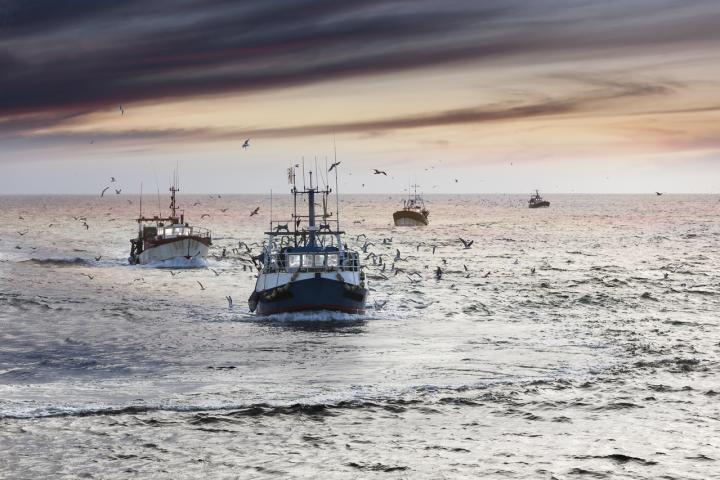
Read the full article…

Become a Member and get unlimited access to all articles.

Register

Already a member? Log in here

Climate Change Hitting West Coast Fishing Fleets, Study Shows Vessels Further North Will Experience More Dramatic Changes

A new NOAA Fisheries study examined how climate change might affect commercial fishing fleets on the U.S. West Coast, assessing the risk to different bottom trawl groundfish fishing fleets in California, Oregon, and Washington.

Read the full article…

Become a Member and get unlimited access to all articles.

Register

Already a member? Log in here

NOAA Status Review Says Sacramento Winter-Run Chinook Remain Endangered, Serious Threats From Climate Change, Disease

Though agencies and partners have pulled together to support the recovery of endangered Sacramento winter-run Chinook salmon in the last few years, NOAA Fisheries says the species is still in trouble, facing threats from climate change and other factors.

Read the full article…

Become a Member and get unlimited access to all articles.

Register

Already a member? Log in here

Montana Files Notice Of Intent To Sue USFWS Over Recent Wolverine ESA Listing

Montana Fish, Wildlife & Parks has notified the U.S. Fish and Wildlife Service of its intent to pursue legal action over the recent listing of wolverines as a threatened species.

Read the full article…

Become a Member and get unlimited access to all articles.

Register

Already a member? Log in here

Marine Heat Waves Trigger Earlier Reproduction, High Juvenile Mortality In Pacific Cod In Gulf Of Alaska Years After Event

Marine heat waves appear to trigger earlier reproduction, high mortality in early life stages and fewer surviving juvenile Pacific cod in the Gulf of Alaska, a new study from Oregon State University shows.

Read the full article…

Become a Member and get unlimited access to all articles.

Register

Already a member? Log in here

Montana Study Quantifies Interconnected Impacts Of Climate Change, Irrigation On Hundreds Of Western Watersheds’ Surface Water Flows

In a study that could help reshape understanding and management of water resources in the Western United States, David Ketchum, a 2023 graduate of the University of Montana systems ecology Ph.D. program, has unveiled a 35-year analysis quantifying the interconnected impacts of climate change and irrigation on surface water flows.

Read the full article…

Become a Member and get unlimited access to all articles.

Register

Already a member? Log in here

Montana Survey Shows Tolerance Of Wolves Way Up Among State’s General Population, Tolerance of Wolf Hunting Down

Montanans have varying attitudes and beliefs about wolves and wolf management, and over time some of those feelings have shifted, according to a new survey conducted cooperatively by Montana Fish, Wildlife & Parks and the University of Montana.

Read the full article…

Become a Member and get unlimited access to all articles.

Register

Already a member? Log in here

Washington Governor Directs WDFW To Draft New Rules For Handling Wolf-Livestock Conflicts

Washington Gov. Jay Inslee last week directed the Washington Fish and Wildlife Commission to draft new rules to guide when wolves can be killed for conflict with livestock and prioritize using nonlethal methods of conflict deterrence over killing wolves.

Read the full article…

Become a Member and get unlimited access to all articles.

Register

Already a member? Log in here

Canadian Researchers Find Toxic Chemicals From Oil Spills, Wildfire Smoke (PAHs) In Killer Whales, Transfers Mother To Fetus

Toxic chemicals produced from oil emissions and wildfire smoke have been found in muscle and liver samples from Southern Resident killer whales and Bigg’s killer whales.

Read the full article…

Become a Member and get unlimited access to all articles.

Register

Already a member? Log in here

Tree Ring History: Study Shows Oregon Cascade Range Forests Burned More Often Than Previously Thought, But Fires Much Smaller

Forests on the west slope of Oregon’s Cascade Range experienced fire much more often between 1500 and 1895 than had been previously thought, according to new research by scientists at Oregon State University.

Read the full article…

Become a Member and get unlimited access to all articles.

Register

Already a member? Log in here

NOAA’s 2023 Arctic Report Card: Summer Air Temperatures Warmest Ever Observed, New Chapter Focuses On Salmon

NOAA’s 2023 Arctic Report Card documents new records showing that human-caused warming of the air, ocean and land is affecting people, ecosystems and communities across the Arctic region, which is heating up faster than any other part of the world.

Read the full article…

Become a Member and get unlimited access to all articles.

Register

Already a member? Log in here

Specialized Forecasts Can Predict A Year In Advance Ocean Changes That Shift Fisheries, Cause Conflicts

Two new research studies describe the increasing accuracy of specialized scientific models in forecasting changes in the ocean up to a year in advance.

Read the full article…

Become a Member and get unlimited access to all articles.

Register

Already a member? Log in here

The Heat Is On: Scientists Say Supercharged Heat Waves Will Strike Harder, More Often In Pacific Northwest

North America’s 2021 heat wave was Washington’s deadliest weather-related disaster, claiming over 100 lives in the evergreen state and many others in neighboring regions. Scientists not only suggest that such heat waves will grow more intense and strike more often—in new work, they reveal the underlying mechanism behind these strengthened heat waves.

Read the full article…

Become a Member and get unlimited access to all articles.

Register

Already a member? Log in here

The Heat Is On: Study Shows Pacific Northwest Snowpack Endangered By Increasing Spring Heatwaves

Even in the precipitation-heavy Pacific Northwest, more frequent heatwaves are threatening a key source of water supply.

Read the full article…

Become a Member and get unlimited access to all articles.

Register

Already a member? Log in here

USFWS Reverses Course, Lists North American Wolverine As Threatened Under ESA, Taking Comment On Rule Allowing Certain ‘Take’ Activities

The U.S. Fish and Wildlife Service has announced its final rule to list the distinct population segment of the North American wolverine in the contiguous U.S. as a threatened species under the Endangered Species Act.

Read the full article…

Become a Member and get unlimited access to all articles.

Register

Already a member? Log in here

Conservation Groups File Appeal Urging Washington Governor To Order New Rules For Wolf-Killing

Conservation groups this week filed an appeal asking Washington Gov. Jay Inslee to order the Washington Fish and Wildlife Commission to draft enforceable rules that limit when the state can kill endangered wolves for conflicts with livestock.

Read the full article…

Become a Member and get unlimited access to all articles.

Register

Already a member? Log in here

Déjà Vu: Oregon Study Says Once Again Salmon-Eating Cormorants Need To Somehow Be Relocated From Astoria Bridge Back To Estuary Island

The thousands of double-crested cormorants nesting on the 5-mile-long Astoria-Megler Bridge in the Columbia River estuary that are damaging the bridge, causing safety problems and eating more salmon and steelhead smolts must go, according to a value engineering study led by the Oregon Department of Transportation.

Read the full article…

Become a Member and get unlimited access to all articles.

Register

Already a member? Log in here

National Climate Assessment Details Challenges To Northwest Salmon Recovery; Warming ‘Increases Extinction Risk For Species Already At Low Abundance’

The Fifth National Climate Assessment (NCA5) released this week finds that the impacts of weather extremes — exacerbated by climate change — are far-reaching across every region of the United States. And it indicates a warming future threatens Northwest salmon recovery.

Read the full article…

Become a Member and get unlimited access to all articles.

Register

Already a member? Log in here

USFWS Finalizes Designation Of Gray Wolf Experimental Population In Colorado, Wolves To Come From Oregon

In support of a statewide voter-led initiative passed in November 2020, the U.S. Fish and Wildlife Service has finalized the designation of an experimental population of gray wolves in Colorado under the Endangered Species Act. This action provides management flexibility in support of the state of Colorado’s voter-mandated gray wolf reintroduction program.

Read the full article…

Become a Member and get unlimited access to all articles.

Register

Already a member? Log in here

USFWS Seeks Comment On Draft Strategy To Remove Non-Native Barred Owls To Save California’s Spotted Owls

The U.S. Fish and Wildlife Service is seeking public input on a draft environmental impact statement and draft Barred Owl Management Strategy that addresses the threat of the non-native and invasive barred owls to native northern and California spotted owls.

Read the full article…

Become a Member and get unlimited access to all articles.

Register

Already a member? Log in here

Rethinking Wolf Hunting Behavior: Researchers Observe Wolves Killing Sea Otters, Seals On Alaska Coast

Firsthand observations of a wolf hunting and killing a harbor seal and a group of wolves hunting and consuming a sea otter on Alaska’s Katmai coast have led scientists to reconsider assumptions about wolf hunting behavior.

Read the full article…

Become a Member and get unlimited access to all articles.

Register

Already a member? Log in here

OSU Scientists Author State Of The Climate Report: ‘We Are On Our Way To Potential Collapse Of Natural, Socioeconomic Systems’

An international coalition of climate scientists says in a paper published this week that the Earth’s vital signs have worsened beyond anything humans have yet seen, to the point that life on the planet is imperiled.

Read the full article…

Become a Member and get unlimited access to all articles.

Register

Already a member? Log in here

Draft Grizzly Bear Restoration Plan By USFWS, NPS Calls For 200 Bears In North Cascades Within 60-100 Years

The U.S. Fish and Wildlife Service and National Park Service have released a draft plan analyzing options to restore grizzly bears to the North Cascades in Washington.

Read the full article…

Become a Member and get unlimited access to all articles.

Register

Already a member? Log in here

Report Says Floating Offshore Wind Farms Off Southern Oregon/Northern California Coast Could Bring Billions In Value, Power A Million Homes

A new report from Pacific Northwest National Laboratory shows that along a 200-mile stretch of ocean off the coast of southern Oregon and northern California, floating wind farms could potentially triple the Pacific Northwest’s wind power capacity while offsetting potentially billions of dollars in costs for utilities, ratepayers, insurance companies, and others across the West who bear the cost of climate change’s effects.

Read the full article…

Become a Member and get unlimited access to all articles.

Register

Already a member? Log in here

Up To 10 Wolves From Northeast Oregon To Be Relocated To Colorado West Slope In Voter-Approved Reintroduction Effort

In a one-year agreement announced between Colorado Parks and Wildlife and Oregon Department of Fish and Wildlife, Oregon will be a source for up to 10 wolves for the Colorado gray wolf reintroduction effort. These wolves will be captured and translocated between December 2023 and March 2024.

Read the full article…

Become a Member and get unlimited access to all articles.

Register

Already a member? Log in here

Group Files Lawsuit Against USFWS Over Lack Of ESA Protection For American Bumblebees

The Center for Biological Diversity filed a formal notice this week of its intent to sue the U.S. Fish and Wildlife Service for failing to protect four imperiled bee species, including American bumblebees, under the Endangered Species Act. Southern Plains bumblebees, variable cuckoo bumblebees and blue calamintha bees are also included in today’s filing.

Read the full article…

Become a Member and get unlimited access to all articles.

Register

Already a member? Log in here

Portland State Inventory Shows Western States’ Glaciers Disappearing, Getting Smaller

The Western United States is losing its glaciers. A new inventory from Portland State University researchers shows that some glaciers have disappeared entirely, some no longer show movement, some are too small to meet the 0.01 square kilometer minimum and some are actually rock glaciers — rocky debris with ice in the pore spaces.

Read the full article…

Become a Member and get unlimited access to all articles.

Register

Already a member? Log in here

Researchers Use Models To Estimate Where West Coast Salmon Habitat Will Remain Favorable With Warming Climate

With climate change, some spawning habitat in British Columbia could actually expand, peaking in area around 2060, according to a recent study that looked at current stream habitat and projected future favorable spawning habitat as the climate warms.

Read the full article…

Become a Member and get unlimited access to all articles.

Register

Already a member? Log in here

UW Researchers Find That Fall Snow Levels (December) In Oregon, Washington Can Predict Total Snowfall An Area Will Get

Researchers who study water resources want to know how much snow an area will get in a season. The total snowpack gives scientists a better idea of how much water will be available for hydropower, irrigation and drinking later in the year.

Read the full article…

Become a Member and get unlimited access to all articles.

Register

Already a member? Log in here

New Research Shows Surprising Resilience Of Fisheries To Marine Heat Waves; 248 Heat Waves 1993-2019 Analyzed

New research has found that marine heat waves – prolonged periods of unusually warm ocean temperatures – haven’t had a lasting effect on the fish communities that feed most of the world.

Read the full article…

Become a Member and get unlimited access to all articles.

Register

Already a member? Log in here

UW Study Quantifies Fossil Fuel Emissions Causing Polar Bear Declines; Method Can Be Used For Other Species Impacted By Global Warming

New research from the University of Washington and Polar Bears International in Bozeman, Montana, quantifies the relationship between greenhouse gas emissions and the survival of polar bear populations.
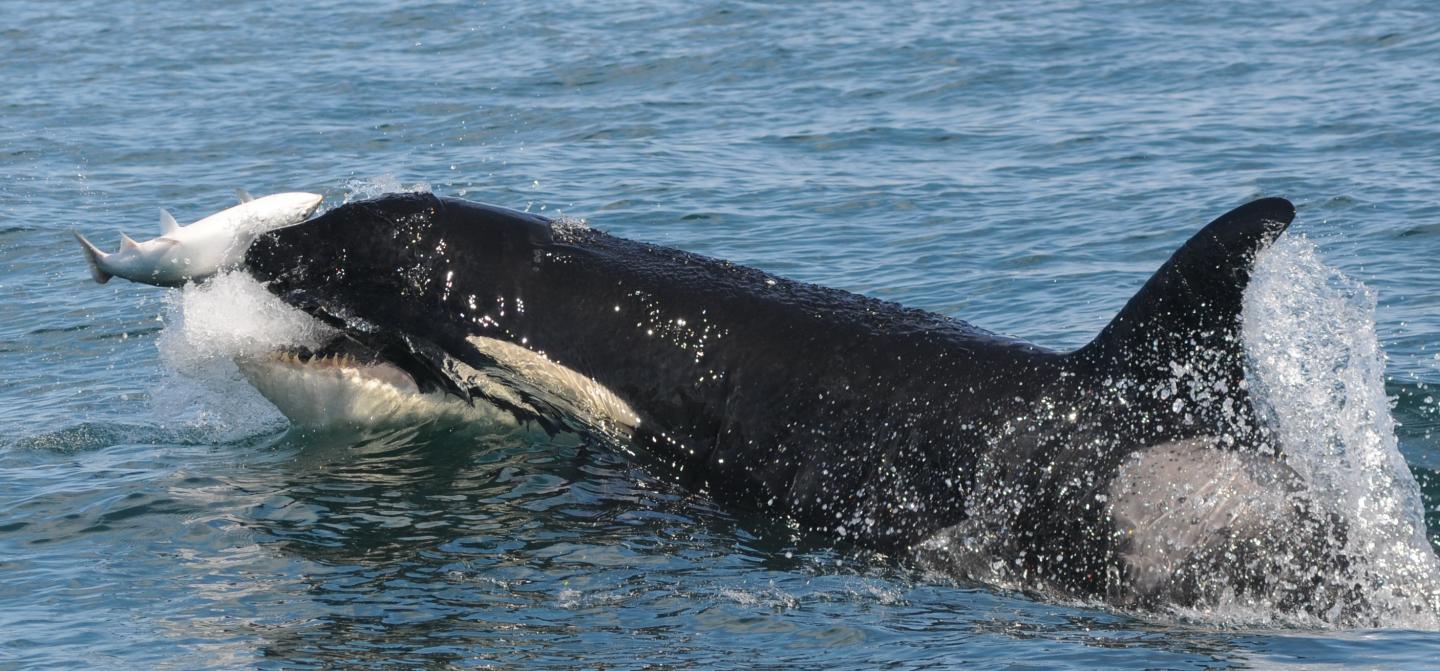
Read the full article…

Become a Member and get unlimited access to all articles.

Register

Already a member? Log in here

NOAA Begins Court-Ordered Work On EIS Analyzing Increase Of Hatchery Salmon Production To Feed Imperiled Killer Whales

Responding to a recent District Court order, NOAA Fisheries has opened a review of its prey increase program specifically designed to provide more food for endangered Southern Resident killer whales in Puget Sound. NOAA is seeking written and verbal feedback from the public as it develops an Environmental Impact Statement for the program.

Read the full article…

Become a Member and get unlimited access to all articles.

Register

Already a member? Log in here

Bad News For Salmon: Walleye Spreading Into Idaho, Most Reports Ever Of Walleye Upstream Of Lower Granite Dam

Idaho Fish and Game has received more verified reports and pictures from people catching walleye in the Hells Canyon reach of the Snake River and Salmon River in 2023 than in all previous years.

Read the full article…

Become a Member and get unlimited access to all articles.

Register

Already a member? Log in here

Climate Change Will Make Fishing For West Coast Groundfish More Difficult As Species Redistribute; Vessels Will Have To Travel Farther, Fish Deeper

Shifting ocean conditions associated with climate change will likely send high-value sablefish into deeper waters off the West Coast, new research shows. That could make the fish tougher to catch and force fishing crews to follow them or shift to other, more accessible species.

Read the full article…

Become a Member and get unlimited access to all articles.

Register

Already a member? Log in here

Is A Growing American White Pelican Population In Mid-Columbia River Threat To Salmonids? Researchers Now Studying Predation Impacts

A growing American white pelican population on an island in the mid-Columbia River basin could be a new threat to salmon and steelhead. The large white birds not only scoop out batches of juvenile fish, they also have been known to eat adult salmon, including sockeye salmon and other fish as large as 29 inches.

Read the full article…

Become a Member and get unlimited access to all articles.

Register

Already a member? Log in here

Promising Sign For Declining Gray Whales? Researchers Count Increase In Calves Headed North To Arctic Feeding Grounds

Almost twice as many gray whale calves swam north with their mothers to their Arctic feeding grounds this spring compared to last year, according to a new count completed by NOAA Fisheries’ Southwest Fisheries Science Center.
Read the full article…

Become a Member and get unlimited access to all articles.

Register

Already a member? Log in here

Study Of Protected Birds Found Dead Along Powerlines In The West Found Illegal Shooting A Significant Threat, 66 Percent Of Birds Studied Shot

A study examining protected birds found dead along power lines on public lands in the western U.S. shows that gunshot deaths were three times more common than deaths from other causes.

Read the full article…

Become a Member and get unlimited access to all articles.

Register

Already a member? Log in here

Construction Work On First Permitted Wave Energy Test Facility Off Oregon Coast Will Be Visible This Month

The next step in Oregon State University’s construction of a wave energy testing facility off the Oregon Coast is visible to residents and visitors to the area this month.

Read the full article…

Become a Member and get unlimited access to all articles.

Register

Already a member? Log in here

Citing Sockeye-Killing Warm Water, Groups To File Lawsuit Pushing For Breaching Of Lower Snake Dams

Four conservation groups notified the U.S. Army Corps of Engineers that they intend to sue the agency over the heat pollution created by the four lower Snake River dams. The groups allege the dams overheat the river’s water and those conditions are killing or injuring Snake River sockeye salmon listed as endangered under the federal Endangered Species Act.

Read the full article…

Become a Member and get unlimited access to all articles.

Register

Already a member? Log in here

Study Tracks Decades Of Juvenile Salmon Migration Timing For 66 West Coast Populations; Climate Change Impacts Vary

Climate change has led to earlier spring blooms for wildflowers and ocean plankton but the impacts on salmon migration are more complicated, according to new research.
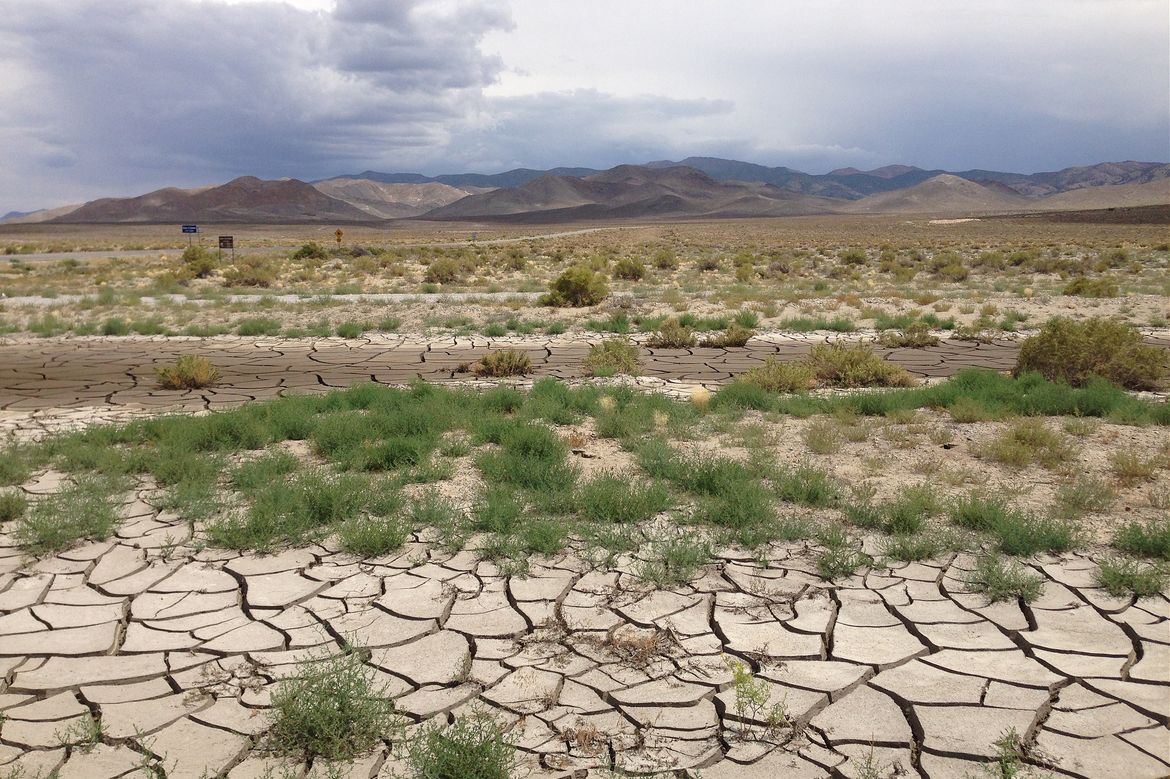
Read the full article…

Become a Member and get unlimited access to all articles.

Register

Already a member? Log in here

Droughts In Western States Driving Up Emissions When Utilities Forced To Switch From Hydro To Fossil Fuels, Has Cost Billions Past 20 Years

When drought-stricken rivers and reservoirs run low across the American West, hydropower dries up and utilities fire up hundreds of power plants that burn coal, oil, or natural gas to keep up with demand for electricity. The timing couldn’t be worse, as accompanying heat waves drive up energy use, often to power air conditioners.

Read the full article…

Become a Member and get unlimited access to all articles.

Register

Already a member? Log in here

Paper Synthesizes Latest Research On Wildfires In The West, More Firefighters On Ground, In Air Not The Answer

Since 1980, fires have gotten significantly larger and more severe across California and the western United States, vastly increasing the amount of destruction they cause.

Read the full article…

Become a Member and get unlimited access to all articles.

Register

Already a member? Log in here

Alaska Fastest Warming State; DOE Looking At Whether Pumped Storage Hydropower Will Reduce Emissions By Backing Up Renewables

Alaska is warming faster than any other state. Pumped storage hydropower has the potential to integrate more wind and solar into the energy grid to reduce the carbon dioxide emissions driving climate change in the state.

Read the full article…

Become a Member and get unlimited access to all articles.

Register

Already a member? Log in here

Wake-Up Call: Climate Change Has Reduced Availability Of Water In Colorado River Basin Equivalent To Entire Storage Of Lake Mead (10 Trillion Gallons)

A recent study has revealed that climate change has had a profound impact on the Colorado River Basin between the years 2000 and 2021. The study shows that over this period, more than 40 trillion liters (10 trillion gallons) of water were lost due to climate change effects, which is roughly equivalent to the entire storage capacity of Lake Mead.

Read the full article…

Become a Member and get unlimited access to all articles.

Register

Already a member? Log in here

When Ocean Warms, Chinook Bycatch In Pacific Hake Fishery Rises; Changing Water Temperatures Affect Salmon Distribution

Rates of Chinook salmon bycatch in the Pacific hake fishery rise during years when ocean temperatures are warmer, a signal that climate change and increased frequency of marine heatwaves could lead to higher bycatch rates, new research indicates.

Read the full article…

Become a Member and get unlimited access to all articles.

Register

Already a member? Log in here

We’re In Hot Water: Half The World’s Ocean May Experience Marine Heatwave Conditions By September, Never So Widespread

As scientists around the world sound the alarm about record sea surface temperatures, a new experimental NOAA forecast system predicts that half of the global ocean may experience marine heatwave conditions by the end of summer.

Read the full article…

Become a Member and get unlimited access to all articles.

Register

Already a member? Log in here

UW Research Show Massive Seabird Die-Offs Off West Coast Indicator Of Marine Heat Waves; Can Kill Millions Of Birds Within Months

New research led by the University of Washington uses data collected by coastal residents along beaches from central California to Alaska to understand how seabirds have fared in recent decades. The paper shows that persistent marine heat waves lead to massive seabird die-offs months later.

Read the full article…

Become a Member and get unlimited access to all articles.

Register

Already a member? Log in here

NOAA Fisheries New Count Of West Coast Gray Whales Shows Continued Decline, Connected To Shifting Prey Abundance In Arctic

A new count of gray whales that migrate along the West Coast each year found a continued decline of this population. However, new clues suggest that population numbers may soon start to rebound.

Read the full article…

Become a Member and get unlimited access to all articles.

Register

Already a member? Log in here

Avian Responses To Climate Change: Birds Raise Fewer Young When Spring Arrives Earlier In A Warming World

A new study of North American songbirds finds that birds can’t keep up with the earlier arrival of spring caused by climate change. As a result, they’re raising fewer young.

Read the full article…

Become a Member and get unlimited access to all articles.

Register

Already a member? Log in here

Montana Wolf Population Drops Slightly To 1,087 Wolves, Packs Now At 181, Down By 10; 258 Animals Harvested

For the second year in a row, wolf numbers in Montana did again fall slightly in 2022, according to the 2022 Montana Fish, Wildlife & Parks Wolf Report.

Read the full article…

Become a Member and get unlimited access to all articles.

Register

Already a member? Log in here

Cascades, Coastal Mountain Ranges Most Vulnerable To Shift From Snow To Extreme Rain Due To Warming World, Civil Engineers Should Prepare

As the world warms, extreme weather events grow – and they also change. Researchers at the Department of Energy’s Lawrence Berkeley National Laboratory found that climate change is shifting snowfall to rainfall on mountains across the Northern Hemisphere. Those surges of liquid water bring a distinct set of dangers, including floods, landslides, and soil erosion.

Read the full article…

Become a Member and get unlimited access to all articles.

Register

Already a member? Log in here

Scientists Concerned About Increasing Skin Disease In Southern Resident Killer Whales; May Be Sign Of Compromised Immune System

In a recently published study, scientists investigating the endangered southern resident killer whales have made a noteworthy observation: the prevalence of skin disease within this population has shown a significant increase.

Read the full article…

Become a Member and get unlimited access to all articles.

Register

Already a member? Log in here

NOAA Court Filing Defends Hatchery ‘Prey Increase’ Program For Imperiled Orcas; A ‘Critical Tool’ To Provide Salmon For Whales Suffering Food Shortage

A three-year-old hatchery production program spread across Puget Sound and the Columbia and Snake rivers, designed specifically to provide more food for Southern Resident killer whales should remain in place, according to NOAA Fisheries in its most recent declaration in federal court.

Read the full article…

Become a Member and get unlimited access to all articles.

Register

Already a member? Log in here

More Letters, Meetings About What To Do With Salmon-Eating Cormorants On Astoria Bridge; Chase Them Back To East Sand Island? Culling?

In a January letter, the Northwest Power and Conservation Council invited Oregon and Washington transportation agencies to meet jointly to discuss their mutual problem of double-crested cormorants on the Astoria-Megler Bridge that spans the Columbia River estuary at Astoria, OR.

Read the full article…

Become a Member and get unlimited access to all articles.

Register

Already a member? Log in here

Study Shows Human-Caused Climate Change Cause For Increase In California Wildfires, Five Largest Since 2020

n the quarter century between 1996 and 2020, wildfires in California consumed five times more area than they did from 1971 to 1995. Researchers at the University of California and other international institutions have concluded that nearly all of the increase in scorched terrain can be blamed on human-caused climate change.

Read the full article…

Become a Member and get unlimited access to all articles.

Register

Already a member? Log in here

Clean Energy Microgrids Can Help Communities Adapt To Wildfires, Safety Power Shutoffs

Wildfires have become increasingly frequent due to climate change, with record occurrences in areas not historically prone to them. In California, wildfires and regional power shutoffs have cost billions and taken lives. For some 46 million Americans living next to forests – at what scientists call the “wildland-urban interface” (WUI) – the risks of wildfire can be especially acute.

Read the full article…

Become a Member and get unlimited access to all articles.

Register

Already a member? Log in here

Researchers Survey Studies Of Avian Predation Of Columbia River Salmon, Steelhead; Identify Trends, Predator-Prey Dynamics, Fish Susceptibility Factors

The breeding season for avian predators, March–August, overlaps with the peak out-migration of juvenile salmon and steelhead, April — August, according to a recent survey of literature that looked specifically at peer-reviewed studies of Caspian terns, double-crested cormorants and gulls that prey on salmonids in the Columbia River basin.

Read the full article…

Become a Member and get unlimited access to all articles.

Register

Already a member? Log in here

Lessons From ‘Blob’ Will Help Manage Fisheries During Future Marine Heatwaves; ‘Greatest Immediate Climate Threat To Oceans’

In early 2014, a great anomaly descended upon the seas: A patch of warm water that manifested in the Gulf of Alaska. Scientists called it “The Blob.”

Read the full article…

Become a Member and get unlimited access to all articles.

Register

Already a member? Log in here

Alaskan, Russian Scientists Collaborate To Study How Ocean Warming Driving Bering Sea Fish Stocks Beyond Traditional Habitats

As the ocean warms, marine fish are on the move—beyond their traditional habitats and across international boundaries. Understanding these patterns of movement is essential to predicting change and managing climate-resilient fisheries.  

Read the full article…

Become a Member and get unlimited access to all articles.

Register

Already a member? Log in here

Study: Even With Population Density Increase, Food Decline, Climate Change, Human Impacts, Yellowstone Grizzlies Maintaining Body Fat For Hibernation

Grizzly bears in the Greater Yellowstone Ecosystem have been able to gain the body fat they need for hibernation even as population densities have increased and as climate change and human impacts have changed the availability of some foods, according to a new study by the U.S. Geological Survey and its partners.

Read the full article…

Become a Member and get unlimited access to all articles.

Register

Already a member? Log in here

Washington Predator-Prey Project: New Research Shows Coyotes, Bobcats Move Into Human Inhabited Areas To Avoid Cougars, Wolves

Since their protection under the Endangered Species Act, wolf populations have been making a comeback in the continental United States. Conservationists have argued that the presence of wolves and other apex predators, so named because they have no known predators aside from people, can help keep smaller predator species in check.

Read the full article…

Become a Member and get unlimited access to all articles.

Register

Already a member? Log in here

Conservation Groups Petition For ESA Listing Of Washington Coastal Spring Chinook Showing Significant Declines

The Center for Biological Diversity and Pacific Rivers have filed a petition to list Washington coast spring Chinook salmon under the federal Endangered Species Act.

Read the full article…

Become a Member and get unlimited access to all articles.

Register

Already a member? Log in here

Inslee Signs Legislation Creating 1000-Yard Mandatory Vessel Buffer Around Endangered Orcas, Effective Jan. 2025

Washington Gov. Jay Inslee has signed new legislation to create a mandatory 1,000-yard vessel buffer around Southern Resident killer whales to protect the endangered population from vessel noise and disturbance. The expanded buffer requirement goes into effect January 2025.

Read the full article…

Become a Member and get unlimited access to all articles.

Register

Already a member? Log in here

Regional Researchers Mount Three-Year Effort To Study Impacts Of Climate Change Off Washington’s Coast; ‘A Sentinel Site’

A team of Oregon State University researchers is leading a three-year effort to learn more about climate fluctuations in Olympic Coast National Marine Sanctuary using more than 20 years of oceanographic data.

Read the full article…

Become a Member and get unlimited access to all articles.

Register

Already a member? Log in here

Oregon Legislation Offers More Flexibility In Managing Non-Native Game Fish -Bass, Walleye- That Gobble Up Native Salmon, Steelhead Smolts

A legislative bill sitting on Oregon Gov. Tina Kotek’s desk waiting for signature would give Oregon more flexibility in managing predatory non-native game fish species –such as bass and walleye — that consume salmon and steelhead smolts in the Columbia River basin.
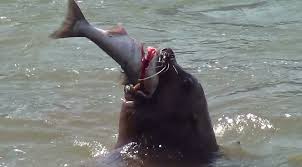
Read the full article…

Become a Member and get unlimited access to all articles.

Register

Already a member? Log in here

Sea Lions Chasing Good Smelt Run Flood Columbia River In High Numbers; Staying For Spring Chinook Feasting

About 200 sea lions were counted last week in the Columbia River between the I-205 Bridge and Bonneville Dam, a 36-mile stretch of river, spurring states and tribes to begin trapping and euthanizing the pinnipeds at Bonneville Dam.

Read the full article…

Become a Member and get unlimited access to all articles.

Register

Already a member? Log in here

Southern Resident Orca Buffer Bill Clears Washington Legislature; All Boats Must Stay 1,000 Yards From Killer Whales

A bill to create a 1,000-yard buffer around the critically endangered Southern Resident orcas is headed to Washington Gov. Jay Inslee’s desk for his signature after clearing a final legislative hurdle this week. Senate Bill 5371 requires that boaters stay 1,000 yards away from Southern Residents, beginning in 2025.

Read the full article…

Become a Member and get unlimited access to all articles.

Register

Already a member? Log in here

Oregon Wolf Report Shows Increase Of Three Wolves Last Year, Four Breeding Pairs In Western Oregon; ‘Illegal Take Unacceptably High’

The minimum known count of wolves in Oregon at the end of 2022 was 178 wolves, an increase of three wolves over the 2021 minimum known number of 175, according to the Oregon Wolf Conservation and Management annual report released today.

Read the full article…

Become a Member and get unlimited access to all articles.

Register

Already a member? Log in here

Tribes, Corps Studying Impacts Of Sediment Buildup (Deltas) At Mouths Of Columbia River Tribs; Impacts Temps, Predation, Salmon Survival

The amount of sediment carried by Columbia River waters to the Pacific Ocean has declined by about half since Bonneville Dam was built in 1935. Much of the sediment no longer moved by the river has found a home at the mouths of tributaries, creating shallow sediment fans or deltas where warm water and predators impact juvenile salmon and steelhead, some listed under the federal Endangered Species Act.

Read the full article…

Become a Member and get unlimited access to all articles.

Register

Already a member? Log in here

Washington Wolf Report Shows 5 Percent Increase In State’s Population; A Minimum 216 Wolves, 37 Packs, First Pack In South Cascades

The Washington Gray Wolf Conservation and Management 2022 Annual Report released by the Washington Department of Fish and Wildlife shows a 5% increase in wolf population growth from the previous count in 2021. WDFW also documented Washington’s first pack to recolonize the south Cascades this winter.

Read the full article…

Become a Member and get unlimited access to all articles.

Register

Already a member? Log in here

Migratory Birds Can Partially Offset Climate Change, But Such Compensation Comes With Cost

Deteriorating habitat conditions caused by climate change are wreaking havoc with the timing of bird migration.

Read the full article…

Become a Member and get unlimited access to all articles.

Register

Already a member? Log in here

Comments On Corps’ Draft EIS for 13 Willamette Valley Dams Question Whether Plan Avoids Jeopardy For ESA-Listed Salmonids

A massive 2,000 page draft environmental impact statement on how Willamette River Valley dams impact threatened salmon, steelhead and bull trout is flawed and does not address one of its own primary goals, which is meeting obligations under the Endangered Species Act to avoid jeopardizing the existence of listed species, according to several groups and agencies that submitted comments to the U.S. Army Corps of Engineers in late February.

Read the full article…

Become a Member and get unlimited access to all articles.

Register

Already a member? Log in here

Why Are Southern Resident Killer Whales Not Recovering? Ground-Breaking Study Shows Inbreeding Major Contributor To Decline Of Endangered Orcas

The small size and isolation of the endangered population of Southern Resident killer whales in the Pacific Northwest have led to high levels of inbreeding. This inbreeding has contributed to their decline, which has continued as surrounding killer whale populations expand, according to research published in Nature Ecology and Evolution.

Read the full article…

Become a Member and get unlimited access to all articles.

Register

Already a member? Log in here

Northwest Washington Study: With Less Salmon To Eat, Bald Eagles Showing Up On Dairy Farms To Get Food From Farm By-Products

Bald Eagles and dairy farmers exist in a mutually beneficial relationship in parts of northwestern Washington State. According to a new study, this “win-win” relationship has been a more recent development, driven by the impact of climate change on eagles’ traditional winter diet of salmon carcasses, as well as by increased eagle abundance following decades of conservation efforts.
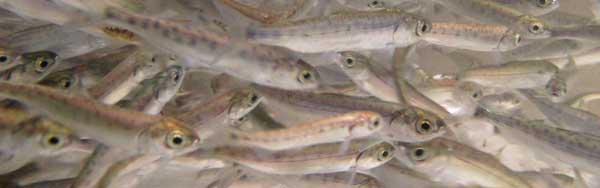
Read the full article…

Become a Member and get unlimited access to all articles.

Register

Already a member? Log in here

With End Of La Nina, Ocean Conditions Likely Trending Downward For Salmon, Steelhead Survival, Mass Of Warm Water In North Pacific

Good years in the Pacific Ocean for salmon and steelhead, as the last couple of years have been, are an anomaly. Instead, ocean conditions are generally trending downward, according to a NOAA Fisheries scientist briefing the Northwest Power and Conservation Council.

Read the full article…

Become a Member and get unlimited access to all articles.

Register

Already a member? Log in here

UW/NOAA Study Looks At Why Northern Resident Orcas Doing Better Than Southern Residents; They Hunt Differently

In the Pacific Northwest and British Columbia, scientists have been sounding the alarm about the plight of southern resident orcas. Annual counts show that population numbers, already precarious, have fallen back to mid-1970s levels.

Read the full article…

Become a Member and get unlimited access to all articles.

Register

Already a member? Log in here

California Current Ecosystem Status Report Shows Disconnect Between Oceanographic Predictions, Observed Conditions

Ecological relationships across the Pacific Coast that once guided annual expectations such as salmon returns are evolving as climate change disrupts long-standing connections. NOAA Fisheries researchers report these findings in their latest Ecosystem Status Report for the California Current Ecosystem.

Read the full article…

Become a Member and get unlimited access to all articles.

Register

Already a member? Log in here

Judge Rules NOAA Fisheries Failed To Protect Humpback Whales When Issued Take Permit For Sablefish Pot Fishery

A federal court this week ruled in favor of the Center for Biological Diversity in a lawsuit arguing that the National Marine Fisheries Service failed to protect endangered Pacific humpback whales from deadly entanglements in sablefish pot gear off California, Oregon and Washington.

Read the full article…

Become a Member and get unlimited access to all articles.

Register

Already a member? Log in here

California Salmon: Shrinking Age Distribution Of Returning Spawners Increases Impacts Of A Bad Year, Warming Climate; Older Fish Rarely Observed

By returning to spawn in the Sacramento River at different ages, Chinook salmon lessen the potential impact of a bad year and increase the stability of their population in the face of climate variability, according to a new study by scientists at UC Santa Cruz and NOAA Fisheries.

Read the full article…

Become a Member and get unlimited access to all articles.

Register

Already a member? Log in here

USFWS Releases Draft Recovery For Oregon Spotted Frog, Most Aquatic Frog In PNW; Over 76 Percent Of Range Gone

The U.S. Fish and Wildlife Service has announced the availability of a draft recovery plan for the Oregon spotted frog, which has lost most of its habitat from southern British Columbia, through the Cascades, and into southern Oregon.

Read the full article…

Become a Member and get unlimited access to all articles.

Register

Already a member? Log in here

Oregon State Scientists Analyze 41 Climate Change ‘Amplifying Feedback Loops’; Threats Looming From Tipping Points

An international collaboration led by Oregon State University scientists has identified 27 global warming accelerators known as amplifying feedback loops, including some that the researchers say may not be fully accounted for in climate models.

Read the full article…

Become a Member and get unlimited access to all articles.

Register

Already a member? Log in here

WSU Study Estimates, Surprisingly, About 50 Canada Lynx in Glacier National Park; Could Provide Climate Haven

Glacier National Park is home to around 50 Canada lynx, more than expected, surprising scientists who recently conducted the first parkwide occupancy survey for the North American cat.

Read the full article…

Become a Member and get unlimited access to all articles.

Register

Already a member? Log in here

New Data On Salmon Behavior In Ocean, Availability of Chinook For Endangered Orcas, Resets Threshold For Fishing Limits

New research examines how Chinook salmon from West Coast rivers travel through the ocean. It shows that endangered Southern Resident killer whales do not have access to as many salmon prey as previously thought.

Read the full article…

Become a Member and get unlimited access to all articles.

Register

Already a member? Log in here

NOAA Fisheries To Conduct Status Review Of Olympic Peninsula Wild Steelhead To Determine If ESA Listing Warranted

NOAA Fisheries says it will consider listing Olympic Peninsula summer and winter steelhead threatened or endangered under the federal Endangered Species Act. All populations of steelhead on the peninsula have continued to decline since 2017.

Read the full article…

Become a Member and get unlimited access to all articles.

Register

Already a member? Log in here

USFWS To Initiate Review Determining If Two Grizzly Bear Populations Should Be De-Listed Under Federal ESA

The U.S. Fish and Wildlife Service has completed the initial review of three petitions filed to remove the grizzly bear in the lower 48 States from the list of endangered and threatened wildlife under the Endangered Species Act in certain ecosystems. The Service says two of these petitions present substantial information indicating the grizzly bears in the Northern Continental Divide Ecosystem and the Greater Yellowstone Ecosystem may qualify as their own distinct population segment and may warrant removal from the ESA list.

Read the full article…

Become a Member and get unlimited access to all articles.

Register

Already a member? Log in here

UM Study On Montanans’ Views About Grizzly Bears: Most Think The Bruins Have Right To Exist, But Also Support Allowing Hunting

For an animal whose population barely tops 2,000, Montana’s grizzly bears hold an outsized presence in the psyche and politics of the Treasure State.

Read the full article…

Become a Member and get unlimited access to all articles.

Register

Already a member? Log in here

WDFW Report Calls For New Strategies To Deal With Climate Change Impacts On Streamflow, Salmon: ‘Need To Address If Want To Recover Salmon’

A new report recently released by the Washington Department of Fish and Wildlife calls for new strategies and policy tools to address consequences of increasing human demand for water and the effects of climate change on Washington’s rivers, streams and salmon.

Read the full article…

Become a Member and get unlimited access to all articles.

Register

Already a member? Log in here

Endangered Southern Resident Killer Whale Mothers Pay High Price For Raising Sons: Sacrifice Reproduction (And Species Recovery) To Care For Male Offspring

Raising sons is an exhausting experience that leaves killer whale mothers far less likely to produce more offspring, new research shows.
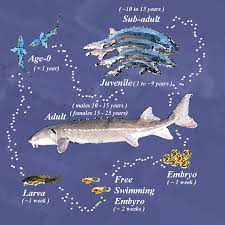
Read the full article…

Become a Member and get unlimited access to all articles.

Register

Already a member? Log in here

Concerning Drop In White Sturgeon Abundance Prompts Fisheries Managers To Recommend No Retention Fishing Below Bonneville Dam

Oregon and Washington fishery agencies announced they will not propose commercial or recreational white sturgeon fishing this year downstream of Bonneville Dam due to a projected low abundance of legal-sized fish, according to a joint status report released this week by the states.

Read the full article…

Become a Member and get unlimited access to all articles.

Register

Already a member? Log in here

Draft Report Documents 2022 Sea Lion Fish Predation Numbers At Bonneville Dam; Notes Huge Take Of Struggling White Sturgeon

Sea lions continue taking a big bite out of spring fish runs at Bonneville Dam. More than 8 percent of winter steelhead and more than 3 percent of spring Chinook salmon were picked off by Steller and California sea lions that prey on the fish below the dam, according to a draft report by the U.S. Army Corps of Engineers.

Read the full article…

Become a Member and get unlimited access to all articles.

Register

Already a member? Log in here

Idaho’s Wolf Population Continues To Drop, Goal Is To Reduce 1,337 Wolves To Around 500

Idaho’s 2022 population estimate of 1,337 wolves declined by about 13%, or 206 wolves, compared with the 2021 estimate based on cameras surveys that measure the population during summer near its annual peak.
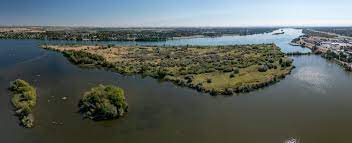
Read the full article…

Become a Member and get unlimited access to all articles.

Register

Already a member? Log in here

Draft Report Out For Comment On Improving Flows, Water Temps In Yakima River Delta To Aid Salmon, Steelhead

In partnership with the Washington Department of Fish and Wildlife, the U.S. Army Corps of Engineers is looking for public feedback on a draft report studying proposed next steps to restore flows for fish in the Yakima River delta.
Read the full article…

Become a Member and get unlimited access to all articles.

Register

Already a member? Log in here

Recent Atmospheric Rivers By The Numbers: Most Rainfall Since Lincoln Was President

From late Dec. 2022 into Jan. 2023, a series of nine “atmospheric rivers” dumped a record amount of rain and mountain snow across the western U.S. and Canada, hitting California particularly hard. More than 32 trillion gallons of water rained down across the state alone, and the moisture also pushed into much of the Intermountain West.

Read the full article…

Become a Member and get unlimited access to all articles.

Register

Already a member? Log in here

Council Reaches Out To State Agencies To Discuss ‘Alarming Conclusions’ Of Study Detailing Impacts To Salmon From Cormorants On Astoria Bridge

The Northwest Power and Conservation Council has asked the owner of the Astoria-Megler Bridge in Astoria to meet with them to talk about the double-crested cormorant problem in the Columbia River estuary.

Read the full article…

Become a Member and get unlimited access to all articles.

Register

Already a member? Log in here

Top Predator Feeding On Top Predator: After Eliminating Deer On Alaska Island, Wolves Now Stalking, Eating Sea Otters

Wolves on an Alaskan island caused a deer population to plummet and switched to primarily eating sea otters in just a few years, a finding scientists at Oregon State University and the Alaska Department of Fish and Game believe is the first case of sea otters becoming the primary food source for a land-based predator.

Read the full article…

Become a Member and get unlimited access to all articles.

Register

Already a member? Log in here

USGS Says Drought, Pesticides Have Reduced Western Bumble Bee By 57 percent, Could Rise To 97 Percent In Some Regions

The western bumble bee was once common in western North America, but increasing temperatures, drought, and pesticide use have contributed to a 57% decline in the occurrence of this species in its historical range, according to a new U.S. Geological Survey-led study. 

Read the full article…

Become a Member and get unlimited access to all articles.

Register

Already a member? Log in here

With Spring Heatwaves, Rapid Melt, April 1 May No Longer Be Reliable Benchmark For Evaluating Snowpack Levels, Western Water Supplies

Snow-capped mountains aren’t just scenic – they also provide natural water storage by creating reservoirs of frozen water that slowly melt into watersheds throughout the spring and summer months. Much of the Western U.S. relies on this process to renew and sustain freshwater supplies, and new research underscores the impacts of extreme weather conditions on this annual cycle. 

Read the full article…

Become a Member and get unlimited access to all articles.

Register

Already a member? Log in here

How Much Are Sea Lions, Seals Contributing To Salmon Decline In Washington Waters? Will Require Targeted Lethal Removal To Find Out

There is a “preponderance” of evidence that sea lions and seals (pinnipeds) in Washington’s Salish Sea and outer coast have contributed to the decline of salmon and steelhead in state waters, concludes a recent report by the Washington State Academy of Sciences.

Read the full article…

Become a Member and get unlimited access to all articles.

Register

Already a member? Log in here

PNNL Research: Water Resources Managers Need To Take Heed Of Western Winter Storms Getting Larger, Wetter

New research shows that the wettest and most extreme winter storms in the Western United States are only growing wetter and larger. These powerful storms are changing shape in a warmer world, sprawling to drench more land while simultaneously growing more intense at their cores.

Read the full article…

Become a Member and get unlimited access to all articles.

Register

Already a member? Log in here

Petition Filed Asking USFWS To Reintroduce Sea Otters Along West Coast

The Center for Biological Diversity submitted a petition this week asking the U.S. Fish and Wildlife Service to reintroduce sea otters to a large stretch of the West Coast. Threatened southern sea otters occupy only 13% of their historic range, and a small population of the animals currently lives on California’s central coast.

Read the full article…

Become a Member and get unlimited access to all articles.

Register

Already a member? Log in here

Harvard Study Puts A Number On What Exxon Knew Decades Ago About Climate Science

Climate projections reported by ExxonMobil scientists between 1977 and 2003 were accurate and skillful in predicting subsequent global warming and contradicted the company’s public claims, a new Harvard study shows.

Read the full article…

Become a Member and get unlimited access to all articles.

Register

Already a member? Log in here

Recovery Plan Released For High Elevation Stoneflies That Rely On Glacier Meltwater; Will Identify Potential Translocation Sites

The U.S. Fish and Wildlife Service this week announced the completion and publication of the final recovery plan for the Meltwater Lednian stonefly and Western Glacier stonefly.

Read the full article…

Become a Member and get unlimited access to all articles.

Register

Already a member? Log in here

Climate Change Study Shows Douglas Fir Trees More Stressed By Drier Air Than Less Rain

Douglas-fir trees will likely experience more stress from drier air as the climate changes than they will from less rain, computer modeling by Oregon State University scientists shows.

Read the full article…

Become a Member and get unlimited access to all articles.

Register

Already a member? Log in here

Toxic Toilet Paper Chemical, Other ‘Forever Chemicals’ Found In Bodies Of Endangered Southern Resident Killer Whales, Moved Up Food Chain

A chemical used in the production of toilet paper and ‘forever chemicals’ have been found in the bodies of orcas in British Columbia, including the endangered southern resident killer whales.

Read the full article…

Become a Member and get unlimited access to all articles.

Register

Already a member? Log in here

Goodbye Frozen, Freshwater Reservoirs: Researchers Say Most Glaciers In Western Canada Gone In 80 Years

Researchers project that most glaciers in western Canada will be gone in 80 years.

Read the full article…

Become a Member and get unlimited access to all articles.

Register

Already a member? Log in here

UW Puget Sound Study Shows Warming Oceans Have Decimated Marine Parasites; ‘Could Mean Bad Stuff For Us’

More than a century of preserved fish specimens offer a rare glimpse into long-term trends in parasite populations. New research from the University of Washington shows that fish parasites plummeted from 1880 to 2019, a 140-year stretch when Puget Sound — their habitat and the second-largest estuary in the mainland U.S. — warmed significantly.

Read the full article…

Become a Member and get unlimited access to all articles.

Register

Already a member? Log in here

Oregon Climate Report Details Risks, Opportunities As State Gets Warmer, More Arid, Glaciers Disappear

Oregon continues to face new and enduring hazards related to climate change, but opportunities for adaptation and mitigation are also expanding, the latest assessment released by the Oregon Climate Change Research Institute indicates.

Read the full article…

Become a Member and get unlimited access to all articles.

Register

Already a member? Log in here

Study Says Corridors Between Western National Parks (Mt. Rainier-North Cascades) Would Enhance Mammals’ ‘Persistence Time’

National parks are the backbone of conservation. Yet mounting evidence shows that many parks are too small to sustain long-term viable populations and maintain essential, large-scale ecological processes, such as large mammal migrations and natural disturbance regimes.

Read the full article…

Become a Member and get unlimited access to all articles.

Register

Already a member? Log in here

Crooked River: ODFW Analyzes Impacts Of Drought-Related Extreme Low Flows On Fish, Redband Trout Down 20 Percent

In mid-September 2022, Central Oregon’s Crooked River became the first river in the state to close to recreational angling specifically due to drought-related low flows. It reopened October 31 after six weeks of extremely low water levels that left as much as 50 to 90 percent of the river’s channels dry.

Read the full article…

Become a Member and get unlimited access to all articles.

Register

Already a member? Log in here

Scientists Urge Endangered Species Act Protection For Pacific Walrus

Twelve scientists are urging the Department of the Interior and the U.S. Fish and Wildlife Service to promptly protect the Pacific walrus under the Endangered Species Act. The Center for Biological Diversity first submitted a petition to list the Pacific walrus as threatened or endangered in 2008, more than a decade ago.

Read the full article…

Become a Member and get unlimited access to all articles.

Register

Already a member? Log in here
© Copyright 1997- 2026 Columbia Basin Bulletin. All rights reserved.