Cormorants, Terns, Pelicans, Gulls: Council Gets The Latest Numbers On Managing Avian Salmonid Predation Across Columbia/Snake Basin

Predation by sea birds on salmon and steelhead smolts in some years is responsible for as much as 50 percent of all smolt mortalities during the outmigration to the sea from the Columbia and Snake river basins, according to a presentation this week at a meeting of the Northwest Power and Conservation Council.

Read the full article…

Become a Member and get unlimited access to all articles.

Register

Already a member? Log in here

Administration’s Proposed Rule Would Alter Definition Of ‘Take’ For ESA Species, Critics Fear Less Habitat Protections

President Donald Trump, in an April proposed rule, has directed the Secretary of Commerce, NOAA Fisheries and the U.S. Fish and Wildlife Service to rescind the long-standing definition of “harm” to species covered by the federal Endangered Species Act. The existing definition of harm as the ESA is currently written, the Administration says, is contrary to the “best meaning” of the term “take.”

The proposal, in essence, says that habitat modification should not be considered harm because it is not the same as intentionally targeting a species, called “take.”

Environmentalists say that the definition of “take” has always included actions that harm species, and the definition of “harm” has been upheld by the U.S. Supreme Court.

“There’s just no way to protect animals and plants from extinction without protecting the places they live, yet the Trump administration is opening the flood gates to immeasurable habitat destruction,” said Noah Greenwald, co-director of endangered species at the Center for Biological Diversity. “This administration’s greed and contempt for imperiled wildlife know no bounds, but most Americans know that we destroy the natural world at our own peril. Nobody voted to drive spotted owls, Florida panthers or grizzly bears to extinction.”

The ESA prohibits “take” of endangered species by any person, including individuals, government entities and corporations, the Center wrote in a news release. Take has been defined to include actions that “harm” endangered species through “significant habitat modification or degradation.”

The Administration’s proposal would fully rescind this definition, the Center wrote. That would open “the door for industries of all kinds to destroy the natural world and drive species to extinction in the process.”

While the proposed rule could drastically change how habitat protections are considered for threatened and endangered species listed under the ESA, according to the Center, an April 17 Federal Register posting of the proposal says that the Administration is simply adhering to the meaning of the ESA.

“The existing regulatory definition of ‘harm,’ which includes habitat modification, runs contrary to the best meaning of the statutory term ‘take.’ We are undertaking this change to adhere to the single, best meaning of the ESA,” an April 17 Federal Register posting says (https://www.federalregister.gov/documents/2025/04/17/2025-06746/rescinding-the-definition-of-harm-under-the-endangered-species-act).

The Federal Register posting seeks public comment on Trump’s April 15 proposal. Comments are due by May 19. If the proposal is finalized, the Administration plans to take the next step and submit an Executive Order to solidify the proposal.

“The ESA itself defines “take,” and further elaborating on one subcomponent of that definition “harm”—is unnecessary in light of the comprehensive statutory definition,” the Federal Register says.

The ESA was passed by Congress in 1973, designating two agencies to share the responsibility for administering the law: Fish and Wildlife Service and the National Marine Fisheries Service (NOAA Fisheries).

Habitat destruction is the biggest cause of extinction and this definition of harm has been pivotal to protecting and recovering endangered species, the Center wrote.

“It was upheld in the Supreme Court case Babbitt v. Sweet Home – 515 U.S. 687 (1995). The inclusion of habitat destruction in the prohibition on take has been critical to saving species. It’s a key difference between the federal Endangered Species Act and almost all state endangered species laws.” (https://en.wikipedia.org/wiki/Babbitt_v._Sweet_Home_Chapter_of_Communities_for_a_Great_Oregon)

“Without a prohibition on habitat destruction, spotted owls, sea turtles, salmon and so many more imperiled animals won’t stand a chance,” said Greenwald. “Trump is trying to drive a knife through the heart of the Endangered Species Act. We refuse to let him wipe out America’s imperiled wildlife, and I believe the courts won’t allow this radical assault on conservation.”

A report by the Center called “Trump’s Extinction Proposal,” says that “The proposal has profound, life-altering implications for endangered animals in the United States that are currently protected under the Endangered Species Act” (https://biologicaldiversity.org/publications/papers/Trumps-Extinction-Proposal.pdf).

“Habitat loss is a key driver of extinctions around the globe and in the United States. The protection of habitat has therefore been a crucial element in preventing extinction for species protected under the Act,” the Center’s report says.

According to the report, the ESA prohibits “take” of endangered species by individuals, government entities and corporations. Take has been defined to include actions that “harm” endangered species through “significant habitat modification or degradation.”

“This definition of harm has been pivotal to protecting and recovering endangered species and preventing the destruction of their most important habitat,” the report says. “It was upheld by the U.S. Supreme Court in 1995. The Trump administration’s extinction proposal would fully rescind this definition, opening the door for industries to mine, log, bulldoze, drain, pollute and otherwise destroy habitat that’s fundamental to the survival of endangered species.”

The Center’s report lists 10 species at risk of extinction due to the Executive Order and one of those species is Chinook salmon.

Nine populations of Chinook salmon are protected under the ESA. Salmon have declined in numbers since the 1800s from habitat destruction, such as “indiscriminate logging, development, dams, river diversion and dramatic reductions in coastal wetlands,” the report says. “The Snake River once supported Chinook runs of half a million fish each autumn but this once-mighty population had a run of only 78 fish in 1990 and remains at less than 10% of its historic numbers today.”

Salmon rely on clear, cool water and connected habitat for them to complete their juvenile and adult migration, but under Trump’s proposed rule, salmon will no longer be protected, says the Center.

“The Trump administration is threatening the survival of some of America’s most iconic animals with this devastating habitat proposal,” Greenwald said. “You simply can’t protect species without protecting the places they live, and Trump’s radical plan might be the end of the Florida panther or the spotted owl. It’s incredibly sad and disturbing to see this administration pressing fast-forward on the extinction crisis.”

According to the Environment and Energy Law Program at Harvard University this matters because, while the ESA provides protections for threatened and endangered species, the level of protection given to each species and the number of species protected depends on how agencies interpret the Act and apply it through regulations. Those regulations, the Harvard Program says, contain detailed definitions and the steps that federal agencies need to take to apply the protections in the Act to species and their habitats. “The regulations are the ‘how-to’ guide that upholds the purpose of the Endangered Species Act, ‘to protect and recover imperiled species and the ecosystems upon which they depend,’” it says.

In an Environmental Law blog, The National Law Review says that Section 9 of the ESA prohibits the “take” of any endangered species.

Under the ESA, “take” means to “harass, harm, pursue, hunt, shoot, wound, kill, trap, capture, collect, or attempt to engage in any such conduct.” Existing regulations further define “harm” as “an act that actually kills or injures fish or wildlife … [including] significant habitat modification or degradation where it actually kills or injures wildlife by significantly impairing essential behavioral patterns, including breeding, feeding or sheltering,” the Review says.

Trump, through NOAA Fisheries and the U.S. Fish and Wildlife Service, is proposing “to eliminate the regulatory definition of “harm,” leaving only the statutory definition of “take,” which the Services said they interpret as prohibiting only affirmative acts that are intentionally directed toward particular members of a listed wildlife species,” the Law Review says. “Actions that could indirectly harm listed wildlife by modifying their habitat would no longer be prohibited by the ESA, removing a significant source of potential liability for projects that involve clearing, grading, vegetation removal and similar activities.

“While effects on listed species’ habitat still could trigger a federal agency’s obligation to consult with the Services under Section 7 of the ESA, many projects lacking a federal “handle” such as a federal approval or funding, likely would be able to forgo seeking ESA authorization,” the Law Review concludes.

Lawsuit Filed In Effort To Stop Musk’s DOGE From Taking Further Actions Against Multiple Environmental Agencies

The Center for Biological Diversity has sued five cabinet-level agencies seeking to stop the so-called Department of Government Efficiency and its DOGE teams from taking further actions against multiple environmental agencies until each team fully complies with the Federal Advisory Committee Act.

Read the full article…

Become a Member and get unlimited access to all articles.

Register

Already a member? Log in here

Oregon Lawmakers Seek Reversal Of Administration Actions On Programs Serving Tribal Communities, Cite Trust, Treaty Obligations

Oregon’s U.S. Sens. Jeff Merkley and Ron Wyden—along with Oregon U.S. Reps. Suzanne Bonamici, Val Hoyle, Andrea Salinas, Maxine Dexter, and Janelle Bynum — joined over 100 Members of Congress to demand that the Trump Administration stop and reverse its “dangerous efforts to fire employees and defund programs” that serve Tribes and Tribal members.

Read the full article…

Become a Member and get unlimited access to all articles.

Register

Already a member? Log in here

4-Month Survey Offers Most Thorough Data Ever Of Marine Mammals, Seabirds Off West Coast, Some Species Shifting North

Above photo: A school of northern right whale dolphins observed off Oregon on the recent Southwest Fisheries Science Center marine mammal survey. Image collected under NOAA Fisheries research permit #22306. Credit: NOAA Fisheries/Cory Hom-Weaver.

NOAA Fisheries scientists have completed a 4-month, roughly 4,500-nautical-mile, survey of marine mammals and seabirds off the U.S. West Coast. They collected a trove of some of the most thorough data and biological samples ever on West Coast whales, dolphins, and other marine mammals.

Researchers also saw immense schools of dolphins, an unusual number of sei whales, and rare seabirds. Scientists said several marine mammal species appear to have shifted north along the coast compared to earlier surveys. That change may reflect their response to marine heatwaves and other ecosystem changes that have become common off the West Coast in the last decade.

“We’re definitely seeing things farther north,” said Jeff Moore, chief scientist of the marine mammal survey led by NOAA Fisheries’ Southwest Fisheries Science Center. He said the survey spotted striped dolphins off the Oregon and Washington coasts, beyond their more typical range in California’s warmer waters. The species may be following their preferred water temperatures and prey.

Details from the survey help inform marine mammal stock assessments required by the Marine Mammal Protection Act and decisions on fishing seasons and areas. NOAA also uses the data collected by surveys to help assess the risk fisheries and other activities may pose to the protected species. Expanding the number and types of platforms these observations are taken from will ultimately lead to greater efficiencies in how the agency conducts these surveys.

The survey recorded more than 1,354 groups of cetaceans (dolphins, whales, and porpoises) representing at least 24 species off the West Coast. It also recorded more than 30,000 birds from 91 species. The abundance and diversity of species reflect the high productivity of the California Current Ecosystem fed by the wind-driven upwelling of nutrients from the deep ocean along the coast.

The number and diversity of cetaceans follow the continuing rebound of many species from near-extinction in the whaling era. Humpback, blue, and fin whale populations have been trending upwards in recent decades. These species are reclaiming their prominence as some of the largest predators in the marine food web.

The Science Center conducts a marine mammal survey roughly every 5 years; the last survey occurred 6 years ago in 2018. For this most recent survey, NOAA Fisheries contracted with the research ship R/V Bold Horizon. It follows patterns known as transects off the West Coast to detect trends in the number and distribution of species compared to prior surveys.

“That long-term record makes the results much more powerful because we get a high-resolution snapshot of what is happening now; at the same time, we can see how things are changing,” Moore said.

The last leg of the survey included the first authorization within NOAA Fisheries to fly a drone beyond sight of the pilot from a research vessel. This allowed the documentation of cetacean groups up to 2 miles from the ship. “In addition to capturing spectacular images and video of cetaceans and other marine wildlife, this effort provided verified information on the size and composition of marine mammal groups to help calibrate group size estimates made by the visual observer team,” said Trevor Joyce, lead investigator and pilot.

Frames extracted from aerial videos helped measure the body condition and health status of large whales including blue, fin, Sei, and sperm whales. Additionally, the drone helped the research vessel track whales while underwater between surfacings. This improved the success rate for collecting skin and blubber samples used in genomics and tissue culture.

While a visual team surveyed marine mammals during daylight hours, drifting recorders listened for marine mammals passing by around the clock. Scientists deployed 27 drifting acoustic recorders in the California Current over the course of the survey. The recorders are suspended 100 meters below a surface buoy that relays its location by GPS.

The 27 buoys traveled nearly 2,000 nautical miles, exceeding the length of the entire West Coast. They recorded marine mammal calls, echolocation, and other underwater sounds. The passive acoustic method helps estimate the density of deep-diving beaked whales the survey might otherwise miss because they remain underwater for long periods, surfacing only rarely.

“These animals are often shy and don’t spend much time at the surface,” said Cory Hom-Weaver, who led the acoustic research during the survey. “But as they are diving and foraging, they use sound to echolocate, which makes passive acoustics a perfect platform for understanding their ecology.”

Scientists also collected 139 water samples for environmental DNA, which is the genetic traces of different species swimming through offshore waters. eDNA offers an increasingly powerful method of assessing the range of species in different waters at different times.

“Several of these samples were taken in the absence of a visual sighting of a marine mammal to see if the samples could help us characterize the diversity of whales and dolphins in the California Current even if we couldn’t actually see the animals,” said Brittany Hancock-Hanser, who co-led the eDNA research during the survey.

Scientists can also go back to archived water samples later to answer future questions about as-yet-undiscovered species that may be represented in the eDNA evidence.

The science team will now return to the lab to process their extensive sighting and other data to pin down numbers, trends, and distributions of species across the California Current Ecosystem. “We have a lot of work to do to fully understand everything this data has to tell us and that is what we will be focused on in the coming months,” Moore said.

The survey is funded by NOAA Fisheries with support from the Inflation Reduction Act and in partnership with the Bureau of Ocean Energy Management.

USFWS Releases Final Recovery Plan For Oregon Spotted Frog, Inhabits Small Portions Of Habitat From Canada To Southern Oregon

The U.S. Fish and Wildlife Service has published a final recovery plan for the Oregon spotted frog, a threatened species living in the Pacific Northwest. The plan provides a road map to help recover the frog so it can thrive and ultimately be delisted from the Endangered Species Act.

Recovery plans are not regulatory documents, and instead encourage cooperation among diverse stakeholders to carry out voluntary actions that conserve listed species and their ecosystems.

Oregon spotted frogs are impacted by several threats including the historic loss of wetland habitats and ongoing hydrological and vegetation changes to habitat, predation by invasive bullfrogs and nonnative fishes, small and isolated populations due to habitat fragmentation, and climate change.

Historically, Oregon spotted frogs were found across large expanses of wetland and aquatic habitat in British Columbia, Washington, Oregon and California. The frog has lost more than 76% of its former range and has been extirpated from California. Currently, this species inhabits small portions of 16 hydrological sub-basins ranging from southwestern British Columbia south through the Puget Trough in Washington, and in the Cascade Range from south-central Washington to the Klamath Basin in southern Oregon.

The goal of the recovery plan is to have resilient Oregon spotted frog populations in the 16 hydrological sub-basins across the species’ current range. The recovery plan is designed to improve genetic diversity and increase frog numbers and distribution so that populations are resilient to adverse impacts.

“Although the plan focuses on the frog, implementing voluntary recovery actions will also benefit people and other listed and non-listed species that depend on wetland and aquatic ecosystems,” said Service Oregon Office state supervisor Kessina Lee.

Restoration of wetlands and other aquatic habitats allows more water to be held in the system, recharge groundwater, reduce flood risk, provide habitat to multiple aquatic species, and even serve as fire breaks.

The Oregon spotted frog has the most aquatic-dependent life history of any frog species in the Pacific Northwest. Appropriate timing and availability of water for this frog is critical since all life stages of the species are aquatic. Focused collaboration among private landowners, local municipalities, conservation organizations, businesses, Tribes, as well as other Federal and state agencies will be necessary to recover and ultimately delist this species.

The draft recovery plan was shared in March 2023 for public comment. The Service has reviewed and incorporated comments and new information into the final recovery plan, which is available at: https://ecos.fws.gov/ecp/species/6633

Also see:

–CBB, Jan. 13, 2023, Conservationists To Sue Agencies Over Deschutes Habitat Conservation Plan, Say Won’t Protect ESA-Listed Oregon Spotted Frog

https://staging.columbiabasinbulletin.org/conservationists-to-sue-agencies-over-deschutes-habitat-conservation-plan-say-wont-protect-esa-listed-oregon-spotted-frog/

USFWS Proposes To List Suckley’s Cuckoo Bumble Bee As Endangered; Once Broadly Distributed In West, Last Sighting In 2016

The U.S. Fish and Wildlife Service is opening a 60-day public comment period on a proposed rule to list Suckley’s cuckoo bumble bee as endangered under the Endangered Species Act. This determination also serves as the 12-month finding on a petition to list the bee.

The Suckley’s cuckoo bumble bee depends on other bee hosts for its survival and raising of young. It has been found in various habitat types including prairies, grasslands, meadows, woodlands and agricultural and urban areas. The bee has a broad historical distribution across North America and has been documented in Arizona, California, Colorado, Idaho, Minnesota, Montana, Nebraska, Nevada, New Mexico, North Dakota, Oregon, South Dakota, Utah, Washington, Wyoming and 11 Canadian territories and provinces.

The last confirmed sighting in the United States was in 2016 in Oregon.

Suckley’s cuckoo bumble bee is an important indicator species for the health of pollinators and native floral communities. In addition, this species’ parasitic nature is very unique among bees, with social parasites making up less than 1% of all bee species. They are different from brood parasites, which only attack the brood of their host, because social parasites rely on the entire colony. Female cuckoo bumble bees invade host bumble bee nests where they will often eliminate the host queen, destroy host eggs, and eject host larvae from the nest.

The viability of this bee is highly dependent on its host bumble bee species, many of which have declined historically, and are expected to continue to do so in the near term. Other major threats include pesticides, habitat fragmentation and conversion, and climate change.

The public comment period on the proposed rule opened Tuesday, December 17th, 2024 and closes Tuesday, February 18th, 2025. The proposed rule, supporting materials, and information on how to submit comments will be found at www.regulations.gov under Docket Number: FWS–R7–ES–2024–0117.

USFWS Proposes ESA-Listing For Monarch Butterfly, Western Population Down 95 Percent Since 1980s

The U.S. Fish and Wildlife Service is proposing protection for one of the nation’s most beloved species — the monarch butterfly — and is encouraging the public to be part of its recovery.

The Service is seeking public input on a proposal to list the species as threatened with species-specific protections and flexibilities to encourage conservation under section 4(d) of the Endangered Species Act (ESA).

Public comments will be accepted on the proposal until March 12, 2025. The Service will then evaluate the comments and any additional information on the species and determine whether to list the monarch butterfly.

“The iconic monarch butterfly is cherished across North America, captivating children and adults throughout its fascinating lifecycle. Despite its fragility, it is remarkably resilient, like many things in nature when we just give them a chance,” said U.S. Fish and Wildlife Service Director Martha Williams. “Science shows that the monarch needs that chance, and this proposed listing invites and builds on unprecedented public participation in shaping monarch conservation efforts.

Providing monarchs with enough milkweed and nectar plants, even in small areas, can help put them on the road to recovery. Working together, we can help make this extraordinary species a legacy for our children and generations to come.”

This proposed rule, says the agency, will help “build on and enhance monarch conservation efforts while balancing activities in support of economic growth.”

With its notable orange and black markings, the monarch butterfly is one of the most recognizable insects in the world. In North America, monarchs are grouped into two long-distance migratory populations. The eastern migratory population is the largest and overwinters in the mountains of central Mexico. The western migratory population primarily overwinters in coastal California.

In the 1980s, over 4.5 million western monarchs flocked to overwintering grounds in coastal California. In the mid-1990s, an estimated 380 million eastern monarchs made the long-distance journey to overwintering grounds in Mexico, completing one of the longest insect migrations in the world.

Today, the eastern migratory population is estimated to have declined by approximately 80%. The western migratory population has declined by more than 95% since the 1980s, putting the western populations at greater than 99% chance of extinction by 2080. During this same period, the probability of extinction for eastern monarchs ranges from 56 to 74%, according to the Service’s most recent species status assessment.

Threats to monarchs include loss and degradation of breeding, migratory and overwintering habitat; exposure to insecticides; and the effects of climate change . Although many people have already helped conserve the butterfly, additional habitat and protections are needed to ensure the species is conserved for future generations.

To assist with monarch conservation efforts, the Service is also proposing critical habitat for the species at a portion of its overwintering sites in coastal California.

Overwintering habitat provides an essential resting place for monarchs during the cold winter months and helps them prepare for breeding in the early spring. In total, the Service is proposing 4,395 acres of critical habitat for the western migratory monarch population across Alameda, Marin, Monterey, San Luis Obispo, Santa Barbara, Santa Cruz and Ventura counties in California. A critical habitat designation imposes no requirements on state or private land unless the action involves federal funding, permits or approvals.

The Service collaborates closely with Tribes, federal and state agencies, academic institutions and non-government organizations to carry out conservation efforts for the monarch butterfly. Many partners across the monarch’s range are involved in surveys, monitoring and habitat improvements. Much of this work takes place on private lands with the support of local landowners.

The proposal to list the monarch butterfly, and designate critical habitat, was published in the Federal Register on December 12, 2024. https://www.govinfo.gov/content/pkg/FR-2024-12-12/pdf/2024-28855.pdf.

A 90-day comment period will open on December 12, 2024, and will close on March 12, 2025.

If the proposal is finalized, monarchs will gain not only protection from harm but also a comprehensive recovery plan and ongoing funding to restore their habitat.

“The fact that a butterfly as widespread and beloved as the monarch is now the face of the extinction crisis is a tri-national distress signal warning us to take better care of the environment that we all share,” said Tierra Curry, a senior scientist at the Center for Biological Diversity. “What’s bad for monarchs is bad for humans, so we have to stop pretending that our health is somehow separate from that of the wildlife our activities are decimating.”

Following the lowest count ever in 2014, the Center for Biological Diversity, Center for Food Safety, Xerces Society for Invertebrate Conservation and renowned Monarch biologist Lincoln Brower petitioned the U.S. Fish and Wildlife Service seeking protection for the butterflies and their habitat under the Endangered Species Act. Monarchs were placed on the candidate waiting list for protection in 2020.

The proposed listing is a result of a lawsuit filed by the Centers to get a date by which the Service would make a decision on whether to provide protections.

“Today’s monarch listing decision is a landmark victory 10 years in the making. It is also a damning precedent, revealing the driving role of pesticides and industrial agriculture in the ongoing extinction crisis,” said George Kimbrell, legal director at the Center for Food Safety. “But the job isn’t done: Monarchs still face an onslaught of pesticides. The Service must do what science and the law require and promptly finalize protection for monarchs.”

Scientists estimate that 15 acres of occupied forest is the minimum threshold for the migrating pollinators to be above extinction risk in North America. In winter 2023 there were only 2.2 acres of monarchs, and the 2024 count is also predicted to be bleak because of poor summer weather conditions for breeding and abnormally warm September temperatures that delayed the start of migration.

Migratory monarchs face tremendous threats. Their initial decline was driven by widespread loss of milkweed, the caterpillar’s sole food source, due to increased herbicide use on genetically engineered corn and soybean crops — most notably, Monsanto’s Roundup. All stages of monarchs are harmed by neonicotinoid insecticides used in crop seed coatings and on ornamental plants.

Grasslands and other green spaces that provide wildflowers for nectar-seeking adult monarchs continue to be lost to sprawl development. Millions of monarchs are killed by vehicles annually as they migrate across the continent. In their winter habitat in Mexico, forests and streams are being lost at record rates to grow avocados for unsustainable avocado demand in the United States.

Non-migratory populations of monarchs live year-round in southern U.S. states. These butterflies have smaller wings and are harmed by parasites that build up on non-native tropical milkweed plants that don’t die back in winter.

In Canada monarchs were listed as endangered under the Species At Risk Act in 2023. In Mexico they are considered a species of special concern. The International Union for Conservation of Nature ranks them as vulnerable, a category denoting threatened status.

USFW Releases Final Recovery Plan, Proposed Critical Habitat Revisions For Canada Lynx, Listed Under ESA 24 Years Ago

The U.S. Fish and Wildlife Service says it is taking two significant steps to support the conservation and recovery of the threatened Canada lynx population in the lower 48 states.

Read the full article…

Become a Member and get unlimited access to all articles.

Register

Already a member? Log in here

Groundbreaking Research: First Time Cloned Endangered Species (Black-Footed Ferret) Produces Offspring

The U.S. Fish and Wildlife Service and conservation partners have announced a groundbreaking achievement in endangered species research: the first-ever birth of black-footed ferrets produced by a cloned endangered animal.

This historic event occurred at the Smithsonian National Zoo and Conservation Biology Institute (NZCBI) in Front Royal, Virginia.

Antonia, a cloned black-footed ferret, has successfully given birth to two healthy offspring after mating with Urchin, a 3-year-old male black-footed ferret at Smithsonian’s NZCBI. This marks the first time a cloned U.S. endangered species has produced offspring, showcasing a critical step forward in using cloning to enhance genetic diversity in conservation efforts.

While one of the three kits passed away shortly after birth, two—one male and one female—are in good health and meeting developmental milestones under the care of NZCBI carnivore keepers. Antonia and her kits will remain at the facility for further research, with no plans to release them into the wild.

“The successful breeding and subsequent birth of Antonia’s kits marks a major milestone in endangered species conservation,” said Paul Marinari, senior curator at the Smithsonian’s NZCBI. “The many partners in the Black-footed Ferret Recovery Program continue their innovative and inspirational efforts to save this species and be a model for other conservation programs across the globe.”

Research partners cloned Antonia using tissue samples collected in 1988 from a black-footed ferret named Willa, whose genetic material was preserved in the Frozen Zoo at the San Diego Zoo Wildlife Alliance.

Partners at Revive & Restore and ViaGen Pets & Equine have pioneered this technology. Willa’s samples contain three times the genetic diversity seen in the current population of black-footed ferrets, all of which (except the three clones and new offspring) are descended from just seven surviving individuals. Introducing these previously unrepresented genes could play a key role in increasing the species’ genetic diversity, vital to healthy, long-term recovery.

The successful reproduction of a cloned endangered species is a landmark in conservation genetic research, proving that cloning technology can not only help restore genetic diversity but also allow for future breeding, opening new possibilities for species recovery. This represents a significant step in safeguarding the future of black-footed ferrets and overcoming the genetic challenges that have hindered recovery efforts.

This scientific achievement is the result of collaboration between the U.S. Fish and Wildlife Service and partners such as the Smithsonian’s NZCBI, Revive & Restore, San Diego Zoo Wildlife Alliance, ViaGen Pets & Equine, and the Association of Zoos and Aquariums. Cloning offers an important tool in addressing genetic bottlenecks and disease threats, such as sylvatic plague and canine distemper, that complicate recovery efforts for black-footed ferrets.

While this technology represents a promising new approach, it is one of many strategies being employed to aid species recovery. The Service continues to focus on habitat conservation, disease management, and the reintroduction of ferrets into the wild. Ongoing efforts include the development of disease resistance and habitat restoration across the Great Plains in collaboration with states, tribes, landowners, and other conservation partners.

The black-footed ferret is a specialist predator that preys primarily on prairie dogs and requires the burrow systems prairie dogs create for habitat. This important relationship links the recovery of black-footed ferrets to the conservation of prairie dogs and grassland ecosystems across western North America.

For more information on black-footed ferret conservation, visit the U.S. Fish and Wildlife Service’s National Black-footed Ferret Conservation Center. https://www.blackfootedferret.org/

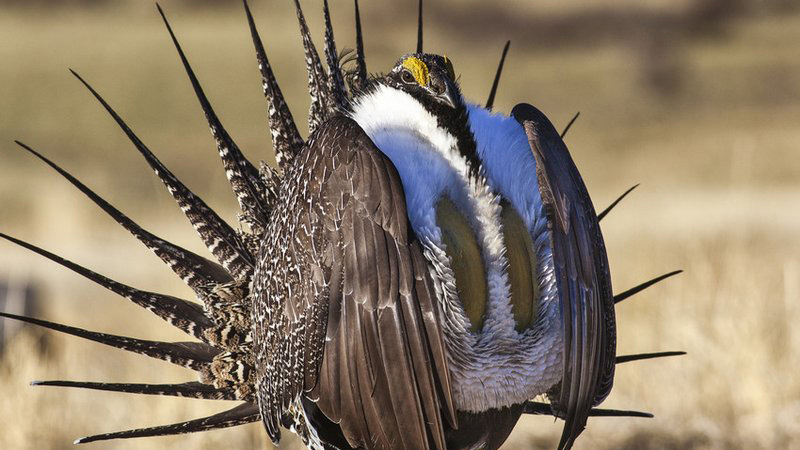
Saving Sage Grouse: BLM Issues New Proposals For 65 Million Acres In The West, Conservation Groups Say Effort Falls Short

The Department of the Interior has announced updates by the Bureau of Land Management to “strengthen conservation and management of greater sage-grouse habitat on public lands, informed by the best available science, collaborative work with states, and input from local, Tribal and federal partners.”

Read the full article…

Become a Member and get unlimited access to all articles.

Register

Already a member? Log in here

Interior Announces First Offshore Wind Energy Lease Sale Off Northwest Coast, Could Power One Million Homes

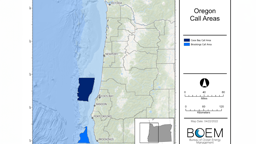
The Department of the Interior has announced it will hold an offshore wind energy lease sale off southern Oregon. The two areas to be auctioned on October 15, 2024, by the Bureau of Ocean Energy Management could generate more than 3.1 gigawatts of clean, renewable energy if fully developed, which could power approximately one million homes.

Read the full article…

Become a Member and get unlimited access to all articles.

Register

Already a member? Log in here

In ESA Status Review USFWS Confirms Marbled Murrelet Remains Threatened, Loss Of Old Growth Habitat

The U.S. Fish and Wildlife Service has released a five-year status review for the marbled murrelet, a species of seabird that is listed as threatened under the Endangered Species Act from the Canadian border to central California. The review has found that the status of the marbled murrelet remains unchanged and it still meets the definition of a threatened species.

Under the ESA, a threatened species is defined as one likely to become in danger of extinction in the foreseeable future.

The small seabird spends most of its time on the ocean, resting and feeding in near-shore marine waters, but comes inland to nest, generally in old-growth forests. Major threats to the species, which has been federally listed as threatened since 1992, include the loss of nesting habitat and changes in the marine environment.

To make sure all species listed as threatened or endangered under the ESA continue to have the appropriate level of protection, the Service conducts assessments of their status once every five years. These reviews assess each listed species to determine whether its status has changed since the time of its listing or its last status review, and whether it should be classified differently or delisted.

The five-year status review is informed by a species biological report, which includes the best available scientific information. The report evaluated the marbled murrelet’s current needs, conditions and threats. It also involved significant contributions from scientific experts, including an independent peer review and review by partners.

View the five-year Status review here. https://www.fws.gov/press-release/2024-08/service-releases-five-year-status-review-marbled-murrelet

Also see:

–CBB, July 4, 2024, Ninth Circuit Stops Old-Growth Clearcutting In Oregon Forest To Protect ESA-Listed Marbled Murrelets https://staging.columbiabasinbulletin.org/ninth-circuit-stops-old-growth-clearcutting-in-oregon-forest-to-protect-esa-listed-marbled-murrelets/

–CBB, Sept. 24, 2020, Same Ocean Conditions Impacting West Coast Salmon Runs Reducing Population Of ESA-Listed Marbled Murrelet; Numbers Dropping 4 Percent A Year https://staging.columbiabasinbulletin.org/same-ocean-conditions-impacting-west-coast-salmon-runs-reducing-population-of-esa-listed-marbled-murrelet-numbers-dropping-4-percent-a-year/

© Copyright 1997- 2026 Columbia Basin Bulletin. All rights reserved.